Regulation in lac operon
Presented by:- Swati Suman
Enrollment no.:-
A35204418013
INTRODUCTION
 LAC OPERON
 The lac operon is an operon, or group of genes
with a single promoter . The genes in the operon
encode proteins that allow the bacteria to use
lactose as an energy source.
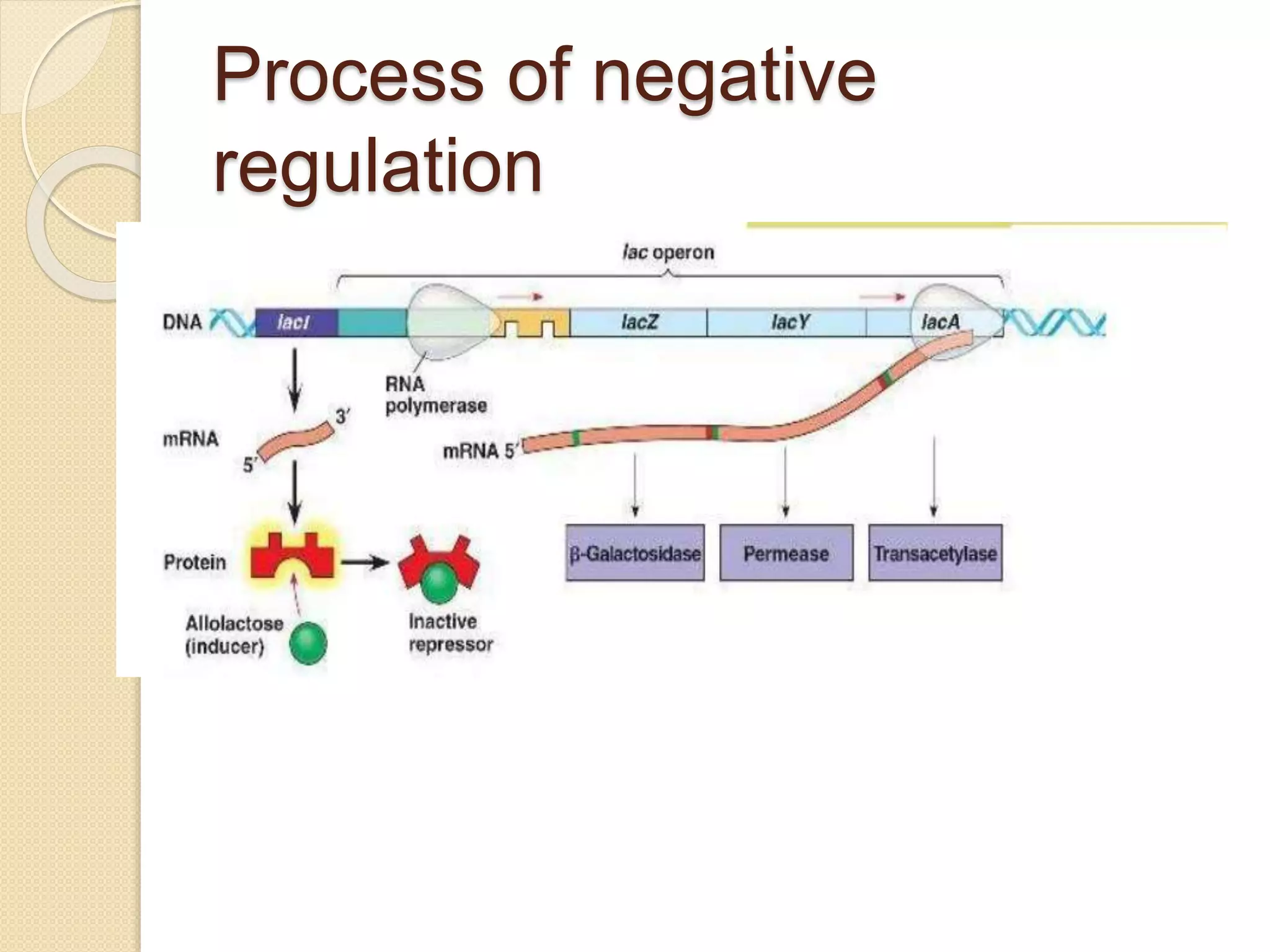
 The lac operon is a cluster of three structural
genes encoding proteins involved in lactose
metabolism and the sites on the DNA involved in
regulation of the operon. The three genes are:
(1) lacZ, which encodes the enzyme β-galactosidase
(2) lacY, which encodes lactose permease
(3) lacA, which encodes a lactose transacetylase.
Regulation
The activity of the promoter that
controls the expression of the lac
operon is regulated by two different
proteins ie. Lac repressor and
CAP(Catabolite Activator Protein). One
of the proteins prevents the RNA
polymerase from transcribing (negative
control), the other enhances the binding
of RNA polymerase to the promoter
(positive control).
Types of regulation
 There are basically 2 types of
regulation in lac operon:-
 1. Negative regulation-occurs when
binding of a protein prevents an event.
 2. Positive regulation- occurs when
binding of the protein causes a event.
Negative regulation
 The protein that inhibits transcription of
the lac operon is a tetramer with four identical
subunits called lac repressor.
 The lac repressor binds to the operator.
 The DNA sequence covered by the repressor
overlaps the DNA sequence recognized by the
RNA polymerase.
 Therefor , when the repressor is bound to the
operator , RNA polymerase cannot bind to the
promoter and transcription can not occur ,the lac
operon is said to be under negative control
Process of negative
regulation
Positive regulation
 When the expression of genetic information is quantitatively
increased by the presence of specific regulator elements, it is
called positive regulation.
 Catabolite represion is a type of positive control in the lac
operon.
 The catabolite activator protein (CAP)
,complex cAMP , binds to a site near the
promoter and stimulates the binding of
RNA polymerase.
 The cellular level of cAMP are controlled
by glucose ; allolactise level increase the
abundance of cAMP and enhance the
transcription of the abundance of cAMP
and enhance the transcription of the lac
structural gene.
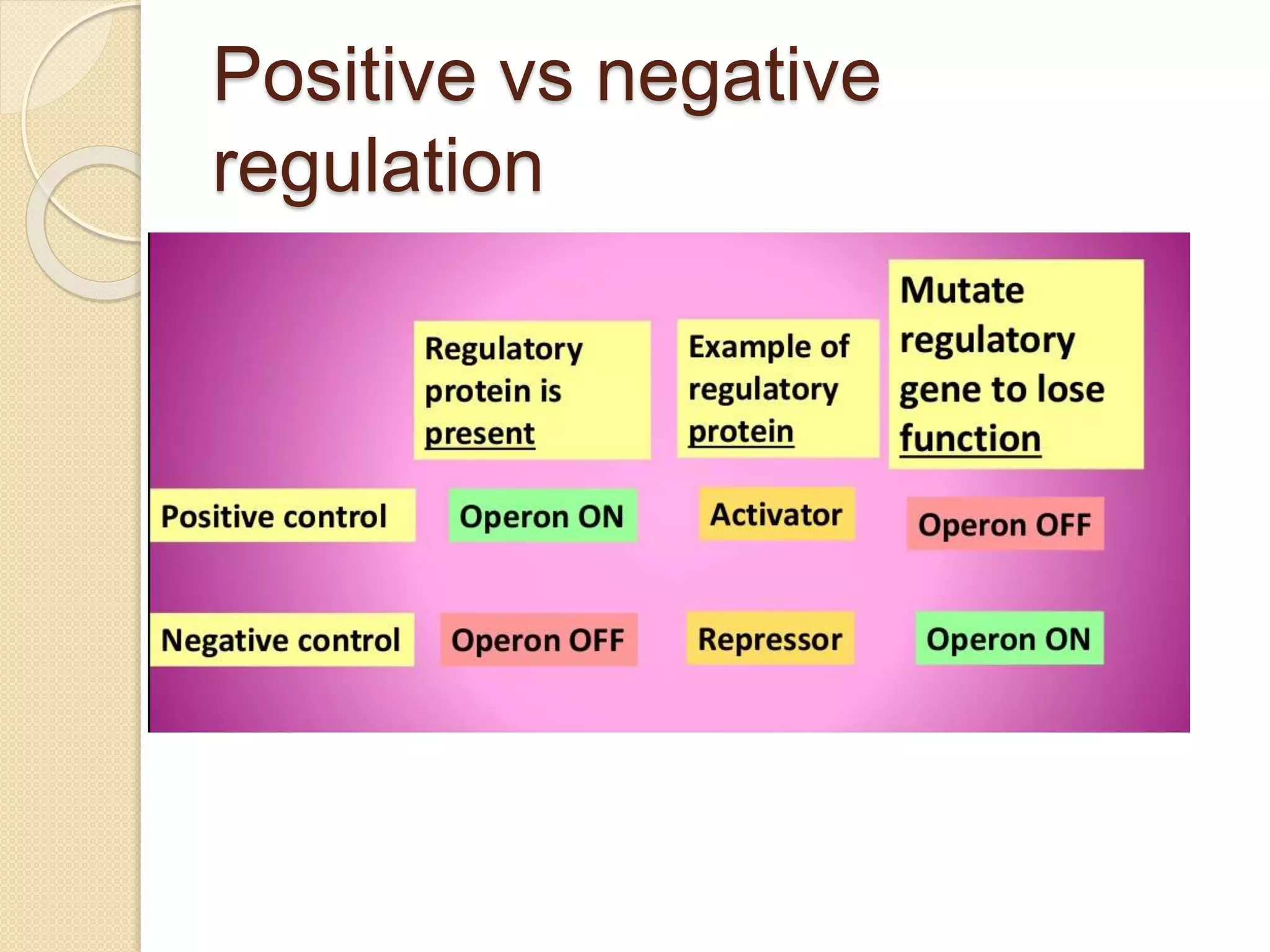
Positive vs negative
regulation
THANKYOU

Regulation in lac operon

  • 1.
    Regulation in lacoperon Presented by:- Swati Suman Enrollment no.:- A35204418013
  • 2.
    INTRODUCTION  LAC OPERON The lac operon is an operon, or group of genes with a single promoter . The genes in the operon encode proteins that allow the bacteria to use lactose as an energy source.  The lac operon is a cluster of three structural genes encoding proteins involved in lactose metabolism and the sites on the DNA involved in regulation of the operon. The three genes are: (1) lacZ, which encodes the enzyme β-galactosidase (2) lacY, which encodes lactose permease (3) lacA, which encodes a lactose transacetylase.
  • 3.
    Regulation The activity ofthe promoter that controls the expression of the lac operon is regulated by two different proteins ie. Lac repressor and CAP(Catabolite Activator Protein). One of the proteins prevents the RNA polymerase from transcribing (negative control), the other enhances the binding of RNA polymerase to the promoter (positive control).
  • 4.
    Types of regulation There are basically 2 types of regulation in lac operon:-  1. Negative regulation-occurs when binding of a protein prevents an event.  2. Positive regulation- occurs when binding of the protein causes a event.
  • 5.
    Negative regulation  Theprotein that inhibits transcription of the lac operon is a tetramer with four identical subunits called lac repressor.  The lac repressor binds to the operator.  The DNA sequence covered by the repressor overlaps the DNA sequence recognized by the RNA polymerase.  Therefor , when the repressor is bound to the operator , RNA polymerase cannot bind to the promoter and transcription can not occur ,the lac operon is said to be under negative control
  • 6.
  • 7.
    Positive regulation  Whenthe expression of genetic information is quantitatively increased by the presence of specific regulator elements, it is called positive regulation.  Catabolite represion is a type of positive control in the lac operon.
  • 8.
     The cataboliteactivator protein (CAP) ,complex cAMP , binds to a site near the promoter and stimulates the binding of RNA polymerase.  The cellular level of cAMP are controlled by glucose ; allolactise level increase the abundance of cAMP and enhance the transcription of the abundance of cAMP and enhance the transcription of the lac structural gene.
  • 9.
  • 10.