
Download to read offline
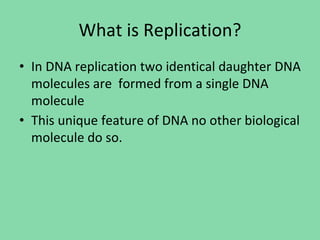
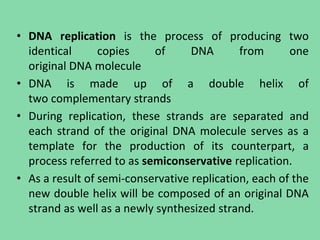
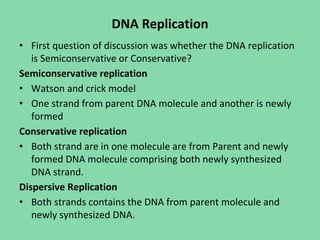
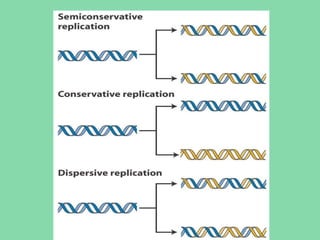
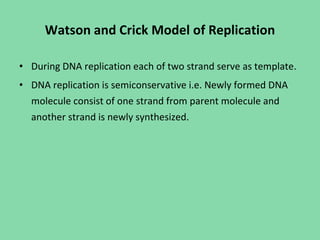
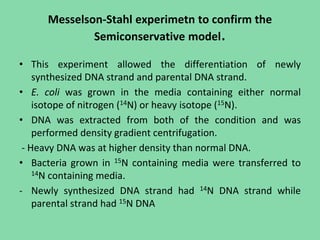
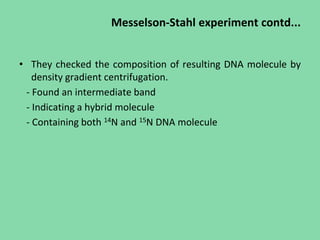
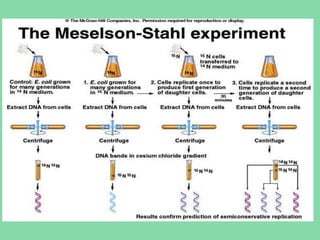
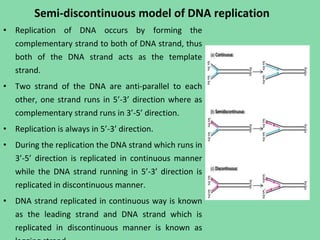
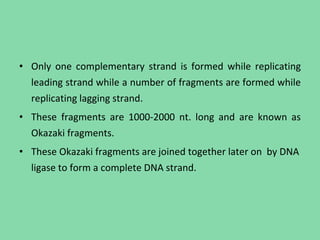
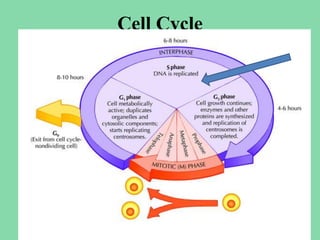
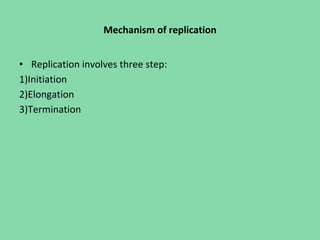
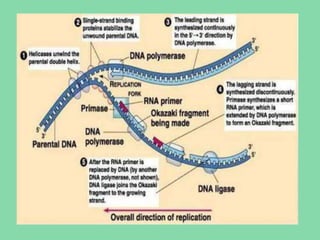
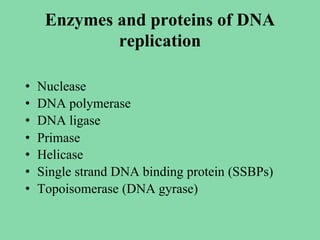
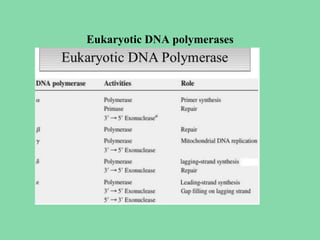
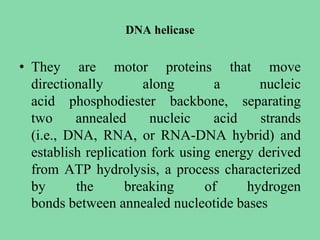
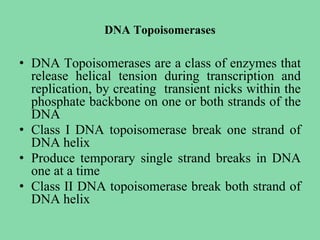
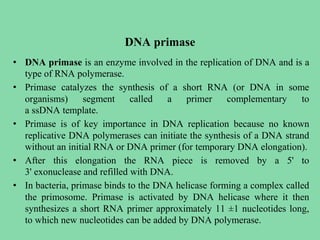
DNA replication is the process by which a cell makes an identical copy of its DNA. It involves separating the double helix into two single strands, each serving as a template for synthesis of a new partner strand. This results in two identical DNA molecules composed of an original strand and a newly synthesized strand. Semiconservative replication was confirmed by Meselson-Stahl experiments which showed newly synthesized strands containing lighter isotopes while parental strands remained heavy. Replication requires enzymes like DNA polymerase, helicase, primase and ligase. In prokaryotes it occurs by theta, sigma or linear mode using replicons from a single origin.


![PERI-PROSTHETIC FRACTURE NAIL-PLATE CONSTRUCT [NPC].pptx](https://cdn.slidesharecdn.com/ss_thumbnails/drarunkumardrmohamedashrafperiprostheticfrasturenail-plateconstructnpc-260209164459-7e9d15a1-thumbnail.jpg?width=640&height=640&fit=bounds)


![CTEV [ clubfoot] DR ARUN LAL ,DR MOHAMED ASHRAF travancore medical college k...](https://cdn.slidesharecdn.com/ss_thumbnails/ctevclubfootdrarunlaldrmohamedashraftravancoremedicalcollegekollamkeralaindia-260208063247-18fc466c-thumbnail.jpg?width=640&height=640&fit=bounds)


