Projections
●
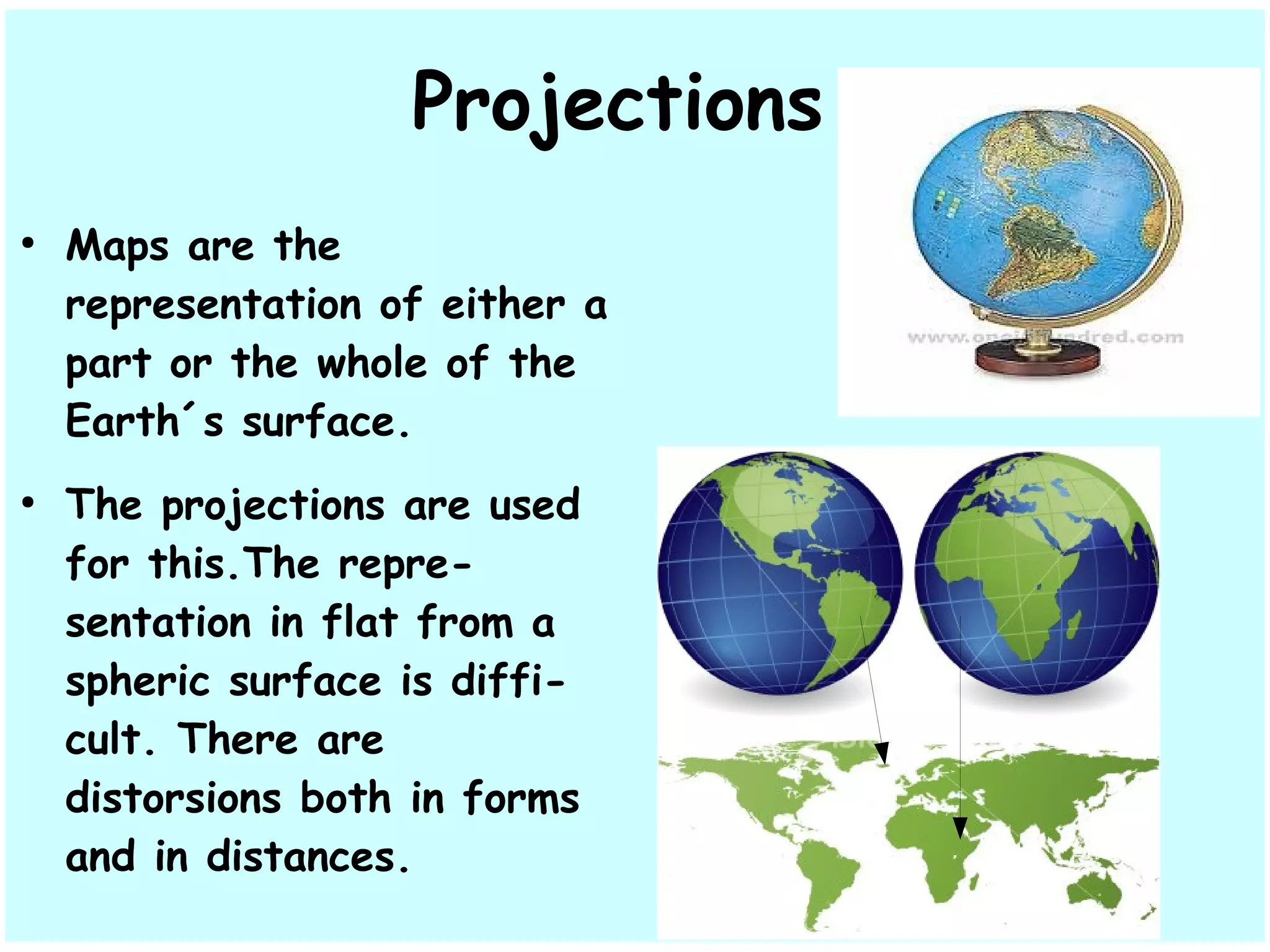
    Maps are the
    representation of either a
    part or the whole of the
    Earth´s surface.
●
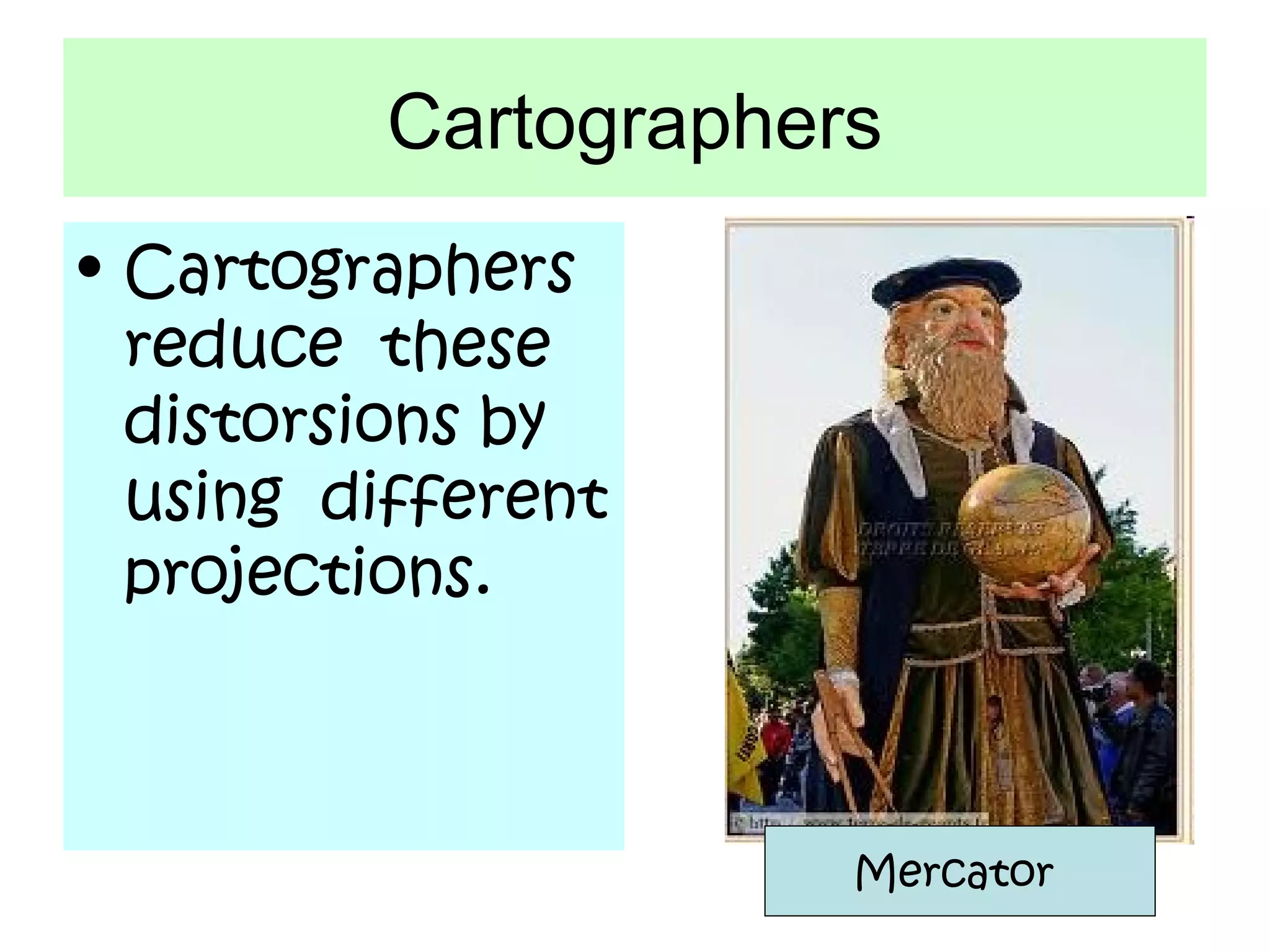
    The projections are used
    for this.The repre-
    sentation in flat from a
    spheric surface is diffi-
    cult. There are
    distorsions both in forms
    and in distances.
Cartographers
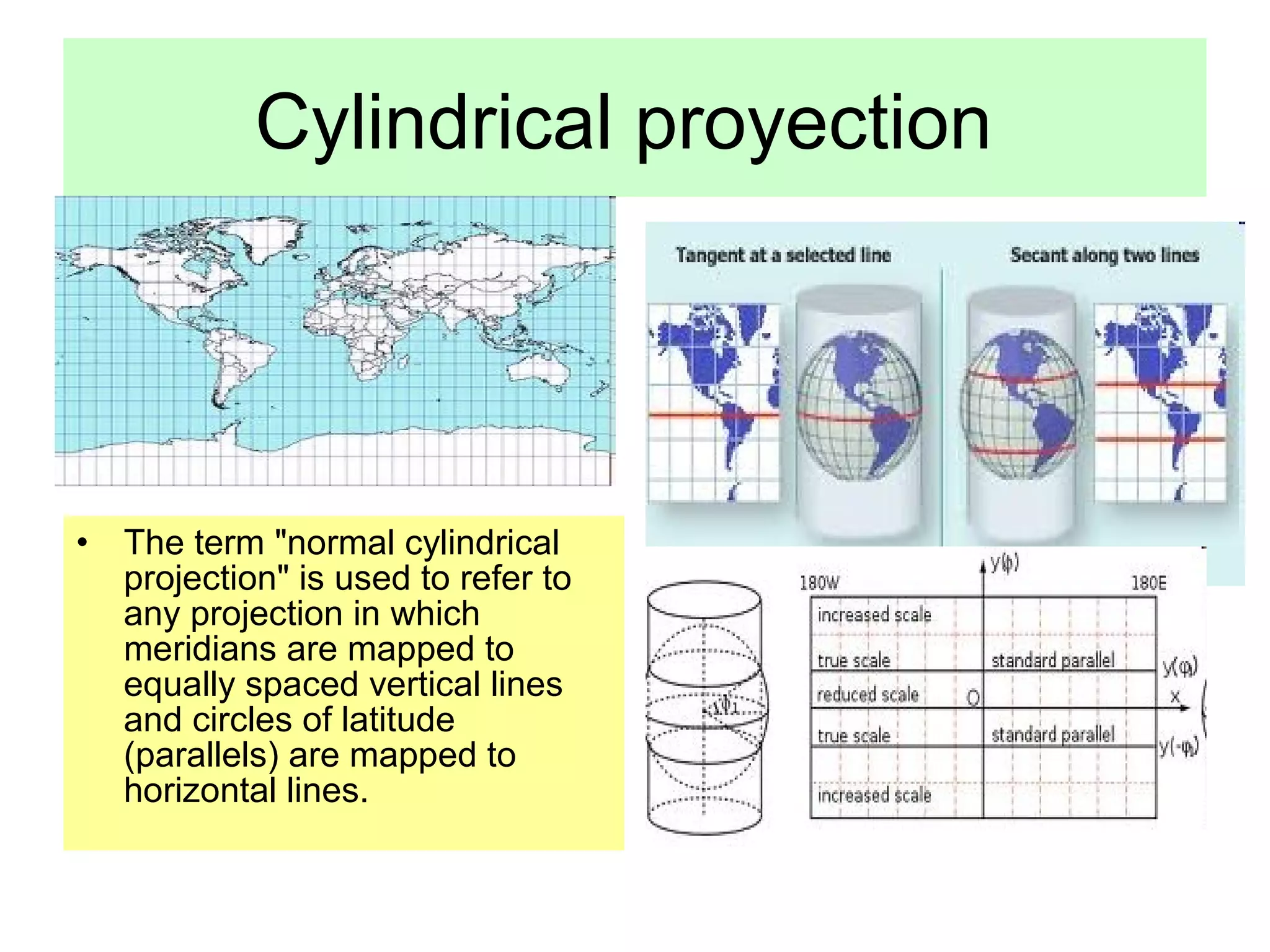
• Cartographers
  reduce these
  distorsions by
  using different
  projections.


                     Mercator
Cylindrical proyection


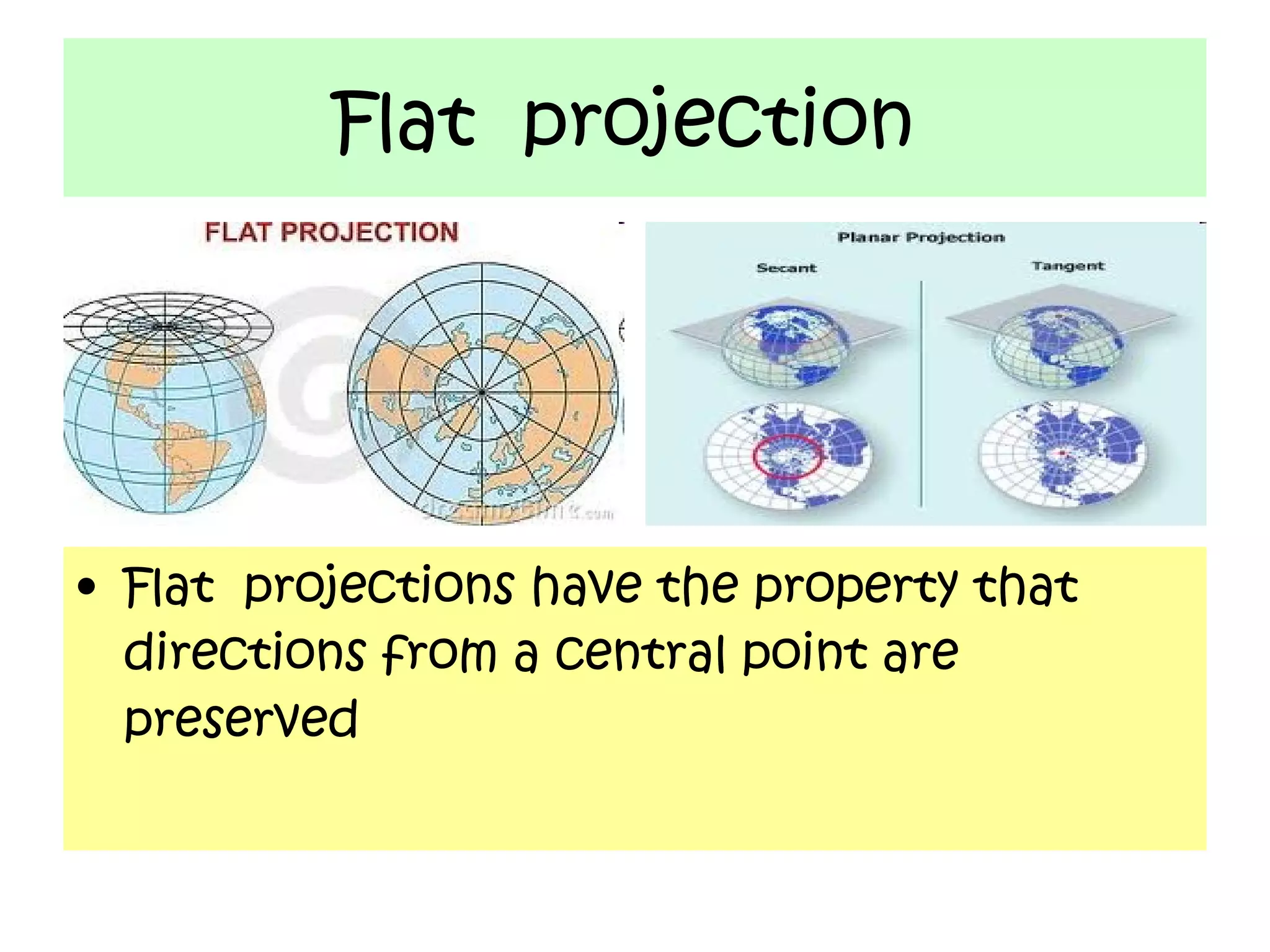
• The term "normal cylindrical
  projection" is used to refer to
  any projection in which
  meridians are mapped to
  equally spaced vertical lines
  and circles of latitude
  (parallels) are mapped to
  horizontal lines.
Flat projection


• Flat projections have the property that
  directions from a central point are
  preserved
Conic projection


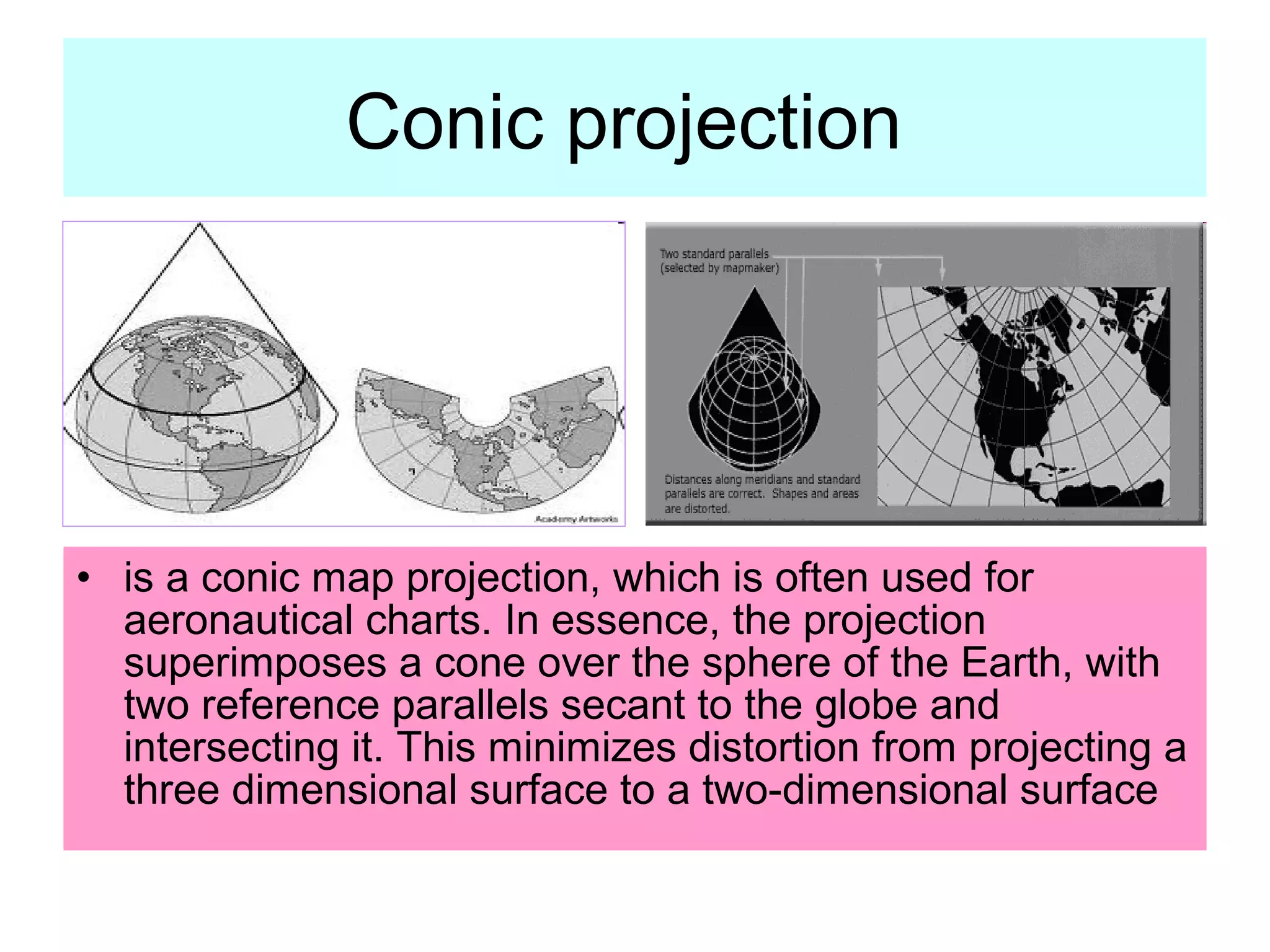
• is a conic map projection, which is often used for
  aeronautical charts. In essence, the projection
  superimposes a cone over the sphere of the Earth, with
  two reference parallels secant to the globe and
  intersecting it. This minimizes distortion from projecting a
  three dimensional surface to a two-dimensional surface
Scale


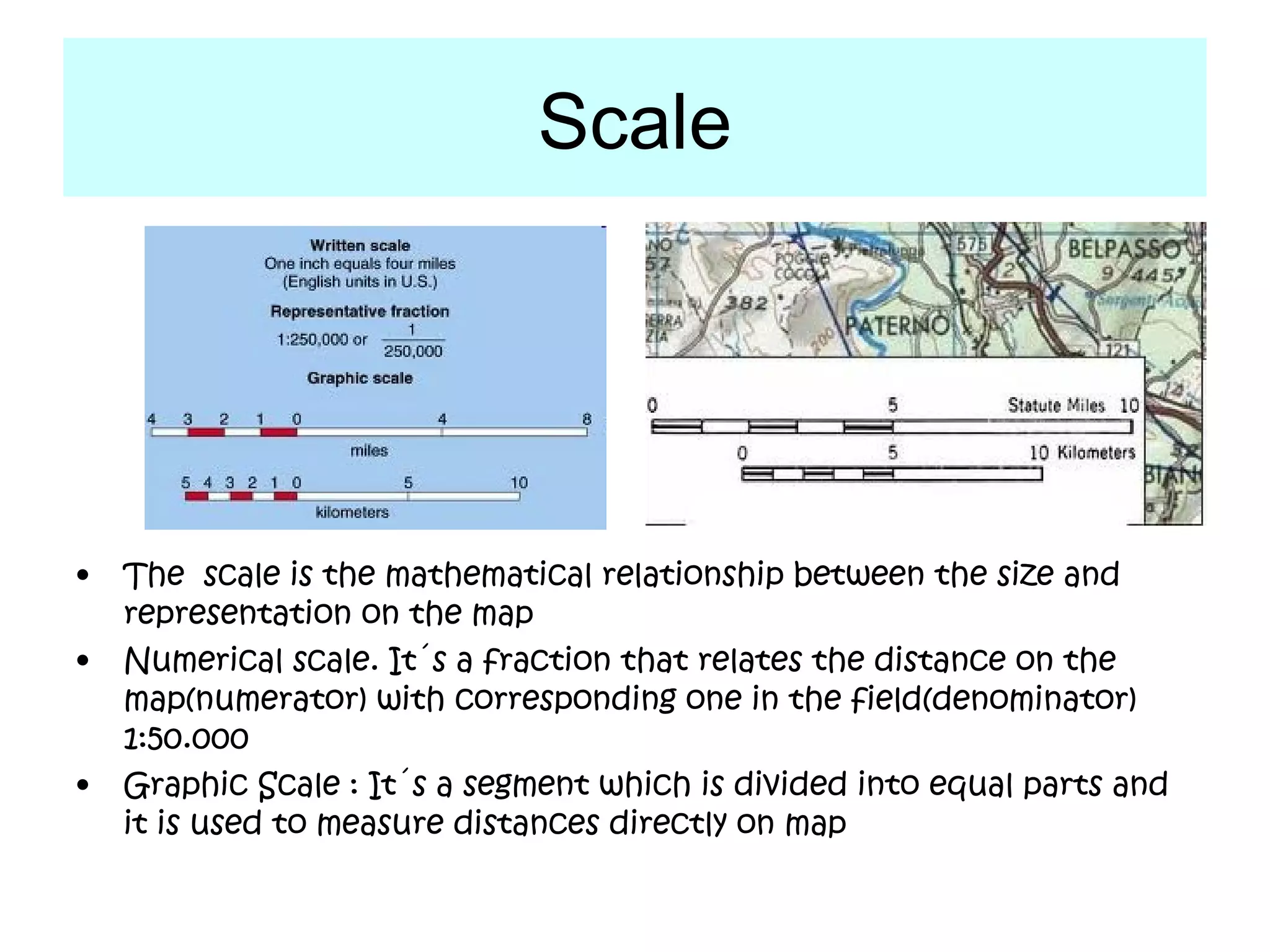
•   The scale is the mathematical relationship between the size and
    representation on the map
•   Numerical scale. It´s a fraction that relates the distance on the
    map(numerator) with corresponding one in the field(denominator)
    1:50.000
•   Graphic Scale : It´s a segment which is divided into equal parts and
    it is used to measure distances directly on map

Projection 2012

  • 1.
    Projections ● Maps are the representation of either a part or the whole of the Earth´s surface. ● The projections are used for this.The repre- sentation in flat from a spheric surface is diffi- cult. There are distorsions both in forms and in distances.
  • 2.
    Cartographers • Cartographers reduce these distorsions by using different projections. Mercator
  • 3.
    Cylindrical proyection • Theterm "normal cylindrical projection" is used to refer to any projection in which meridians are mapped to equally spaced vertical lines and circles of latitude (parallels) are mapped to horizontal lines.
  • 4.
    Flat projection • Flatprojections have the property that directions from a central point are preserved
  • 5.
    Conic projection • isa conic map projection, which is often used for aeronautical charts. In essence, the projection superimposes a cone over the sphere of the Earth, with two reference parallels secant to the globe and intersecting it. This minimizes distortion from projecting a three dimensional surface to a two-dimensional surface
  • 6.
    Scale • The scale is the mathematical relationship between the size and representation on the map • Numerical scale. It´s a fraction that relates the distance on the map(numerator) with corresponding one in the field(denominator) 1:50.000 • Graphic Scale : It´s a segment which is divided into equal parts and it is used to measure distances directly on map