Reported by:
Ailene Meking
Objectives
 At the end of the lesson
a. we will be able to identify the three
types of Map projections .
Map projections
 are attempts to portray the surface of
the earth or a portion of the earth on a
flat surface.
Map projections
 is a mathematically described technique
of how to represent the Earth’s curved
surface on a flat map.
 is an orderly arrangement of meridians
and parallels on which one draws a
map.
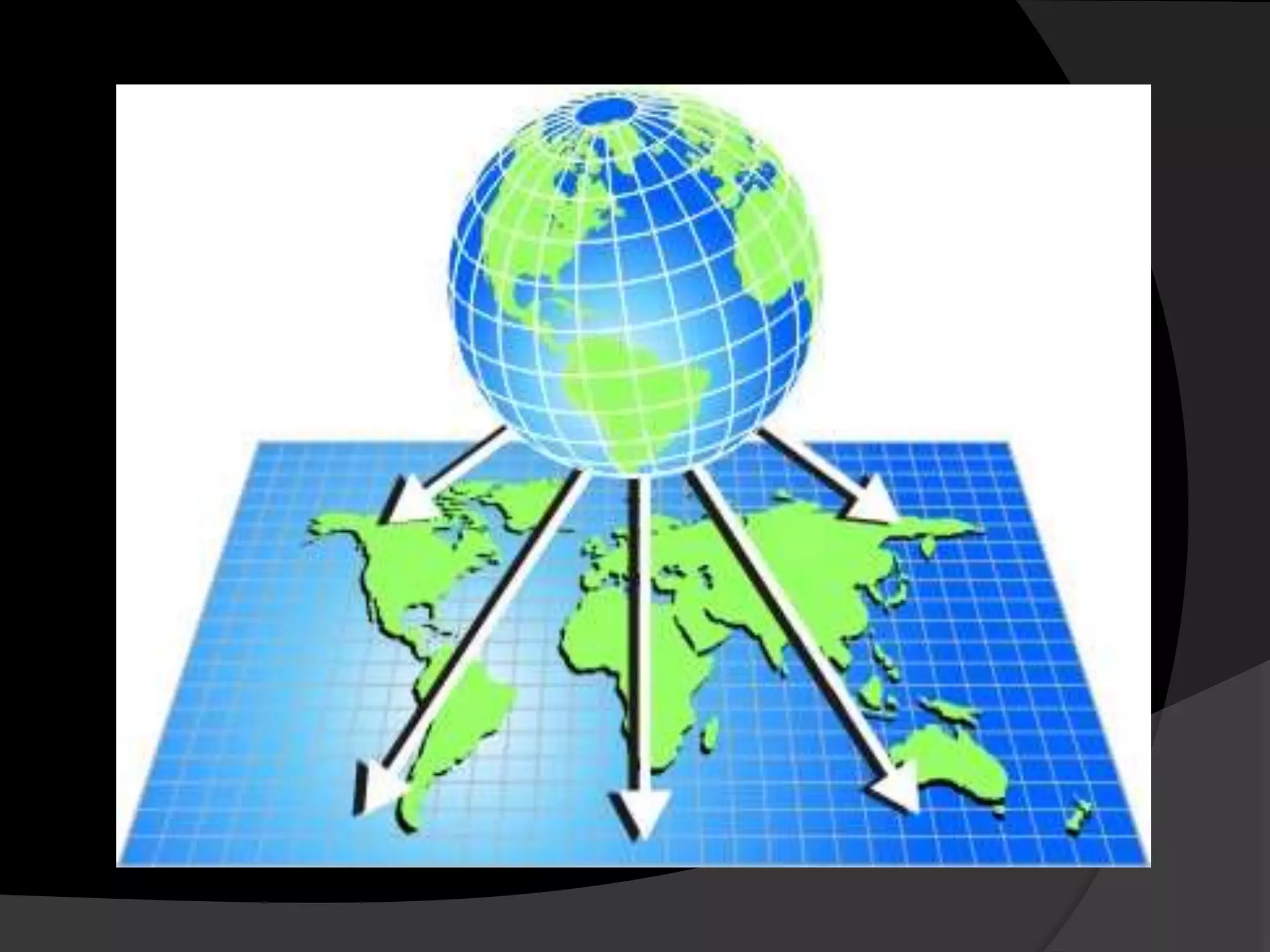
 To represent parts of the surface of
the Earth on a flat paper map or on a
computer screen, the curved
horizontal reference surface must be
mapped onto the 2D mapping plane.
3 Types of Map
Projections
1. Mercator projection
2. Equal Area Projection
3. Gnomonic Projection
1. Mercator Projection
 It was created by Flemish cartographer
Gerardus Mercator in 1569 – a time when
Antarctica hadn’t even been discovered.
 Mercator was designed as a navigational tool
for sailors as it was most convenient to hand-
plot courses with parallel rules and triangles
on this map.
1. Mercator Projection
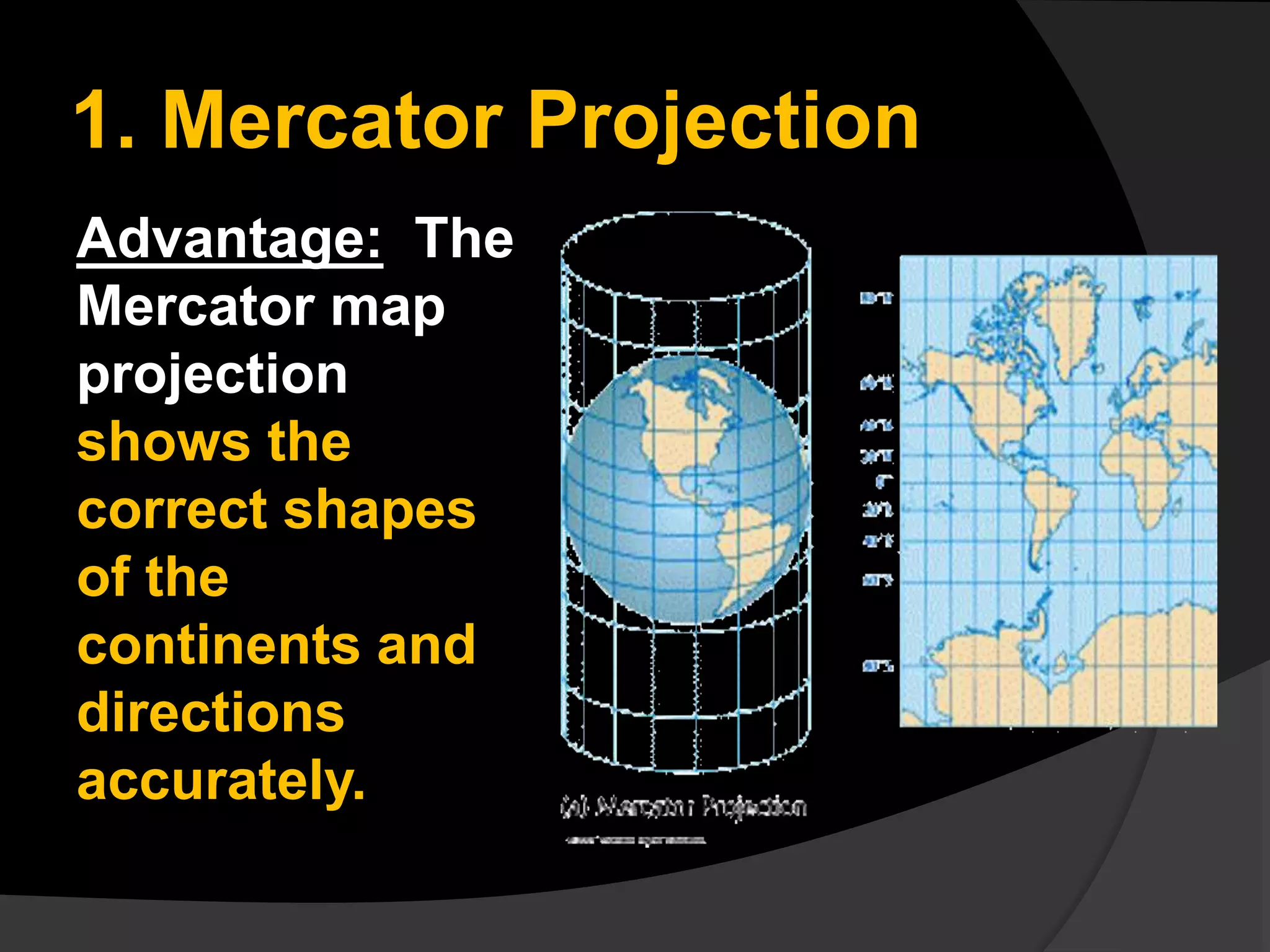
 It is often described as a cylindrical
projection.
 shows the lines of longitude and
latitude as straight lines.
1. Mercator Projection
Advantage: The
Mercator map
projection
shows the
correct shapes
of the
continents and
directions
accurately.
1. Mercator Projection
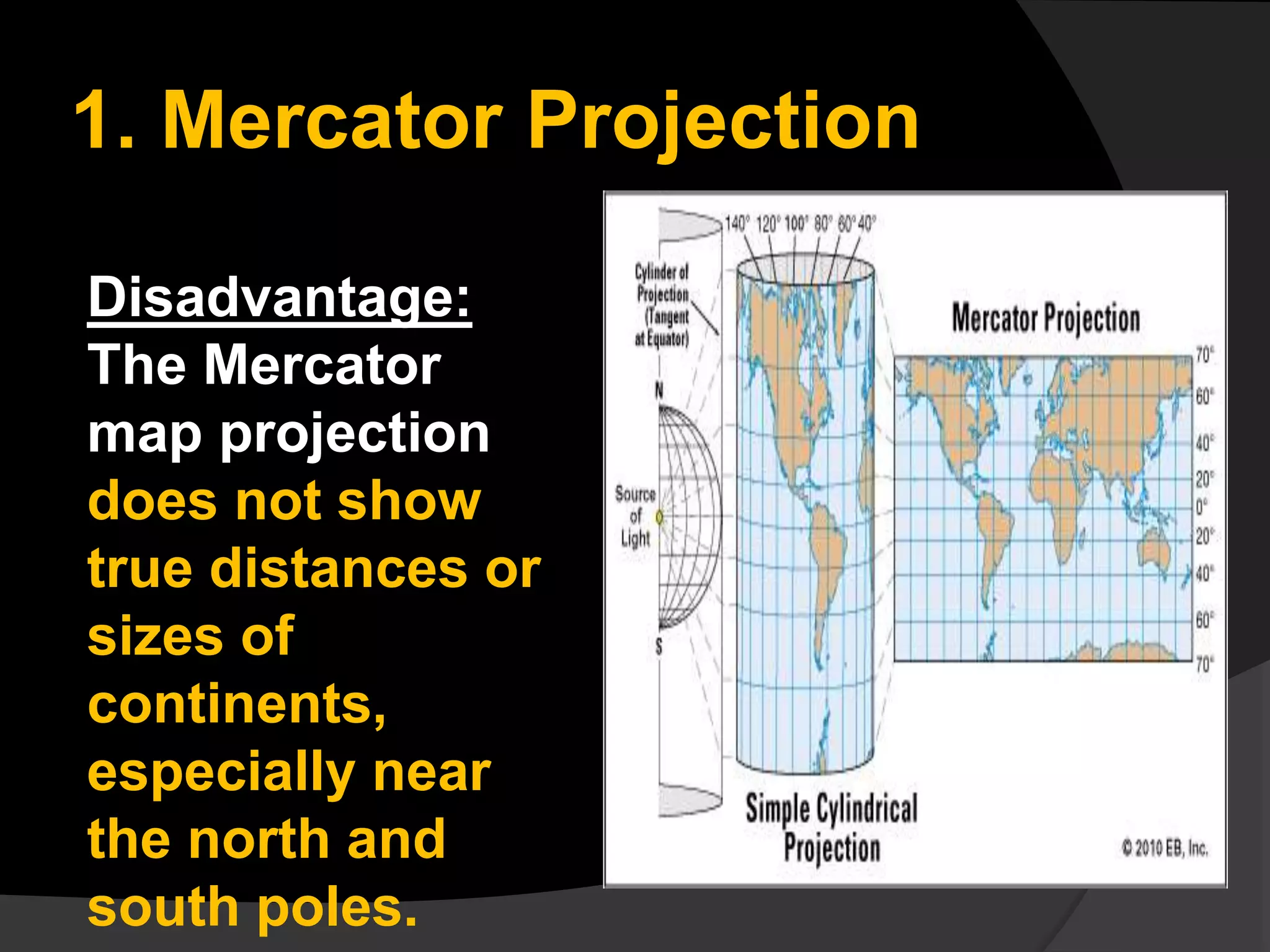
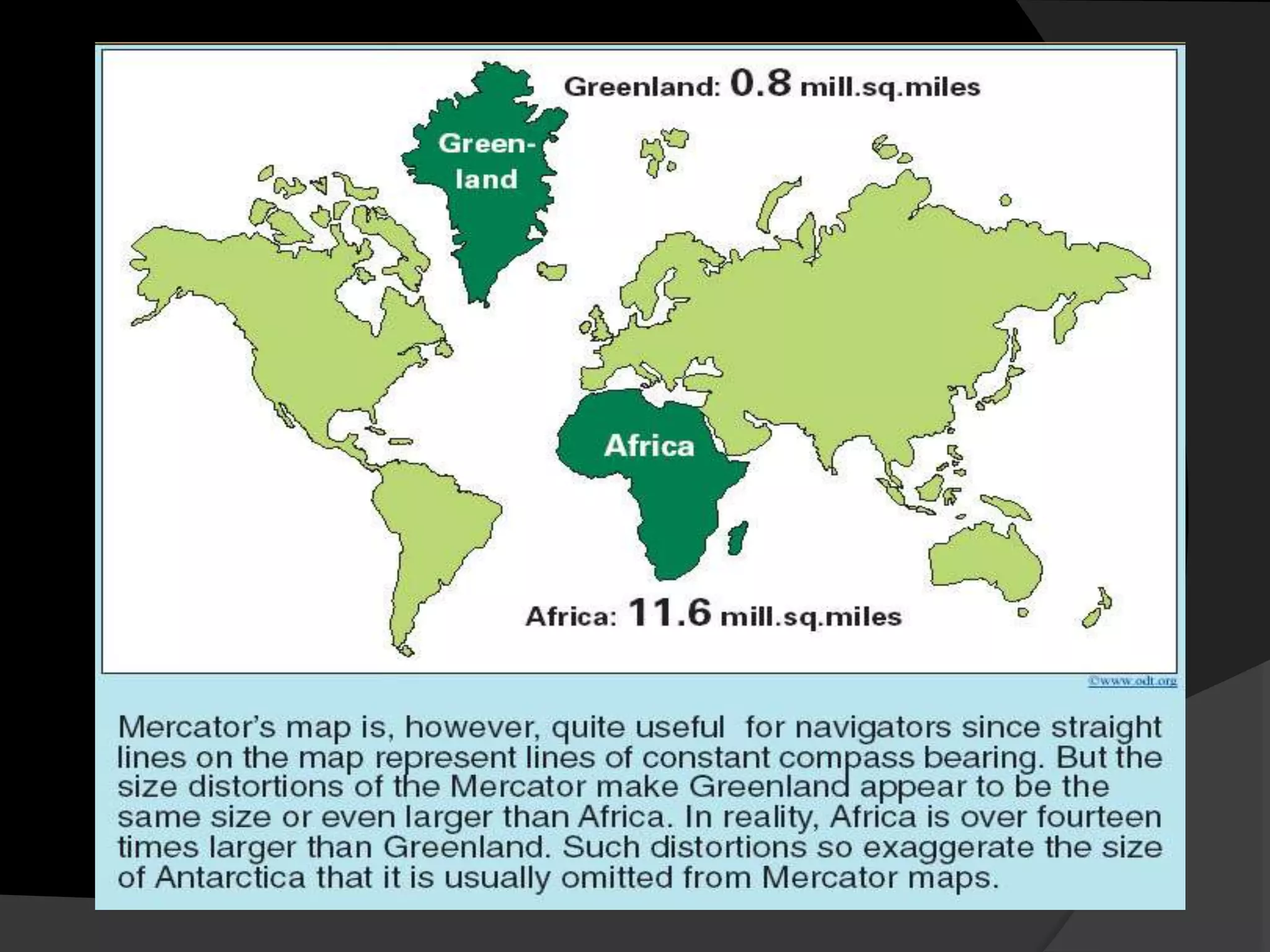
Disadvantage:
The Mercator
map projection
does not show
true distances or
sizes of
continents,
especially near
the north and
south poles.
2. Equal Area Projection
 also known as equivalent or authalic
projection
 represent areas correctly on the map.
 the areas of features on the map are
proportional to their areas on the reference
surface of Earth
 Researchers use Equal-Area maps to
compare land sizes of the world.
2.Equal Area Projection
 This
projection
uses a cone
to portray
the Earth
on a plane
2.Equal Area Projection
 Advantage: The Equal-Area map
projection show the correct sizes of
landmasses and continents.
 Disadvantage: The Equal area map
causes the shapes of landmasses to be
altered and forced into curves.
END….

Map Projection

  • 1.
  • 2.
    Objectives  At theend of the lesson a. we will be able to identify the three types of Map projections .
  • 3.
    Map projections  areattempts to portray the surface of the earth or a portion of the earth on a flat surface.
  • 4.
    Map projections  isa mathematically described technique of how to represent the Earth’s curved surface on a flat map.  is an orderly arrangement of meridians and parallels on which one draws a map.
  • 5.
     To representparts of the surface of the Earth on a flat paper map or on a computer screen, the curved horizontal reference surface must be mapped onto the 2D mapping plane.
  • 7.
    3 Types ofMap Projections 1. Mercator projection 2. Equal Area Projection 3. Gnomonic Projection
  • 8.
    1. Mercator Projection It was created by Flemish cartographer Gerardus Mercator in 1569 – a time when Antarctica hadn’t even been discovered.  Mercator was designed as a navigational tool for sailors as it was most convenient to hand- plot courses with parallel rules and triangles on this map.
  • 9.
    1. Mercator Projection It is often described as a cylindrical projection.  shows the lines of longitude and latitude as straight lines.
  • 10.
    1. Mercator Projection Advantage:The Mercator map projection shows the correct shapes of the continents and directions accurately.
  • 11.
    1. Mercator Projection Disadvantage: TheMercator map projection does not show true distances or sizes of continents, especially near the north and south poles.
  • 13.
    2. Equal AreaProjection  also known as equivalent or authalic projection  represent areas correctly on the map.  the areas of features on the map are proportional to their areas on the reference surface of Earth  Researchers use Equal-Area maps to compare land sizes of the world.
  • 14.
    2.Equal Area Projection This projection uses a cone to portray the Earth on a plane
  • 15.
    2.Equal Area Projection Advantage: The Equal-Area map projection show the correct sizes of landmasses and continents.  Disadvantage: The Equal area map causes the shapes of landmasses to be altered and forced into curves.
  • 16.