ROLE OF TECHNOLOGY
IN SERVICE
OPERATIONS
MANAGEMENT
Technology Trends in Services


Increase in Self-Service
 Reduces

labor costs
 Speeds up service


Decrease in the Importance of Location
 Lower

costs for delivery of products and services
increases remote points of access and reduces
the need for specific service locations
Technology Trends in Services


Increase in Disintermediation
 Technology

brings buyers and sellers closer
together, eliminating intermediate steps or
organizations.



Integration Benefits
 Efficiency

in operations
 Effectiveness in serving customers
Technology Trends in Services
 Increased

efficiency

 Economies

of scale in consolidating operations.
 Reduced labor costs through replacement of manpower and
increased labor productivity.
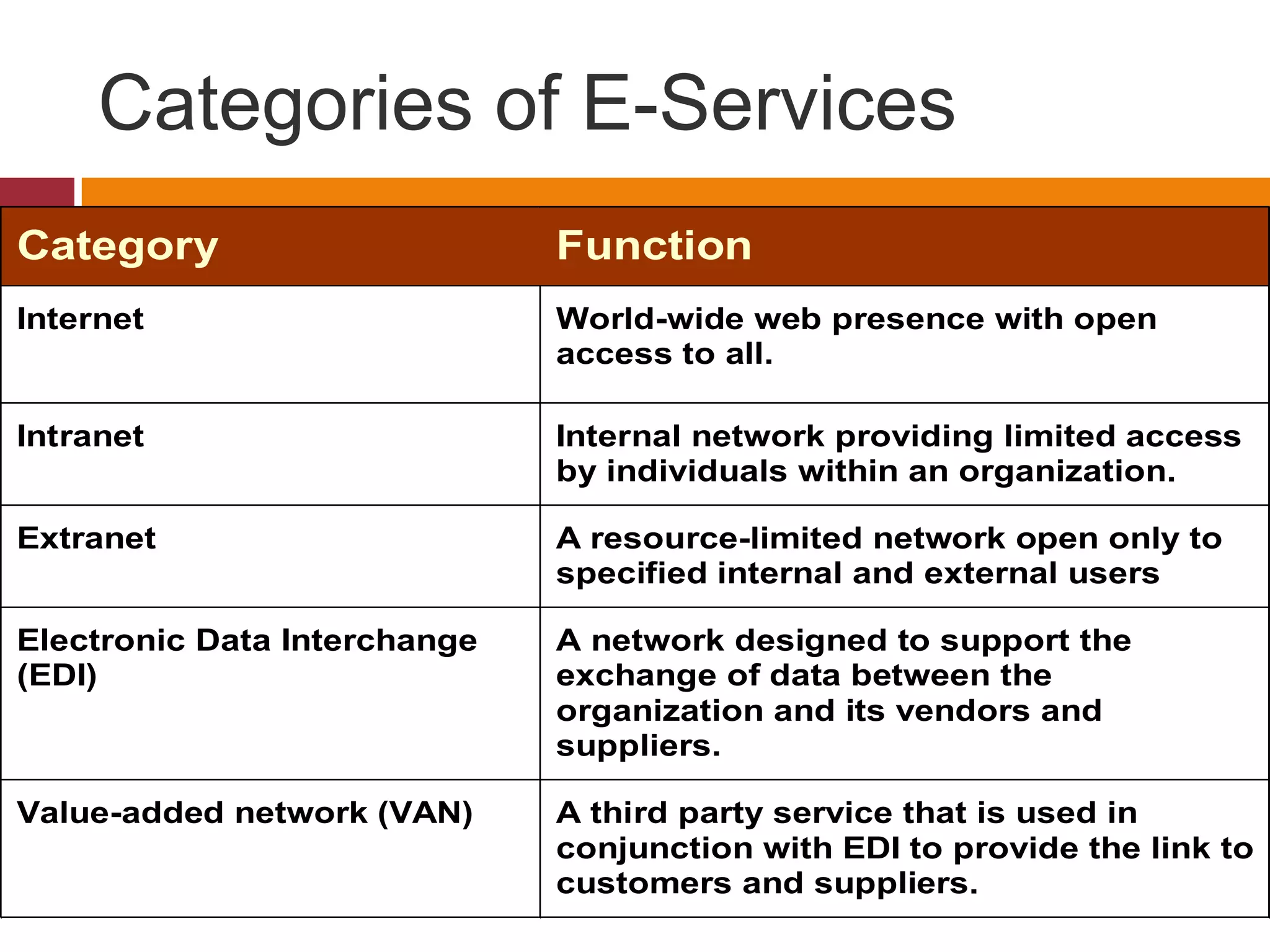
Categories of E-Services
Category

Function

Internet

World-wide web presence with open
access to all.

Intranet

Internal network providing limited access
by individuals within an organization.

Extranet

A resource-limited network open only to
specified internal and external users

Electronic Data Interchange
(EDI)

A network designed to support the
exchange of data between the
organization and its vendors and
suppliers.

Value-added network (VAN)

A third party service that is used in
conjunction with EDI to provide the link to
customers and suppliers.
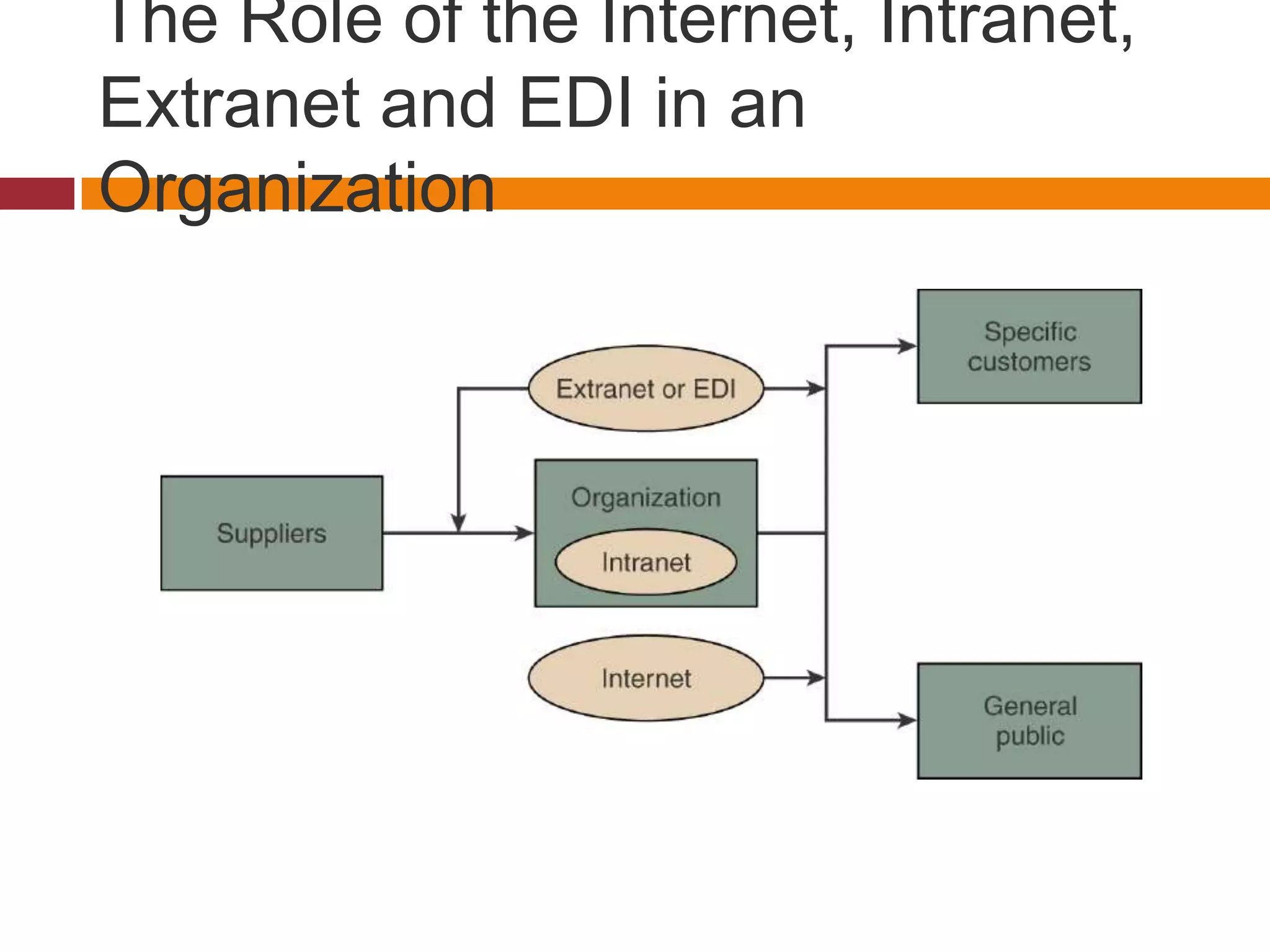
The Role of the Internet, Intranet,
Extranet and EDI in an
Organization
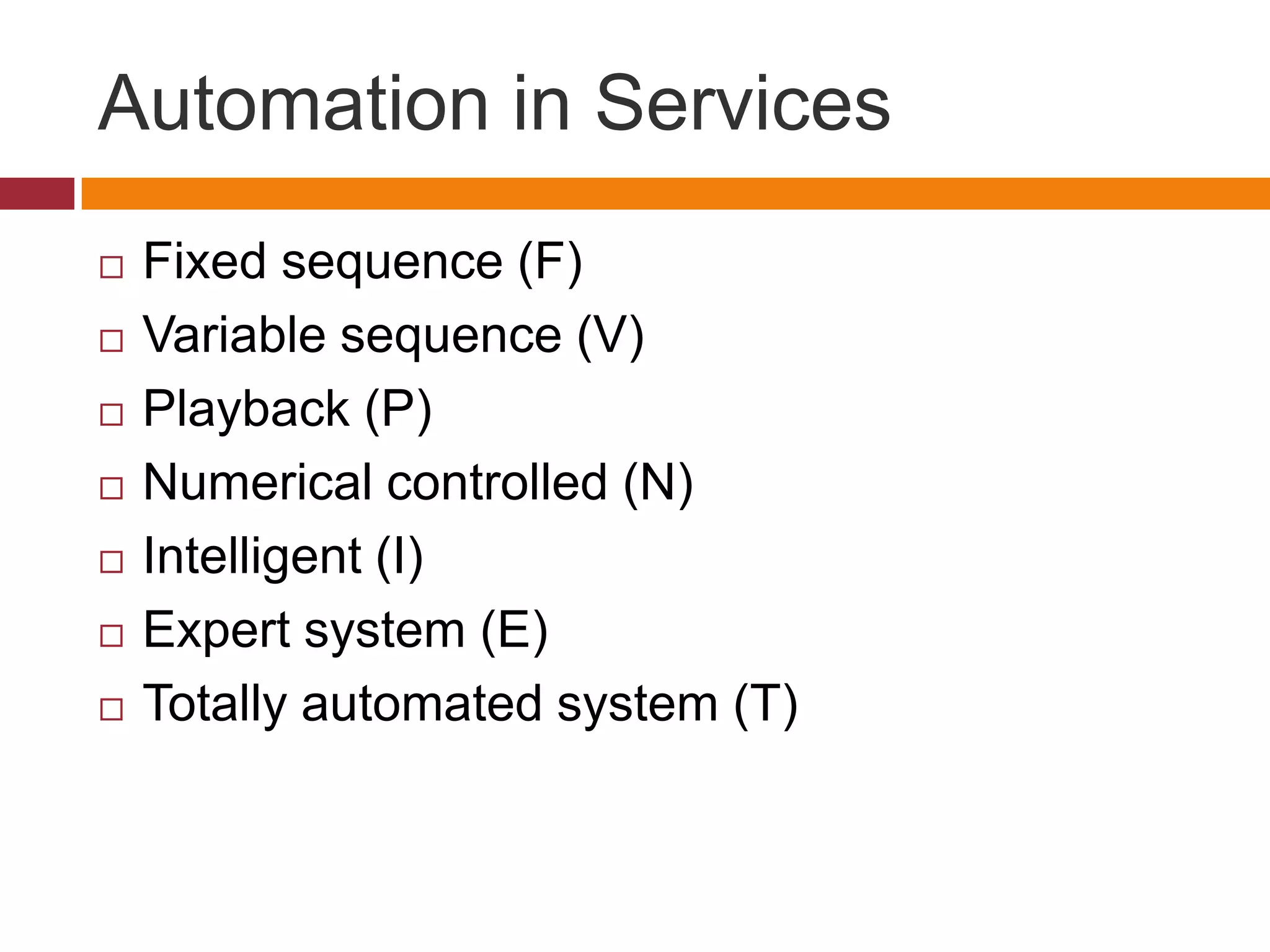
Automation in Services









Fixed sequence (F)
Variable sequence (V)
Playback (P)
Numerical controlled (N)
Intelligent (I)
Expert system (E)
Totally automated system (T)
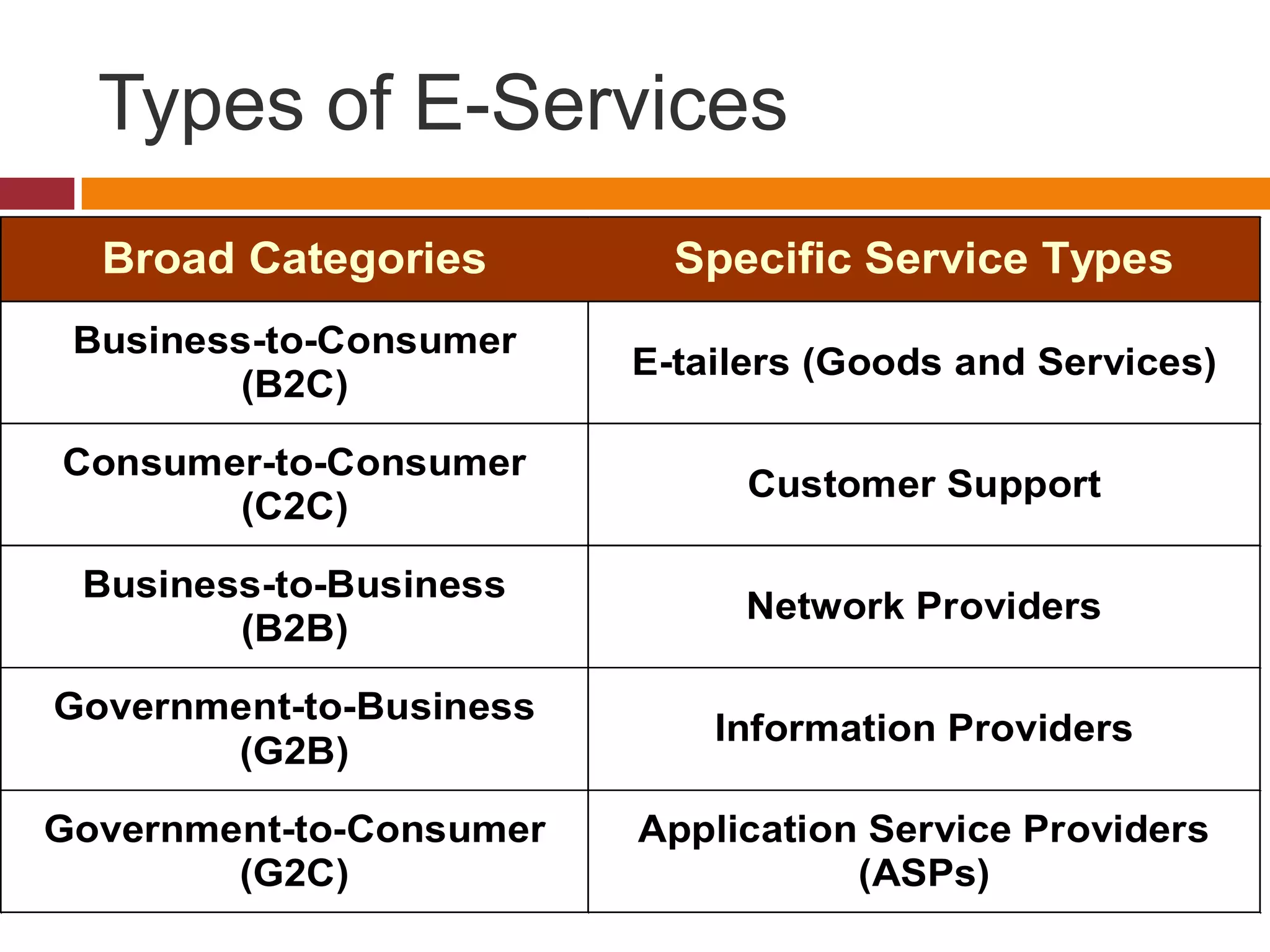
Types of E-Services
Broad Categories

Specific Service Types

Business-to-Consumer
(B2C)

E-tailers (Goods and Services)

Consumer-to-Consumer
(C2C)

Customer Support

Business-to-Business
(B2B)

Network Providers

Government-to-Business
(G2B)

Information Providers

Government-to-Consumer
(G2C)

Application Service Providers
(ASPs)
Technology Issues


Overcoming Barriers to Entry (Customer)
 “Fear

of the unknown”
 Lack of knowledge by the customer


Training and Support
 Worker

skill development through hands-on
training in the new technology.
 Customer familiarization with technology.
THANK
YOU….!

Role of technology in service operation

  • 1.
    ROLE OF TECHNOLOGY INSERVICE OPERATIONS MANAGEMENT
  • 2.
    Technology Trends inServices  Increase in Self-Service  Reduces labor costs  Speeds up service  Decrease in the Importance of Location  Lower costs for delivery of products and services increases remote points of access and reduces the need for specific service locations
  • 3.
    Technology Trends inServices  Increase in Disintermediation  Technology brings buyers and sellers closer together, eliminating intermediate steps or organizations.  Integration Benefits  Efficiency in operations  Effectiveness in serving customers
  • 4.
    Technology Trends inServices  Increased efficiency  Economies of scale in consolidating operations.  Reduced labor costs through replacement of manpower and increased labor productivity.
  • 5.
    Categories of E-Services Category Function Internet World-wideweb presence with open access to all. Intranet Internal network providing limited access by individuals within an organization. Extranet A resource-limited network open only to specified internal and external users Electronic Data Interchange (EDI) A network designed to support the exchange of data between the organization and its vendors and suppliers. Value-added network (VAN) A third party service that is used in conjunction with EDI to provide the link to customers and suppliers.
  • 6.
    The Role ofthe Internet, Intranet, Extranet and EDI in an Organization
  • 7.
    Automation in Services        Fixedsequence (F) Variable sequence (V) Playback (P) Numerical controlled (N) Intelligent (I) Expert system (E) Totally automated system (T)
  • 8.
    Types of E-Services BroadCategories Specific Service Types Business-to-Consumer (B2C) E-tailers (Goods and Services) Consumer-to-Consumer (C2C) Customer Support Business-to-Business (B2B) Network Providers Government-to-Business (G2B) Information Providers Government-to-Consumer (G2C) Application Service Providers (ASPs)
  • 9.
    Technology Issues  Overcoming Barriersto Entry (Customer)  “Fear of the unknown”  Lack of knowledge by the customer  Training and Support  Worker skill development through hands-on training in the new technology.  Customer familiarization with technology.
  • 10.