Reading
• Of all the skills necessary to
  succeed , the two most important
  are:
• Reading – the intake of information
• Writing – the production of
  information
• In this presentation, we deal with
  how to make your reading
  skills work for you…
Take Charge of Your Reading
• Before all else, if you don’t like to read,
  accept the importance of the skill and work on
  it. This is CRITICAL to your success!
• Commit to reading goals
• Plan time and space to concentrate
• Capture and connect
• Know how to read primary and
   secondary sources.
• Preview and Review…
Commit to Reading Goals
•   Stay positive, reading can be enjoyable.
•   Break chapters into “chunks.”
•   Preview each chunk before you start.
•   Pace yourself according to difficulty level.
•   Take breaks.
•   Read other sources if the reading is confusing.
•   Keep building your vocabulary.
•   When necessary, skim readings for key points
•   Make understanding the material of prime
    importance.
Plan Time and Space to Concentrate

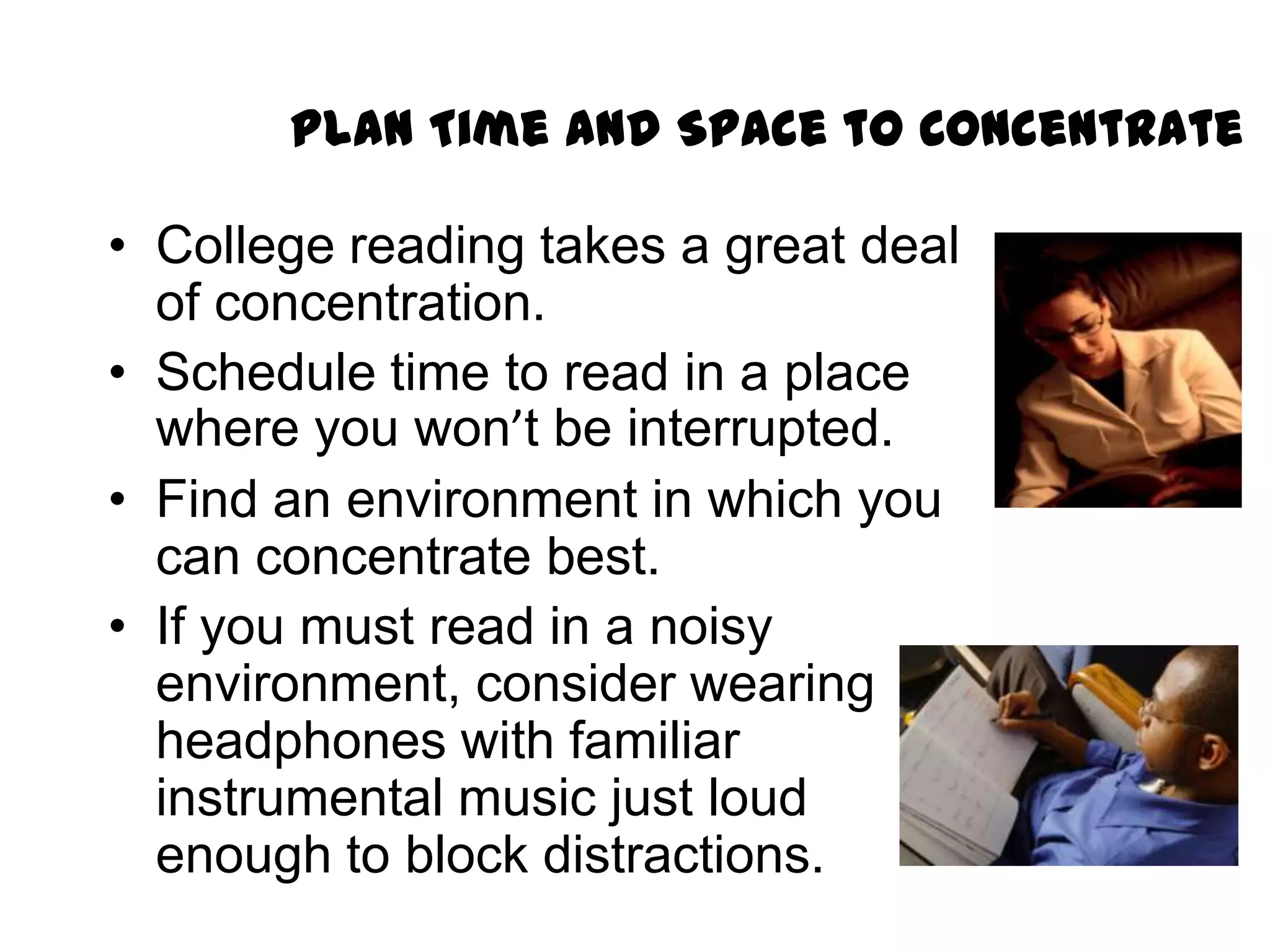
• College reading takes a great deal
  of concentration.
• Schedule time to read in a place
  where you won’t be interrupted.
• Find an environment in which you
  can concentrate best.
• If you must read in a noisy
  environment, consider wearing
  headphones with familiar
  instrumental music just loud
  enough to block distractions.
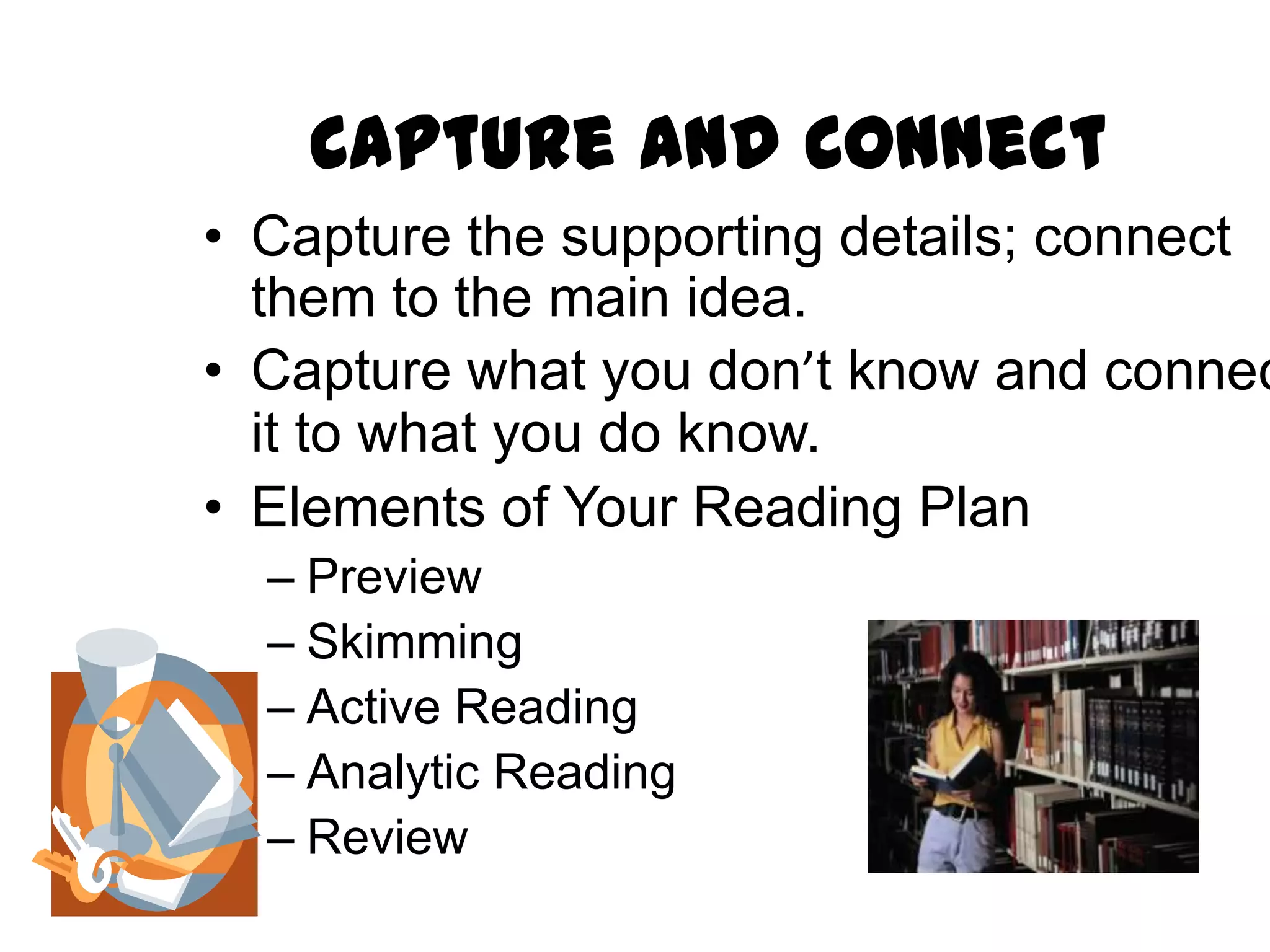
Capture and Connect
• Capture the supporting details; connect
  them to the main idea.
• Capture what you don’t know and connec
  it to what you do know.
• Elements of Your Reading Plan
  – Preview
  – Skimming
  – Active Reading
  – Analytic Reading
  – Review
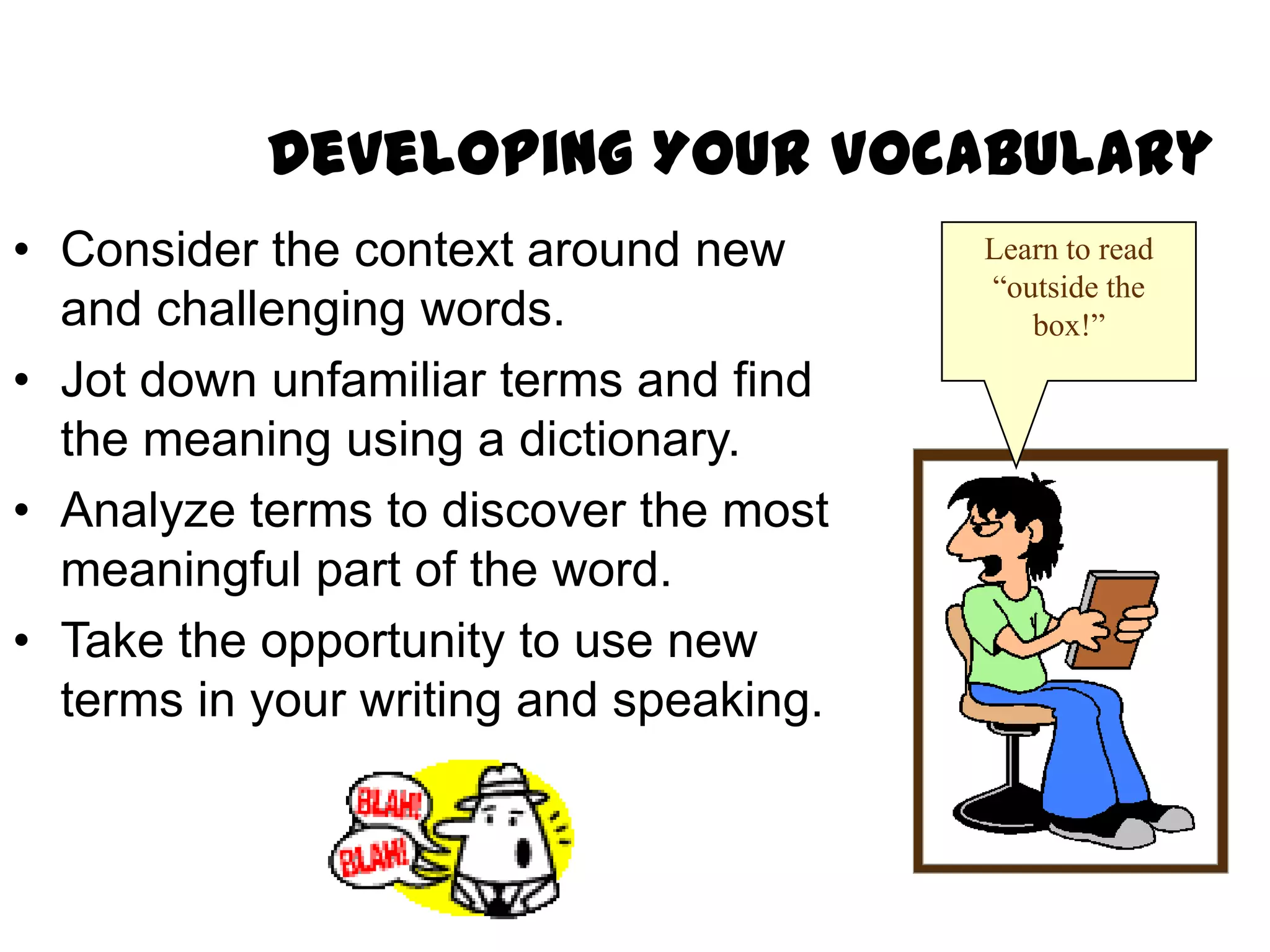
Developing Your Vocabulary
• Consider the context around new       Learn to read
                                        “outside the
  and challenging words.                   box!”
• Jot down unfamiliar terms and find
  the meaning using a dictionary.
• Analyze terms to discover the most
  meaningful part of the word.
• Take the opportunity to use new
  terms in your writing and speaking.
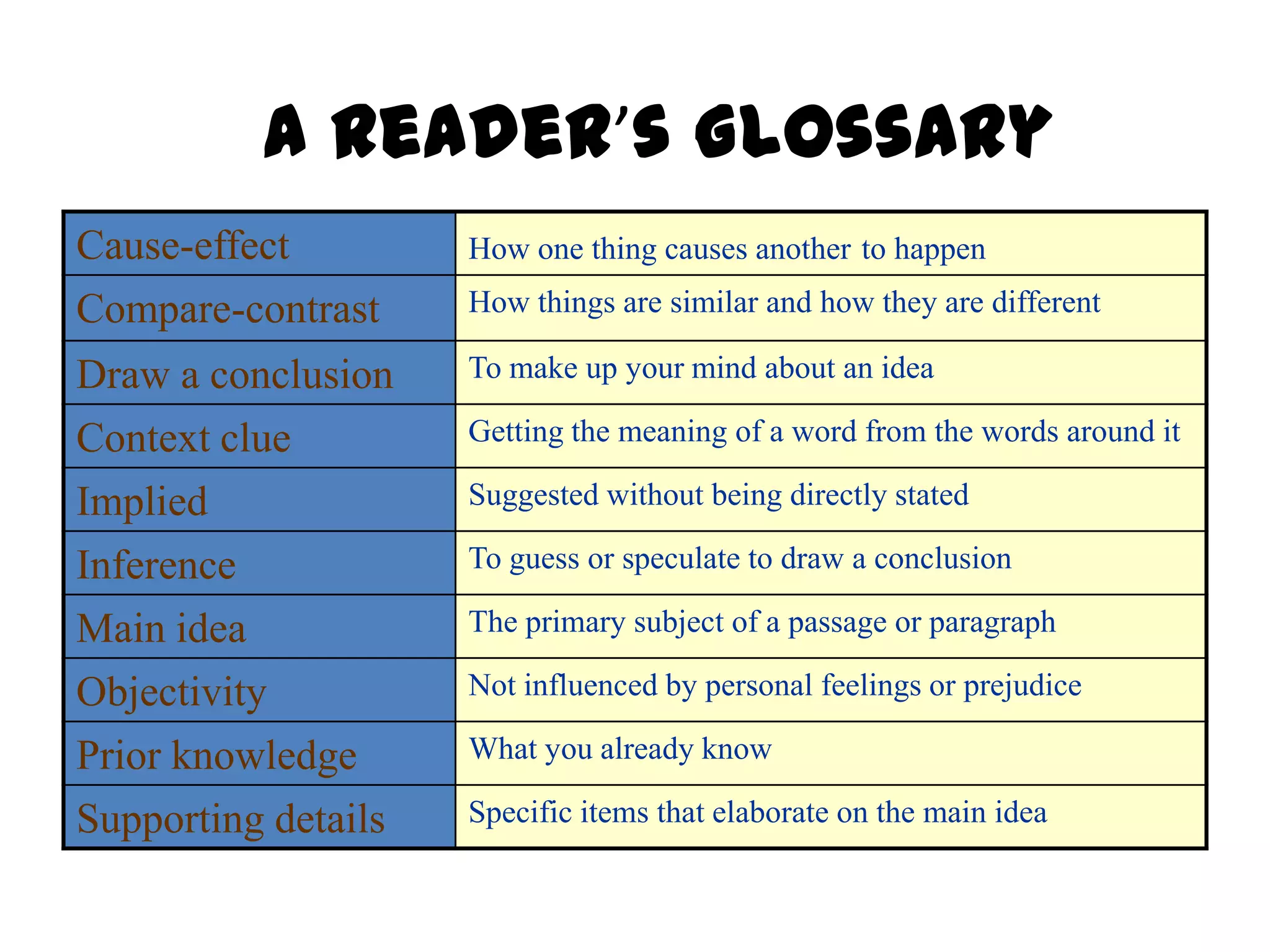
A Reader’s Glossary
Cause-effect         How one thing causes another to happen

Compare-contrast     How things are similar and how they are different

Draw a conclusion    To make up your mind about an idea

Context clue         Getting the meaning of a word from the words around it

Implied              Suggested without being directly stated

Inference            To guess or speculate to draw a conclusion

Main idea            The primary subject of a passage or paragraph

Objectivity          Not influenced by personal feelings or prejudice

Prior knowledge      What you already know

Supporting details   Specific items that elaborate on the main idea
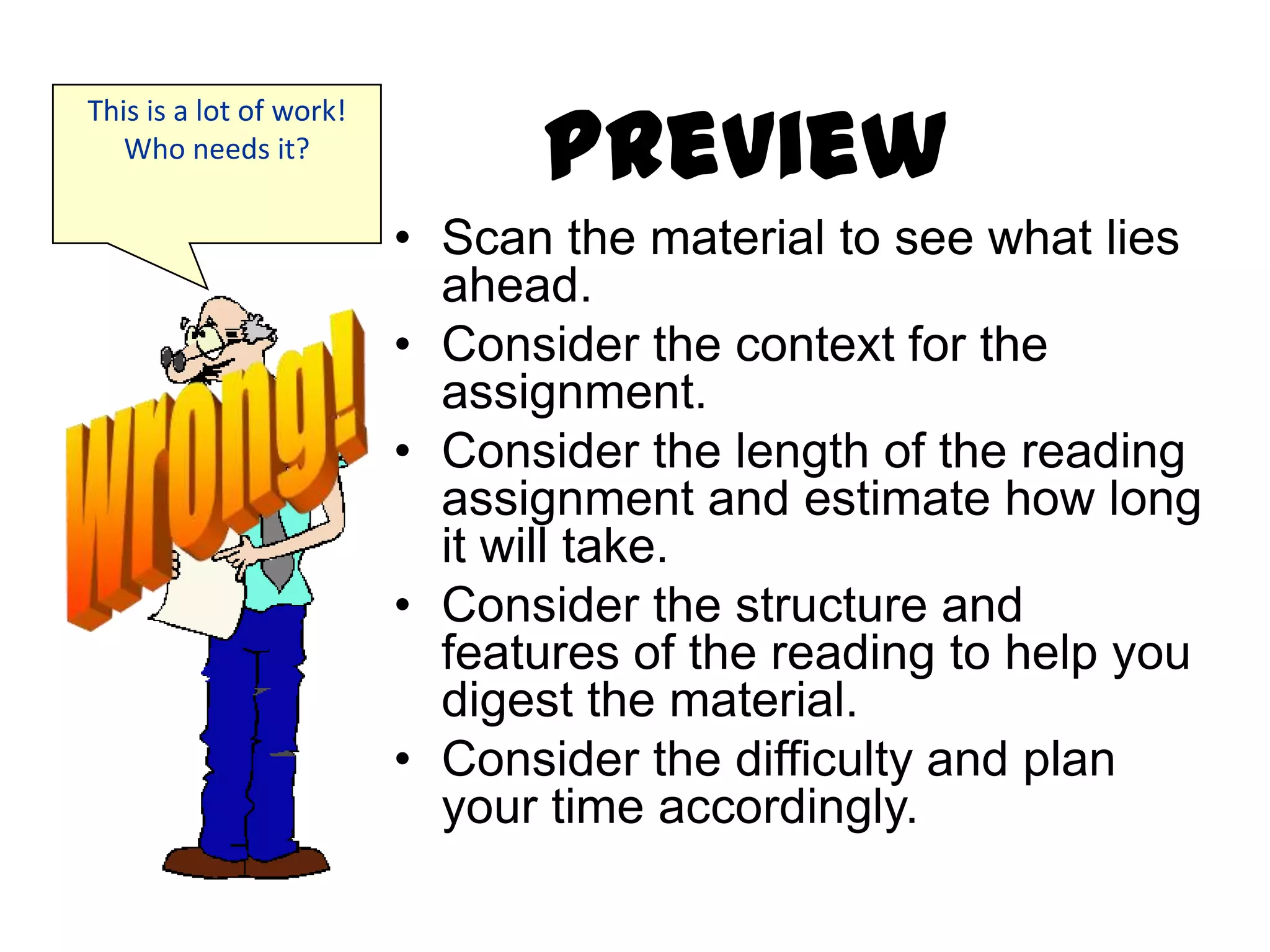
Preview
This is a lot of work!
   Who needs it?


                         • Scan the material to see what lies
                           ahead.
                         • Consider the context for the
                           assignment.
                         • Consider the length of the reading
                           assignment and estimate how long
                           it will take.
                         • Consider the structure and
                           features of the reading to help you
                           digest the material.
                         • Consider the difficulty and plan
                           your time accordingly.
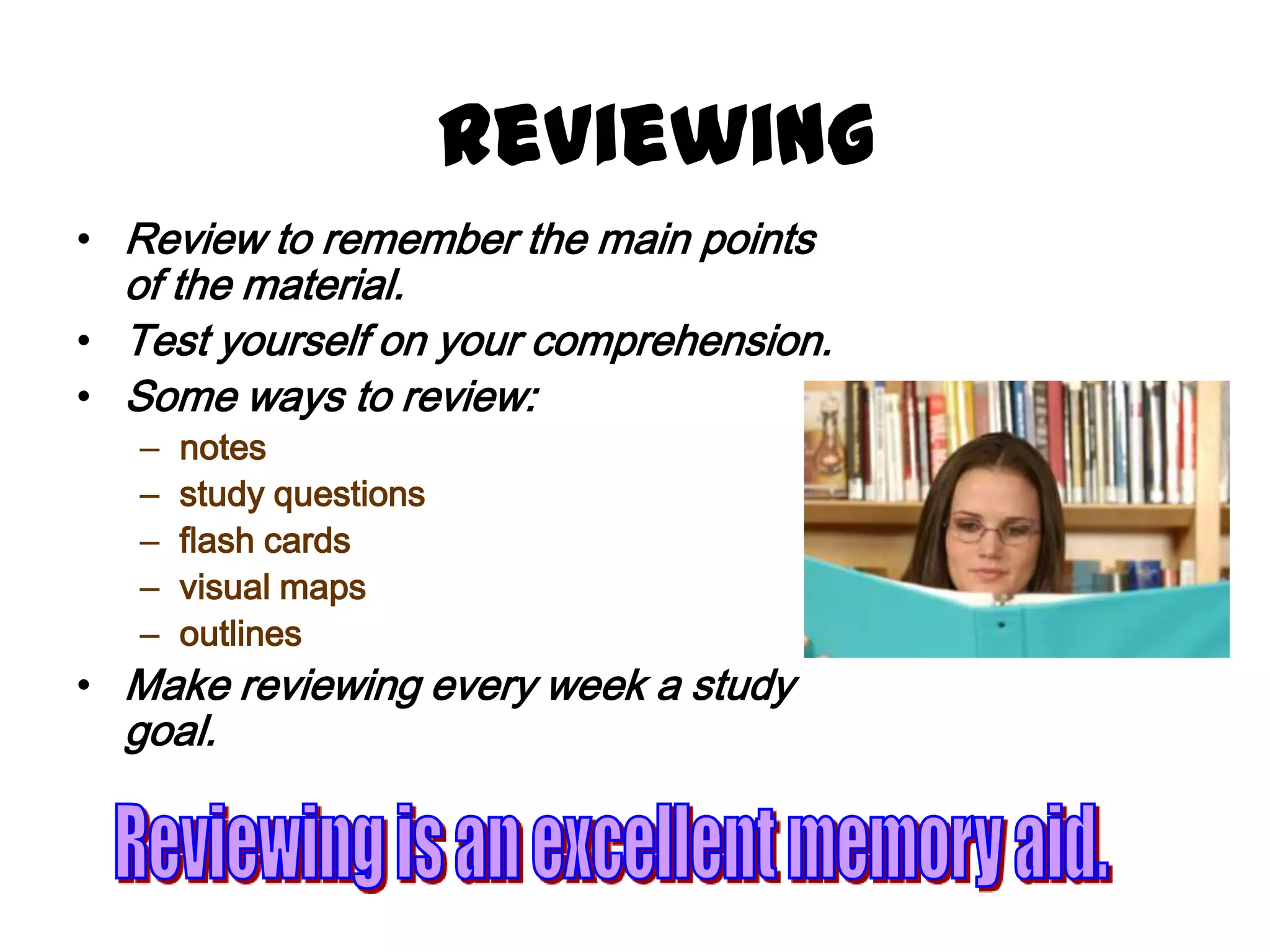
Reviewing
• Review to remember the main points
  of the material.
• Test yourself on your comprehension.
• Some ways to review:
   –   notes
   –   study questions
   –   flash cards
   –   visual maps
   –   outlines
• Make reviewing every week a study
  goal.
Skimming
• Skimming covers the content
  at a general level.
• It involves reading at about
  twice your normal rate.
• Focuses on introductory statements, topic
  sentences and boldface terms.
• Provides the chance for you to see what kind
  of information the assignment contains
• Enables you to gather the surface ideas if you
  don’t have enough time to read deeply.
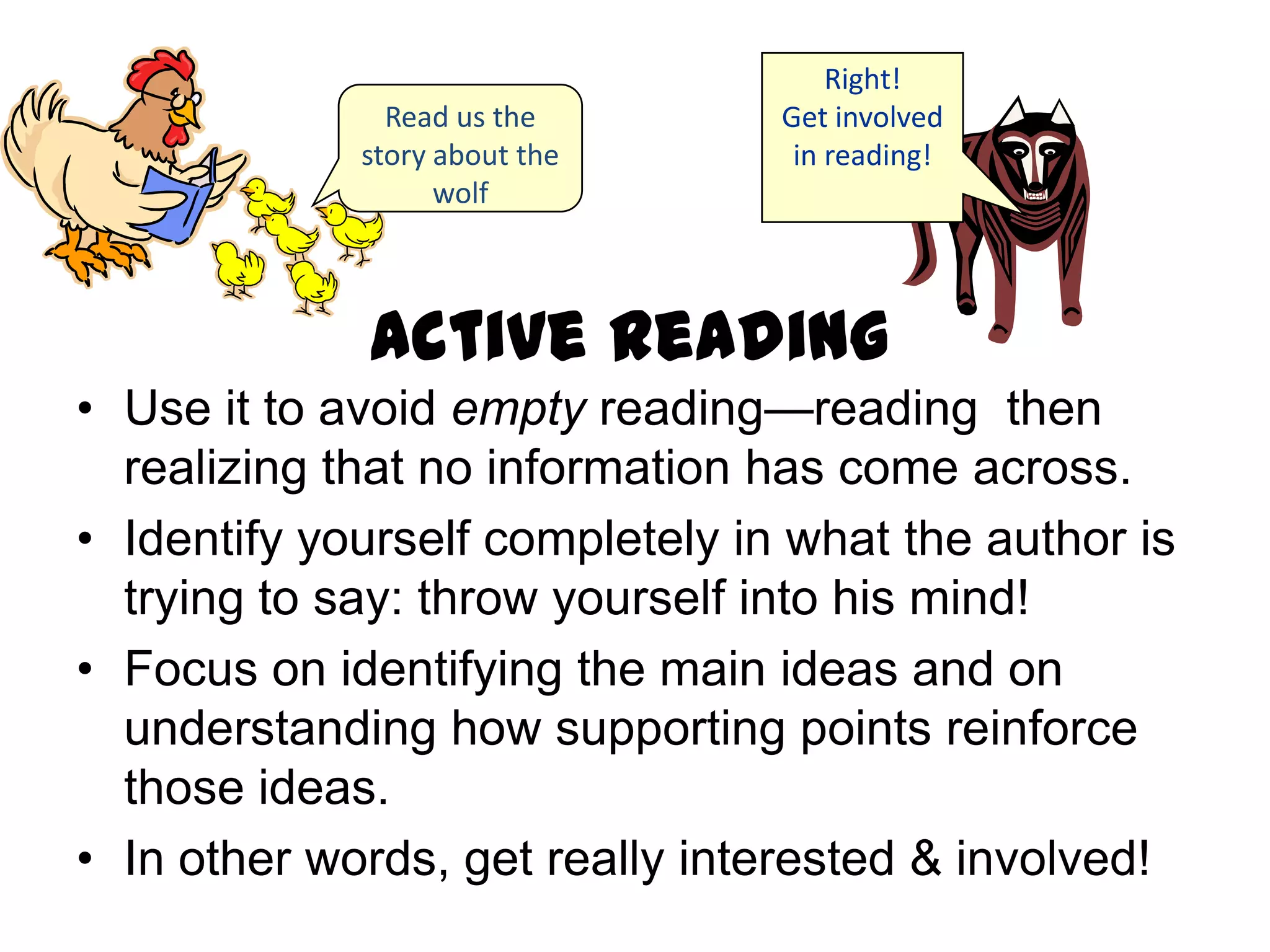
Right!
               Read us the       Get involved
             story about the      in reading!
                   wolf


             Active Reading
• Use it to avoid empty reading—reading then
  realizing that no information has come across.
• Identify yourself completely in what the author is
  trying to say: throw yourself into his mind!
• Focus on identifying the main ideas and on
  understanding how supporting points reinforce
  those ideas.
• In other words, get really interested & involved!
Analytic Reading
• Reading at a more intense level.
• Involves breaking ideas open and digging
  underneath their surface.
• Enables you to try to spot flaws in the writer’s
  logic.
• Promotes a comparison of the work to other
  works.
• Should involve questioning the author and
  yourself.
• In other words, active skepticism with a purpose
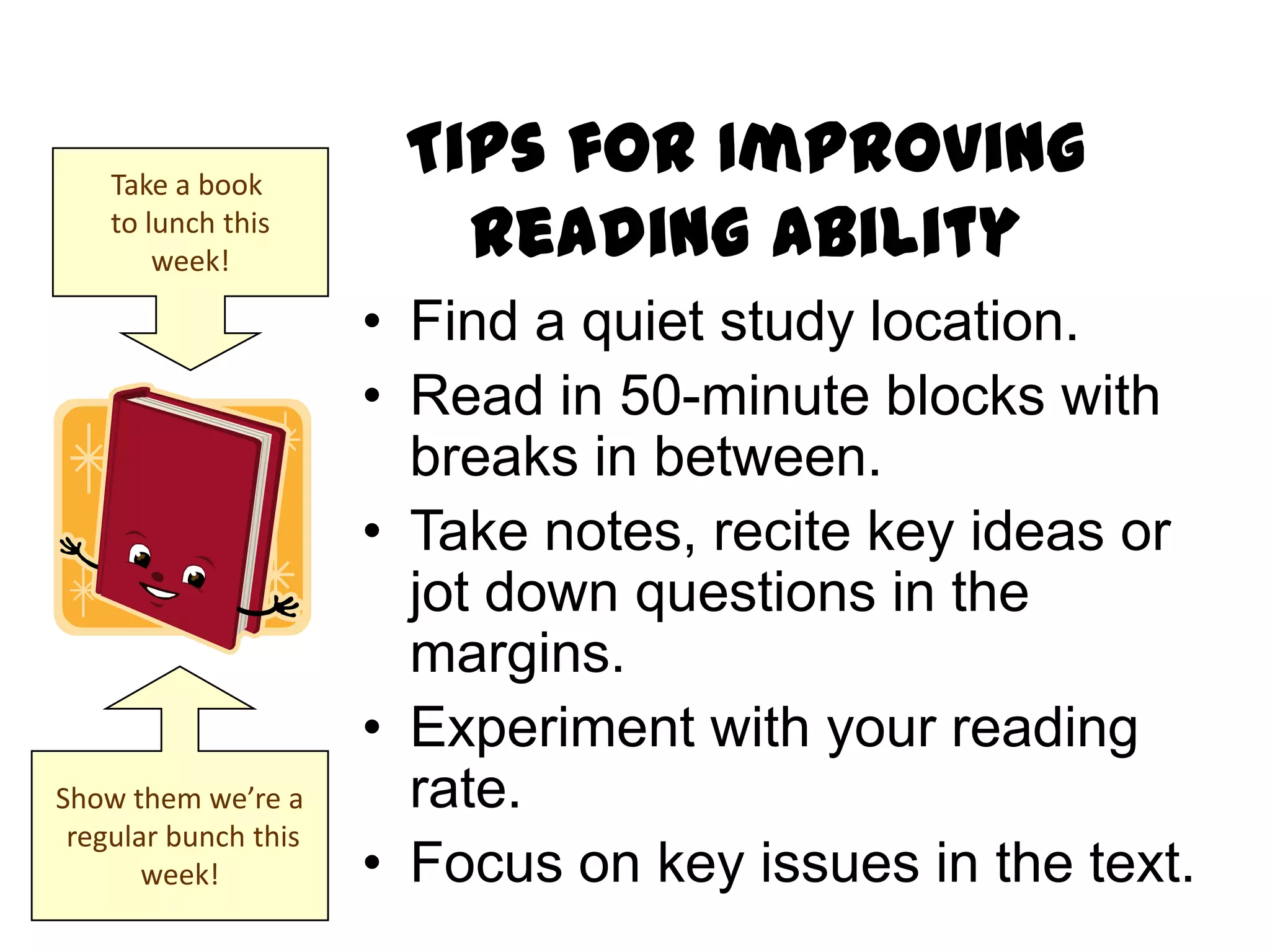
Take a book
                       Tips for Improving
    to lunch this
        week!            Reading Ability
                      • Find a quiet study location.
                      • Read in 50-minute blocks with
                        breaks in between.
                      • Take notes, recite key ideas or
                        jot down questions in the
                        margins.
                      • Experiment with your reading
Show them we’re a       rate.
 regular bunch this
       week!          • Focus on key issues in the text.
Highlighting Text
• Highlight:
   – Topic sentences, Key words, Conclusions
• But watch out!
  – Highlighting too much can cause you to re-
    read everything because you don’t know
    what’s important.
  – Highlighting doesn’t show you why you
    highlighted something
  – You need to have the entire text with you to
    review.
Important Points About
                 College Reading
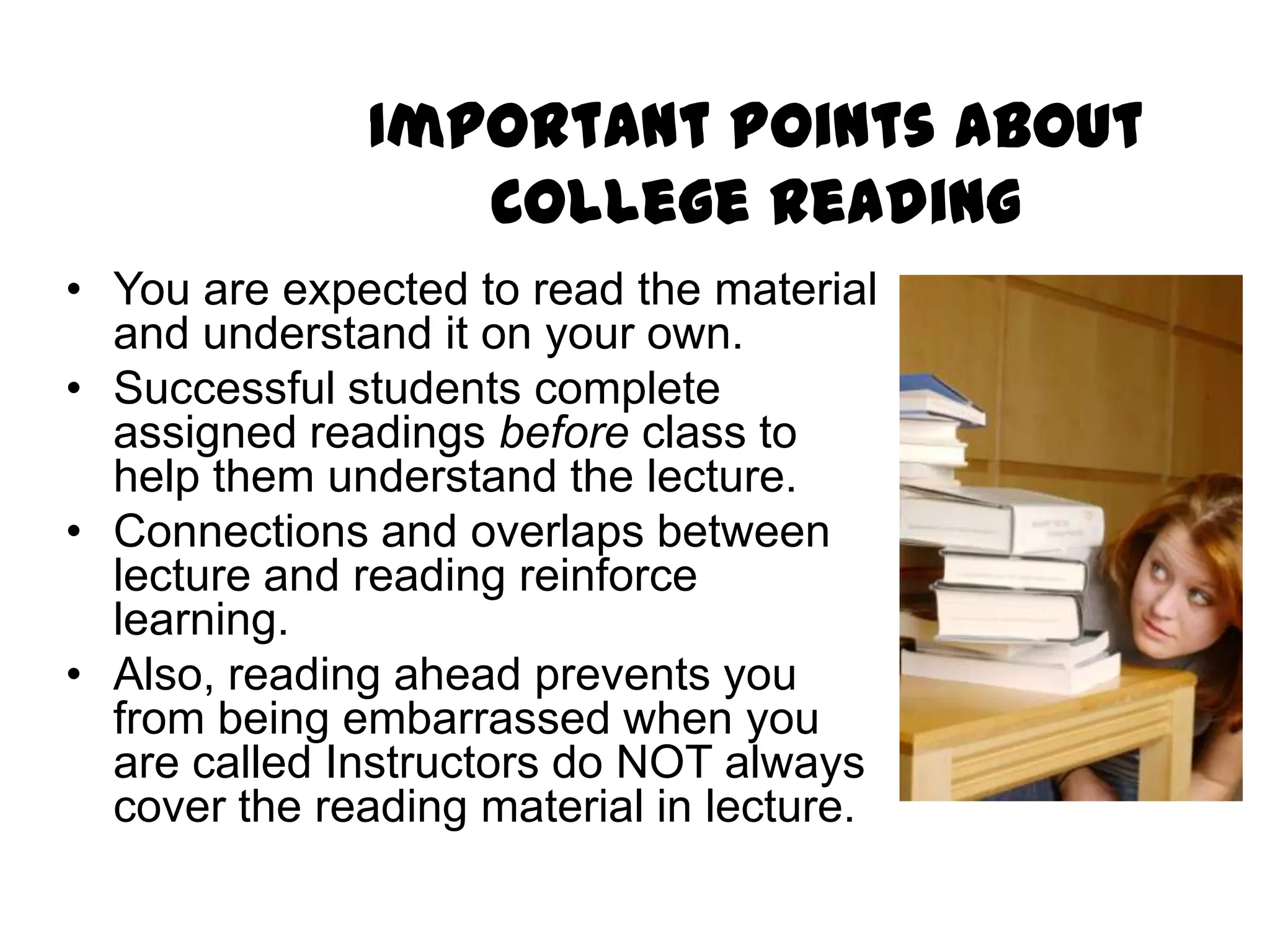
• You are expected to read the material
  and understand it on your own.
• Successful students complete
  assigned readings before class to
  help them understand the lecture.
• Connections and overlaps between
  lecture and reading reinforce
  learning.
• Also, reading ahead prevents you
  from being embarrassed when you
  are called Instructors do NOT always
  cover the reading material in lecture.
A Summary of Strategies to
         Improve Reading
• Practice a positive       • Shift gears when you do
  attitude.                   not make progress.
• Make the author your      • Read other sources if the
  companion.                  reading is confusing.
                            • Build your vocabulary.
• Pace yourself
  according to difficulty   • Work on reading faster.
  level.                    • Increase your
                              accountability for reading.
• Take breaks to restore
  concentration.

Reading skills

  • 1.
    Reading • Of allthe skills necessary to succeed , the two most important are: • Reading – the intake of information • Writing – the production of information • In this presentation, we deal with how to make your reading skills work for you…
  • 2.
    Take Charge ofYour Reading • Before all else, if you don’t like to read, accept the importance of the skill and work on it. This is CRITICAL to your success! • Commit to reading goals • Plan time and space to concentrate • Capture and connect • Know how to read primary and secondary sources. • Preview and Review…
  • 3.
    Commit to ReadingGoals • Stay positive, reading can be enjoyable. • Break chapters into “chunks.” • Preview each chunk before you start. • Pace yourself according to difficulty level. • Take breaks. • Read other sources if the reading is confusing. • Keep building your vocabulary. • When necessary, skim readings for key points • Make understanding the material of prime importance.
  • 4.
    Plan Time andSpace to Concentrate • College reading takes a great deal of concentration. • Schedule time to read in a place where you won’t be interrupted. • Find an environment in which you can concentrate best. • If you must read in a noisy environment, consider wearing headphones with familiar instrumental music just loud enough to block distractions.
  • 5.
    Capture and Connect •Capture the supporting details; connect them to the main idea. • Capture what you don’t know and connec it to what you do know. • Elements of Your Reading Plan – Preview – Skimming – Active Reading – Analytic Reading – Review
  • 6.
    Developing Your Vocabulary •Consider the context around new Learn to read “outside the and challenging words. box!” • Jot down unfamiliar terms and find the meaning using a dictionary. • Analyze terms to discover the most meaningful part of the word. • Take the opportunity to use new terms in your writing and speaking.
  • 7.
    A Reader’s Glossary Cause-effect How one thing causes another to happen Compare-contrast How things are similar and how they are different Draw a conclusion To make up your mind about an idea Context clue Getting the meaning of a word from the words around it Implied Suggested without being directly stated Inference To guess or speculate to draw a conclusion Main idea The primary subject of a passage or paragraph Objectivity Not influenced by personal feelings or prejudice Prior knowledge What you already know Supporting details Specific items that elaborate on the main idea
  • 8.
    Preview This is alot of work! Who needs it? • Scan the material to see what lies ahead. • Consider the context for the assignment. • Consider the length of the reading assignment and estimate how long it will take. • Consider the structure and features of the reading to help you digest the material. • Consider the difficulty and plan your time accordingly.
  • 9.
    Reviewing • Review toremember the main points of the material. • Test yourself on your comprehension. • Some ways to review: – notes – study questions – flash cards – visual maps – outlines • Make reviewing every week a study goal.
  • 10.
    Skimming • Skimming coversthe content at a general level. • It involves reading at about twice your normal rate. • Focuses on introductory statements, topic sentences and boldface terms. • Provides the chance for you to see what kind of information the assignment contains • Enables you to gather the surface ideas if you don’t have enough time to read deeply.
  • 11.
    Right! Read us the Get involved story about the in reading! wolf Active Reading • Use it to avoid empty reading—reading then realizing that no information has come across. • Identify yourself completely in what the author is trying to say: throw yourself into his mind! • Focus on identifying the main ideas and on understanding how supporting points reinforce those ideas. • In other words, get really interested & involved!
  • 12.
    Analytic Reading • Readingat a more intense level. • Involves breaking ideas open and digging underneath their surface. • Enables you to try to spot flaws in the writer’s logic. • Promotes a comparison of the work to other works. • Should involve questioning the author and yourself. • In other words, active skepticism with a purpose
  • 13.
    Take a book Tips for Improving to lunch this week! Reading Ability • Find a quiet study location. • Read in 50-minute blocks with breaks in between. • Take notes, recite key ideas or jot down questions in the margins. • Experiment with your reading Show them we’re a rate. regular bunch this week! • Focus on key issues in the text.
  • 14.
    Highlighting Text • Highlight: – Topic sentences, Key words, Conclusions • But watch out! – Highlighting too much can cause you to re- read everything because you don’t know what’s important. – Highlighting doesn’t show you why you highlighted something – You need to have the entire text with you to review.
  • 15.
    Important Points About College Reading • You are expected to read the material and understand it on your own. • Successful students complete assigned readings before class to help them understand the lecture. • Connections and overlaps between lecture and reading reinforce learning. • Also, reading ahead prevents you from being embarrassed when you are called Instructors do NOT always cover the reading material in lecture.
  • 16.
    A Summary ofStrategies to Improve Reading • Practice a positive • Shift gears when you do attitude. not make progress. • Make the author your • Read other sources if the companion. reading is confusing. • Build your vocabulary. • Pace yourself according to difficulty • Work on reading faster. level. • Increase your accountability for reading. • Take breaks to restore concentration.