Quality and Competitiveness in a Global
Environment
Defining Operations Management
 The management of systems or processes
that create goods and/or provide services
 Operations management is concerned with
converting materials and labour into goods and
services as efficiently as possible to maximize the
profit of an organization.
The Evolution of Operations Management
 One of the oldest management technique
 The Pyramids of Egypt
 The Great Wall of China
 The Roads and the Aqueducts of Rome
 Operations Management begin with Industrial
Revolution in the 1700s, when Craft Production is
converted into factory
 When a series of industrial inventions and
mechanically powered machines have taken place
OM
ROADMAP
Quality
Supply Chain Management
GlobalOperations
Quality
Management
Product &
Services
Processes,
Capacity &
Technology
Human
Resources
Statistical
Process
Control
Facilities
Project
Managemen
t
Learning Includes
 Introduction
 Planning
 Strategy
 Supply Chain management
 JIT
 Quality
 Project Management
 PERT Diagram & GANTT Chart
 Services
Operations as a Transformation Process
Transformation
Process
Product Design
Process Planning
Production Control
Maintenance
Input
Man
Material
Machine
Money
Information
Output
Product
Services
Continues
Inventory
Quantity
Cost
Feedback
Defining Planning
The process of thinking and organizing the
required activities to achieve a desired goal
Plan=Internal  Plan is concrete
Defining
Strategy
Strategy=External  Strategy is abstract
A plan of action designed to achieve a long-
term or overall aim.
BASIS FOR
COMPARISON
PLANNING STRATEGY
Meaning Planning is thinking in
advance, for the actions
which are going to take
place in the future.
Best plan opted for
achieving the desired
outcome.
What is it? Planning is a road map
for accomplishing any
task.
Strategy is the path
chosen for achieving the
objectives.
Related to Thinking Action
Basis Assumptions Practical considerations
Term Depending upon the
circumstances.
Long Term
Nature Preventive Competitive
Part of Management
Functions
Yes Sub-part of Decision
Making
Sequence Second First
Types of Planning
It is an operational activity
that does an aggregate
plan for the production
process, in advance of 6 to
18 months, to give an idea
to management as to what
quantity of materials and
other resources are to be
procured and when, so that
the total cost of operations
of the organization is kept
to the minimum over that
period.
Distribution requirements
planning (DRP) is a
systematic process to make
the delivery of goods more
efficient by determining
which goods, in what
quantities, and at what
location are required to
meet anticipated demand.
The goal is to minimize
shortages and reduce the
costs of ordering,
transporting, and holding
goods.
Aggregate Planning DRP
Types of Strategy
Level Strategy
the company continuously produces goods equal to the
average demand for the goods
Chase Strategy
Chase strategy, or Demand Matching Strategy,
produce only enough goods to meet or exactly match
the demand for goods
Hybrid Strategy
Hybrid strategies as strategies which enable to
associate low cost production and differentiation
Supply Chain Management
It is the collaborative effort of multiple channel members to
design, implement and manage seamless value added
process to meet the real need of end customer
Efficiency
Responsivenes
s
Inventory
Transportatio
n
Facilities Information
Efficiency
Responsivenes
s
Cost of Holding
Availability
Consolidation
Speed
Consolidation
Dedicated
Proximity/Flexi
bility
Best Suited
for each
Objective
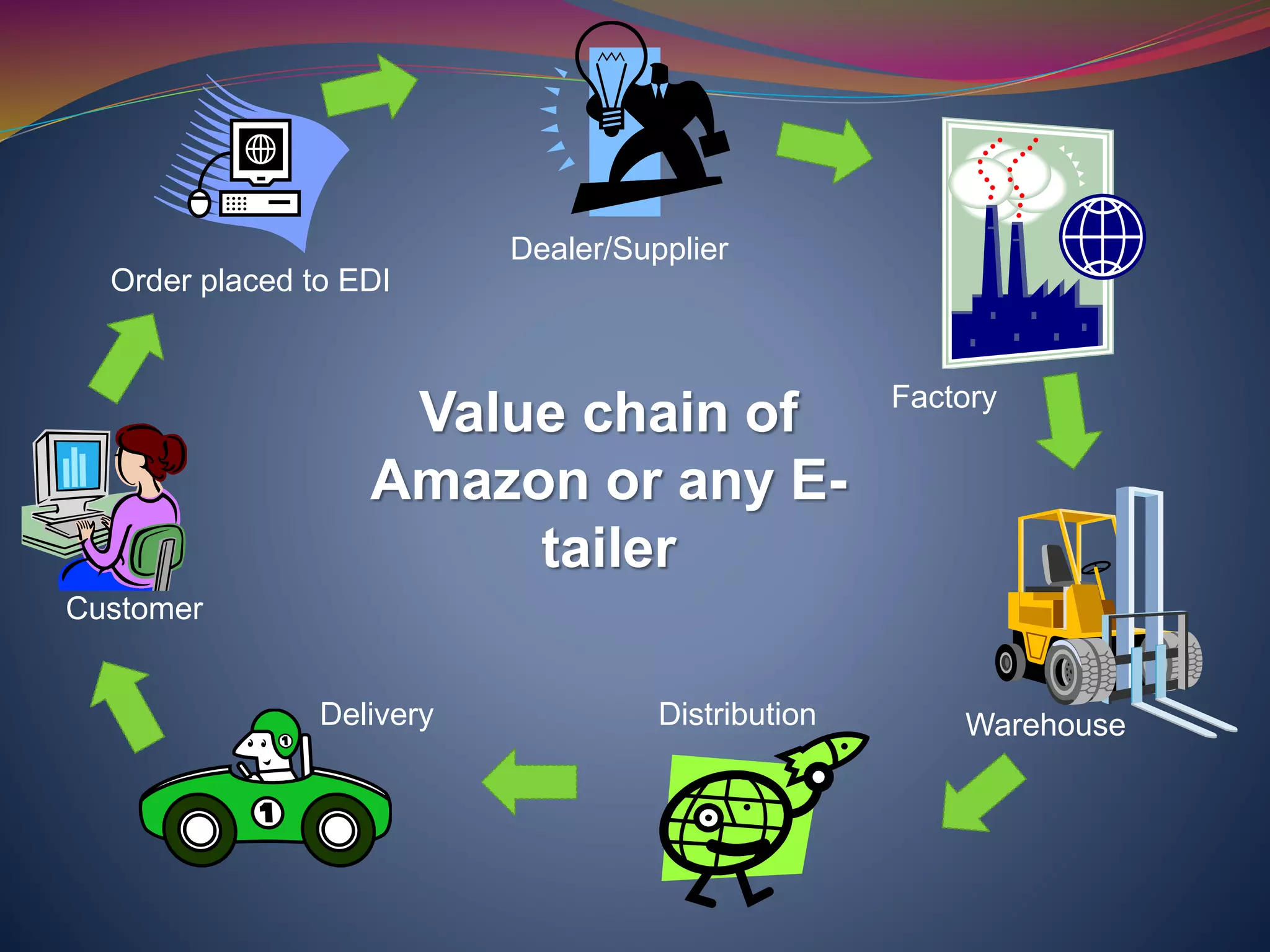
Supply Chain Structure
Customer
Order placed to EDI
Dealer/Supplier
Factory
WarehouseDistributionDelivery
Value chain of
Amazon or any E-
tailer
Just In Time (JIT)
Eliminating waste
JIT is an inventory strategy companies employ to increase
efficiency and decrease waste by receiving goods only as they
are needed in the production process, there by reducing
inventory cost
This method requires that producers are able to accurately
forecast the demand
JIT concept goes hand in hand with concept such as Kanban,
continuous improvement and (TQM)
Technology plays an important role in JIT, an information
system such as ERP is required to implement JIT in any
Just In Time (JIT)
Advantages of
JIT
 Lower on stock
holding
 Lesser working
capital
 Avoids buildup of
unsold finished
products
 Lesser time on
quality inspection
Disadvantage
s
 Little room for
mistakes
 Production is
relied on
suppliers
JIT can Achieve
 Reducing cost
 Improving Quality
 Improving Performance
 Improving Delivery
 Adding Flexibility
 Increasing Innovation
Quality
Quality is assurance which satisfies the customer’s
expectation
QC Quality Control
QA Quality AssuranceSix Sigma Lean Thinking Theory of
Constraint
Views of waste Variation is waste Non-value adding
in market
Constraint drive
waste
Application Define
Measure
Analyze
Improve
Control
Identify value
Define value
stream
Determine the
flow
Define Pull
Improve Process
Identify constraint
Exploit Constraint
Sub-ordinate
Cons
Elevate Cons
Repeat Cycle
Tools Math, Stats Visualize System thinking
Focus Problem Process Flow Constraint
Project Management
Initiation
Planning
& Design
Execution
Monitorin
g
Closure
It is temporary endeavor with a defined beginning & end
undertaken to meet your need, goals, and objectives, typically to
bring about beneficial change or add value
BAU (Business As Usual)
Initiation
Planning &
Design
Execution
Monitoring &
Controlling
Closure
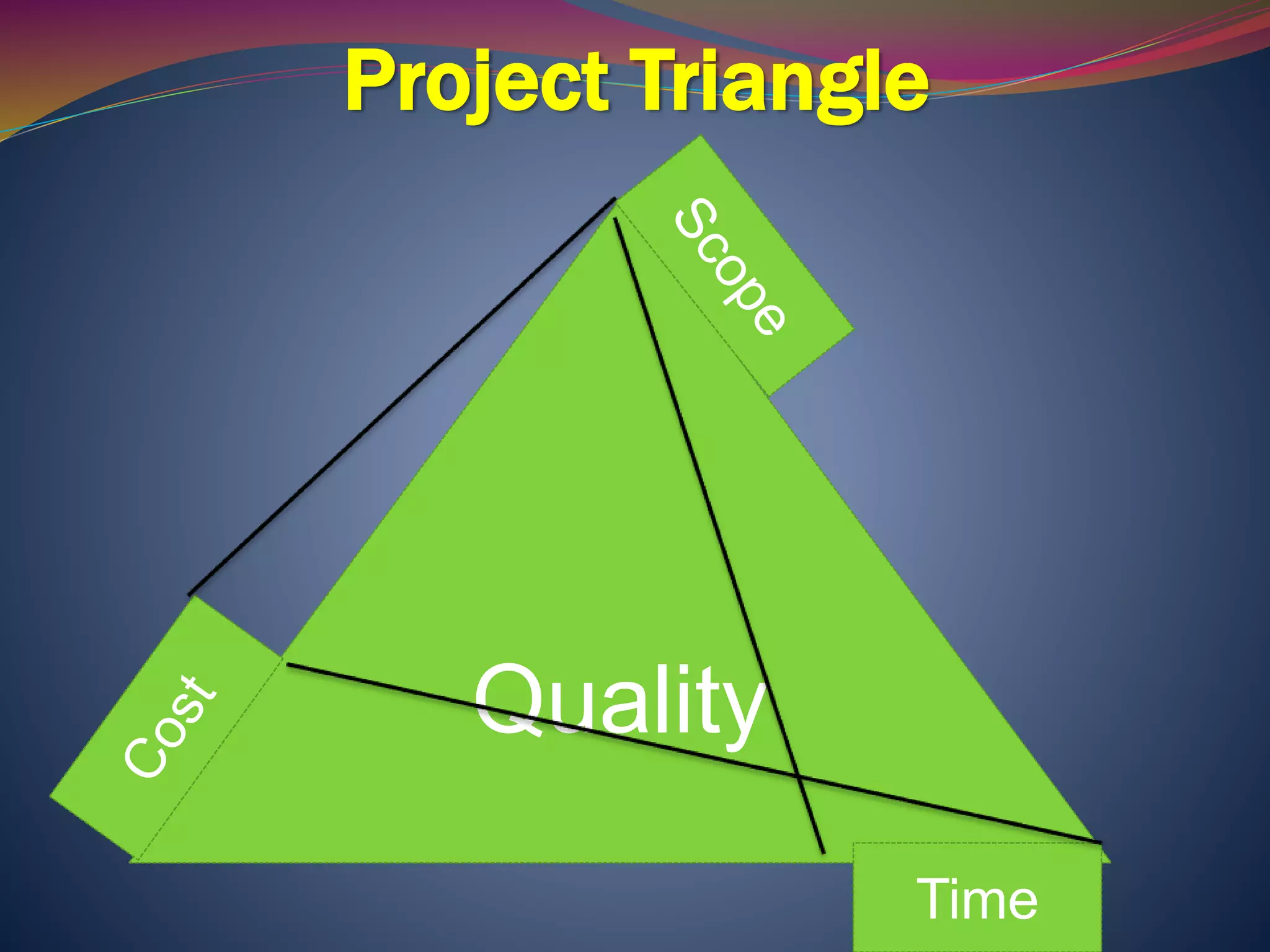
Project Triangle
Quality
Time
WBS (Work Breakdown
Structure)
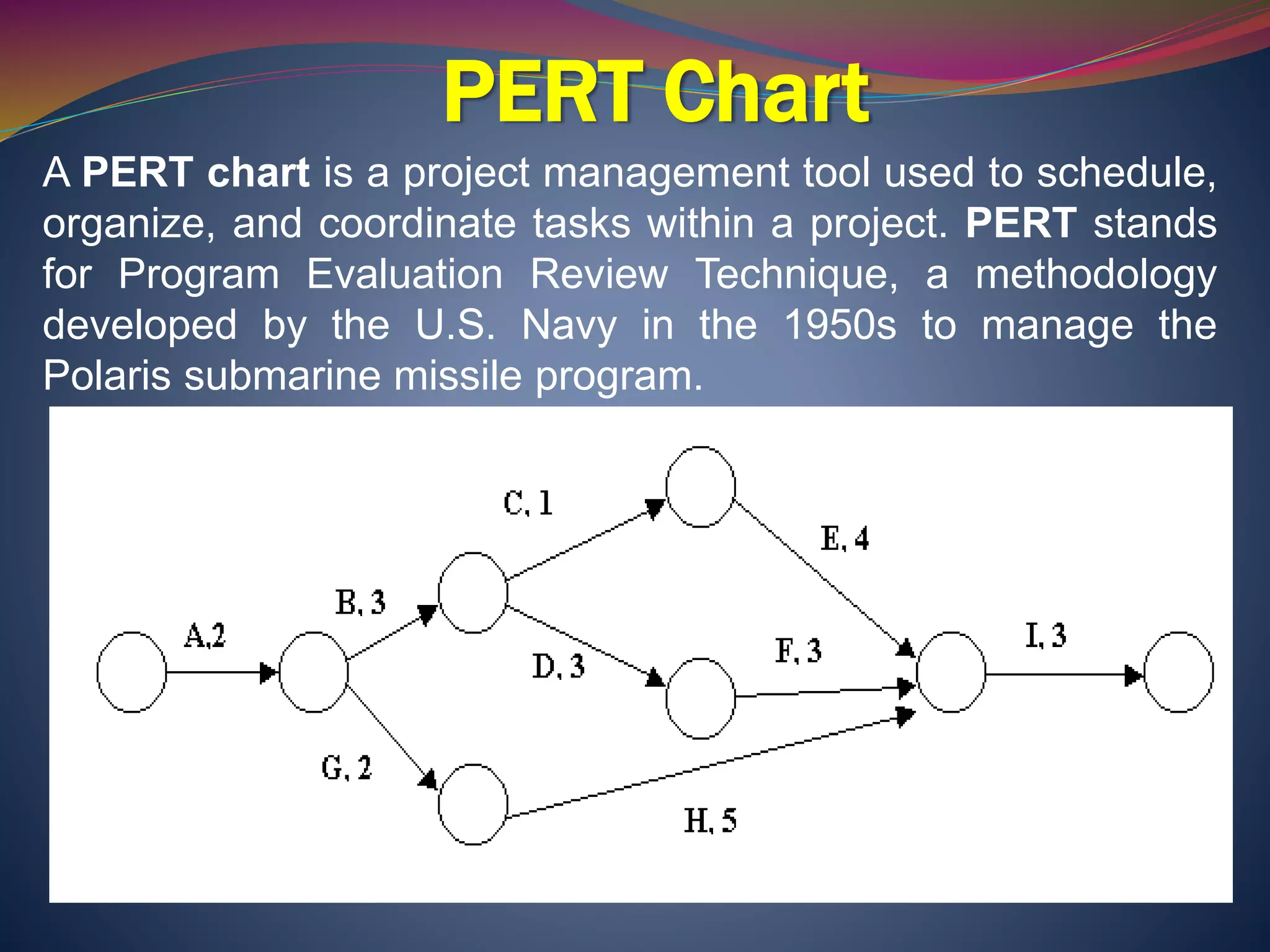
PERT Chart
A PERT chart is a project management tool used to schedule,
organize, and coordinate tasks within a project. PERT stands
for Program Evaluation Review Technique, a methodology
developed by the U.S. Navy in the 1950s to manage the
Polaris submarine missile program.
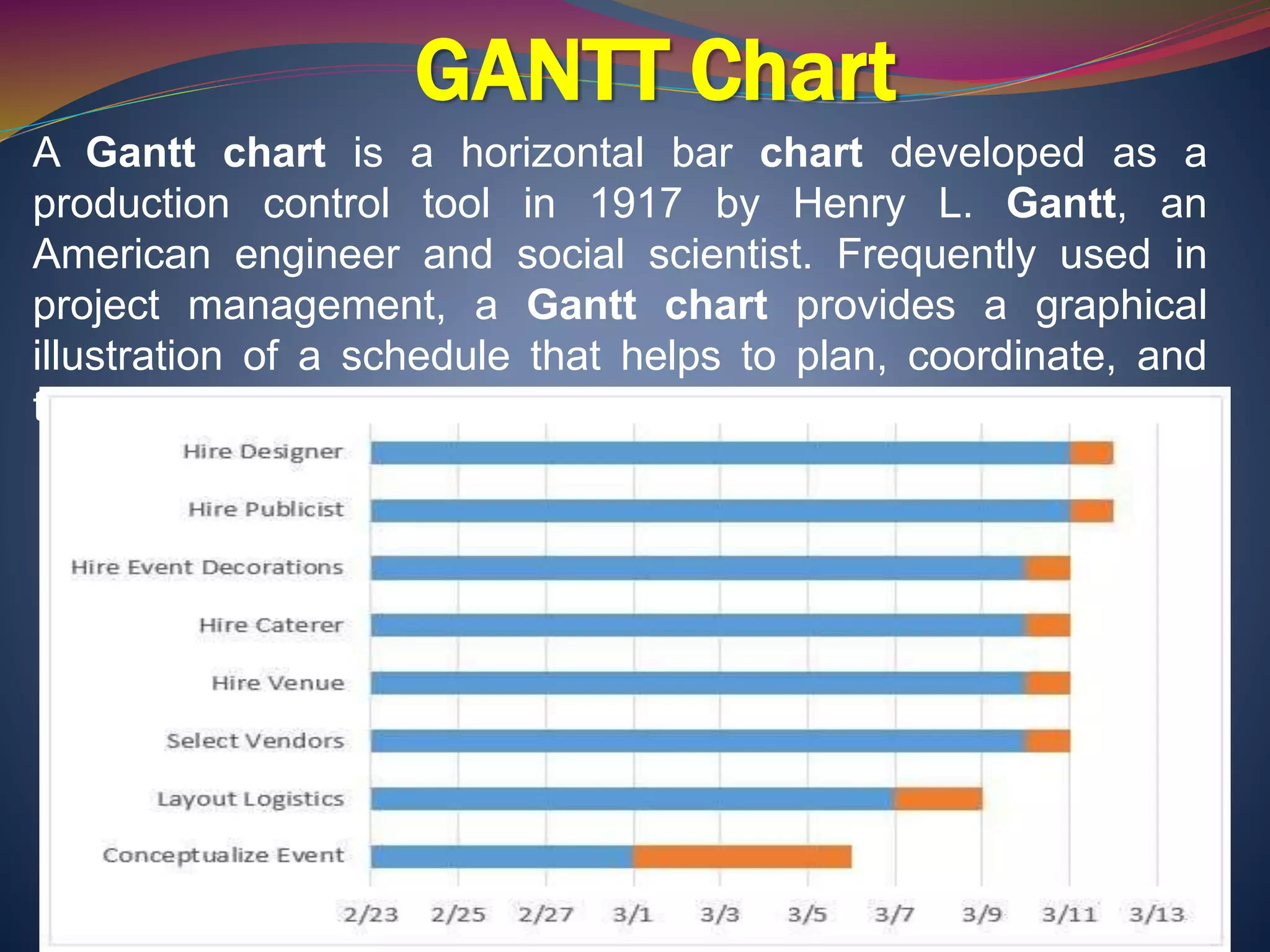
GANTT Chart
A Gantt chart is a horizontal bar chart developed as a
production control tool in 1917 by Henry L. Gantt, an
American engineer and social scientist. Frequently used in
project management, a Gantt chart provides a graphical
illustration of a schedule that helps to plan, coordinate, and
track specific tasks in a project.
Services
Any activity or benefit that one party can offer to
another that is essentially intangible and does not
result the ownership of anything. It is production
may or may not be tied up to a physical products
Types of services
Pure Service
Product Linked Service
Product Based Service
 GOODS
 Tangible
 Homogenous
 Produced in a
factory
 Transfer of
ownership
 SERVICES
 Intangible
 Heterogeneous
 Cannot be stored
 Production,
Distribution, and
Consumption
takes place
simultaneously
Production
 The action of making or manufacturing from raw
materials, or the process of being so manufactured
 TYPES of Production systems
 T-Type
 Y-Type
 Reverse Y-Type
 I-Type
Operations management

Operations management

  • 1.
    Quality and Competitivenessin a Global Environment
  • 2.
    Defining Operations Management The management of systems or processes that create goods and/or provide services  Operations management is concerned with converting materials and labour into goods and services as efficiently as possible to maximize the profit of an organization.
  • 3.
    The Evolution ofOperations Management  One of the oldest management technique  The Pyramids of Egypt  The Great Wall of China  The Roads and the Aqueducts of Rome  Operations Management begin with Industrial Revolution in the 1700s, when Craft Production is converted into factory  When a series of industrial inventions and mechanically powered machines have taken place
  • 4.
    OM ROADMAP Quality Supply Chain Management GlobalOperations Quality Management Product& Services Processes, Capacity & Technology Human Resources Statistical Process Control Facilities Project Managemen t
  • 5.
    Learning Includes  Introduction Planning  Strategy  Supply Chain management  JIT  Quality  Project Management  PERT Diagram & GANTT Chart  Services
  • 6.
    Operations as aTransformation Process Transformation Process Product Design Process Planning Production Control Maintenance Input Man Material Machine Money Information Output Product Services Continues Inventory Quantity Cost Feedback
  • 7.
    Defining Planning The processof thinking and organizing the required activities to achieve a desired goal Plan=Internal  Plan is concrete Defining Strategy Strategy=External  Strategy is abstract A plan of action designed to achieve a long- term or overall aim.
  • 8.
    BASIS FOR COMPARISON PLANNING STRATEGY MeaningPlanning is thinking in advance, for the actions which are going to take place in the future. Best plan opted for achieving the desired outcome. What is it? Planning is a road map for accomplishing any task. Strategy is the path chosen for achieving the objectives. Related to Thinking Action Basis Assumptions Practical considerations Term Depending upon the circumstances. Long Term Nature Preventive Competitive Part of Management Functions Yes Sub-part of Decision Making Sequence Second First
  • 9.
    Types of Planning Itis an operational activity that does an aggregate plan for the production process, in advance of 6 to 18 months, to give an idea to management as to what quantity of materials and other resources are to be procured and when, so that the total cost of operations of the organization is kept to the minimum over that period. Distribution requirements planning (DRP) is a systematic process to make the delivery of goods more efficient by determining which goods, in what quantities, and at what location are required to meet anticipated demand. The goal is to minimize shortages and reduce the costs of ordering, transporting, and holding goods. Aggregate Planning DRP
  • 10.
    Types of Strategy LevelStrategy the company continuously produces goods equal to the average demand for the goods Chase Strategy Chase strategy, or Demand Matching Strategy, produce only enough goods to meet or exactly match the demand for goods Hybrid Strategy Hybrid strategies as strategies which enable to associate low cost production and differentiation
  • 11.
    Supply Chain Management Itis the collaborative effort of multiple channel members to design, implement and manage seamless value added process to meet the real need of end customer Efficiency Responsivenes s Inventory Transportatio n Facilities Information Efficiency Responsivenes s Cost of Holding Availability Consolidation Speed Consolidation Dedicated Proximity/Flexi bility Best Suited for each Objective Supply Chain Structure
  • 12.
    Customer Order placed toEDI Dealer/Supplier Factory WarehouseDistributionDelivery Value chain of Amazon or any E- tailer
  • 13.
    Just In Time(JIT) Eliminating waste JIT is an inventory strategy companies employ to increase efficiency and decrease waste by receiving goods only as they are needed in the production process, there by reducing inventory cost This method requires that producers are able to accurately forecast the demand JIT concept goes hand in hand with concept such as Kanban, continuous improvement and (TQM) Technology plays an important role in JIT, an information system such as ERP is required to implement JIT in any
  • 14.
    Just In Time(JIT) Advantages of JIT  Lower on stock holding  Lesser working capital  Avoids buildup of unsold finished products  Lesser time on quality inspection Disadvantage s  Little room for mistakes  Production is relied on suppliers
  • 15.
    JIT can Achieve Reducing cost  Improving Quality  Improving Performance  Improving Delivery  Adding Flexibility  Increasing Innovation
  • 16.
    Quality Quality is assurancewhich satisfies the customer’s expectation QC Quality Control QA Quality AssuranceSix Sigma Lean Thinking Theory of Constraint Views of waste Variation is waste Non-value adding in market Constraint drive waste Application Define Measure Analyze Improve Control Identify value Define value stream Determine the flow Define Pull Improve Process Identify constraint Exploit Constraint Sub-ordinate Cons Elevate Cons Repeat Cycle Tools Math, Stats Visualize System thinking Focus Problem Process Flow Constraint
  • 17.
    Project Management Initiation Planning & Design Execution Monitorin g Closure Itis temporary endeavor with a defined beginning & end undertaken to meet your need, goals, and objectives, typically to bring about beneficial change or add value BAU (Business As Usual) Initiation Planning & Design Execution Monitoring & Controlling Closure
  • 18.
  • 19.
  • 20.
    PERT Chart A PERTchart is a project management tool used to schedule, organize, and coordinate tasks within a project. PERT stands for Program Evaluation Review Technique, a methodology developed by the U.S. Navy in the 1950s to manage the Polaris submarine missile program.
  • 21.
    GANTT Chart A Ganttchart is a horizontal bar chart developed as a production control tool in 1917 by Henry L. Gantt, an American engineer and social scientist. Frequently used in project management, a Gantt chart provides a graphical illustration of a schedule that helps to plan, coordinate, and track specific tasks in a project.
  • 22.
    Services Any activity orbenefit that one party can offer to another that is essentially intangible and does not result the ownership of anything. It is production may or may not be tied up to a physical products Types of services Pure Service Product Linked Service Product Based Service
  • 23.
     GOODS  Tangible Homogenous  Produced in a factory  Transfer of ownership  SERVICES  Intangible  Heterogeneous  Cannot be stored  Production, Distribution, and Consumption takes place simultaneously
  • 24.
    Production  The actionof making or manufacturing from raw materials, or the process of being so manufactured  TYPES of Production systems  T-Type  Y-Type  Reverse Y-Type  I-Type