By
Dr. Abhishek Srivastava
Probing Questioning Skill
• It is very important for a teacher to ask questions
during a teaching in order to increase the thinking
capability in students. Probing is one of the best
skills which helps students to solve problems with
the help of a teacher.
• छात्रों में सोचने की क्षमता बढाने के लिए लिक्षक के लिए एक लिक्षण के दौरान
प्रश्न पूछना बहुत महत्वपूणण है। प्रोलबिंग सबसे अच्छे कौिि में से एक है जो छात्रों
को लिक्षक की मदद से समस्याओिं को हि करने में मदद करता है।
meaning
These are the set of some questions and hint in the
form of questions that a teacher asks
during teaching for seeking further information, this
may increase the thinking capability of students so that
they can think on multiple fronts.
यह कौिि बहुत सहायक होता है जब छात्र कई उत्तर देने के लिए गहराई से गुजरते
हैं, कभी-कभी इसका उपयोग सभी छात्रों को िालमि करने के लिए लकया जाता है
यलद वे लिक्षण सीखने की प्रलिया में थोडी कम रुलच लदखाते हैं।
What are Probing Questions?
• This skill is very helpful when students go through
deeply in order to have multiple answers,
sometimes this is used for involving all students if
they show a bit less interest in the teaching
learning process.
• ये कुछ प्रश्नों का एक सेट हैं और प्रश्नों के रूप में सिंके त देते हैं जो एक लिक्षक
आगे की जानकारी मािंगने के लिए लिक्षण के दौरान पूछता है, इससे छात्रों की
सोचने की क्षमता बढ सकती है तालक वे कई मोचों पर सोच सकें ।
When a Teacher Should use Skill of Probing
Questions
• When students are unable to give the answer or give incomplete
answers, teachers use probing skills for questioning.
• For seeking further information.
• For gaining student's attention in the teaching-learning process
and we call it Refocussing.
• जब छात्र उत्तर देने में असमथण होते हैं या अपूणण उत्तर देते हैं, तो लिक्षक
• पूछताछ के लिए जािंच कौिि का उपयोग करते हैं।
• आगे की जानकारी मािंगने के लिएलिक्षण-सीखने की प्रलिया में छात्र का ध्यान आकलषणत करने के लिए
और हम इसे रीफोकलसिंग कहते हैं।
• यलद लिक्षक छात्रों को समस्या के सभी पहिुओिं का ज्ञान देना चाहता है, तो लिक्षक एक
समान प्रश्न पूछता है।
• इसे हम पुनः लनदेिन कह सकते हैं।छात्र की सोचने की क्षमता में सुधार के लिए।
• उसके लिए लिक्षक प्रश्न क्यों और कैसे टाइप करता है। इसे लिलटकि अवेयरनेस कहा जाता है।
• If the teacher wants to give the knowledge of all aspects of
the problem to students, then the teacher asks a similar
question in a different manner. We can call it Re-directing.
• For improving the student's thinking ability. For that teacher
asks why and how type questions. This is called Critical
Awareness.
• सिंके त प्रश्न
• Prompting
• Seeking further Information
• लवस्तृत सूचना प्रालि के प्रश्न
components
• पुनः के न्द्रीकरण
• Refocusing
• Redirection
• पुनः प्रेषण
• Critical awareness
• आिोचनात्मक सजगता
• Prompting mostly involves verbal questions,
visual questions, through the model, gestures, and
some physical guidance. In order to help the student
to know the answer, the teacher gives some
indication.
• सिंके त देने में ज्यादातर मौलखक प्रश्न, दृश्य प्रश्न, मॉडि के माध्यम से, इिारों और
कुछ भौलतक मागणदिणन िालमि होते हैं। उत्तर जानने में छात्र की मदद करने के
लिए, लिक्षक कुछ सिंके त देता है।
Prompting
• Most of the time students don't give the proper and
accurate answer, then the teacher asks the same
question to other students in order to get the correct
answers. The teacher asks different aspects of the
question in order to seek further information, this also
may check the student's knowledge.
• अलधकािंि समय छात्र उलचत और सटीक उत्तर नहीं देते हैं, तो लिक्षक सही उत्तर पाने के
लिए अन्द्य छात्रों से भी यही प्रश्न पूछते हैं। लिक्षक आगे की जानकारी िेने के लिए प्रश्न
के लवलभन्द्न पहिुओिं को पूछता है, इससे छात्र के ज्ञान की जािंच भी हो सकती है।
Seeking Further Information
• If the teacher is not satisfied with the answer of the
student then the teacher puts different situations in
front of the students which helps them in
the transfer of knowledge of the student.
• यलद लिक्षक छात्र के उत्तर से सिंतुष्ट नहीं है तो लिक्षक छात्रों के सामने लवलभन्द्न
पररलस्थलतयों को रखता है जो उन्द्हें छात्र के ज्ञान के हस्तािंतरण में मदद करता है।
Re Focusing
• The teacher tries to know the multiple answers to
the question in order to make students think again
and again. This will increase the thinking ability of
the student, and this may increase the participation
of the students in the class too.
• छात्रों को बार-बार सोचने के लिए लिक्षक प्रश्न के कई उत्तरों को जानने की
कोलिि करता है। इससे छात्र की सोचने की क्षमता बढेगी, और इससे कक्षा में
छात्रों की भागीदारी भी बढ सकती है।
Re-Direction
• If the teacher asks why? how? type of
questions then it is called Critical Awareness. This
increase critical awareness among students and
finally they will understand the nature of the
questions.
• अगर लिक्षक पूछता है लक क्यों? कै से? इस प्रकार के प्रश्नों को लिलटकि
अवेयरनेस कहा जाता है। इससे छात्रों में महत्वपूणण जागरूकता बढती है और अिंत
में वे प्रश्नों की प्रकृलत को समझेंगे।
Critical Awareness
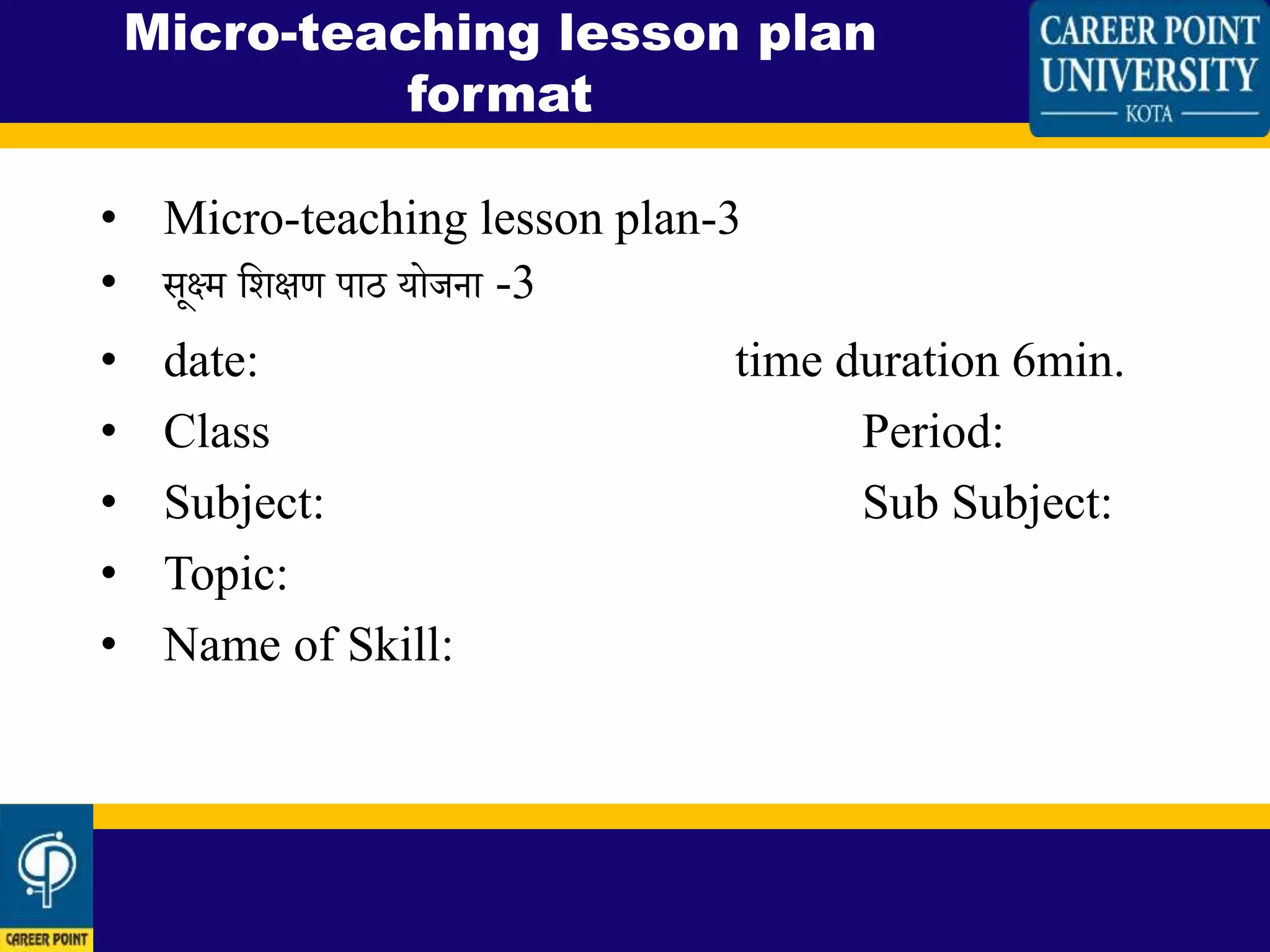
• Micro-teaching lesson plan-3
• सूक्ष्म लिक्षण पाठ योजना -3
• date: time duration 6min.
• Class Period:
• Subject: Sub Subject:
• Topic:
• Name of Skill:
Micro-teaching lesson plan
format
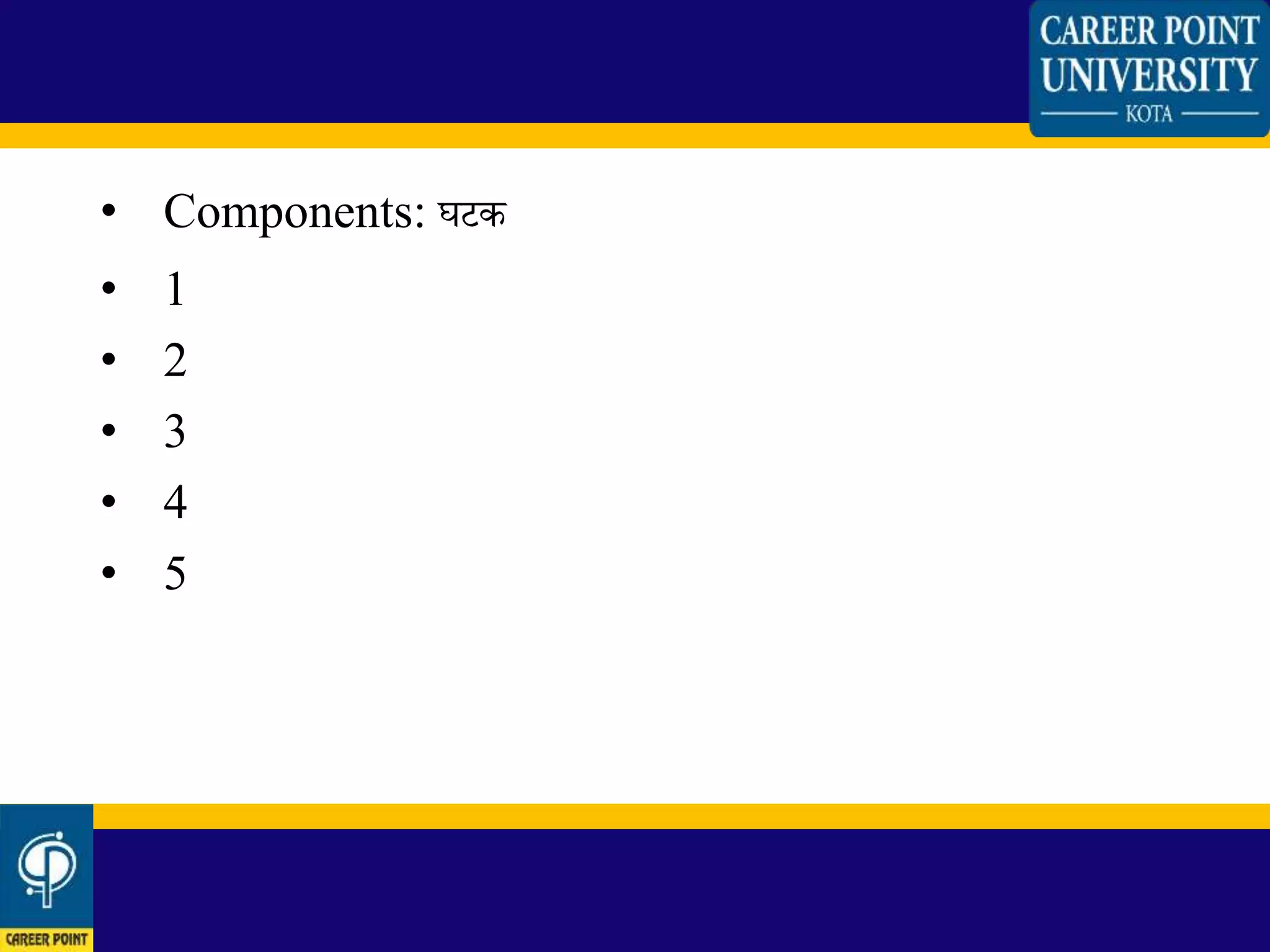
• Components: घटक
• 1
• 2
• 3
• 4
• 5
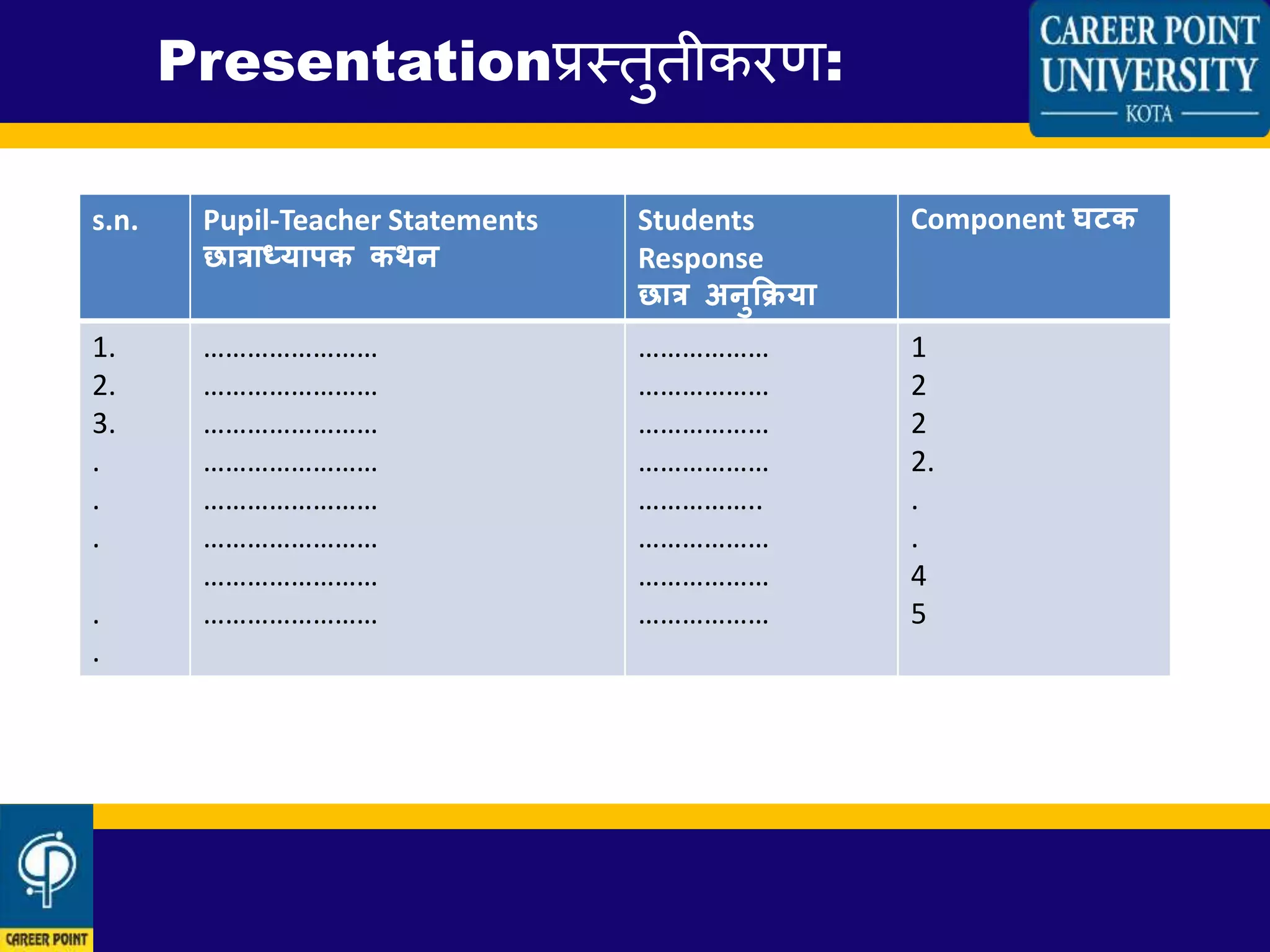
Presentationप्रस्तुतीकरण:
s.n. Pupil-Teacher Statements
छात्राध्यापक कथन
Students
Response
छात्र अनुक्रिया
Component घटक
1.
2.
3.
.
.
.
.
.
……………………
……………………
……………………
……………………
……………………
……………………
……………………
……………………
………………
………………
………………
………………
……………..
………………
………………
………………
1
2
2
2.
.
.
4
5
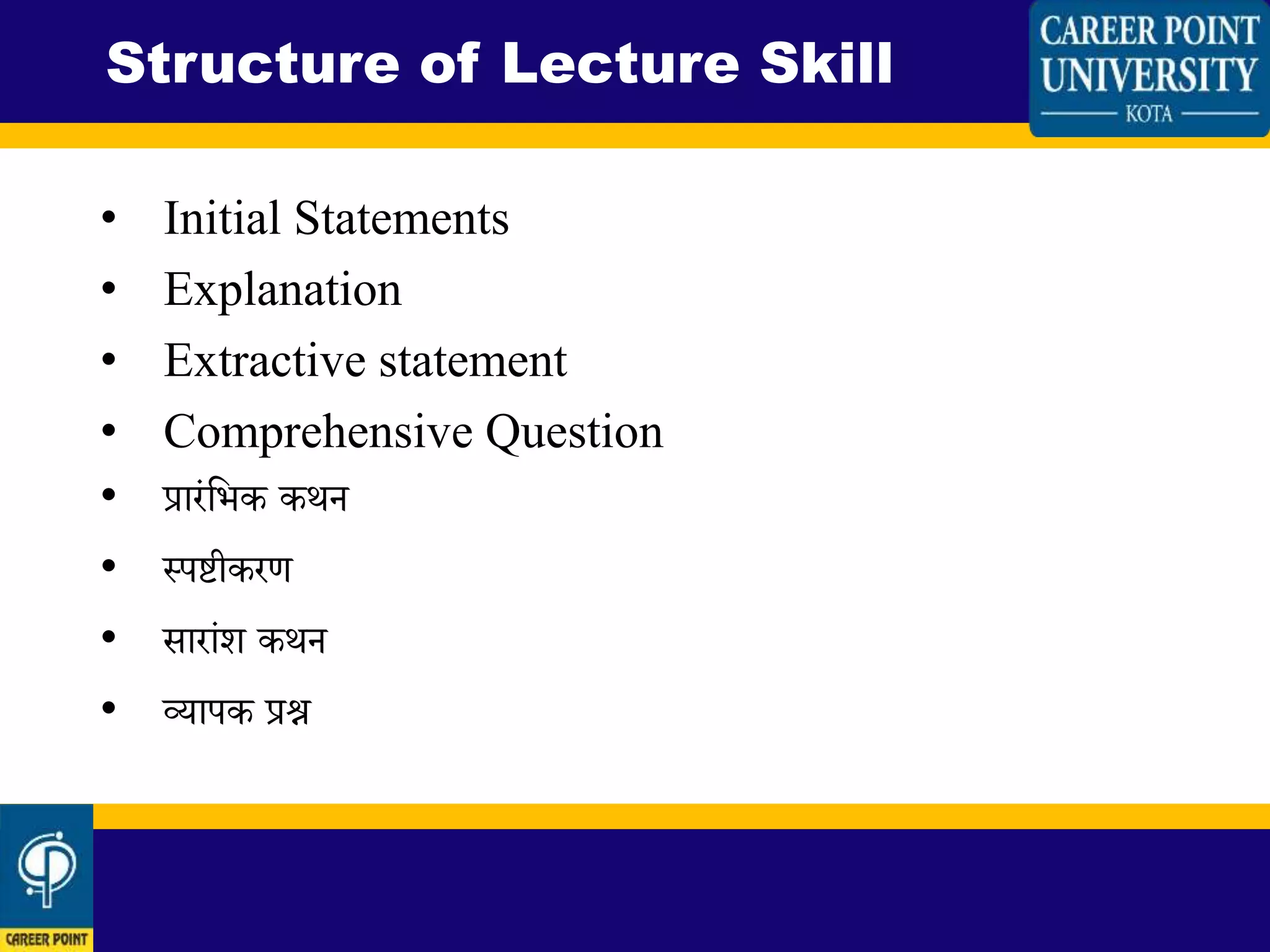
• Initial Statements
• Explanation
• Extractive statement
• Comprehensive Question
• प्रारिंलभक कथन
• स्पष्टीकरण
• सारािंि कथन
• व्यापक प्रश्न
Structure of Lecture Skill
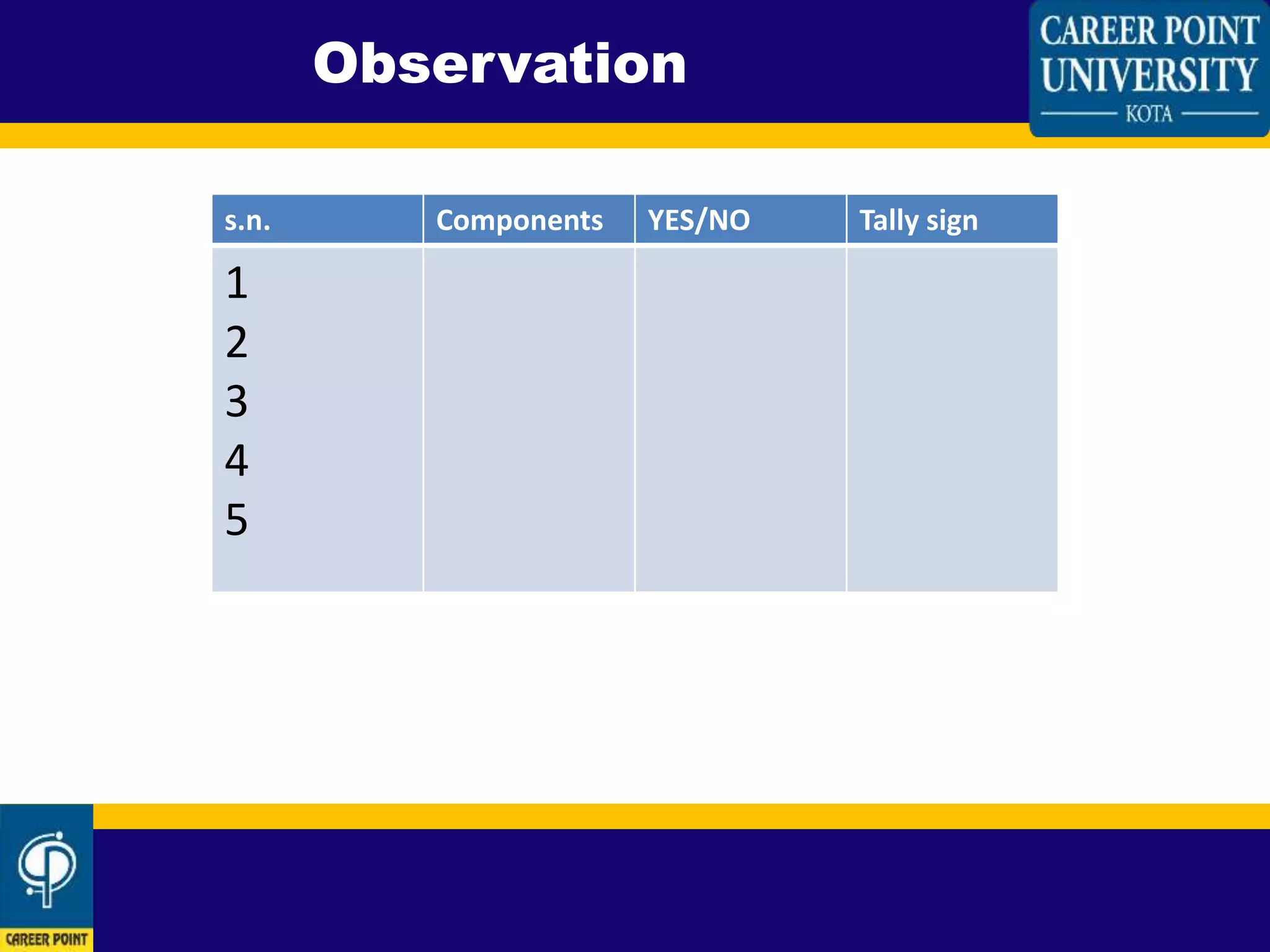
Observation
s.n. Components YES/NO Tally sign
1
2
3
4
5
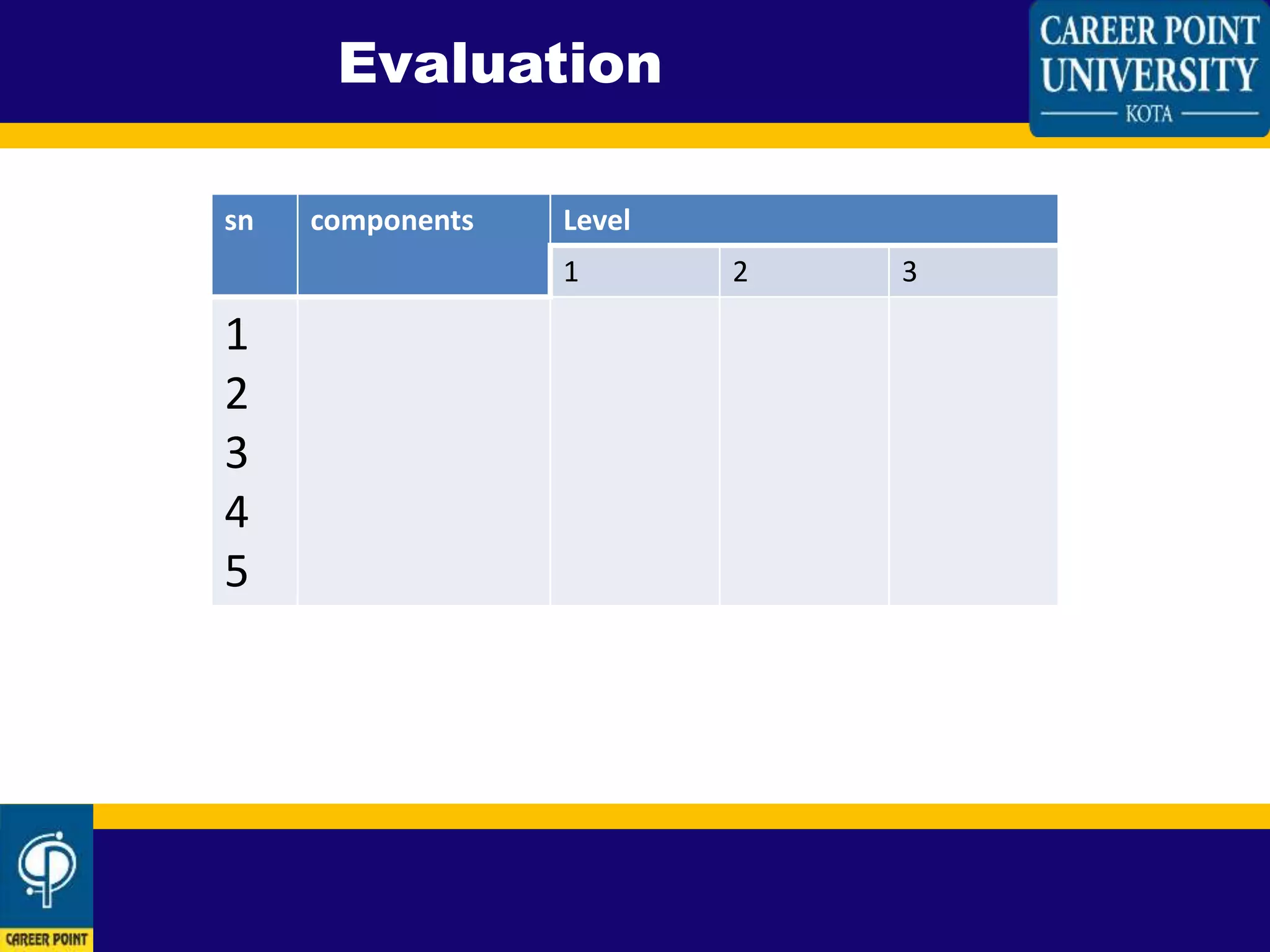
Evaluation
sn components Level
1 2 3
1
2
3
4
5
• Comments
• Peer Signature Supervisor Signature
• साथी हस्ताक्षर पयणवेक्षक हस्ताक्षर
Thanks

Probing questioning skill

  • 1.
  • 2.
    • It isvery important for a teacher to ask questions during a teaching in order to increase the thinking capability in students. Probing is one of the best skills which helps students to solve problems with the help of a teacher. • छात्रों में सोचने की क्षमता बढाने के लिए लिक्षक के लिए एक लिक्षण के दौरान प्रश्न पूछना बहुत महत्वपूणण है। प्रोलबिंग सबसे अच्छे कौिि में से एक है जो छात्रों को लिक्षक की मदद से समस्याओिं को हि करने में मदद करता है। meaning
  • 3.
    These are theset of some questions and hint in the form of questions that a teacher asks during teaching for seeking further information, this may increase the thinking capability of students so that they can think on multiple fronts. यह कौिि बहुत सहायक होता है जब छात्र कई उत्तर देने के लिए गहराई से गुजरते हैं, कभी-कभी इसका उपयोग सभी छात्रों को िालमि करने के लिए लकया जाता है यलद वे लिक्षण सीखने की प्रलिया में थोडी कम रुलच लदखाते हैं। What are Probing Questions?
  • 4.
    • This skillis very helpful when students go through deeply in order to have multiple answers, sometimes this is used for involving all students if they show a bit less interest in the teaching learning process. • ये कुछ प्रश्नों का एक सेट हैं और प्रश्नों के रूप में सिंके त देते हैं जो एक लिक्षक आगे की जानकारी मािंगने के लिए लिक्षण के दौरान पूछता है, इससे छात्रों की सोचने की क्षमता बढ सकती है तालक वे कई मोचों पर सोच सकें ।
  • 5.
    When a TeacherShould use Skill of Probing Questions • When students are unable to give the answer or give incomplete answers, teachers use probing skills for questioning. • For seeking further information. • For gaining student's attention in the teaching-learning process and we call it Refocussing. • जब छात्र उत्तर देने में असमथण होते हैं या अपूणण उत्तर देते हैं, तो लिक्षक • पूछताछ के लिए जािंच कौिि का उपयोग करते हैं। • आगे की जानकारी मािंगने के लिएलिक्षण-सीखने की प्रलिया में छात्र का ध्यान आकलषणत करने के लिए और हम इसे रीफोकलसिंग कहते हैं।
  • 6.
    • यलद लिक्षकछात्रों को समस्या के सभी पहिुओिं का ज्ञान देना चाहता है, तो लिक्षक एक समान प्रश्न पूछता है। • इसे हम पुनः लनदेिन कह सकते हैं।छात्र की सोचने की क्षमता में सुधार के लिए। • उसके लिए लिक्षक प्रश्न क्यों और कैसे टाइप करता है। इसे लिलटकि अवेयरनेस कहा जाता है। • If the teacher wants to give the knowledge of all aspects of the problem to students, then the teacher asks a similar question in a different manner. We can call it Re-directing. • For improving the student's thinking ability. For that teacher asks why and how type questions. This is called Critical Awareness.
  • 7.
    • सिंके तप्रश्न • Prompting • Seeking further Information • लवस्तृत सूचना प्रालि के प्रश्न components
  • 8.
    • पुनः केन्द्रीकरण • Refocusing • Redirection • पुनः प्रेषण • Critical awareness • आिोचनात्मक सजगता
  • 9.
    • Prompting mostlyinvolves verbal questions, visual questions, through the model, gestures, and some physical guidance. In order to help the student to know the answer, the teacher gives some indication. • सिंके त देने में ज्यादातर मौलखक प्रश्न, दृश्य प्रश्न, मॉडि के माध्यम से, इिारों और कुछ भौलतक मागणदिणन िालमि होते हैं। उत्तर जानने में छात्र की मदद करने के लिए, लिक्षक कुछ सिंके त देता है। Prompting
  • 10.
    • Most ofthe time students don't give the proper and accurate answer, then the teacher asks the same question to other students in order to get the correct answers. The teacher asks different aspects of the question in order to seek further information, this also may check the student's knowledge. • अलधकािंि समय छात्र उलचत और सटीक उत्तर नहीं देते हैं, तो लिक्षक सही उत्तर पाने के लिए अन्द्य छात्रों से भी यही प्रश्न पूछते हैं। लिक्षक आगे की जानकारी िेने के लिए प्रश्न के लवलभन्द्न पहिुओिं को पूछता है, इससे छात्र के ज्ञान की जािंच भी हो सकती है। Seeking Further Information
  • 11.
    • If theteacher is not satisfied with the answer of the student then the teacher puts different situations in front of the students which helps them in the transfer of knowledge of the student. • यलद लिक्षक छात्र के उत्तर से सिंतुष्ट नहीं है तो लिक्षक छात्रों के सामने लवलभन्द्न पररलस्थलतयों को रखता है जो उन्द्हें छात्र के ज्ञान के हस्तािंतरण में मदद करता है। Re Focusing
  • 12.
    • The teachertries to know the multiple answers to the question in order to make students think again and again. This will increase the thinking ability of the student, and this may increase the participation of the students in the class too. • छात्रों को बार-बार सोचने के लिए लिक्षक प्रश्न के कई उत्तरों को जानने की कोलिि करता है। इससे छात्र की सोचने की क्षमता बढेगी, और इससे कक्षा में छात्रों की भागीदारी भी बढ सकती है। Re-Direction
  • 13.
    • If theteacher asks why? how? type of questions then it is called Critical Awareness. This increase critical awareness among students and finally they will understand the nature of the questions. • अगर लिक्षक पूछता है लक क्यों? कै से? इस प्रकार के प्रश्नों को लिलटकि अवेयरनेस कहा जाता है। इससे छात्रों में महत्वपूणण जागरूकता बढती है और अिंत में वे प्रश्नों की प्रकृलत को समझेंगे। Critical Awareness
  • 14.
    • Micro-teaching lessonplan-3 • सूक्ष्म लिक्षण पाठ योजना -3 • date: time duration 6min. • Class Period: • Subject: Sub Subject: • Topic: • Name of Skill: Micro-teaching lesson plan format
  • 15.
    • Components: घटक •1 • 2 • 3 • 4 • 5
  • 16.
    Presentationप्रस्तुतीकरण: s.n. Pupil-Teacher Statements छात्राध्यापककथन Students Response छात्र अनुक्रिया Component घटक 1. 2. 3. . . . . . …………………… …………………… …………………… …………………… …………………… …………………… …………………… …………………… ……………… ……………… ……………… ……………… …………….. ……………… ……………… ……………… 1 2 2 2. . . 4 5
  • 17.
    • Initial Statements •Explanation • Extractive statement • Comprehensive Question • प्रारिंलभक कथन • स्पष्टीकरण • सारािंि कथन • व्यापक प्रश्न Structure of Lecture Skill
  • 18.
  • 19.
  • 20.
    • Comments • PeerSignature Supervisor Signature • साथी हस्ताक्षर पयणवेक्षक हस्ताक्षर
  • 21.