Downloaded 400 times
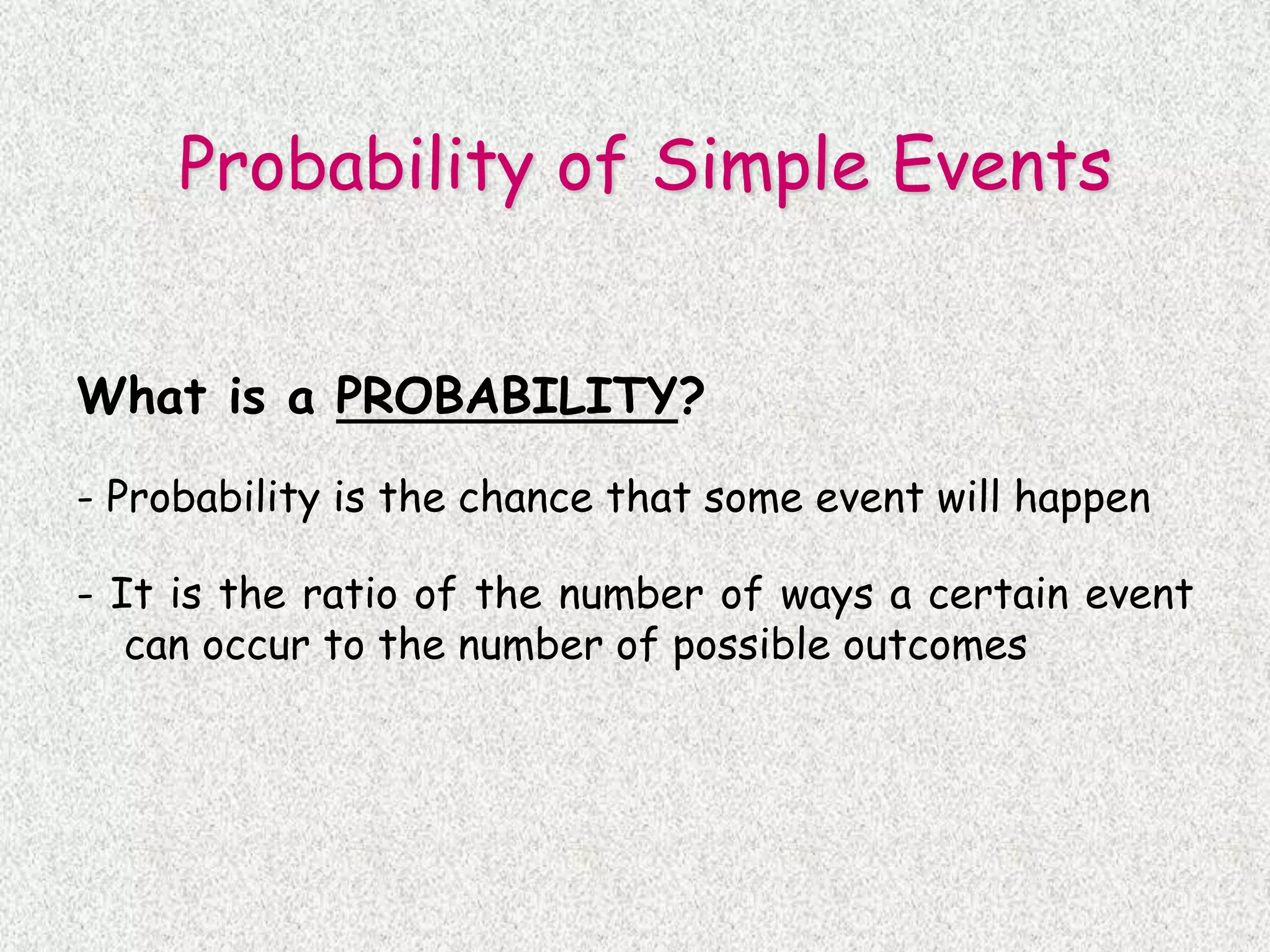
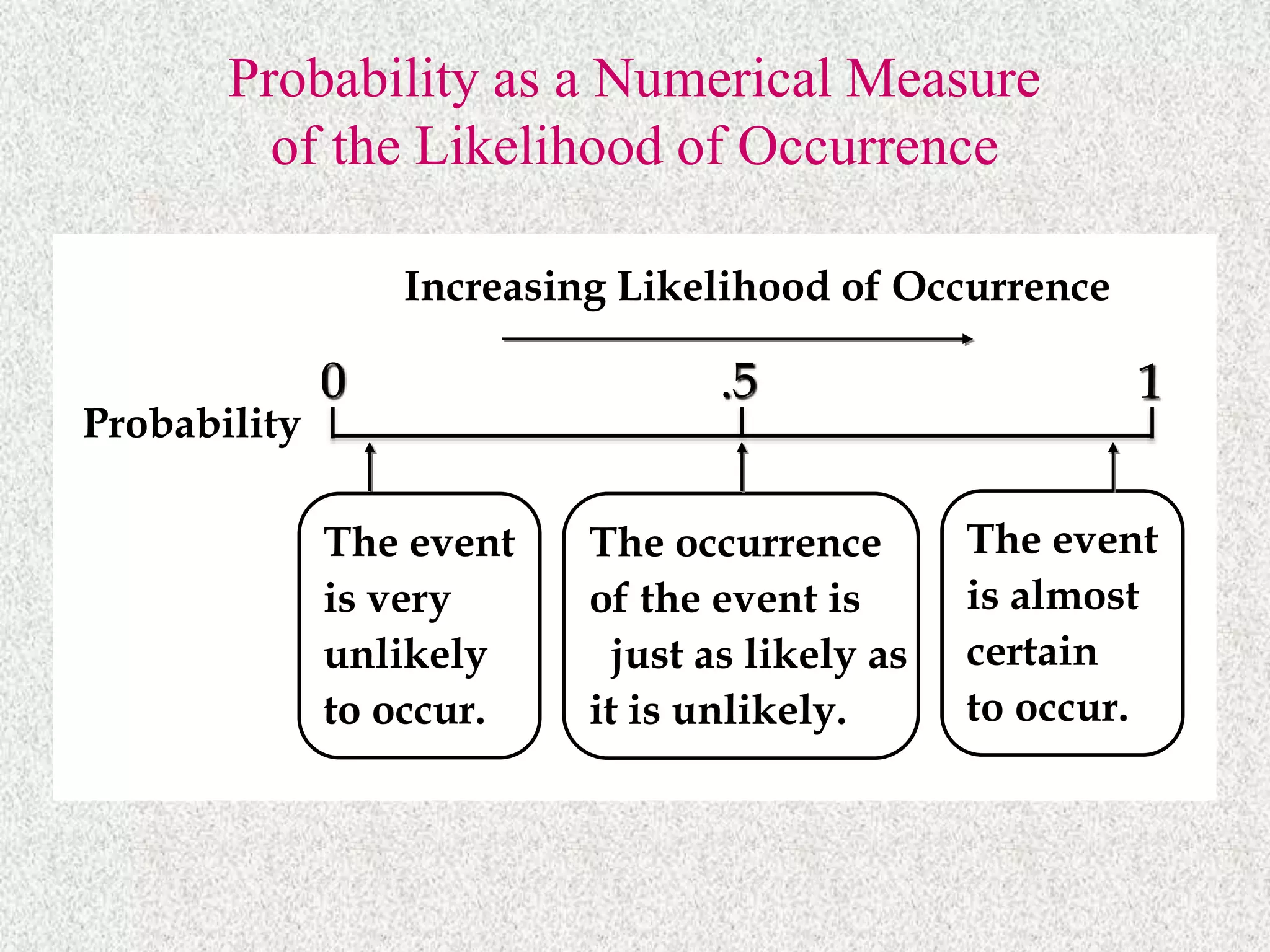


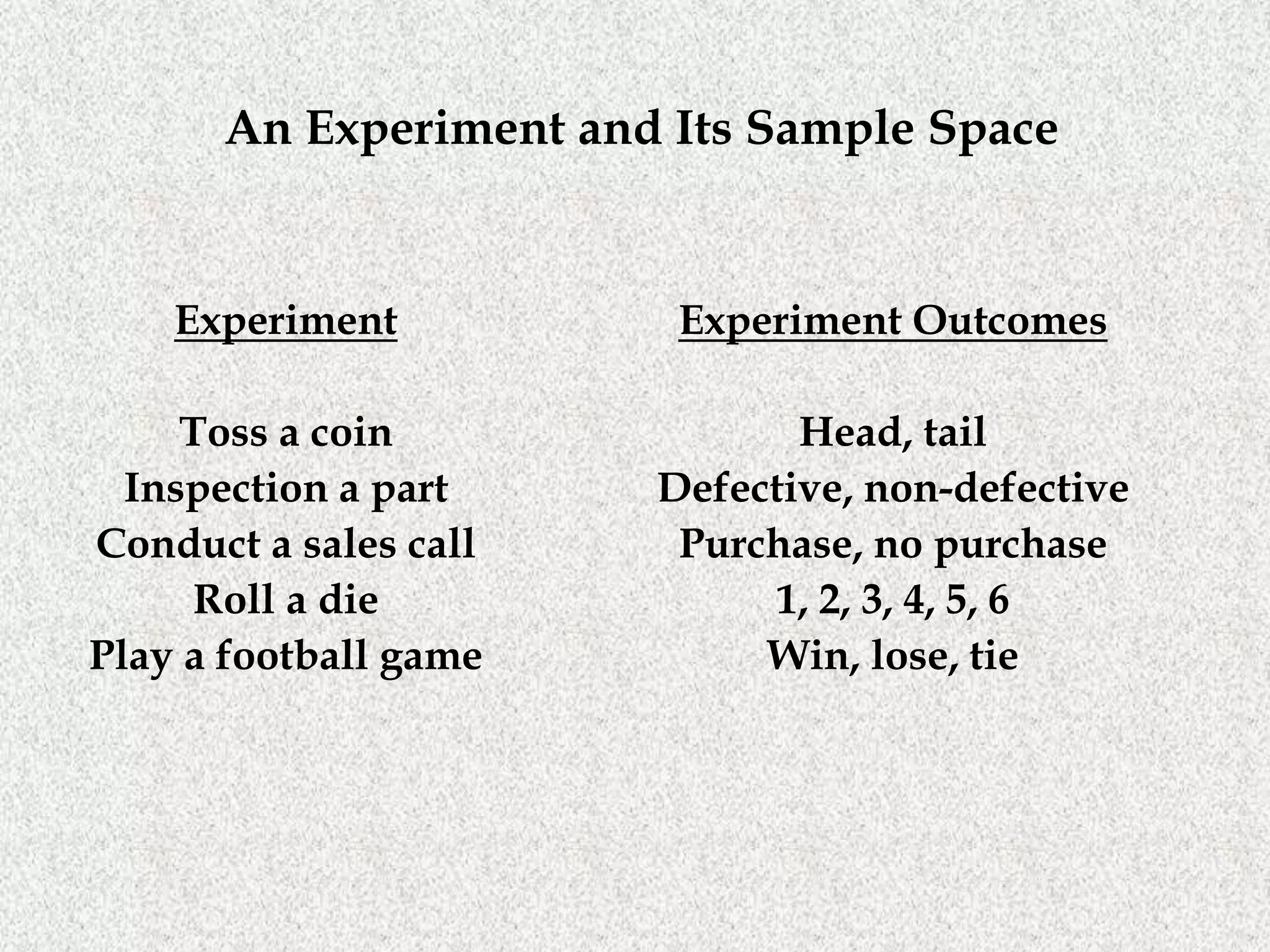
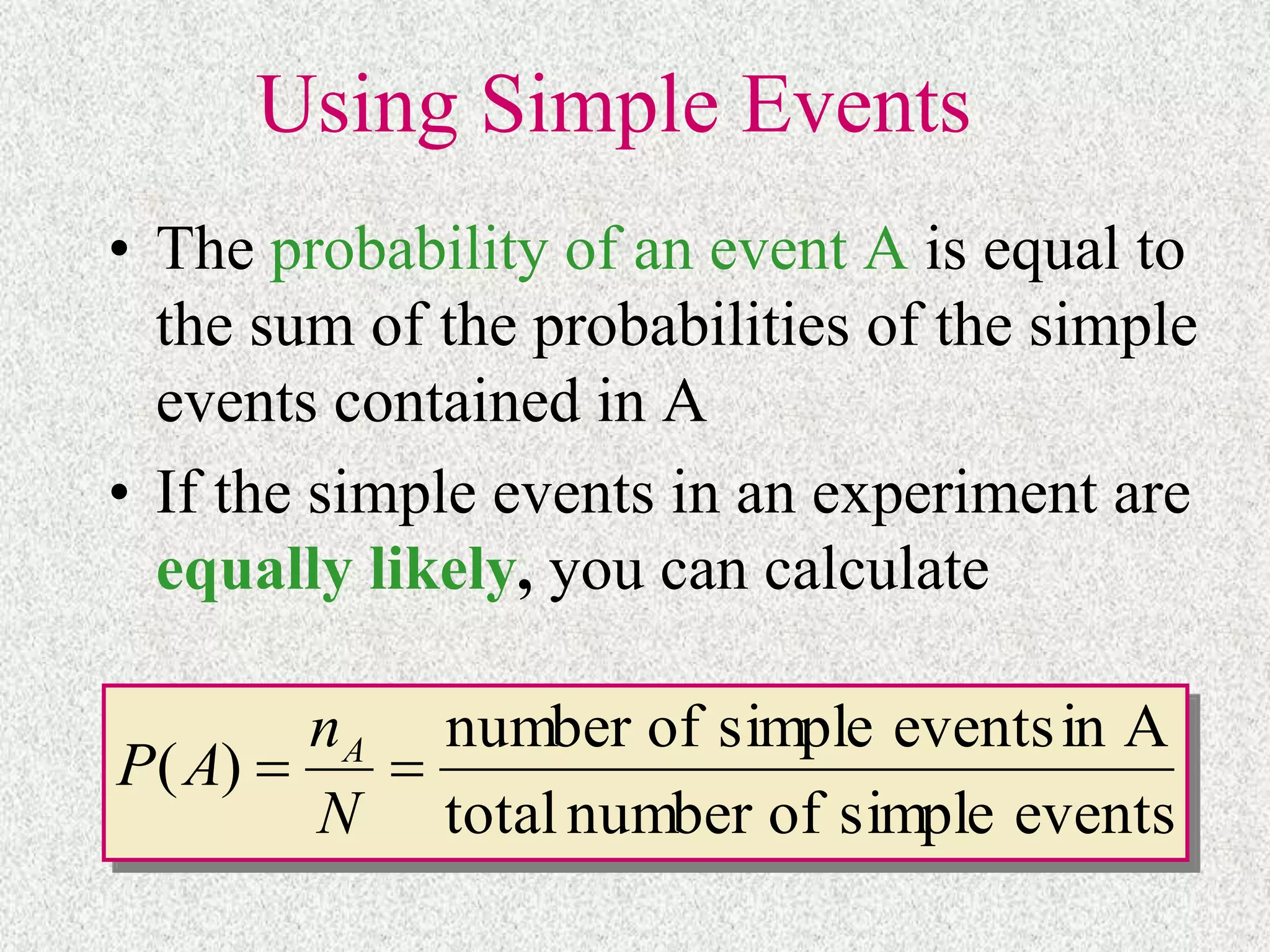

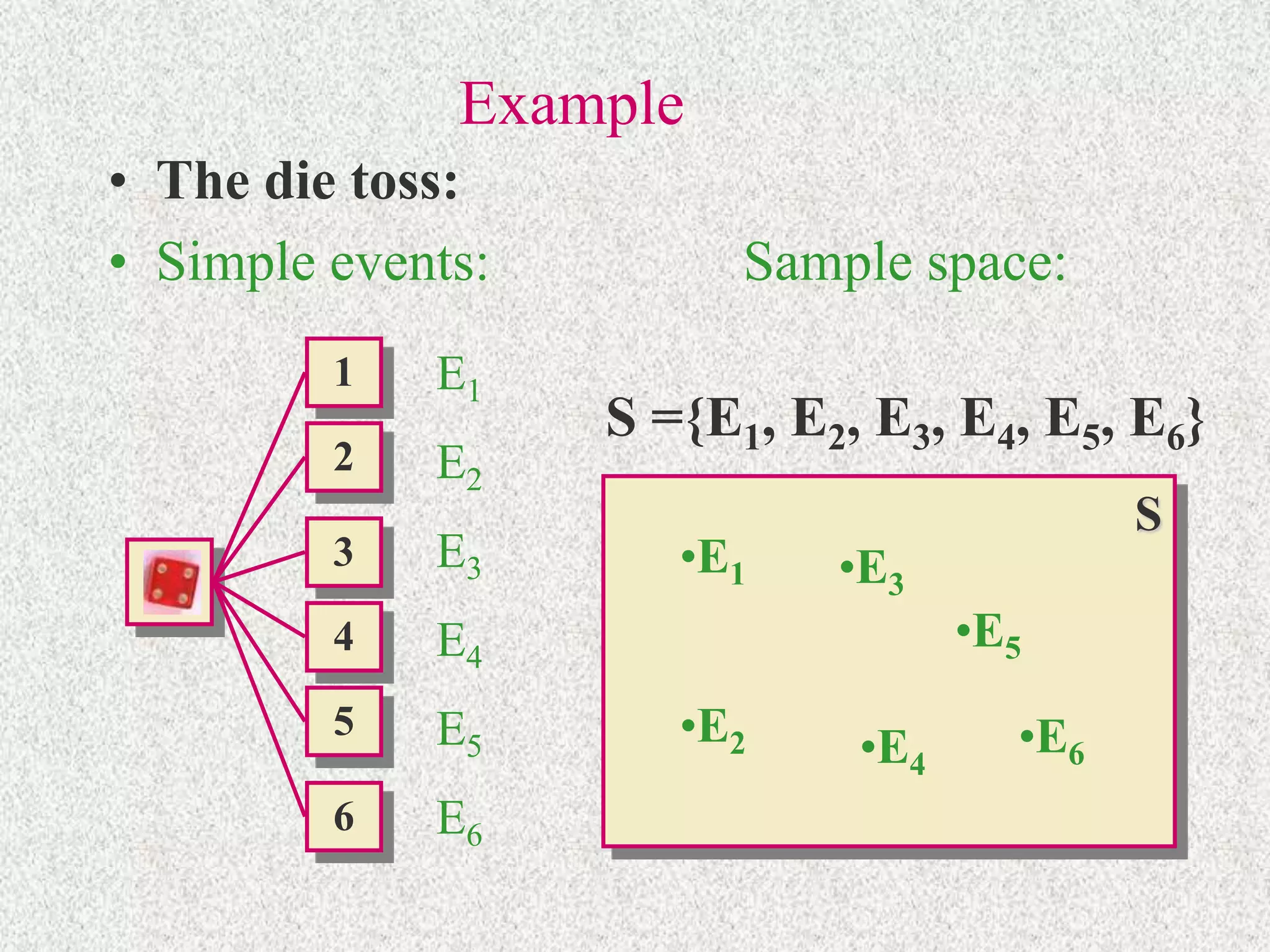
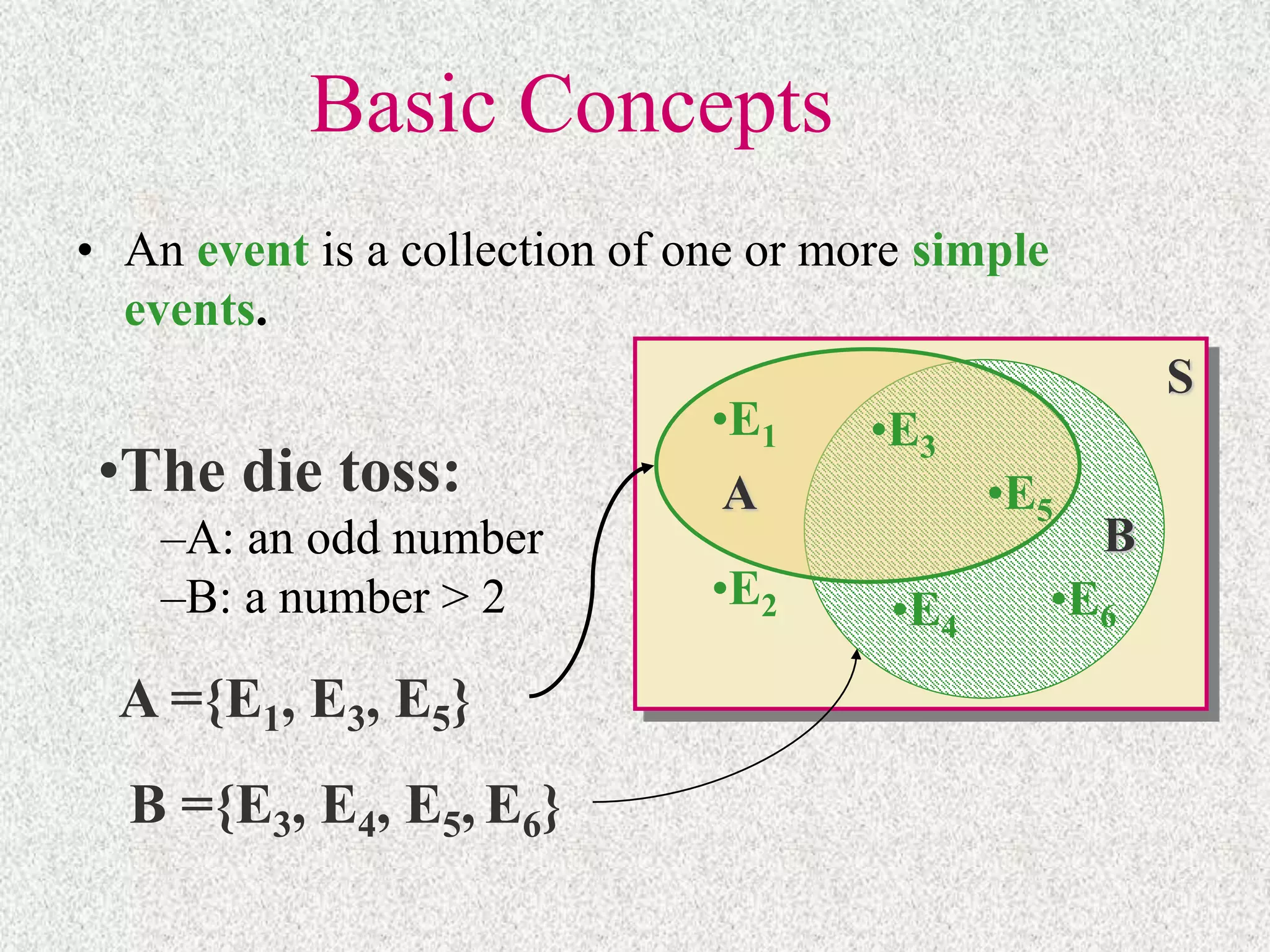

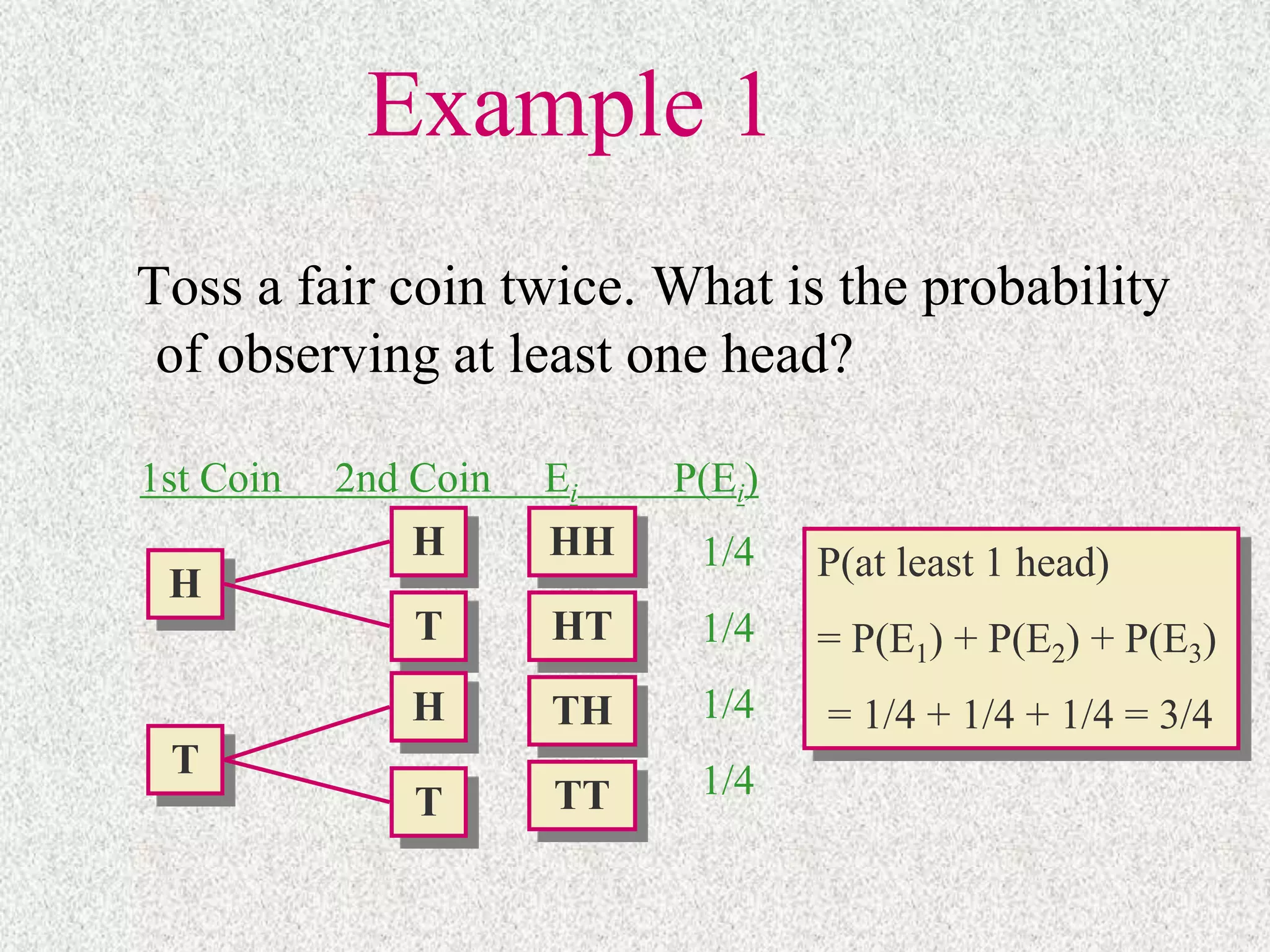

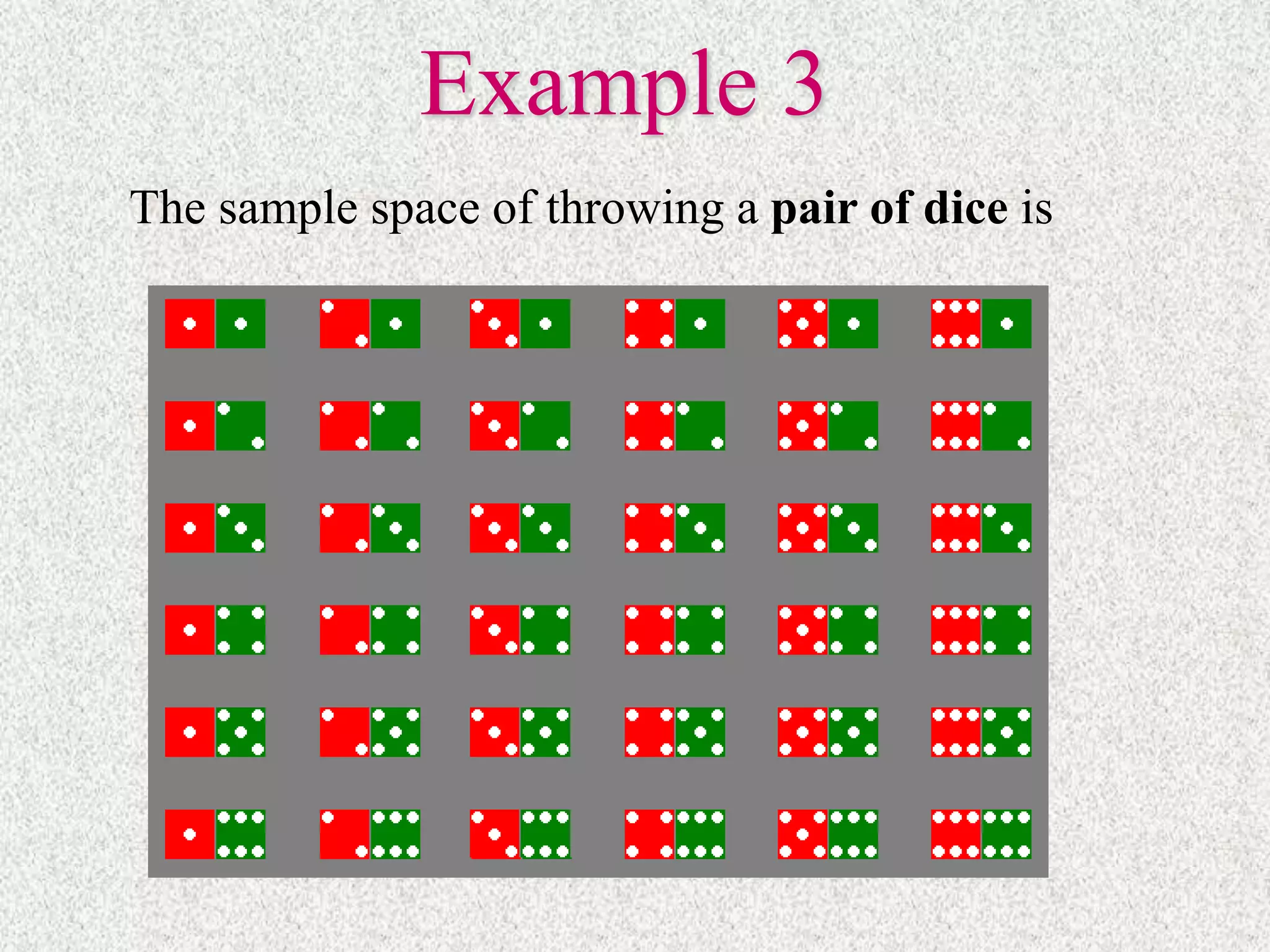
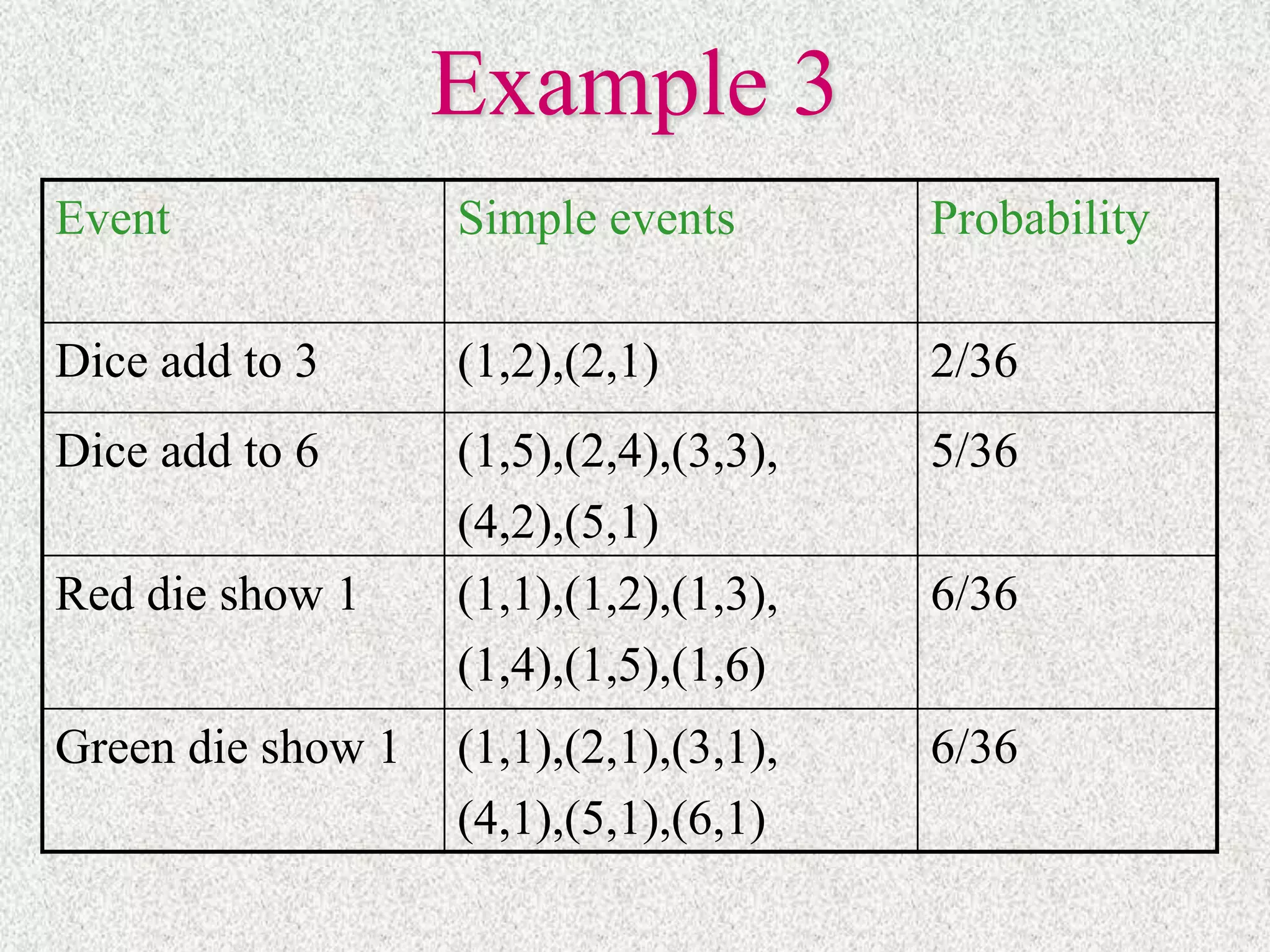



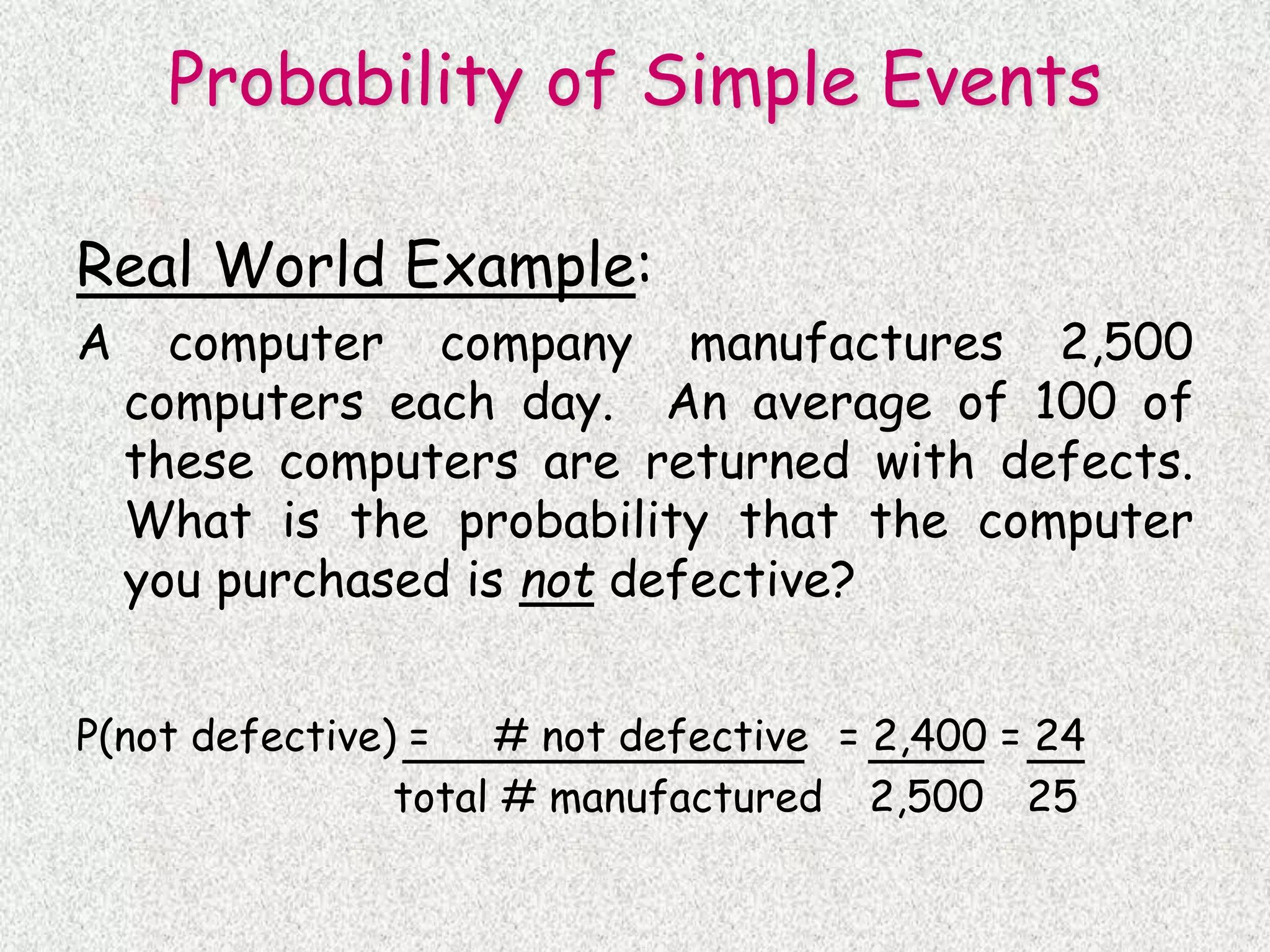

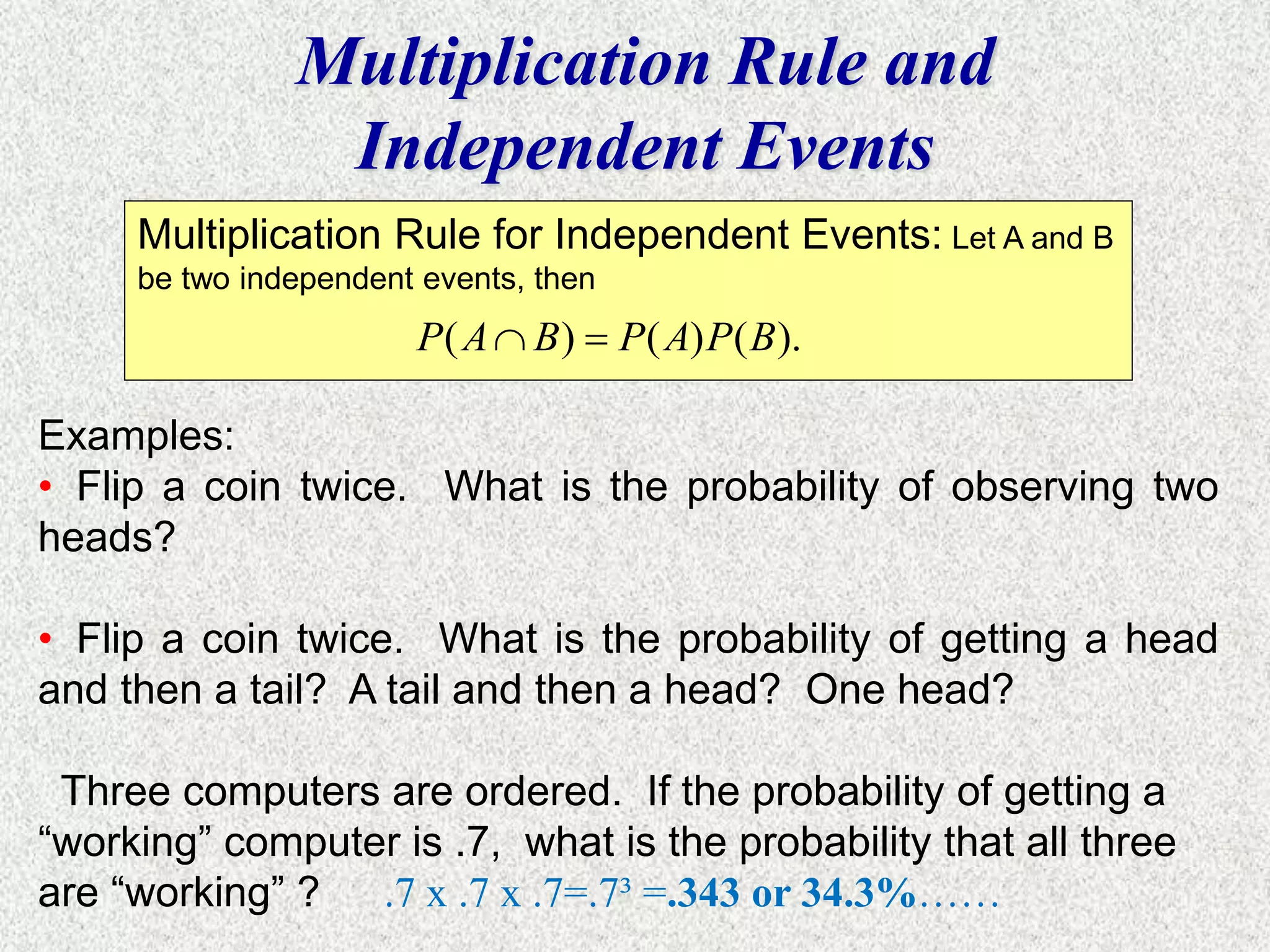

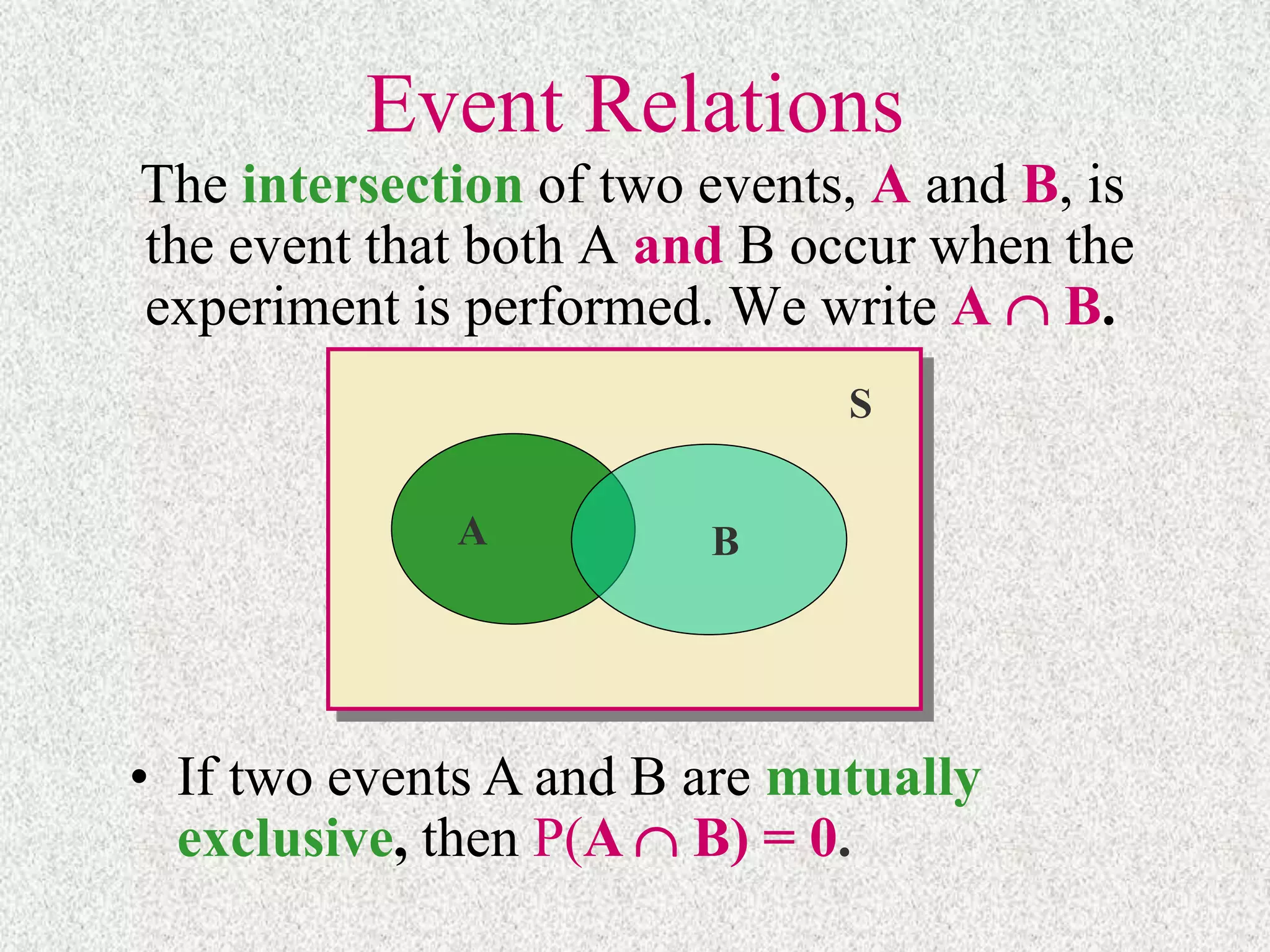
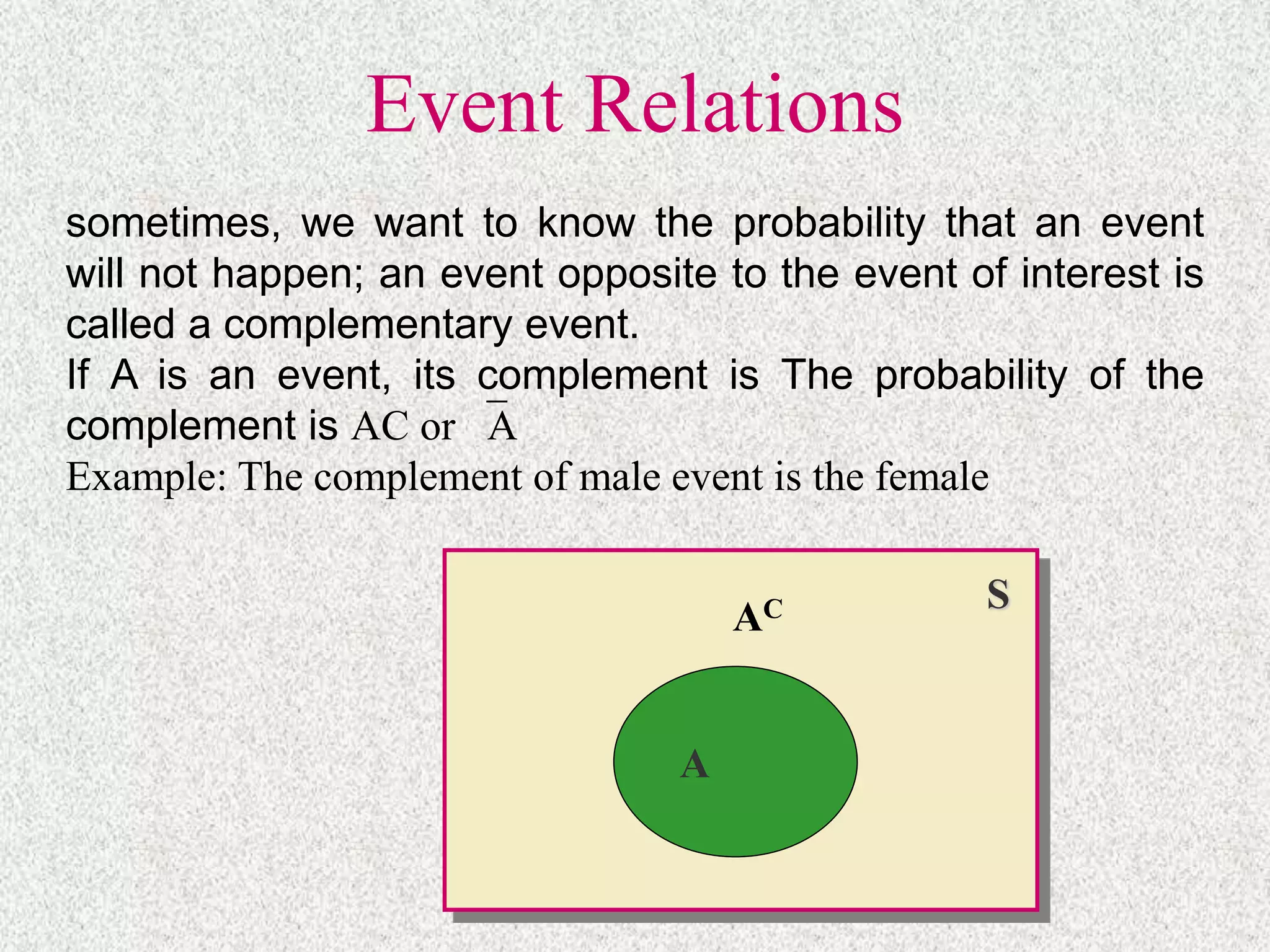
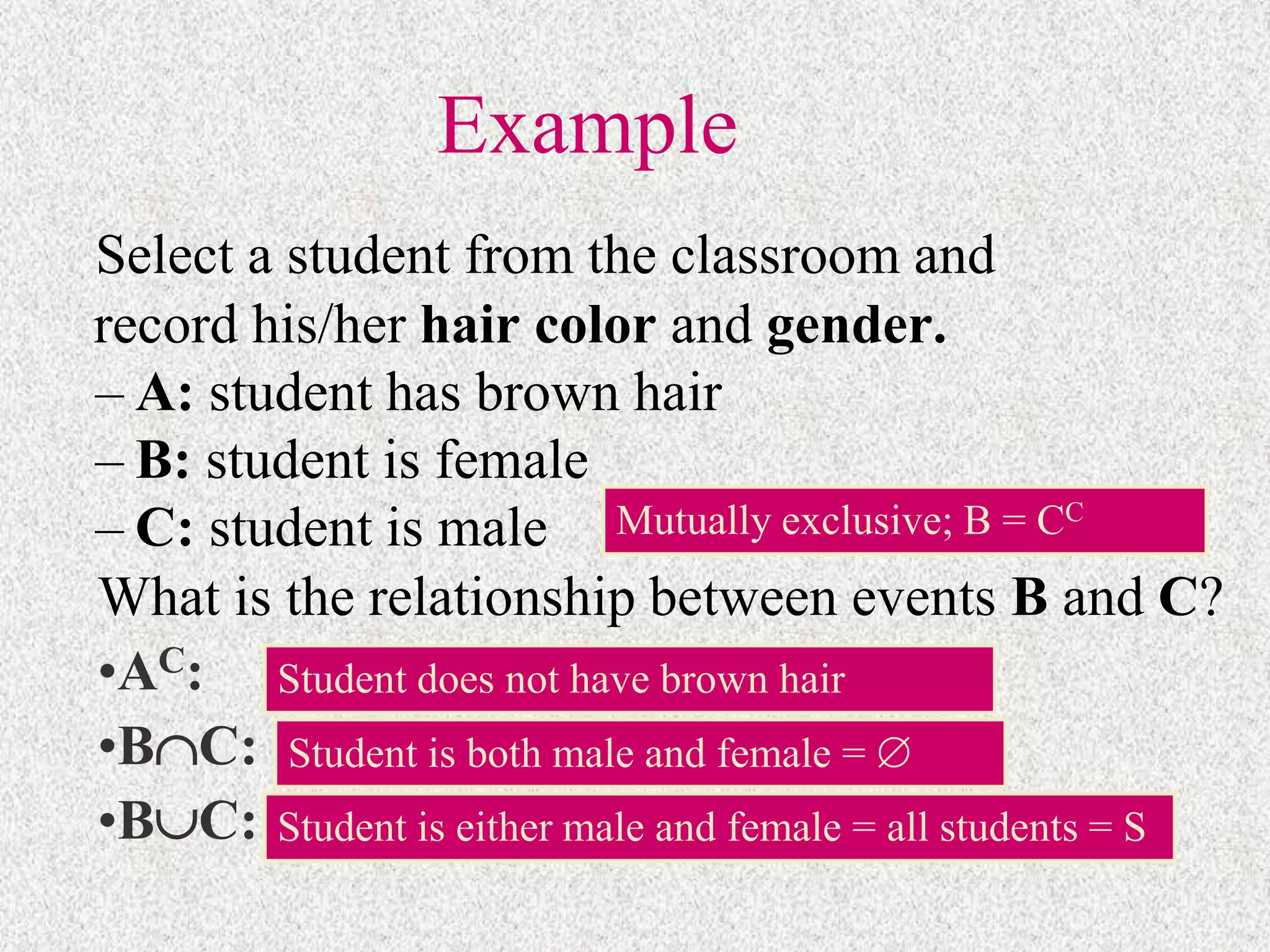
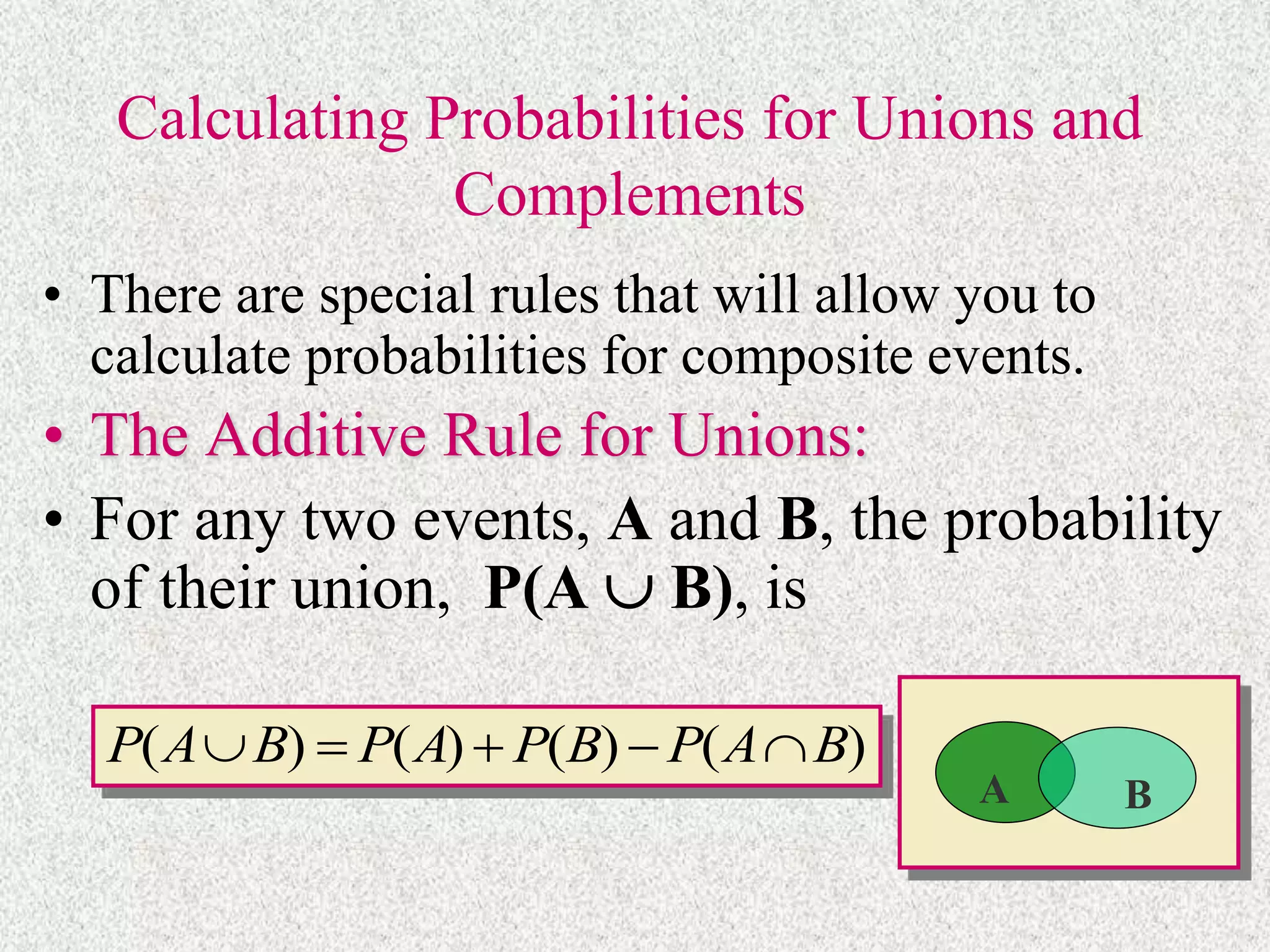
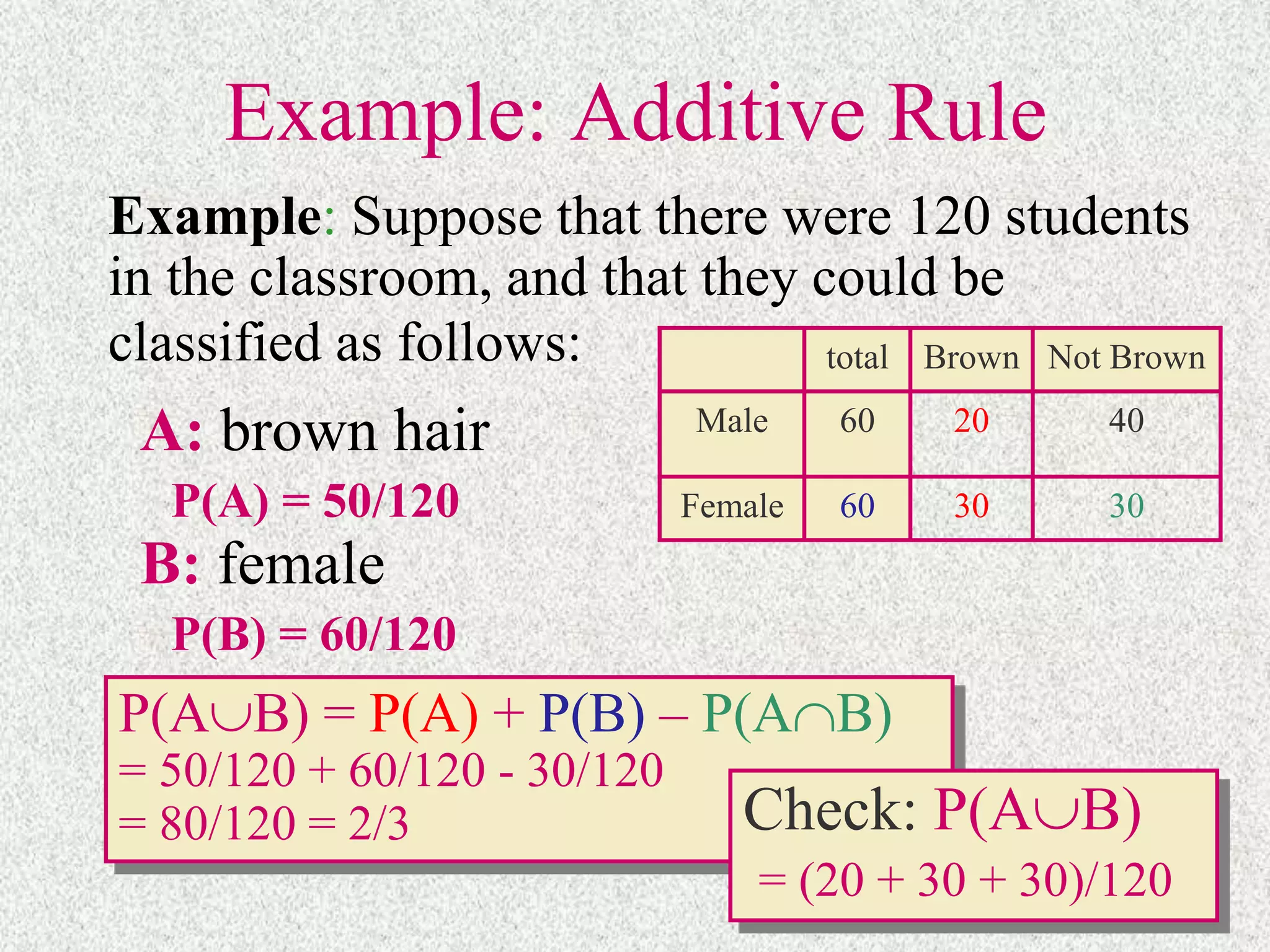

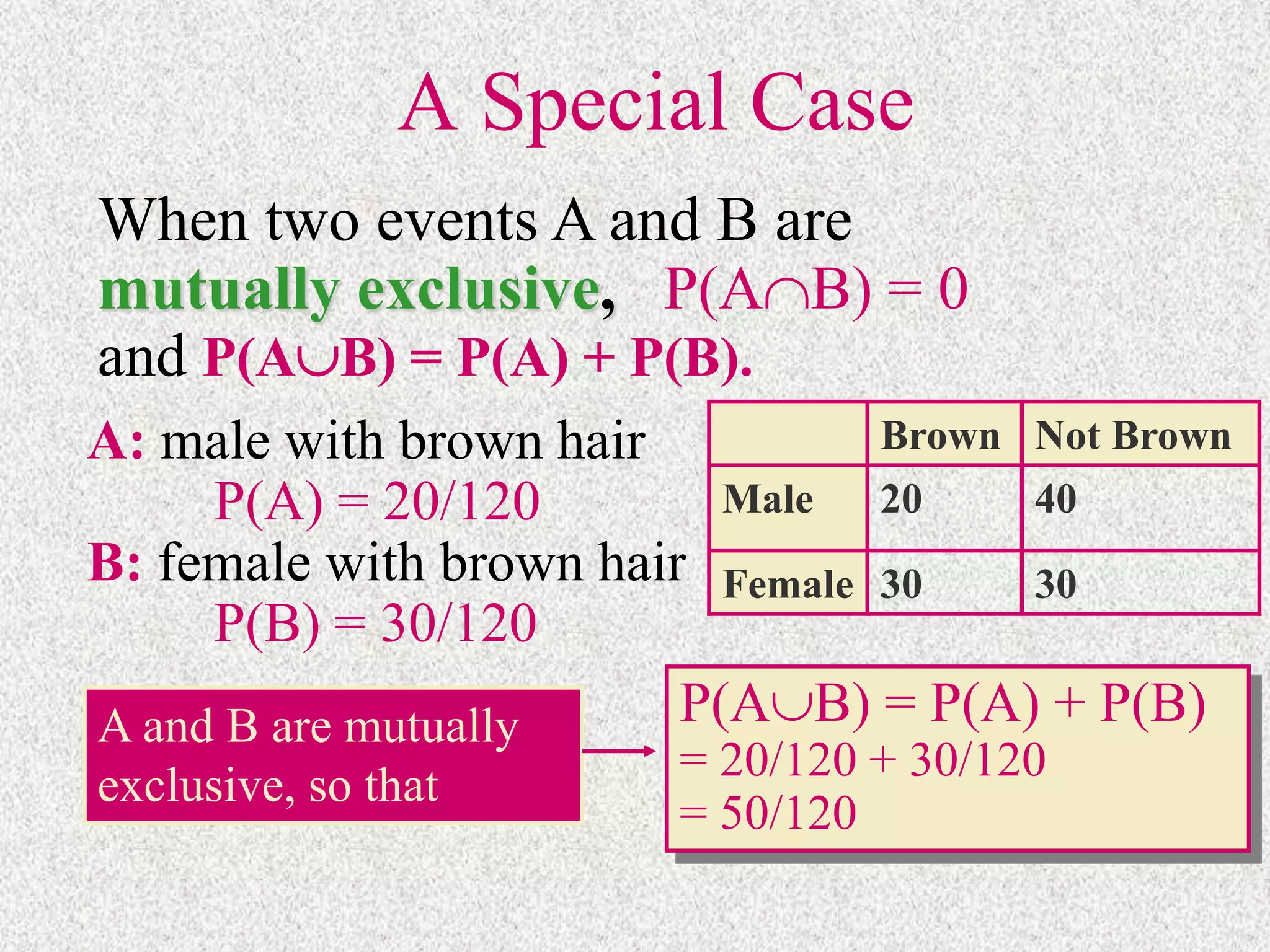
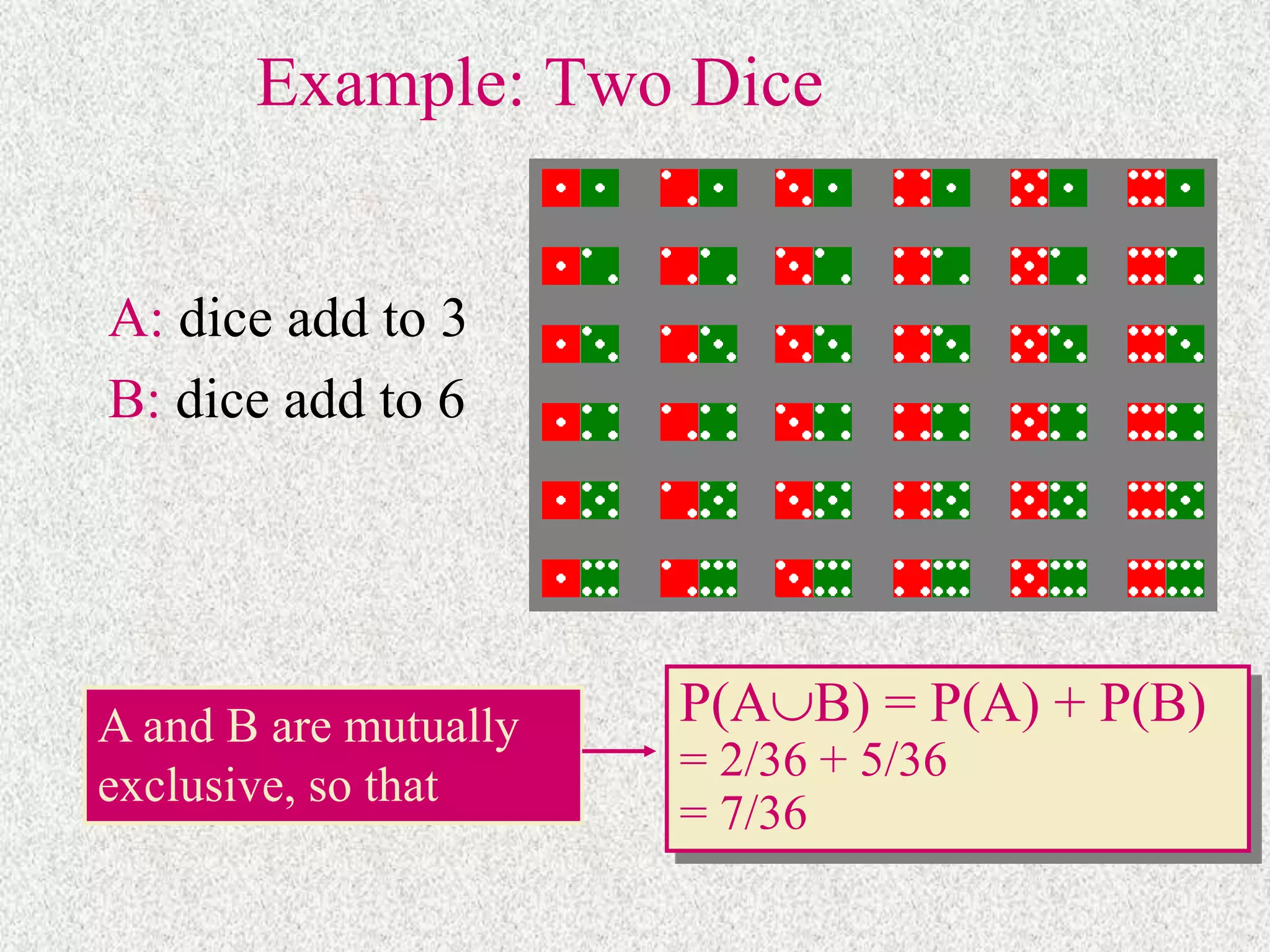
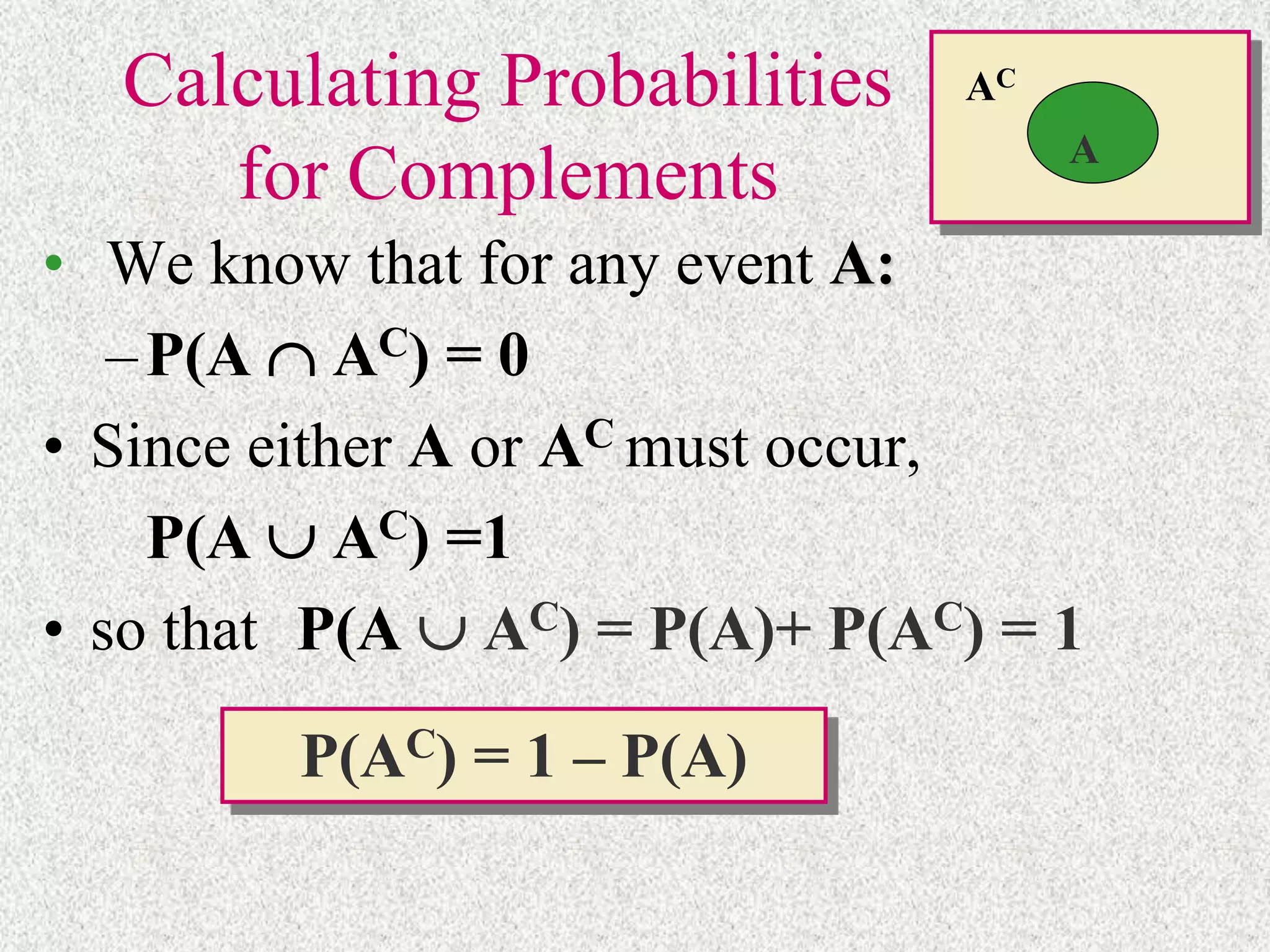
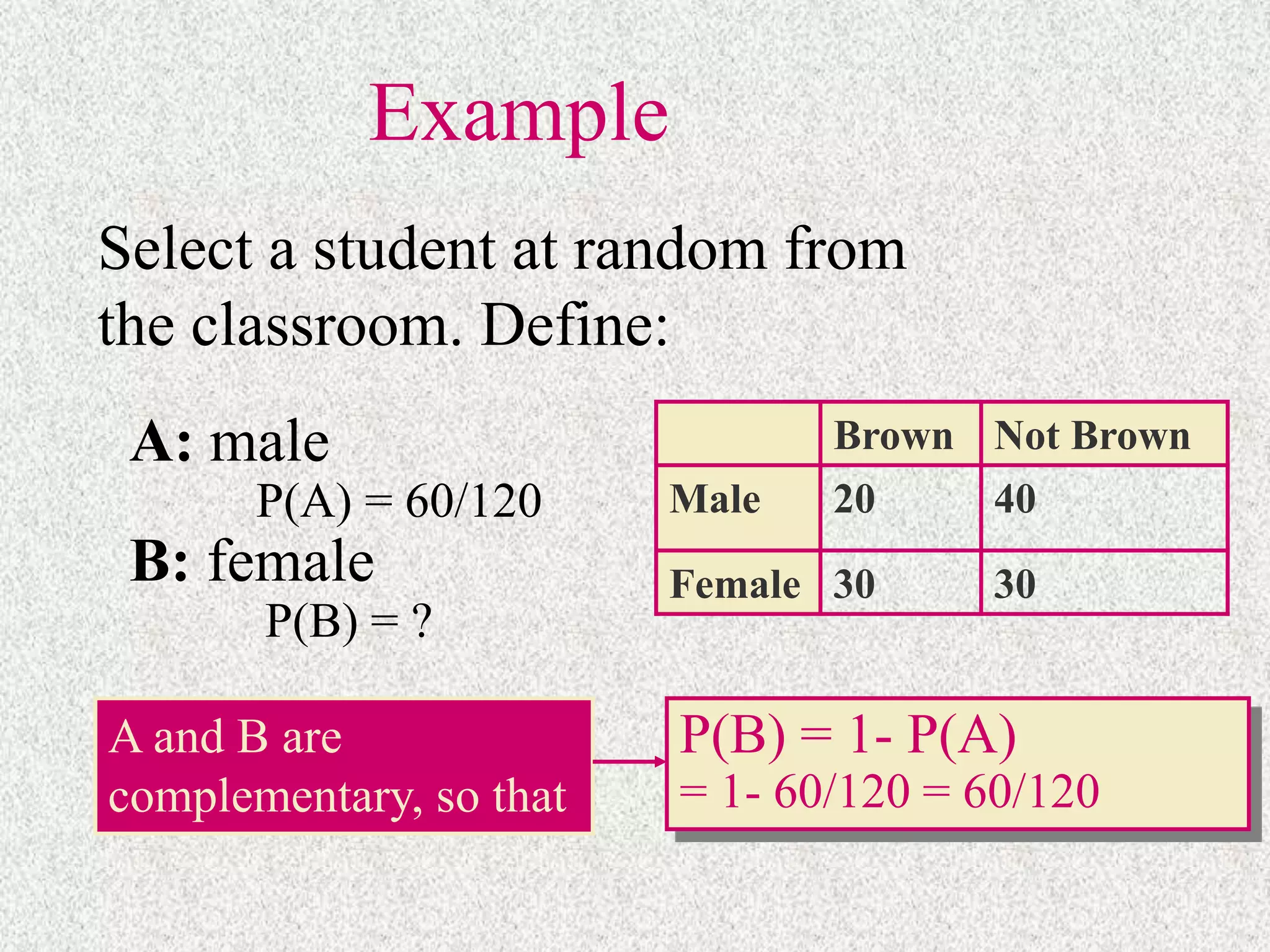
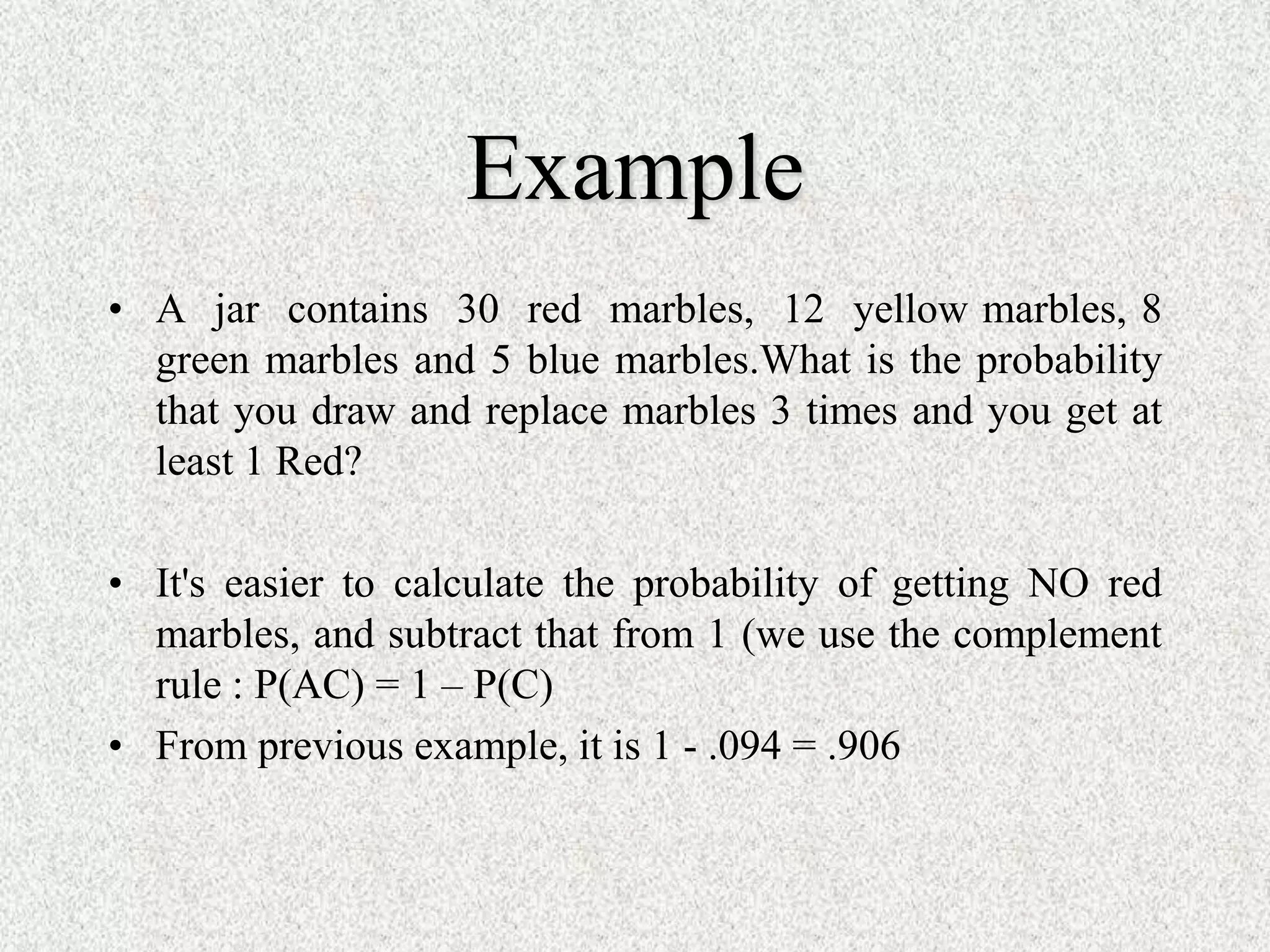
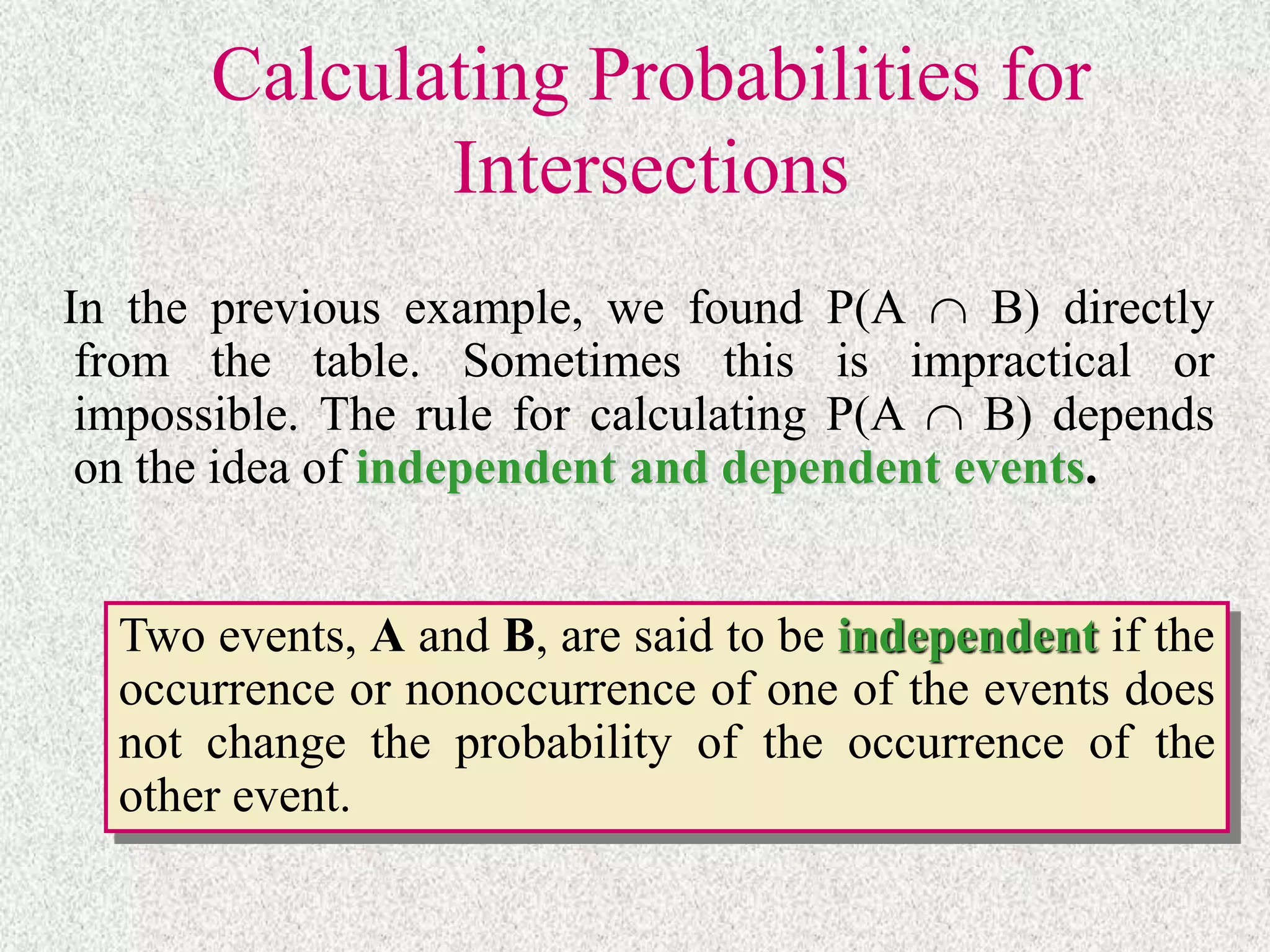
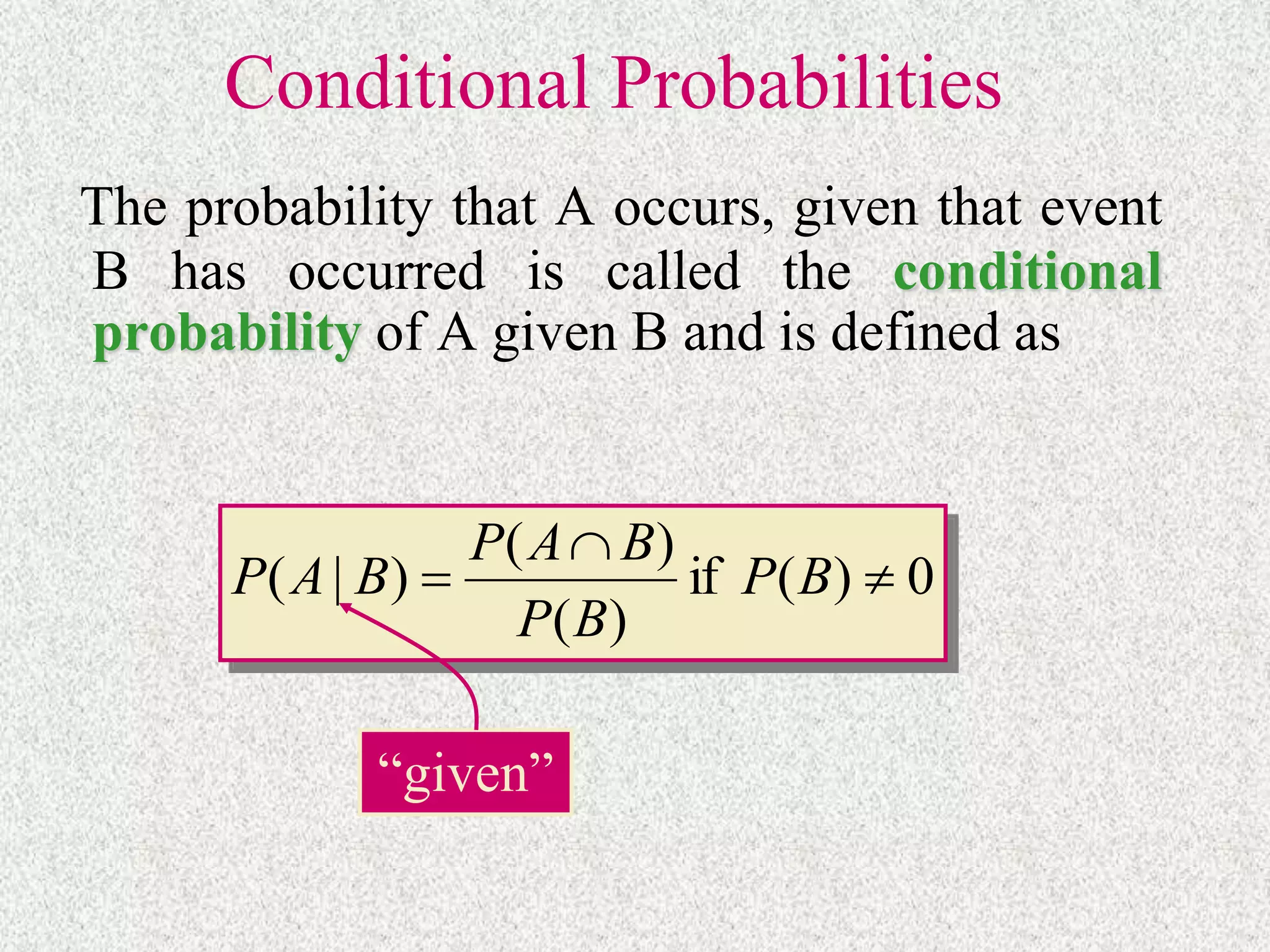
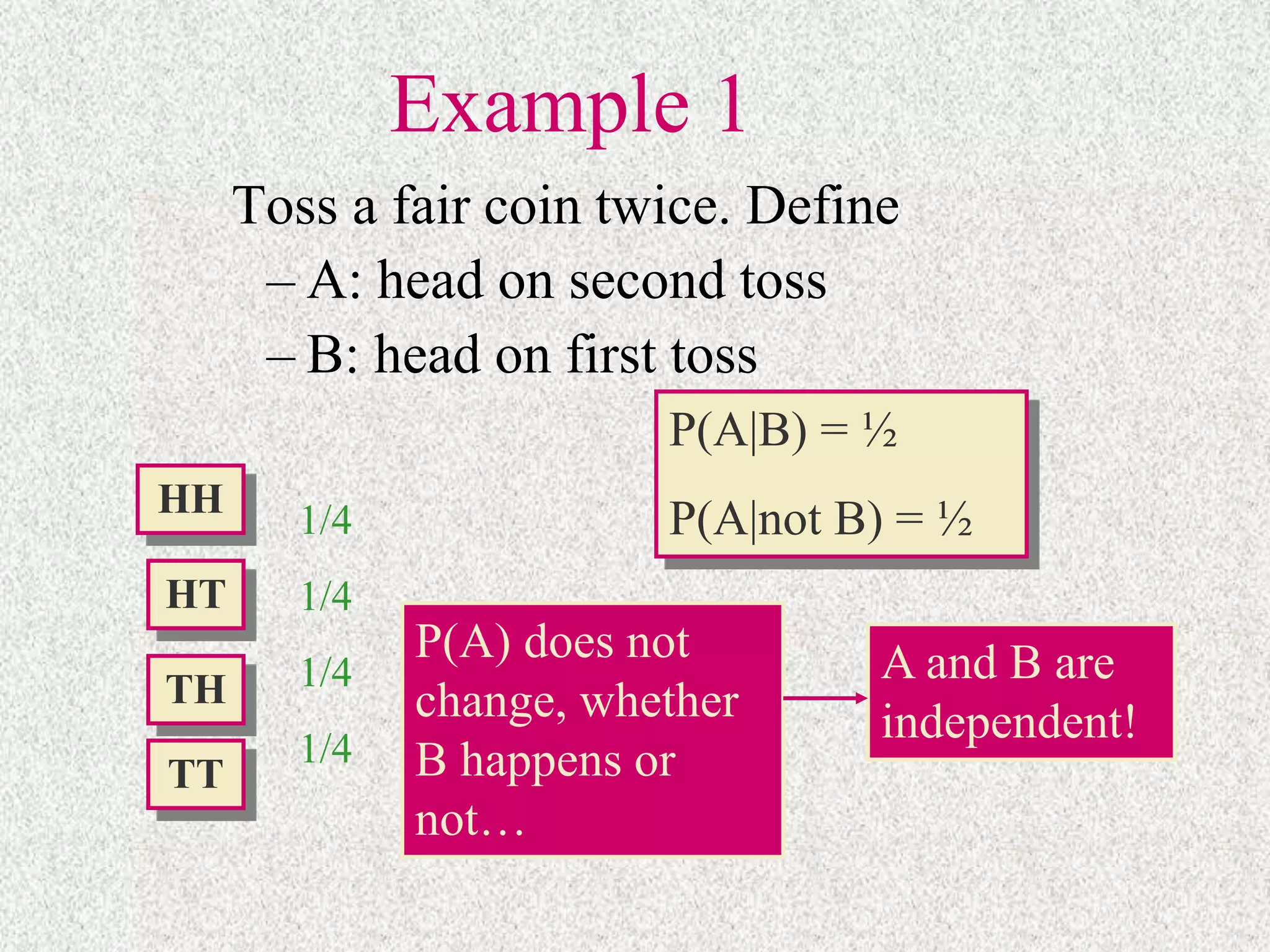

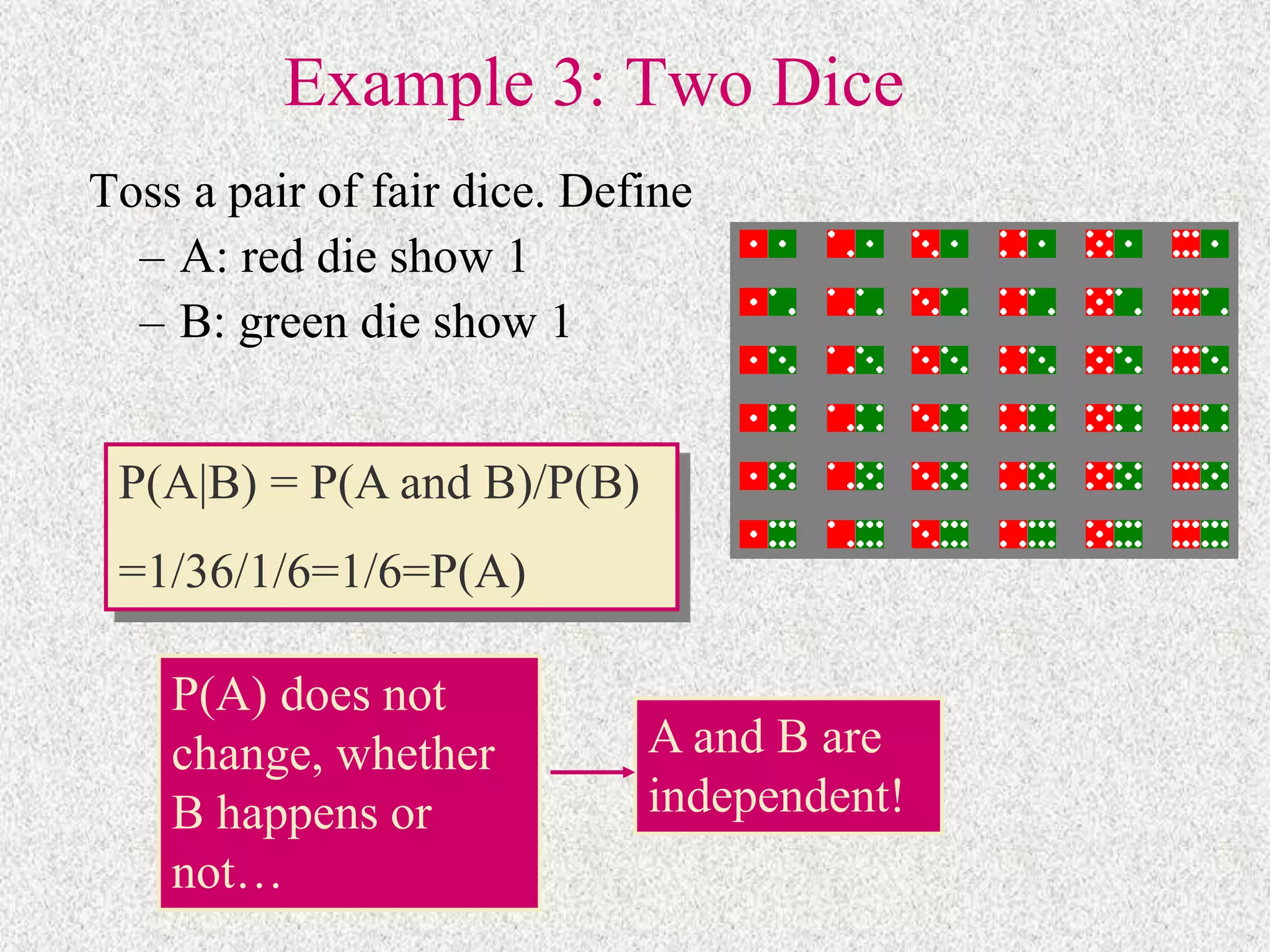
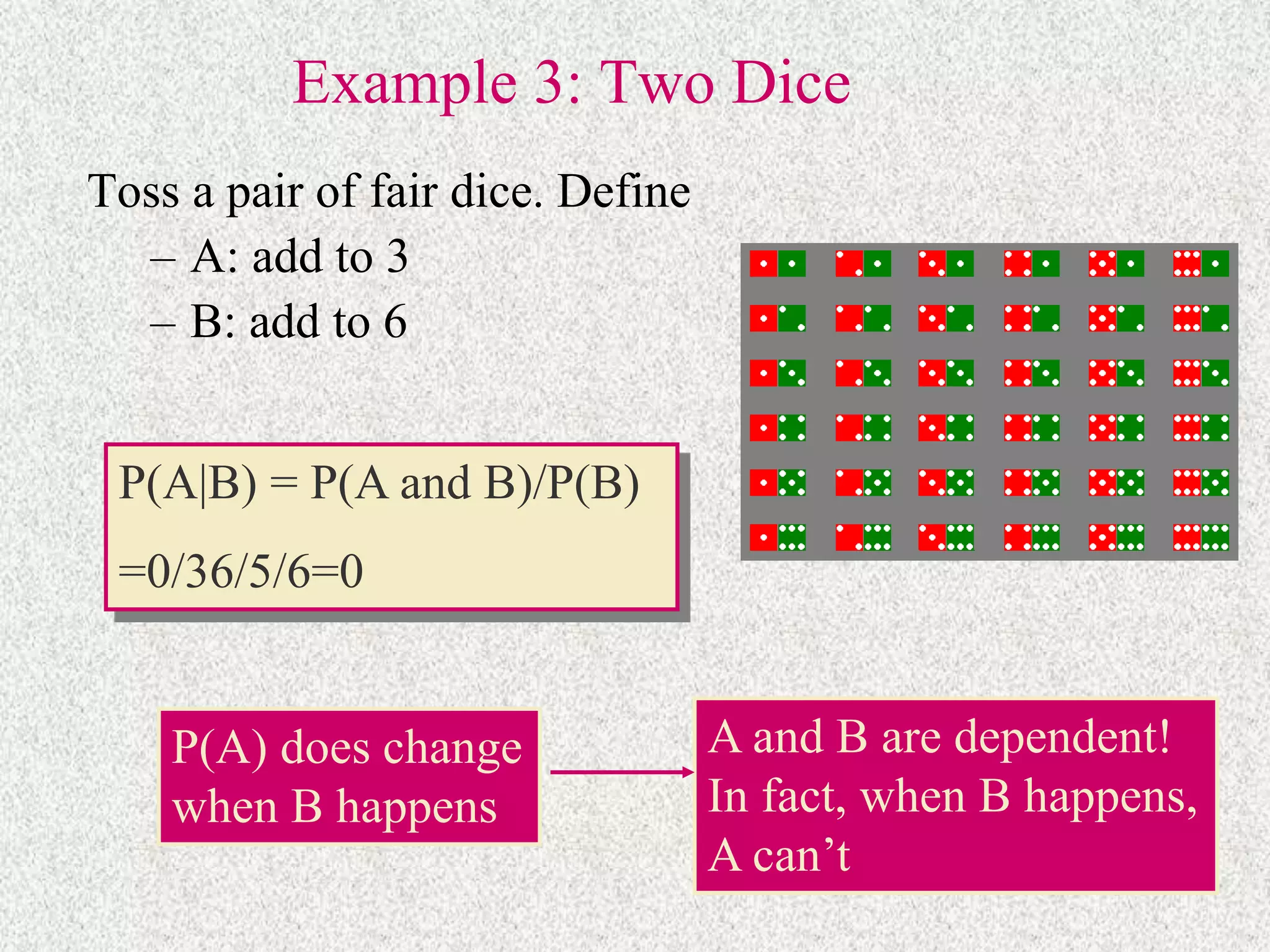


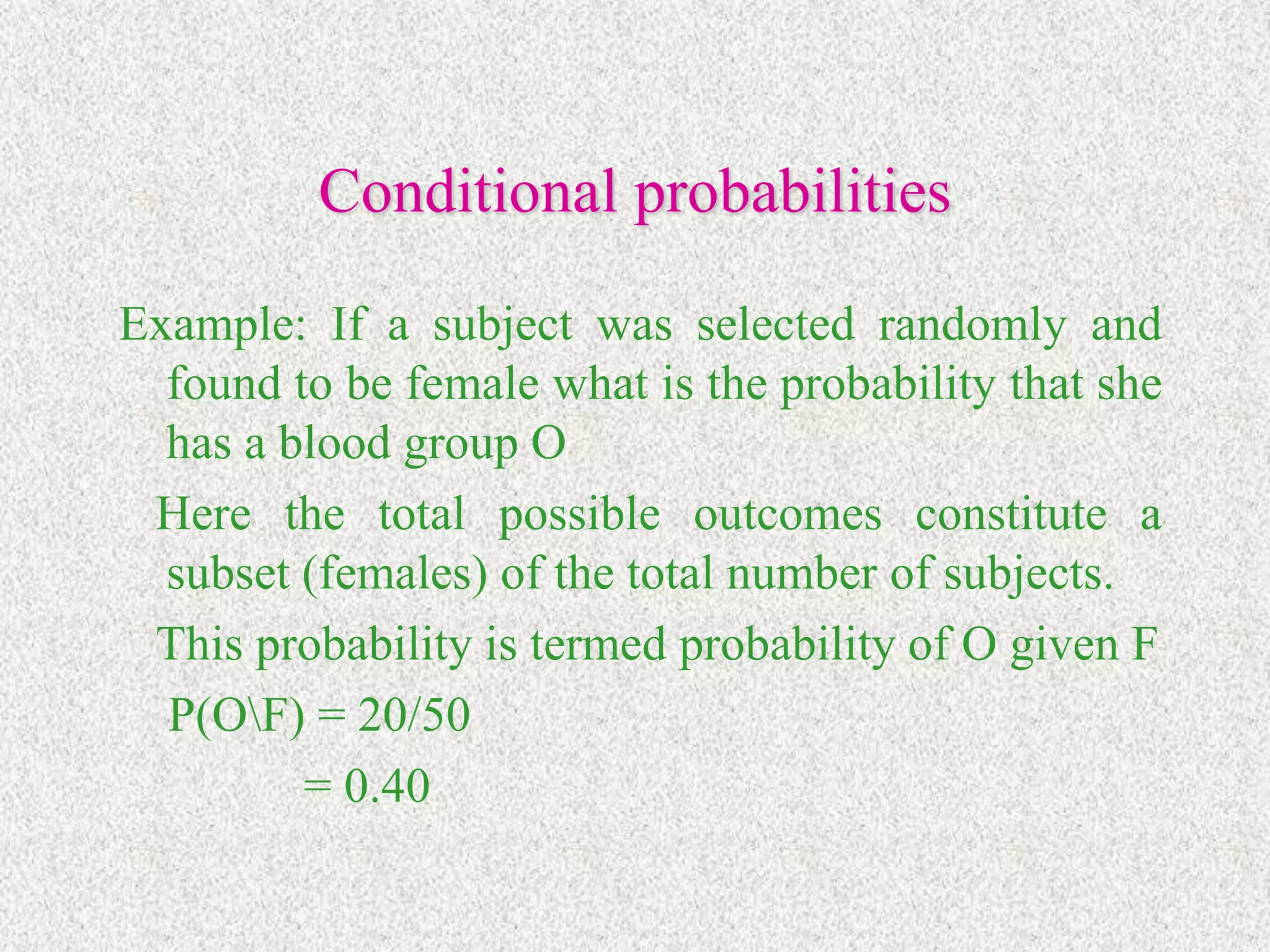
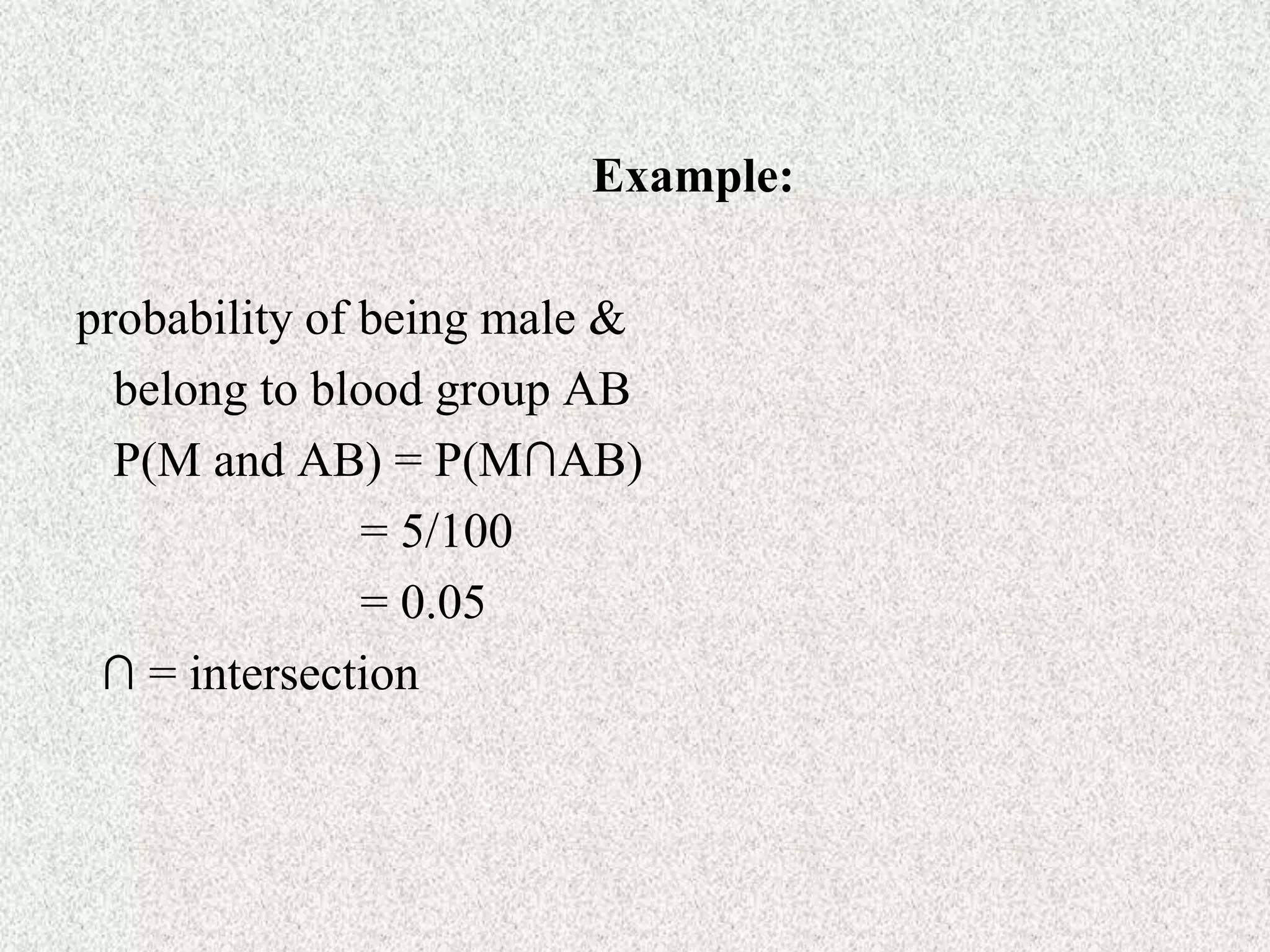
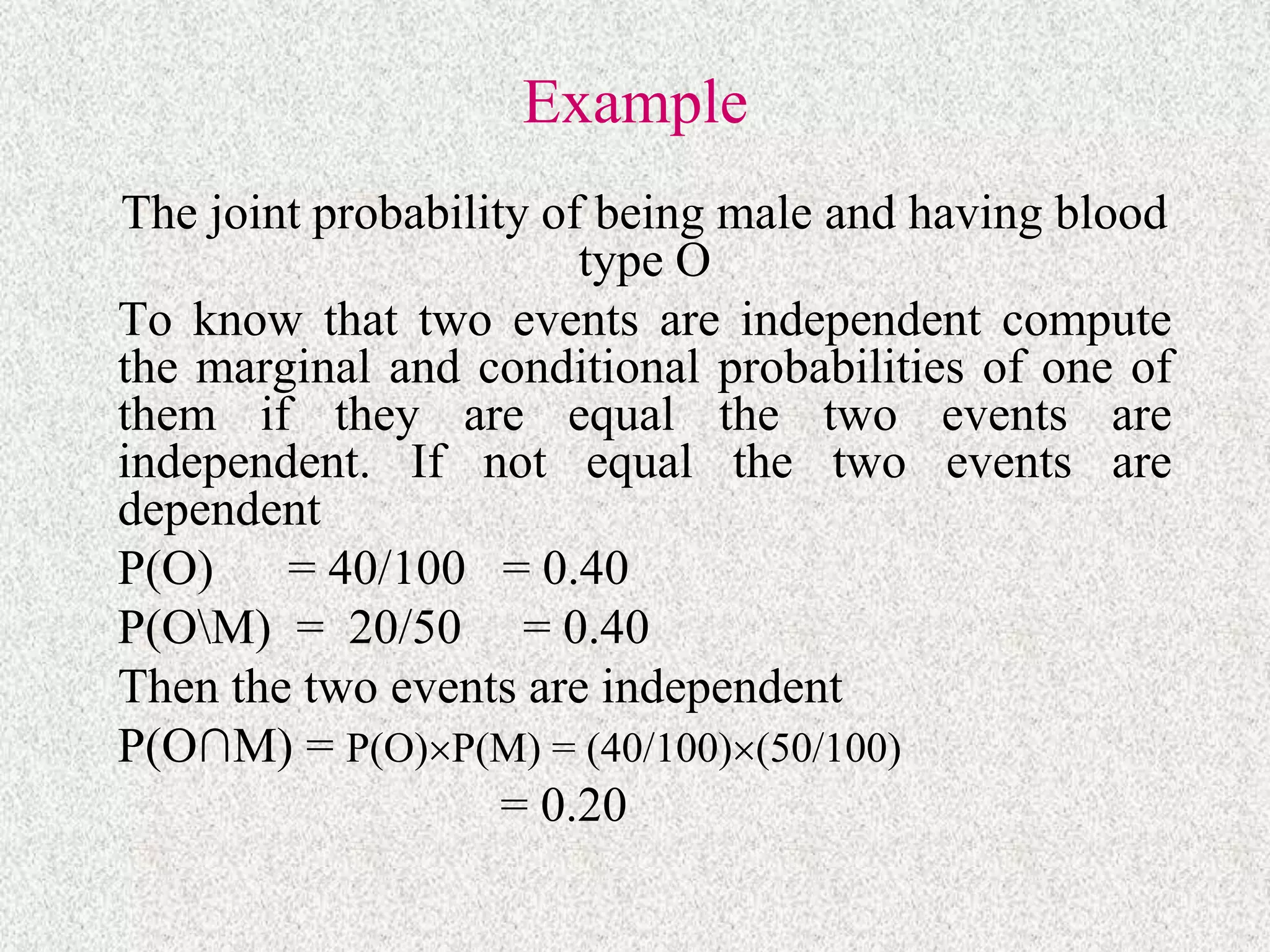
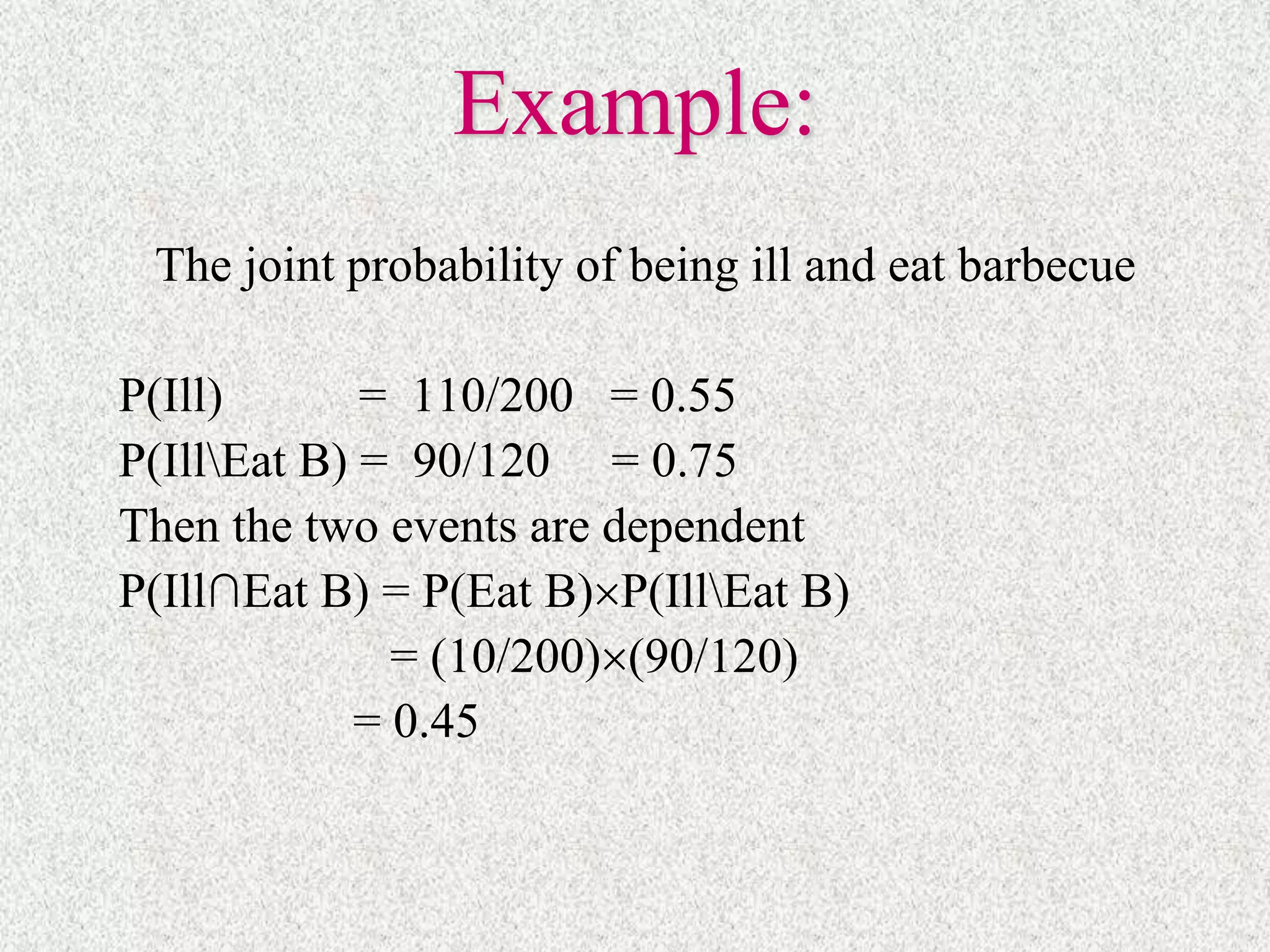
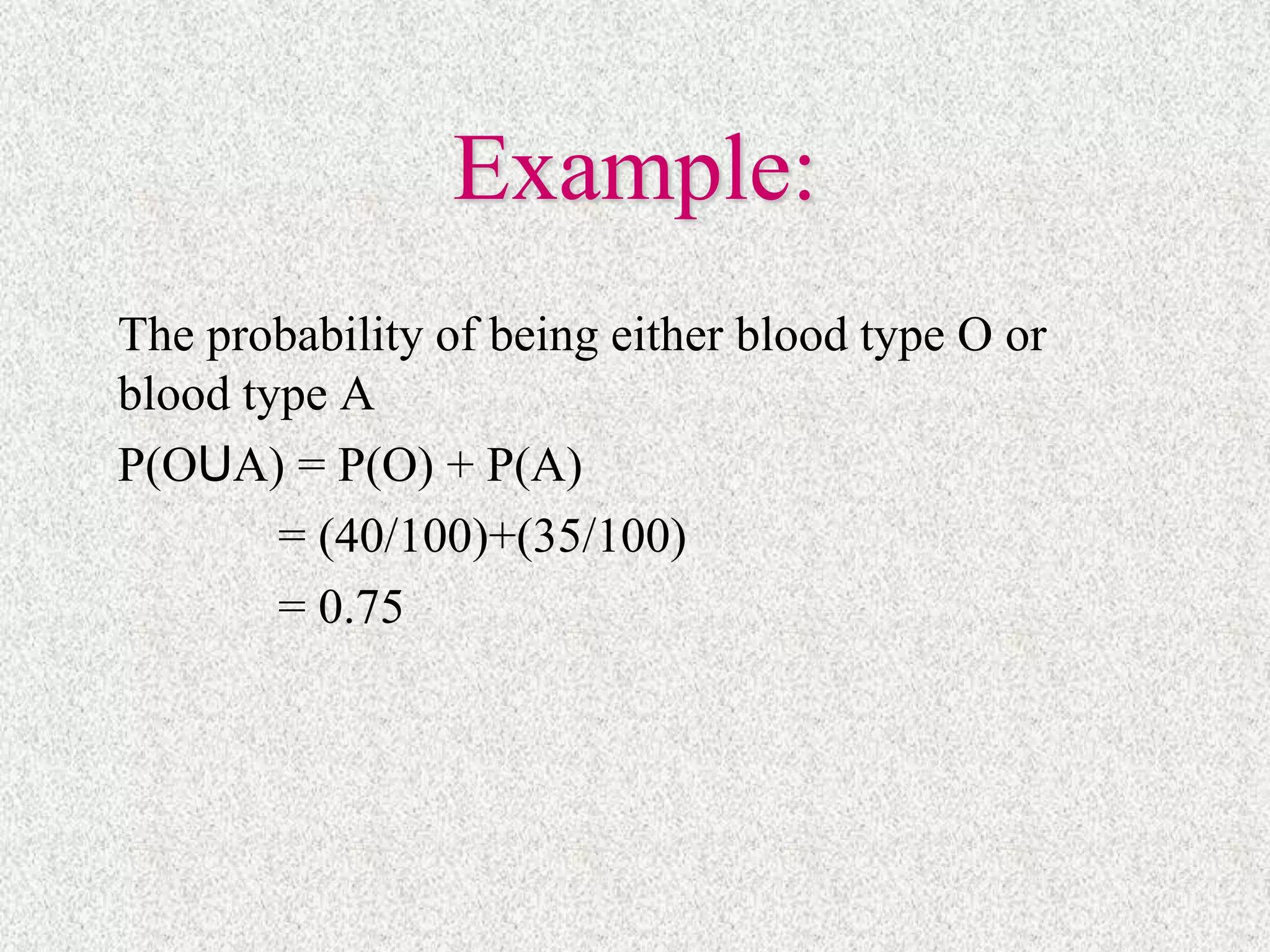


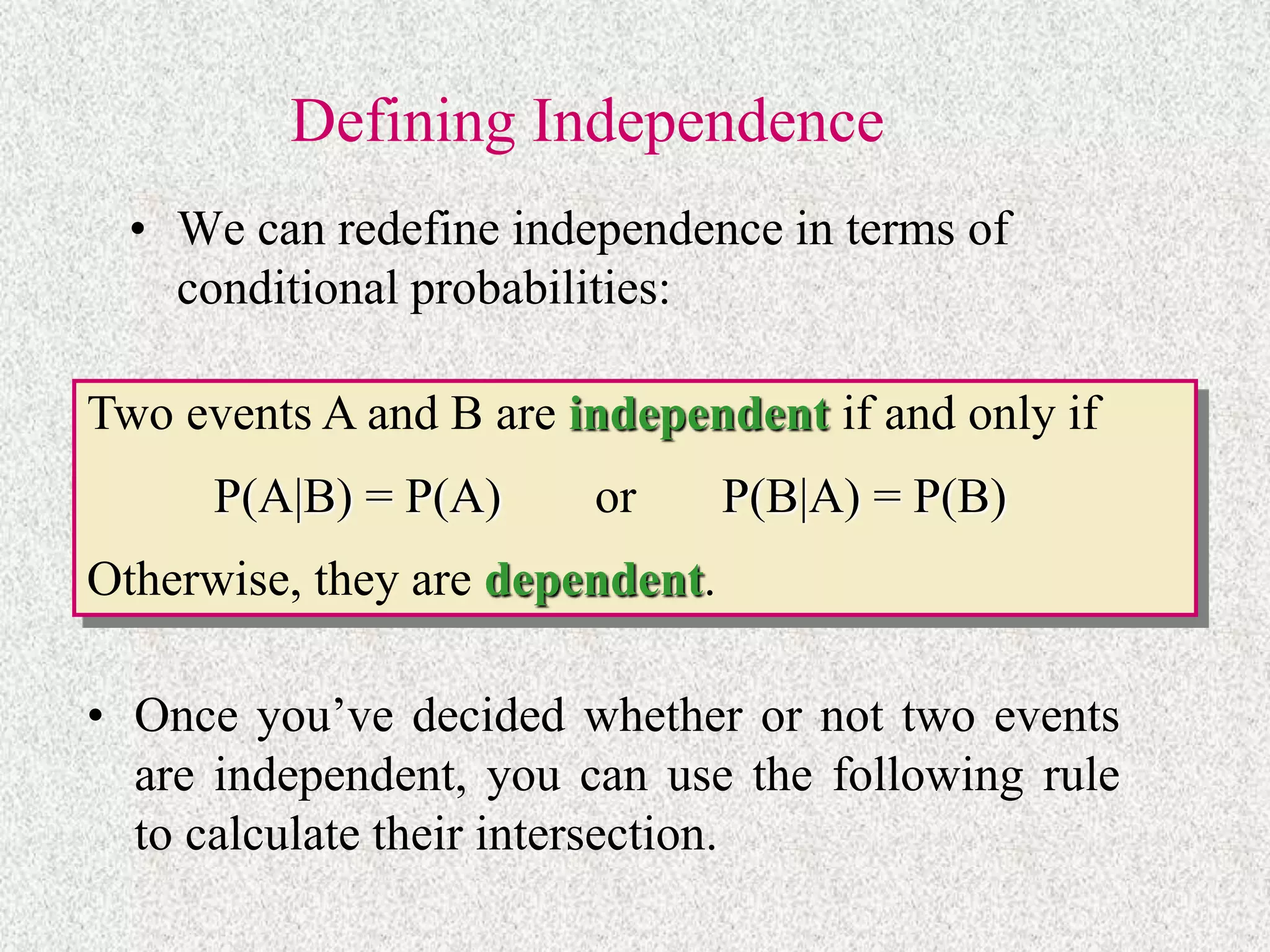
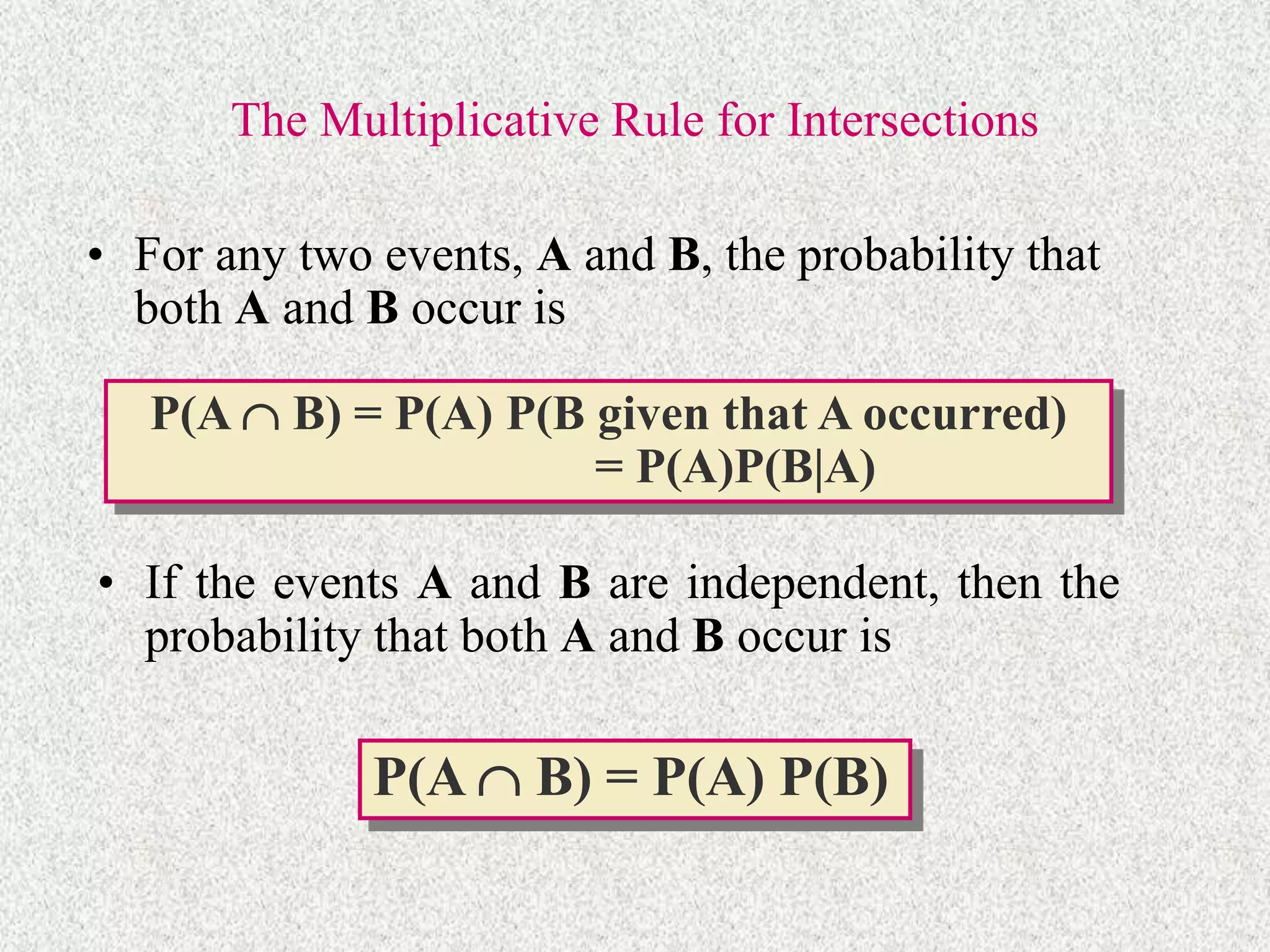


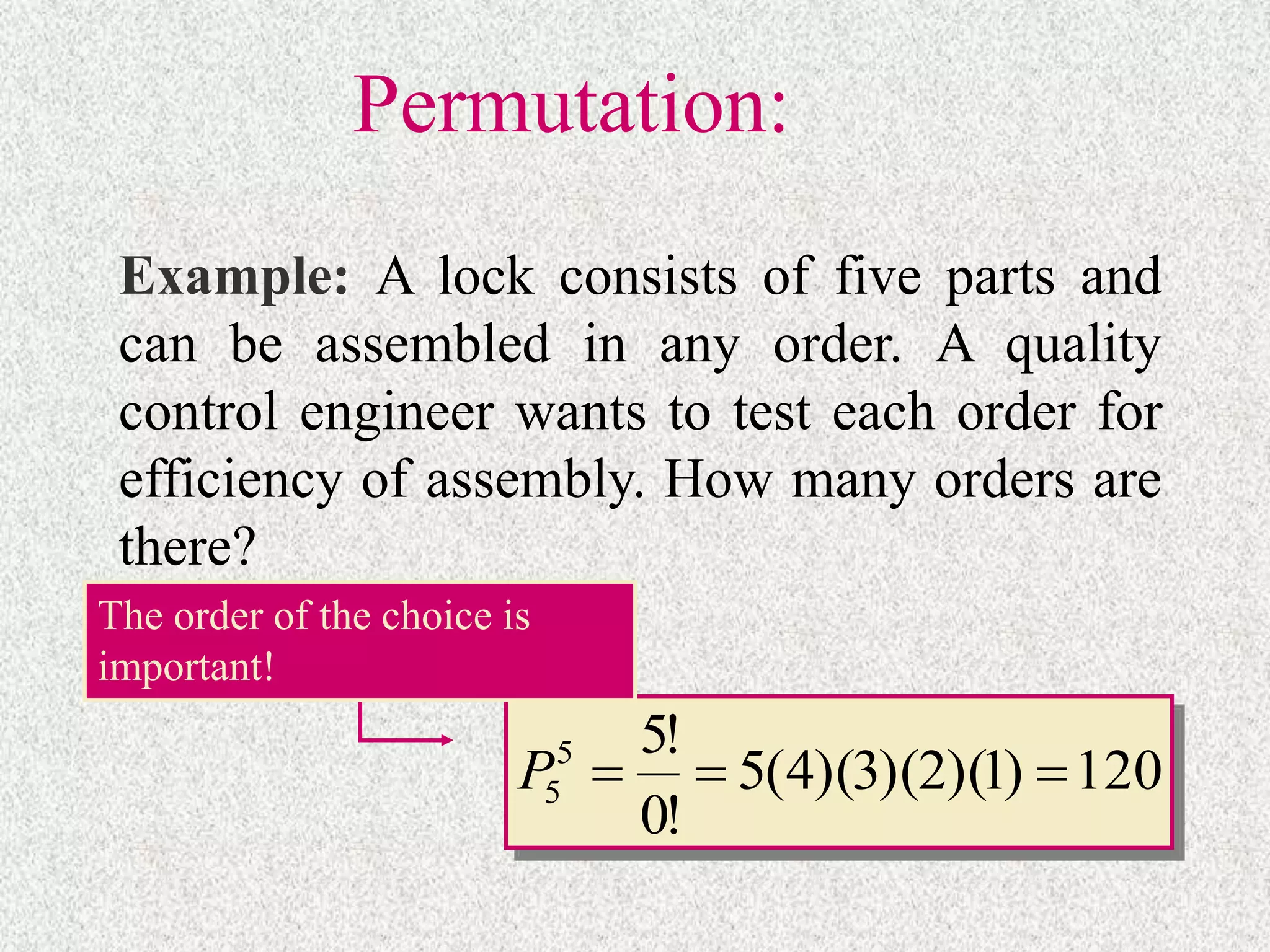

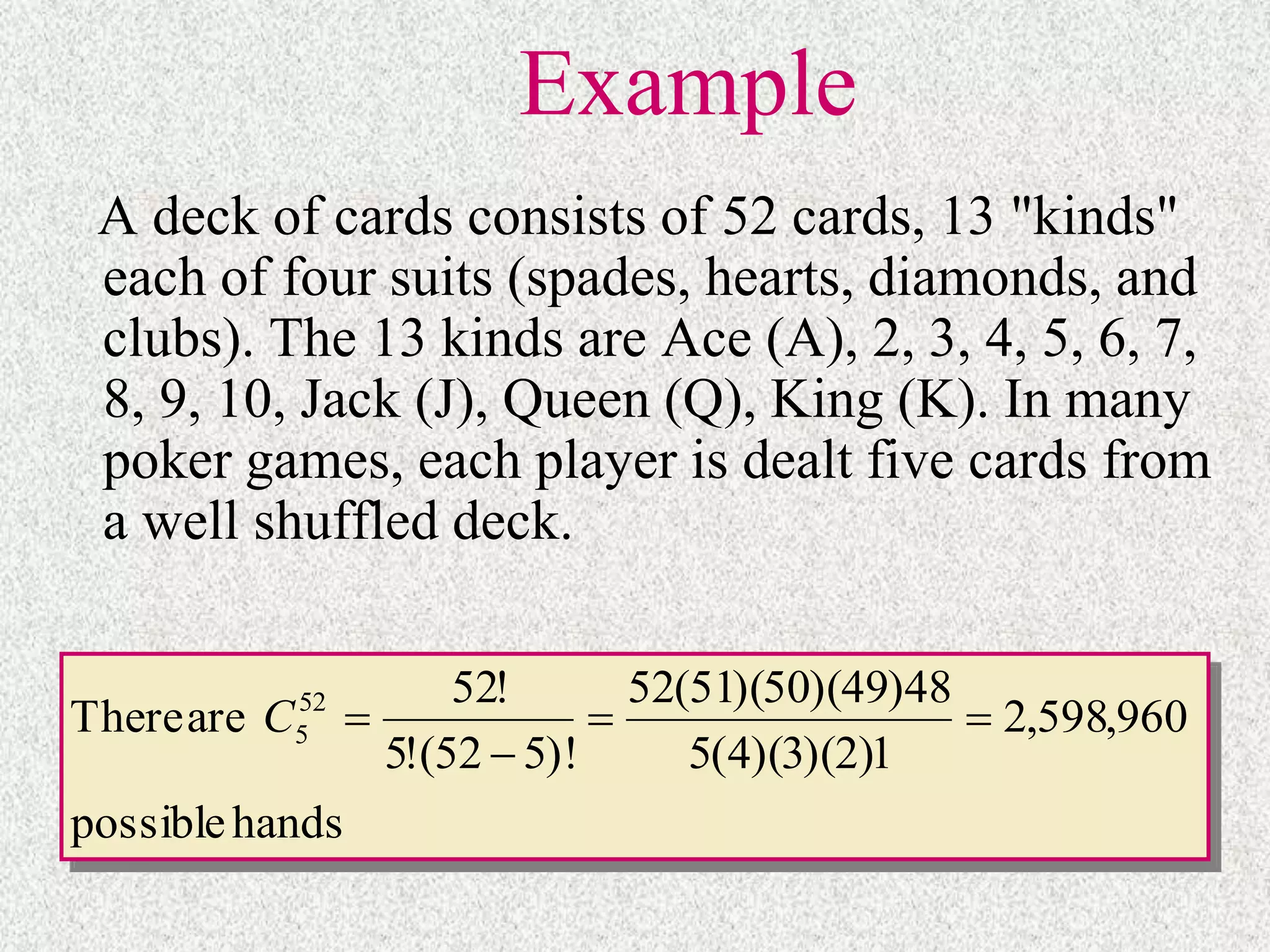

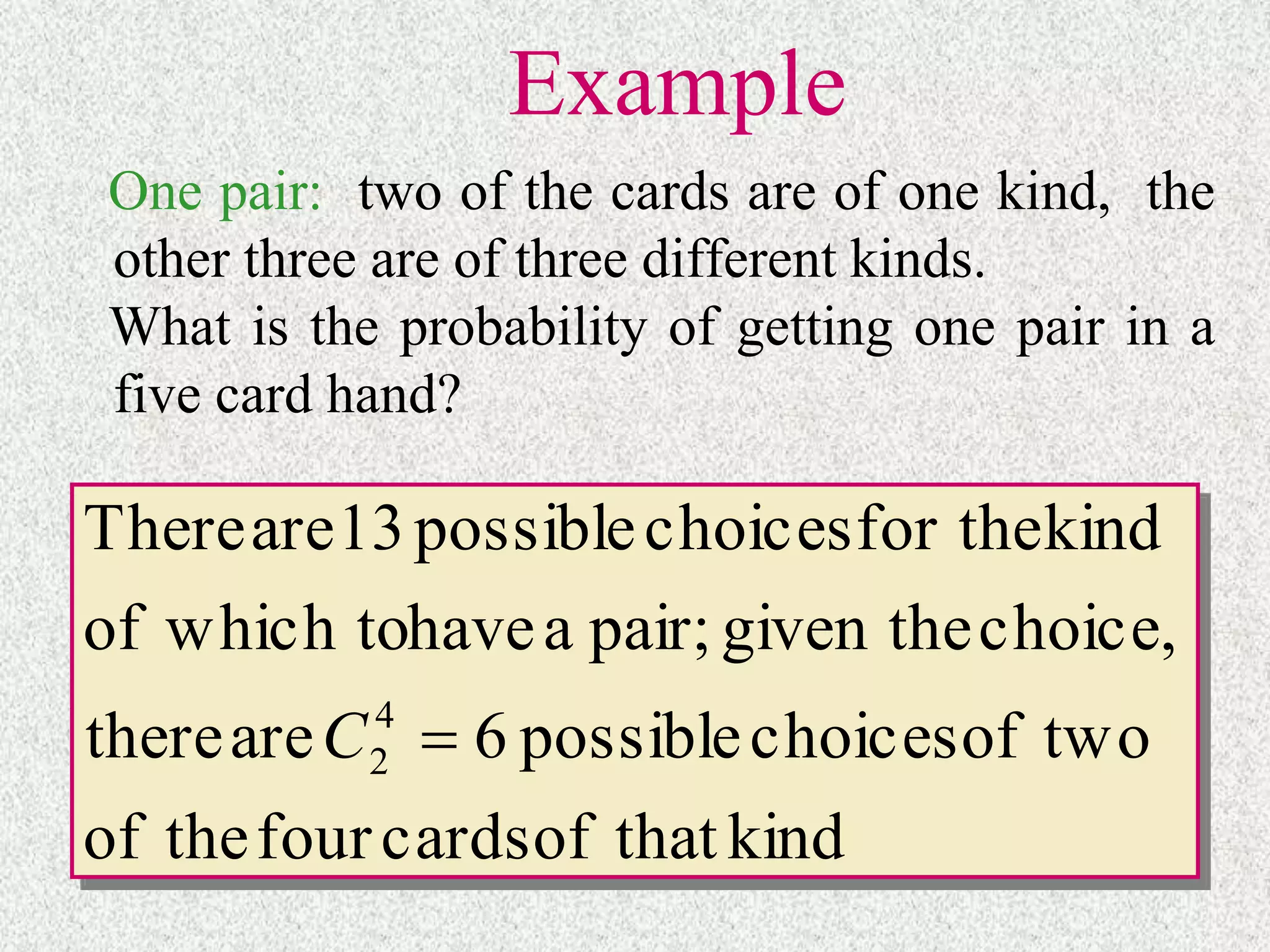


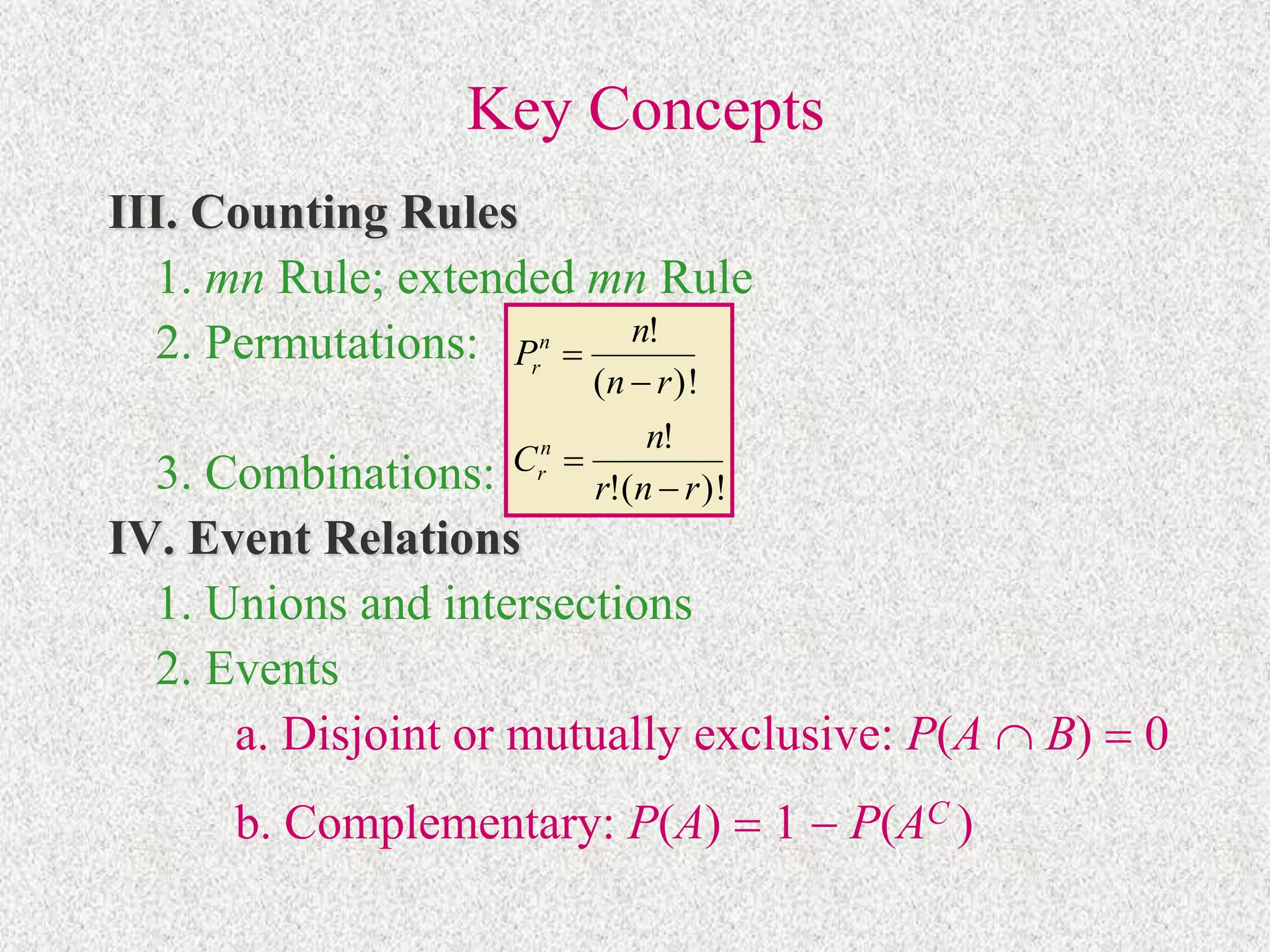
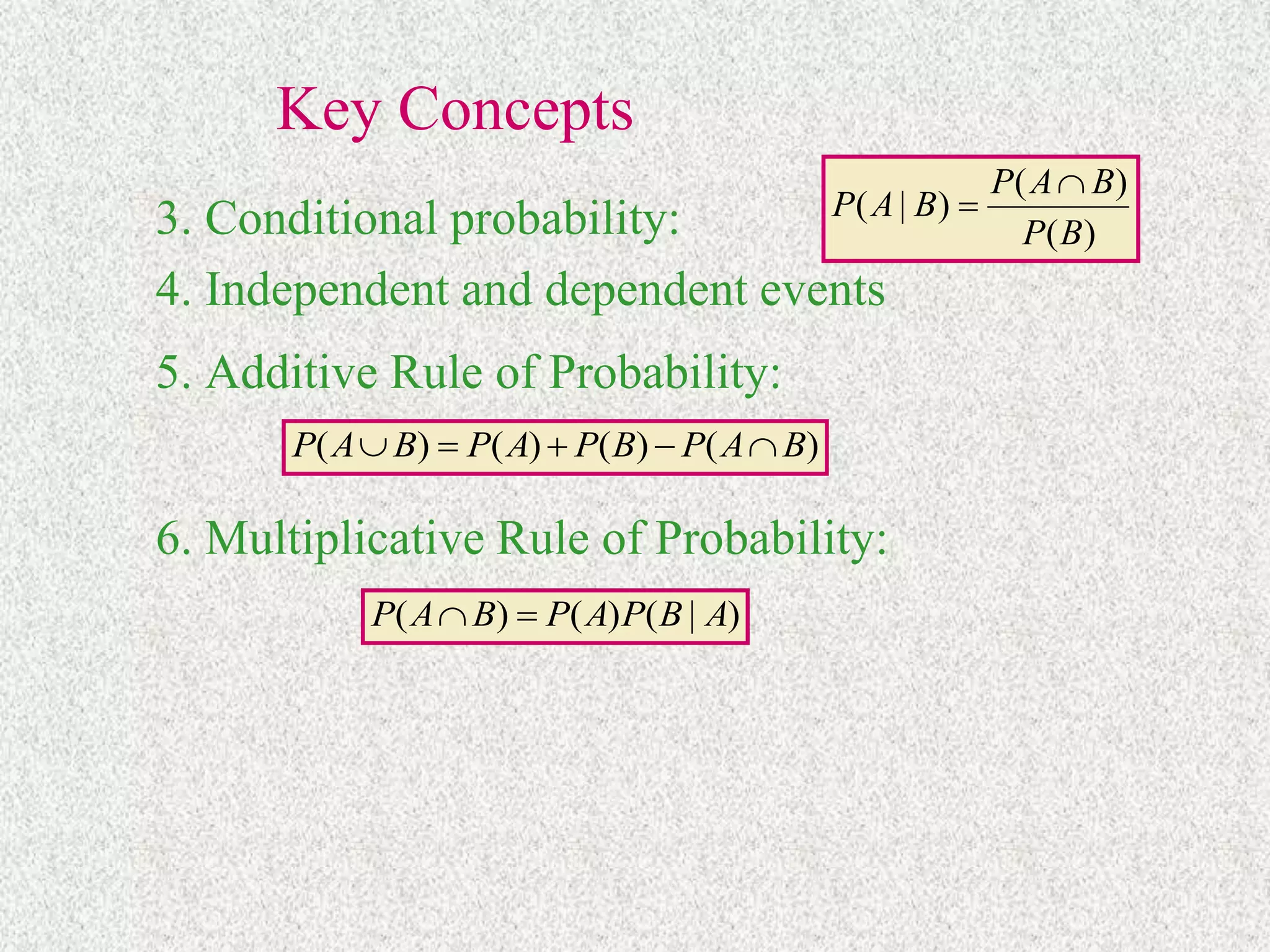

This document provides an overview of probability concepts including: - Probability is a numerical measure of the likelihood of an event occurring, ranging from 0 (impossible) to 1 (certain). - An experiment generates outcomes that make up the sample space. Events are collections of outcomes. - Simple events have a defined probability based on being equally likely. The probability of an event is the sum of probabilities of the simple events it contains. - Rules like the multiplication rule for independent events and additive rule for unions allow calculating probabilities of composite events. - Complement and conditional probabilities relate the probabilities of events. Independent events do not influence each other's probabilities.


