A
PRESENTATION
     ON
 PRINT MEDIA
INTRODUCTION
• With a sort of boon coming in the world of print
  communication with the availability of printing
  press, telegraph, telephone and telex, the publishing
  industry made hey while the sun was shining

• The first hundred years was the time when the print
  industry tried to comprehend the new situation and
  shaped itself into a regular and formal sector but from
  the start of the 19th century, print media in most
  countries started specializing in certain areas.
Cond...
     Since business in the form of advertisements in the print
   was also flourishing, the media enjoyed a great deal of
   financial comfort and provided jobs to tens of thousands of
   people across the globe.
    James Augustus Hickey is considered as the "father of
   Indian press" as he started the first Indian newspaper from
   Calcutta, the Calcutta General Advertise or the Bengal
   Gazette in January, 1780 and thus the history of Indian
   Print Media started from the very same year.
Samachar Darpan in Bengali proved to be the first
newspaper in the Indian languag and the first issue of this
daily was published from the Serampore Mission Press
on May 23, 1818.

On July 1, 1822 the first Gujarati newspaper the
Bombay Samachar was published from Bombay, which
is still extant. The first Hindi newspaper, the Samachar
Sudha Varshan began in 1854.

After such invention this industry had never looked
back. It flourished like a growing tree and within no time
it became a high valued and influencing industry
Definition of Print media


Print media include such
  forms as-
 newspapers,
 magazines,
 books,
 newsletters,
 advertising,
 memos,
 business forms, etc.
Types of Print Media:


Newspapers: Newspapers are the most popular forms of print
media. Newspapers collect, edit and print news reports and
articles


Magazines: Magazines also offer advertisers an opportunity to
incorporate various     new      techniques     and    ideas.
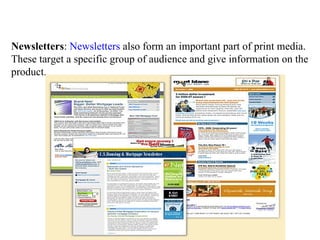
Newsletters: Newsletters also form an important part of print media.
These target a specific group of audience and give information on the
product.
• Brochures:      Brochures    give   detailed
  information about the product. These are
  mainly distributed at events or even at the
  main outlet when a consumer needs to read
  in detail about the product.

 Posters: Posters are forms of outdoor
 advertising. The message in a poster has to be
 brief and eye catching as it targets a person
 on move.
Advantages of Print Media

loyal readership. This can be very useful for
advertisers as compared to advertising on the
Internet.

If you are targeting a particular geographical area, you
can do so with ease through print media.
For example, a local newspaper would be a best
medium to advertise about a new shopping complex.

You can choose the size of the advertisement space.
This will help you to plan the budget of the expenses
to be incurred while advertising.
Cond…
• making a longer impact on the minds of the
  reader, with more in-depth reporting and
  analysis.
DISADVANTAGES OF PRINT MEDIA

The cost incurred can sometimes be expensive considering
the medium you choose.

Newspapers for example, are amongst the public eye only for
a day.

This medium may not always give you a wide reach.
Internet, on the other hand, can target a global audience.

Advertisements may get lost in all the clutter of editorial and
ads by competitors.
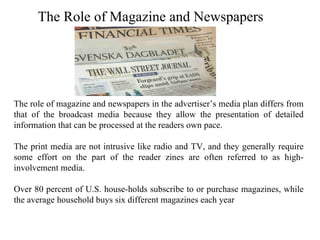
The Role of Magazine and Newspapers


The role of magazine and newspapers in the advertiser’s media plan differs from
that of the broadcast media because they allow the presentation of detailed
information that can be processed at the readers own pace.

The print media are not intrusive like radio and TV, and they generally require
some effort on the part of the reader zines are often referred to as high-
involvement media.

Over 80 percent of U.S. house-holds subscribe to or purchase magazines, while
the average household buys six different magazines each year
TYPES OF NEWSPAPERS

The traditional role of newspapers has been to deliver
prompt, detailed coverage of news as well as to supply
other information and features that appeal to readers.

 Daily newspapers

 Weekly newspapers

 National newspapers

 Special audience newspapers

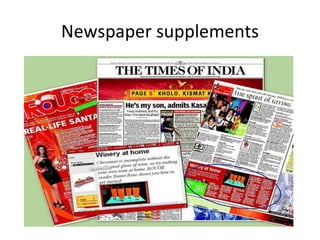
 Newspaper supplements
Newspaper supplements
TYPES OF NEWSPAPER ADVERTISING

The major types of newspaper advertising are display and
classified.

Display advertising

Classified advertising
  -special ads and inserts
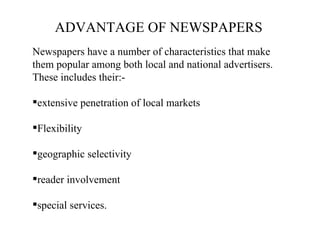
ADVANTAGE OF NEWSPAPERS
Newspapers have a number of characteristics that make
them popular among both local and national advertisers.
These includes their:-

extensive penetration of local markets

Flexibility

geographic selectivity

reader involvement

special services.
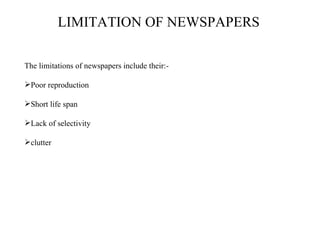
LIMITATION OF NEWSPAPERS

The limitations of newspapers include their:-

Poor reproduction

Short life span

Lack of selectivity

clutter
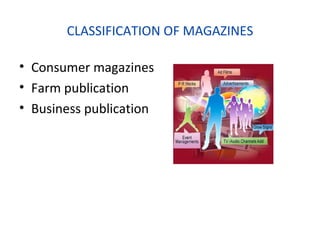
CLASSIFICATION OF MAGAZINES

• Consumer magazines
• Farm publication
• Business publication
Consumer magazine
Business publication
Farm publication
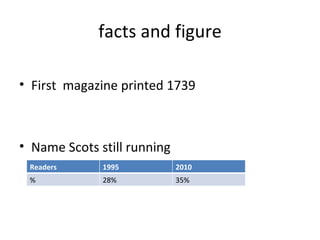
facts and figure

• First magazine printed 1739


• Name Scots still running
 Readers      1995           2010
 %            28%            35%
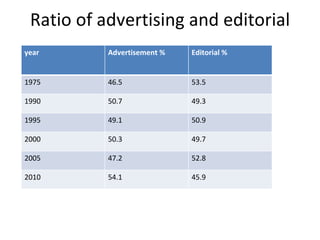
Ratio of advertising and editorial
year       Advertisement %   Editorial %


1975       46.5              53.5

1990       50.7              49.3

1995       49.1              50.9

2000       50.3              49.7

2005       47.2              52.8

2010       54.1              45.9
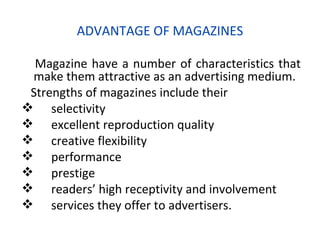
ADVANTAGE OF MAGAZINES

  Magazine have a number of characteristics that
 make them attractive as an advertising medium.
 Strengths of magazines include their
 selectivity
 excellent reproduction quality
 creative flexibility
 performance
 prestige
 readers’ high receptivity and involvement
 services they offer to advertisers.
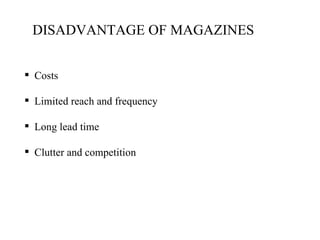
DISADVANTAGE OF MAGAZINES


 Costs

 Limited reach and frequency

 Long lead time

 Clutter and competition
–THANK YOU

Print media

  • 1.
    A PRESENTATION ON PRINT MEDIA
  • 2.
    INTRODUCTION • With asort of boon coming in the world of print communication with the availability of printing press, telegraph, telephone and telex, the publishing industry made hey while the sun was shining • The first hundred years was the time when the print industry tried to comprehend the new situation and shaped itself into a regular and formal sector but from the start of the 19th century, print media in most countries started specializing in certain areas.
  • 3.
    Cond... Since business in the form of advertisements in the print was also flourishing, the media enjoyed a great deal of financial comfort and provided jobs to tens of thousands of people across the globe. James Augustus Hickey is considered as the "father of Indian press" as he started the first Indian newspaper from Calcutta, the Calcutta General Advertise or the Bengal Gazette in January, 1780 and thus the history of Indian Print Media started from the very same year.
  • 4.
    Samachar Darpan inBengali proved to be the first newspaper in the Indian languag and the first issue of this daily was published from the Serampore Mission Press on May 23, 1818. On July 1, 1822 the first Gujarati newspaper the Bombay Samachar was published from Bombay, which is still extant. The first Hindi newspaper, the Samachar Sudha Varshan began in 1854. After such invention this industry had never looked back. It flourished like a growing tree and within no time it became a high valued and influencing industry
  • 5.
    Definition of Printmedia Print media include such forms as-  newspapers,  magazines,  books,  newsletters,  advertising,  memos,  business forms, etc.
  • 6.
    Types of PrintMedia: Newspapers: Newspapers are the most popular forms of print media. Newspapers collect, edit and print news reports and articles Magazines: Magazines also offer advertisers an opportunity to incorporate various new techniques and ideas.
  • 7.
    Newsletters: Newsletters alsoform an important part of print media. These target a specific group of audience and give information on the product.
  • 8.
    • Brochures: Brochures give detailed information about the product. These are mainly distributed at events or even at the main outlet when a consumer needs to read in detail about the product. Posters: Posters are forms of outdoor advertising. The message in a poster has to be brief and eye catching as it targets a person on move.
  • 9.
    Advantages of PrintMedia loyal readership. This can be very useful for advertisers as compared to advertising on the Internet. If you are targeting a particular geographical area, you can do so with ease through print media. For example, a local newspaper would be a best medium to advertise about a new shopping complex. You can choose the size of the advertisement space. This will help you to plan the budget of the expenses to be incurred while advertising.
  • 10.
    Cond… • making alonger impact on the minds of the reader, with more in-depth reporting and analysis.
  • 11.
    DISADVANTAGES OF PRINTMEDIA The cost incurred can sometimes be expensive considering the medium you choose. Newspapers for example, are amongst the public eye only for a day. This medium may not always give you a wide reach. Internet, on the other hand, can target a global audience. Advertisements may get lost in all the clutter of editorial and ads by competitors.
  • 12.
    The Role ofMagazine and Newspapers The role of magazine and newspapers in the advertiser’s media plan differs from that of the broadcast media because they allow the presentation of detailed information that can be processed at the readers own pace. The print media are not intrusive like radio and TV, and they generally require some effort on the part of the reader zines are often referred to as high- involvement media. Over 80 percent of U.S. house-holds subscribe to or purchase magazines, while the average household buys six different magazines each year
  • 13.
    TYPES OF NEWSPAPERS Thetraditional role of newspapers has been to deliver prompt, detailed coverage of news as well as to supply other information and features that appeal to readers.  Daily newspapers  Weekly newspapers  National newspapers  Special audience newspapers  Newspaper supplements
  • 14.
  • 15.
    TYPES OF NEWSPAPERADVERTISING The major types of newspaper advertising are display and classified. Display advertising Classified advertising -special ads and inserts
  • 16.
    ADVANTAGE OF NEWSPAPERS Newspapershave a number of characteristics that make them popular among both local and national advertisers. These includes their:- extensive penetration of local markets Flexibility geographic selectivity reader involvement special services.
  • 17.
    LIMITATION OF NEWSPAPERS Thelimitations of newspapers include their:- Poor reproduction Short life span Lack of selectivity clutter
  • 18.
    CLASSIFICATION OF MAGAZINES •Consumer magazines • Farm publication • Business publication
  • 19.
  • 20.
  • 21.
  • 22.
    facts and figure •First magazine printed 1739 • Name Scots still running Readers 1995 2010 % 28% 35%
  • 23.
    Ratio of advertisingand editorial year Advertisement % Editorial % 1975 46.5 53.5 1990 50.7 49.3 1995 49.1 50.9 2000 50.3 49.7 2005 47.2 52.8 2010 54.1 45.9
  • 24.
    ADVANTAGE OF MAGAZINES Magazine have a number of characteristics that make them attractive as an advertising medium. Strengths of magazines include their  selectivity  excellent reproduction quality  creative flexibility  performance  prestige  readers’ high receptivity and involvement  services they offer to advertisers.
  • 25.
    DISADVANTAGE OF MAGAZINES Costs  Limited reach and frequency  Long lead time  Clutter and competition
  • 26.