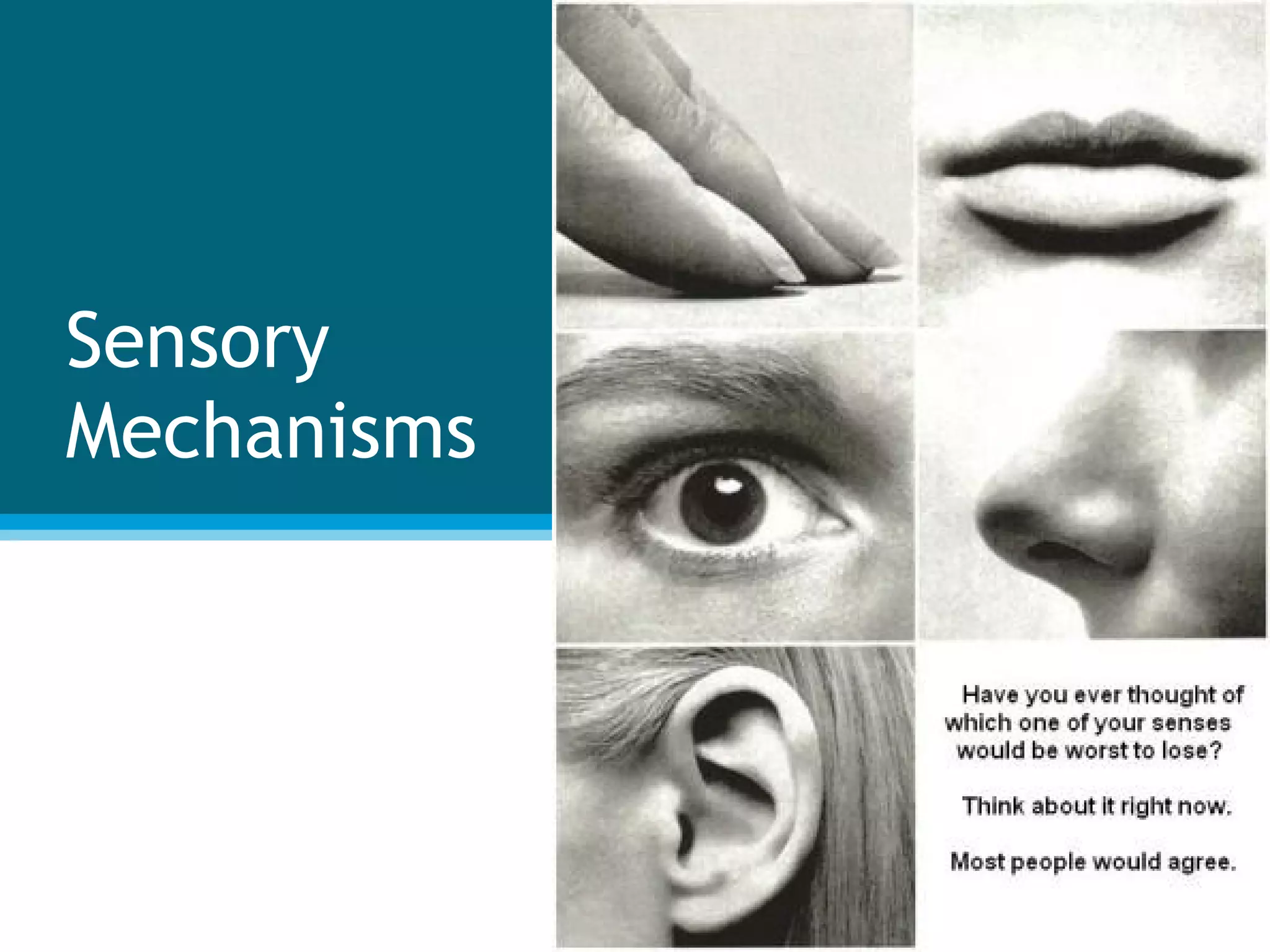
Sensory Mechanisms
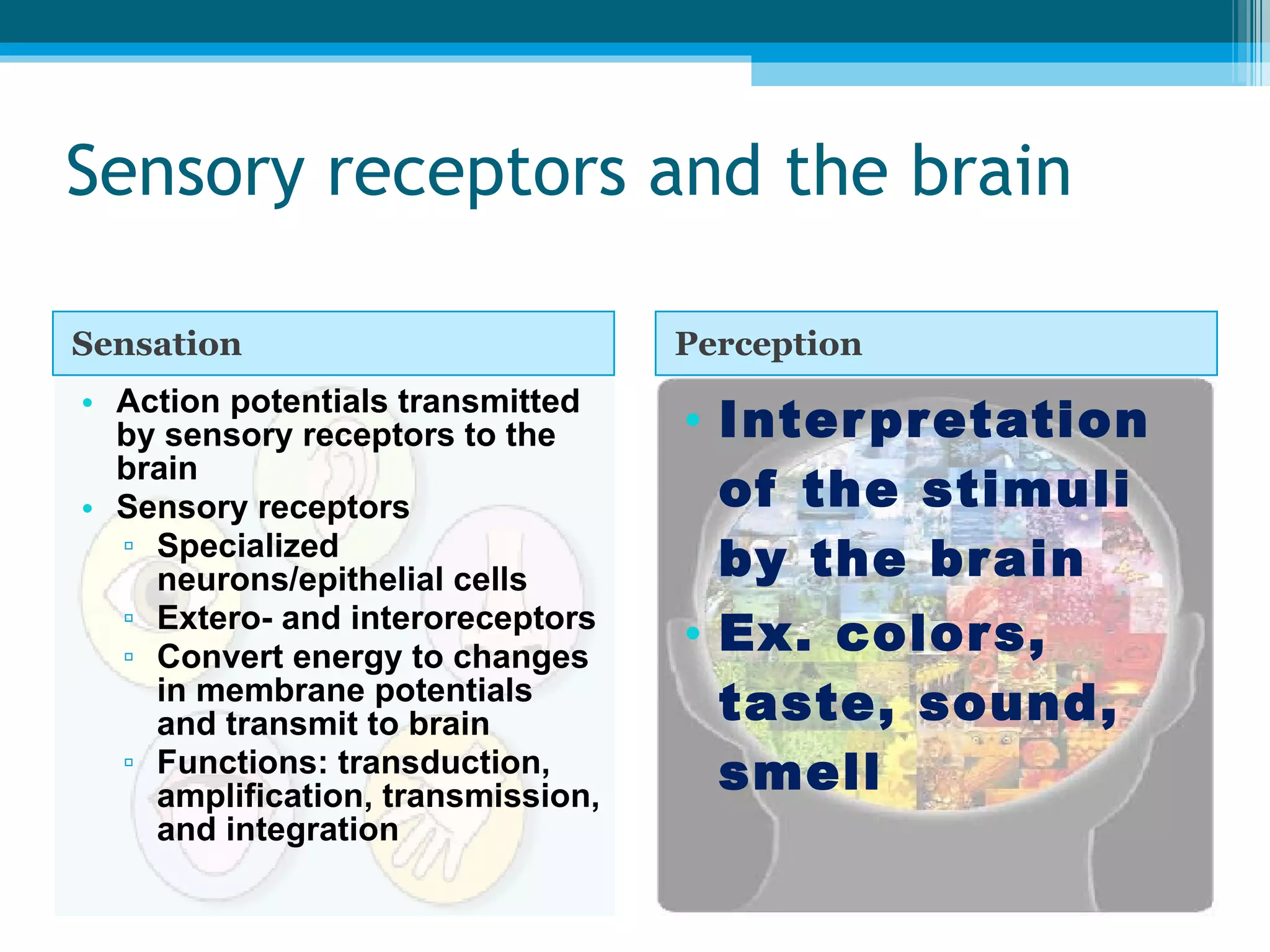
Sensory receptors and the brain Sensation Perception Action potentials transmitted by sensory receptors to the brain Sensory receptors Specialized neurons/epithelial cells Extero- and interoreceptors Convert energy to changes in membrane potentials and transmit to brain Functions: transduction, amplification, transmission, and integration Interpretation of the stimuli by the brain Ex. colors, taste, sound, smell
 
1. Follow the movement of the rotating pink dot with your eyes. 2. Stare at the cross in the center. 3. Concentrate on the cross at the center for a long period of time.
Is the blue side in the front or back of the cube?
 
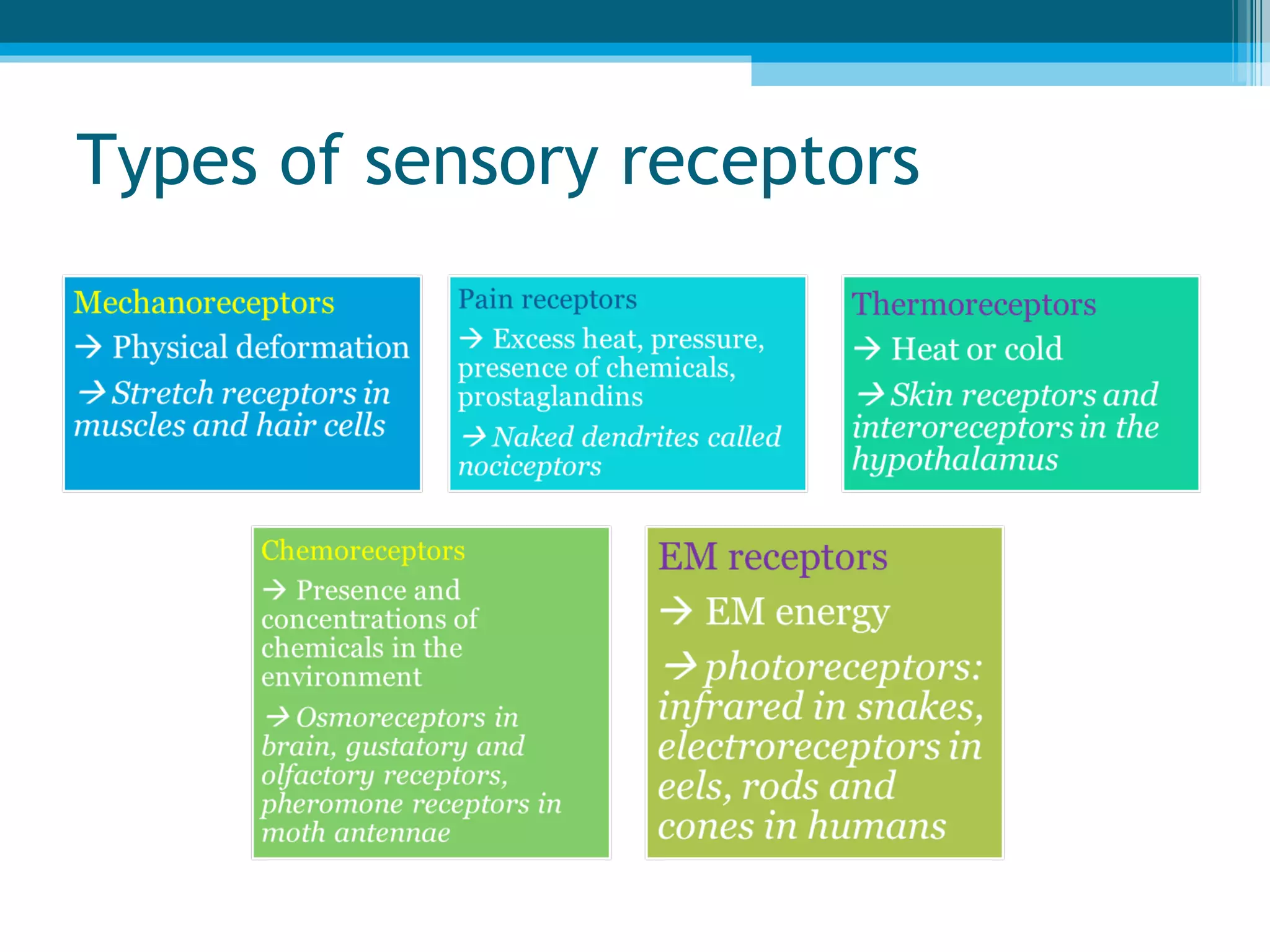
Types of sensory receptors
Vision and photoreceptors * All have pigment molecules that absorb light
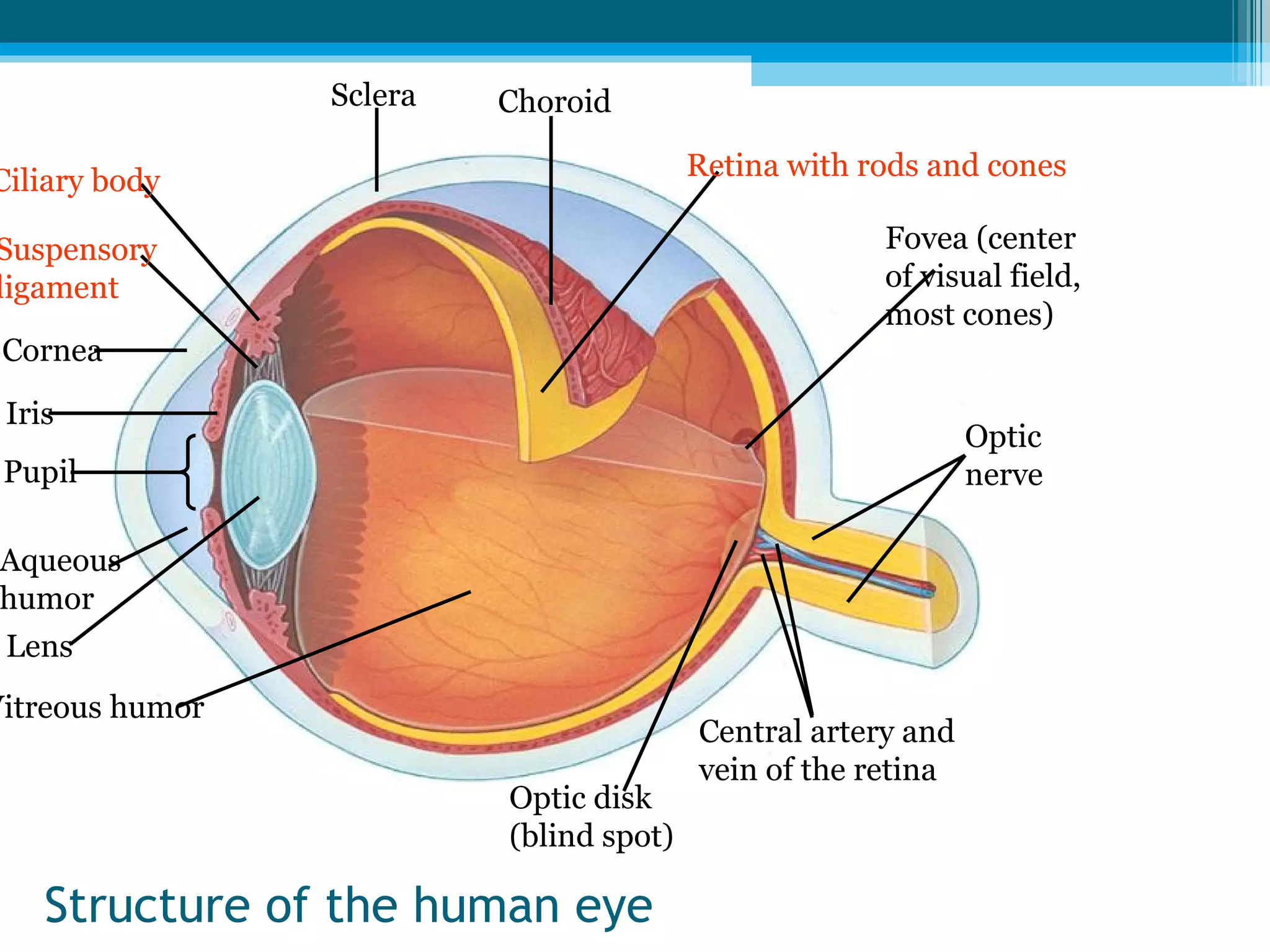
Structure of the human eye Ciliary body Iris Suspensory ligament Cornea Pupil Aqueous humor Lens Vitreous humor Optic disk (blind spot) Central artery and vein of the retina Optic nerve Fovea (center of visual field,  most cones) Retina with rods and cones Choroid Sclera
 
Hearing and equilibrium in invertebrates Statocysts in invertebrates Ciliated receptor cells Cilia Statolith Sensory nerve fibers 1 mm Tympanic membrane
Hearing and equilibrium in mammals Pinna Auditory  canal Eustachian  tube Tympanic membrane Stapes Incus Malleus Skull bones Semicircular canals Auditory nerve, to brain Cochlea Tympanic membrane Oval window Eustachian  tube Round window Vestibular canal Tympanic canal Auditory nerve Bone Cochlear duct Hair cells Tectorial membrane Basilar membrane To auditory nerve Axons of  sensory neurons 1 Overview of ear structure 2 The middle ear and inner ear 4  The organ of Corti 3 The cochlea Organ of Corti Outer ear Middle ear Inner ear
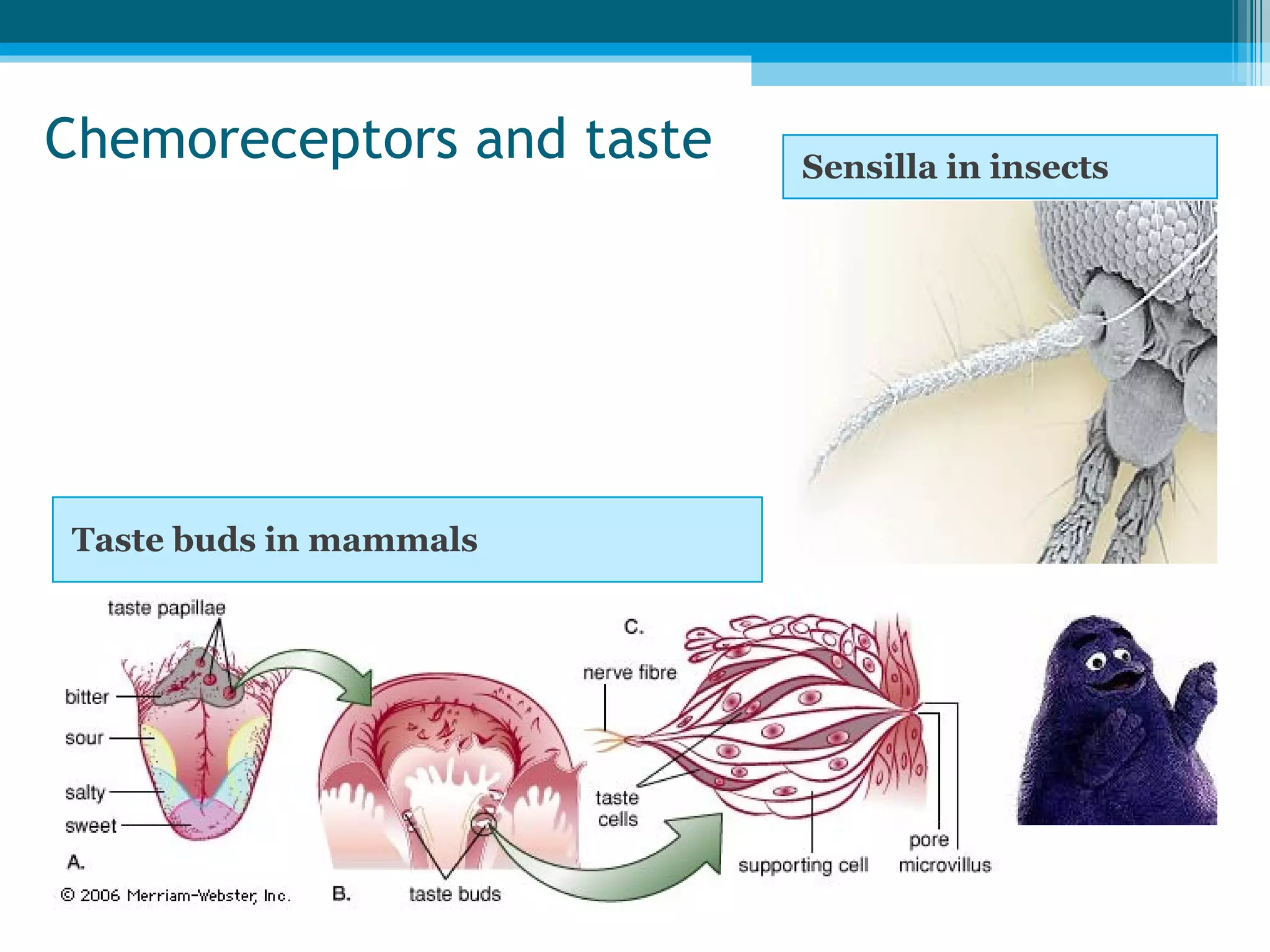
Chemoreceptors and taste Sensilla in insects Taste buds in mammals
Chemoreceptors and smell  Brain Nasal cavity Odorant Odorant receptors Plasma membrane Odorant Cilia Chemoreceptor Epithelial cell Bone Olfactory bulb Action potentials Mucus
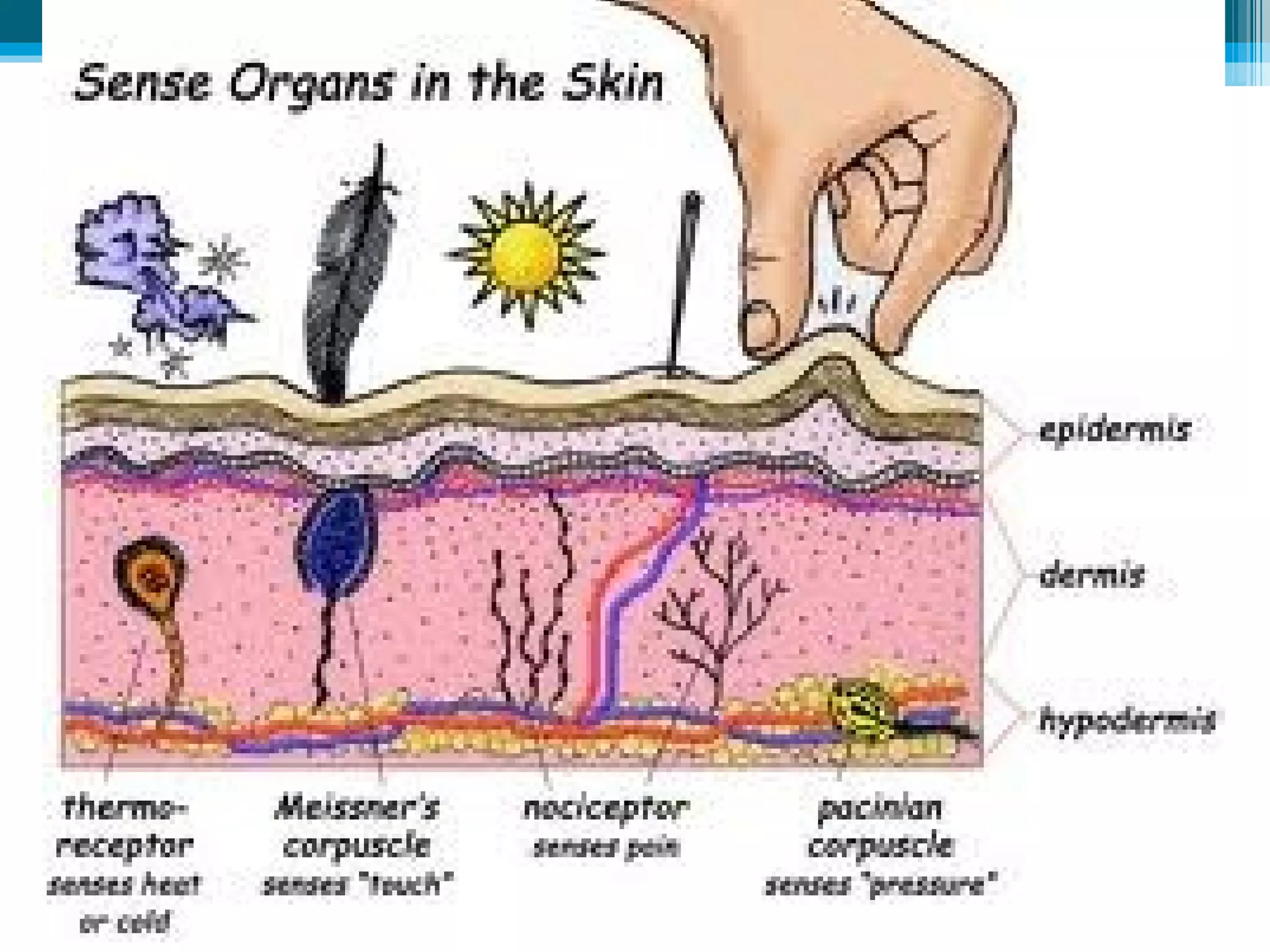
Mechanoreceptors and pain receptors in the skin

Presentation 17 - Sensory Mechanisms

  • 1.
  • 2.
    Sensory receptors andthe brain Sensation Perception Action potentials transmitted by sensory receptors to the brain Sensory receptors Specialized neurons/epithelial cells Extero- and interoreceptors Convert energy to changes in membrane potentials and transmit to brain Functions: transduction, amplification, transmission, and integration Interpretation of the stimuli by the brain Ex. colors, taste, sound, smell
  • 3.
  • 4.
    1. Follow themovement of the rotating pink dot with your eyes. 2. Stare at the cross in the center. 3. Concentrate on the cross at the center for a long period of time.
  • 5.
    Is the blueside in the front or back of the cube?
  • 6.
  • 7.
  • 8.
    Vision and photoreceptors* All have pigment molecules that absorb light
  • 9.
    Structure of thehuman eye Ciliary body Iris Suspensory ligament Cornea Pupil Aqueous humor Lens Vitreous humor Optic disk (blind spot) Central artery and vein of the retina Optic nerve Fovea (center of visual field, most cones) Retina with rods and cones Choroid Sclera
  • 10.
  • 11.
    Hearing and equilibriumin invertebrates Statocysts in invertebrates Ciliated receptor cells Cilia Statolith Sensory nerve fibers 1 mm Tympanic membrane
  • 12.
    Hearing and equilibriumin mammals Pinna Auditory canal Eustachian tube Tympanic membrane Stapes Incus Malleus Skull bones Semicircular canals Auditory nerve, to brain Cochlea Tympanic membrane Oval window Eustachian tube Round window Vestibular canal Tympanic canal Auditory nerve Bone Cochlear duct Hair cells Tectorial membrane Basilar membrane To auditory nerve Axons of sensory neurons 1 Overview of ear structure 2 The middle ear and inner ear 4 The organ of Corti 3 The cochlea Organ of Corti Outer ear Middle ear Inner ear
  • 13.
    Chemoreceptors and tasteSensilla in insects Taste buds in mammals
  • 14.
    Chemoreceptors and smell Brain Nasal cavity Odorant Odorant receptors Plasma membrane Odorant Cilia Chemoreceptor Epithelial cell Bone Olfactory bulb Action potentials Mucus
  • 15.
    Mechanoreceptors and painreceptors in the skin