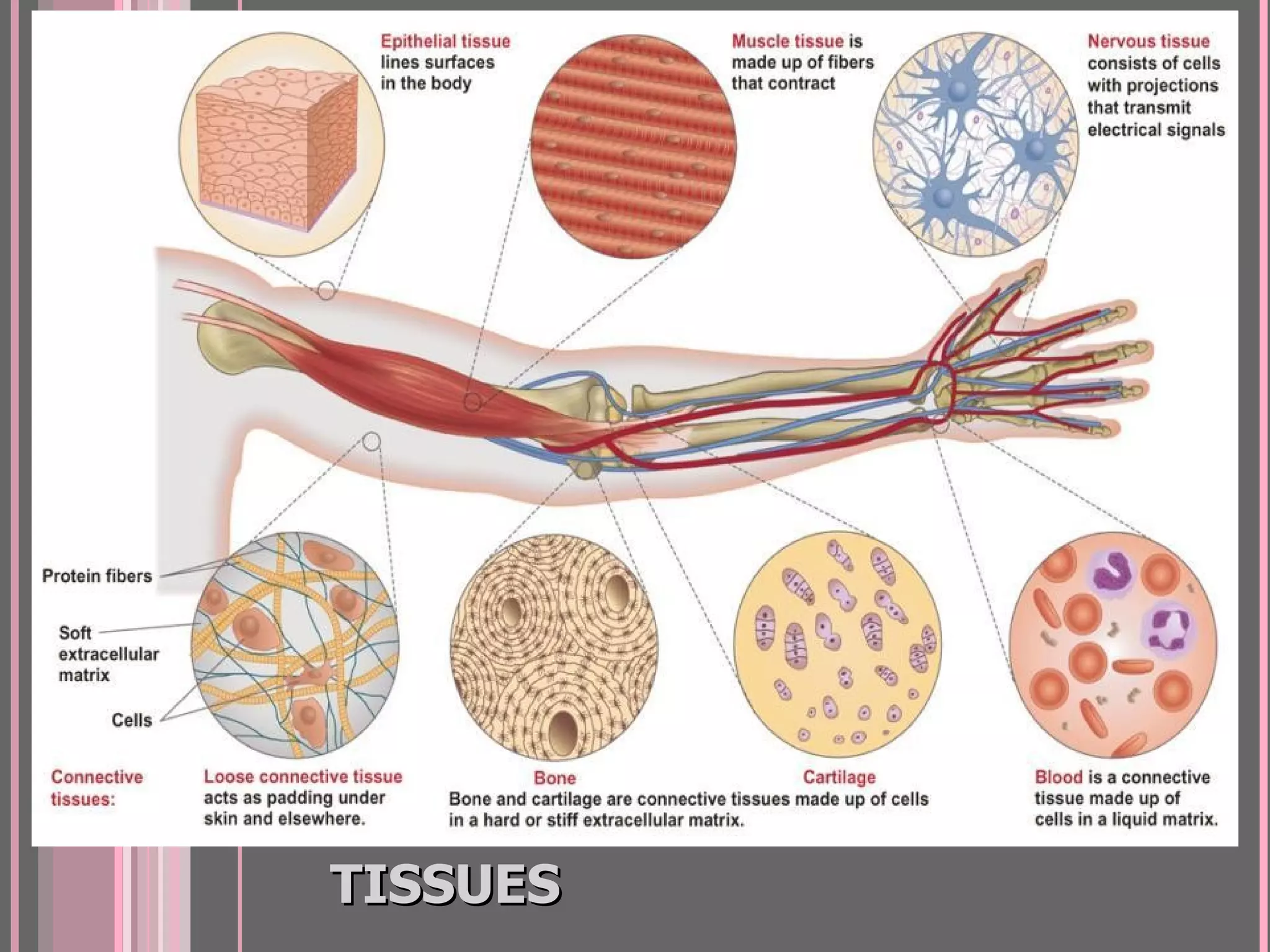
FOUR TYPES OF ANIMAL
TISSUES
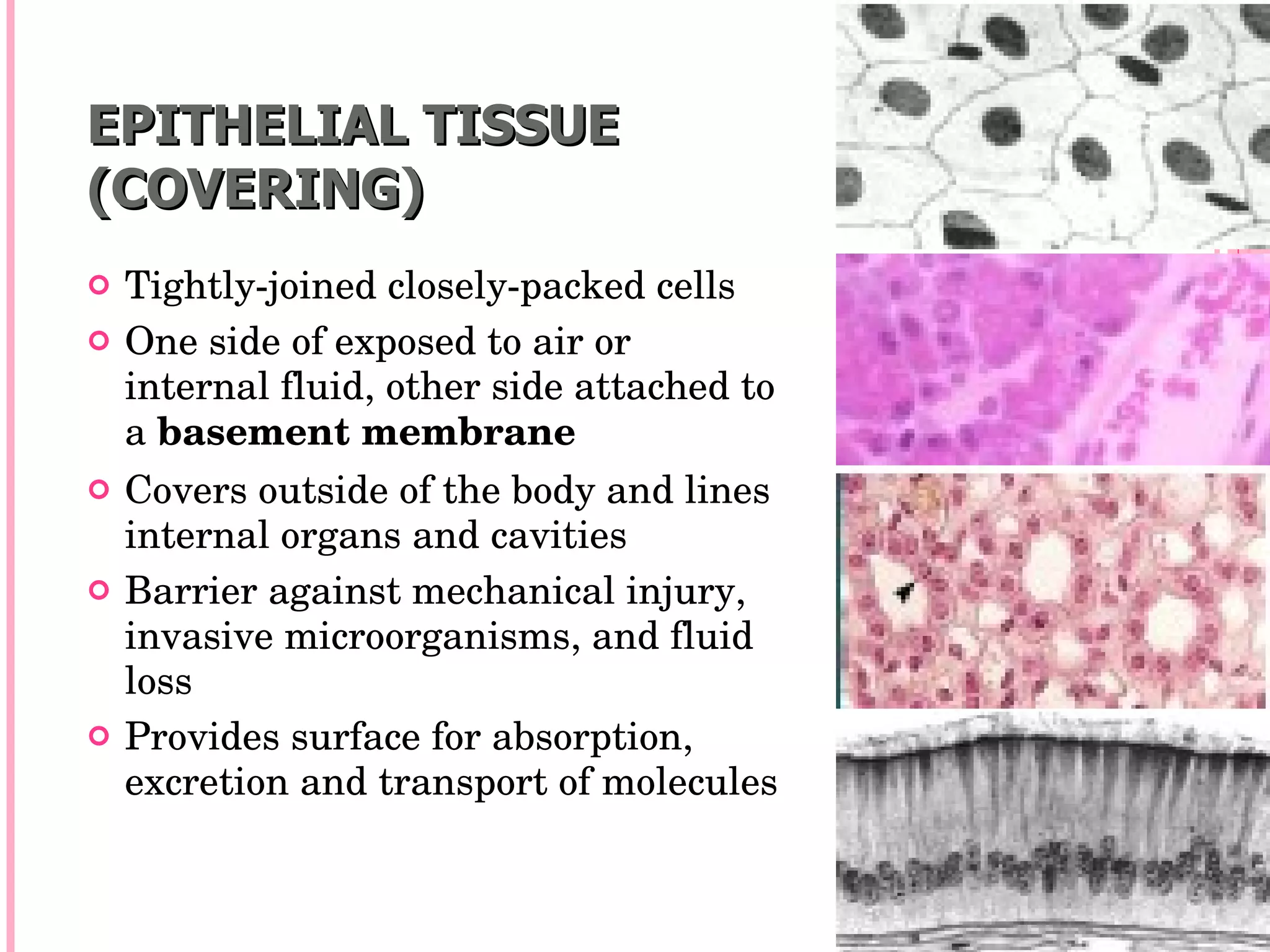
EPITHELIAL TISSUE
(COVERING)
   Tightly­joined closely­packed cells
   One side of exposed to air or 
    internal fluid, other side attached to 
    a basement membrane
   Covers outside of the body and lines 
    internal organs and cavities
   Barrier against mechanical injury, 
    invasive microorganisms, and fluid 
    loss
   Provides surface for absorption, 
    excretion and transport of molecules
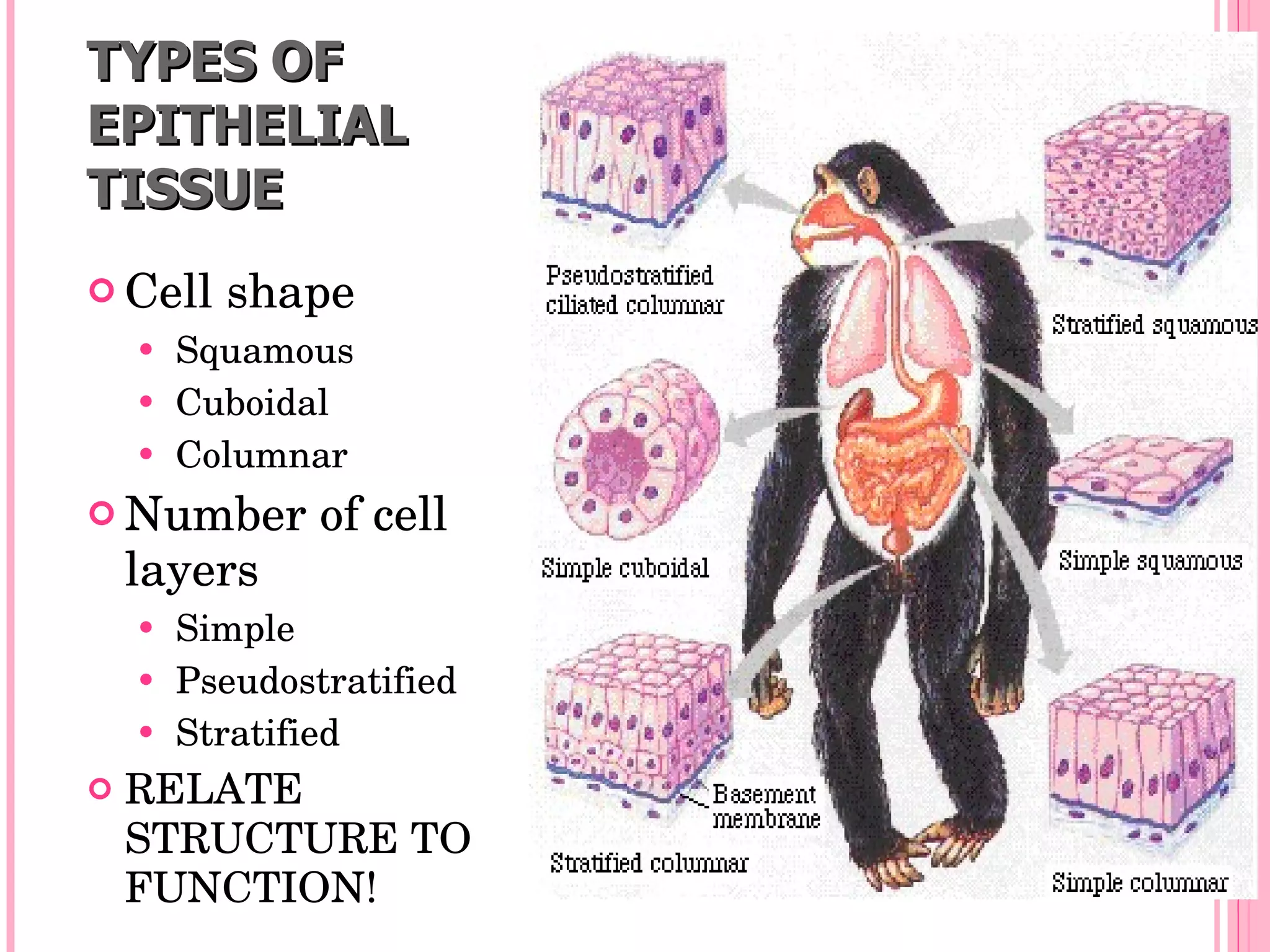
TYPES OF
EPITHELIAL
TISSUE
 Cell shape
     Squamous
     Cuboidal
     Columnar

 Number of cell 
    layers
     Simple
     Pseudostratified
     Stratified
   RELATE 
    STRUCTURE TO 
    FUNCTION!
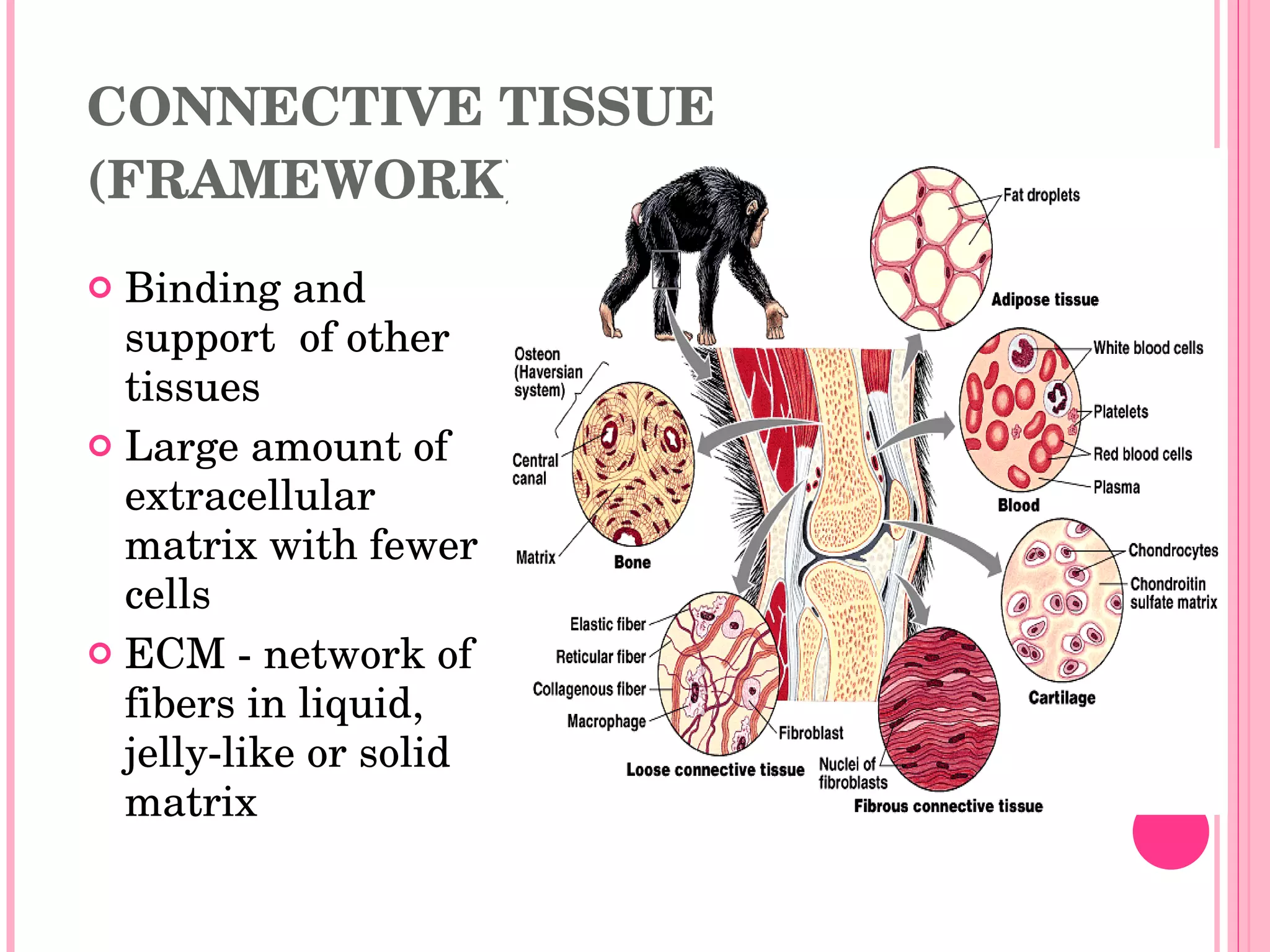
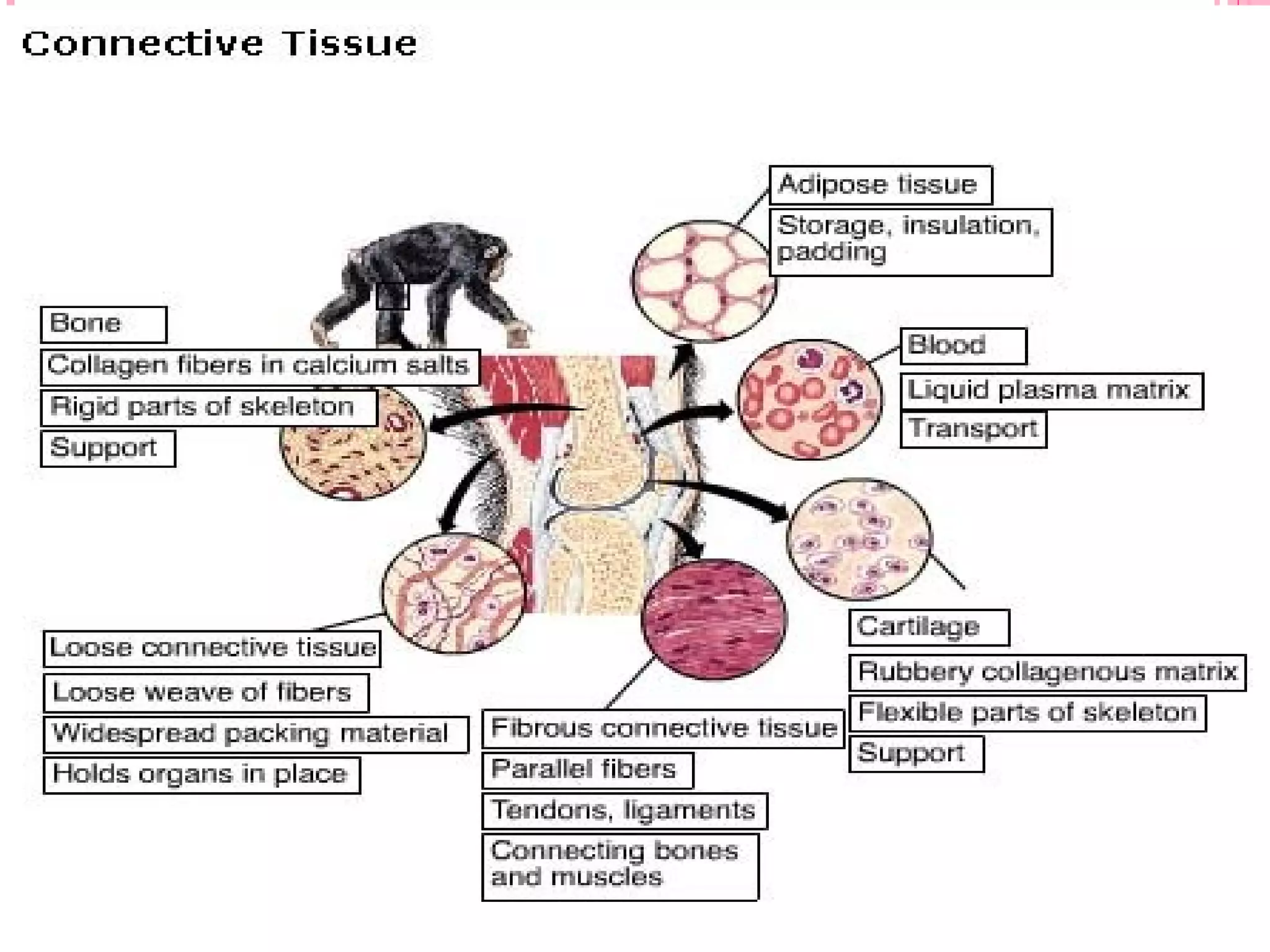
CONNECTIVE TISSUE
(FRAMEWORK)
 Binding and 
  support  of other 
  tissues
 Large amount of 
  extracellular 
  matrix with fewer 
  cells
 ECM ­ network of 
  fibers in liquid, 
  jelly­like or solid 
  matrix
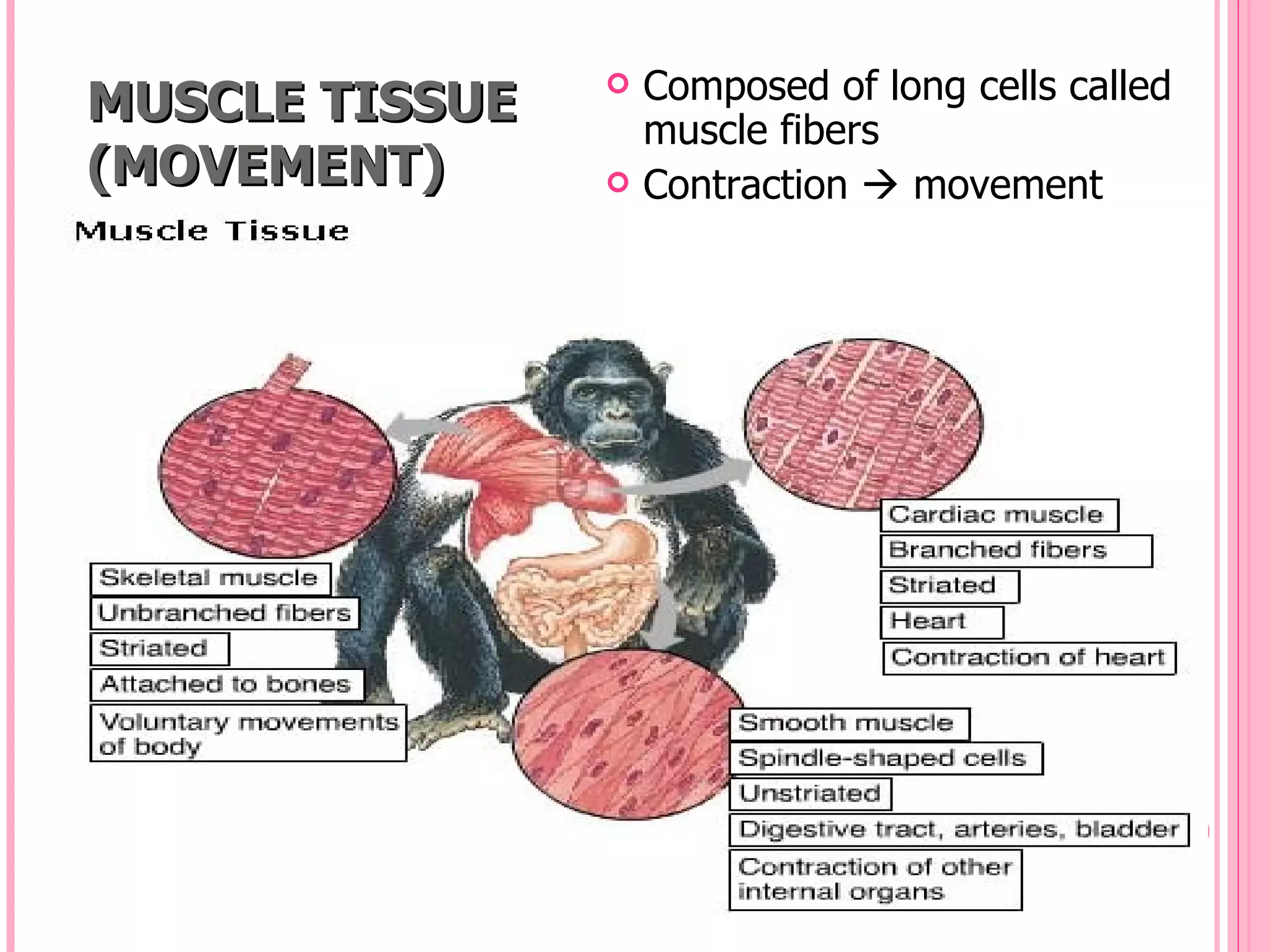
MUSCLE TISSUE      Composed of long cells called
                    muscle fibers
(MOVEMENT)         Contraction  movement
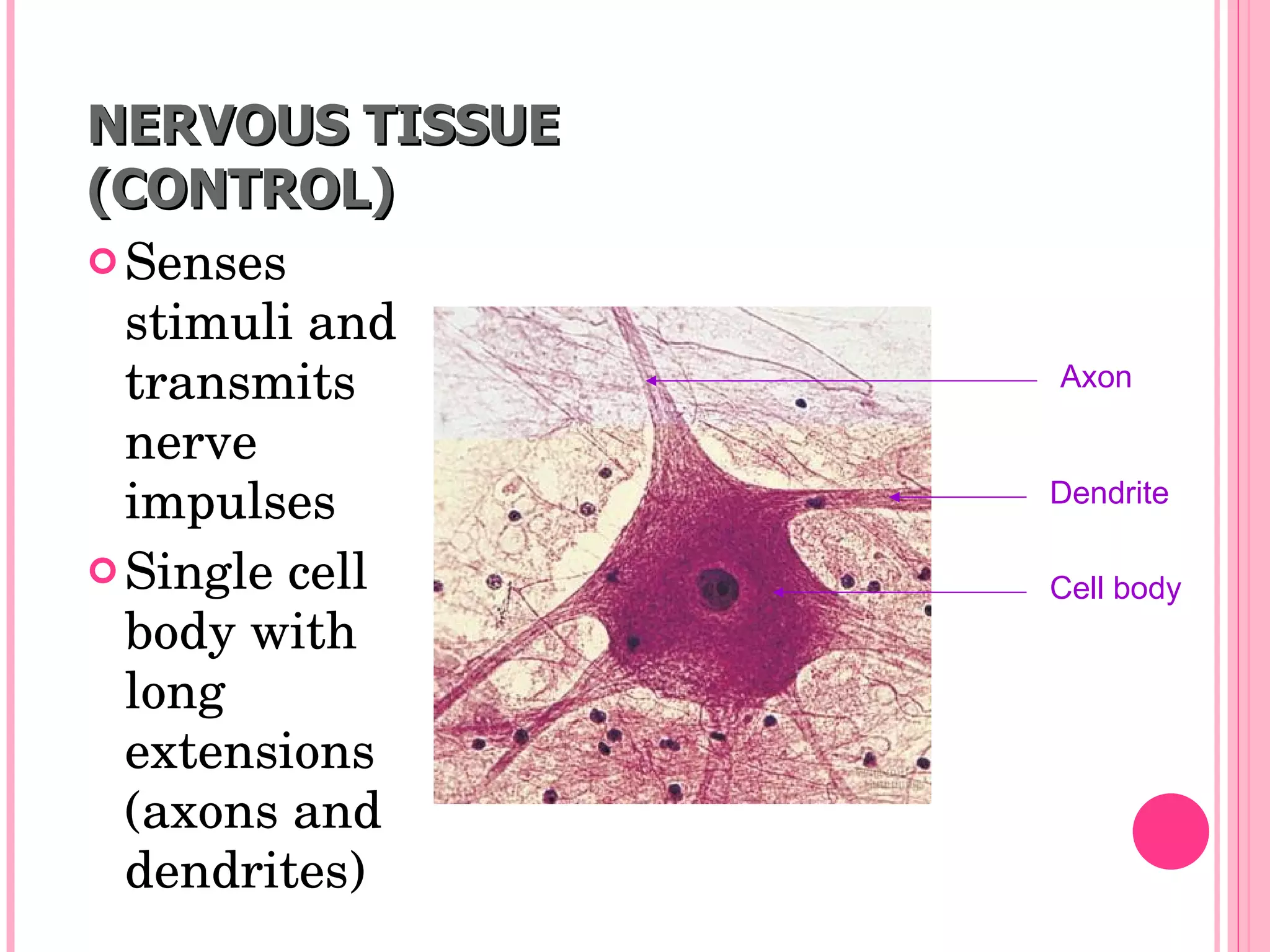
NERVOUS TISSUE
(CONTROL)
 Senses 
  stimuli and 
  transmits      Axon

  nerve 
  impulses       Dendrite

 Single cell    Cell body
  body with 
  long 
  extensions 
  (axons and 
  dendrites)
Tissue Type         Epithelial           Connective             Muscle                Nerve

  Cell Shape          Flattened,       Irregular or round      Elongated          Cell appendages
                      cuboidal,                                                      branched
                      columnar
     Cell            Single              Scattered in         In sheets or         Isolated or
 Arrangement        multilayered            matrix               bundles            networked

   Location       Body covering or      Supports other       Lining internal      Concentrated in
                  lining organs or         organs             organs, make        brain and spinal
                       cavities                             skeletal muscles       cord + all over
                                                                                      the body
Surface Feature    Cilia, microvilli           -                     -                    -
    of Cells
 Matrix Type         Basement          Varied – protein              -                    -
                     membrane          fibers + liquid,
                                       gelatinous, firm
                                         to calcified
Matrix Amount         Minimal              Extensive             Absent               Absent

Unique Feature     No direct blood     Cartilage has no       Can generate         Can generate
                  supply, except for    blood supply        electrical signals,   electrical signal
                       glands                                   force and
                                                               movement

Presentation 04 - Animal Tissues

  • 1.
    FOUR TYPES OFANIMAL TISSUES
  • 2.
    EPITHELIAL TISSUE (COVERING)  Tightly­joined closely­packed cells  One side of exposed to air or  internal fluid, other side attached to  a basement membrane  Covers outside of the body and lines  internal organs and cavities  Barrier against mechanical injury,  invasive microorganisms, and fluid  loss  Provides surface for absorption,  excretion and transport of molecules
  • 3.
    TYPES OF EPITHELIAL TISSUE  Cell shape  Squamous  Cuboidal  Columnar  Number of cell  layers  Simple  Pseudostratified  Stratified  RELATE  STRUCTURE TO  FUNCTION!
  • 4.
    CONNECTIVE TISSUE (FRAMEWORK)  Binding and  support  of other  tissues  Large amount of  extracellular  matrix with fewer  cells  ECM ­ network of  fibers in liquid,  jelly­like or solid  matrix
  • 6.
    MUSCLE TISSUE  Composed of long cells called muscle fibers (MOVEMENT)  Contraction  movement
  • 7.
    NERVOUS TISSUE (CONTROL)  Senses  stimuli and  transmits  Axon nerve  impulses Dendrite  Single cell  Cell body body with  long  extensions  (axons and  dendrites)
  • 8.
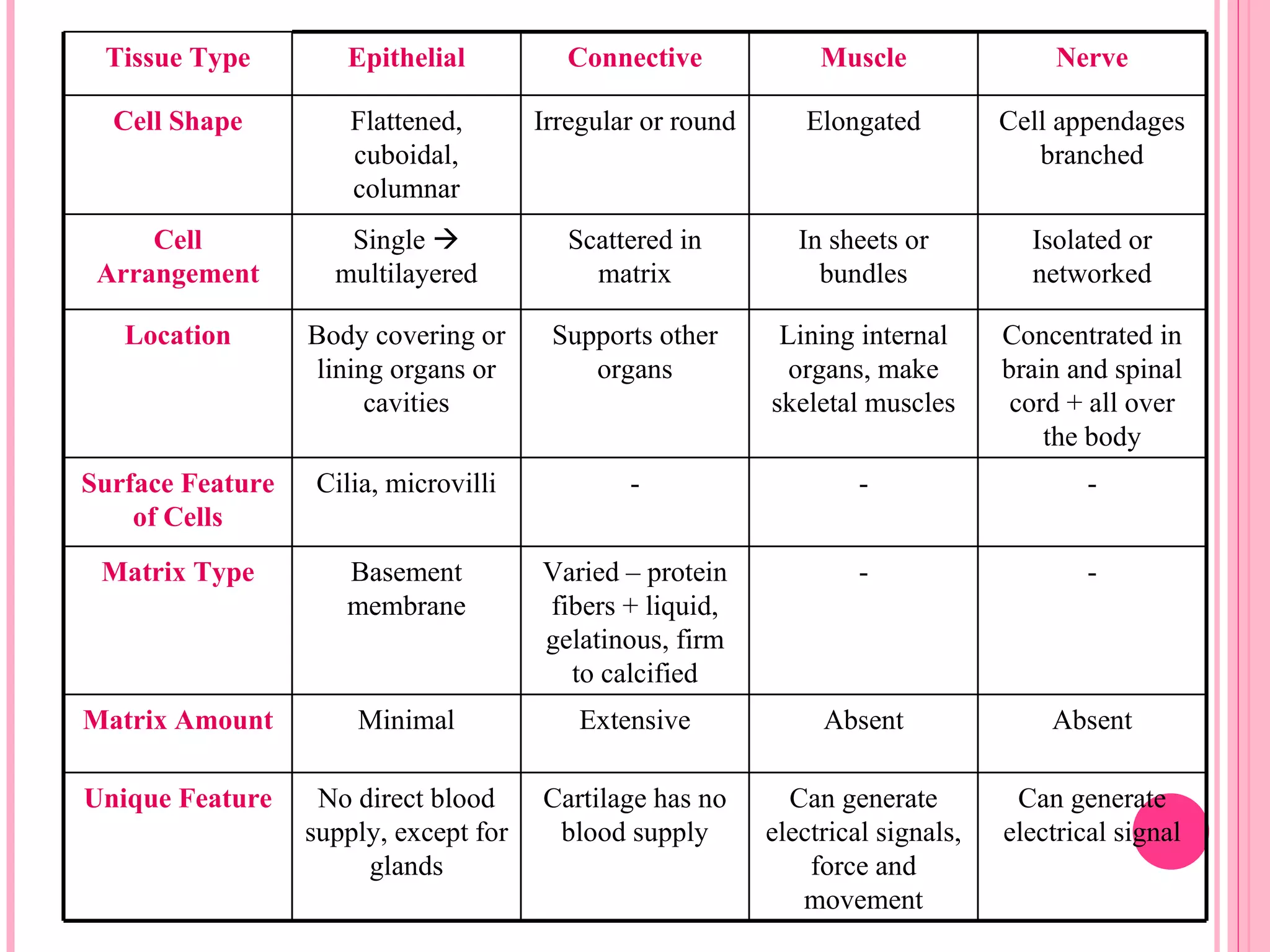
    Tissue Type Epithelial Connective Muscle Nerve Cell Shape Flattened, Irregular or round Elongated Cell appendages cuboidal, branched columnar Cell Single  Scattered in In sheets or Isolated or Arrangement multilayered matrix bundles networked Location Body covering or Supports other Lining internal Concentrated in lining organs or organs organs, make brain and spinal cavities skeletal muscles cord + all over the body Surface Feature Cilia, microvilli - - - of Cells Matrix Type Basement Varied – protein - - membrane fibers + liquid, gelatinous, firm to calcified Matrix Amount Minimal Extensive Absent Absent Unique Feature No direct blood Cartilage has no Can generate Can generate supply, except for blood supply electrical signals, electrical signal glands force and movement