Downloaded 854 times
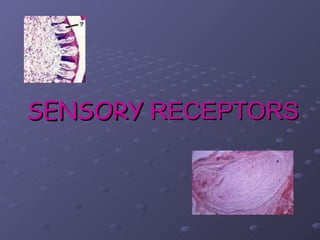
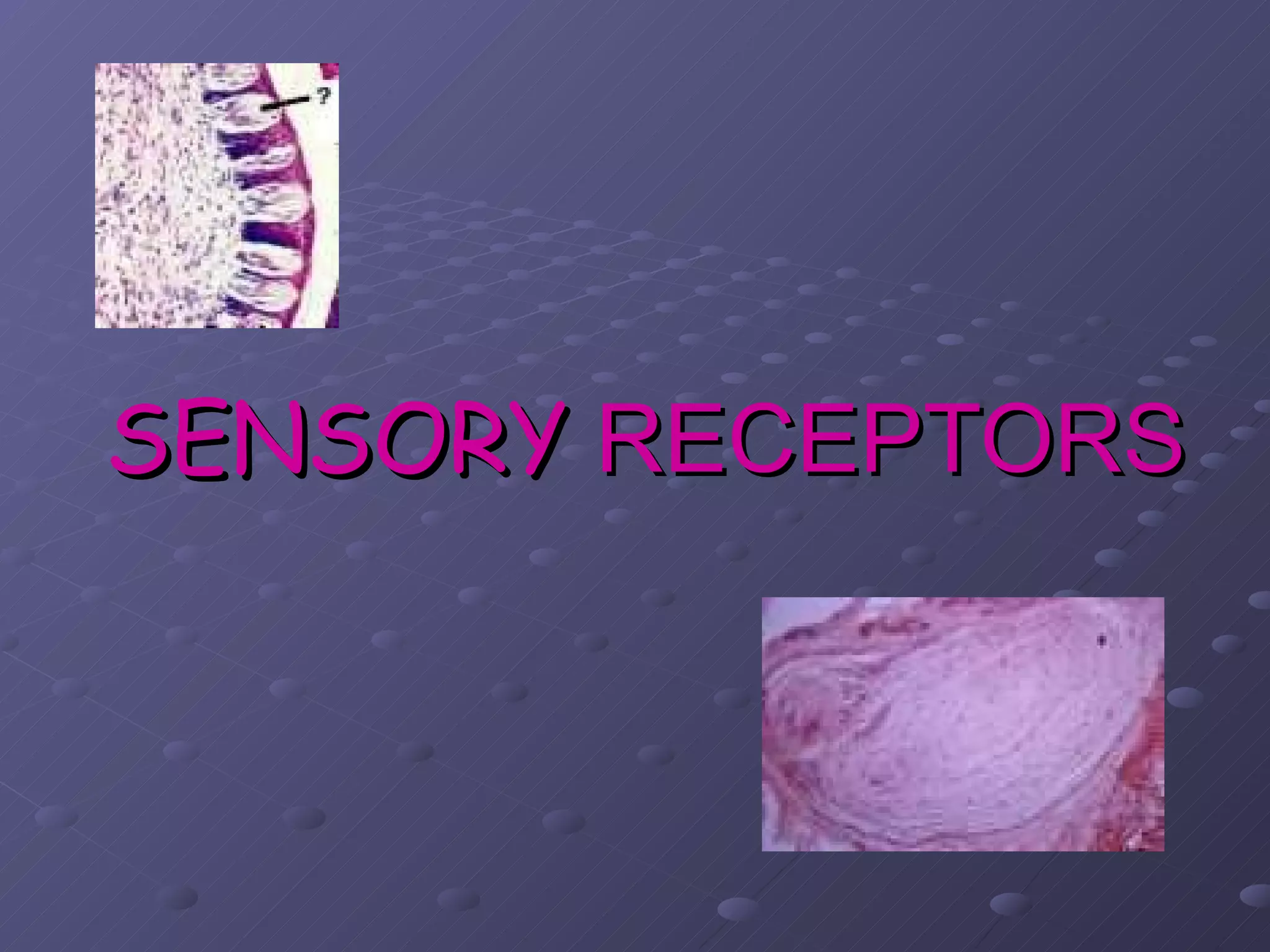
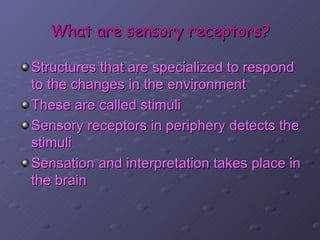
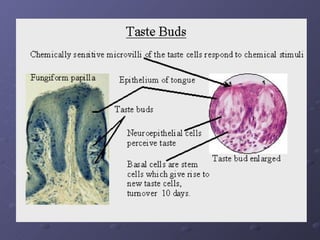

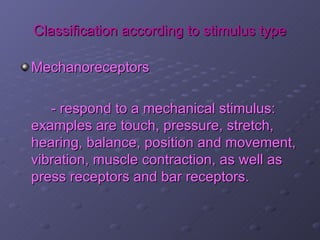
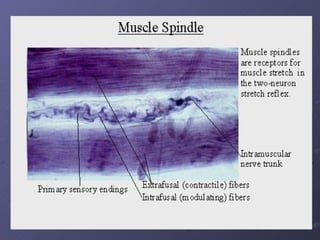
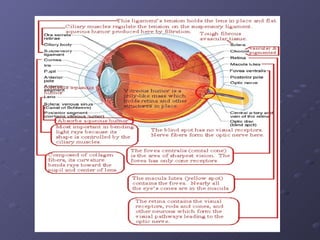

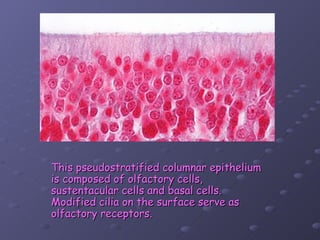
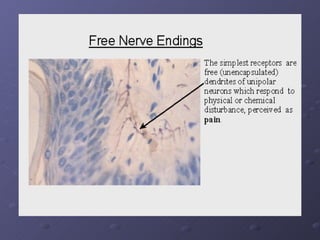
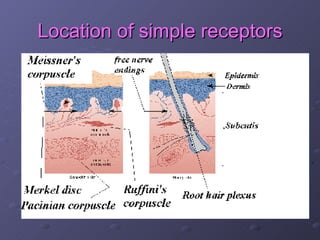
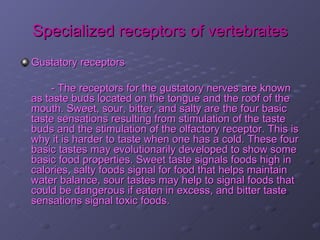
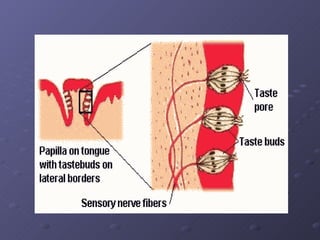
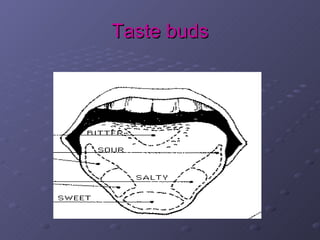
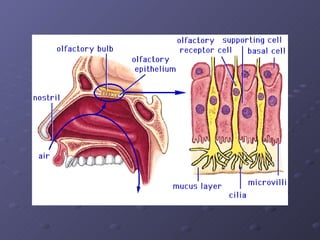

Sensory receptors are structures that detect changes in the environment called stimuli. They are classified by their location, the stimulus they detect, and their structure. The main types are exteroceptors that detect external stimuli, interoceptors that detect internal stimuli, and proprioceptors that detect body position. Receptors are also classified by the stimulus they detect, such as mechanoreceptors for touch, thermoreceptors for temperature, photoreceptors for light, and chemoreceptors for chemicals. Vertebrates have specialized receptors like taste buds that detect the four basic tastes, and olfactory receptors in the nasal cavity that detect smells.


![ONFH[AVN HIP] -TRIPLE REGIME -A NOVAL SURGICAL CONCEPT .pptx](https://cdn.slidesharecdn.com/ss_thumbnails/onfhavnhip2026koaconcalicutdrgokuldevdrmashraf-260210064517-213ec005-thumbnail.jpg?width=640&height=640&fit=bounds)


![CTEV [ clubfoot] DR ARUN LAL ,DR MOHAMED ASHRAF travancore medical college k...](https://cdn.slidesharecdn.com/ss_thumbnails/ctevclubfootdrarunlaldrmohamedashraftravancoremedicalcollegekollamkeralaindia-260208063247-18fc466c-thumbnail.jpg?width=640&height=640&fit=bounds)


