Downloaded 164 times
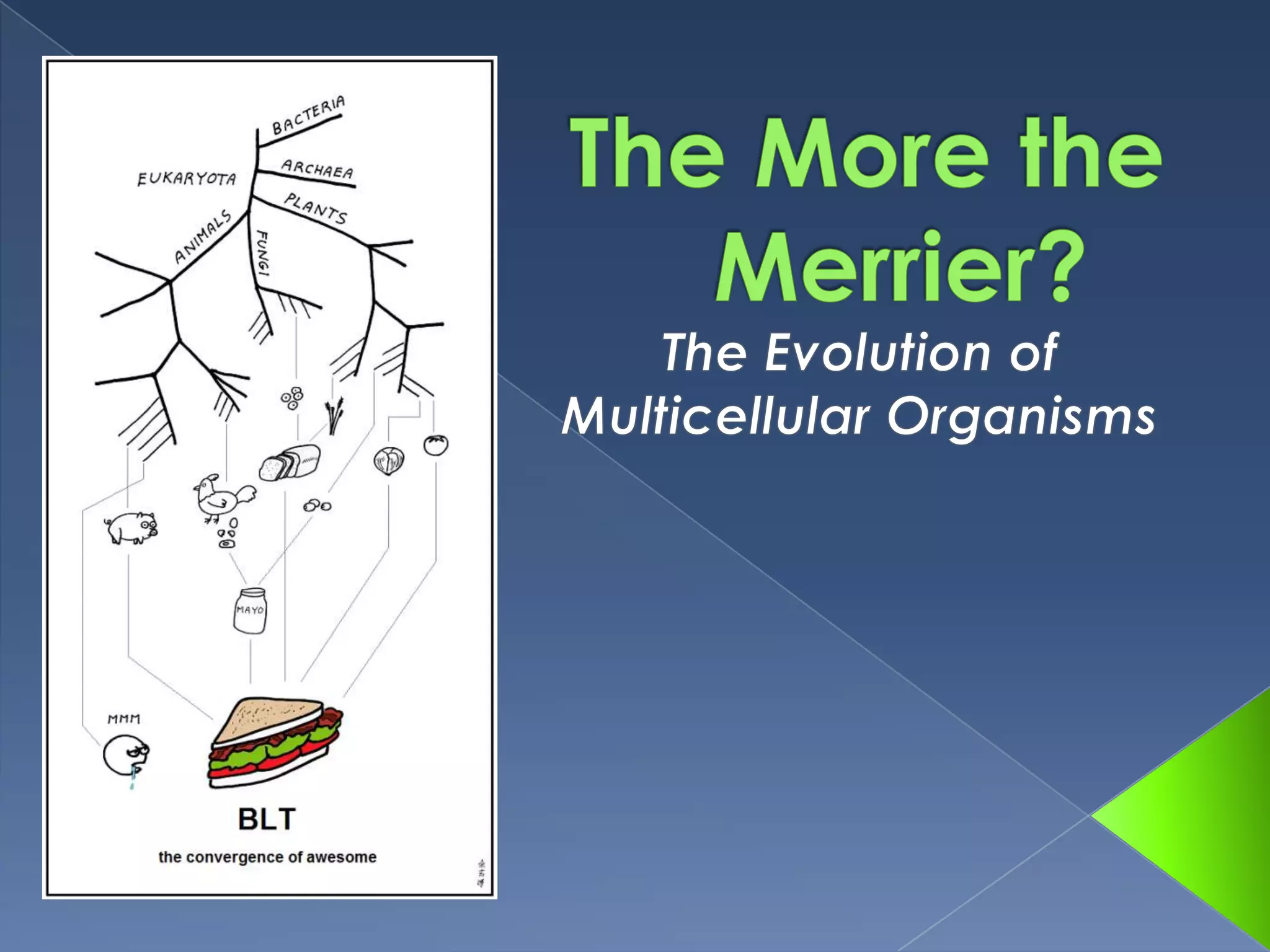
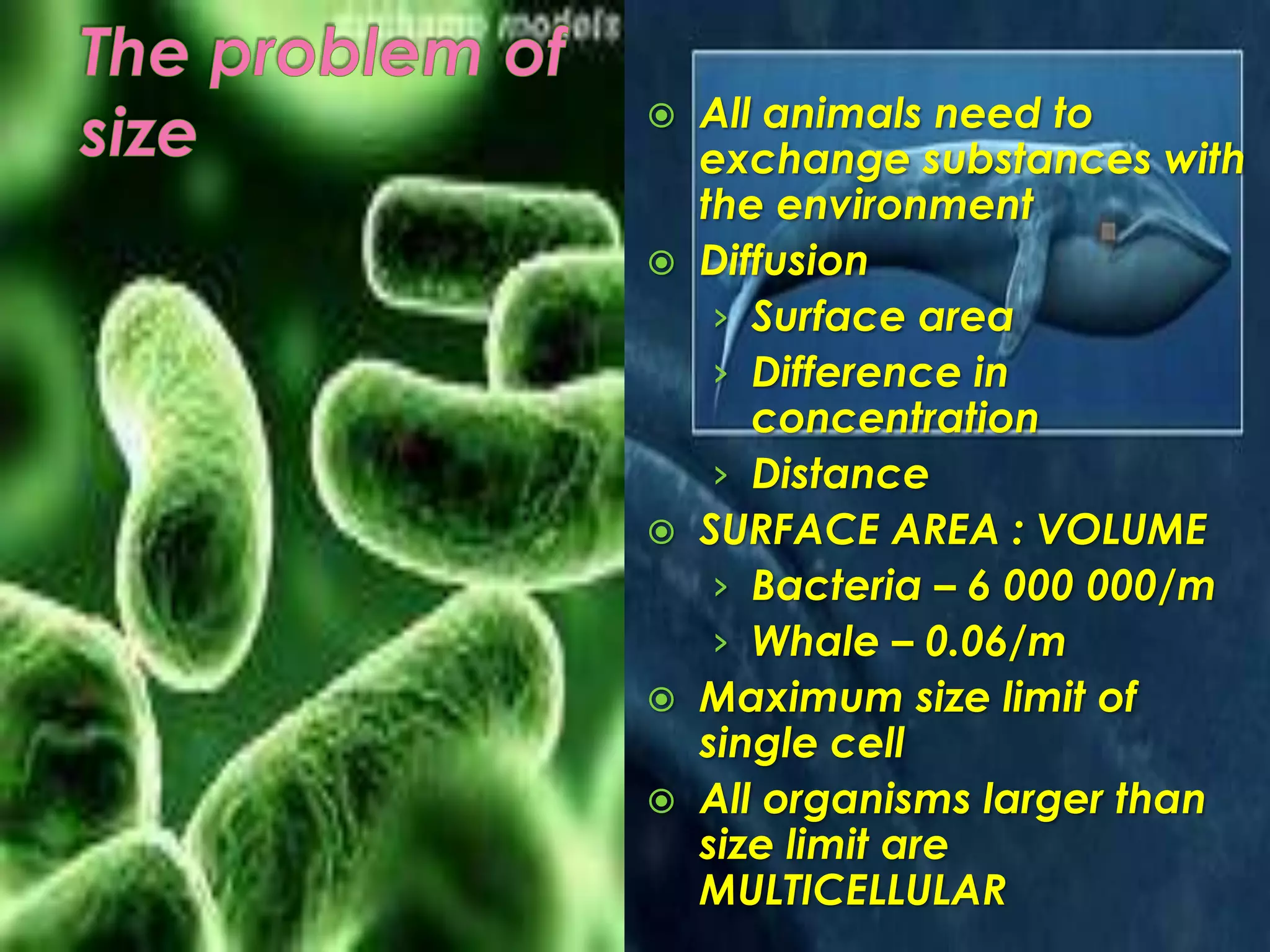
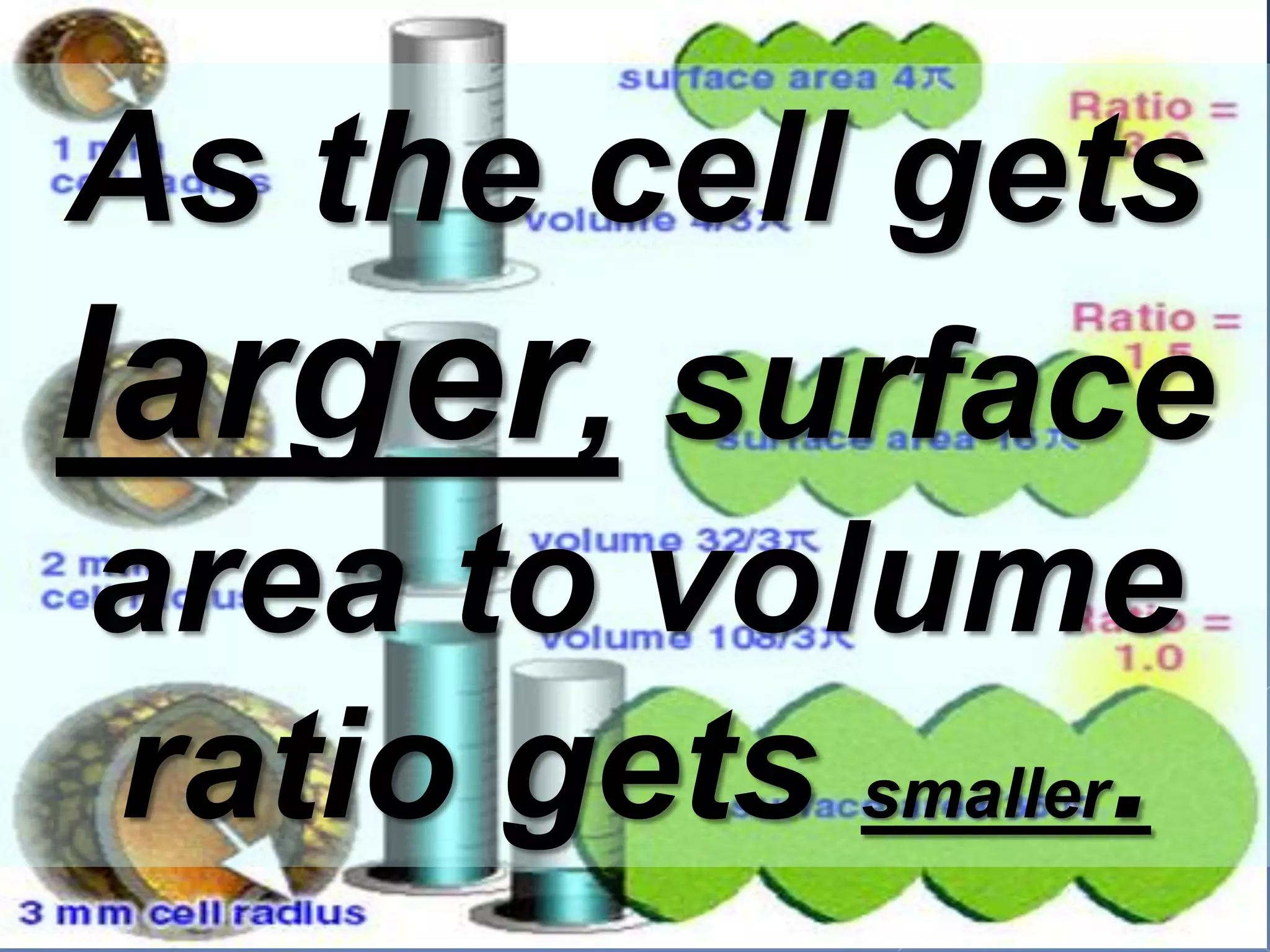
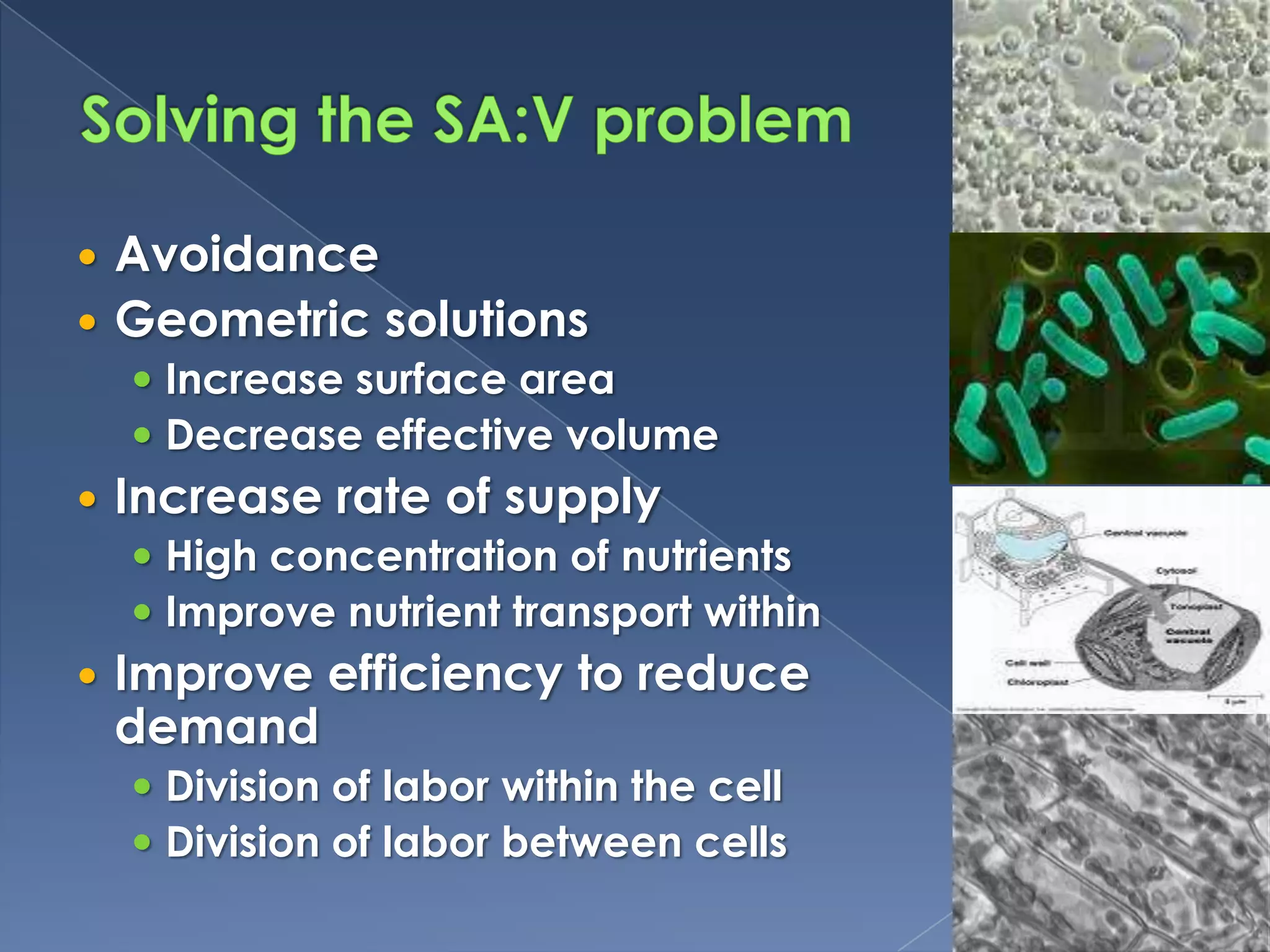
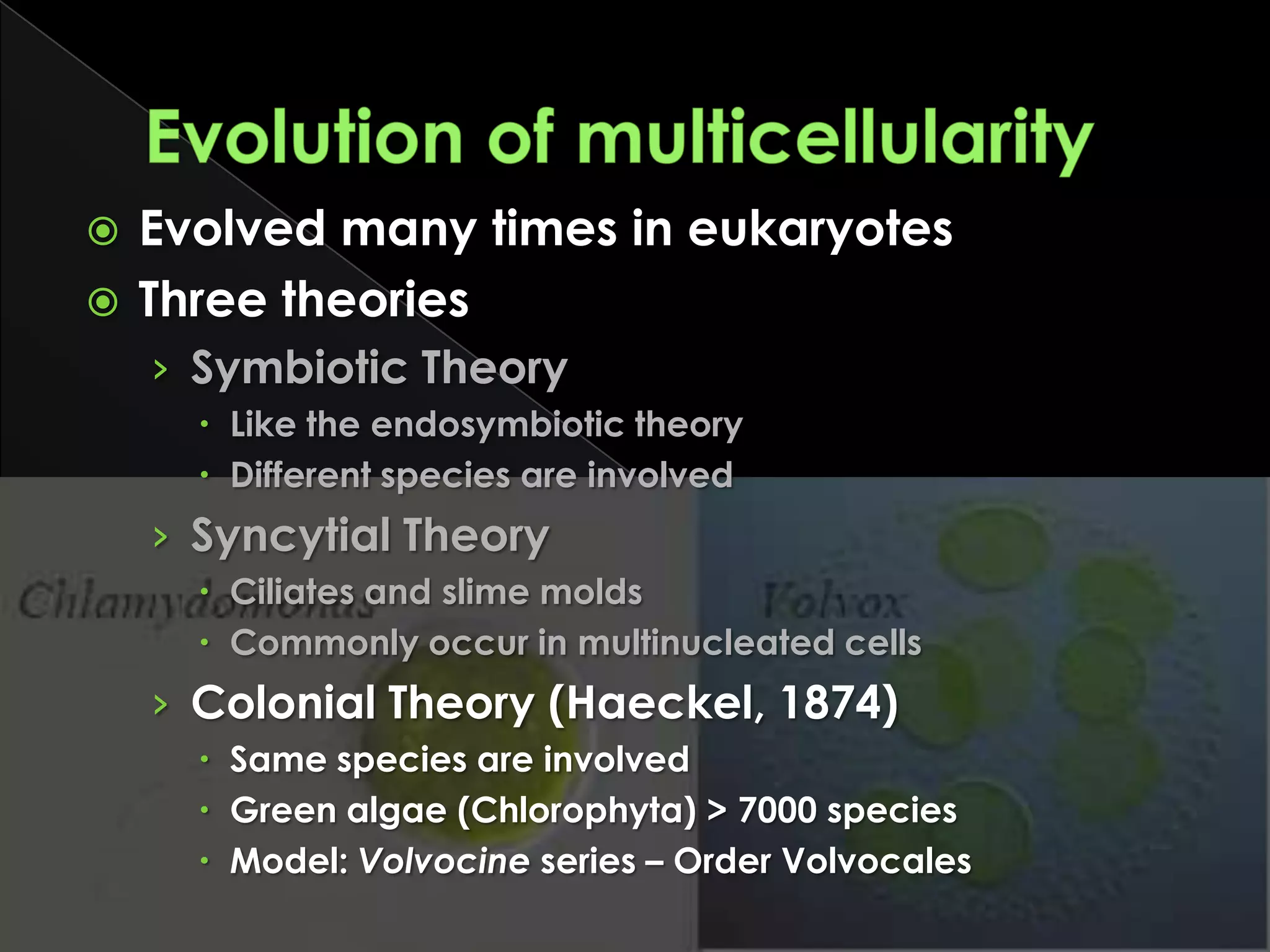
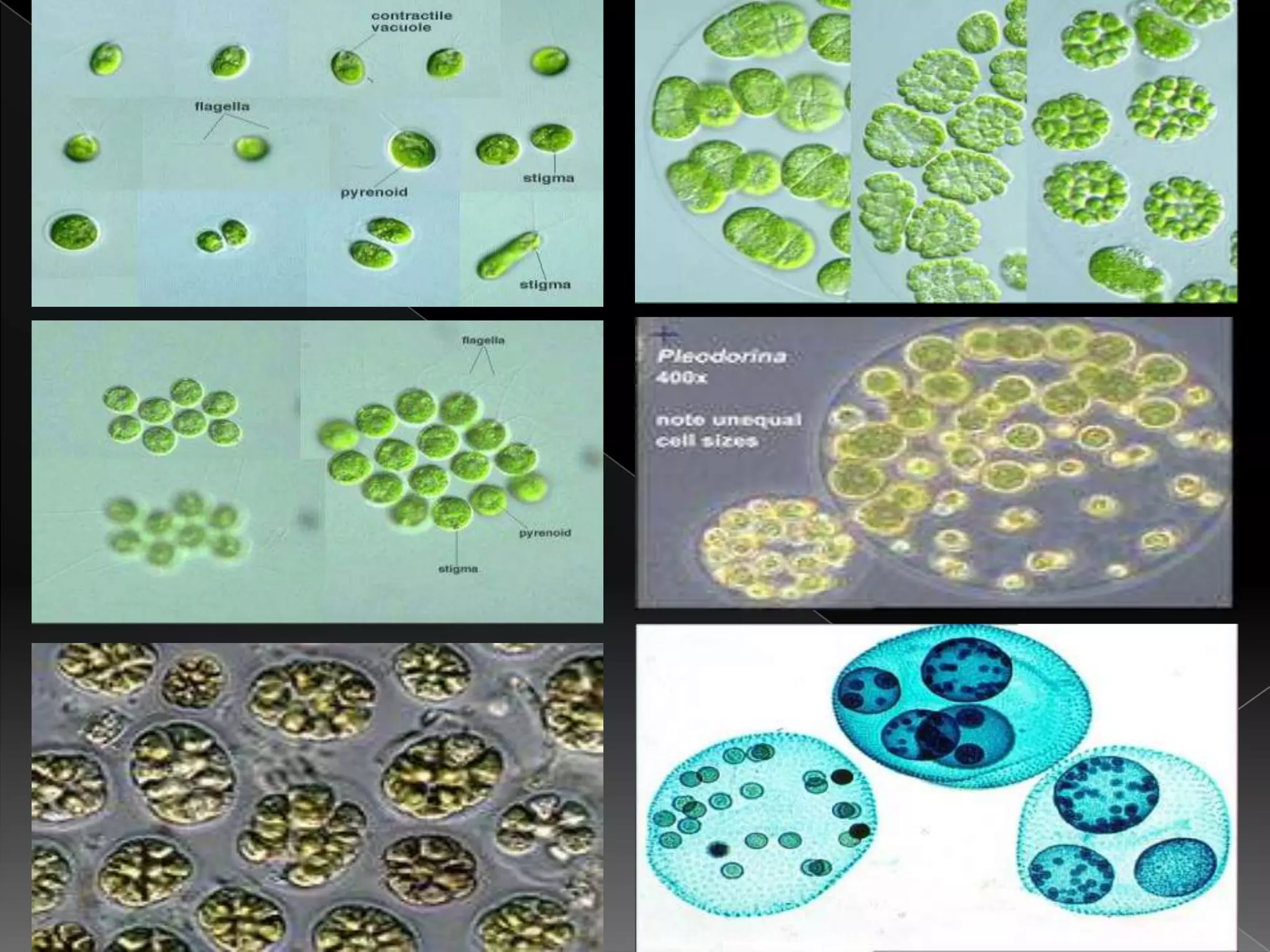
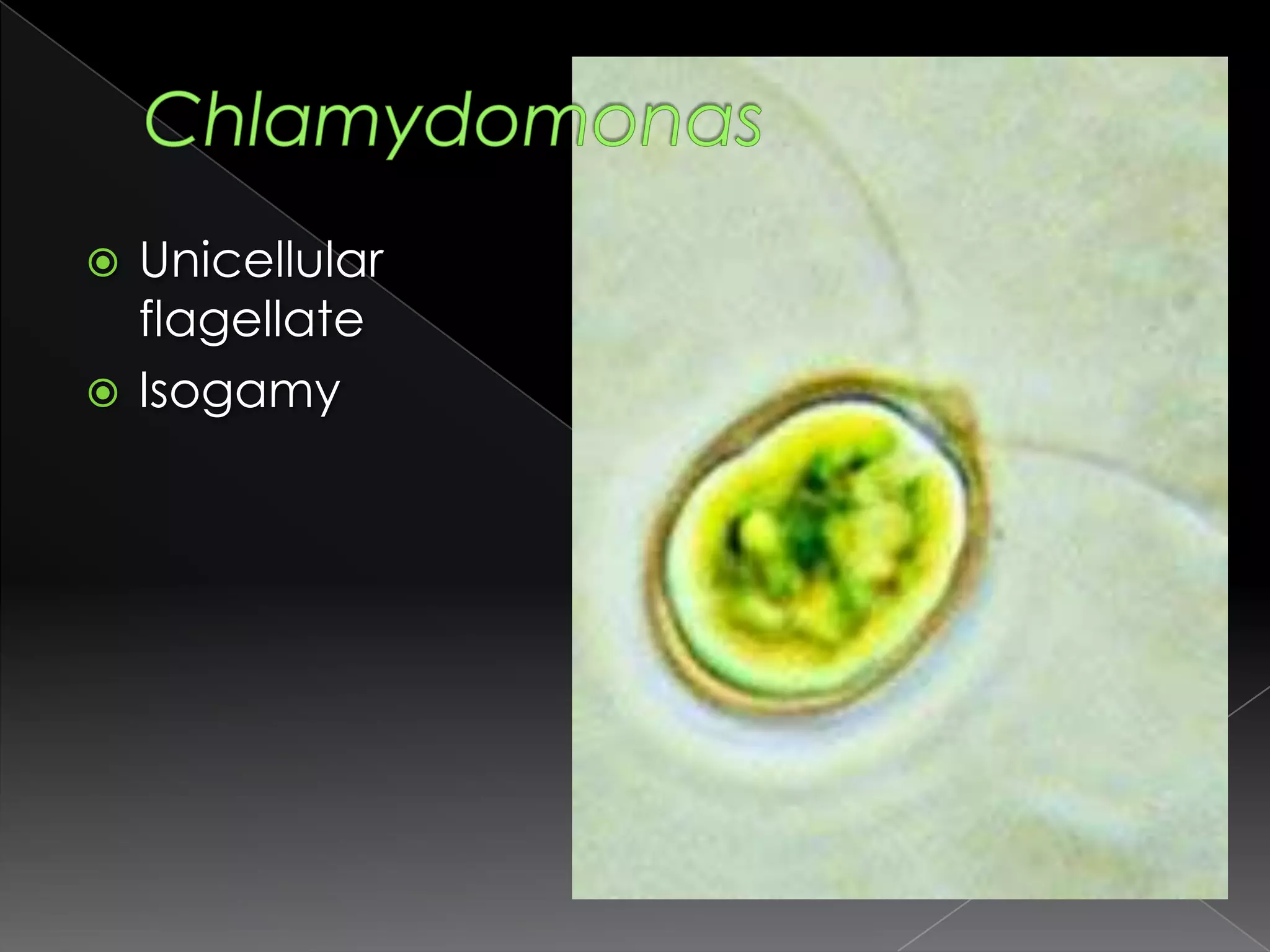
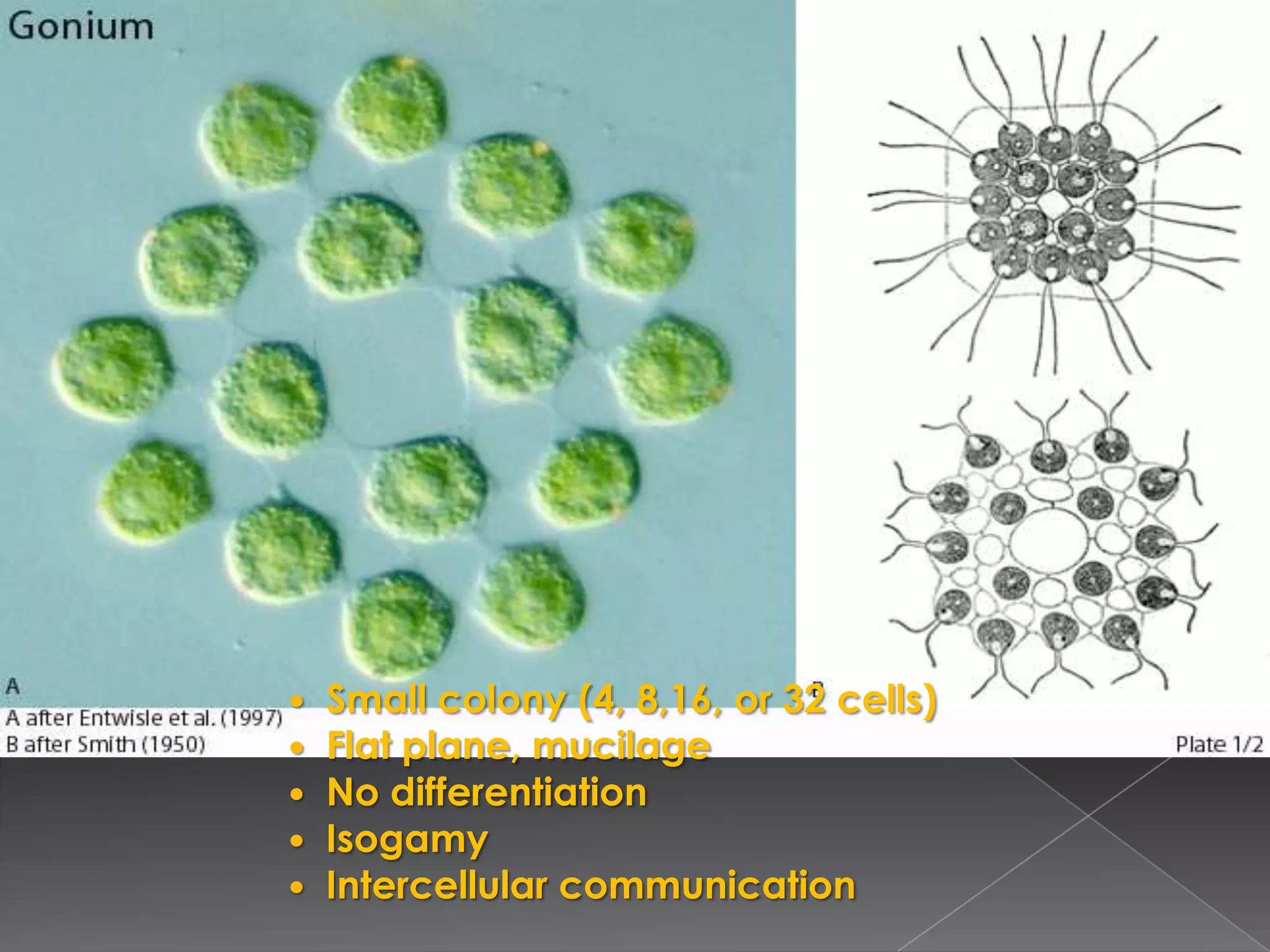
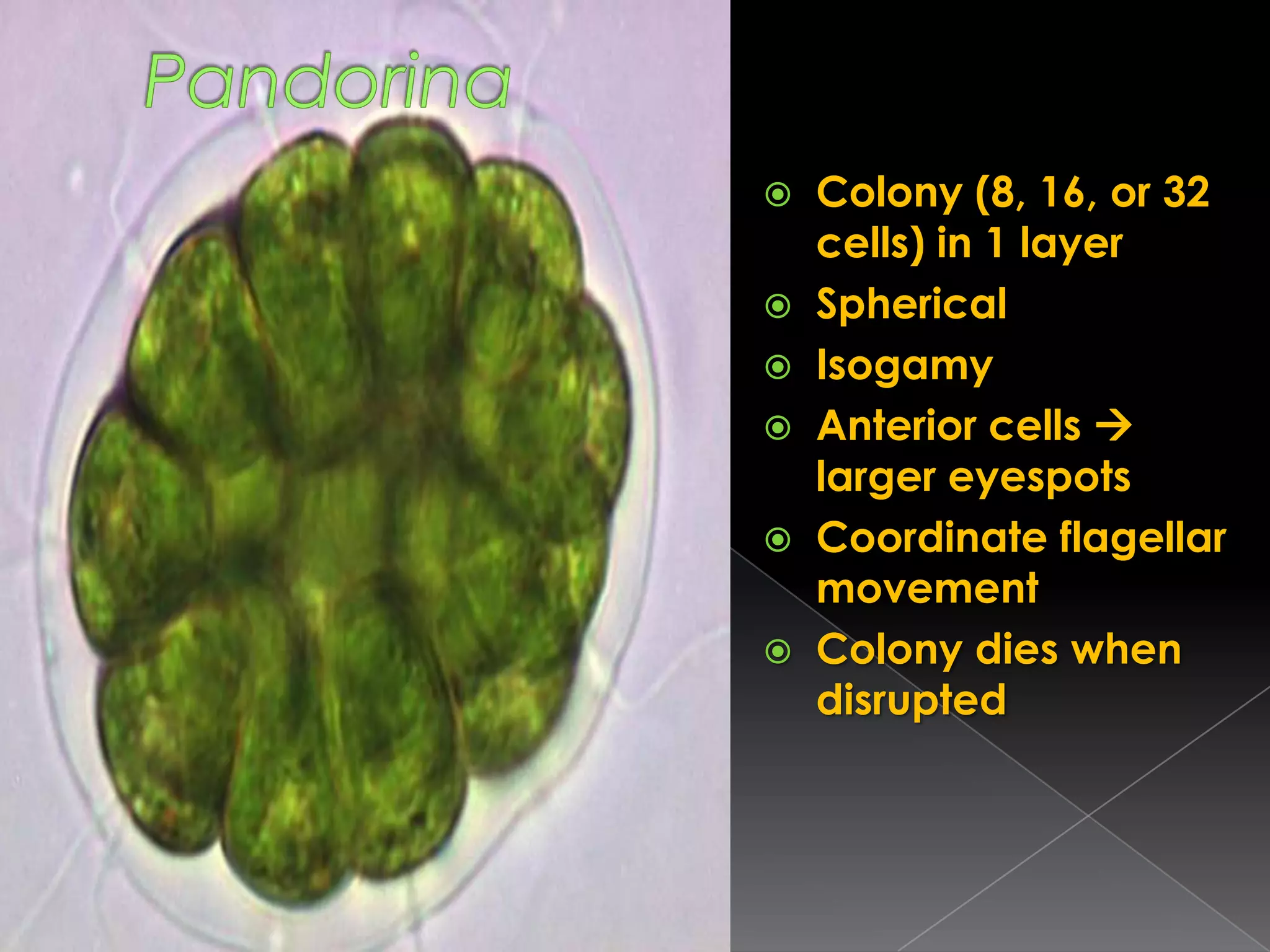
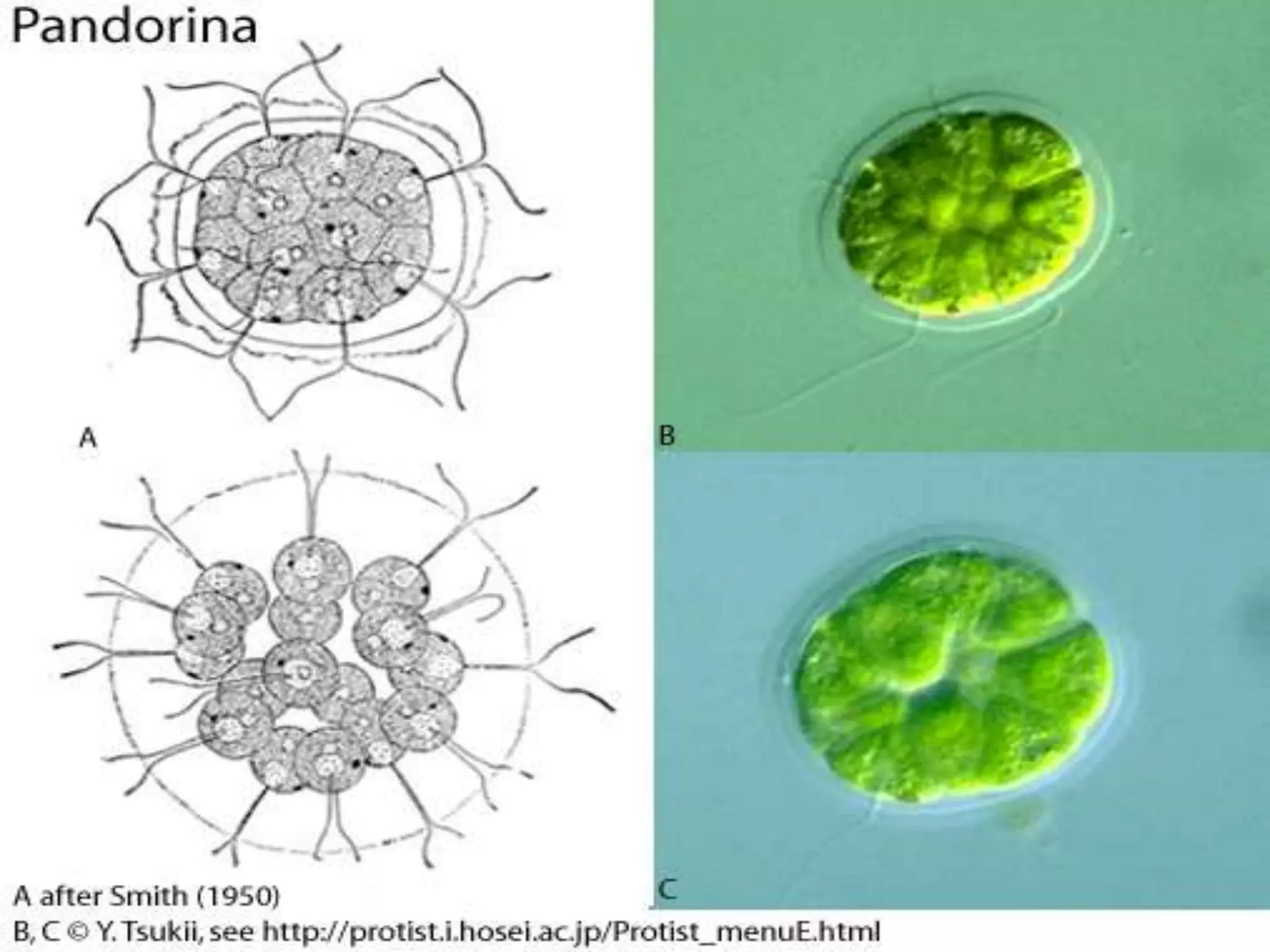
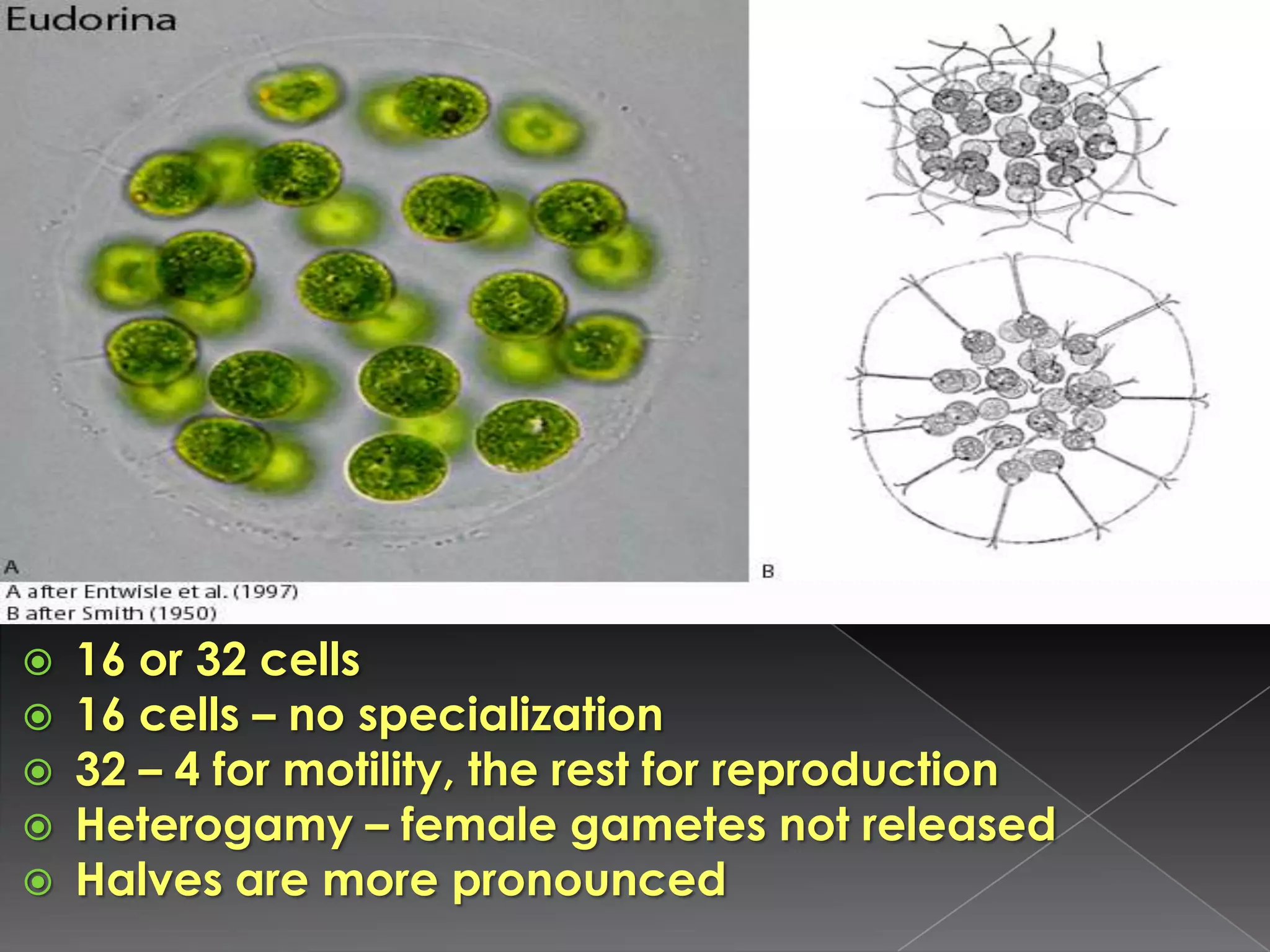
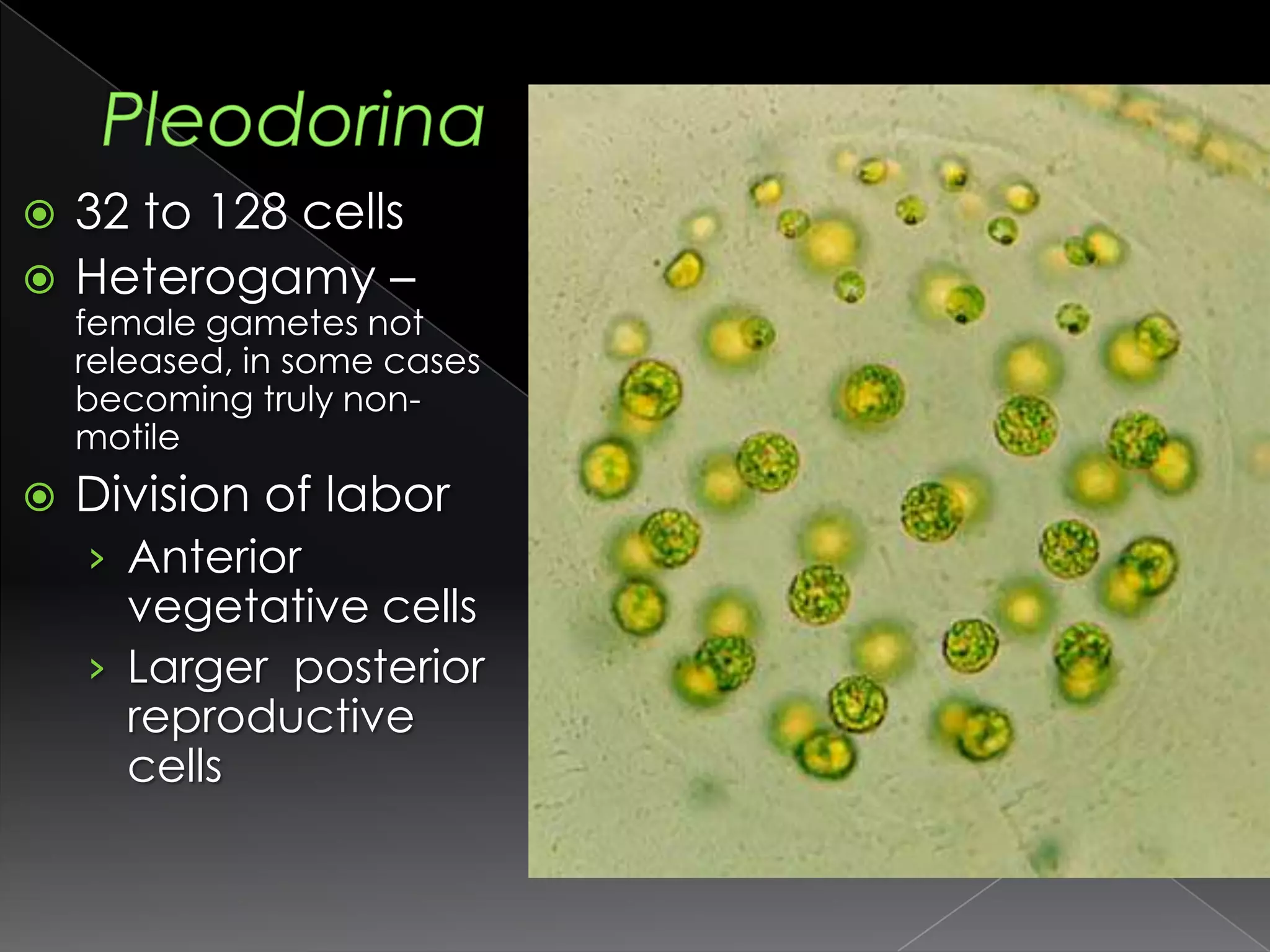
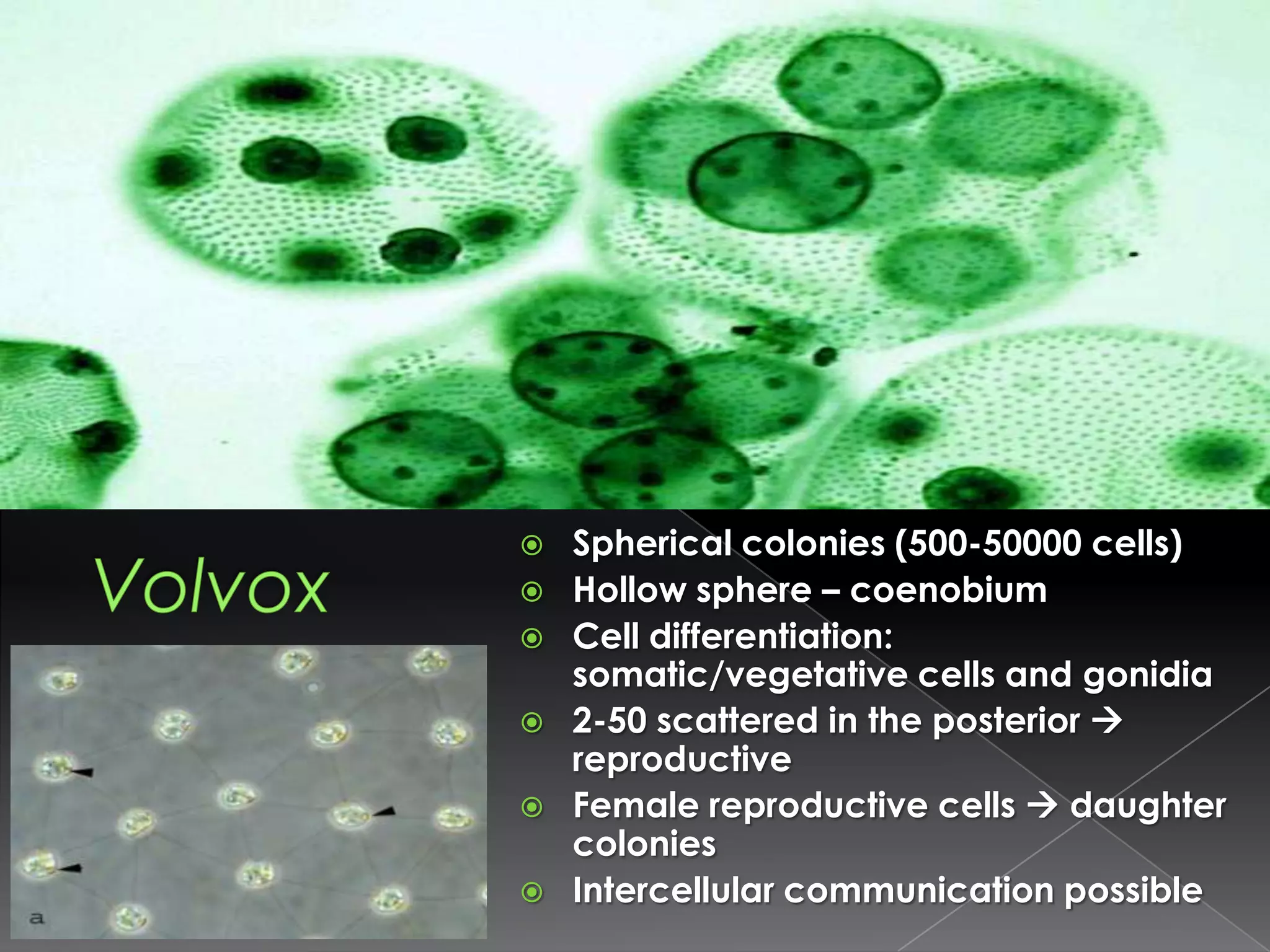
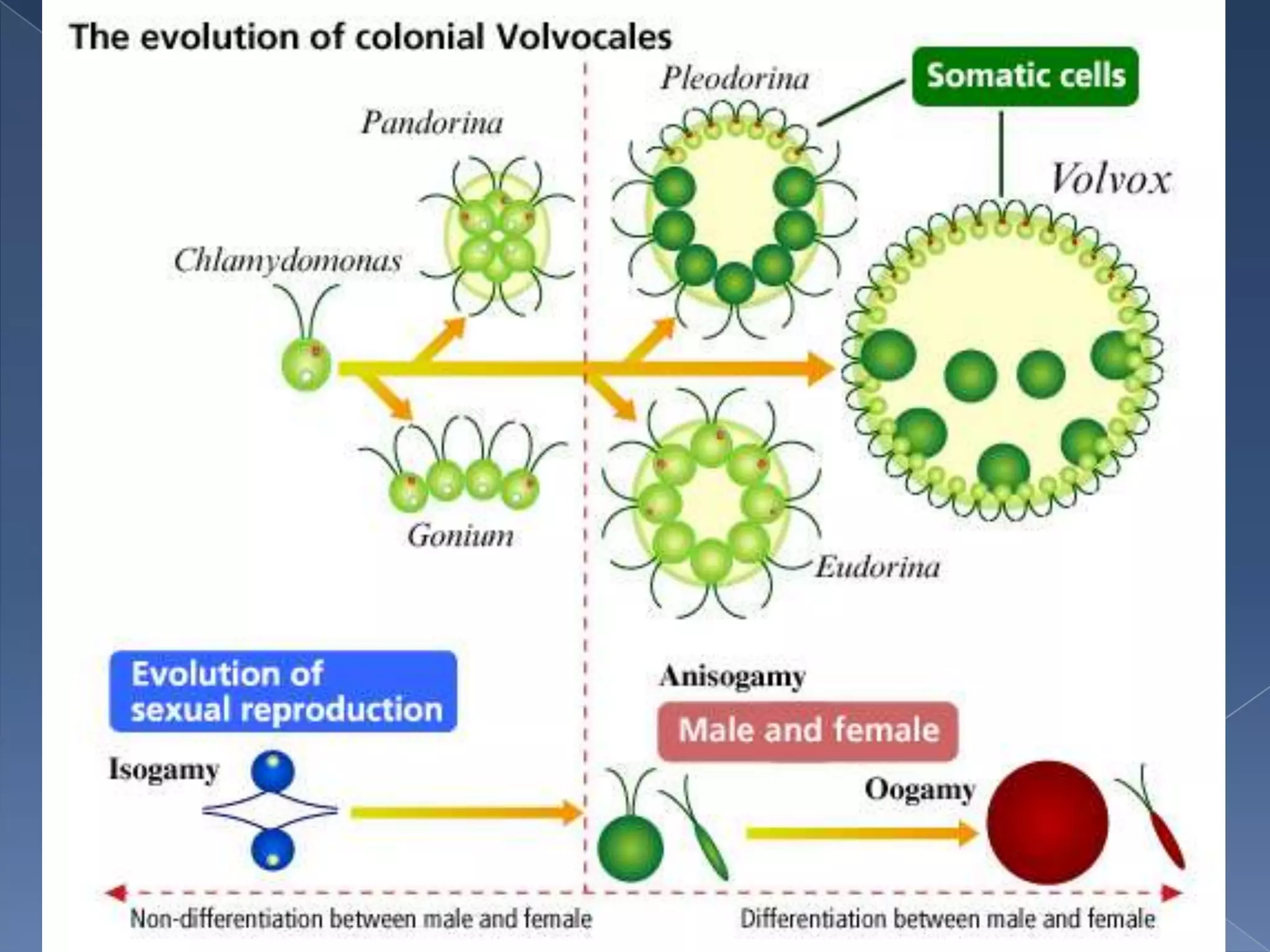
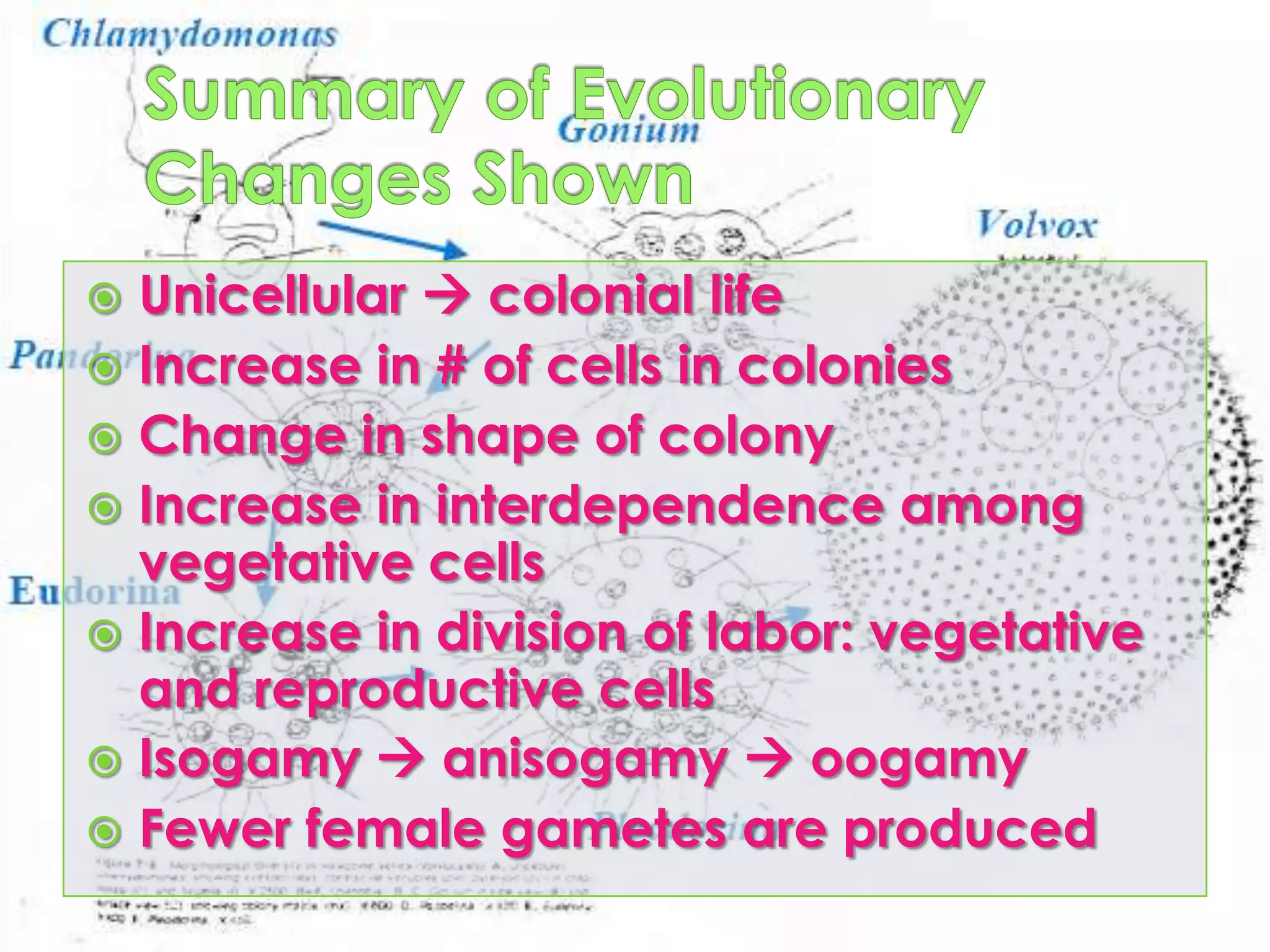

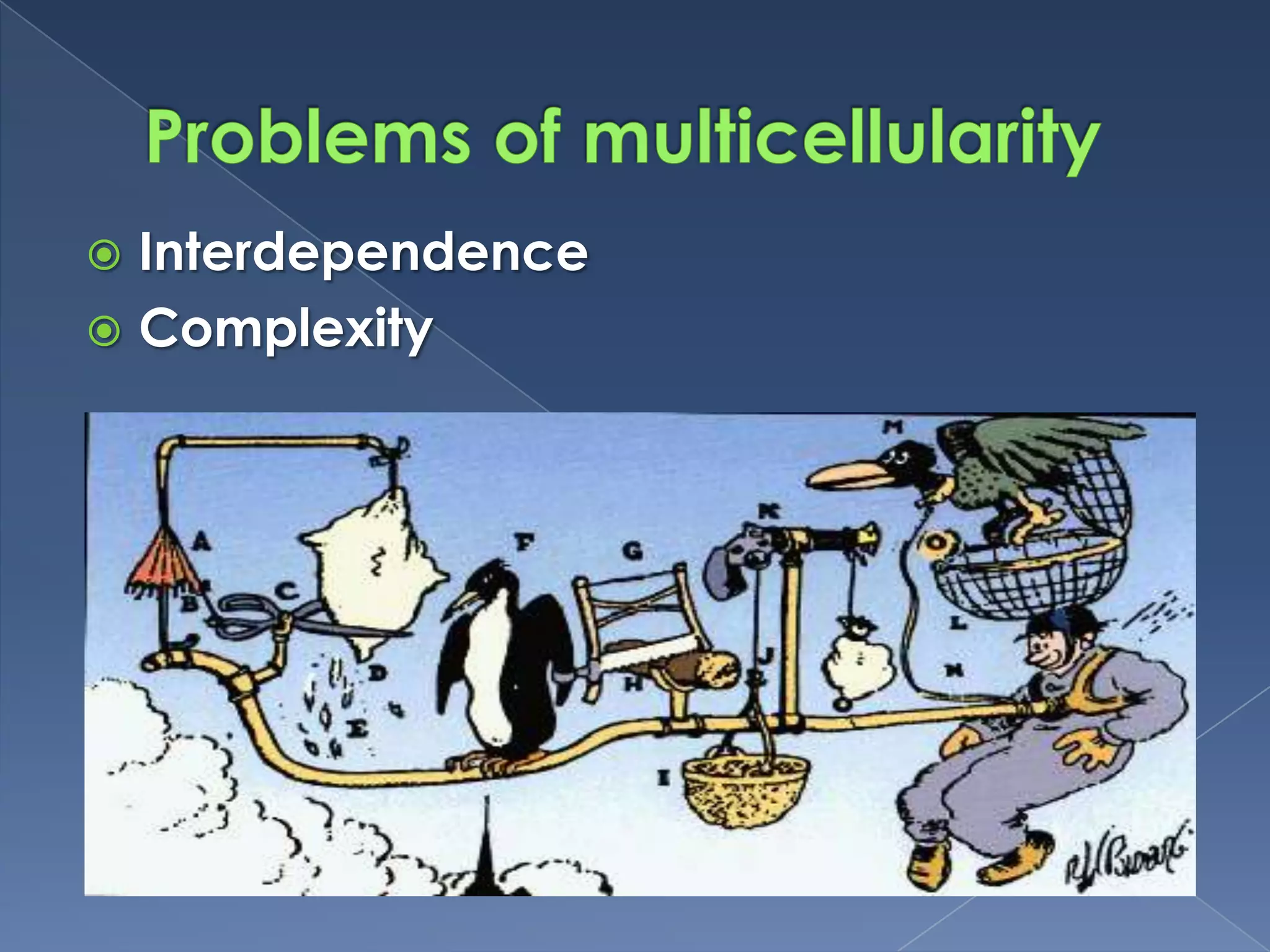

The document discusses the evolution of multicellular organisms from single-celled ancestors. As single cells increase in size, their surface area to volume ratio decreases, limiting nutrient exchange. Multicellularity solves this issue by allowing division of labor between specialized cells and improved transport within the organism. The evolution of multicellularity is seen in the Volvocine algae series, from unicellular Chlamydomonas to colonial Volvox, with increasing cell number, shape complexity, specialization, and reproductive strategies over generations. Multicellularity provides advantages like increased size and specialization but also new challenges of interdependence and complexity.


