SENSORY ORGANS:
CLASSIFICATION OF
RECEPTORS-1
S.K. SAIKIA
Department of Zoology
Visva-Bharati
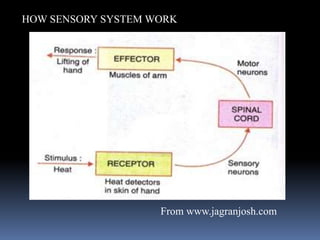
HOW SENSORY SYSTEM WORK
From www.jagranjosh.com
Sensations takes place when..
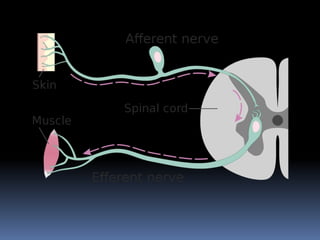
 Stimuli initiate afferent impulses
 That eventually reach a conscious level in the
cerebral cortex
 All sensations involve receptor organs
 Simplest receptor organs are bare nerve
endings
What are the Sensations we
feel?
 Pain
 Temperature
 Pressure
 Touch
Special Senses
Sight
Hearing
Taste
Smell
Orientation in space
Sensory Receptor
 Peripheral component of an afferent
axon and the centrally located nerve cell
body of that axon.
 Convert different types of energy into
nerve signals (sound, light, thermal,
chemical, and mechanical).
 Generally receptors are specific and only
respond to one form of energy.
 Sensory receptors are specialized epidermal
cells that respond to environmental stimuli
and consist of structural and support cells
that produce the outward form of
the receptor, and the internal neural
dendrites that respond to specific stimuli.
Different types of receptors
include:
 Chemoreceptors
 Pain receptors
 Thermoreceptors
 Mechanoreceptors
 Photoreceptors
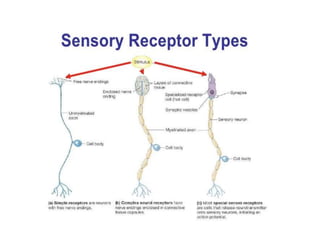
Types of sensory receptors
(based on structure)
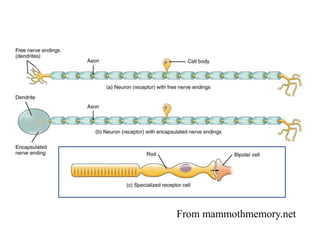
 Free nerve endings or dendrites
 Encapsulated nerve endings
 Specialised receptor cells
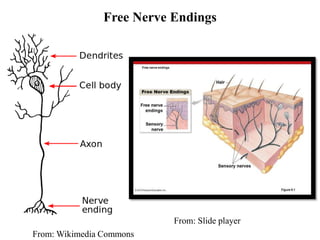
Free Nerve Endings
From: Wikimedia Commons
From: Slide player
Functions of Free Nerve endings
• Free nerve endings can detect temperature,
mechanical stimuli (touch, pressure, stretch)
or danger (nociception). Its overall function is
to respond to superficial pain and touch.
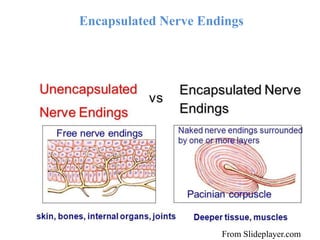
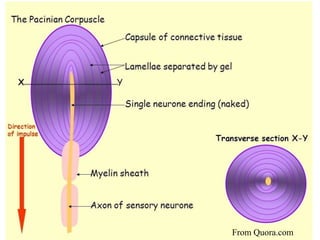
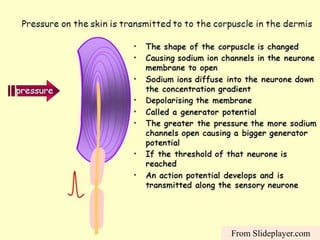
Encapsulated Nerve Endings
From Slideplayer.com
From Quora.com
From Slideplayer.com
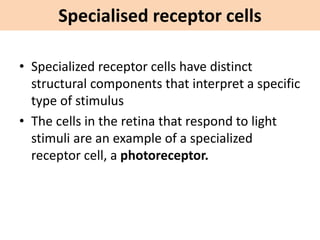
Specialised receptor cells
• Specialized receptor cells have distinct
structural components that interpret a specific
type of stimulus
• The cells in the retina that respond to light
stimuli are an example of a specialized
receptor cell, a photoreceptor.
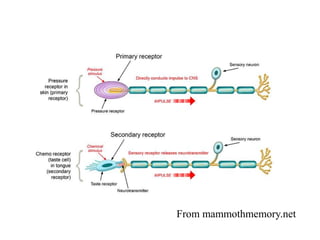
From mammothmemory.net
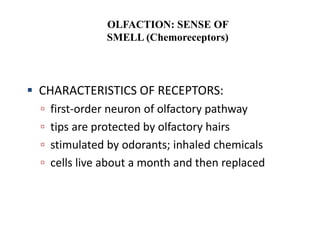
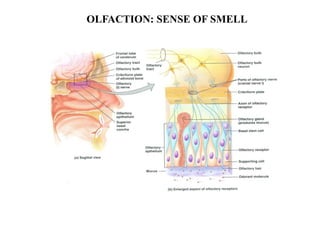
 CHARACTERISTICS OF RECEPTORS:
 first-order neuron of olfactory pathway
 tips are protected by olfactory hairs
 stimulated by odorants; inhaled chemicals
 cells live about a month and then replaced
OLFACTION: SENSE OF
SMELL (Chemoreceptors)
OLFACTION: SENSE OF SMELL
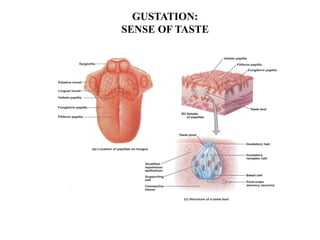
GUSTATION:
SENSE OF TASTE
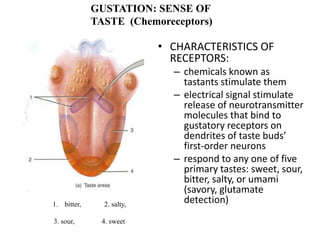
• CHARACTERISTICS OF
RECEPTORS:
– chemicals known as
tastants stimulate them
– electrical signal stimulate
release of neurotransmitter
molecules that bind to
gustatory receptors on
dendrites of taste buds’
first-order neurons
– respond to any one of five
primary tastes: sweet, sour,
bitter, salty, or umami
(savory, glutamate
detection)
1. bitter, 2. salty,
3. sour, 4. sweet
GUSTATION: SENSE OF
TASTE (Chemoreceptors)
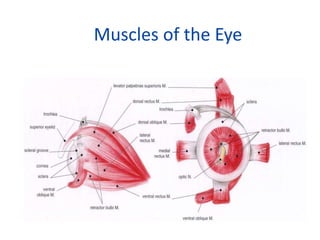
Muscles of the Eye

Classification of Sensory receptor 1

  • 1.
    SENSORY ORGANS: CLASSIFICATION OF RECEPTORS-1 S.K.SAIKIA Department of Zoology Visva-Bharati
  • 3.
    HOW SENSORY SYSTEMWORK From www.jagranjosh.com
  • 5.
    Sensations takes placewhen..  Stimuli initiate afferent impulses  That eventually reach a conscious level in the cerebral cortex  All sensations involve receptor organs  Simplest receptor organs are bare nerve endings
  • 6.
    What are theSensations we feel?  Pain  Temperature  Pressure  Touch Special Senses Sight Hearing Taste Smell Orientation in space
  • 7.
    Sensory Receptor  Peripheralcomponent of an afferent axon and the centrally located nerve cell body of that axon.  Convert different types of energy into nerve signals (sound, light, thermal, chemical, and mechanical).  Generally receptors are specific and only respond to one form of energy.
  • 8.
     Sensory receptorsare specialized epidermal cells that respond to environmental stimuli and consist of structural and support cells that produce the outward form of the receptor, and the internal neural dendrites that respond to specific stimuli.
  • 9.
    Different types ofreceptors include:  Chemoreceptors  Pain receptors  Thermoreceptors  Mechanoreceptors  Photoreceptors
  • 10.
    Types of sensoryreceptors (based on structure)  Free nerve endings or dendrites  Encapsulated nerve endings  Specialised receptor cells
  • 11.
    Free Nerve Endings From:Wikimedia Commons From: Slide player
  • 12.
    Functions of FreeNerve endings • Free nerve endings can detect temperature, mechanical stimuli (touch, pressure, stretch) or danger (nociception). Its overall function is to respond to superficial pain and touch.
  • 13.
  • 14.
  • 15.
  • 16.
    Specialised receptor cells •Specialized receptor cells have distinct structural components that interpret a specific type of stimulus • The cells in the retina that respond to light stimuli are an example of a specialized receptor cell, a photoreceptor.
  • 17.
  • 18.
  • 20.
     CHARACTERISTICS OFRECEPTORS:  first-order neuron of olfactory pathway  tips are protected by olfactory hairs  stimulated by odorants; inhaled chemicals  cells live about a month and then replaced OLFACTION: SENSE OF SMELL (Chemoreceptors)
  • 21.
  • 22.
  • 23.
    • CHARACTERISTICS OF RECEPTORS: –chemicals known as tastants stimulate them – electrical signal stimulate release of neurotransmitter molecules that bind to gustatory receptors on dendrites of taste buds’ first-order neurons – respond to any one of five primary tastes: sweet, sour, bitter, salty, or umami (savory, glutamate detection) 1. bitter, 2. salty, 3. sour, 4. sweet GUSTATION: SENSE OF TASTE (Chemoreceptors)
  • 24.

Editor's Notes