Preparation methods of polymeric nanoparticles
polymers used in preparation:
1- Natural hydrophilic eg. Proteins & poly saccharides
a) Proteins :
Gelatin
Albumin
Lectin
Legumine
Viciline
b) Poly saccharides :
Alginate
Dextran
Chitosan
Agarose
Pullulan
Preparation methods of polymeric nanoparticles
By: ph Abeer Abd elrahman
2-Synthetic lipiphilic eg. Pre-polymerized & polymerized in process
a) Pre-polymerized :
Poly E caprolactone
PLA
Poly lactide co glycolide (PLGA)
Polystyrene
b) Polymerized in process:
Poly Isobutyrl cyano acrylates (PICA)
PBCA
PHCA
Poly methyl methacyrlate (PMMA)
Methods of preparation:
1- Amphiphilic macromolecule cross-linking :
a) heat cross linking
b) chemical cross linking.
2- Polymerization based methods :
polymerization of monomers
a) Emulsion polymerization
b) Dispersion polymerization
c) Interfacial condensation polymerization
3- Polymer precipitation methods:
a) Solvent extraction/ evaporation
b) Solvent displacement (nanoprecipitation)
c) Salting out
1-Amphiphilic macromolecule cross-linking :
We make w/o emulsion using our polymer "BSA" and oil
Then we make centrifugation to get the polymer "BSA bovine
serum albumin" out of the oil then we add Add cross-linking
agent (chemical cross-linking) or pre-heated oil (heat cross-
linking)
2- Polymerization based methods:
We start with monomer till we get polymer.
a) Emulsion polymerization:
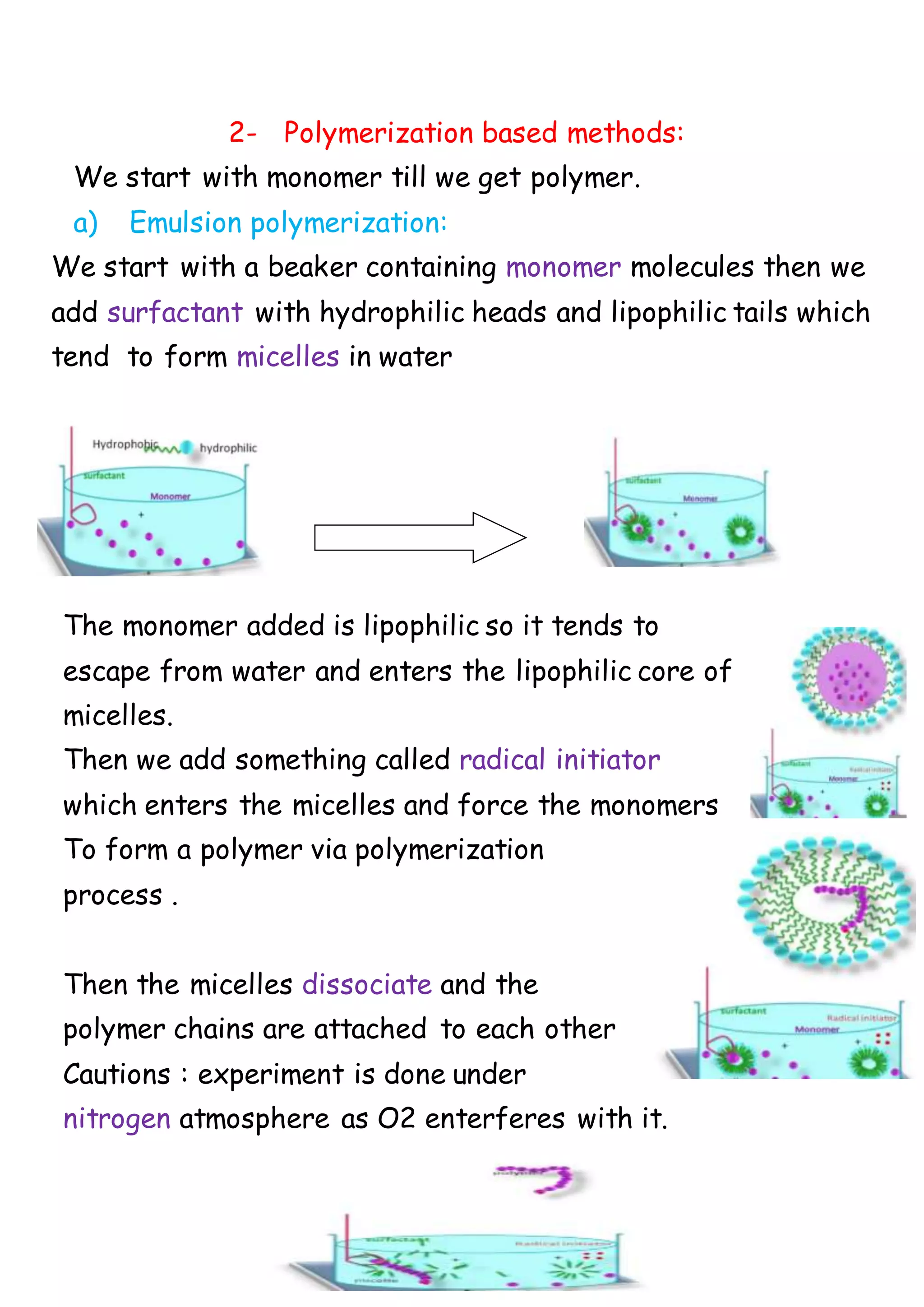
We start with a beaker containing monomer molecules then we
add surfactant with hydrophilic heads and lipophilic tails which
tend to form micelles in water
The monomer added is lipophilic so it tends to
escape from water and enters the lipophilic core of
micelles.
Then we add something called radical initiator
which enters the micelles and force the monomers
To form a polymer via polymerization
process .
Then the micelles dissociate and the
polymer chains are attached to each other
Cautions : experiment is done under
nitrogen atmosphere as O2 enterferes with it.
b) dispersion polymerization:
monomer is dissolved in the Aq medium, which act as a
precipitant for formed polymer.
Nucleation is directly induced in Aq Monomer solution. So
STABILIZER/ SURFACTANT is no needed .
Initiation here is achieved by different mechanism, but mostly
it is by irradiating solution with high energy radiation (g, UV,
strong visible light).
c) interfacial complexation :
It involves polymerization of two different monomers,
dissolved in two phases respectively, Continuous and Dispersed
phase as o/w or w/o emulsion.
Polymerization reaction takes place at the interfaces of two
liquids.
Nanometre-sized hollow polymer particles were synthesized
by employing interfacial cross-linking reactions as polyaddition
and polycondensation or radical polymerization using the
radical initiator .
3- Polymer precipitation methods:
a) Solvent extraction method :
a).1 single emulsion:
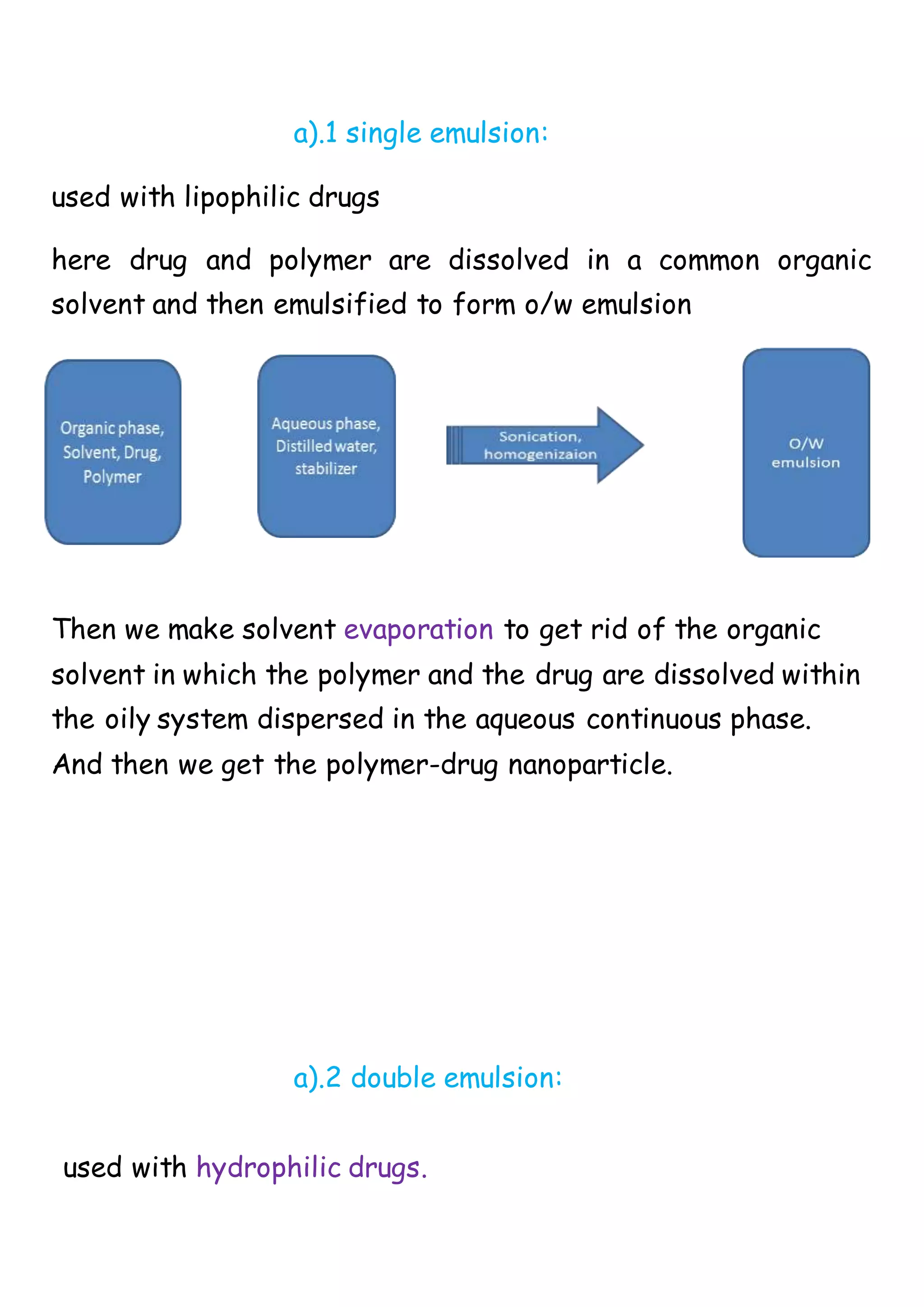
used with lipophilic drugs
here drug and polymer are dissolved in a common organic
solvent and then emulsified to form o/w emulsion
Then we make solvent evaporation to get rid of the organic
solvent in which the polymer and the drug are dissolved within
the oily system dispersed in the aqueous continuous phase.
And then we get the polymer-drug nanoparticle.
a).2 double emulsion:
used with hydrophilic drugs.
here the drug is dissolved in an aqueous medium and
emulsified into the oily phase containing polymers and their
solvents to form w/o emulsion
+
Then we emulsify our whole system into an agueous external
phase to form w/o/w emulsion with the addition of "PVA poly
vinyl alcohol" as stabilizer in the aqueous continuous phase
Then we make solvent evaporation step to get rid of the
organic solvent such as dichloromethane.
b) Solvent displacement method:
Its principle is that precipitation
occurs when two different
phases ( Aqueous phase and
organic phase) are added
together under magnetic stirring.
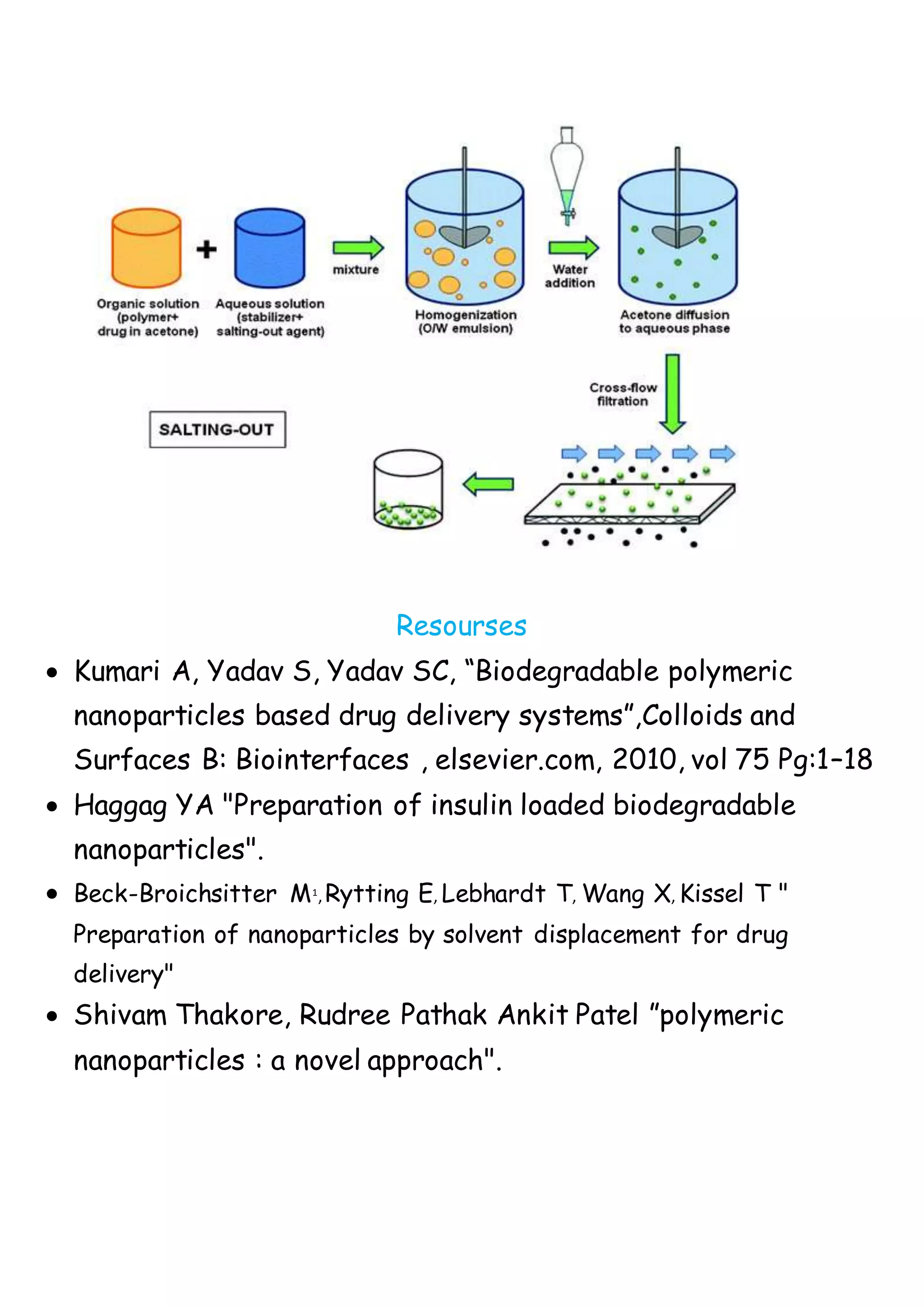
C) salting out :
Resourses
 Kumari A, Yadav S, Yadav SC, “Biodegradable polymeric
nanoparticles based drug delivery systems”,Colloids and
Surfaces B: Biointerfaces , elsevier.com, 2010, vol 75 Pg:1–18
 Haggag YA "Preparation of insulin loaded biodegradable
nanoparticles".
 Beck-Broichsitter M1
, Rytting E, Lebhardt T, Wang X, Kissel T "
Preparation of nanoparticles by solvent displacement for drug
delivery"
 Shivam Thakore, Rudree Pathak Ankit Patel ”polymeric
nanoparticles : a novel approach".

Preparation methods of polymeric nanoparticles

  • 1.
    Preparation methods ofpolymeric nanoparticles polymers used in preparation: 1- Natural hydrophilic eg. Proteins & poly saccharides a) Proteins : Gelatin Albumin Lectin Legumine Viciline b) Poly saccharides : Alginate Dextran Chitosan Agarose Pullulan Preparation methods of polymeric nanoparticles By: ph Abeer Abd elrahman
  • 2.
    2-Synthetic lipiphilic eg.Pre-polymerized & polymerized in process a) Pre-polymerized : Poly E caprolactone PLA Poly lactide co glycolide (PLGA) Polystyrene b) Polymerized in process: Poly Isobutyrl cyano acrylates (PICA) PBCA PHCA Poly methyl methacyrlate (PMMA)
  • 3.
    Methods of preparation: 1-Amphiphilic macromolecule cross-linking : a) heat cross linking b) chemical cross linking. 2- Polymerization based methods : polymerization of monomers a) Emulsion polymerization b) Dispersion polymerization c) Interfacial condensation polymerization 3- Polymer precipitation methods: a) Solvent extraction/ evaporation b) Solvent displacement (nanoprecipitation) c) Salting out
  • 4.
    1-Amphiphilic macromolecule cross-linking: We make w/o emulsion using our polymer "BSA" and oil Then we make centrifugation to get the polymer "BSA bovine serum albumin" out of the oil then we add Add cross-linking agent (chemical cross-linking) or pre-heated oil (heat cross- linking)
  • 5.
    2- Polymerization basedmethods: We start with monomer till we get polymer. a) Emulsion polymerization: We start with a beaker containing monomer molecules then we add surfactant with hydrophilic heads and lipophilic tails which tend to form micelles in water The monomer added is lipophilic so it tends to escape from water and enters the lipophilic core of micelles. Then we add something called radical initiator which enters the micelles and force the monomers To form a polymer via polymerization process . Then the micelles dissociate and the polymer chains are attached to each other Cautions : experiment is done under nitrogen atmosphere as O2 enterferes with it.
  • 6.
    b) dispersion polymerization: monomeris dissolved in the Aq medium, which act as a precipitant for formed polymer. Nucleation is directly induced in Aq Monomer solution. So STABILIZER/ SURFACTANT is no needed . Initiation here is achieved by different mechanism, but mostly it is by irradiating solution with high energy radiation (g, UV, strong visible light). c) interfacial complexation : It involves polymerization of two different monomers, dissolved in two phases respectively, Continuous and Dispersed phase as o/w or w/o emulsion. Polymerization reaction takes place at the interfaces of two liquids. Nanometre-sized hollow polymer particles were synthesized by employing interfacial cross-linking reactions as polyaddition and polycondensation or radical polymerization using the radical initiator . 3- Polymer precipitation methods: a) Solvent extraction method :
  • 7.
    a).1 single emulsion: usedwith lipophilic drugs here drug and polymer are dissolved in a common organic solvent and then emulsified to form o/w emulsion Then we make solvent evaporation to get rid of the organic solvent in which the polymer and the drug are dissolved within the oily system dispersed in the aqueous continuous phase. And then we get the polymer-drug nanoparticle. a).2 double emulsion: used with hydrophilic drugs.
  • 8.
    here the drugis dissolved in an aqueous medium and emulsified into the oily phase containing polymers and their solvents to form w/o emulsion + Then we emulsify our whole system into an agueous external phase to form w/o/w emulsion with the addition of "PVA poly vinyl alcohol" as stabilizer in the aqueous continuous phase Then we make solvent evaporation step to get rid of the organic solvent such as dichloromethane. b) Solvent displacement method: Its principle is that precipitation occurs when two different phases ( Aqueous phase and organic phase) are added together under magnetic stirring. C) salting out :
  • 9.
    Resourses  Kumari A,Yadav S, Yadav SC, “Biodegradable polymeric nanoparticles based drug delivery systems”,Colloids and Surfaces B: Biointerfaces , elsevier.com, 2010, vol 75 Pg:1–18  Haggag YA "Preparation of insulin loaded biodegradable nanoparticles".  Beck-Broichsitter M1 , Rytting E, Lebhardt T, Wang X, Kissel T " Preparation of nanoparticles by solvent displacement for drug delivery"  Shivam Thakore, Rudree Pathak Ankit Patel ”polymeric nanoparticles : a novel approach".