Parkinson’s disease and parkinsonism
• Parkinson’s disease: degeneration of nerve
cells responsible for dopamine release in
the brain.
• Parkinsonism: secondary to
1. side effects of medications
2. chronic head traumas (accidents/boxing)
Parkinson’s causes
Parkinson’s causes
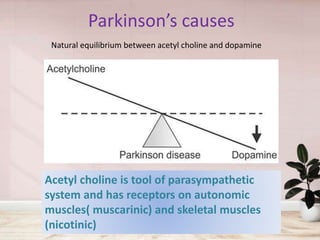
Natural equilibrium between acetyl choline and dopamine
Acetyl choline is tool of parasympathetic
system and has receptors on autonomic
muscles( muscarinic) and skeletal muscles
(nicotinic)
Parkinson’s symptoms
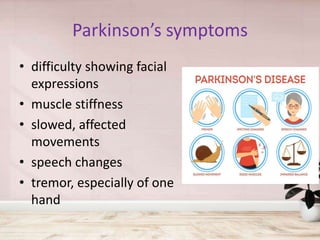
• difficulty showing facial
expressions
• muscle stiffness
• slowed, affected
movements
• speech changes
• tremor, especially of one
hand
diagnosis
• Important to differentiate from peripheral
neuropathy.
• Based mainly on clinical symptoms.
• History of dementia or brain malfunction.
• test that tracks the movement of dopamine in
the brain. This is known as the DaT-SPECT test.
• MRI on mid brain.
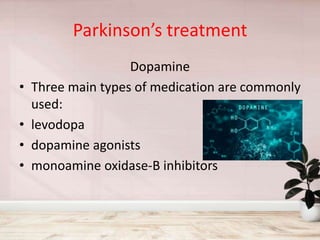
Parkinson’s treatment
Dopamine
• Three main types of medication are commonly
used:
• levodopa
• dopamine agonists
• monoamine oxidase-B inhibitors
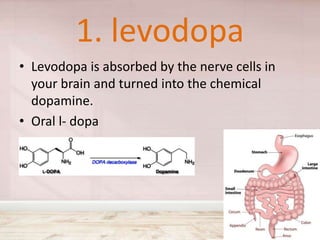
1. levodopa
• Levodopa is absorbed by the nerve cells in
your brain and turned into the chemical
dopamine.
• Oral l- dopa
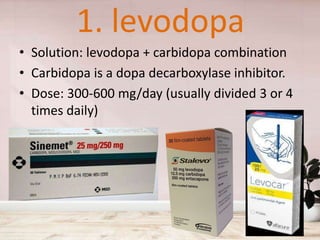
1. levodopa
• Solution: levodopa + carbidopa combination
• Carbidopa is a dopa decarboxylase inhibitor.
• Dose: 300-600 mg/day (usually divided 3 or 4
times daily)
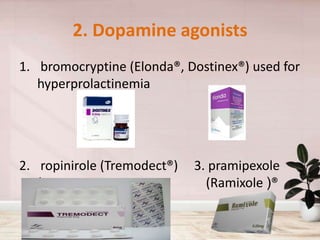
2. Dopamine agonists
1. bromocryptine (Elonda®, Dostinex®) used for
hyperprolactinemia
2. ropinirole (Tremodect®) 3. pramipexole
( (Ramixole ®
(
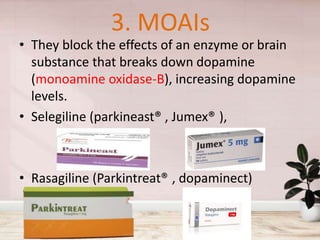
3. MOAIs
• They block the effects of an enzyme or brain
substance that breaks down dopamine
(monoamine oxidase-B), increasing dopamine
levels.
• Selegiline (parkineast® , Jumex® ),
• Rasagiline (Parkintreat® , dopaminect)
references
• https://davisphinneyfoundation.org/parkinsons-vs-
parkinsonism/
• https://scienceofparkinsons.com/2020/01/18/dormant/
• https://www.medicalnewstoday.com/articles/320601#treat
ments
• https://www.nhs.uk/conditions/parkinsons-
disease/treatment/#:~:text=Most%20people%20with%20P
arkinson's%20disease,and%20nerves%20that%20control%
20movement.
• https://www.medscape.com/answers/1831191-9932/what-
is-the-recommended-dosage-for-levodopa-and-a-dopa-
decarboxylase-inhibitor-in-the-management-of-parkinson-
disease-pd
• https://www.healthline.com/health/parkinsons-
disease/dopamine-agonist#how-they-work

Parkinson’s disease.pptx

  • 2.
    Parkinson’s disease andparkinsonism • Parkinson’s disease: degeneration of nerve cells responsible for dopamine release in the brain. • Parkinsonism: secondary to 1. side effects of medications 2. chronic head traumas (accidents/boxing)
  • 3.
  • 4.
    Parkinson’s causes Natural equilibriumbetween acetyl choline and dopamine Acetyl choline is tool of parasympathetic system and has receptors on autonomic muscles( muscarinic) and skeletal muscles (nicotinic)
  • 5.
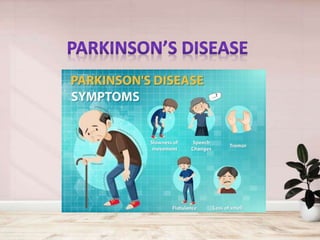
    Parkinson’s symptoms • difficultyshowing facial expressions • muscle stiffness • slowed, affected movements • speech changes • tremor, especially of one hand
  • 6.
    diagnosis • Important todifferentiate from peripheral neuropathy. • Based mainly on clinical symptoms. • History of dementia or brain malfunction. • test that tracks the movement of dopamine in the brain. This is known as the DaT-SPECT test. • MRI on mid brain.
  • 7.
    Parkinson’s treatment Dopamine • Threemain types of medication are commonly used: • levodopa • dopamine agonists • monoamine oxidase-B inhibitors
  • 8.
    1. levodopa • Levodopais absorbed by the nerve cells in your brain and turned into the chemical dopamine. • Oral l- dopa
  • 9.
    1. levodopa • Solution:levodopa + carbidopa combination • Carbidopa is a dopa decarboxylase inhibitor. • Dose: 300-600 mg/day (usually divided 3 or 4 times daily)
  • 10.
    2. Dopamine agonists 1.bromocryptine (Elonda®, Dostinex®) used for hyperprolactinemia 2. ropinirole (Tremodect®) 3. pramipexole ( (Ramixole ® (
  • 11.
    3. MOAIs • Theyblock the effects of an enzyme or brain substance that breaks down dopamine (monoamine oxidase-B), increasing dopamine levels. • Selegiline (parkineast® , Jumex® ), • Rasagiline (Parkintreat® , dopaminect)
  • 13.
    references • https://davisphinneyfoundation.org/parkinsons-vs- parkinsonism/ • https://scienceofparkinsons.com/2020/01/18/dormant/ •https://www.medicalnewstoday.com/articles/320601#treat ments • https://www.nhs.uk/conditions/parkinsons- disease/treatment/#:~:text=Most%20people%20with%20P arkinson's%20disease,and%20nerves%20that%20control% 20movement. • https://www.medscape.com/answers/1831191-9932/what- is-the-recommended-dosage-for-levodopa-and-a-dopa- decarboxylase-inhibitor-in-the-management-of-parkinson- disease-pd • https://www.healthline.com/health/parkinsons- disease/dopamine-agonist#how-they-work