Prepared by: Shivam Thakore Guided by: Ms Rudree Pathak
Ankit Patel
7/26/2013 1
Department of Pharmaceutical Technology,
LJ institute of Pharmacy, Ahmedabad
Table of Contents
 Introduction
 Advantages
 Disadvantages
 Polymers used
 Method Of Preparation
 Characterization
 Questions that can be asked
 References
7/26/2013 2
Department of Pharmaceutical Technology, LJ
institute of Pharmacy, Ahmedabad
Introduction: Polymeric
Nanoparticles
• What are PNP’s?
○ They are solid colloidal particles ranging in size from
10 to 1000 nm (1µm).
 Drug may be dissolved, entrapped, encapsulated or
attached to a nanoparticle matrix .
 Because these systems have very high surface
areas, drugs may also be adsorbed on their surface.
 Polymer-based nanoparticles effectively carry
drugs, proteins and DNA to target cells and organs.
 Their nanometer-size promotes effective permeation
through cell membranes and stability in the blood
stream
7/26/2013 3
Department of Pharmaceutical Technology, LJ
institute of Pharmacy, Ahmedabad
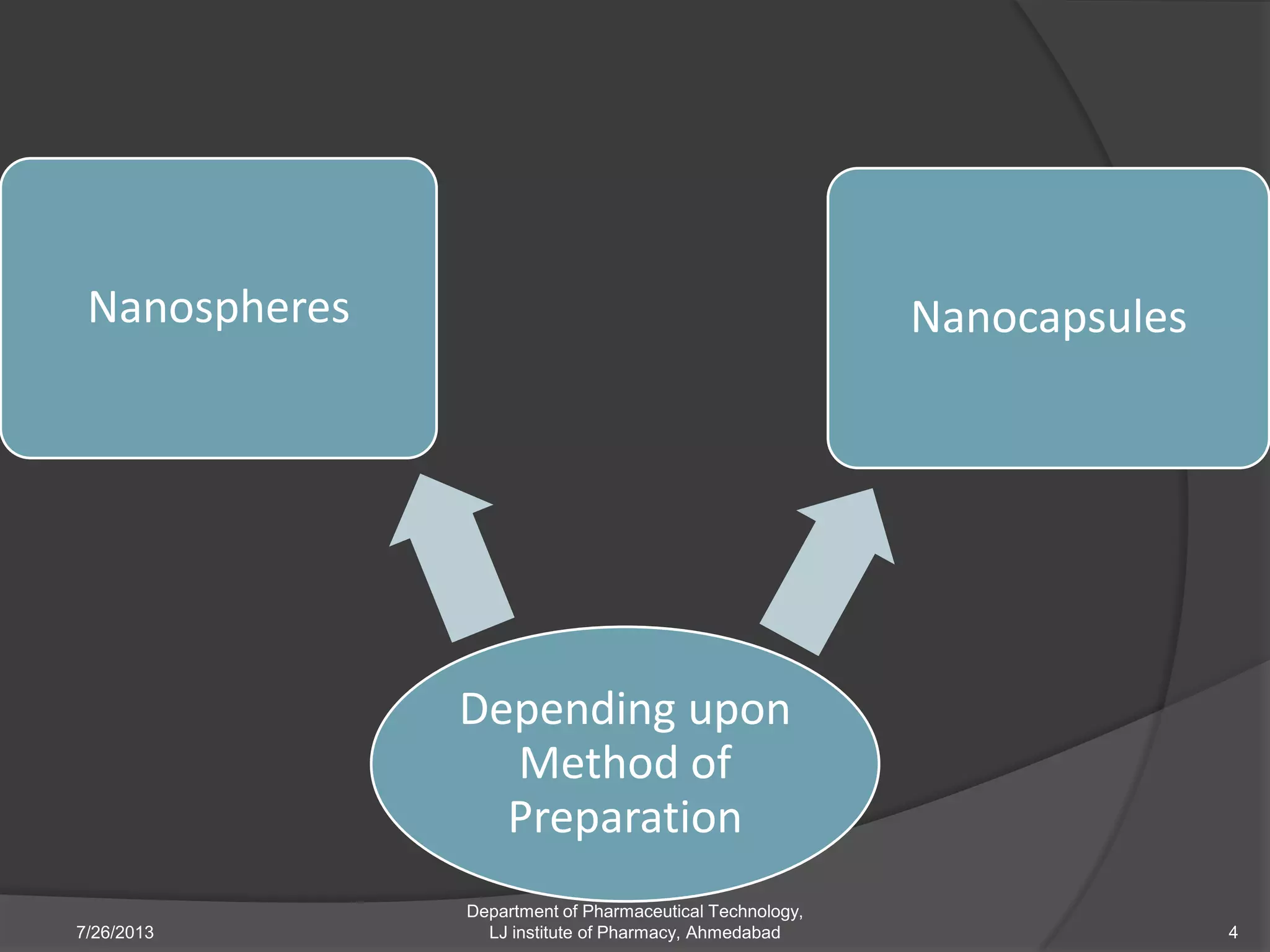
Depending upon
Method of
Preparation
Nanospheres Nanocapsules
7/26/2013 4
Department of Pharmaceutical Technology,
LJ institute of Pharmacy, Ahmedabad
7/26/2013 5
Department of Pharmaceutical Technology,
LJ institute of Pharmacy, Ahmedabad
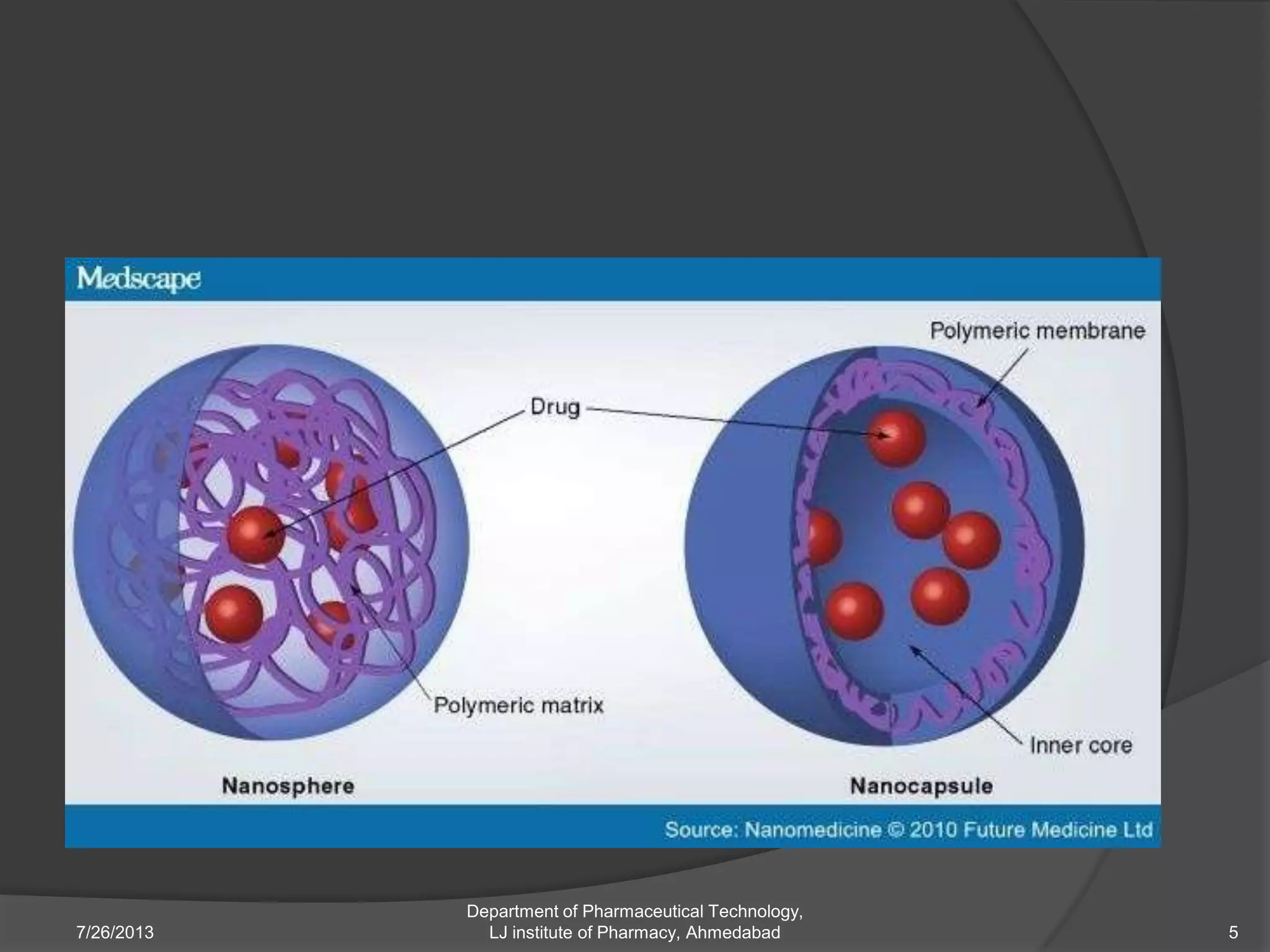
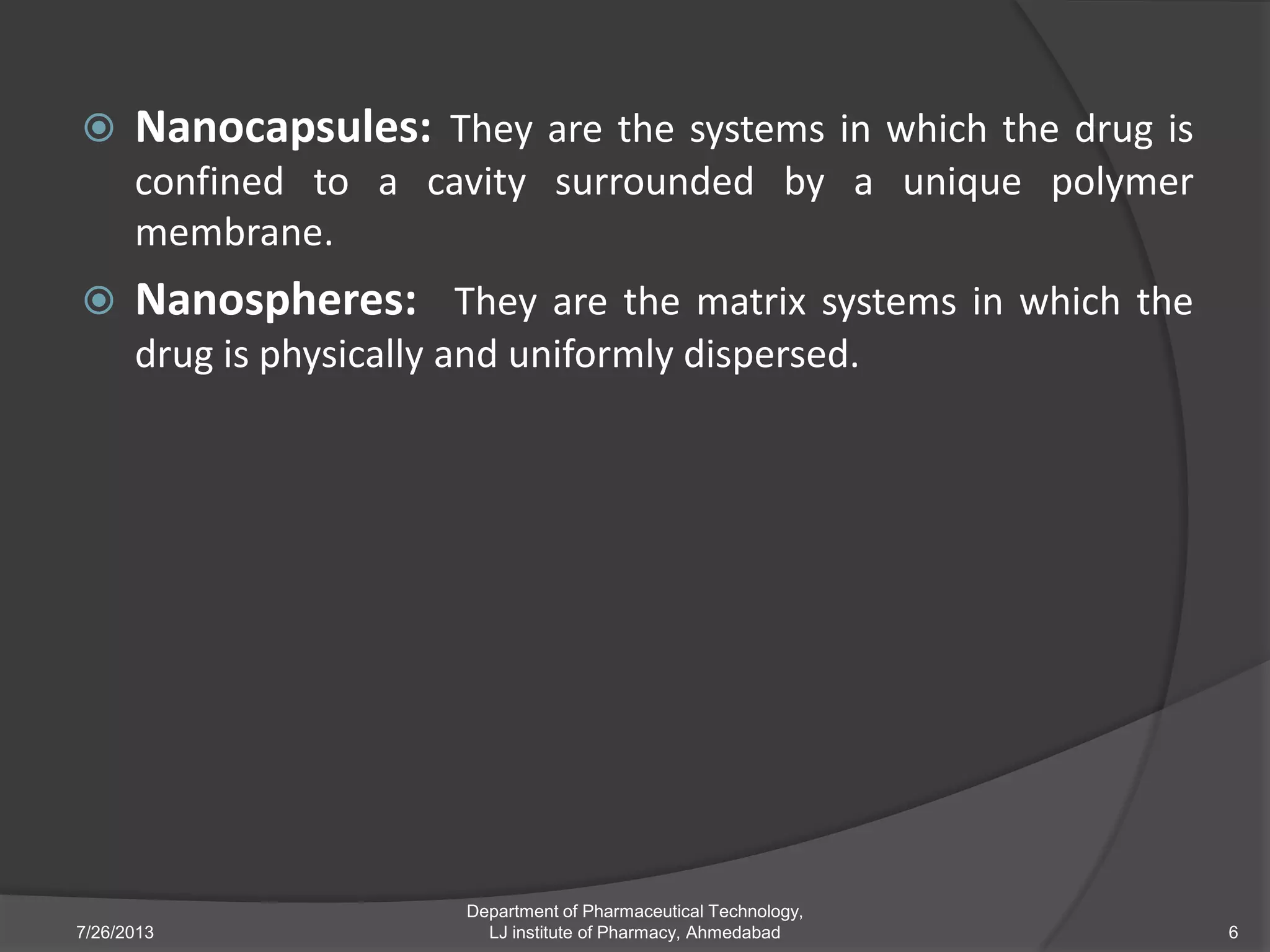
 Nanocapsules: They are the systems in which the drug is
confined to a cavity surrounded by a unique polymer
membrane.
 Nanospheres: They are the matrix systems in which the
drug is physically and uniformly dispersed.
7/26/2013 6
Department of Pharmaceutical Technology,
LJ institute of Pharmacy, Ahmedabad
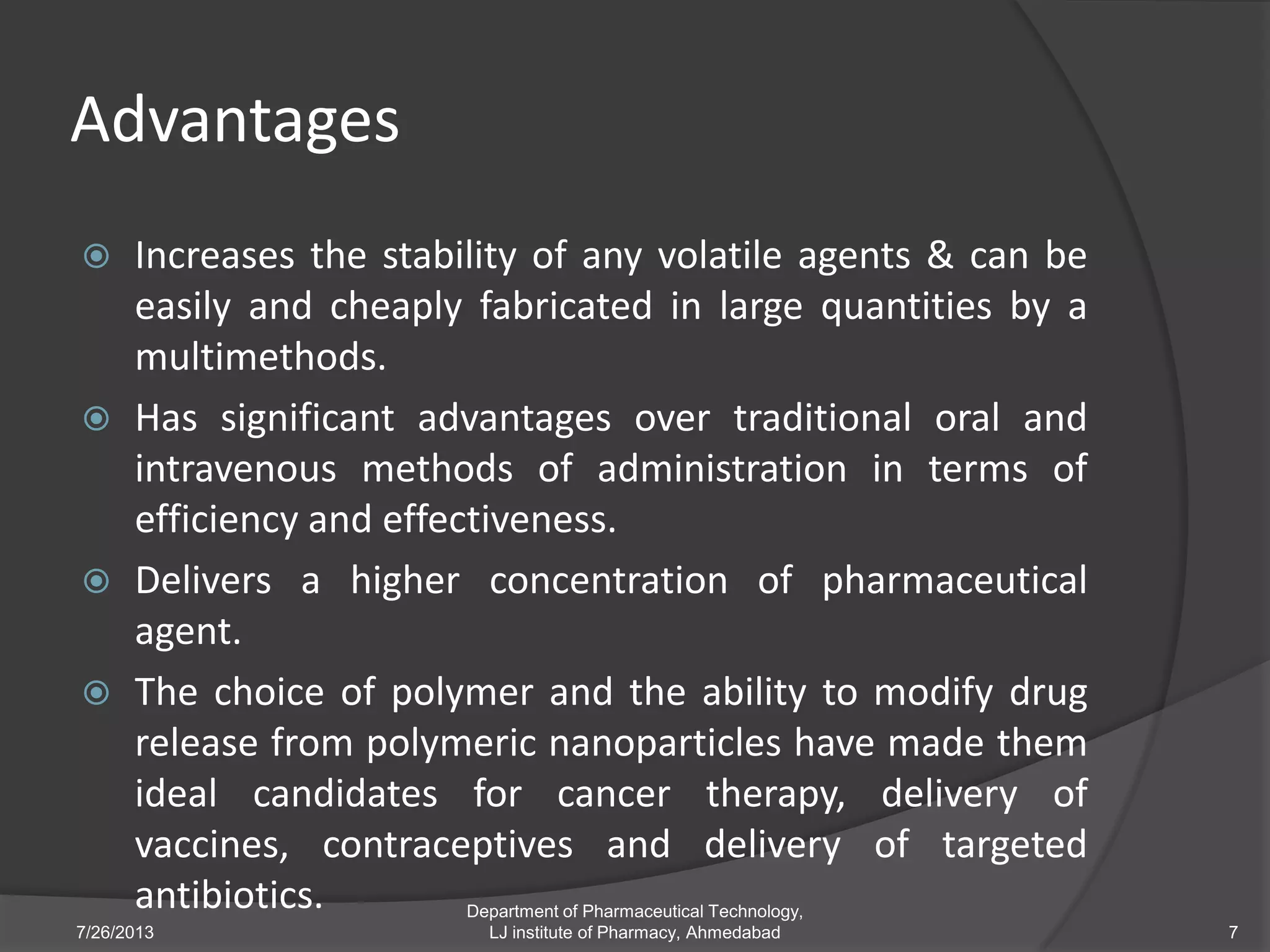
Advantages
 Increases the stability of any volatile agents & can be
easily and cheaply fabricated in large quantities by a
multimethods.
 Has significant advantages over traditional oral and
intravenous methods of administration in terms of
efficiency and effectiveness.
 Delivers a higher concentration of pharmaceutical
agent.
 The choice of polymer and the ability to modify drug
release from polymeric nanoparticles have made them
ideal candidates for cancer therapy, delivery of
vaccines, contraceptives and delivery of targeted
antibiotics.
7/26/2013 7
Department of Pharmaceutical Technology,
LJ institute of Pharmacy, Ahmedabad
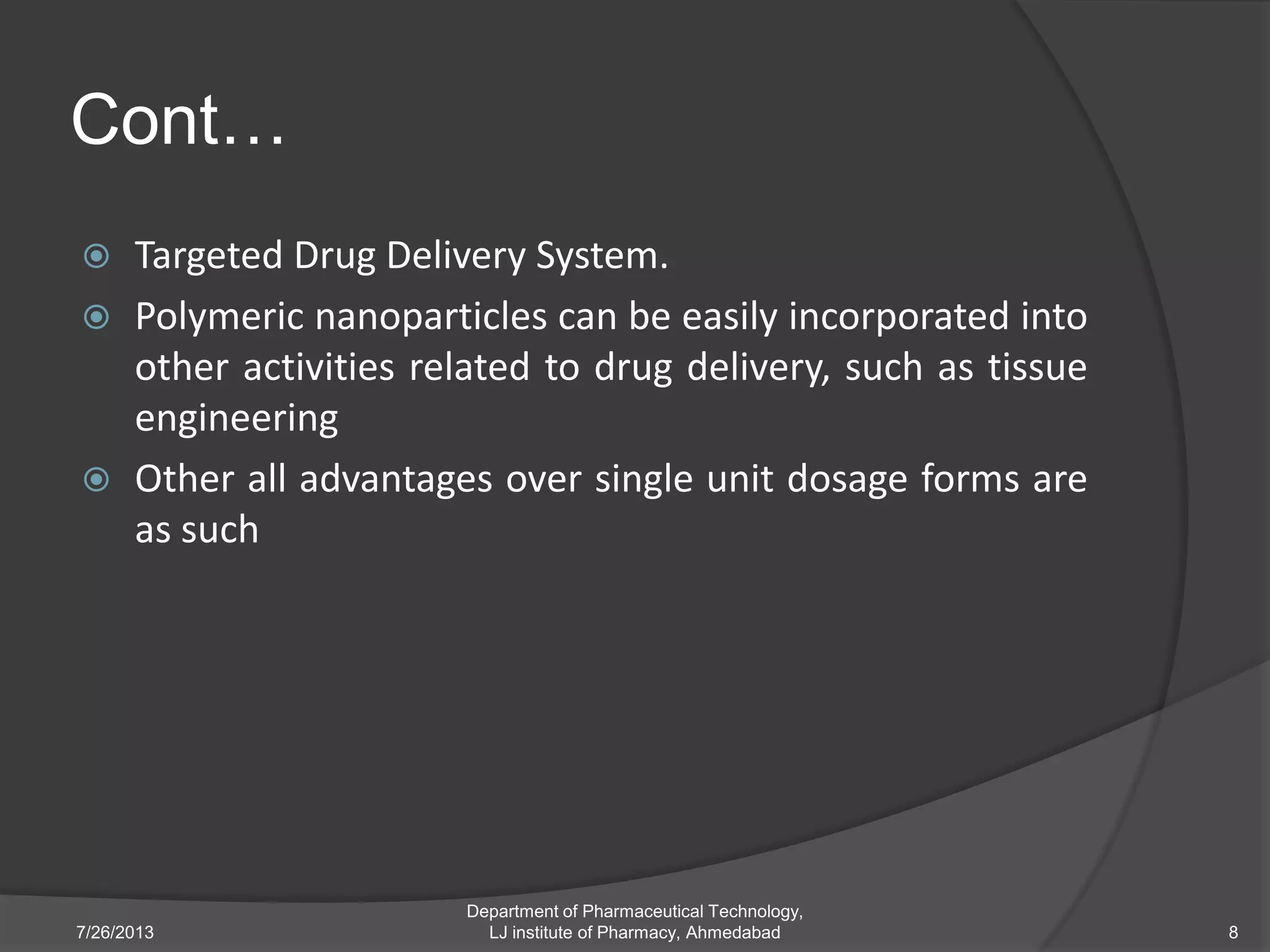
Cont…
 Targeted Drug Delivery System.
 Polymeric nanoparticles can be easily incorporated into
other activities related to drug delivery, such as tissue
engineering
 Other all advantages over single unit dosage forms are
as such
7/26/2013 8
Department of Pharmaceutical Technology,
LJ institute of Pharmacy, Ahmedabad
Disadvantages
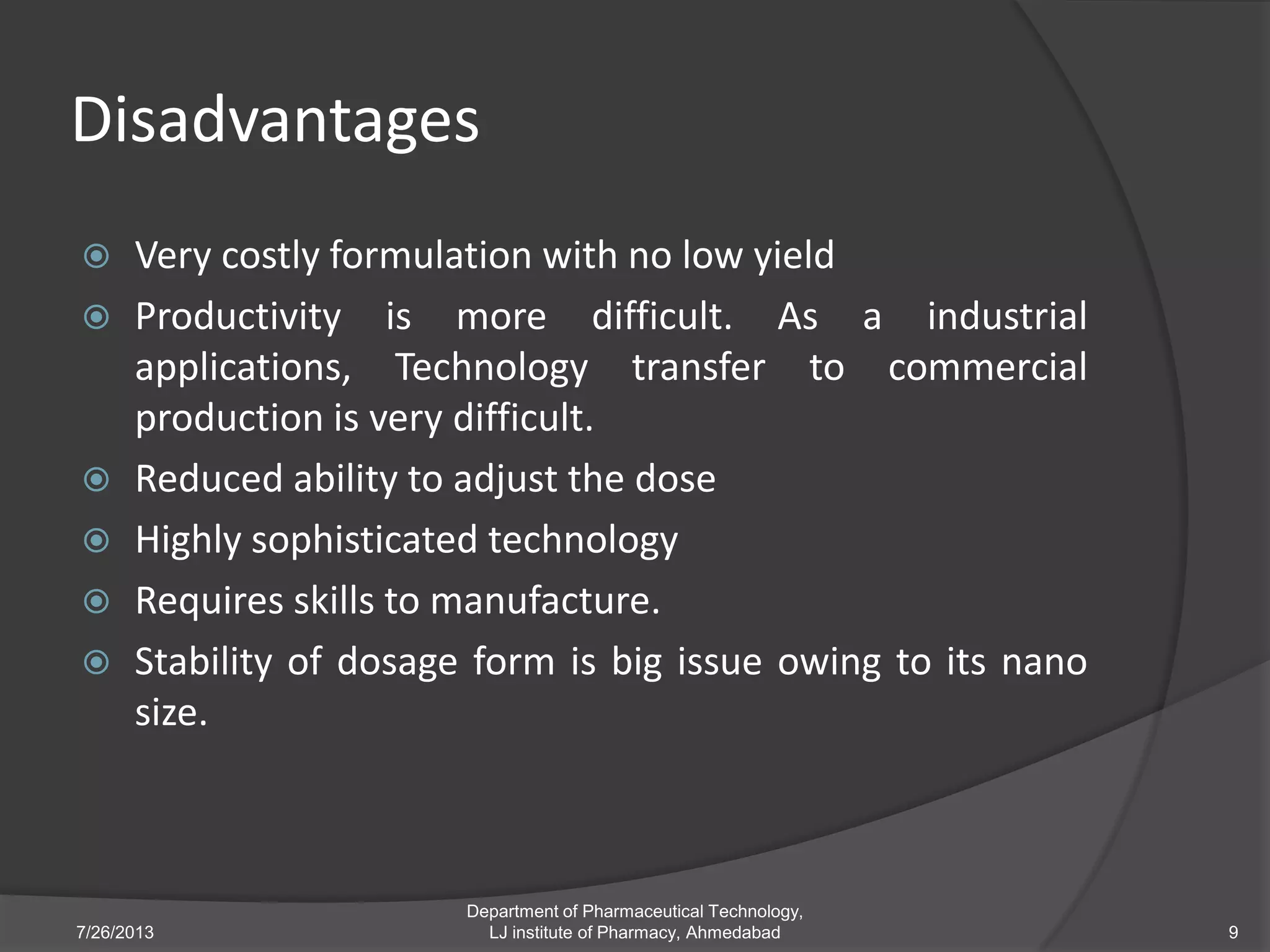
 Very costly formulation with no low yield
 Productivity is more difficult. As a industrial
applications, Technology transfer to commercial
production is very difficult.
 Reduced ability to adjust the dose
 Highly sophisticated technology
 Requires skills to manufacture.
 Stability of dosage form is big issue owing to its nano
size.
7/26/2013 9
Department of Pharmaceutical Technology,
LJ institute of Pharmacy, Ahmedabad
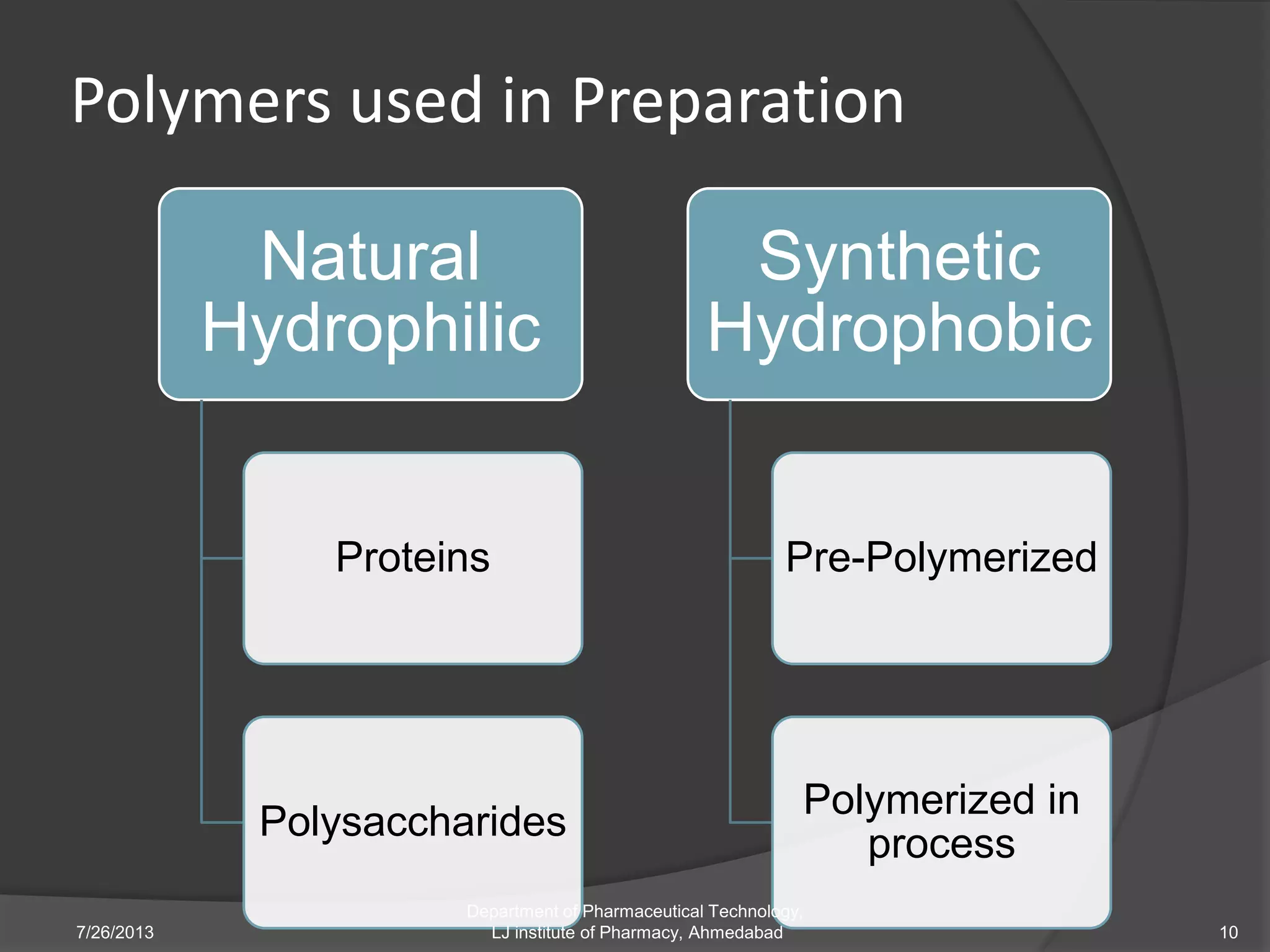
Polymers used in Preparation
Natural
Hydrophilic
Proteins
Polysaccharides
Synthetic
Hydrophobic
Pre-Polymerized
Polymerized in
process
7/26/2013 10
Department of Pharmaceutical Technology,
LJ institute of Pharmacy, Ahmedabad
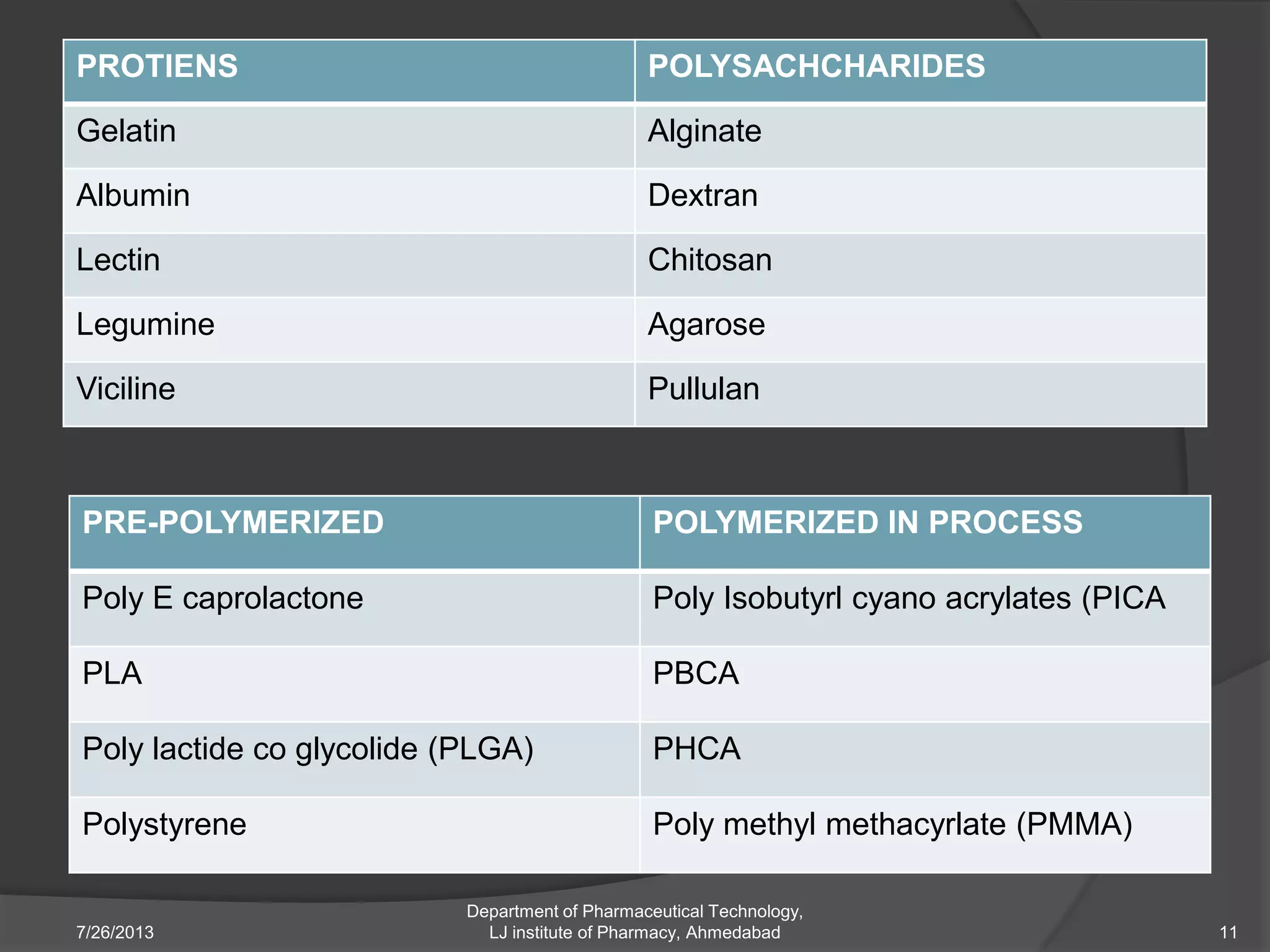
PROTIENS POLYSACHCHARIDES
Gelatin Alginate
Albumin Dextran
Lectin Chitosan
Legumine Agarose
Viciline Pullulan
PRE-POLYMERIZED POLYMERIZED IN PROCESS
Poly E caprolactone Poly Isobutyrl cyano acrylates (PICA
PLA PBCA
Poly lactide co glycolide (PLGA) PHCA
Polystyrene Poly methyl methacyrlate (PMMA)
7/26/2013 11
Department of Pharmaceutical Technology,
LJ institute of Pharmacy, Ahmedabad
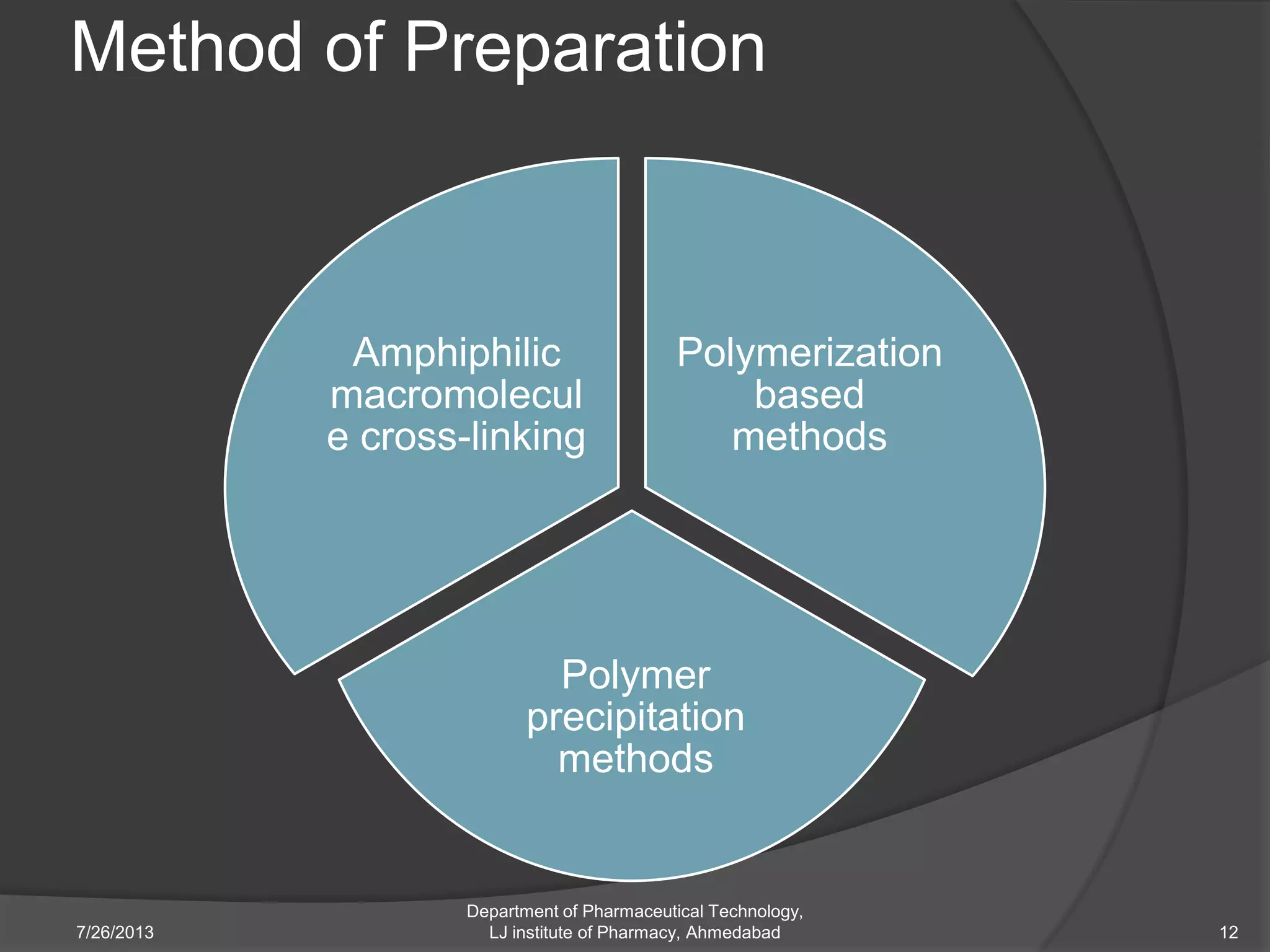
Method of Preparation
7/26/2013
Department of Pharmaceutical Technology,
LJ institute of Pharmacy, Ahmedabad 12
Polymerization
based
methods
Polymer
precipitation
methods
Amphiphilic
macromolecul
e cross-linking
7/26/2013
Department of Pharmaceutical Technology,
LJ institute of Pharmacy, Ahmedabad 13
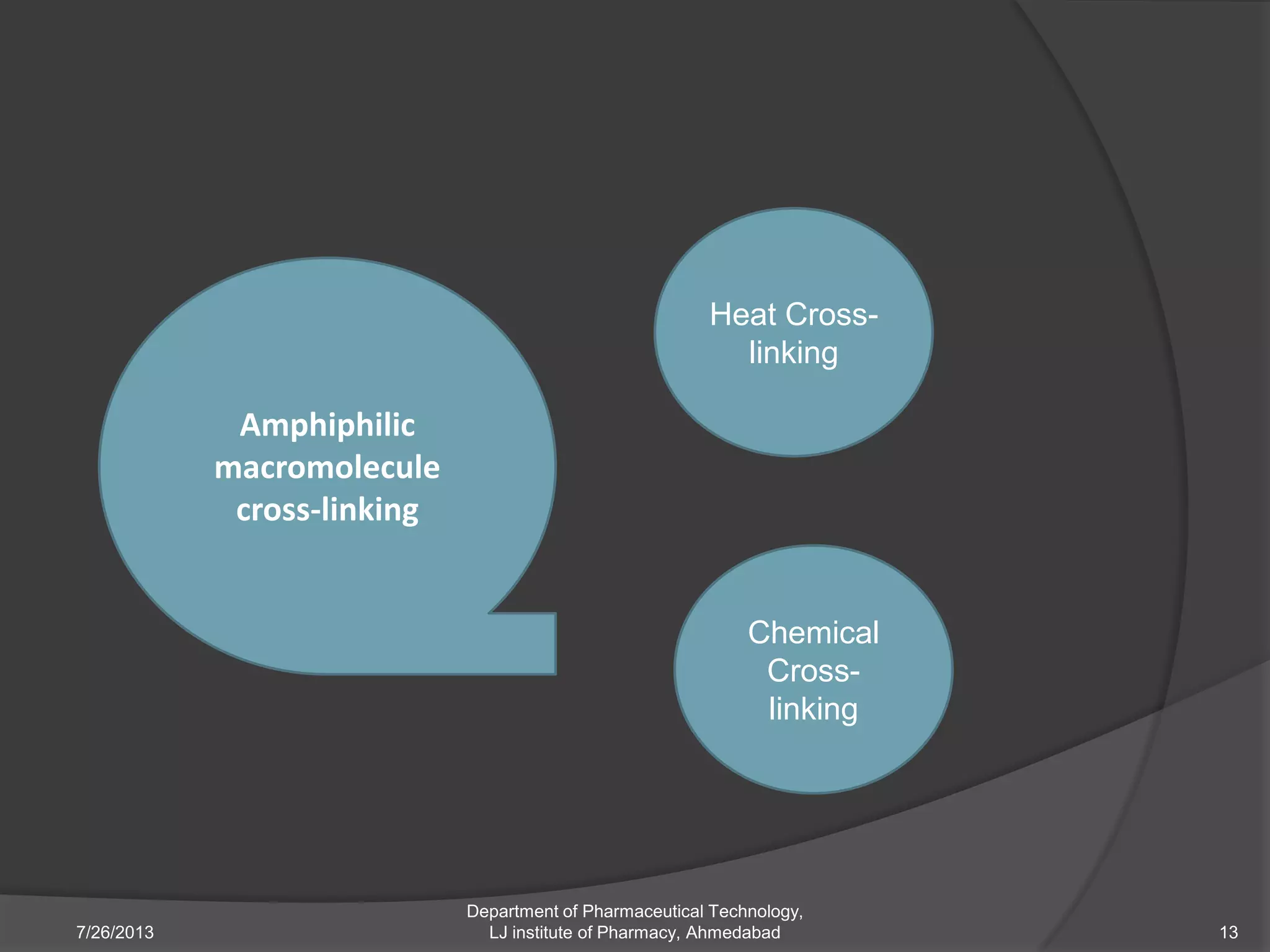
Heat Cross-
linking
Chemical
Cross-
linking
Amphiphilic
macromolecule
cross-linking
7/26/2013
Department of Pharmaceutical Technology,
LJ institute of Pharmacy, Ahmedabad 14
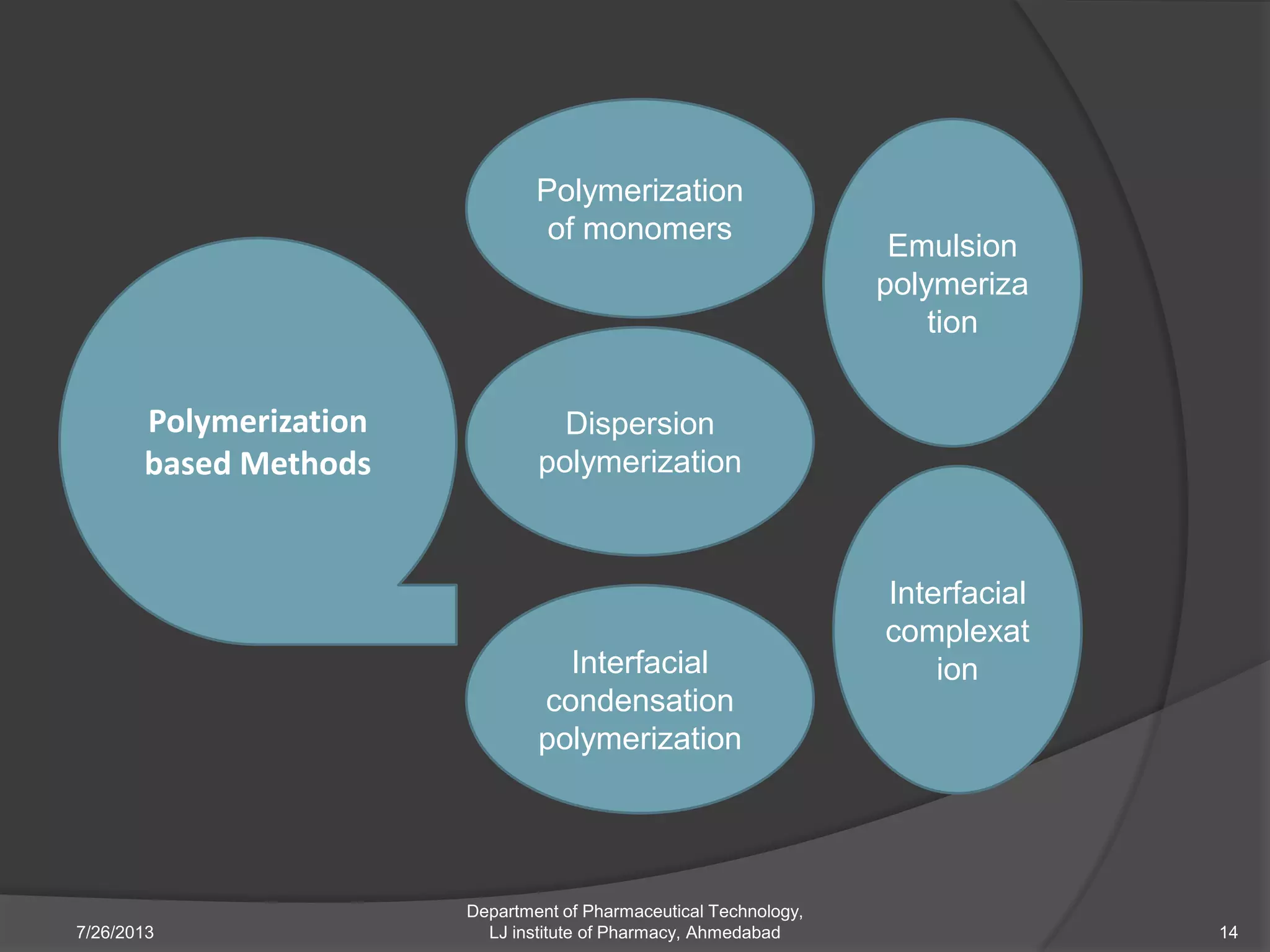
Polymerization
based Methods
Polymerization
of monomers
Emulsion
polymeriza
tion
Interfacial
complexat
ion
Dispersion
polymerization
Interfacial
condensation
polymerization
7/26/2013
Department of Pharmaceutical Technology,
LJ institute of Pharmacy, Ahmedabad 15
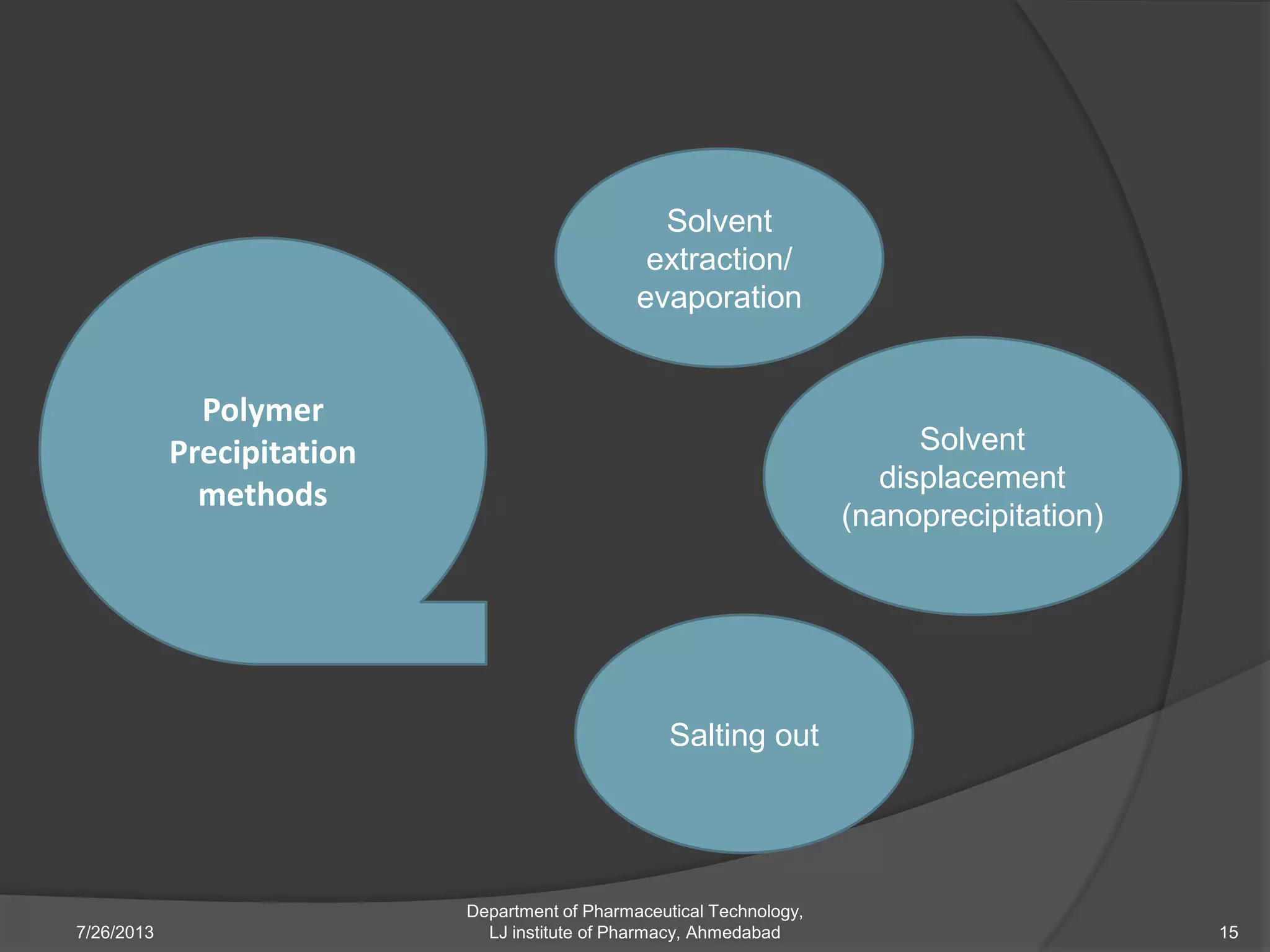
Polymer
Precipitation
methods
Solvent
extraction/
evaporation
Solvent
displacement
(nanoprecipitation)
Salting out
7/26/2013
Department of Pharmaceutical Technology,
LJ institute of Pharmacy, Ahmedabad 16
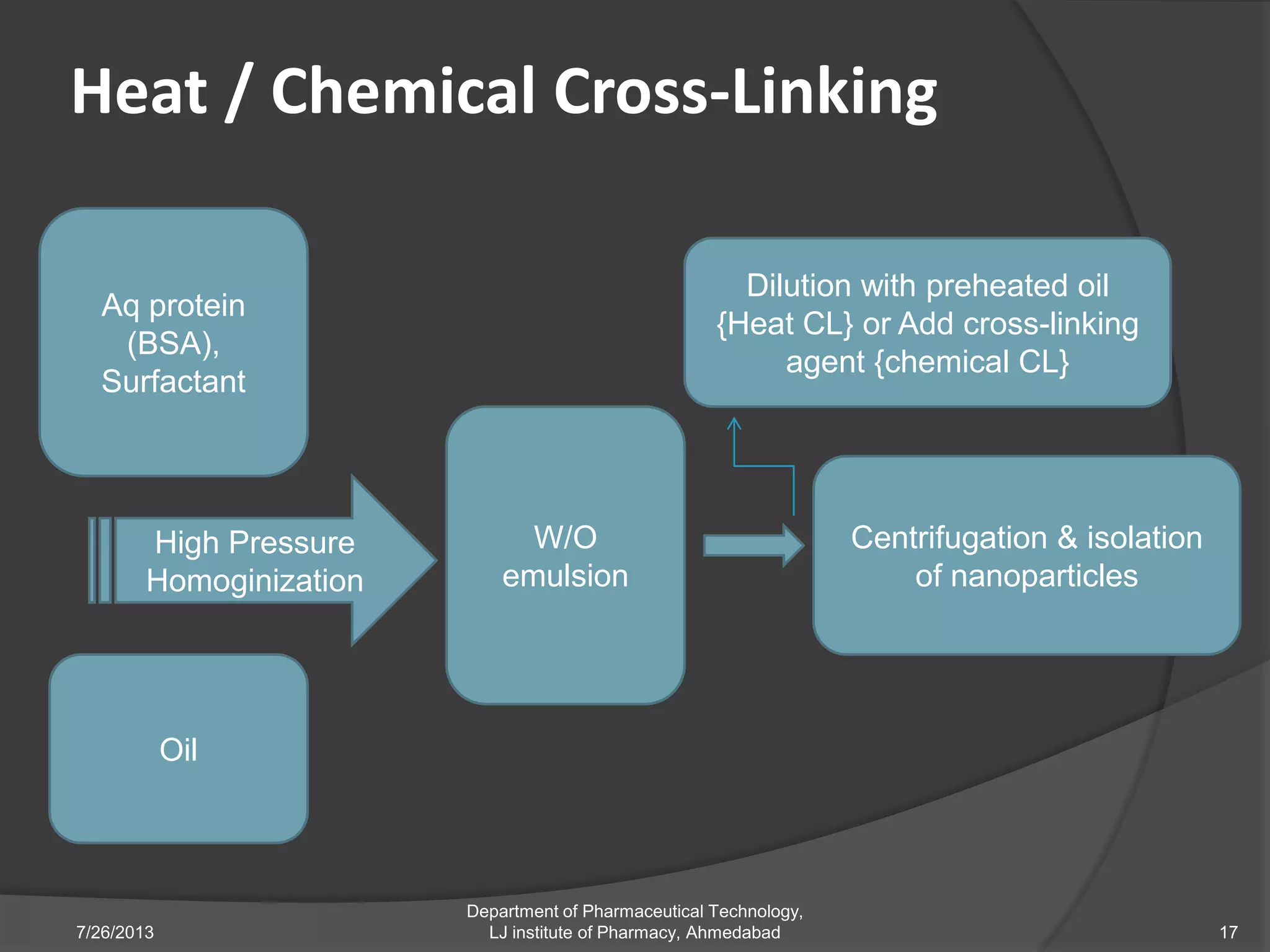
Heat / Chemical Cross-Linking
7/26/2013
Department of Pharmaceutical Technology,
LJ institute of Pharmacy, Ahmedabad 17
Aq protein
(BSA),
Surfactant
Oil
High Pressure
Homoginization
W/O
emulsion
Centrifugation & isolation
of nanoparticles
Dilution with preheated oil
{Heat CL} or Add cross-linking
agent {chemical CL}
7/26/2013
Department of Pharmaceutical Technology,
LJ institute of Pharmacy, Ahmedabad 18
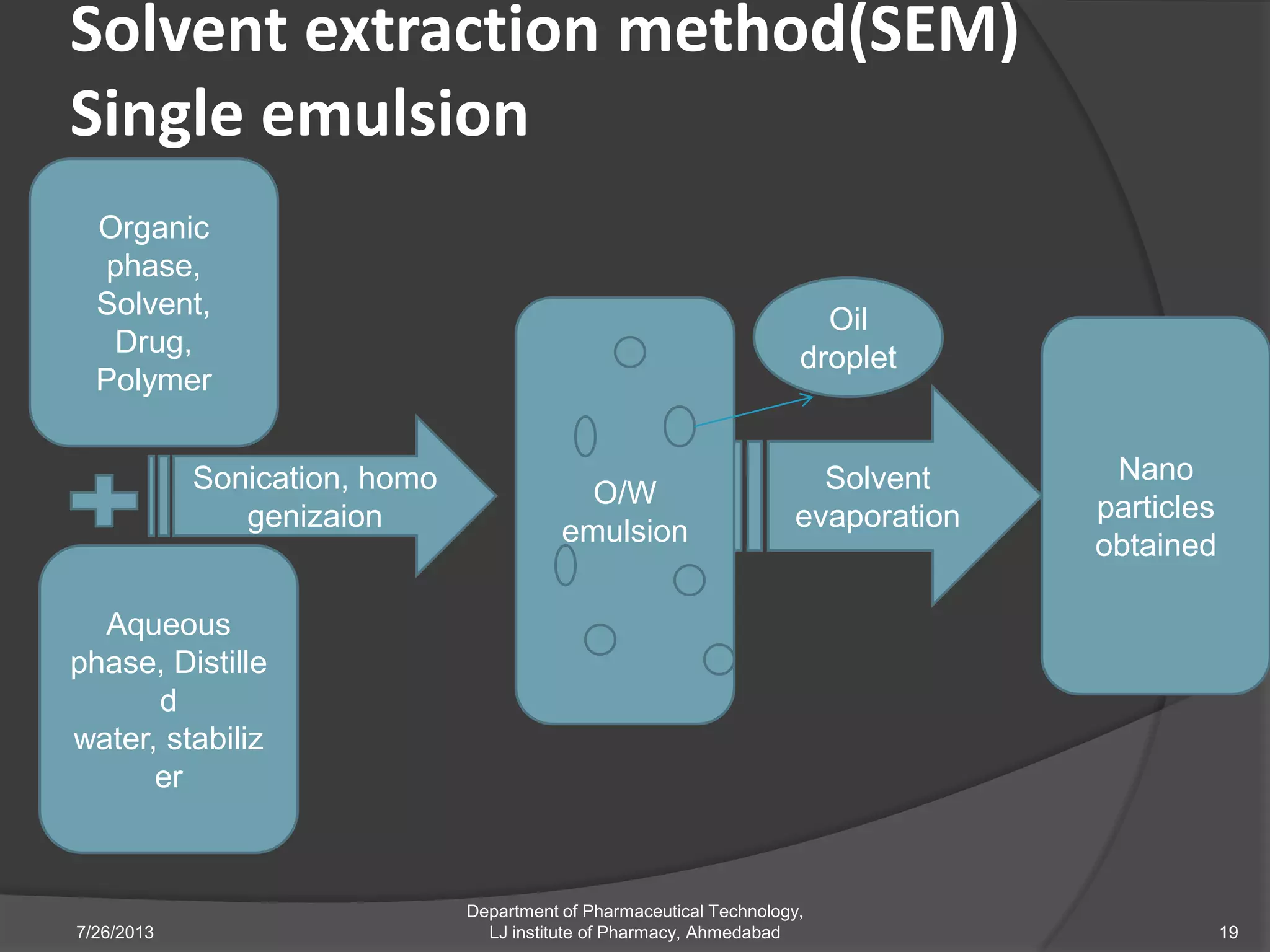
Solvent extraction method(SEM)
Single emulsion
7/26/2013
Department of Pharmaceutical Technology,
LJ institute of Pharmacy, Ahmedabad 19
Organic
phase,
Solvent,
Drug,
Polymer
Aqueous
phase, Distille
d
water, stabiliz
er
Sonication, homo
genizaion
O/W
emulsion
Oil
droplet
Solvent
evaporation
Nano
particles
obtained
Double Emulsion SEM
7/26/2013
Department of Pharmaceutical Technology,
LJ institute of Pharmacy, Ahmedabad 20
Organic
phase,
solvent, drug,
polymer
Aqueous
Phase, Water,
Stabilizer
Sonication, homo
genization
W/O
emulsion
stablized at
4 C
W/O/W
emulsion
Nano
particles
Aq phase with
stabilizer(PVA)
Solvent
evaporation
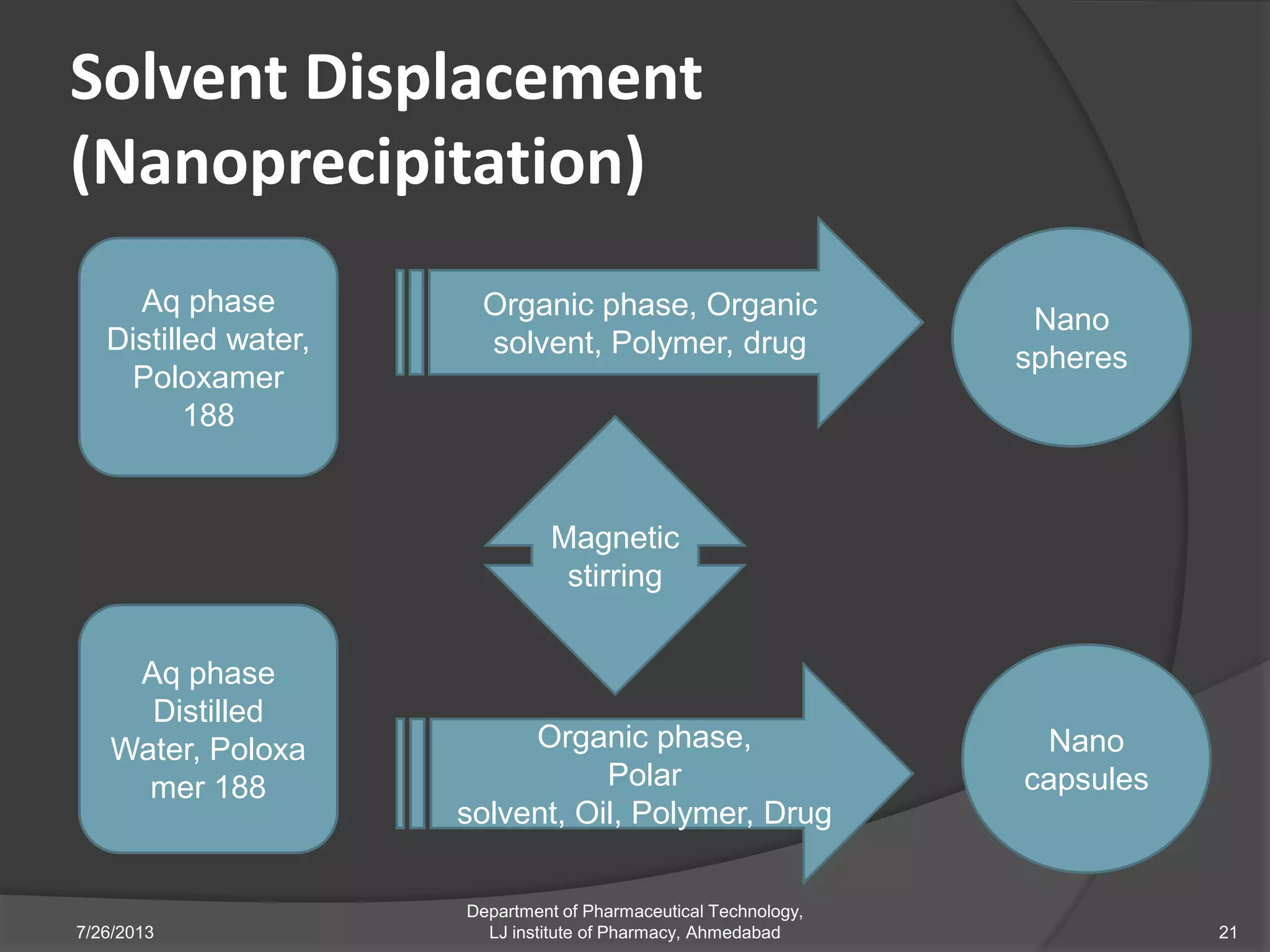
Solvent Displacement
(Nanoprecipitation)
7/26/2013
Department of Pharmaceutical Technology,
LJ institute of Pharmacy, Ahmedabad 21
Aq phase
Distilled water,
Poloxamer
188
Organic phase, Organic
solvent, Polymer, drug
Nano
spheres
Aq phase
Distilled
Water, Poloxa
mer 188
Organic phase,
Polar
solvent, Oil, Polymer, Drug
Nano
capsules
Magnetic
stirring
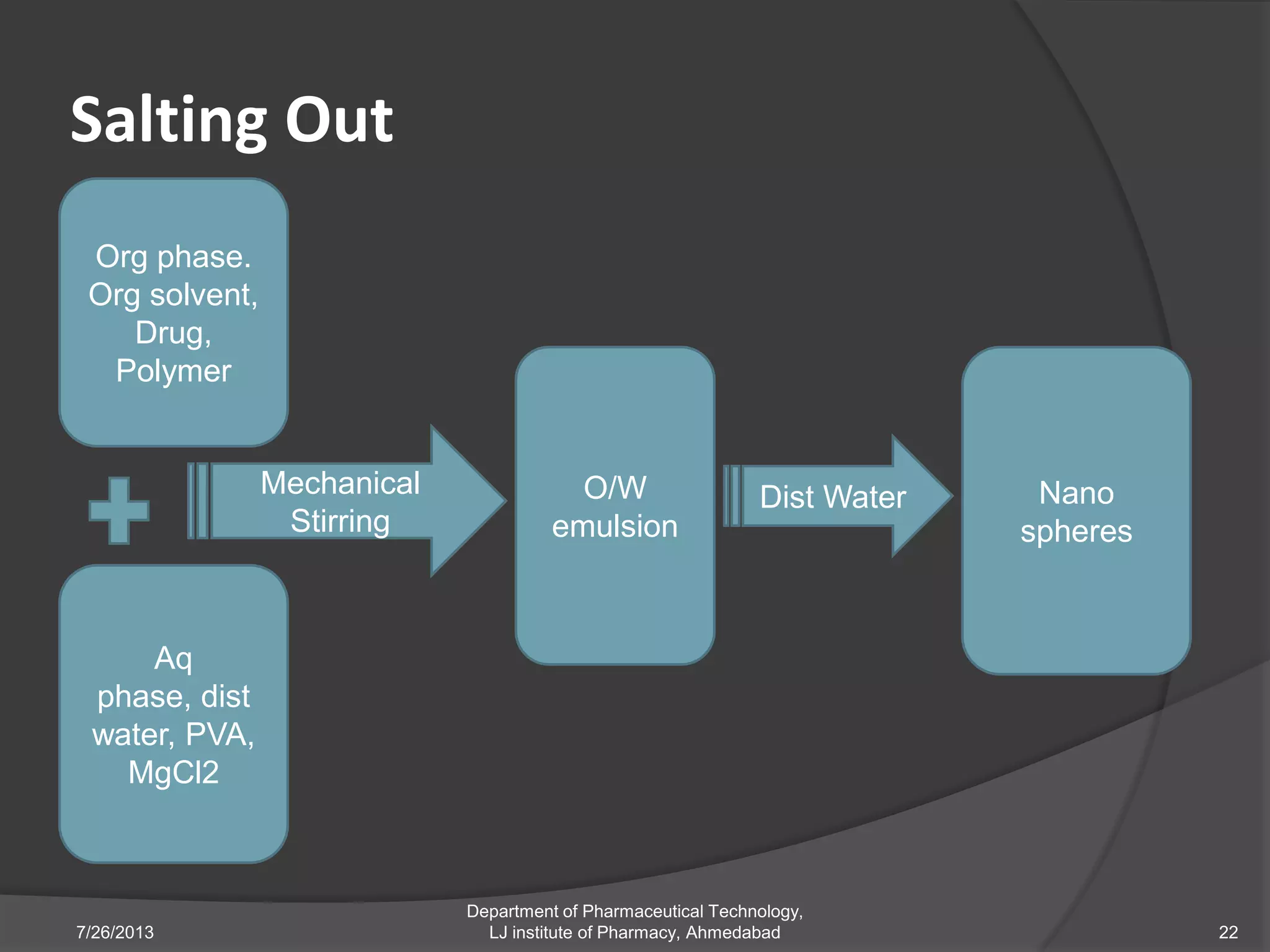
Salting Out
7/26/2013
Department of Pharmaceutical Technology,
LJ institute of Pharmacy, Ahmedabad 22
Org phase.
Org solvent,
Drug,
Polymer
Aq
phase, dist
water, PVA,
MgCl2
Mechanical
Stirring
O/W
emulsion
Nano
spheres
Dist Water
7/26/2013
Department of Pharmaceutical Technology,
LJ institute of Pharmacy, Ahmedabad 23
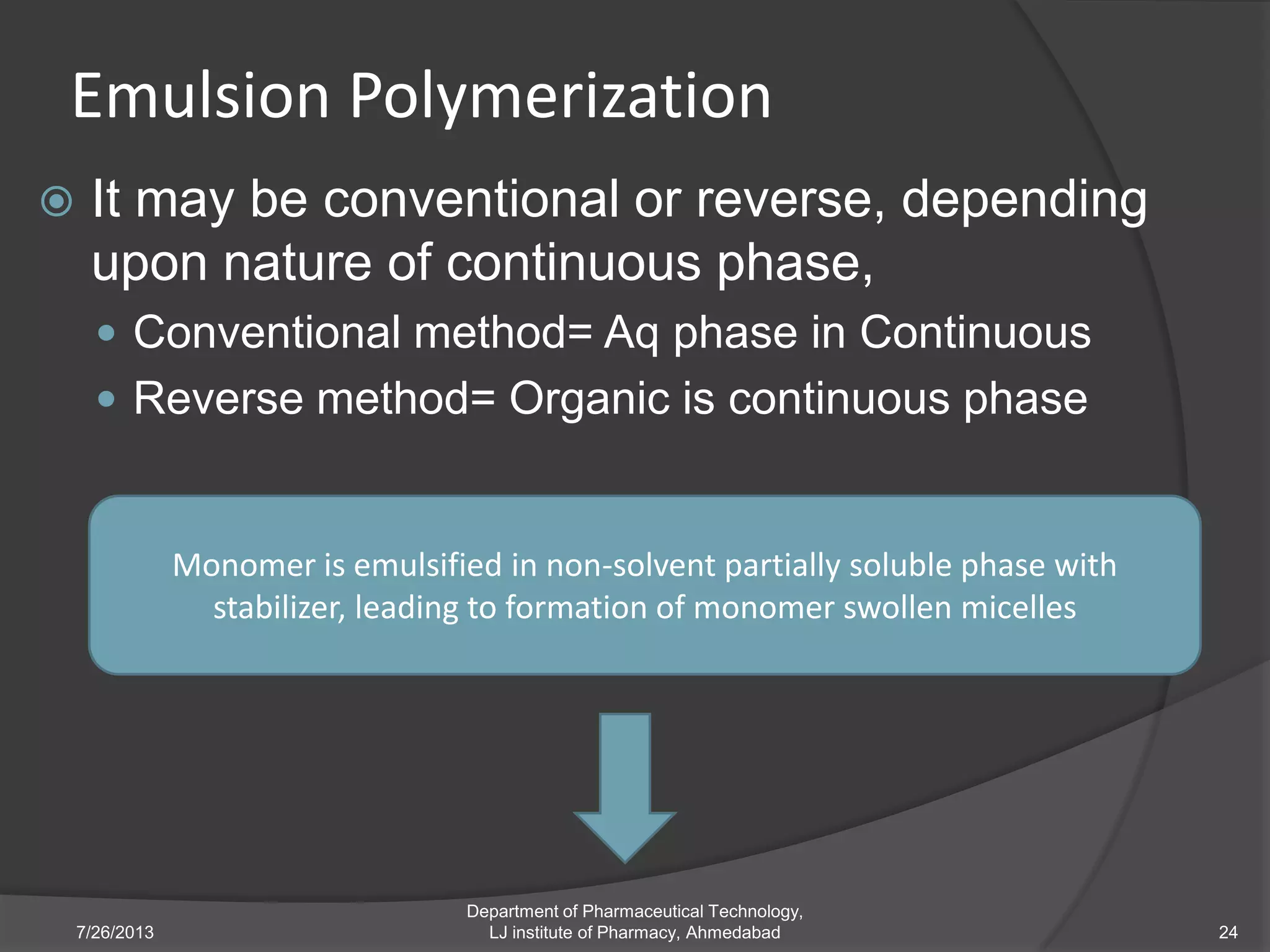
Emulsion Polymerization
 It may be conventional or reverse, depending
upon nature of continuous phase,
 Conventional method= Aq phase in Continuous
 Reverse method= Organic is continuous phase
7/26/2013
Department of Pharmaceutical Technology,
LJ institute of Pharmacy, Ahmedabad 24
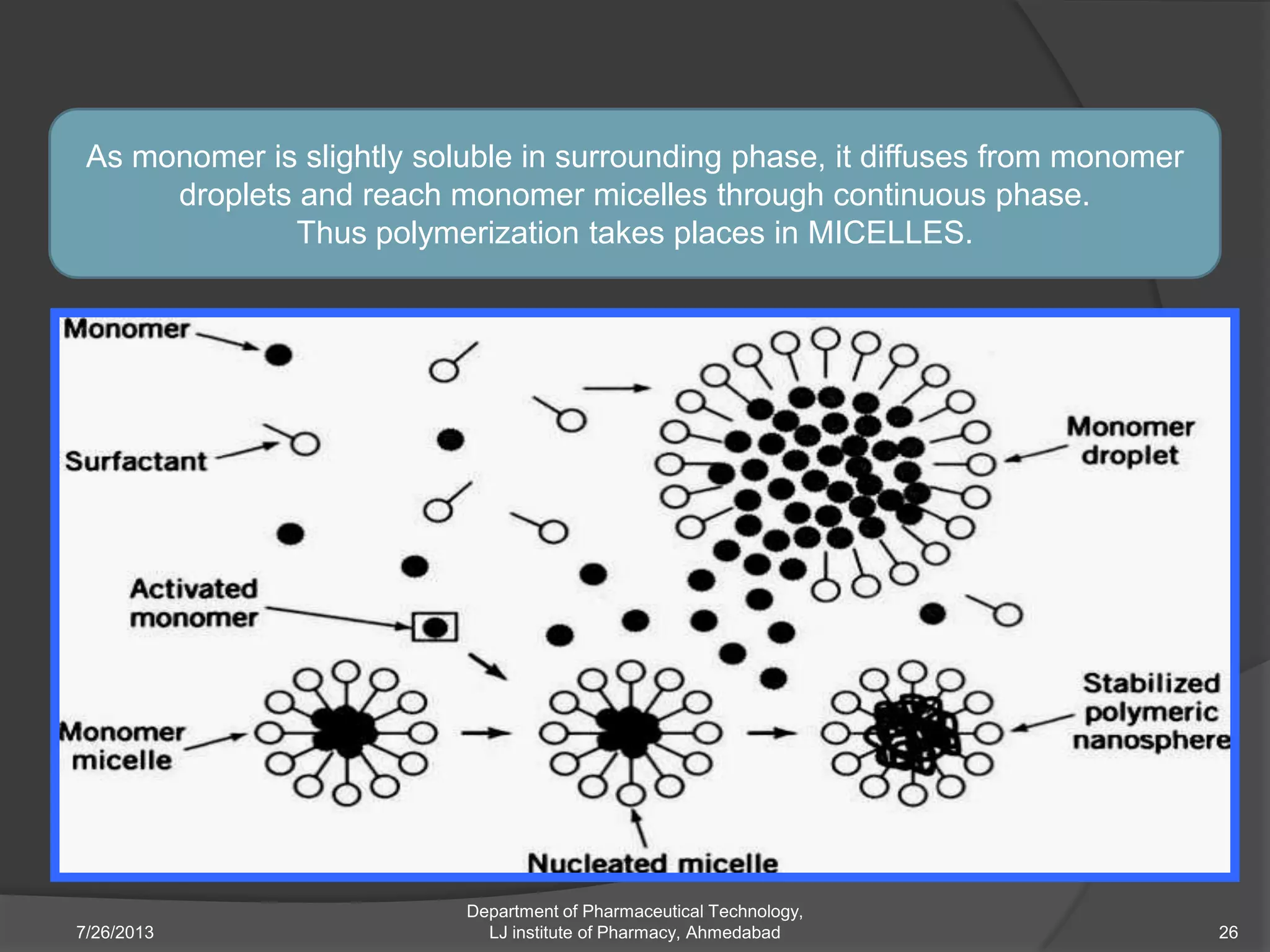
Monomer is emulsified in non-solvent partially soluble phase with
stabilizer, leading to formation of monomer swollen micelles
7/26/2013
Department of Pharmaceutical Technology,
LJ institute of Pharmacy, Ahmedabad 25
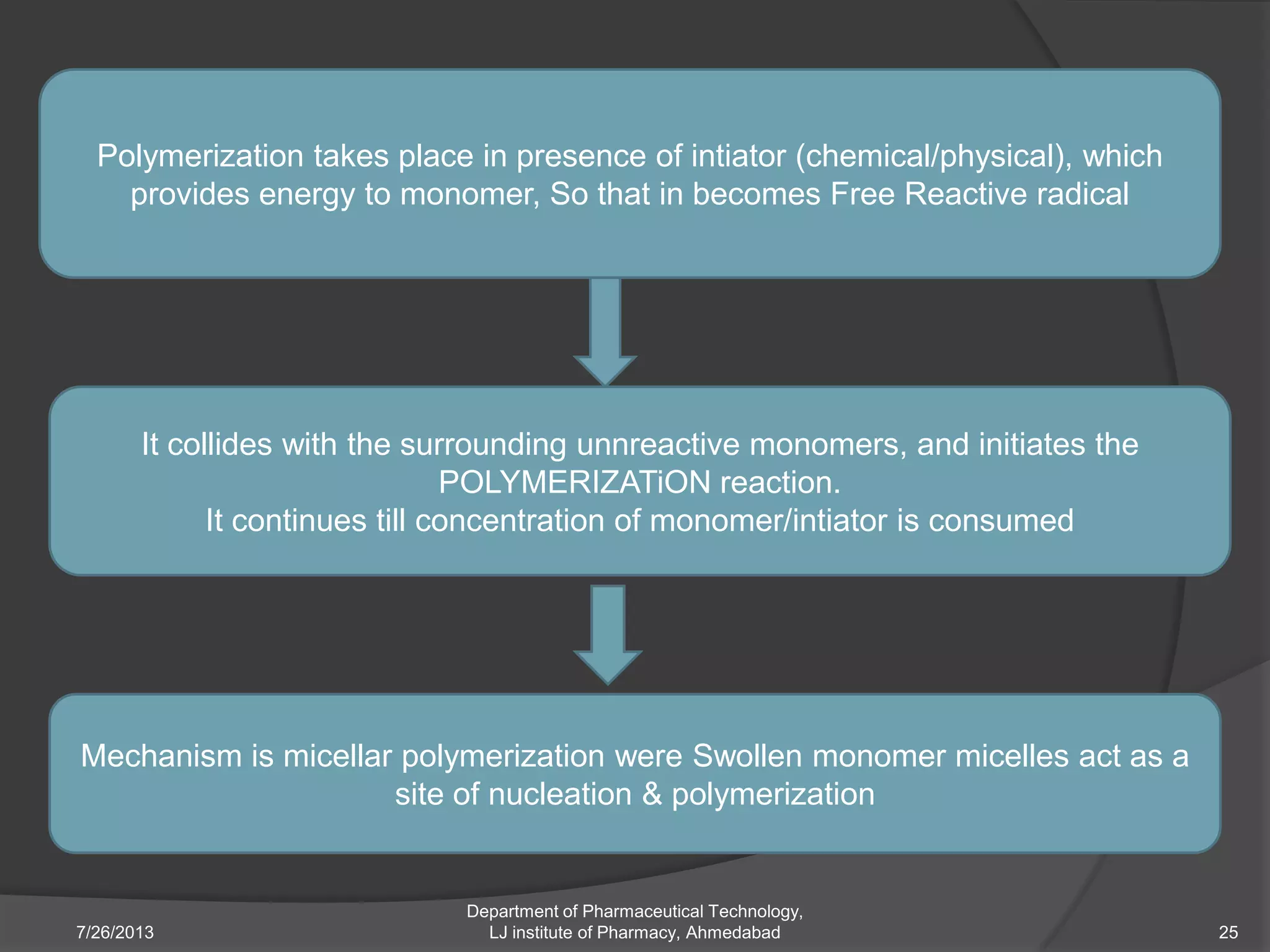
Polymerization takes place in presence of intiator (chemical/physical), which
provides energy to monomer, So that in becomes Free Reactive radical
It collides with the surrounding unnreactive monomers, and initiates the
POLYMERIZATiON reaction.
It continues till concentration of monomer/intiator is consumed
Mechanism is micellar polymerization were Swollen monomer micelles act as a
site of nucleation & polymerization
7/26/2013
Department of Pharmaceutical Technology,
LJ institute of Pharmacy, Ahmedabad 26
As monomer is slightly soluble in surrounding phase, it diffuses from monomer
droplets and reach monomer micelles through continuous phase.
Thus polymerization takes places in MICELLES.
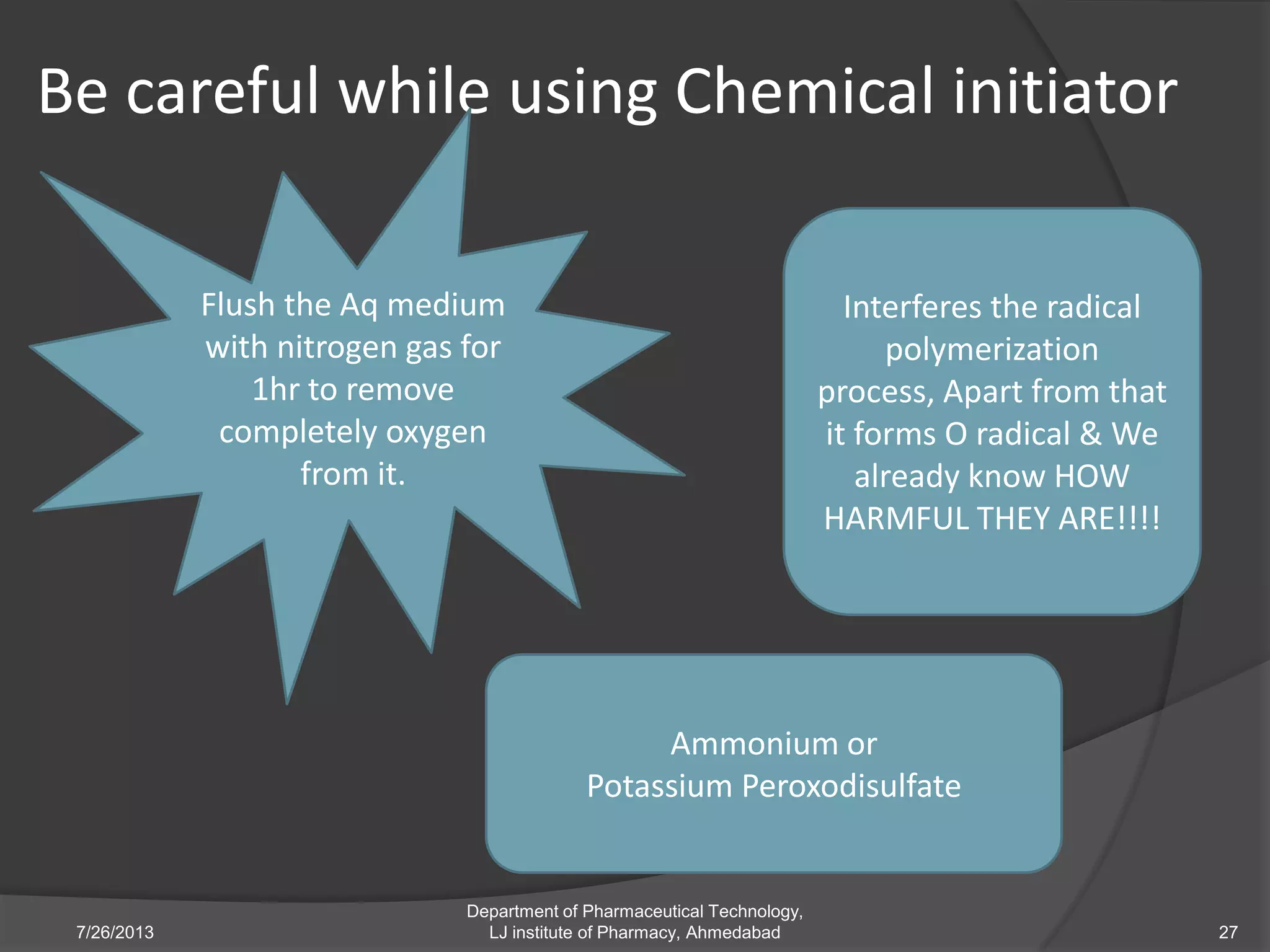
Be careful while using Chemical initiator
7/26/2013
Department of Pharmaceutical Technology,
LJ institute of Pharmacy, Ahmedabad 27
Flush the Aq medium
with nitrogen gas for
1hr to remove
completely oxygen
from it.
Interferes the radical
polymerization
process, Apart from that
it forms O radical & We
already know HOW
HARMFUL THEY ARE!!!!
Ammonium or
Potassium Peroxodisulfate
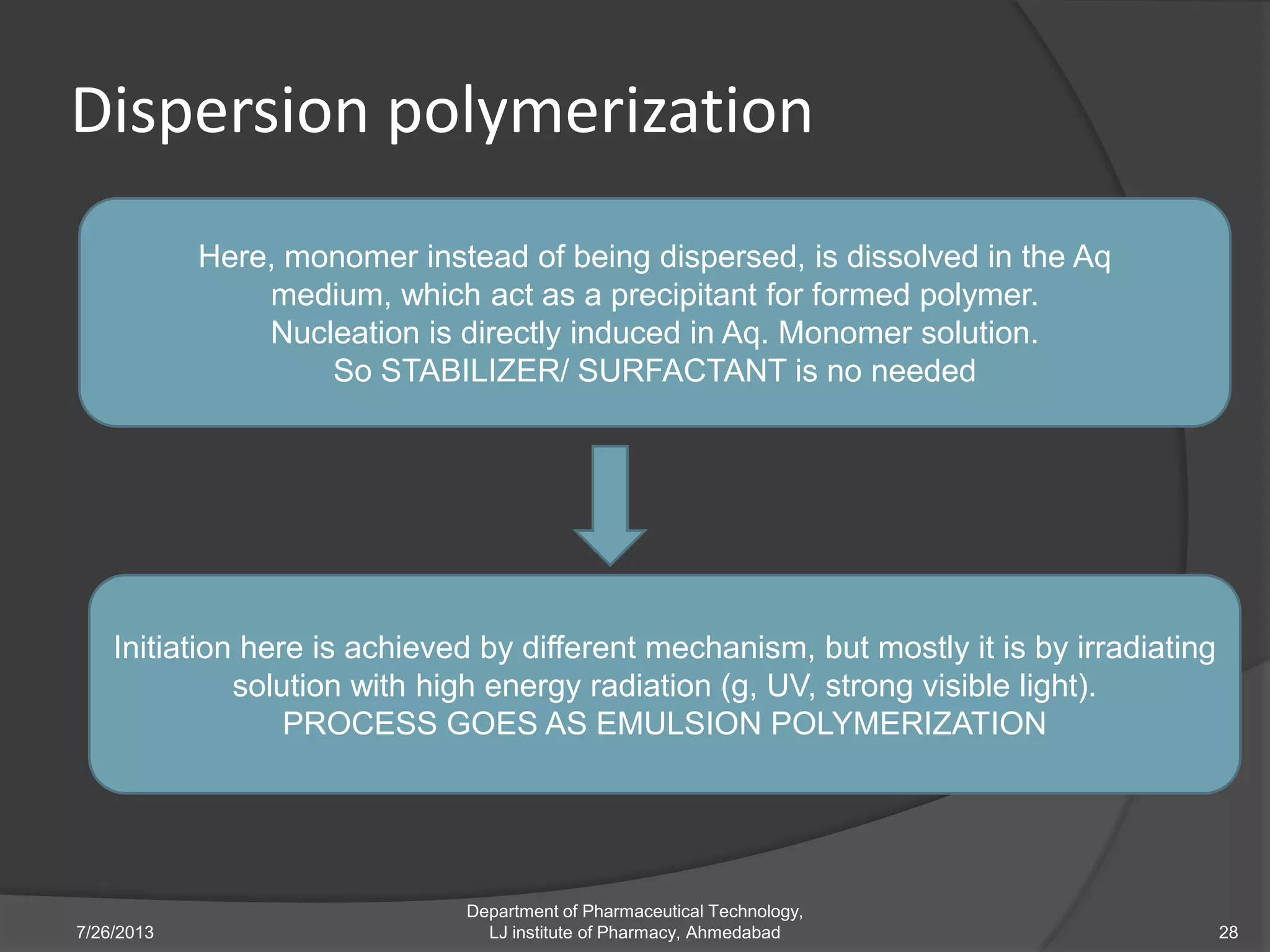
Dispersion polymerization
7/26/2013
Department of Pharmaceutical Technology,
LJ institute of Pharmacy, Ahmedabad 28
Here, monomer instead of being dispersed, is dissolved in the Aq
medium, which act as a precipitant for formed polymer.
Nucleation is directly induced in Aq. Monomer solution.
So STABILIZER/ SURFACTANT is no needed
Initiation here is achieved by different mechanism, but mostly it is by irradiating
solution with high energy radiation (g, UV, strong visible light).
PROCESS GOES AS EMULSION POLYMERIZATION
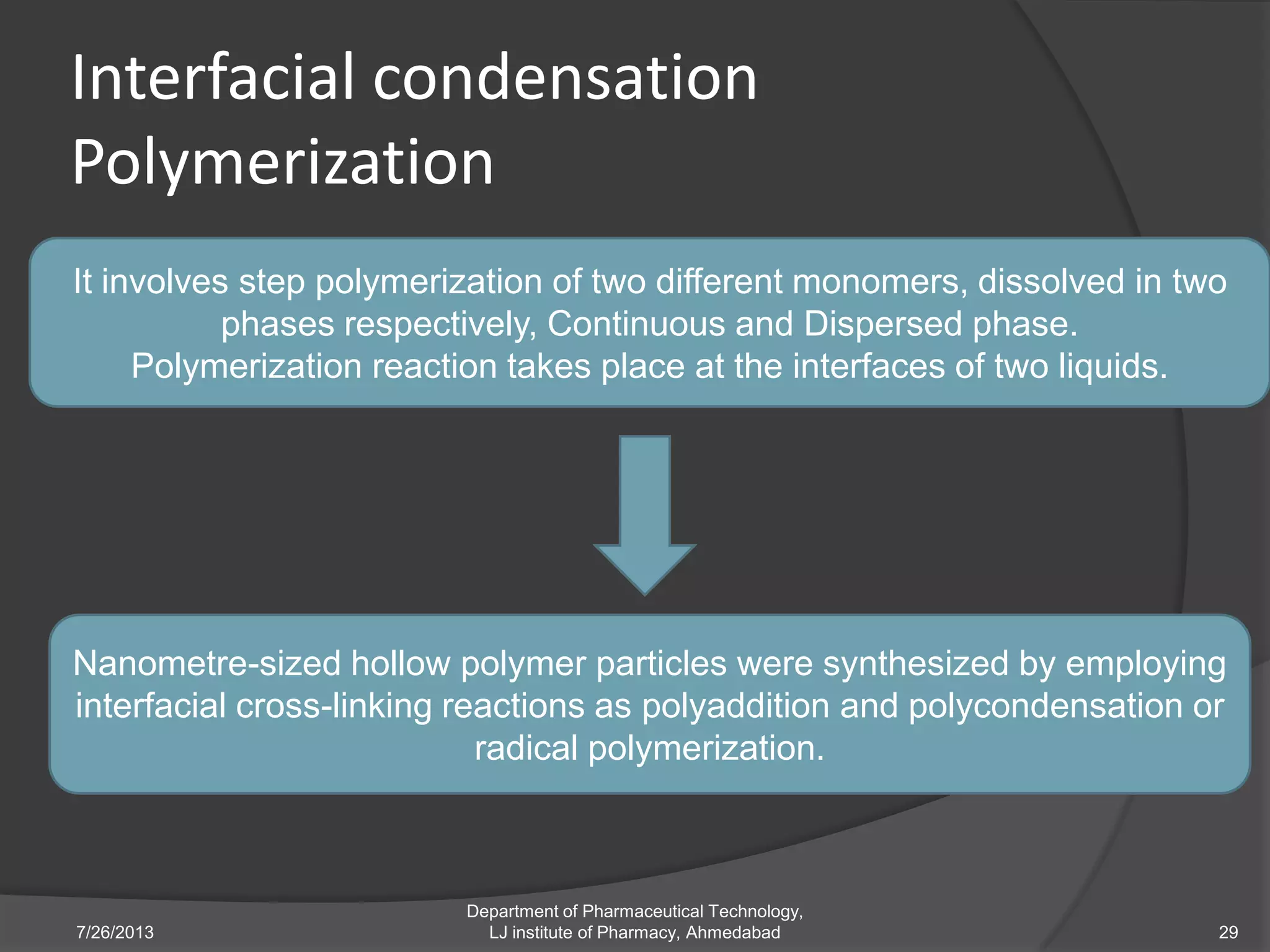
Interfacial condensation
Polymerization
7/26/2013
Department of Pharmaceutical Technology,
LJ institute of Pharmacy, Ahmedabad 29
It involves step polymerization of two different monomers, dissolved in two
phases respectively, Continuous and Dispersed phase.
Polymerization reaction takes place at the interfaces of two liquids.
Nanometre-sized hollow polymer particles were synthesized by employing
interfacial cross-linking reactions as polyaddition and polycondensation or
radical polymerization.
7/26/2013
Department of Pharmaceutical Technology,
LJ institute of Pharmacy, Ahmedabad 30
Oil-containing nanocapsules were obtained by the polymerization of monomers
at the oil/water interface of a very fine oil-in-water micro- emulsion. The organic
solvent, which was completely miscible with water, served as a monomer vehicle
and the interfacial polymerization of the monomer was believed to occur at the
surface of the oil droplets that formed during emulsification
Reverse is the case with preparation of water containing Nanocapusles
Characterization of PNP’s
 Particle size and size distribution
 Surface area, surface chemistry, surface coating and
porosity
 Hydrophilicity and surface charge density
 Purity and quality
 Stability (on shelf and upon administration)
 Drug release parameters and bioequivalence testing
considerations
 % Entrapment efficiency
 % PNP Yield
7/26/2013
Department of Pharmaceutical Technology,
LJ institute of Pharmacy, Ahmedabad 31
Size evaluation
 Done by number of methods with/without Freeze
fracture like
 Photon correlation spectroscopy,
 Transmission electron microscopy(TEM)
 Scanning electron microscopy(SEM)
 The spherical shape of the nanocapsules was
confirmed by atomic force microscopy
 At present, TEM is most successfully used in
determining the nanocap structure, polymer
envelope and the inner cavity & allowing the wall
thickness to be estimated.
7/26/2013
Department of Pharmaceutical Technology,
LJ institute of Pharmacy, Ahmedabad 32
 Laser Difractometry : For larger particles
 Freeze fracture has also allowed the visualization of different
possible organizations of lipophilic surfactant, which can form
vesicles,
micelles,
Bilayers,
Monolayers,
7/26/2013
Department of Pharmaceutical Technology,
LJ institute of Pharmacy, Ahmedabad 33
Surface Charge, Molecular
Wt, Structure & Crystallinility
 Surface Charge: Measuring particle velocity in
electric field
 Molecule charge: Gel permeation
 For Structure/crystallinity different thermal
methods are used
 DSC
 DTA
 TGA
7/26/2013
Department of Pharmaceutical Technology,
LJ institute of Pharmacy, Ahmedabad 34
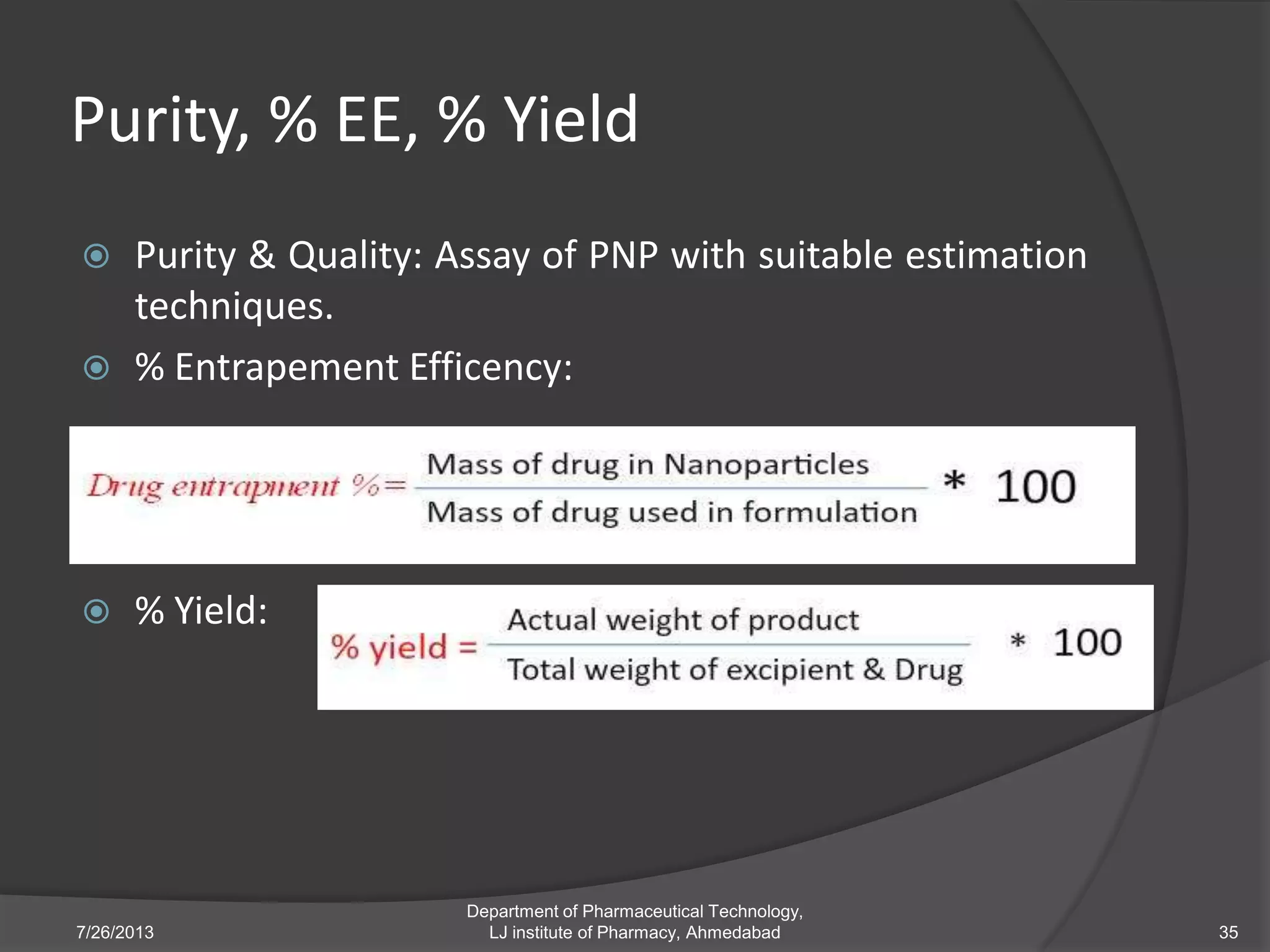
Purity, % EE, % Yield
 Purity & Quality: Assay of PNP with suitable estimation
techniques.
 % Entrapement Efficency:
 % Yield:
7/26/2013
Department of Pharmaceutical Technology,
LJ institute of Pharmacy, Ahmedabad 35
In vitro Drug release
 Ideally Franz-diffusion cell is used, but is not appropriate for
nano/multiparticulate DDS.
 Hence, generally, Cellophane bag filled with the product is
used, that is dipped suitable in the beaker filled with proper
media, aliquots are taken at regular time intervals.
7/26/2013
Department of Pharmaceutical Technology,
LJ institute of Pharmacy, Ahmedabad 36
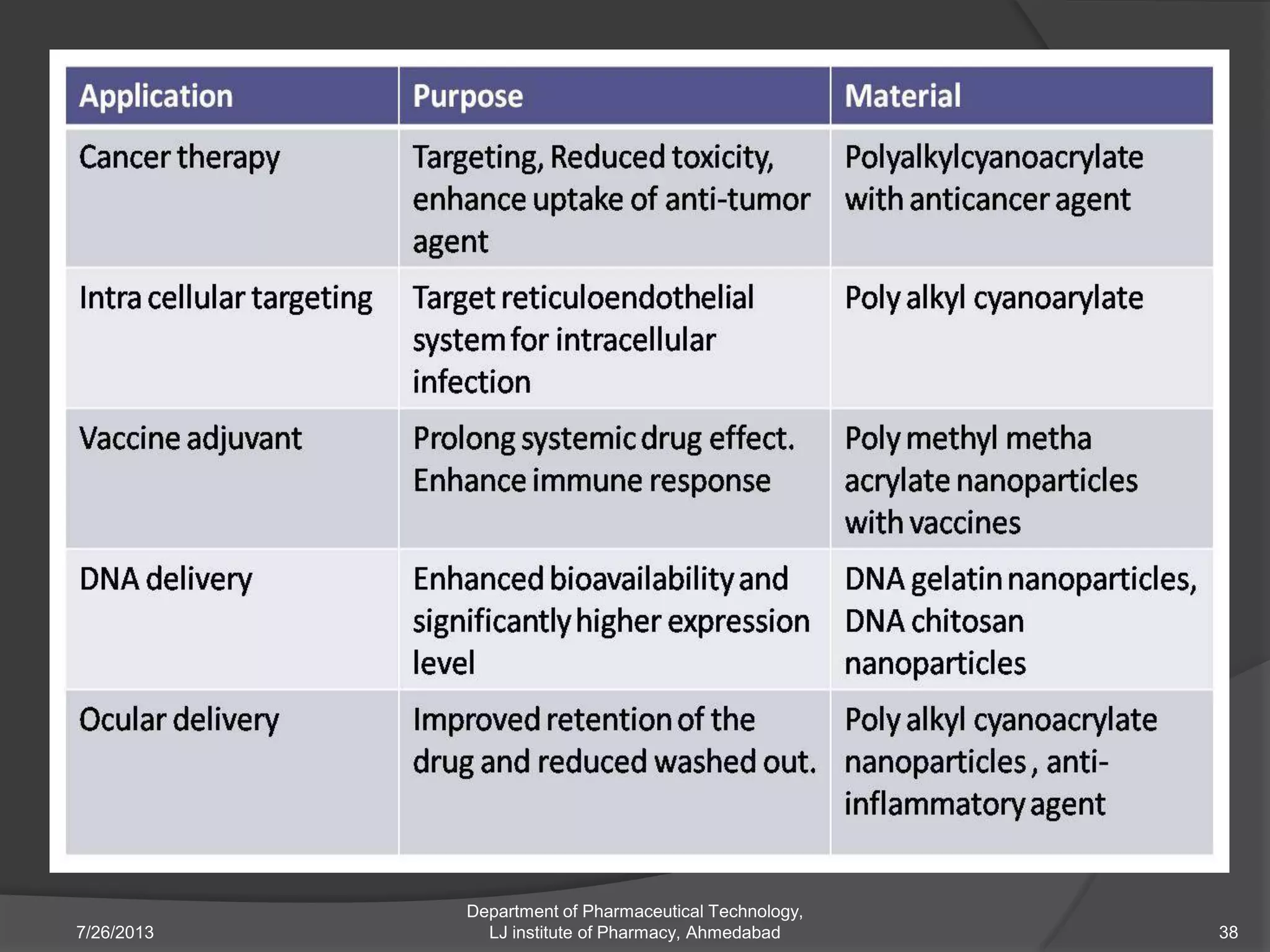
Applications in some areas of
medicine
 Corticoids release
 Anticancer therapy
 Crossing BBB
 Vaccines and gene therapy
 Diagnostic
 Ocular delivery
7/26/2013
Department of Pharmaceutical Technology,
LJ institute of Pharmacy, Ahmedabad 37
7/26/2013
Department of Pharmaceutical Technology,
LJ institute of Pharmacy, Ahmedabad 38
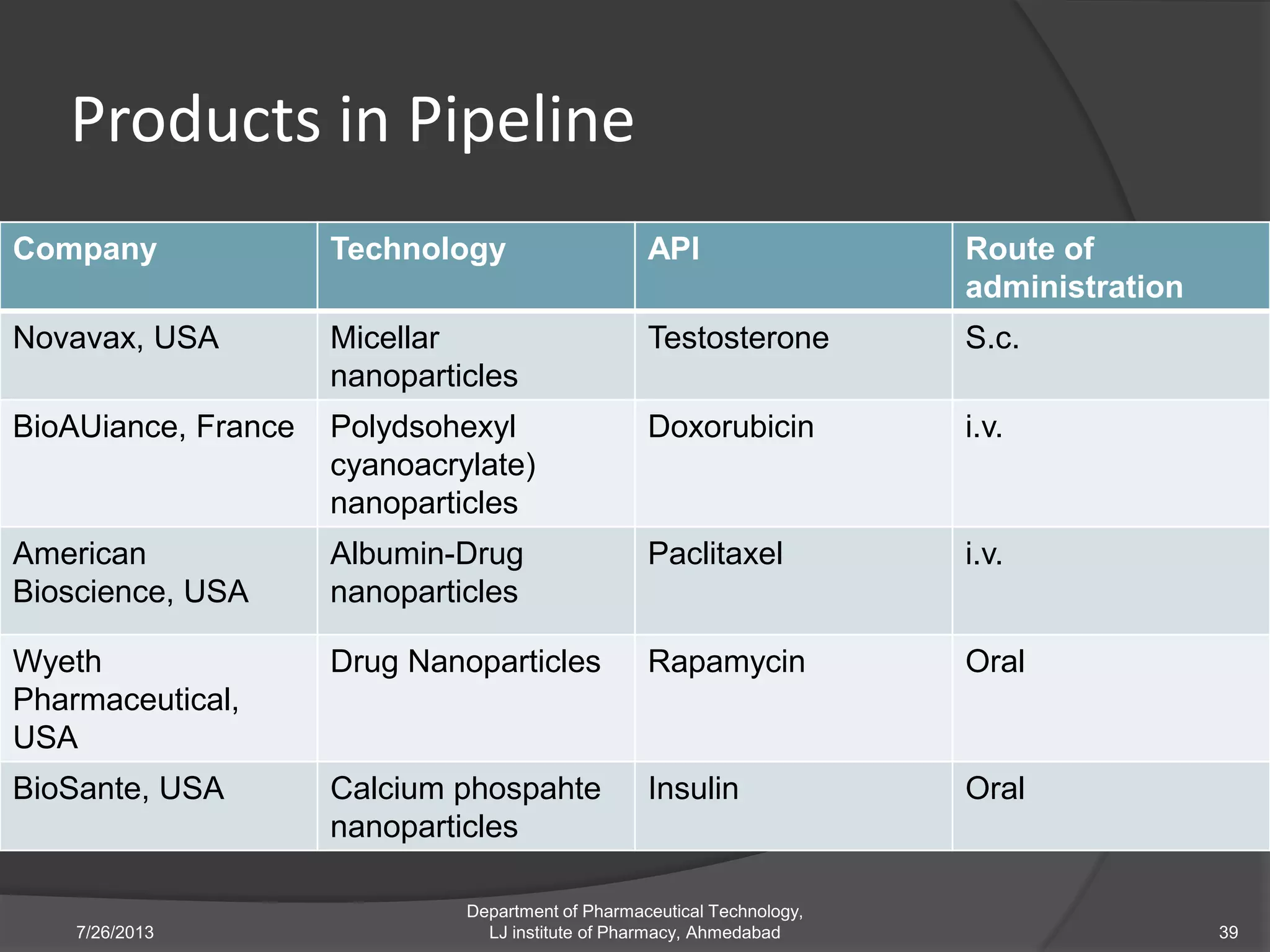
Products in Pipeline
Company Technology API Route of
administration
Novavax, USA Micellar
nanoparticles
Testosterone S.c.
BioAUiance, France Polydsohexyl
cyanoacrylate)
nanoparticles
Doxorubicin i.v.
American
Bioscience, USA
Albumin-Drug
nanoparticles
Paclitaxel i.v.
Wyeth
Pharmaceutical,
USA
Drug Nanoparticles Rapamycin Oral
BioSante, USA Calcium phospahte
nanoparticles
Insulin Oral
7/26/2013
Department of Pharmaceutical Technology,
LJ institute of Pharmacy, Ahmedabad 39
Question to Crack GTU
 Define nanotechnology and various products prepared by it.
Explain application of nanoparticles and nanosuspensions giving
examples for their market products. 5M JAN 2011
 Briefly introduce the term nanotechnology. Enlist the commonly
used polymers into these products. Discuss any one method of
preparation of nanoparticle. 6M JUNE 2011
 Write about applications of nanoparticulate drug delivery system.
5M JUNE 2011
7/26/2013 40
Department of Pharmaceutical Technology,
LJ institute of Pharmacy, Ahmedabad
 Explain the terms Nanotechnology and Nanoparticles.
Enumerate different parameters and characterization
methods for each parameter in context to
characterization of Nanoparticulate system.
8M MAY 2012
 Nanotechnology and its applications
5M NOV 2012
 Give application of nanotechnology in the field of
pharmaceutical science 5M DEC 2011
7/26/2013
Department of Pharmaceutical Technology,
LJ institute of Pharmacy, Ahmedabad 41
References
 Kumari A, Yadav S, Yadav SC, “Biodegradable polymeric
nanoparticles based drug delivery systems”,Colloids
and Surfaces B: Biointerfaces , elsevier.com, 2010, vol
75 Pg:1–18
 Nagavarma BVN, Yadav HKS*, Ayaz A, Vasudha LS,
Shivakumar HG. “Different techniques for preparation
of polymeric nanoparticles- a review ”, Asian J Pharm
Clin Res, Vol 5, Suppl 3, 2012, Pg.16-23
 Jain N.K. “Advances in controlled and novel Drug
Delivery”, CBS publisher & Distributers, Edition 1st
2001, Pg. 408
7/26/2013 42
Department of Pharmaceutical Technology,
LJ institute of Pharmacy, Ahmedabad
 Zhang G, Niu A, Peng S, Jiang M, Tu Y, Li M, Wu C,
“Formation of Novel Polymeric Nanoparticles”, vol. 34,
no. 3, 2001 / accounts of chemical research, pg .249-
256
 Kreuter J, “Nanoparticles—a historical perspective”,
International Journal of Pharmaceutics, vol 331 (2007)
elsevier.com,Pg. 1–10
 Cismaru L, Popa M,” polymeric nanoparticles with
biomedical applications”, Rev. Roum. Chim., vol 55(8)
2010, Pg 433-442
7/26/2013 43
Department of Pharmaceutical Technology,
LJ institute of Pharmacy, Ahmedabad
 Khar RK and Vyas SP, “Targetted and controlledd drug
delivery”
 Torchilin p v, “nanoparticulates drug carriers”, imperial
college press, london
7/26/2013
Department of Pharmaceutical Technology,
LJ institute of Pharmacy, Ahmedabad 44
7/26/2013 45
Department of Pharmaceutical Technology,
LJ institute of Pharmacy, Ahmedabad

Polymeric nanoparticles A Novel Approach

  • 1.
    Prepared by: ShivamThakore Guided by: Ms Rudree Pathak Ankit Patel 7/26/2013 1 Department of Pharmaceutical Technology, LJ institute of Pharmacy, Ahmedabad
  • 2.
    Table of Contents Introduction  Advantages  Disadvantages  Polymers used  Method Of Preparation  Characterization  Questions that can be asked  References 7/26/2013 2 Department of Pharmaceutical Technology, LJ institute of Pharmacy, Ahmedabad
  • 3.
    Introduction: Polymeric Nanoparticles • Whatare PNP’s? ○ They are solid colloidal particles ranging in size from 10 to 1000 nm (1µm).  Drug may be dissolved, entrapped, encapsulated or attached to a nanoparticle matrix .  Because these systems have very high surface areas, drugs may also be adsorbed on their surface.  Polymer-based nanoparticles effectively carry drugs, proteins and DNA to target cells and organs.  Their nanometer-size promotes effective permeation through cell membranes and stability in the blood stream 7/26/2013 3 Department of Pharmaceutical Technology, LJ institute of Pharmacy, Ahmedabad
  • 4.
    Depending upon Method of Preparation NanospheresNanocapsules 7/26/2013 4 Department of Pharmaceutical Technology, LJ institute of Pharmacy, Ahmedabad
  • 5.
    7/26/2013 5 Department ofPharmaceutical Technology, LJ institute of Pharmacy, Ahmedabad
  • 6.
     Nanocapsules: Theyare the systems in which the drug is confined to a cavity surrounded by a unique polymer membrane.  Nanospheres: They are the matrix systems in which the drug is physically and uniformly dispersed. 7/26/2013 6 Department of Pharmaceutical Technology, LJ institute of Pharmacy, Ahmedabad
  • 7.
    Advantages  Increases thestability of any volatile agents & can be easily and cheaply fabricated in large quantities by a multimethods.  Has significant advantages over traditional oral and intravenous methods of administration in terms of efficiency and effectiveness.  Delivers a higher concentration of pharmaceutical agent.  The choice of polymer and the ability to modify drug release from polymeric nanoparticles have made them ideal candidates for cancer therapy, delivery of vaccines, contraceptives and delivery of targeted antibiotics. 7/26/2013 7 Department of Pharmaceutical Technology, LJ institute of Pharmacy, Ahmedabad
  • 8.
    Cont…  Targeted DrugDelivery System.  Polymeric nanoparticles can be easily incorporated into other activities related to drug delivery, such as tissue engineering  Other all advantages over single unit dosage forms are as such 7/26/2013 8 Department of Pharmaceutical Technology, LJ institute of Pharmacy, Ahmedabad
  • 9.
    Disadvantages  Very costlyformulation with no low yield  Productivity is more difficult. As a industrial applications, Technology transfer to commercial production is very difficult.  Reduced ability to adjust the dose  Highly sophisticated technology  Requires skills to manufacture.  Stability of dosage form is big issue owing to its nano size. 7/26/2013 9 Department of Pharmaceutical Technology, LJ institute of Pharmacy, Ahmedabad
  • 10.
    Polymers used inPreparation Natural Hydrophilic Proteins Polysaccharides Synthetic Hydrophobic Pre-Polymerized Polymerized in process 7/26/2013 10 Department of Pharmaceutical Technology, LJ institute of Pharmacy, Ahmedabad
  • 11.
    PROTIENS POLYSACHCHARIDES Gelatin Alginate AlbuminDextran Lectin Chitosan Legumine Agarose Viciline Pullulan PRE-POLYMERIZED POLYMERIZED IN PROCESS Poly E caprolactone Poly Isobutyrl cyano acrylates (PICA PLA PBCA Poly lactide co glycolide (PLGA) PHCA Polystyrene Poly methyl methacyrlate (PMMA) 7/26/2013 11 Department of Pharmaceutical Technology, LJ institute of Pharmacy, Ahmedabad
  • 12.
    Method of Preparation 7/26/2013 Departmentof Pharmaceutical Technology, LJ institute of Pharmacy, Ahmedabad 12 Polymerization based methods Polymer precipitation methods Amphiphilic macromolecul e cross-linking
  • 13.
    7/26/2013 Department of PharmaceuticalTechnology, LJ institute of Pharmacy, Ahmedabad 13 Heat Cross- linking Chemical Cross- linking Amphiphilic macromolecule cross-linking
  • 14.
    7/26/2013 Department of PharmaceuticalTechnology, LJ institute of Pharmacy, Ahmedabad 14 Polymerization based Methods Polymerization of monomers Emulsion polymeriza tion Interfacial complexat ion Dispersion polymerization Interfacial condensation polymerization
  • 15.
    7/26/2013 Department of PharmaceuticalTechnology, LJ institute of Pharmacy, Ahmedabad 15 Polymer Precipitation methods Solvent extraction/ evaporation Solvent displacement (nanoprecipitation) Salting out
  • 16.
    7/26/2013 Department of PharmaceuticalTechnology, LJ institute of Pharmacy, Ahmedabad 16
  • 17.
    Heat / ChemicalCross-Linking 7/26/2013 Department of Pharmaceutical Technology, LJ institute of Pharmacy, Ahmedabad 17 Aq protein (BSA), Surfactant Oil High Pressure Homoginization W/O emulsion Centrifugation & isolation of nanoparticles Dilution with preheated oil {Heat CL} or Add cross-linking agent {chemical CL}
  • 18.
    7/26/2013 Department of PharmaceuticalTechnology, LJ institute of Pharmacy, Ahmedabad 18
  • 19.
    Solvent extraction method(SEM) Singleemulsion 7/26/2013 Department of Pharmaceutical Technology, LJ institute of Pharmacy, Ahmedabad 19 Organic phase, Solvent, Drug, Polymer Aqueous phase, Distille d water, stabiliz er Sonication, homo genizaion O/W emulsion Oil droplet Solvent evaporation Nano particles obtained
  • 20.
    Double Emulsion SEM 7/26/2013 Departmentof Pharmaceutical Technology, LJ institute of Pharmacy, Ahmedabad 20 Organic phase, solvent, drug, polymer Aqueous Phase, Water, Stabilizer Sonication, homo genization W/O emulsion stablized at 4 C W/O/W emulsion Nano particles Aq phase with stabilizer(PVA) Solvent evaporation
  • 21.
    Solvent Displacement (Nanoprecipitation) 7/26/2013 Department ofPharmaceutical Technology, LJ institute of Pharmacy, Ahmedabad 21 Aq phase Distilled water, Poloxamer 188 Organic phase, Organic solvent, Polymer, drug Nano spheres Aq phase Distilled Water, Poloxa mer 188 Organic phase, Polar solvent, Oil, Polymer, Drug Nano capsules Magnetic stirring
  • 22.
    Salting Out 7/26/2013 Department ofPharmaceutical Technology, LJ institute of Pharmacy, Ahmedabad 22 Org phase. Org solvent, Drug, Polymer Aq phase, dist water, PVA, MgCl2 Mechanical Stirring O/W emulsion Nano spheres Dist Water
  • 23.
    7/26/2013 Department of PharmaceuticalTechnology, LJ institute of Pharmacy, Ahmedabad 23
  • 24.
    Emulsion Polymerization  Itmay be conventional or reverse, depending upon nature of continuous phase,  Conventional method= Aq phase in Continuous  Reverse method= Organic is continuous phase 7/26/2013 Department of Pharmaceutical Technology, LJ institute of Pharmacy, Ahmedabad 24 Monomer is emulsified in non-solvent partially soluble phase with stabilizer, leading to formation of monomer swollen micelles
  • 25.
    7/26/2013 Department of PharmaceuticalTechnology, LJ institute of Pharmacy, Ahmedabad 25 Polymerization takes place in presence of intiator (chemical/physical), which provides energy to monomer, So that in becomes Free Reactive radical It collides with the surrounding unnreactive monomers, and initiates the POLYMERIZATiON reaction. It continues till concentration of monomer/intiator is consumed Mechanism is micellar polymerization were Swollen monomer micelles act as a site of nucleation & polymerization
  • 26.
    7/26/2013 Department of PharmaceuticalTechnology, LJ institute of Pharmacy, Ahmedabad 26 As monomer is slightly soluble in surrounding phase, it diffuses from monomer droplets and reach monomer micelles through continuous phase. Thus polymerization takes places in MICELLES.
  • 27.
    Be careful whileusing Chemical initiator 7/26/2013 Department of Pharmaceutical Technology, LJ institute of Pharmacy, Ahmedabad 27 Flush the Aq medium with nitrogen gas for 1hr to remove completely oxygen from it. Interferes the radical polymerization process, Apart from that it forms O radical & We already know HOW HARMFUL THEY ARE!!!! Ammonium or Potassium Peroxodisulfate
  • 28.
    Dispersion polymerization 7/26/2013 Department ofPharmaceutical Technology, LJ institute of Pharmacy, Ahmedabad 28 Here, monomer instead of being dispersed, is dissolved in the Aq medium, which act as a precipitant for formed polymer. Nucleation is directly induced in Aq. Monomer solution. So STABILIZER/ SURFACTANT is no needed Initiation here is achieved by different mechanism, but mostly it is by irradiating solution with high energy radiation (g, UV, strong visible light). PROCESS GOES AS EMULSION POLYMERIZATION
  • 29.
    Interfacial condensation Polymerization 7/26/2013 Department ofPharmaceutical Technology, LJ institute of Pharmacy, Ahmedabad 29 It involves step polymerization of two different monomers, dissolved in two phases respectively, Continuous and Dispersed phase. Polymerization reaction takes place at the interfaces of two liquids. Nanometre-sized hollow polymer particles were synthesized by employing interfacial cross-linking reactions as polyaddition and polycondensation or radical polymerization.
  • 30.
    7/26/2013 Department of PharmaceuticalTechnology, LJ institute of Pharmacy, Ahmedabad 30 Oil-containing nanocapsules were obtained by the polymerization of monomers at the oil/water interface of a very fine oil-in-water micro- emulsion. The organic solvent, which was completely miscible with water, served as a monomer vehicle and the interfacial polymerization of the monomer was believed to occur at the surface of the oil droplets that formed during emulsification Reverse is the case with preparation of water containing Nanocapusles
  • 31.
    Characterization of PNP’s Particle size and size distribution  Surface area, surface chemistry, surface coating and porosity  Hydrophilicity and surface charge density  Purity and quality  Stability (on shelf and upon administration)  Drug release parameters and bioequivalence testing considerations  % Entrapment efficiency  % PNP Yield 7/26/2013 Department of Pharmaceutical Technology, LJ institute of Pharmacy, Ahmedabad 31
  • 32.
    Size evaluation  Doneby number of methods with/without Freeze fracture like  Photon correlation spectroscopy,  Transmission electron microscopy(TEM)  Scanning electron microscopy(SEM)  The spherical shape of the nanocapsules was confirmed by atomic force microscopy  At present, TEM is most successfully used in determining the nanocap structure, polymer envelope and the inner cavity & allowing the wall thickness to be estimated. 7/26/2013 Department of Pharmaceutical Technology, LJ institute of Pharmacy, Ahmedabad 32
  • 33.
     Laser Difractometry: For larger particles  Freeze fracture has also allowed the visualization of different possible organizations of lipophilic surfactant, which can form vesicles, micelles, Bilayers, Monolayers, 7/26/2013 Department of Pharmaceutical Technology, LJ institute of Pharmacy, Ahmedabad 33
  • 34.
    Surface Charge, Molecular Wt,Structure & Crystallinility  Surface Charge: Measuring particle velocity in electric field  Molecule charge: Gel permeation  For Structure/crystallinity different thermal methods are used  DSC  DTA  TGA 7/26/2013 Department of Pharmaceutical Technology, LJ institute of Pharmacy, Ahmedabad 34
  • 35.
    Purity, % EE,% Yield  Purity & Quality: Assay of PNP with suitable estimation techniques.  % Entrapement Efficency:  % Yield: 7/26/2013 Department of Pharmaceutical Technology, LJ institute of Pharmacy, Ahmedabad 35
  • 36.
    In vitro Drugrelease  Ideally Franz-diffusion cell is used, but is not appropriate for nano/multiparticulate DDS.  Hence, generally, Cellophane bag filled with the product is used, that is dipped suitable in the beaker filled with proper media, aliquots are taken at regular time intervals. 7/26/2013 Department of Pharmaceutical Technology, LJ institute of Pharmacy, Ahmedabad 36
  • 37.
    Applications in someareas of medicine  Corticoids release  Anticancer therapy  Crossing BBB  Vaccines and gene therapy  Diagnostic  Ocular delivery 7/26/2013 Department of Pharmaceutical Technology, LJ institute of Pharmacy, Ahmedabad 37
  • 38.
    7/26/2013 Department of PharmaceuticalTechnology, LJ institute of Pharmacy, Ahmedabad 38
  • 39.
    Products in Pipeline CompanyTechnology API Route of administration Novavax, USA Micellar nanoparticles Testosterone S.c. BioAUiance, France Polydsohexyl cyanoacrylate) nanoparticles Doxorubicin i.v. American Bioscience, USA Albumin-Drug nanoparticles Paclitaxel i.v. Wyeth Pharmaceutical, USA Drug Nanoparticles Rapamycin Oral BioSante, USA Calcium phospahte nanoparticles Insulin Oral 7/26/2013 Department of Pharmaceutical Technology, LJ institute of Pharmacy, Ahmedabad 39
  • 40.
    Question to CrackGTU  Define nanotechnology and various products prepared by it. Explain application of nanoparticles and nanosuspensions giving examples for their market products. 5M JAN 2011  Briefly introduce the term nanotechnology. Enlist the commonly used polymers into these products. Discuss any one method of preparation of nanoparticle. 6M JUNE 2011  Write about applications of nanoparticulate drug delivery system. 5M JUNE 2011 7/26/2013 40 Department of Pharmaceutical Technology, LJ institute of Pharmacy, Ahmedabad
  • 41.
     Explain theterms Nanotechnology and Nanoparticles. Enumerate different parameters and characterization methods for each parameter in context to characterization of Nanoparticulate system. 8M MAY 2012  Nanotechnology and its applications 5M NOV 2012  Give application of nanotechnology in the field of pharmaceutical science 5M DEC 2011 7/26/2013 Department of Pharmaceutical Technology, LJ institute of Pharmacy, Ahmedabad 41
  • 42.
    References  Kumari A,Yadav S, Yadav SC, “Biodegradable polymeric nanoparticles based drug delivery systems”,Colloids and Surfaces B: Biointerfaces , elsevier.com, 2010, vol 75 Pg:1–18  Nagavarma BVN, Yadav HKS*, Ayaz A, Vasudha LS, Shivakumar HG. “Different techniques for preparation of polymeric nanoparticles- a review ”, Asian J Pharm Clin Res, Vol 5, Suppl 3, 2012, Pg.16-23  Jain N.K. “Advances in controlled and novel Drug Delivery”, CBS publisher & Distributers, Edition 1st 2001, Pg. 408 7/26/2013 42 Department of Pharmaceutical Technology, LJ institute of Pharmacy, Ahmedabad
  • 43.
     Zhang G,Niu A, Peng S, Jiang M, Tu Y, Li M, Wu C, “Formation of Novel Polymeric Nanoparticles”, vol. 34, no. 3, 2001 / accounts of chemical research, pg .249- 256  Kreuter J, “Nanoparticles—a historical perspective”, International Journal of Pharmaceutics, vol 331 (2007) elsevier.com,Pg. 1–10  Cismaru L, Popa M,” polymeric nanoparticles with biomedical applications”, Rev. Roum. Chim., vol 55(8) 2010, Pg 433-442 7/26/2013 43 Department of Pharmaceutical Technology, LJ institute of Pharmacy, Ahmedabad
  • 44.
     Khar RKand Vyas SP, “Targetted and controlledd drug delivery”  Torchilin p v, “nanoparticulates drug carriers”, imperial college press, london 7/26/2013 Department of Pharmaceutical Technology, LJ institute of Pharmacy, Ahmedabad 44
  • 45.
    7/26/2013 45 Department ofPharmaceutical Technology, LJ institute of Pharmacy, Ahmedabad