

Presented by:
     Monika Sharma
M.Sc.Nursing 1st year
 It
   is the most important method of teaching in
 nursing. It teaches by explanation and
 exhibition.
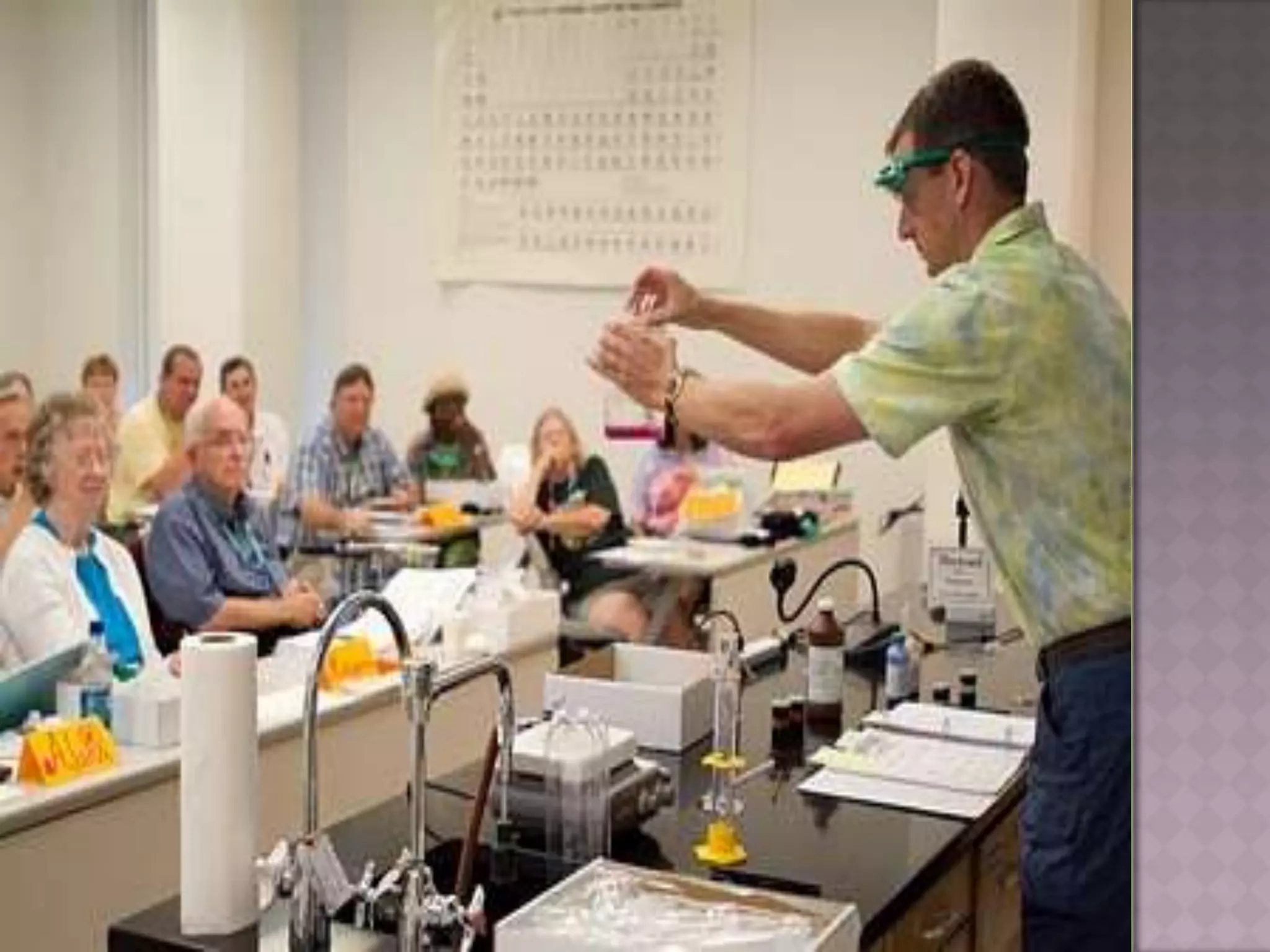
 To demonstrate  experiments or procedures
 To introduce a new procedure.
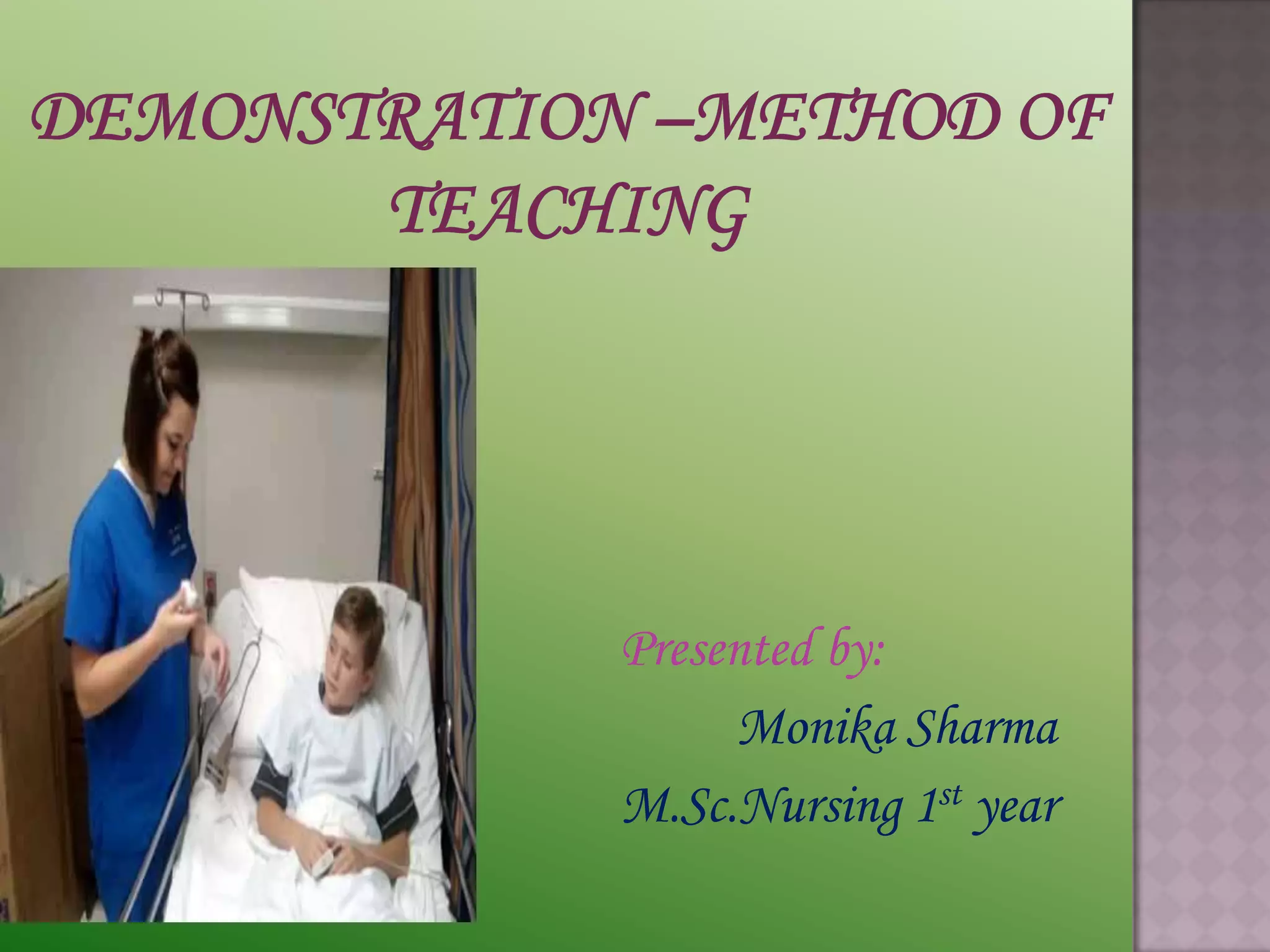
 To teach the patient a procedure or treatment
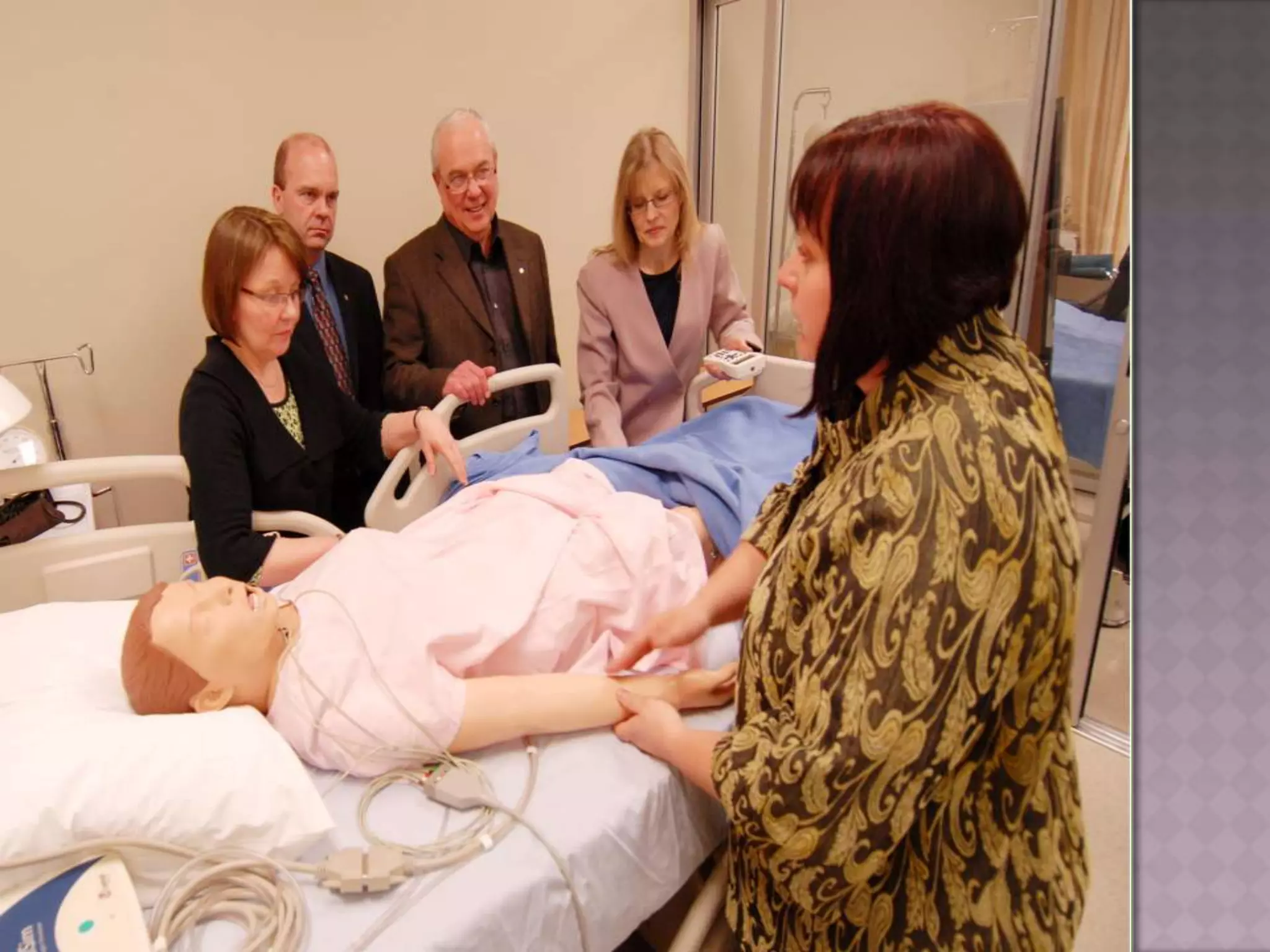
 To demonstrate a procedure at the bedside or in the
  ward conference room.
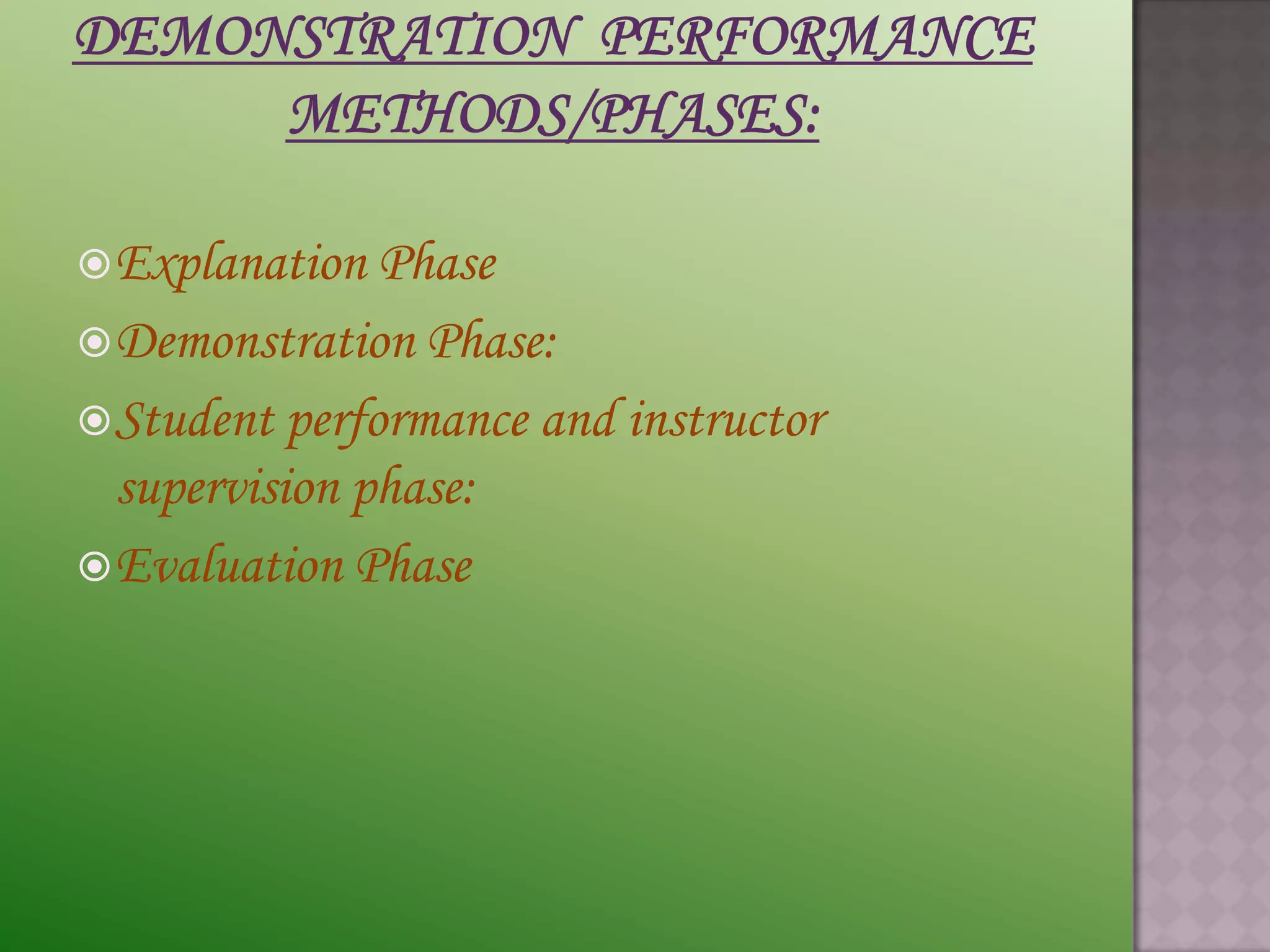
 Explanation Phase
 Demonstration Phase:
 Student performance   and instructor
  supervision phase:
 Evaluation Phase
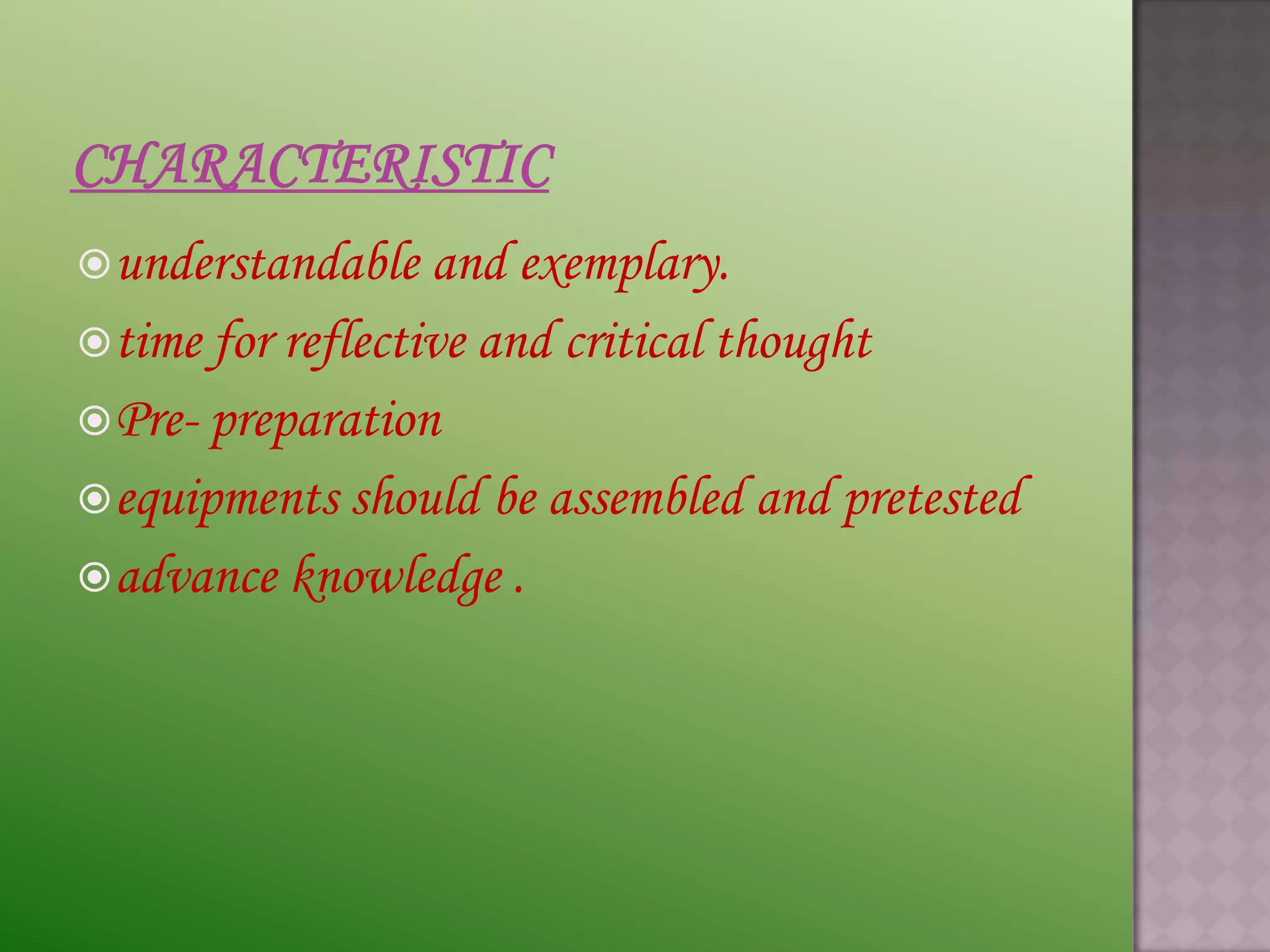
 understandable   and exemplary.
 time for reflective and critical thought
 Pre- preparation
 equipments should be assembled and pretested
 advance knowledge .
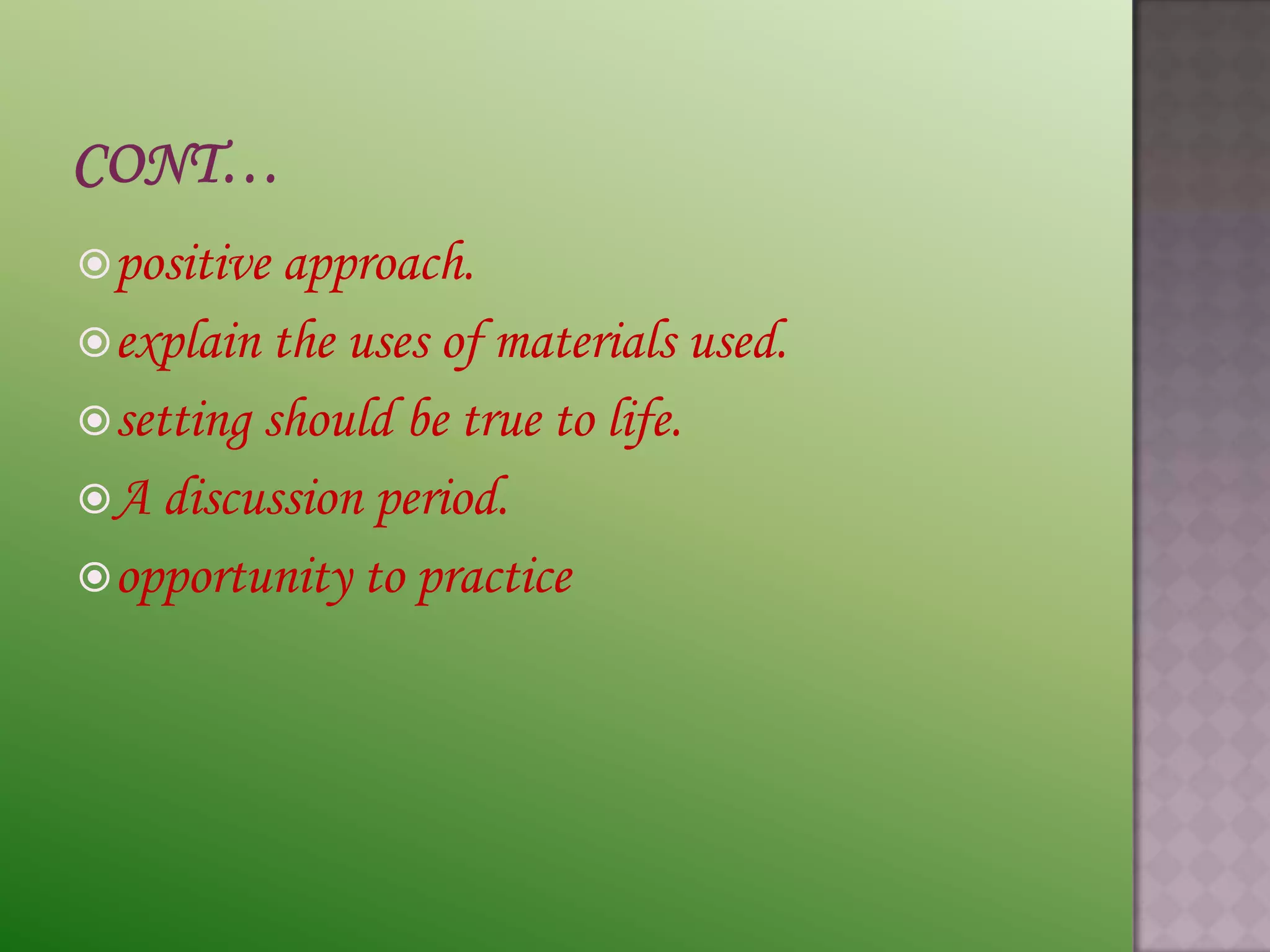
 positive approach.
 explain the uses of materials used.
 setting should be true to life.
 A discussion period.
 opportunity to practice
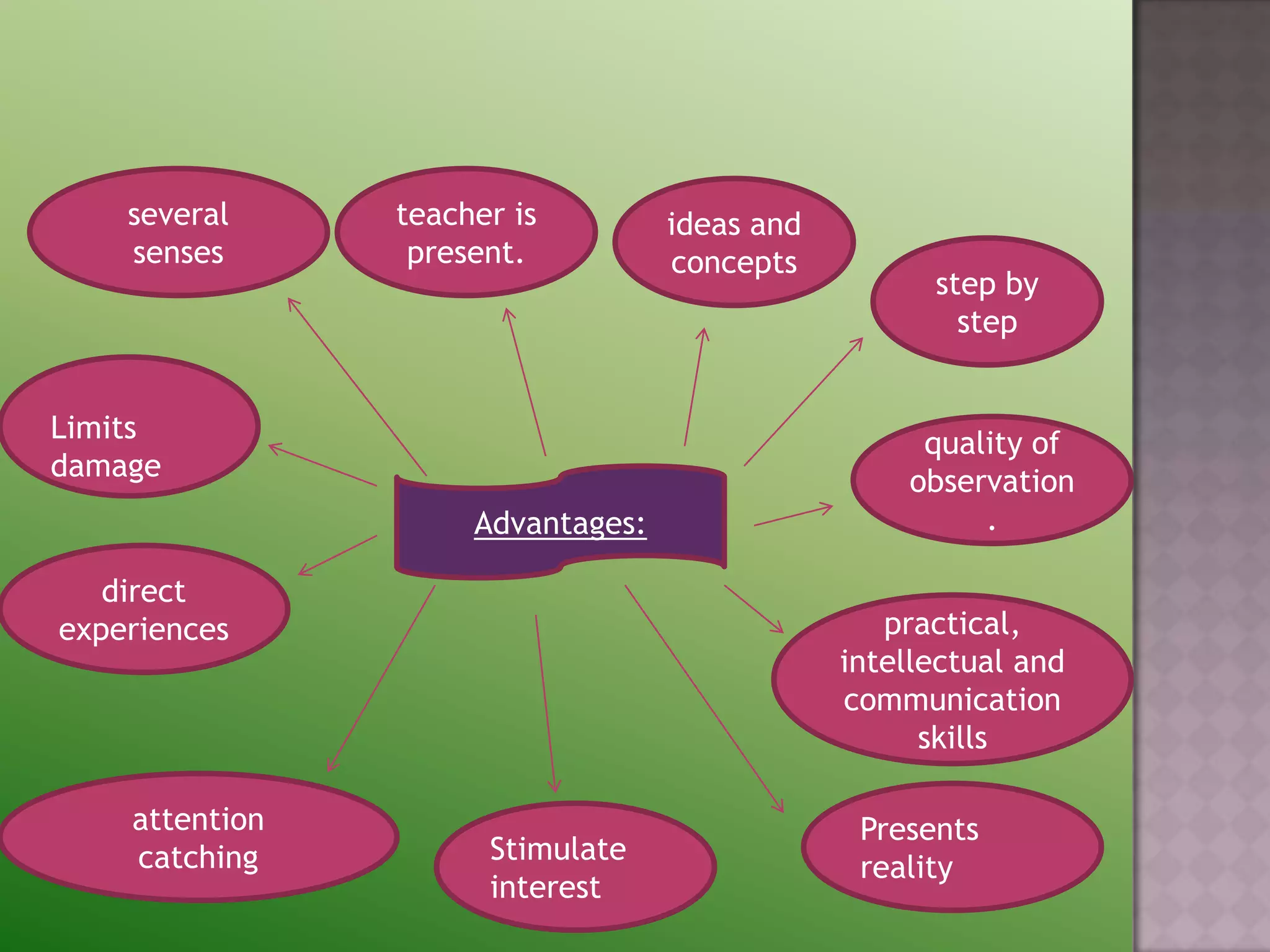
several     teacher is         ideas and
    senses       present.          concepts
                                                     step by
                                                       step

  
Limits                                              quality of
damage                                             observation
                     Advantages:                        .

   direct
experiences                                       practical,
                                               intellectual and
                                               communication
                                                     skills

    attention                                   Presents
    catching          Stimulate
                                                reality
                      interest
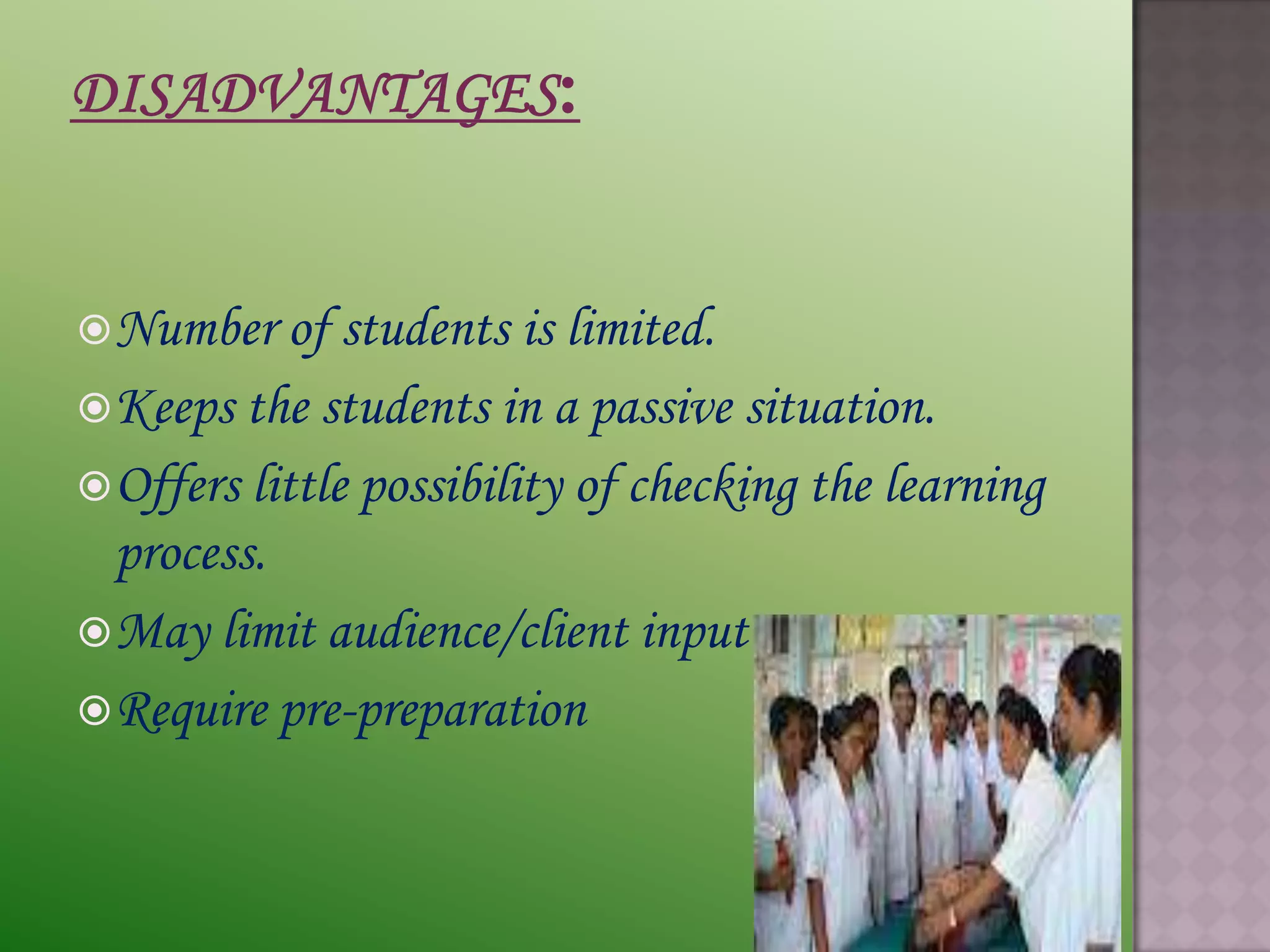
 Number of students     is limited.
 Keeps the students in a passive situation.
 Offers little possibility of checking the learning
  process.
 May limit audience/client input
 Require pre-preparation
 Does not allow for   individual pacing of
  learning.
 High cost in personnel and time.
 Difficulty in repeating demonstration in order
  to acquire competence.
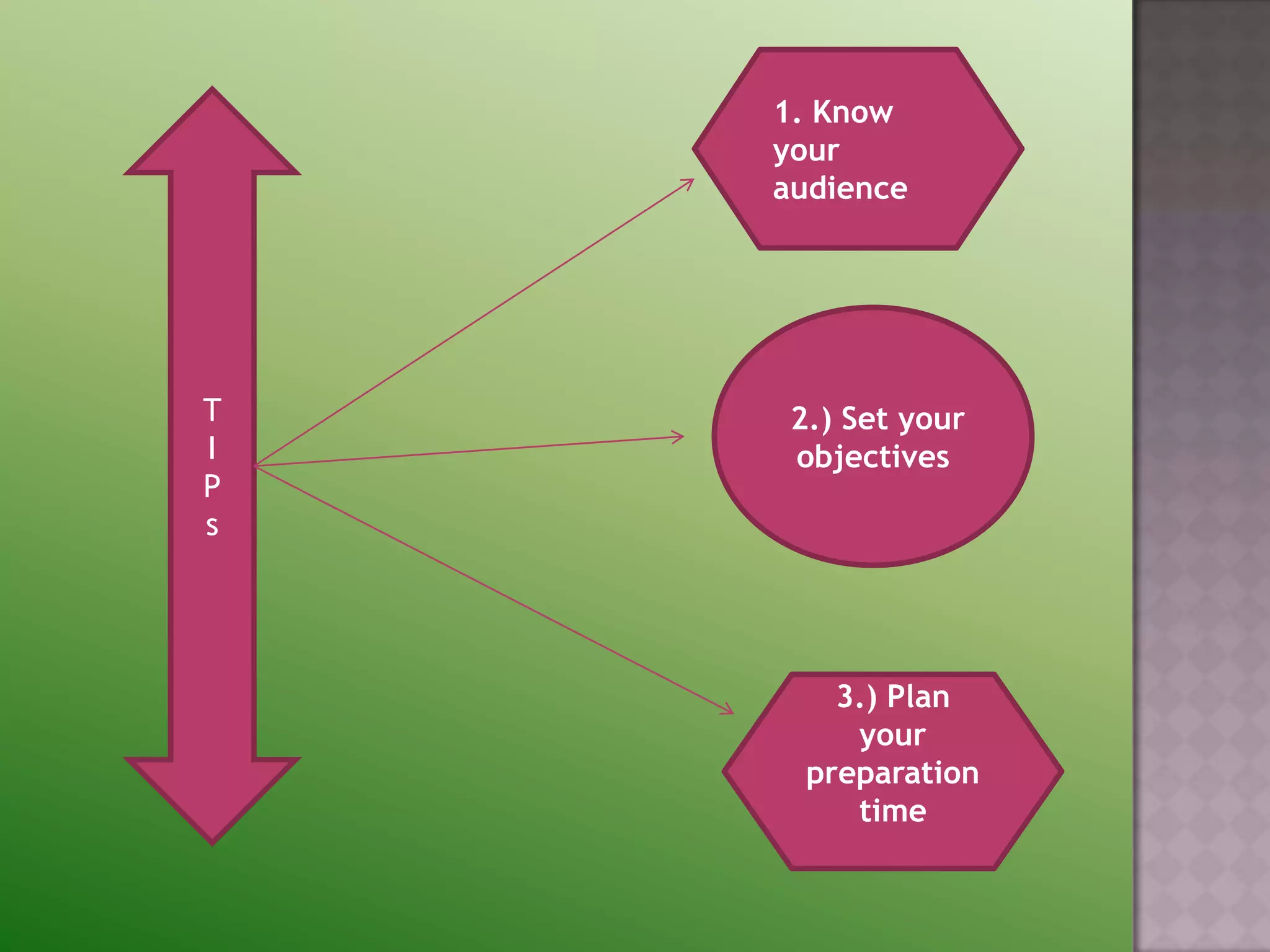
1. Know
    your
    audience


T    2.) Set your
I    objectives
P
s


        3.) Plan
         your
      preparation
         time
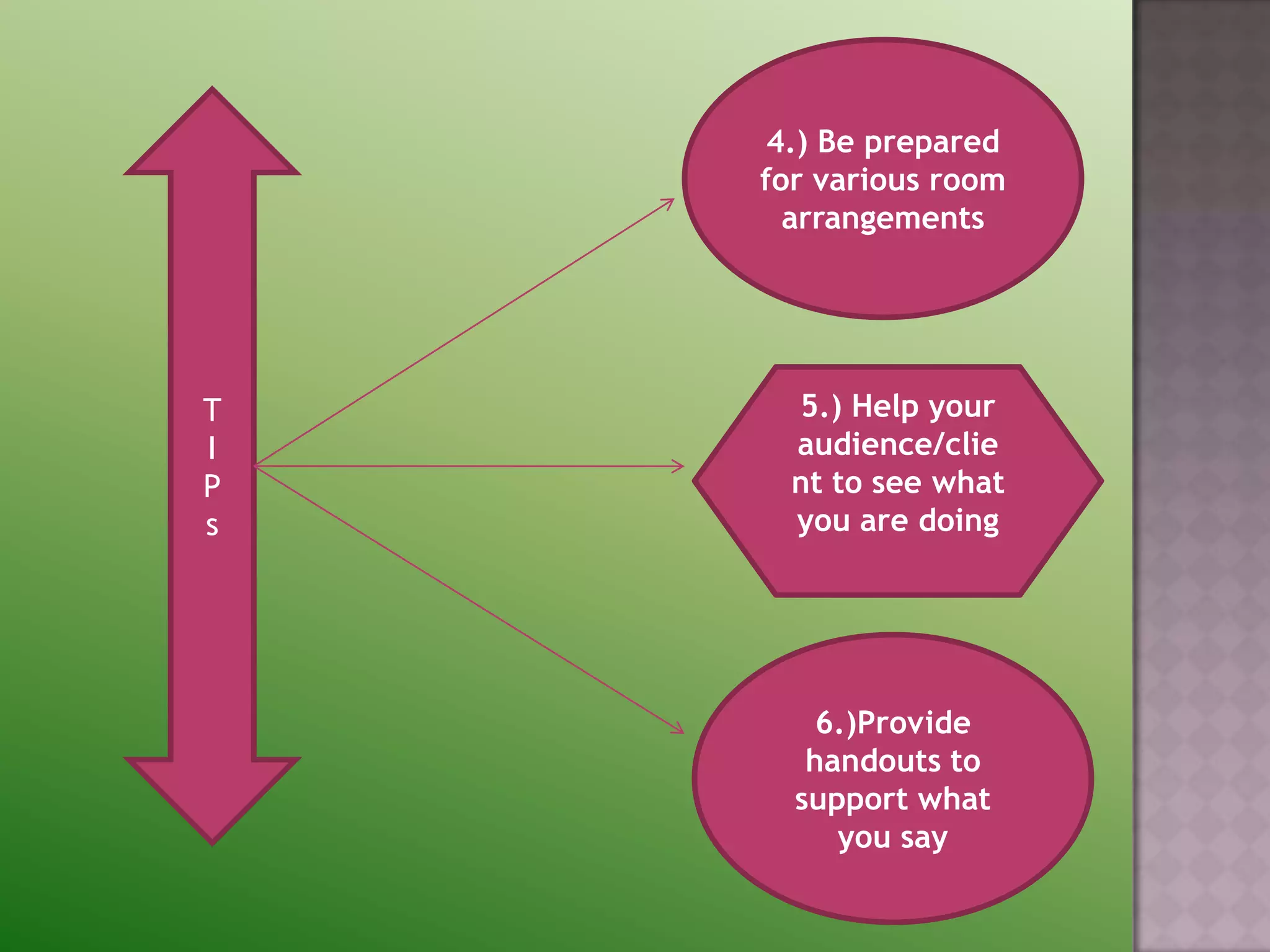
4.) Be prepared
    for various room
      arrangements


T     5.) Help your
I     audience/clie
P     nt to see what
s     you are doing


        6.)Provide
       handouts to
      support what
         you say
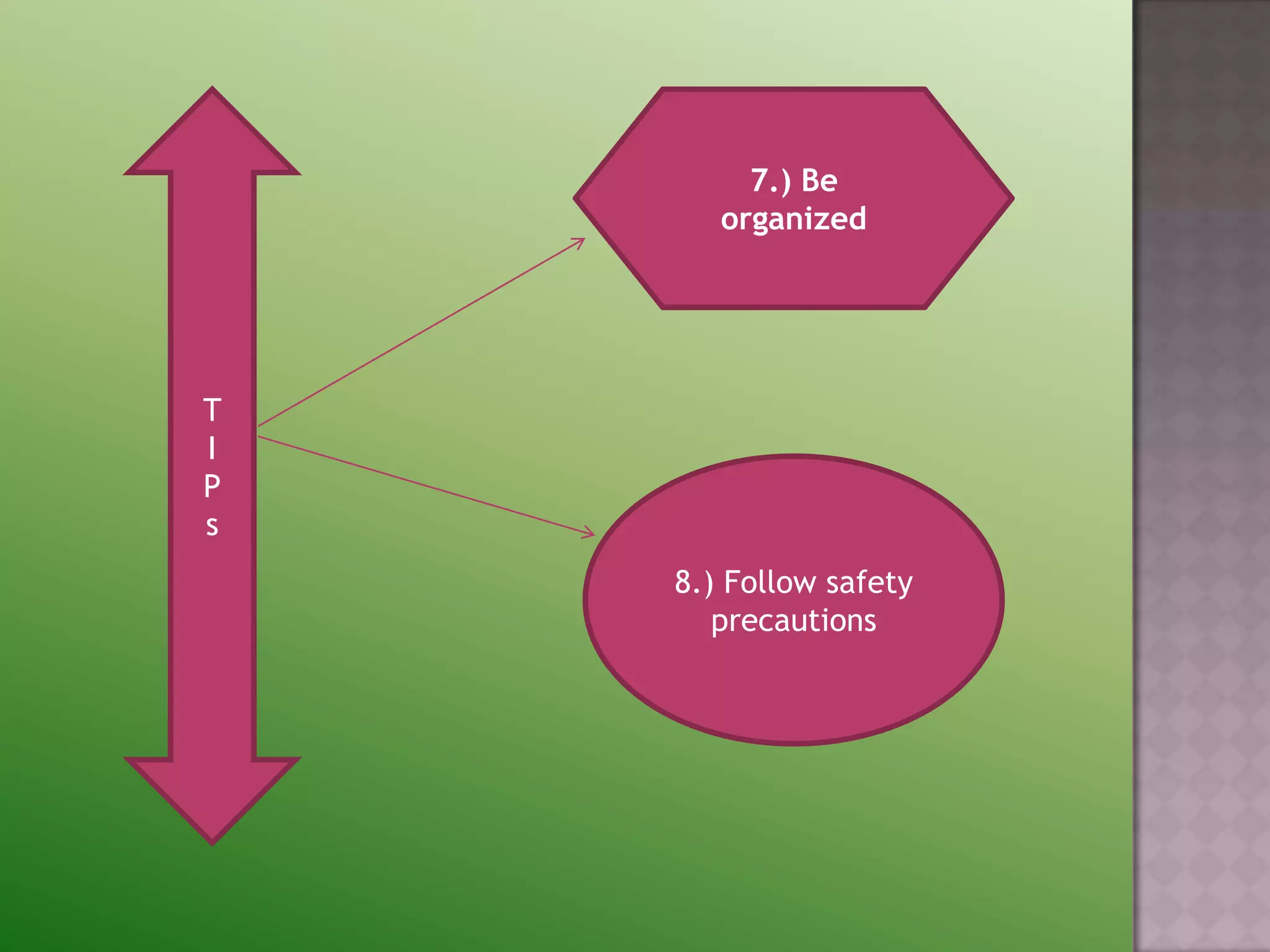
7.) Be
       organized


T
I
P
s
    8.) Follow safety
       precautions
Ppt.......demonstration

Ppt.......demonstration

  • 1.
    Presented by: Monika Sharma M.Sc.Nursing 1st year
  • 3.
     It is the most important method of teaching in nursing. It teaches by explanation and exhibition.
  • 4.
     To demonstrate experiments or procedures  To introduce a new procedure.  To teach the patient a procedure or treatment  To demonstrate a procedure at the bedside or in the ward conference room.
  • 5.
     Explanation Phase Demonstration Phase:  Student performance and instructor supervision phase:  Evaluation Phase
  • 6.
     understandable and exemplary.  time for reflective and critical thought  Pre- preparation  equipments should be assembled and pretested  advance knowledge .
  • 7.
     positive approach. explain the uses of materials used.  setting should be true to life.  A discussion period.  opportunity to practice
  • 8.
    several teacher is ideas and senses present. concepts step by step  Limits quality of damage observation Advantages: . direct experiences practical, intellectual and communication skills attention Presents catching Stimulate reality interest
  • 10.
     Number ofstudents is limited.  Keeps the students in a passive situation.  Offers little possibility of checking the learning process.  May limit audience/client input  Require pre-preparation
  • 11.
     Does notallow for individual pacing of learning.  High cost in personnel and time.  Difficulty in repeating demonstration in order to acquire competence.
  • 13.
    1. Know your audience T 2.) Set your I objectives P s 3.) Plan your preparation time
  • 14.
    4.) Be prepared for various room arrangements T 5.) Help your I audience/clie P nt to see what s you are doing 6.)Provide handouts to support what you say
  • 15.
    7.) Be organized T I P s 8.) Follow safety precautions