ENTREDICHO*SAN PEDRO*SASI*TAGO*ZACARIAS
   A method of teaching that relies heavily upon
    showing the learner a model per formance
    that he/she should match or pass after he/she
    has seen a presentation that is live, filmed
    or electronically operated.
   A learning activity performed by a student, a
    group of 3 to 4 members or a teacher while the
    rest become observers.

   Employed in presenting lessons that use
    sophisticated equipment/s and technical know-
    how.
VERBAL EXPLANATION +
LIVE DISPLAY/ USE OF APPARATUS
        = DEMONSTRATION
   shows the step-by-step procedures in a job
    task, using the exact physical procedures if
    possible.

     While  demonstrating, explain the reason for and the
      significance of each step.
 The demonstration step gives learners the
  opportunity to see and hear the details
  related to the skill being taught.
 The performance step gives the learners the
  opportunity to become proficient.
 The repetition step helps the average and slow
  learners to have more time in learning the
  taught skill.
 PLAN. PLAN. PLAN.
 Use Training Aids

 “Hands On” Practice
Lesson  Summary
Oral Questioning

Training Aids
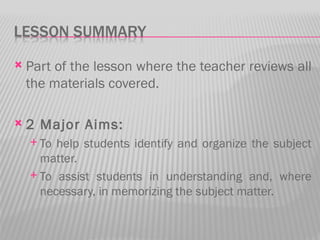
   Part of the lesson where the teacher reviews all
    the materials covered.

   2 Major Aims:
     To help students identify and organize the subject
      matter.
     To assist students in understanding and, where
      necessary, in memorizing the subject matter.
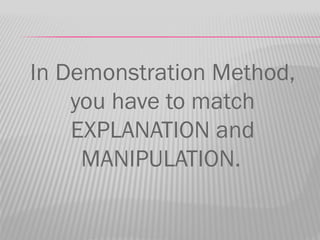
In Demonstration Method,
    you have to match
    EXPLANATION and
     MANIPULATION.
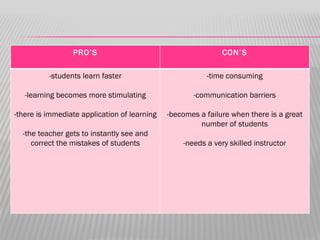
PRO’S                                        CON’S

          -students learn faster                         -time consuming

   -learning becomes more stimulating                -communication barriers

-there is immediate application of learning   -becomes a failure when there is a great
                                                       number of students
  -the teacher gets to instantly see and
     correct the mistakes of students             -needs a very skilled instructor
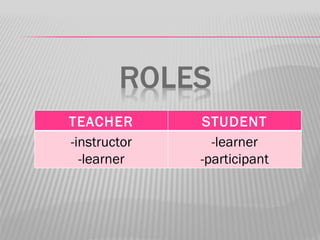
TEACHER       STUDENT
-instructor     -learner
  -learner    -participant
ENTREDICHO*SAN PEDRO*SASI*TAGO*ZACARIAS
   http://www.authorstream.com/Presentation/z
    enith2012-534848-demonstration-method/

   Corpuz, Brenda B., Salandanan, Gloria G. 2007.
    Principles of Teaching 1. Lorimar Publishing,
    Inc. Quezon City, Metro Manila. P. 73-75.

Demonstration method

  • 1.
  • 2.
    A method of teaching that relies heavily upon showing the learner a model per formance that he/she should match or pass after he/she has seen a presentation that is live, filmed or electronically operated.
  • 3.
    A learning activity performed by a student, a group of 3 to 4 members or a teacher while the rest become observers.  Employed in presenting lessons that use sophisticated equipment/s and technical know- how.
  • 4.
    VERBAL EXPLANATION + LIVEDISPLAY/ USE OF APPARATUS = DEMONSTRATION
  • 5.
    shows the step-by-step procedures in a job task, using the exact physical procedures if possible.  While demonstrating, explain the reason for and the significance of each step.
  • 6.
     The demonstrationstep gives learners the opportunity to see and hear the details related to the skill being taught.  The performance step gives the learners the opportunity to become proficient.  The repetition step helps the average and slow learners to have more time in learning the taught skill.
  • 7.
     PLAN. PLAN.PLAN.  Use Training Aids  “Hands On” Practice
  • 8.
    Lesson Summary OralQuestioning Training Aids
  • 9.
    Part of the lesson where the teacher reviews all the materials covered.  2 Major Aims:  To help students identify and organize the subject matter.  To assist students in understanding and, where necessary, in memorizing the subject matter.
  • 10.
    In Demonstration Method, you have to match EXPLANATION and MANIPULATION.
  • 11.
    PRO’S CON’S -students learn faster -time consuming -learning becomes more stimulating -communication barriers -there is immediate application of learning -becomes a failure when there is a great number of students -the teacher gets to instantly see and correct the mistakes of students -needs a very skilled instructor
  • 12.
    TEACHER STUDENT -instructor -learner -learner -participant
  • 13.
  • 14.
    http://www.authorstream.com/Presentation/z enith2012-534848-demonstration-method/  Corpuz, Brenda B., Salandanan, Gloria G. 2007. Principles of Teaching 1. Lorimar Publishing, Inc. Quezon City, Metro Manila. P. 73-75.