


Theories of disease causation


                      Presented by:
                     Monika sharma
               M.Sc. Nursing 1st year
INTRODUCTION

Disease is a dynamic process and it is just opposite to
the health. Health denotes perfect harmony and normal
functioning of all the body system or state of complete
wellness whereas disease denotes disharmony and
deviation from normal functioning of various body
functioning system.
DEFINITION OF DISEASE:

 According to webster ,


                “disease is a condition in which
 body health is impaired, a departure from state of
 health, an alteration of human body function and
 interrupting the performance of vital function".
CONT…

 According to oxford English dictionary ,”disease is a
  condition of body or some part of body or organ of
  body in which its function are disrupted”.
                           OR
 According to ecological point of view, “ disease is a
  maladjustment of the human organism to the
  environment”
THEORIES OF DISEASE
     CAUSATION
   INTRODUCTION
CONT…

 Before the discovery of micro-organism (bacteria
 by loies pasture in 1822-1895)several theories
 explaning the cause of disease were put forward
 time to time
 germ theory
 epidemiological triad
 multifactorial causation theory
 web of causation
 devers epidemiological model
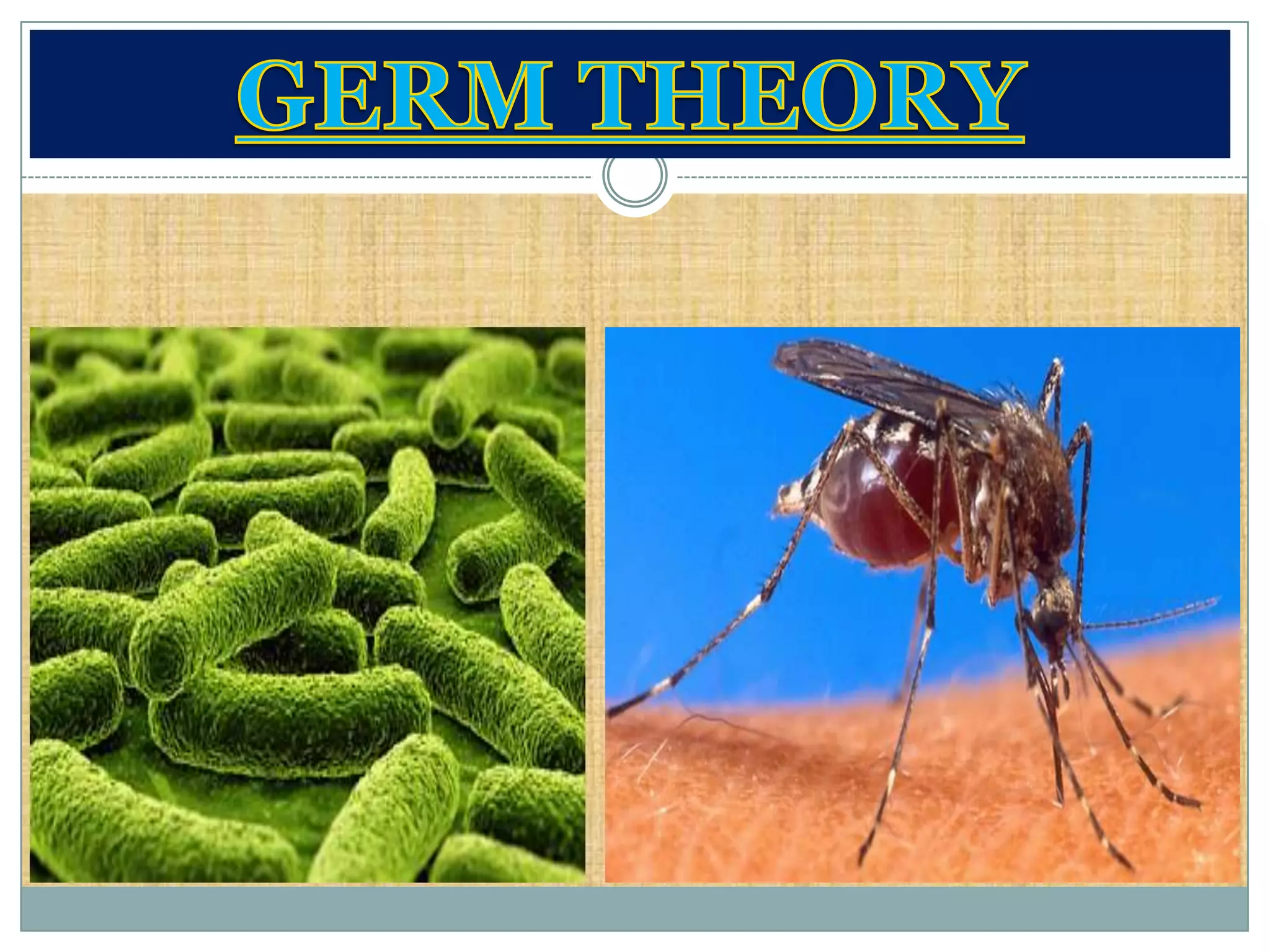
THE GERM THEORY:


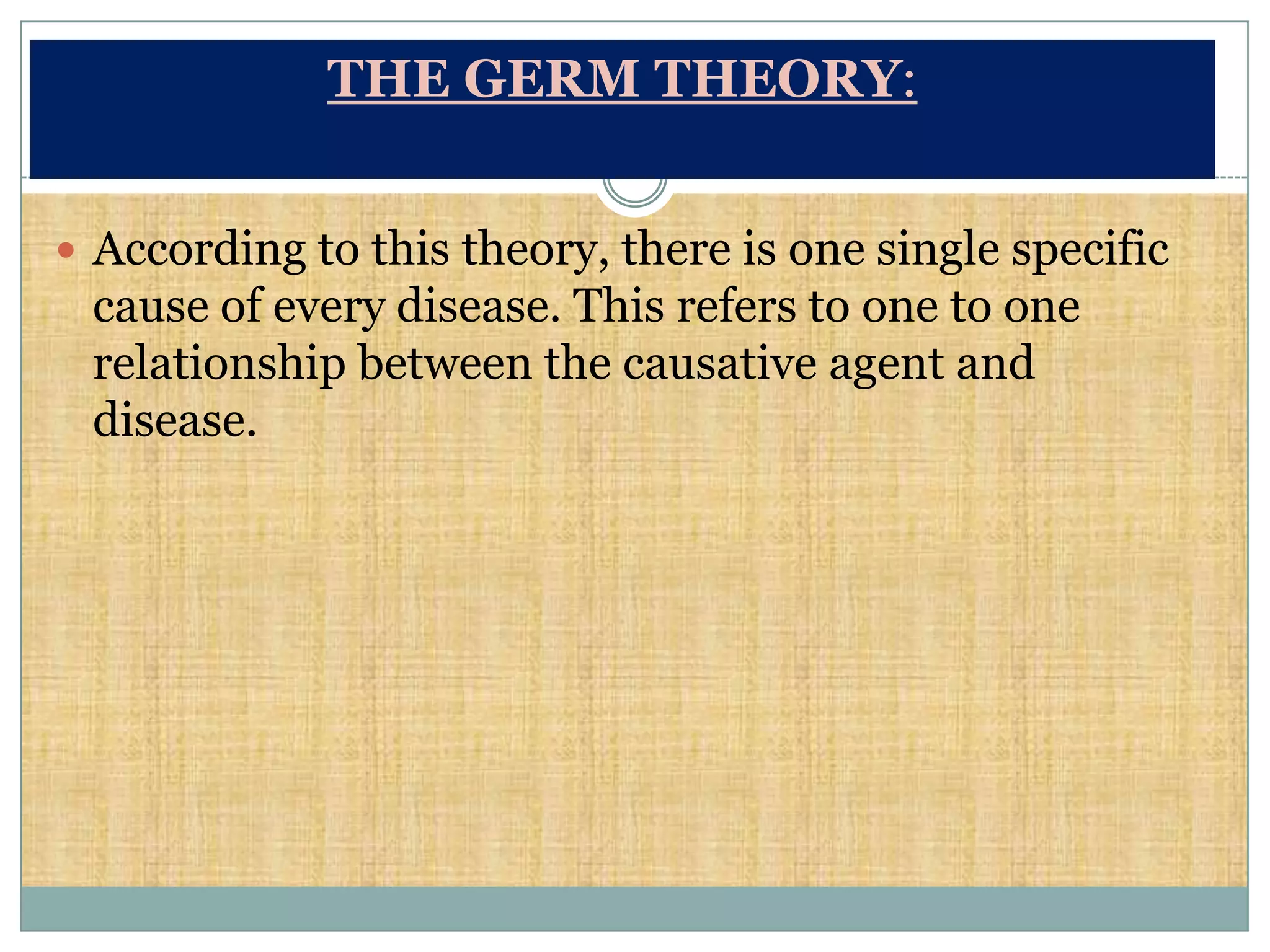
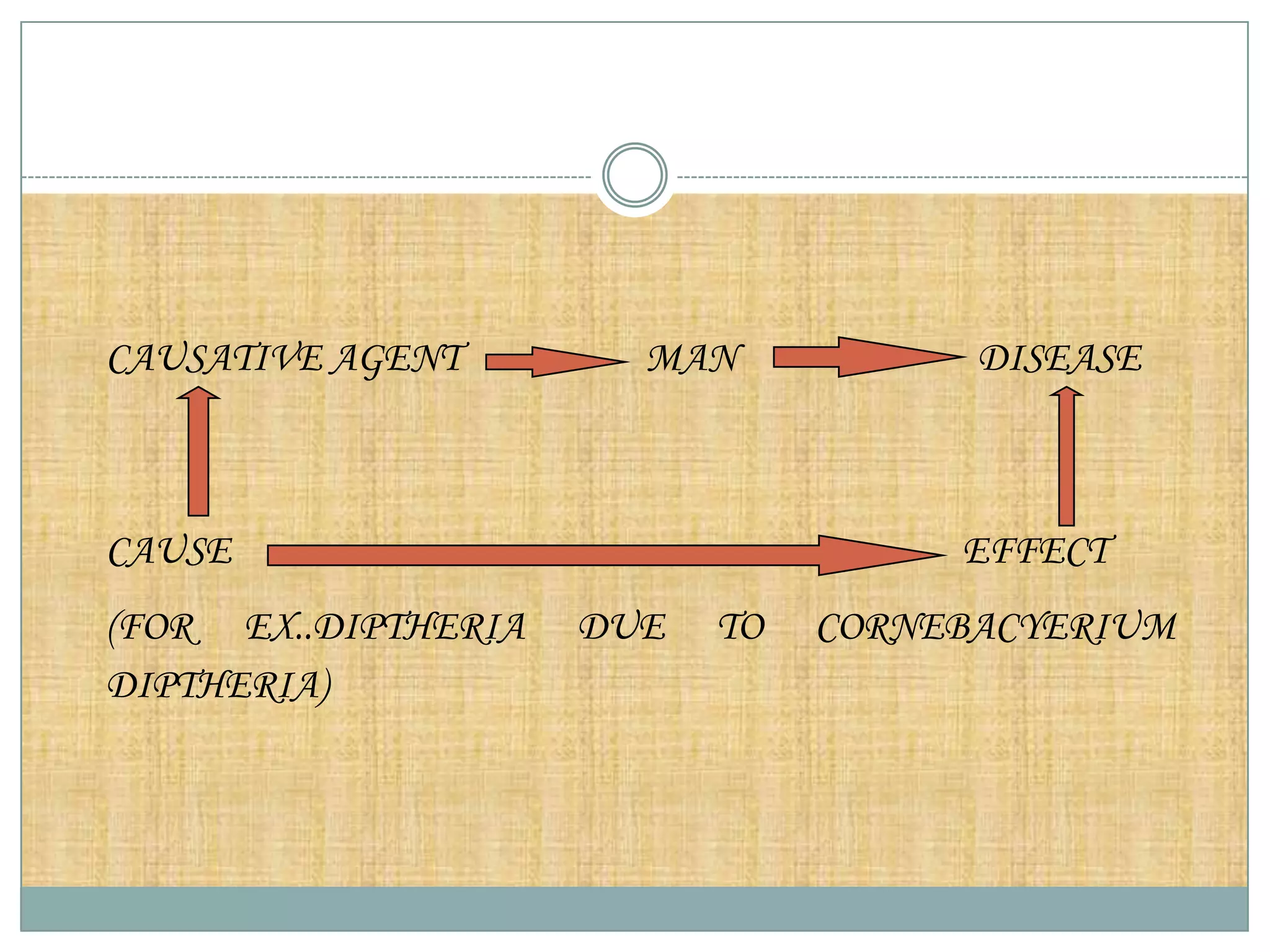
 According to this theory, there is one single specific
 cause of every disease. This refers to one to one
 relationship between the causative agent and
 disease.
CAUSATIVE AGENT        MAN            DISEASE


CAUSE                                EFFECT
(FOR EX..DIPTHERIA   DUE   TO   CORNEBACYERIUM
DIPTHERIA)
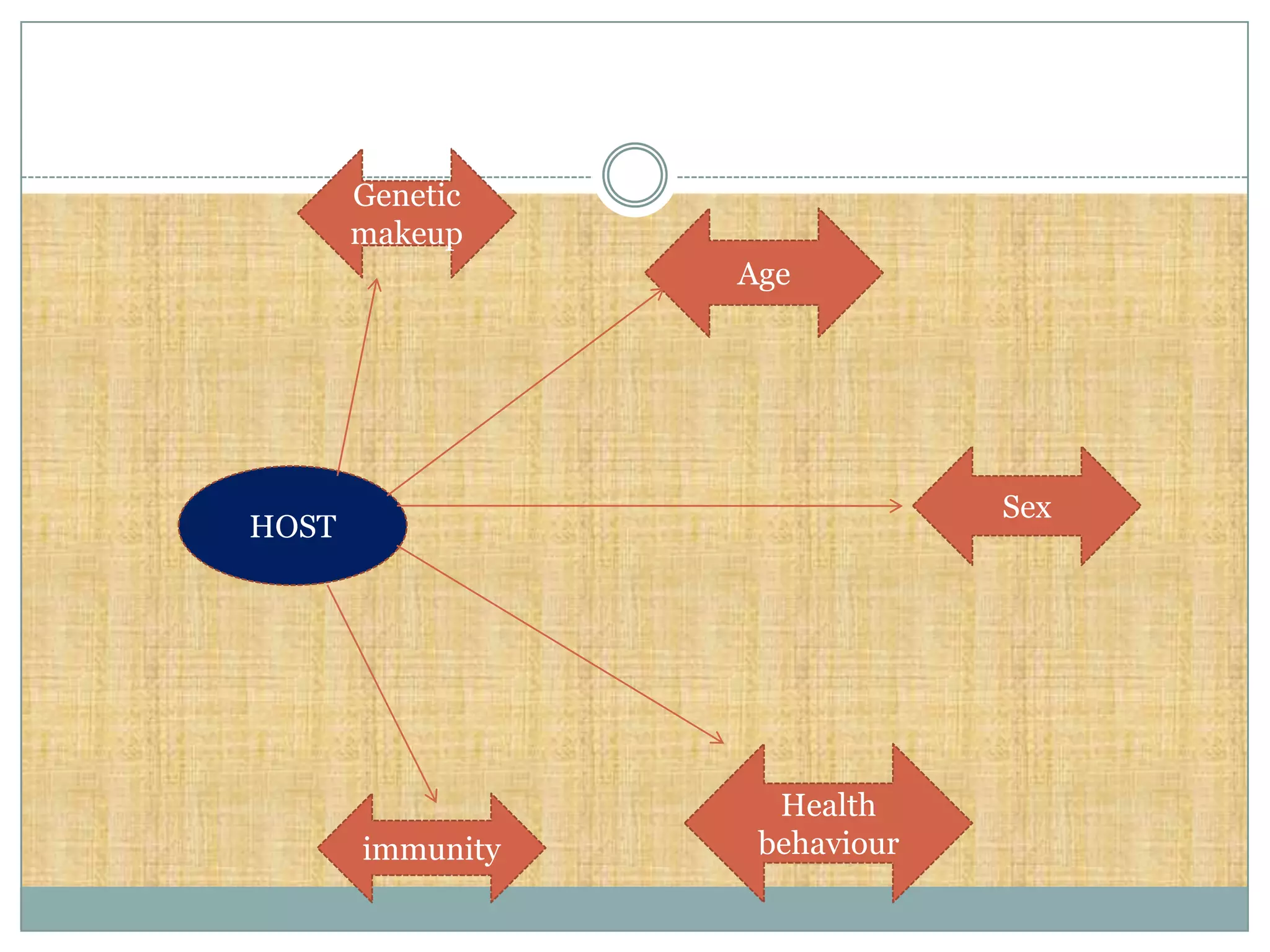
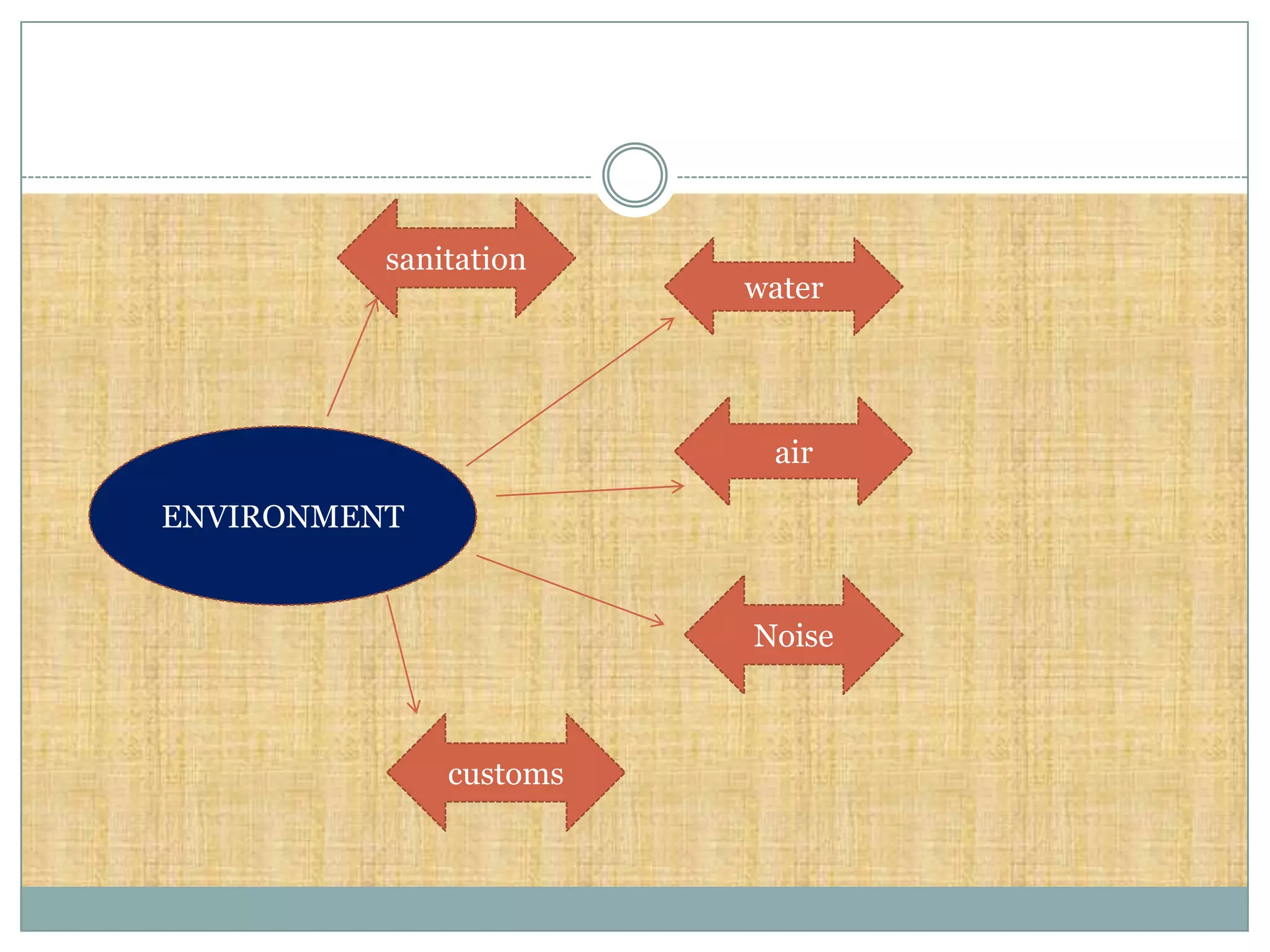
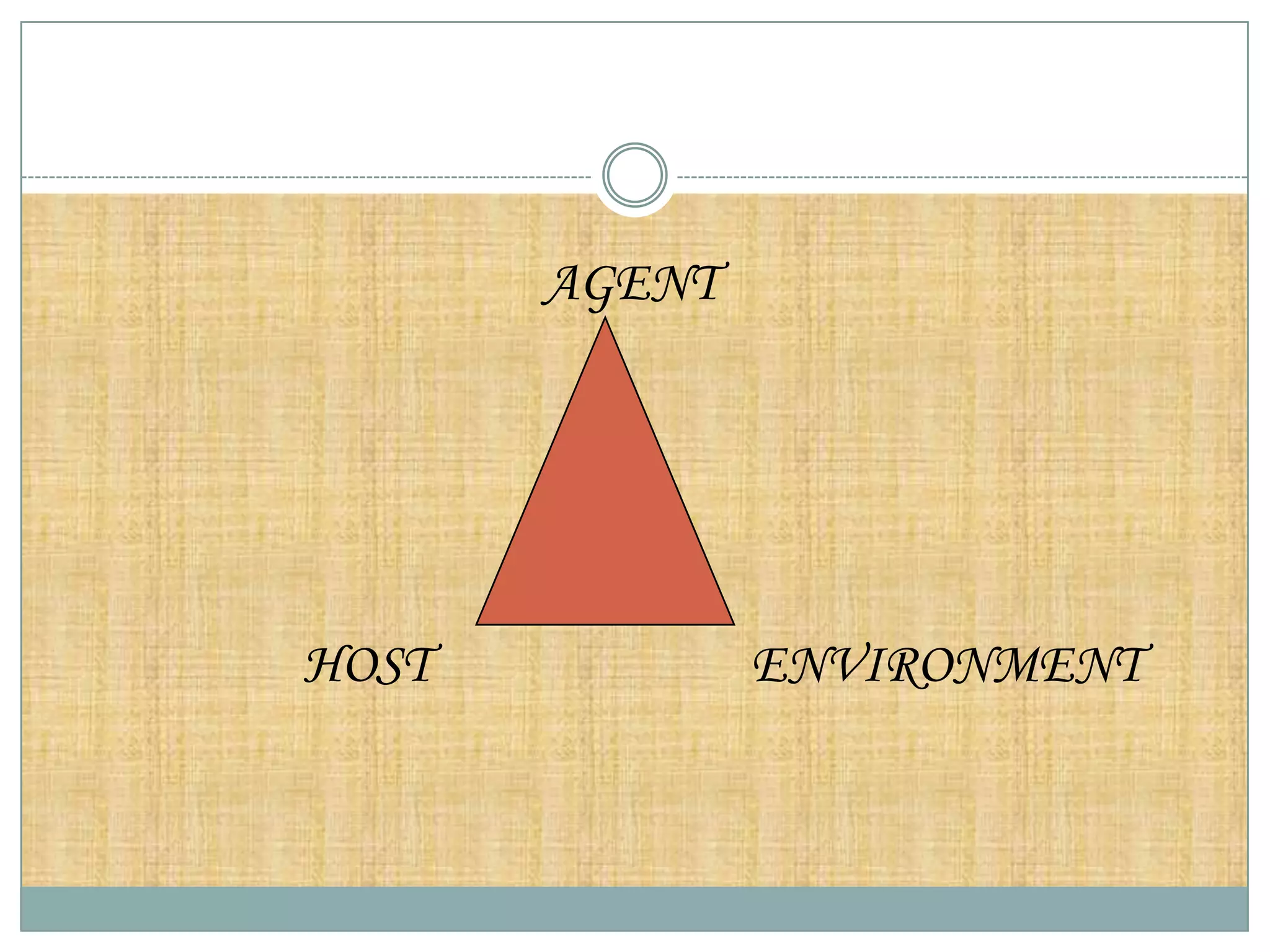
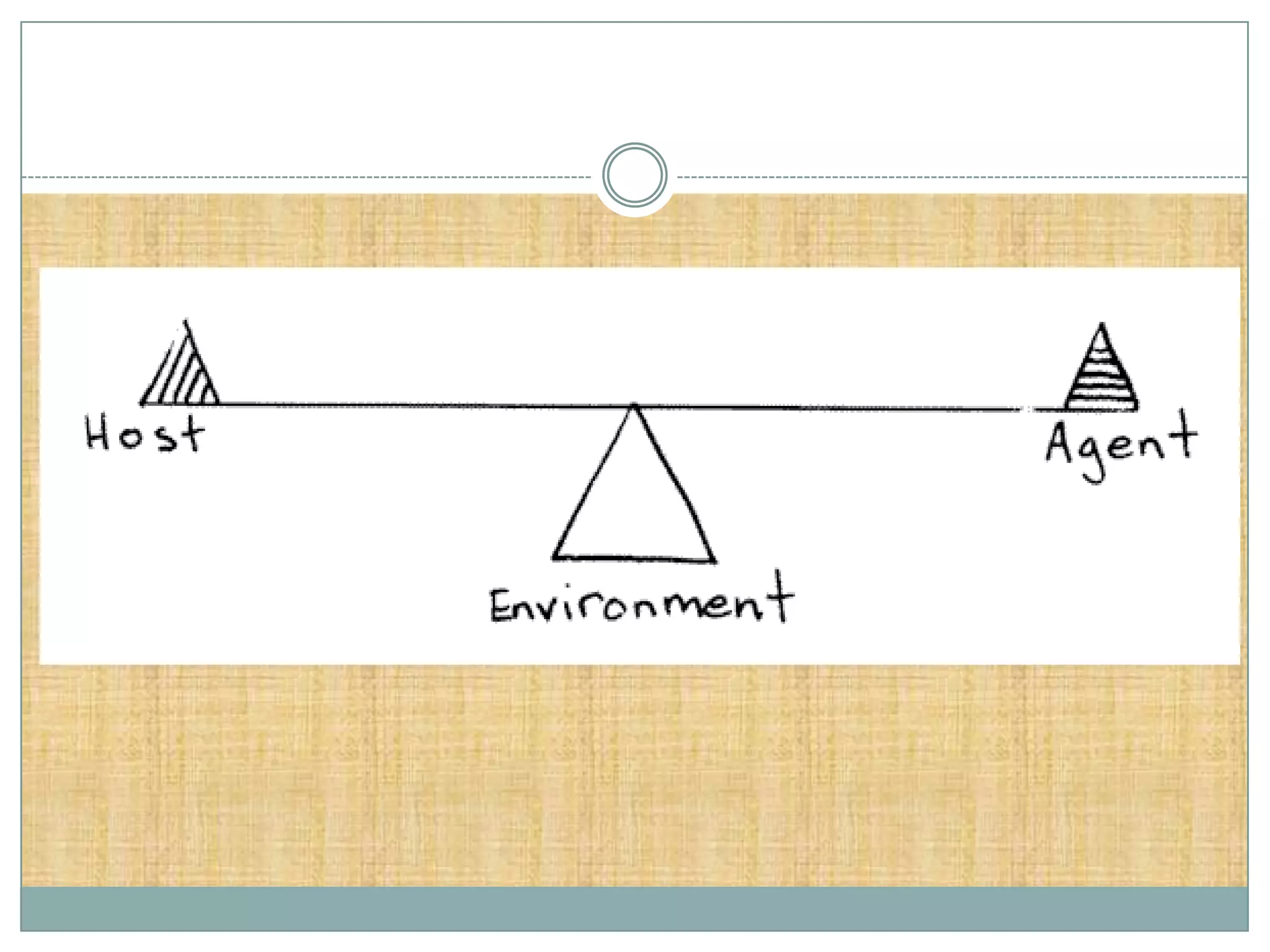
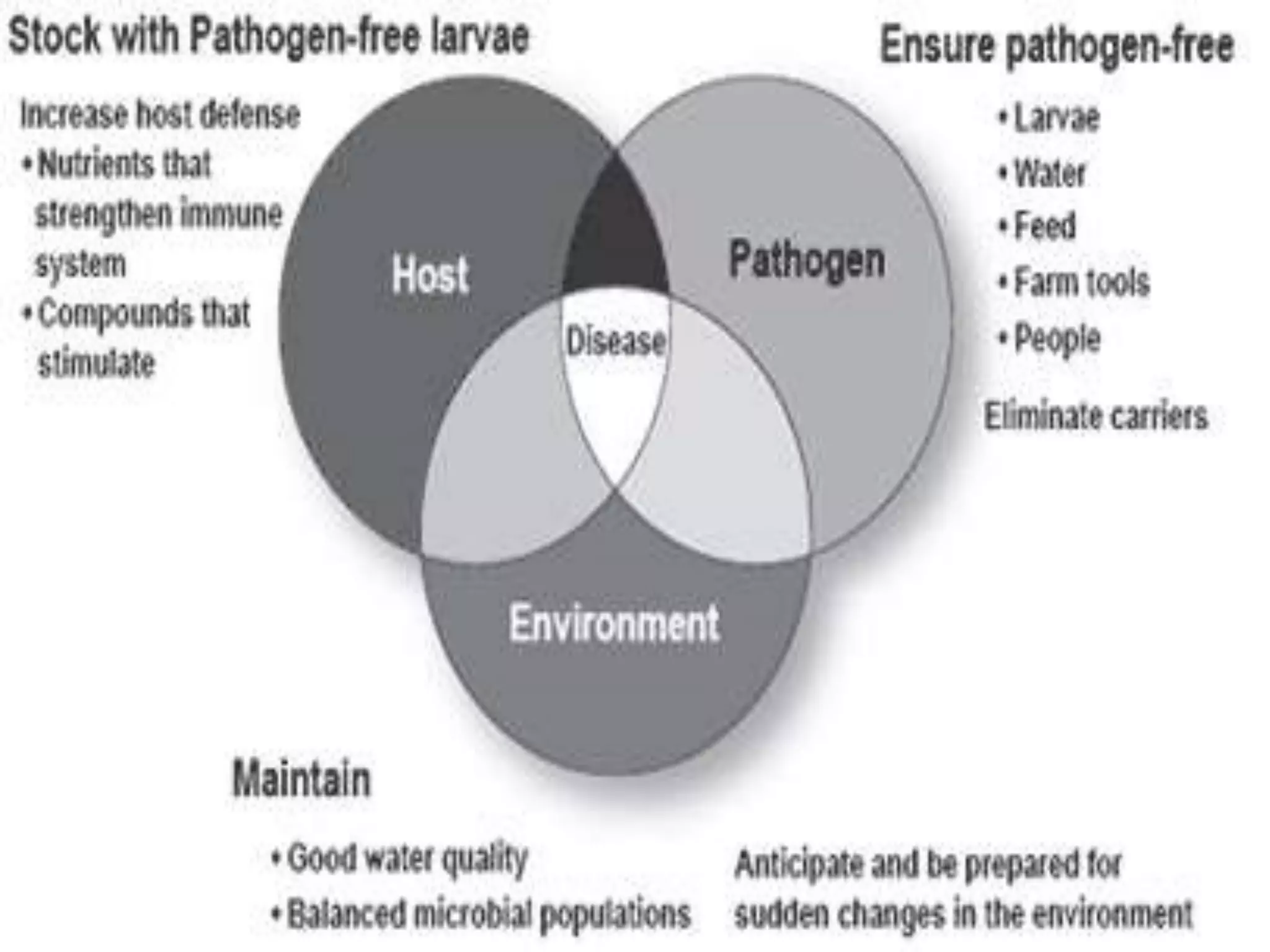
THEORY OF EPIDEMIOLOGICAL TRIAD :


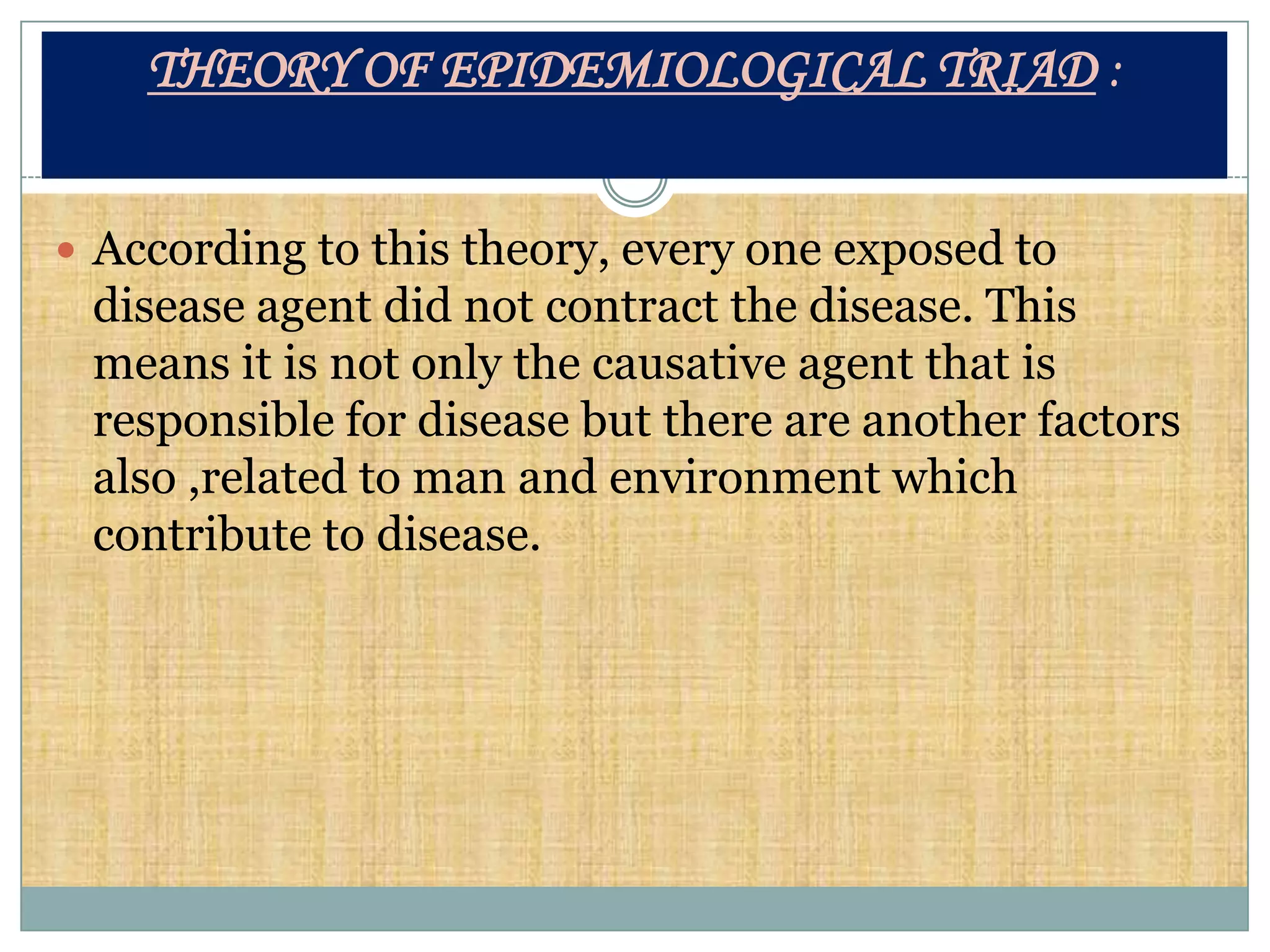
 According to this theory, every one exposed to
 disease agent did not contract the disease. This
 means it is not only the causative agent that is
 responsible for disease but there are another factors
 also ,related to man and environment which
 contribute to disease.
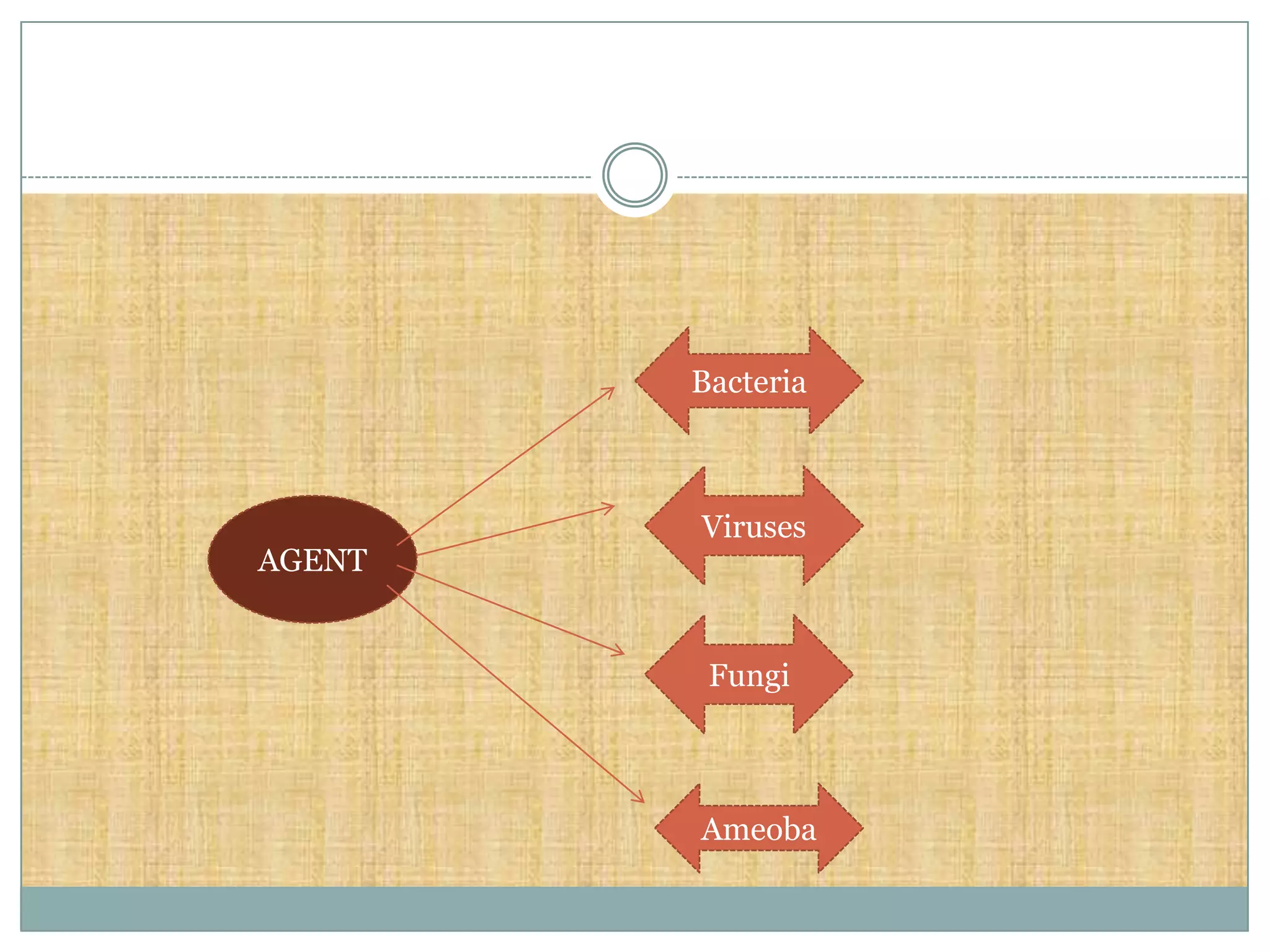
Bacteria


        Viruses
AGENT


         Fungi


        Ameoba
Genetic
       makeup
                  Age


                               Sex
HOST


                    Health
       immunity    behaviour
sanitation
                        water


                         air

ENVIRONMENT


                        Noise


              customs
AGENT


HOST           ENVIRONMENT
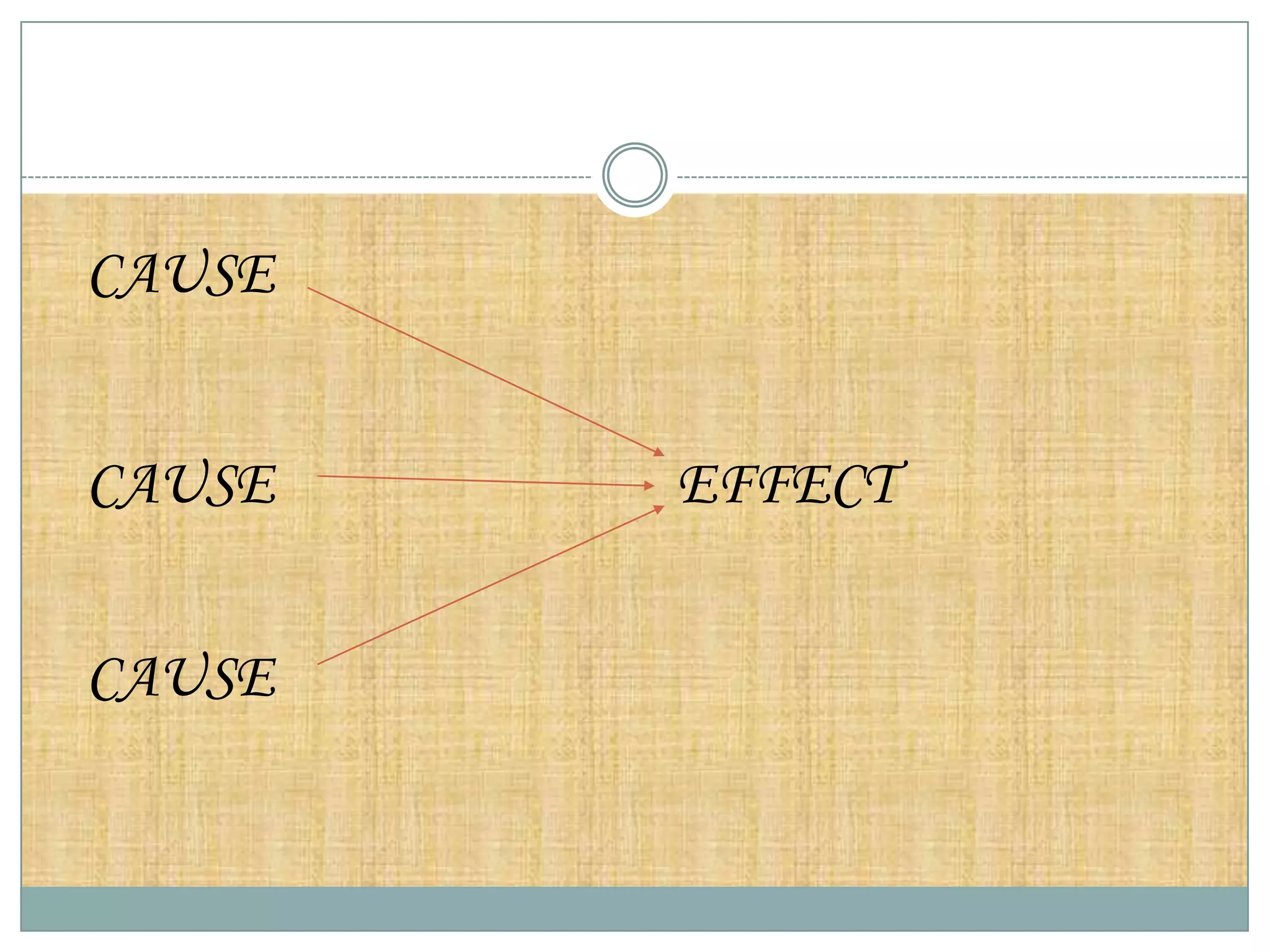
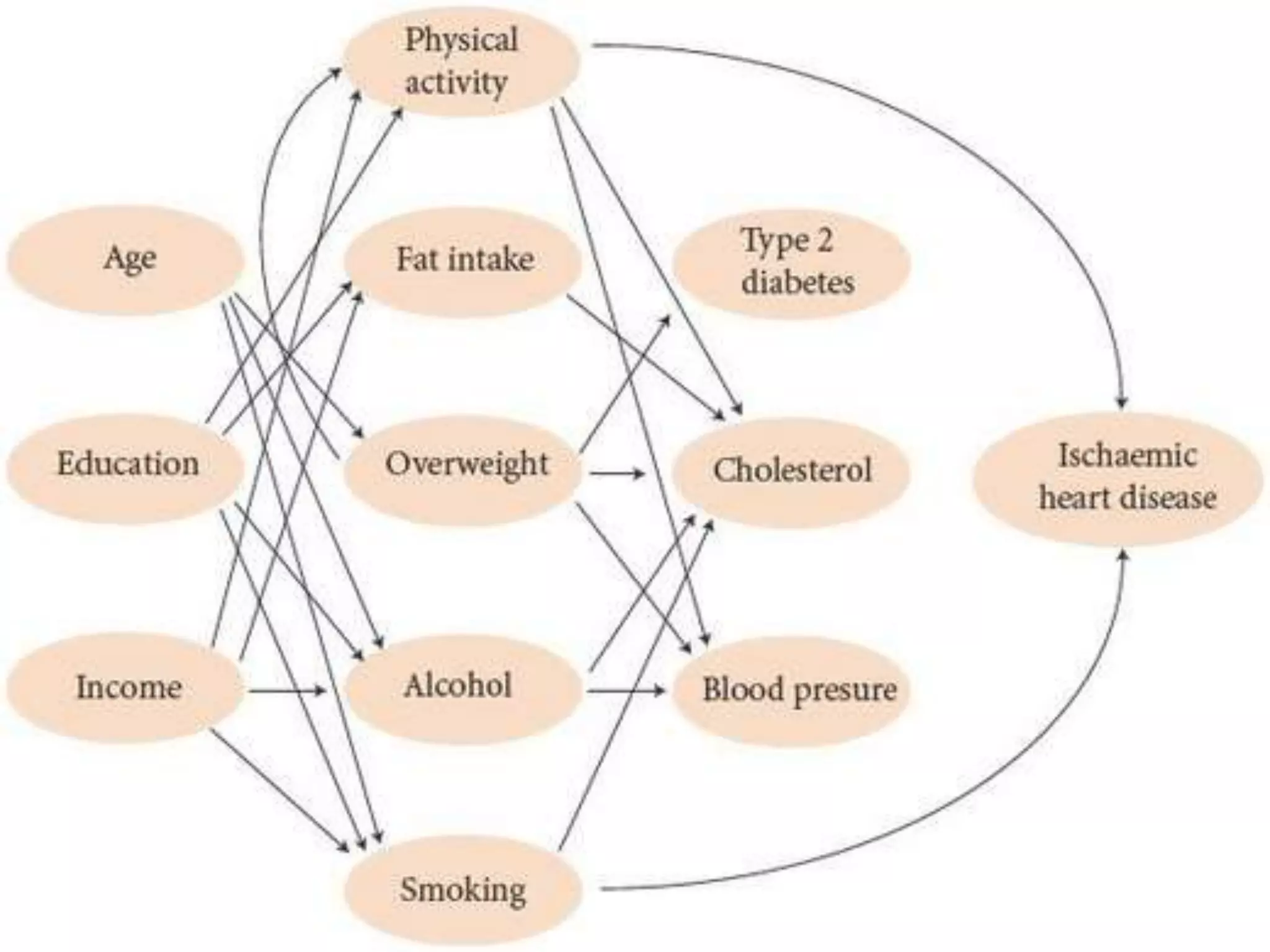
MULTIFACTORIAL CAUSATIONTHEORY:

 Epidemiological theory is not applicable for non
  infectious and chronic diseases like coronary artery
  diseases etc. because it has many causes or multiple
  factors.
 This theory helps to understand the various
  associated causative factors, prioitise and plan
  preventive and plan measures to control the disease.
CAUSE


CAUSE   EFFECT


CAUSE
WEB OF CAUSATION


 Given by macmohan and pugh.
                               according to him
 disease never depends upon single isolated cause
 rather it develops from a chain of causation in
 which each link itself is a result of complex
 interaction of preceding events these chain of
 causation which may be the fraction of the whole
 complex is known as web of causation.
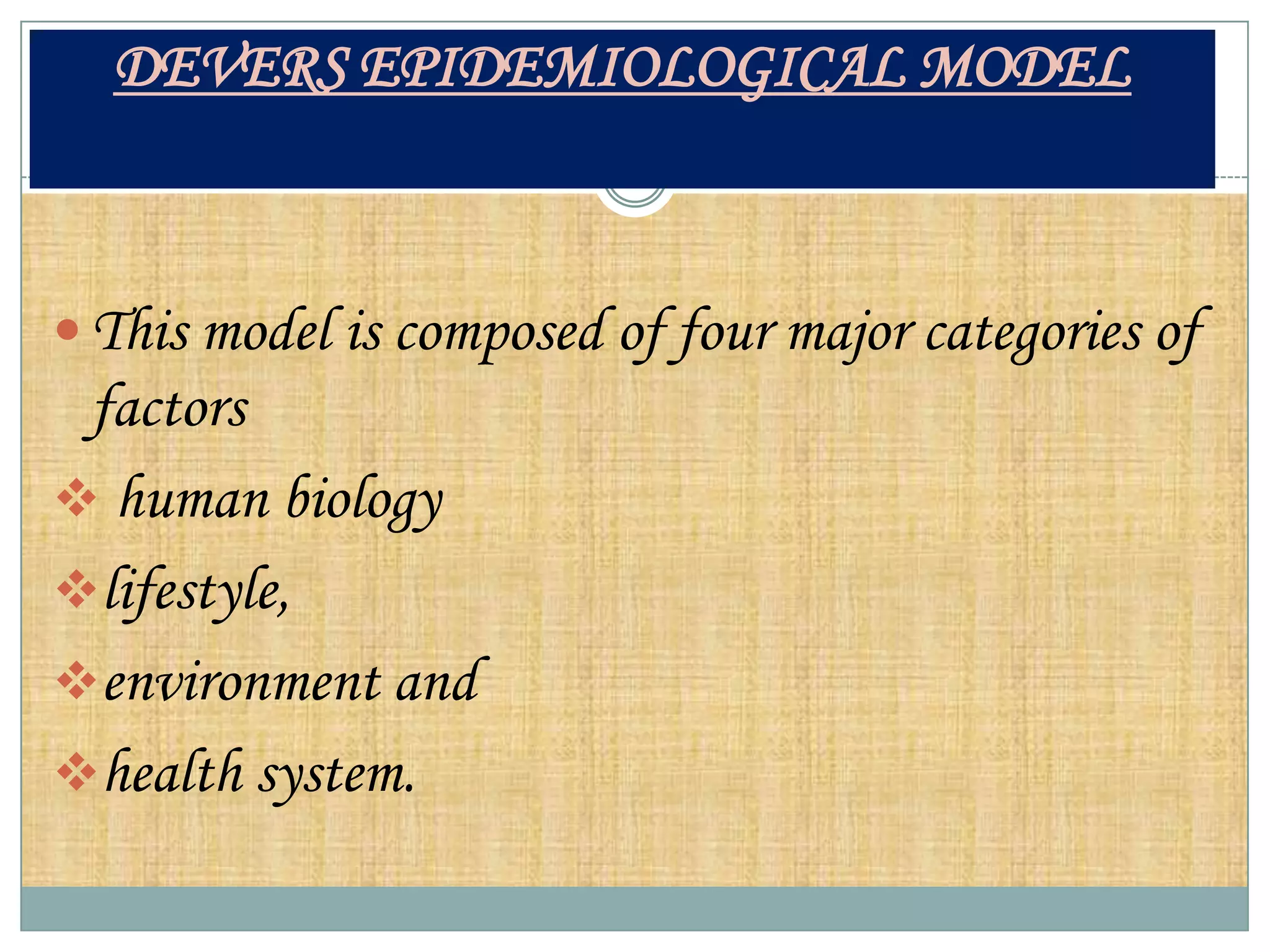
DEVERS EPIDEMIOLOGICAL MODEL


 This model is composed of four major categories of
 factors
 human biology
lifestyle,
environment and
health system.
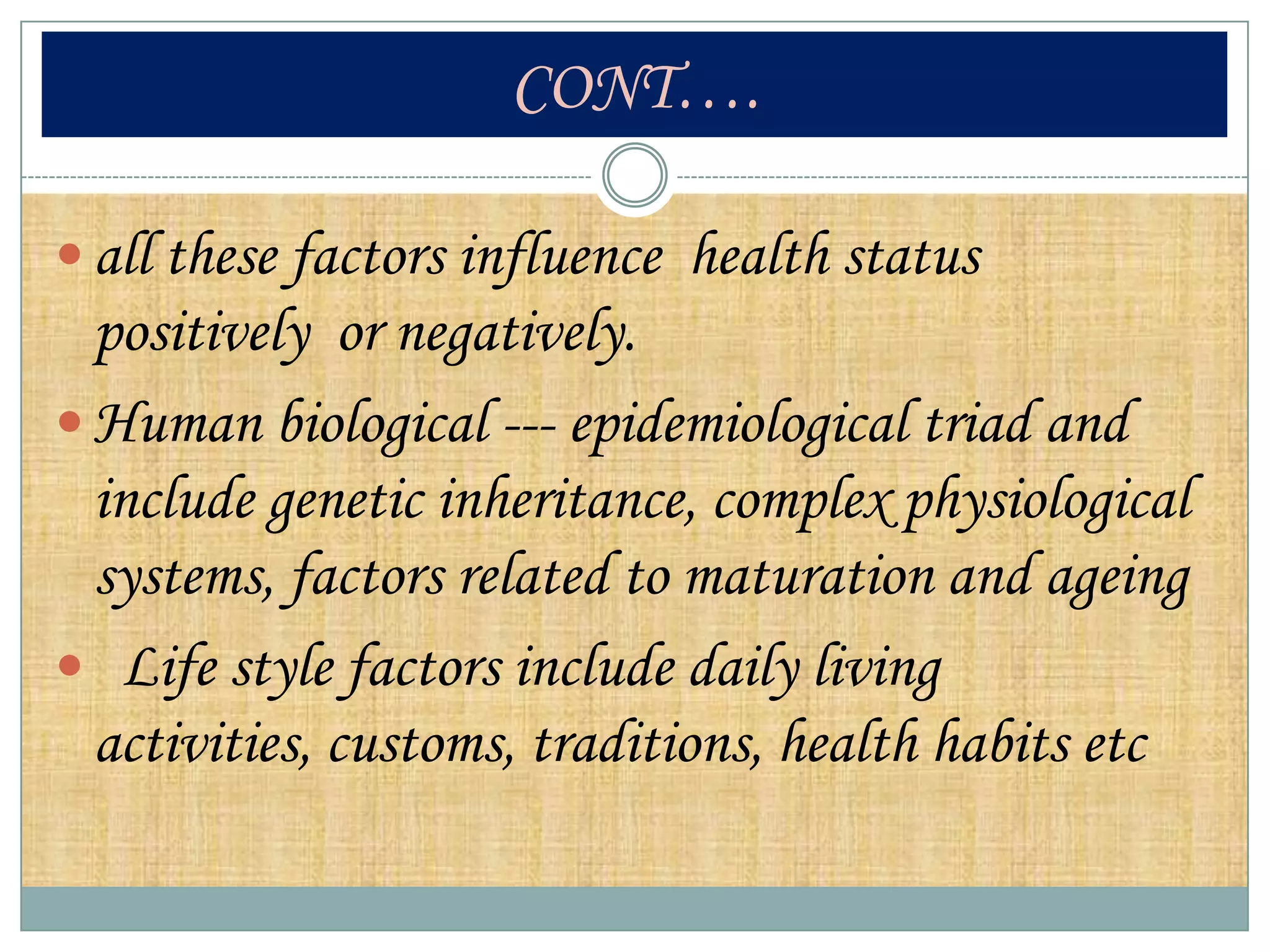
CONT….

 all these factors influence health status
  positively or negatively.
 Human biological --- epidemiological triad and
  include genetic inheritance, complex physiological
  systems, factors related to maturation and ageing
 Life style factors include daily living
  activities, customs, traditions, health habits etc
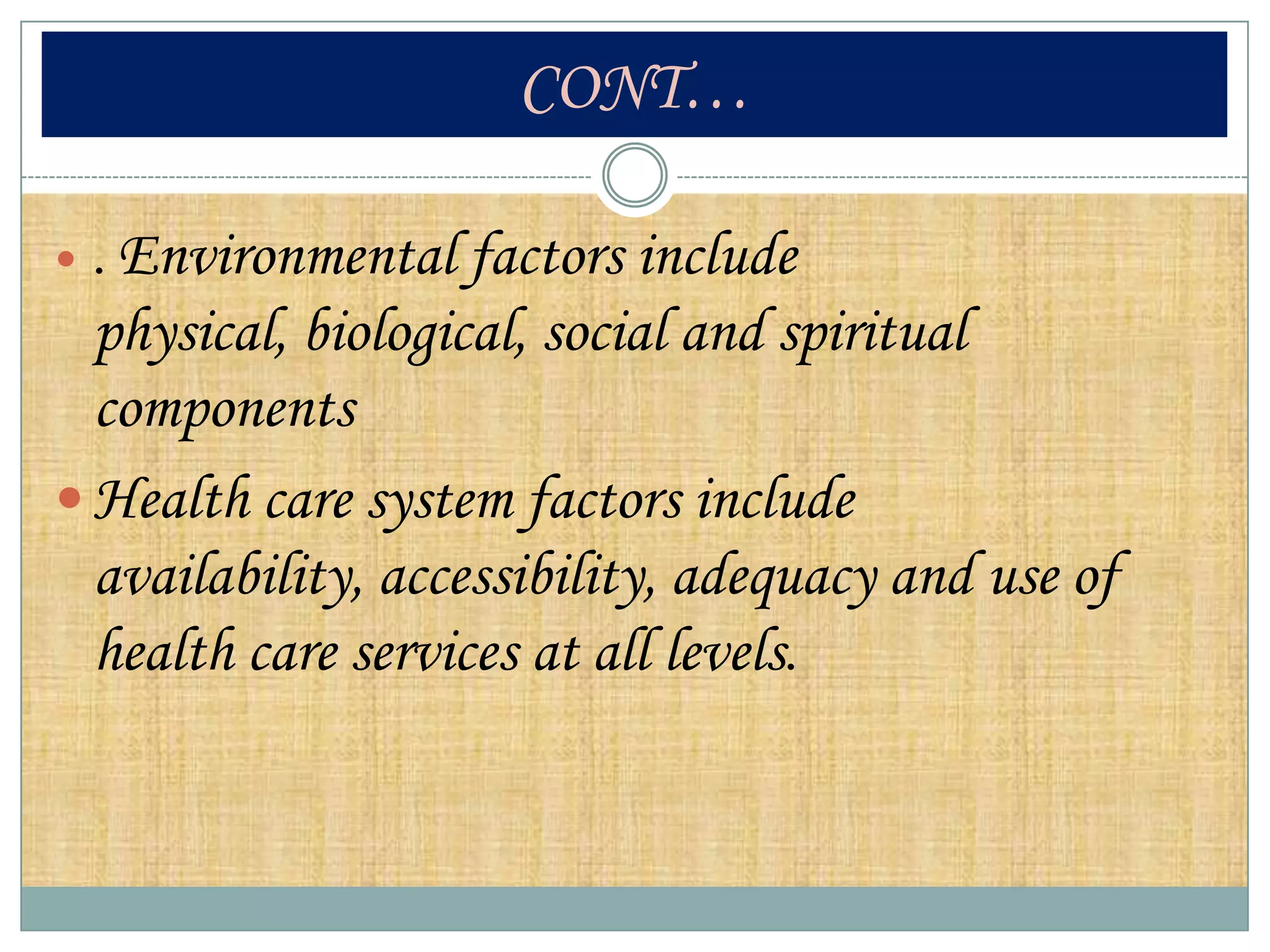
CONT…

 . Environmental   factors include
  physical, biological, social and spiritual
  components
 Health care system factors include
  availability, accessibility, adequacy and use of
  health care services at all levels.
SPECTRUM OF DISEASE:


 “Spectrum  of disease” is the graphical
 representation of variation in the manifestations
 of disease.
CONT…

 At one end of disease spectrum are subclinical
 infections which are not ordinarily identified and
 at the other end are fatal illness.. In the middle of
 the spectrum lie illness ranging in severity from
 mild to severe.
ICEBERG OF DISEASE:


 To this the disease can be closely related with an
 iceberg. The floating tip of the iceberg represents
 what the physician sees in the community i.e.
 clinical cases.
CONT…

 The vast submerge portion of the iceberg
 represents the hidden mass of disease i.e.
 latent, unapparent, presymptomatic and
 undiagnosed cases and carrier in the community.
 he waterline represents the demarcation between
 apparent and unapparent diseases
ROLE OF NURSE IN PREVENTION OF DISEASE:


 participate in early diagnosis and treatment.
 notification of certain specific diseases.
 identify source of infection and method of spread.
 health education of people in general.
 control of communicable diseases .
SUMMARIZATION:
 Introduction
 Definition of disease
 Various theories of disease causation
         - germ theory
         -epidemiological triad
        - multifactorial causation theory
        -web of causation
CONT…


       - deversepidimiological model
 Role of nurse in disease prevention
 Spectrum of disease
 Iceberg of disease
BIBLIOGRAPHY

 Gulani k.k.community health nursing.2009(new
  delhi):kumar publishing house.21-23
 Park k .preventive and socialmedicine. 2007(New
  Delhi):banarsidas bhanot.24-28

Theories of disease causation..ppt

  • 1.
    Theories of diseasecausation Presented by: Monika sharma M.Sc. Nursing 1st year
  • 2.
    INTRODUCTION Disease is adynamic process and it is just opposite to the health. Health denotes perfect harmony and normal functioning of all the body system or state of complete wellness whereas disease denotes disharmony and deviation from normal functioning of various body functioning system.
  • 3.
    DEFINITION OF DISEASE: According to webster , “disease is a condition in which body health is impaired, a departure from state of health, an alteration of human body function and interrupting the performance of vital function".
  • 4.
    CONT…  According tooxford English dictionary ,”disease is a condition of body or some part of body or organ of body in which its function are disrupted”. OR  According to ecological point of view, “ disease is a maladjustment of the human organism to the environment”
  • 5.
    THEORIES OF DISEASE CAUSATION INTRODUCTION
  • 6.
    CONT…  Before thediscovery of micro-organism (bacteria by loies pasture in 1822-1895)several theories explaning the cause of disease were put forward time to time
  • 7.
     germ theory epidemiological triad  multifactorial causation theory  web of causation  devers epidemiological model
  • 9.
    THE GERM THEORY: According to this theory, there is one single specific cause of every disease. This refers to one to one relationship between the causative agent and disease.
  • 10.
    CAUSATIVE AGENT MAN DISEASE CAUSE EFFECT (FOR EX..DIPTHERIA DUE TO CORNEBACYERIUM DIPTHERIA)
  • 11.
    THEORY OF EPIDEMIOLOGICALTRIAD :  According to this theory, every one exposed to disease agent did not contract the disease. This means it is not only the causative agent that is responsible for disease but there are another factors also ,related to man and environment which contribute to disease.
  • 12.
    Bacteria Viruses AGENT Fungi Ameoba
  • 13.
    Genetic makeup Age Sex HOST Health immunity behaviour
  • 14.
    sanitation water air ENVIRONMENT Noise customs
  • 15.
    AGENT HOST ENVIRONMENT
  • 18.
    MULTIFACTORIAL CAUSATIONTHEORY:  Epidemiologicaltheory is not applicable for non infectious and chronic diseases like coronary artery diseases etc. because it has many causes or multiple factors.  This theory helps to understand the various associated causative factors, prioitise and plan preventive and plan measures to control the disease.
  • 19.
    CAUSE CAUSE EFFECT CAUSE
  • 20.
    WEB OF CAUSATION Given by macmohan and pugh. according to him disease never depends upon single isolated cause rather it develops from a chain of causation in which each link itself is a result of complex interaction of preceding events these chain of causation which may be the fraction of the whole complex is known as web of causation.
  • 22.
    DEVERS EPIDEMIOLOGICAL MODEL This model is composed of four major categories of factors  human biology lifestyle, environment and health system.
  • 23.
    CONT….  all thesefactors influence health status positively or negatively.  Human biological --- epidemiological triad and include genetic inheritance, complex physiological systems, factors related to maturation and ageing  Life style factors include daily living activities, customs, traditions, health habits etc
  • 24.
    CONT…  . Environmental factors include physical, biological, social and spiritual components  Health care system factors include availability, accessibility, adequacy and use of health care services at all levels.
  • 25.
    SPECTRUM OF DISEASE: “Spectrum of disease” is the graphical representation of variation in the manifestations of disease.
  • 26.
    CONT…  At oneend of disease spectrum are subclinical infections which are not ordinarily identified and at the other end are fatal illness.. In the middle of the spectrum lie illness ranging in severity from mild to severe.
  • 27.
    ICEBERG OF DISEASE: To this the disease can be closely related with an iceberg. The floating tip of the iceberg represents what the physician sees in the community i.e. clinical cases.
  • 28.
    CONT…  The vastsubmerge portion of the iceberg represents the hidden mass of disease i.e. latent, unapparent, presymptomatic and undiagnosed cases and carrier in the community. he waterline represents the demarcation between apparent and unapparent diseases
  • 31.
    ROLE OF NURSEIN PREVENTION OF DISEASE:  participate in early diagnosis and treatment.  notification of certain specific diseases.  identify source of infection and method of spread.  health education of people in general.  control of communicable diseases .
  • 33.
    SUMMARIZATION:  Introduction  Definitionof disease  Various theories of disease causation - germ theory -epidemiological triad - multifactorial causation theory -web of causation
  • 34.
    CONT… - deversepidimiological model  Role of nurse in disease prevention  Spectrum of disease  Iceberg of disease
  • 37.
    BIBLIOGRAPHY  Gulani k.k.communityhealth nursing.2009(new delhi):kumar publishing house.21-23  Park k .preventive and socialmedicine. 2007(New Delhi):banarsidas bhanot.24-28