BY- MRS SUDHARANI
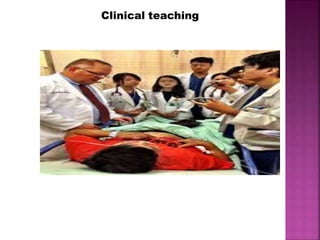
Clinical teaching
In preparation of professional practice, the clinical setting
is the place where the students come in contact with patient
or consumer for the purpose of testing theories and
learning skill
Introduction
“Clinical teaching is an individualized or group teaching to the nursing student in the
clinical area by the nurse educators, staff and clinical nurse manager."
“ Clinical teaching is vehicle that provides students with opportunity to translate
basic theoretical knowledge into learning of variety of intellectual and psychomotor
skills needed to provide patient – centered quality nursing care.”
- Schweer
• Teaching in clinical setting is a challenge that is different from those
encountered in the class room
• Like any other skill based profession, nursing also requires the
development of relationship between theory and practice
4.Toprovide individualized care in a systematic, holistic approach
5.To develop high technical competent skills
6.Topractice various procedure
7.Tocollect and analyze the data
1.Todevelop communication skills and maintain interpersonal relationship
2.Tomaintain high standard of nursing practice to become independent enough
to practice nursing
3.Todevelop, cognitive, affective and psychomotor skills
8. To learn various diagnostic procedures
9. To learn various skill in giving health
education technique to the client
10.To develop proficiency and efficiency in
carrying out various procedure
• Clinical education should reflect the nature
of professional practice
• Clinical teaching is supported by
climate of mutual trust and respect
• Clinical teaching and learning should
focus on essential knowledge, skill and
attitude
• Must be appropriate to objectives and
desired behavioral changes.
• Must be in accordance with principles of
learning.
• Must be in accordance with the capacity of the
student.
• Must be in accordance with availability of
resources.
• Must be in accordance with the teacher’s
ability to use it effectively and creatively.
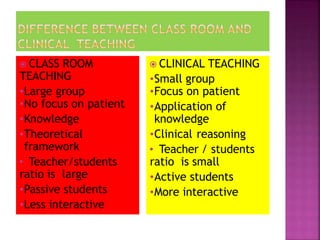
 CLASS ROOM
TEACHING
•Large group
•No focus on patient
•Knowledge
•Theoretical
framework
• Teacher/students
ratio is large
•Passive students
•Less interactive
 CLINICAL TEACHING
•Small group
•Focus on patient
•Application of
knowledge
•Clinical reasoning
• Teacher / students
ratio is small
•Active students
•More interactive
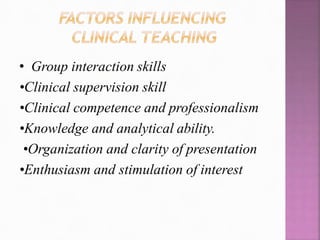
• Group interaction skills
•Clinical supervision skill
•Clinical competence and professionalism
•Knowledge and analytical ability.
•Organization and clarity of presentation
•Enthusiasm and stimulation of interest
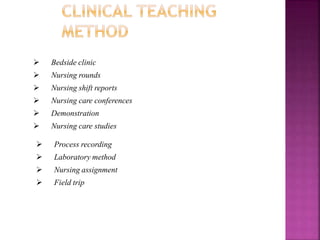
 Bedside clinic
 Nursing rounds
 Nursing shift reports
 Nursing care conferences
 Demonstration
 Nursing care studies
 Process recording
 Laboratory method
 Nursing assignment
 Field trip
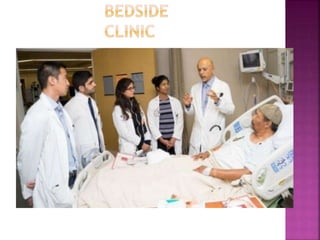
It is a method of clinical teaching which is carried
out by either the group visits the patient or the
patient is brought to the conference room in order
to study problems associated with a particular
disease or disorder
• Always ensure the presence of the patient.
• Patients with typical diseases are selected.
• To show the sign and symptoms related to a
particular condition
• To demonstrate a significant nursing situation
• To show how nursing problem have been
solved
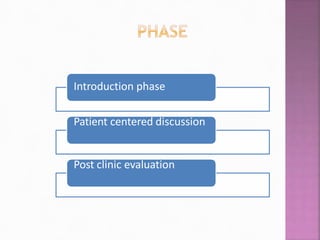
Introduction phase
Patient centered discussion
Post clinic evaluation
• It puts the student in an active actual situation
• Develop skills in collecting information from
authentic source
• Develop tactfulness diplomacy needed to get
information from the patient
• Develop skills in problem solving, decision
making an organizing
• Permits comparison between reality and theory
• Sometimes put patient in a difficult situation
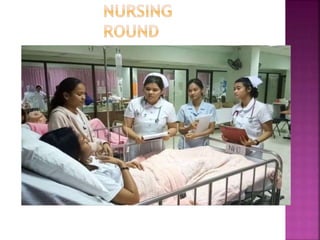
 A tour of patient’s bedside area made by a
small group of staff and students, not more
than 7 or
 8 for the purpose of clinical
learning and instructional
purpose
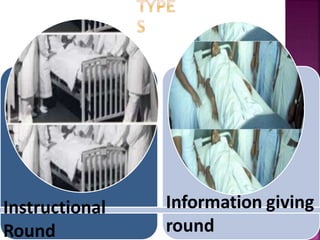
Instructional
Round
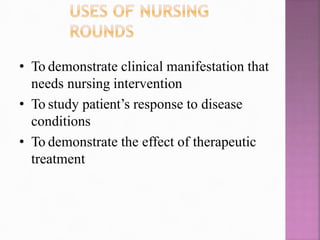
Information giving
round
• To demonstrate clinical manifestation that
needs nursing intervention
• To study patient’s response to disease
conditions
• To demonstrate the effect of therapeutic
treatment
• To illustrate skillful nursing care
• To have better understanding of patient’ s
needs in order to provide better care to patient
• Puts the students in actual live situation where
patient responds and acts as a stimulus variable
• Students have options to select specific case or
problem that interest them and plan proper
nursing care
• It provides opportunity to reinforce the
theoretical knowledge through its application
in a real patient
• Increases learning ability
• Only applicable for small group of students
• Require careful planning
Clinical teaching methods

Clinical teaching methods

  • 1.
  • 2.
  • 3.
    In preparation ofprofessional practice, the clinical setting is the place where the students come in contact with patient or consumer for the purpose of testing theories and learning skill Introduction
  • 4.
    “Clinical teaching isan individualized or group teaching to the nursing student in the clinical area by the nurse educators, staff and clinical nurse manager." “ Clinical teaching is vehicle that provides students with opportunity to translate basic theoretical knowledge into learning of variety of intellectual and psychomotor skills needed to provide patient – centered quality nursing care.” - Schweer
  • 5.
    • Teaching inclinical setting is a challenge that is different from those encountered in the class room • Like any other skill based profession, nursing also requires the development of relationship between theory and practice
  • 6.
    4.Toprovide individualized carein a systematic, holistic approach 5.To develop high technical competent skills 6.Topractice various procedure 7.Tocollect and analyze the data 1.Todevelop communication skills and maintain interpersonal relationship 2.Tomaintain high standard of nursing practice to become independent enough to practice nursing 3.Todevelop, cognitive, affective and psychomotor skills
  • 7.
    8. To learnvarious diagnostic procedures 9. To learn various skill in giving health education technique to the client 10.To develop proficiency and efficiency in carrying out various procedure
  • 8.
    • Clinical educationshould reflect the nature of professional practice • Clinical teaching is supported by climate of mutual trust and respect • Clinical teaching and learning should focus on essential knowledge, skill and attitude
  • 9.
    • Must beappropriate to objectives and desired behavioral changes. • Must be in accordance with principles of learning. • Must be in accordance with the capacity of the student.
  • 10.
    • Must bein accordance with availability of resources. • Must be in accordance with the teacher’s ability to use it effectively and creatively.
  • 11.
     CLASS ROOM TEACHING •Largegroup •No focus on patient •Knowledge •Theoretical framework • Teacher/students ratio is large •Passive students •Less interactive  CLINICAL TEACHING •Small group •Focus on patient •Application of knowledge •Clinical reasoning • Teacher / students ratio is small •Active students •More interactive
  • 12.
    • Group interactionskills •Clinical supervision skill •Clinical competence and professionalism •Knowledge and analytical ability. •Organization and clarity of presentation •Enthusiasm and stimulation of interest
  • 13.
     Bedside clinic Nursing rounds  Nursing shift reports  Nursing care conferences  Demonstration  Nursing care studies  Process recording  Laboratory method  Nursing assignment  Field trip
  • 15.
    It is amethod of clinical teaching which is carried out by either the group visits the patient or the patient is brought to the conference room in order to study problems associated with a particular disease or disorder • Always ensure the presence of the patient. • Patients with typical diseases are selected.
  • 16.
    • To showthe sign and symptoms related to a particular condition • To demonstrate a significant nursing situation • To show how nursing problem have been solved
  • 17.
    Introduction phase Patient centereddiscussion Post clinic evaluation
  • 18.
    • It putsthe student in an active actual situation • Develop skills in collecting information from authentic source • Develop tactfulness diplomacy needed to get information from the patient • Develop skills in problem solving, decision making an organizing • Permits comparison between reality and theory
  • 19.
    • Sometimes putpatient in a difficult situation
  • 21.
     A tourof patient’s bedside area made by a small group of staff and students, not more than 7 or  8 for the purpose of clinical learning and instructional purpose
  • 22.
  • 23.
    • To demonstrateclinical manifestation that needs nursing intervention • To study patient’s response to disease conditions • To demonstrate the effect of therapeutic treatment
  • 24.
    • To illustrateskillful nursing care • To have better understanding of patient’ s needs in order to provide better care to patient
  • 25.
    • Puts thestudents in actual live situation where patient responds and acts as a stimulus variable • Students have options to select specific case or problem that interest them and plan proper nursing care
  • 26.
    • It providesopportunity to reinforce the theoretical knowledge through its application in a real patient • Increases learning ability
  • 27.
    • Only applicablefor small group of students • Require careful planning