Strongyloides stercoralis
Habitat: females live in the superficial tissues of the small intestine (duodenum and
jejunum)
Definitive host: Human, dogs and cats
Route of infection: Filariform larvae penetrate the skin of human.
Infective stage: Third stage larvae ( filariform).
Diagnostic stage: First stage larvae(Rhabditiform) in feces.
Geographical distribution: - cosmopolitan parasite, mainly in moist and warm
areas of low hygiene
Morphology
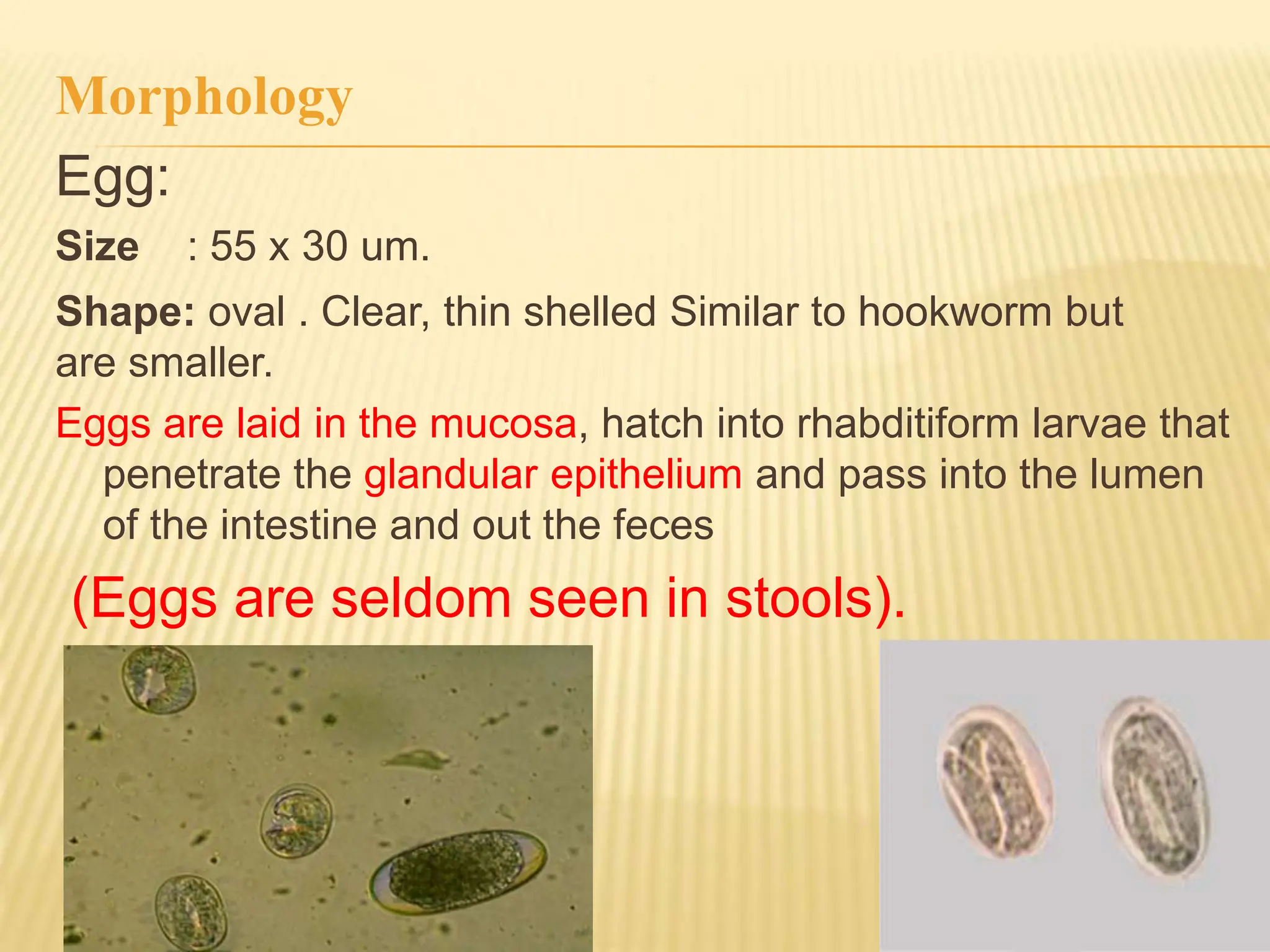
Egg:
Size : 55 x 30 um.
Shape: oval . Clear, thin shelled Similar to hookworm but
are smaller.
Eggs are laid in the mucosa, hatch into rhabditiform larvae that
penetrate the glandular epithelium and pass into the lumen
of the intestine and out the feces
(Eggs are seldom seen in stools).
MORPHOLOGY
Adult:
Male (parasitic or free-living):
- 0.7 mm in length
- Rhabditiform oesophagus
- Posterior end curved ventrally with Spicules
Parasitic female:
- 2.2 mm in length
- Cylindrical oesophagus (1/3 body length)
- Posterior end straight
Free living female:
- 1 mm in length
- rhabditiform oesophagus
- posterior end straight
Morphology of Strongyloides stercoralis
a) parasitic female
b) free-living male
c) free-living female
• Since the parasitic females live in the superficial tissues of the small intestine, and can
be present in high numbers, they can cause significant pathology.
Rhabditiform larvae
 220 x 15 um.
 Short buccal cavity.
 Diagnostic stage
 appear in stools within 4weeks of infection.
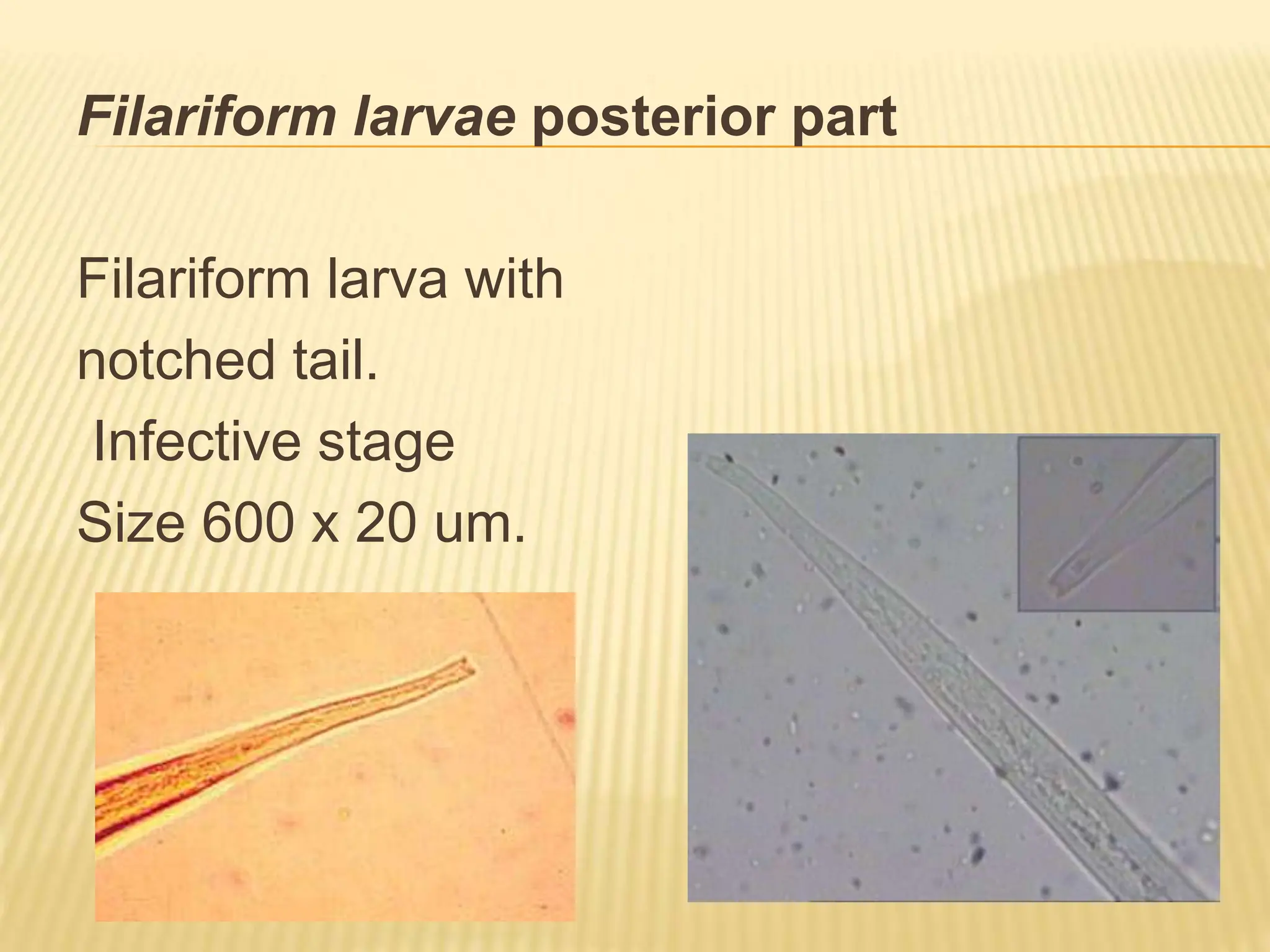
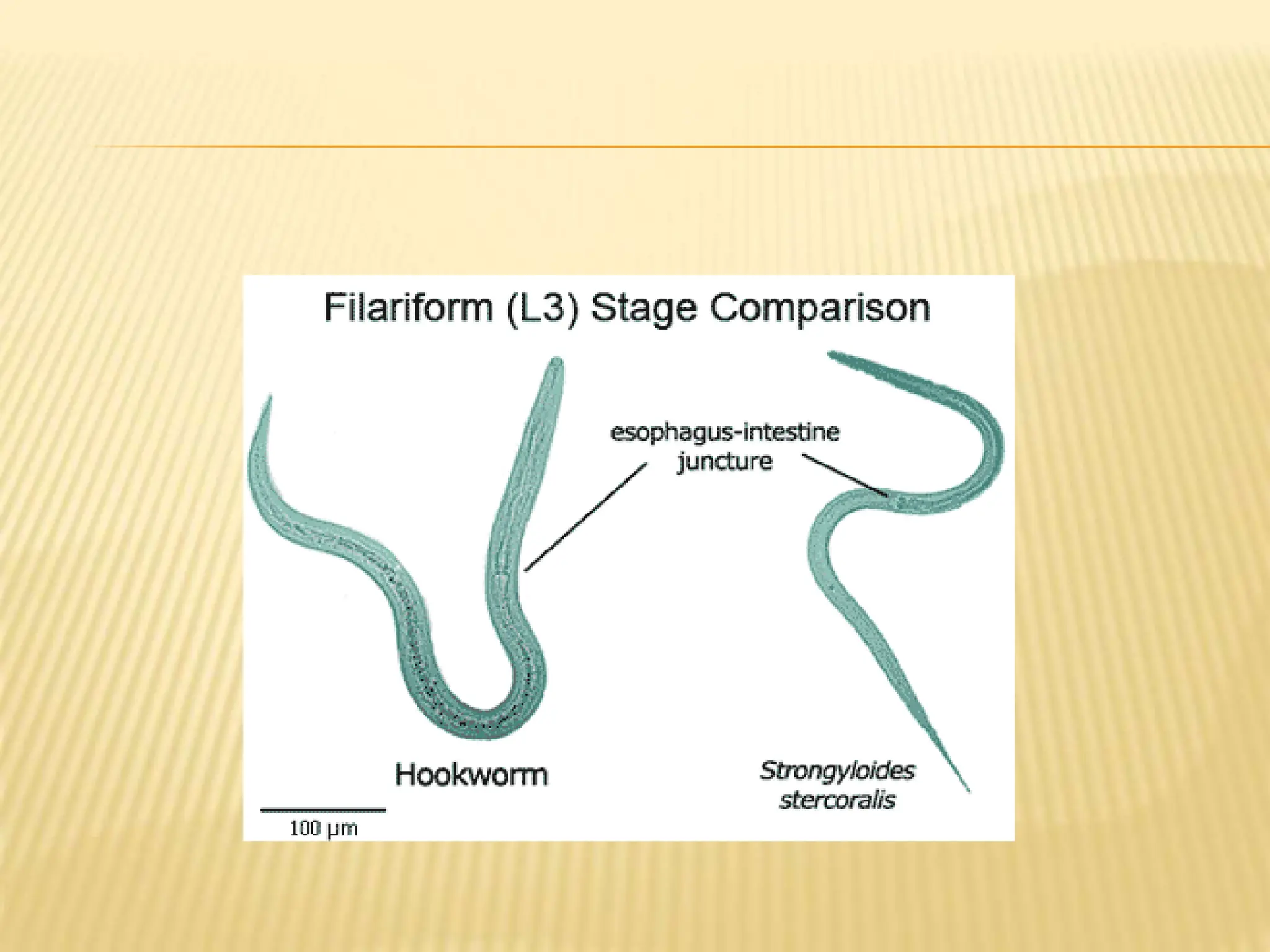
Filariform larvae posterior part
Filariform larva with
notched tail.
Infective stage
Size 600 x 20 um.
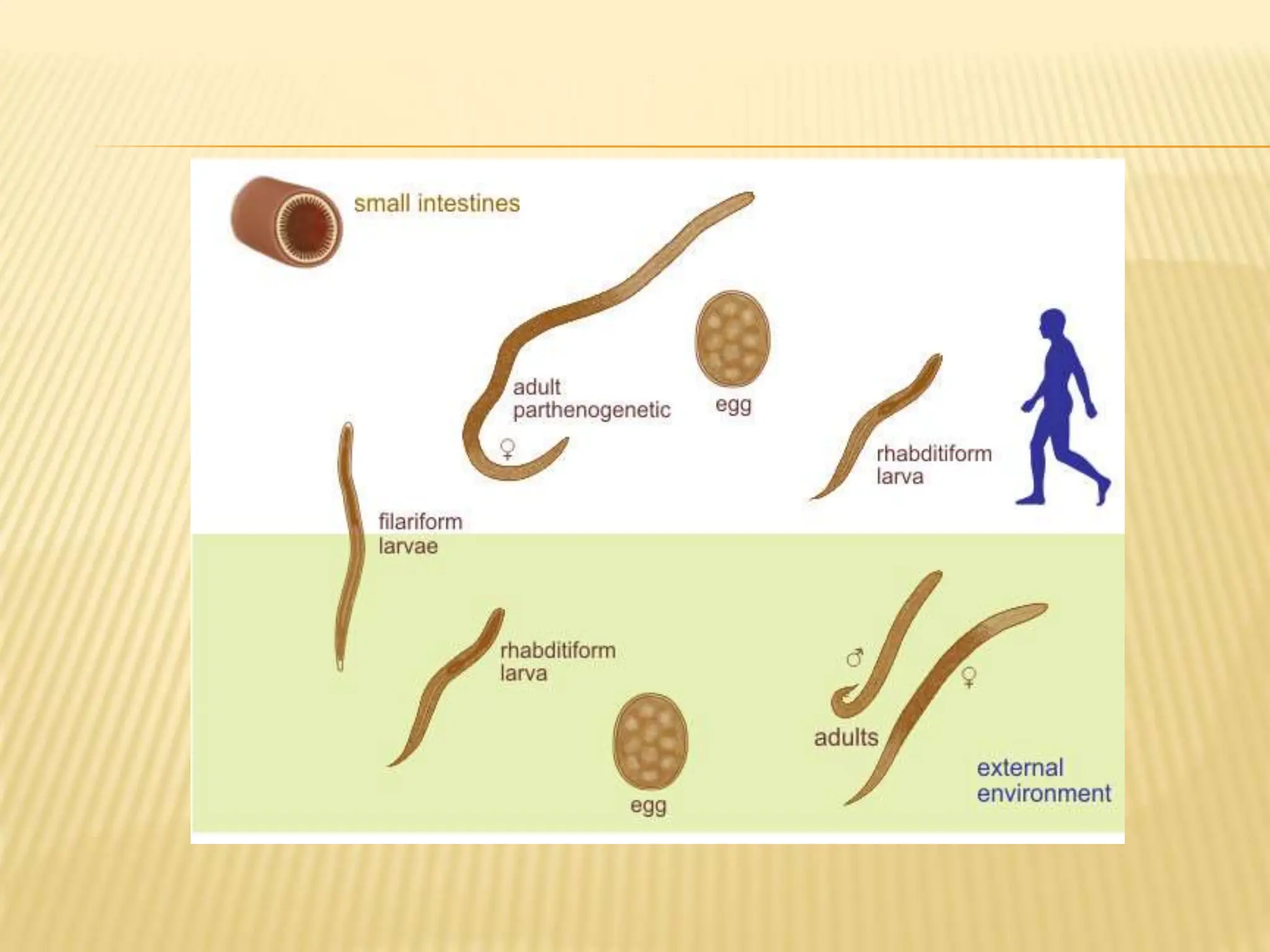
Life Cycle:
Free-living cycle
Parasitic cycle: In the parasitic stage, no
male form of this organism has been reliably
identified, and the female reproduce in a
parthinogenitic manner.
Life Cycle
1. Free-living Phase
• Free living S. stercoralis dwell in moist soil in warm climates
• Copulation occurs in soil; sperm penetration merely activates the oocyte to
develop parthenogenetically with no contribution to the genetic material of the
developing embryo
• Following oviposition, eggs hatch in the soil and give rise to 1st stage
rhabditiform larvae
• These feed on organic debris, go through several molts and become sexually
mature adults
• This free-living heterogonic life cycle may continue indefinitely
• However, if the environment becomes inhospitable, the rhabditform larvae
molts to become a nonfeeding filariform larva - the form infective to humans
Life cycle
of
S. stercoralis
Life Cycle cont.
2. Parasitic Phase
• When filariform larvae encounter a human or another suitable host (e.g. cats and dogs),
they penetrate the skin and are carried by cutaneous veins to the vena cava
• They enter the right side of the heart and are carried to the lungs via the pulmonary
artery
• In the lungs, following a 3rd molt, the larvae rupture from the pulmonary capillaries and
enter the alveoli
• From the alveoli, the larvae move up the respiratory tree to the epiglottis
• Abetted by coughing and subsequent swallowing by the host, they migrate over the
epiglottis to the esophagus and down into the small intestine, where they undergo a final
molt and become sexually mature females
Parasitic Phase cont.
• Females produce embryonated eggs parhenogenetically
• These eggs hatch in the mucosa into 1st stage rhabditiform larvae
• These exit the intestine with the feces, feeding down the length of
the intestine
• Larvae become established in the soil, undergo several molts and
become free-living adults
• Under adverse conditions they can revert to being filariform larvae
3. Autoinfection
• During passage through the host digestive system, rhabditiform
larvae may undergo 2 molts to filariform larvae and by penetrating
the intestinal mucosa, enter the circulatory system and continue
their parasitic lives without leaving the host
•Autoinfection can also occur when larvae remain on and penetrate
the perianal skin.
• Autoinfection often leads to very high worm burdens in humans
Clinical Aspects:
•Cutaneous reaction due to skin penetration “ ground itch
•Pulmonary symptoms (including Loeffler’s syndrome) can occur during
pulmonary migration of the filariform larvae.
•Gastrointestinal symptoms include abdominal pain, vomiting, diarrhea,
weight loss, malabsorption,.
•Dermatologic manifestations include urticarial rashes in the buttocks and
waist areas (larva migrans).
•Autoinfection within the human host can lead to the (Hyperinfection
Syndrome) or disseminated strongyloidiasis occurs in
immunosuppressed patients,
neurologic(CNS), heart, lung , liver
complications and septicemia.
This syndrome is potentially fatal.
Laboratory Diagnosis
 Direct stool smears (larvae)
 Cultivation of stool. (Damp charcoal or Harada-Mori
mediums).
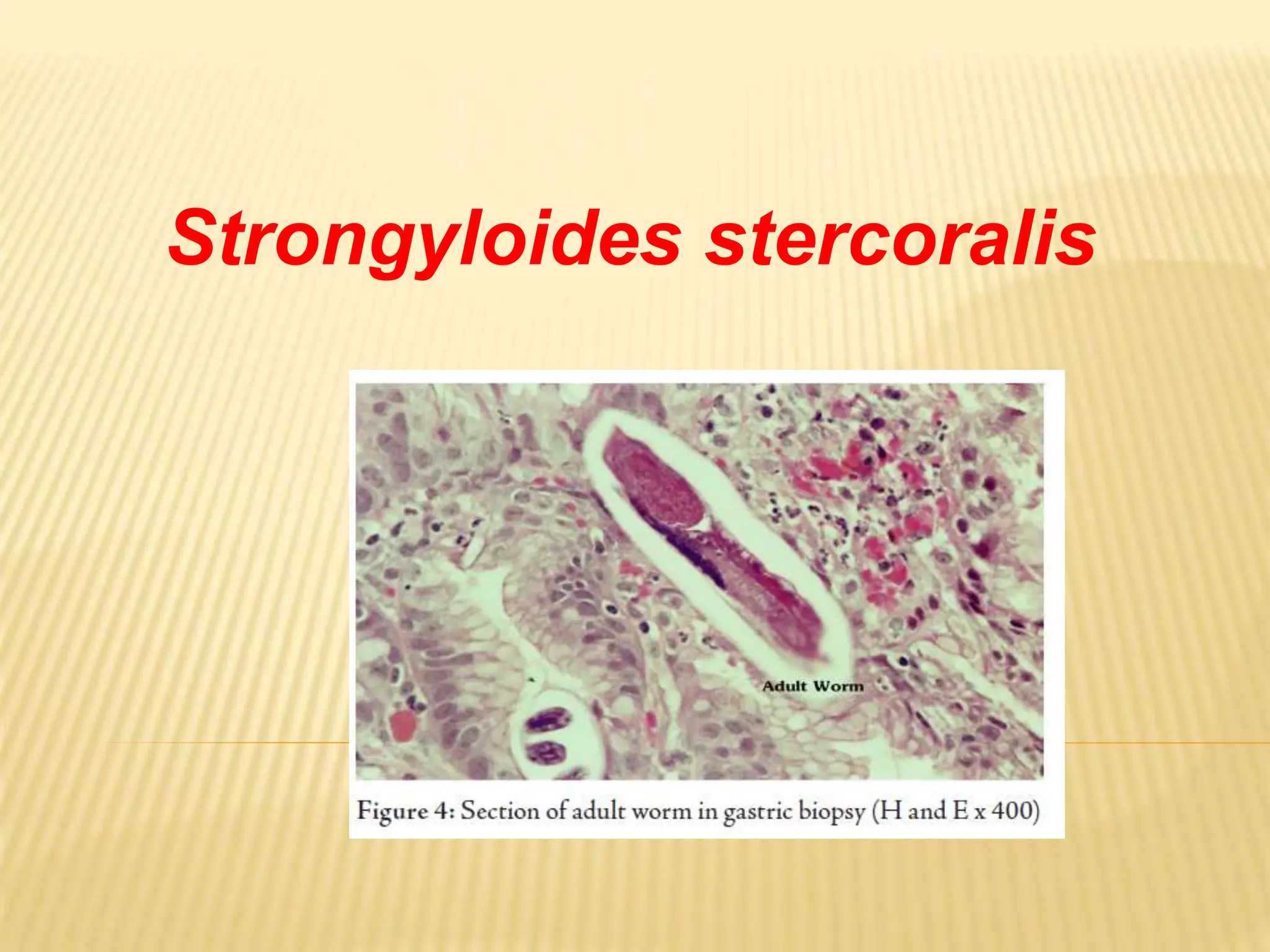
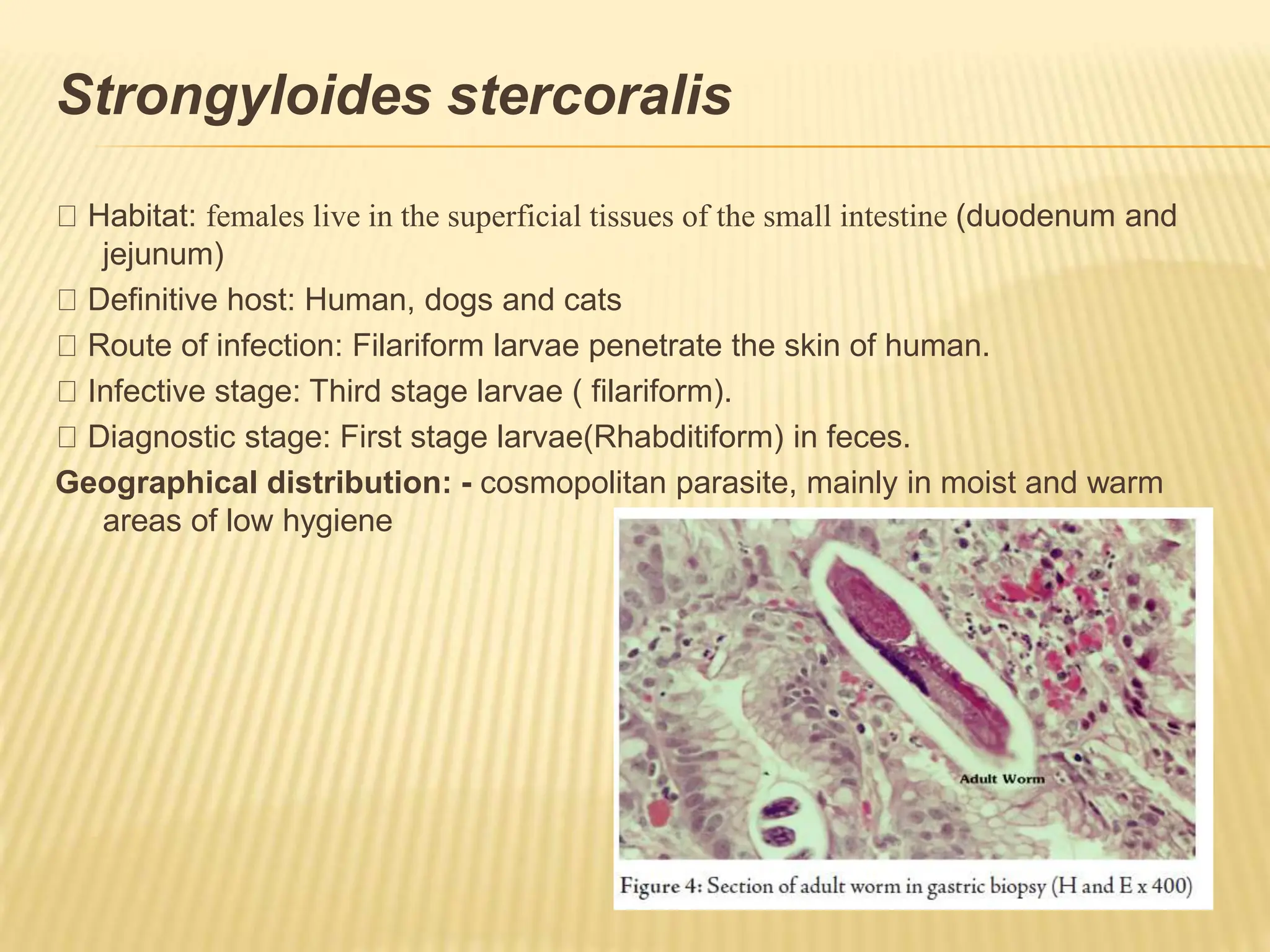
 Histological examination of duodenal or jejunal biopsy
specimens obtained by endoscopy can demonstrate adult
worms embedded in the mucosa.
 Eosinophilia, is present in uncomplicated strongyloidiasis,
but is lost in hyper infection
 For population screening in endemic areas, an ELISA for
IgG anfi-Strongyloides antibodies is effective.

nausea, cramping, abdominal pain,
distension, and watery diarrhea.

Powerpoint strongyloides stercoralis.ppt

  • 1.
  • 2.
    Strongyloides stercoralis Habitat: femaleslive in the superficial tissues of the small intestine (duodenum and jejunum) Definitive host: Human, dogs and cats Route of infection: Filariform larvae penetrate the skin of human. Infective stage: Third stage larvae ( filariform). Diagnostic stage: First stage larvae(Rhabditiform) in feces. Geographical distribution: - cosmopolitan parasite, mainly in moist and warm areas of low hygiene
  • 3.
    Morphology Egg: Size : 55x 30 um. Shape: oval . Clear, thin shelled Similar to hookworm but are smaller. Eggs are laid in the mucosa, hatch into rhabditiform larvae that penetrate the glandular epithelium and pass into the lumen of the intestine and out the feces (Eggs are seldom seen in stools).
  • 5.
    MORPHOLOGY Adult: Male (parasitic orfree-living): - 0.7 mm in length - Rhabditiform oesophagus - Posterior end curved ventrally with Spicules
  • 6.
    Parasitic female: - 2.2mm in length - Cylindrical oesophagus (1/3 body length) - Posterior end straight Free living female: - 1 mm in length - rhabditiform oesophagus - posterior end straight
  • 7.
    Morphology of Strongyloidesstercoralis a) parasitic female b) free-living male c) free-living female
  • 8.
    • Since theparasitic females live in the superficial tissues of the small intestine, and can be present in high numbers, they can cause significant pathology.
  • 10.
    Rhabditiform larvae  220x 15 um.  Short buccal cavity.  Diagnostic stage  appear in stools within 4weeks of infection.
  • 11.
    Filariform larvae posteriorpart Filariform larva with notched tail. Infective stage Size 600 x 20 um.
  • 13.
    Life Cycle: Free-living cycle Parasiticcycle: In the parasitic stage, no male form of this organism has been reliably identified, and the female reproduce in a parthinogenitic manner.
  • 14.
    Life Cycle 1. Free-livingPhase • Free living S. stercoralis dwell in moist soil in warm climates • Copulation occurs in soil; sperm penetration merely activates the oocyte to develop parthenogenetically with no contribution to the genetic material of the developing embryo • Following oviposition, eggs hatch in the soil and give rise to 1st stage rhabditiform larvae • These feed on organic debris, go through several molts and become sexually mature adults • This free-living heterogonic life cycle may continue indefinitely • However, if the environment becomes inhospitable, the rhabditform larvae molts to become a nonfeeding filariform larva - the form infective to humans
  • 15.
  • 17.
    Life Cycle cont. 2.Parasitic Phase • When filariform larvae encounter a human or another suitable host (e.g. cats and dogs), they penetrate the skin and are carried by cutaneous veins to the vena cava • They enter the right side of the heart and are carried to the lungs via the pulmonary artery • In the lungs, following a 3rd molt, the larvae rupture from the pulmonary capillaries and enter the alveoli • From the alveoli, the larvae move up the respiratory tree to the epiglottis • Abetted by coughing and subsequent swallowing by the host, they migrate over the epiglottis to the esophagus and down into the small intestine, where they undergo a final molt and become sexually mature females
  • 18.
    Parasitic Phase cont. •Females produce embryonated eggs parhenogenetically • These eggs hatch in the mucosa into 1st stage rhabditiform larvae • These exit the intestine with the feces, feeding down the length of the intestine • Larvae become established in the soil, undergo several molts and become free-living adults • Under adverse conditions they can revert to being filariform larvae
  • 19.
    3. Autoinfection • Duringpassage through the host digestive system, rhabditiform larvae may undergo 2 molts to filariform larvae and by penetrating the intestinal mucosa, enter the circulatory system and continue their parasitic lives without leaving the host •Autoinfection can also occur when larvae remain on and penetrate the perianal skin. • Autoinfection often leads to very high worm burdens in humans
  • 20.
    Clinical Aspects: •Cutaneous reactiondue to skin penetration “ ground itch •Pulmonary symptoms (including Loeffler’s syndrome) can occur during pulmonary migration of the filariform larvae. •Gastrointestinal symptoms include abdominal pain, vomiting, diarrhea, weight loss, malabsorption,. •Dermatologic manifestations include urticarial rashes in the buttocks and waist areas (larva migrans). •Autoinfection within the human host can lead to the (Hyperinfection Syndrome) or disseminated strongyloidiasis occurs in immunosuppressed patients, neurologic(CNS), heart, lung , liver complications and septicemia. This syndrome is potentially fatal.
  • 22.
    Laboratory Diagnosis  Directstool smears (larvae)  Cultivation of stool. (Damp charcoal or Harada-Mori mediums).  Histological examination of duodenal or jejunal biopsy specimens obtained by endoscopy can demonstrate adult worms embedded in the mucosa.  Eosinophilia, is present in uncomplicated strongyloidiasis, but is lost in hyper infection  For population screening in endemic areas, an ELISA for IgG anfi-Strongyloides antibodies is effective.
  • 30.
     nausea, cramping, abdominalpain, distension, and watery diarrhea.