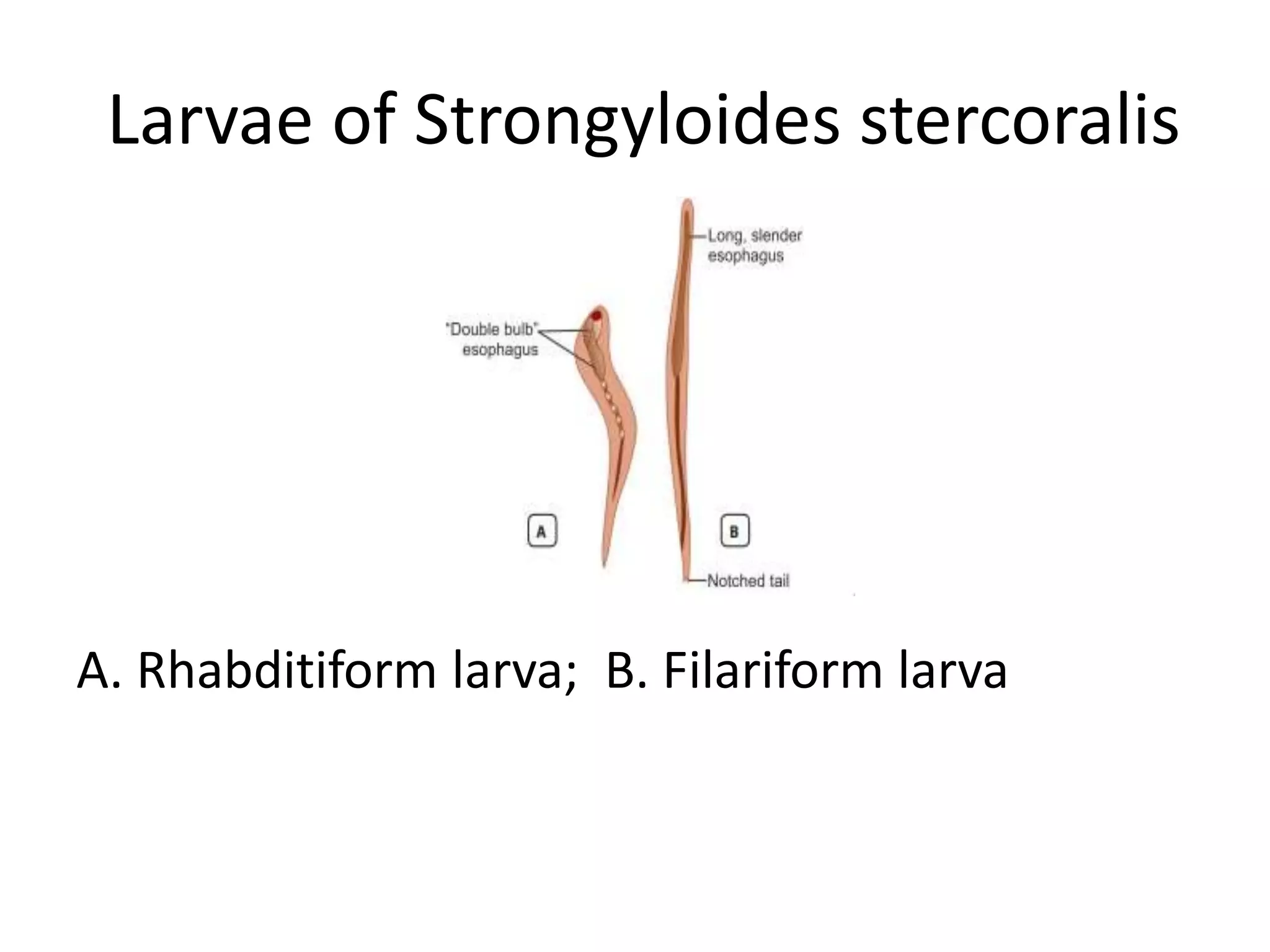
This document summarizes the key characteristics of Strongyloides stercoralis, including its morphology, life cycle, pathogenicity, clinical manifestations, diagnosis and treatment. It is a parasitic nematode commonly found in warm, moist tropical regions. The adult worms inhabit the small intestine and larvae can disseminate throughout the body. It has a complex life cycle involving both free-living and parasitic stages that allows it to persist long-term in human hosts through autoinfection. While often asymptomatic, it can cause skin, pulmonary or intestinal symptoms and severe disseminated infection in immunocompromised individuals. Diagnosis involves microscopic identification of larvae in stool or biopsy samples. Treatment involves antihelminthics like ivermect




![Trypanosoma [1]](https://cdn.slidesharecdn.com/ss_thumbnails/trypanosomaseminar1-170312074241-thumbnail.jpg?width=640&height=640&fit=bounds)


