
M. TechM. Tech
ThesisThesis
OnOn
POWER SYSTEM STABILITY ENHANCEMENT BY SIMULTANEOUS
AC-DC POWER TRANSMISSION
Submitted By:
ABHISHEK
CHATURVEDI
ID No. : 11MTEEEPS019
Advisor:
Er. Vinay Kumar Tripathi
(Asst. Professor)
Department of Electrical and Electronics Engineering
Shepherd School of Engineering and Technology
Sam Higginbottom Institute of Agriculture, Technology and
Sciences
(Deemed-To-Be-University)
Allahabad-211007, Uttar Pradesh
INTRODUCTION
ď‚§ The concept of simultaneous ac-dc power transmission.Long
extra high voltage (EHV) ac lines cannot be loaded to their
thermal limits due to this instability occurs in the power
system
ď‚§ It is possible to load these lines very close to their thermal
limits.
ď‚§ The conductors are allowed to carry usual ac along dc
superimposed on it.
ď‚§The advantage of parallel ac-dc transmission for
improvement of transient stability and dynamic stability and
damp out oscillations have been established.
ď‚§Simulation study is carried out in MATLAB software
package. The results shows the stability of power system
when compared with only ac transmission.
OBJECTIVE OF THE THESIS
ď‚§To emphasize the possibility of simultaneous ac-dc
transmission with its inherent advantage of power flow control
improves stability and damps out oscillations in power system.
ď‚§To achieve the advantages of parallel ac-dc transmission in
some specific applications LV (low voltage) and MV (Medium
voltage) system.
METHODS
AND
METHODOLOGY
ď‚§Using flexible ac transmission system (FACTS) components .
ď‚§Very fast control of SCRs in FACTS devices like state VAR
system (SVS), controlled series capacitor (CSC), static phase
shiftier (SPS) and controlled braking resistors oscillations as
well as to control the voltage profile of the line by controlling
the total reactive power flow.
ď‚§The flexible ac transmission system (FACTS) concepts, based
on applying state-of-the-art power electronic technology to
existing ac transmission system, improve stability to achieve
power transmission close to its thermal limit.
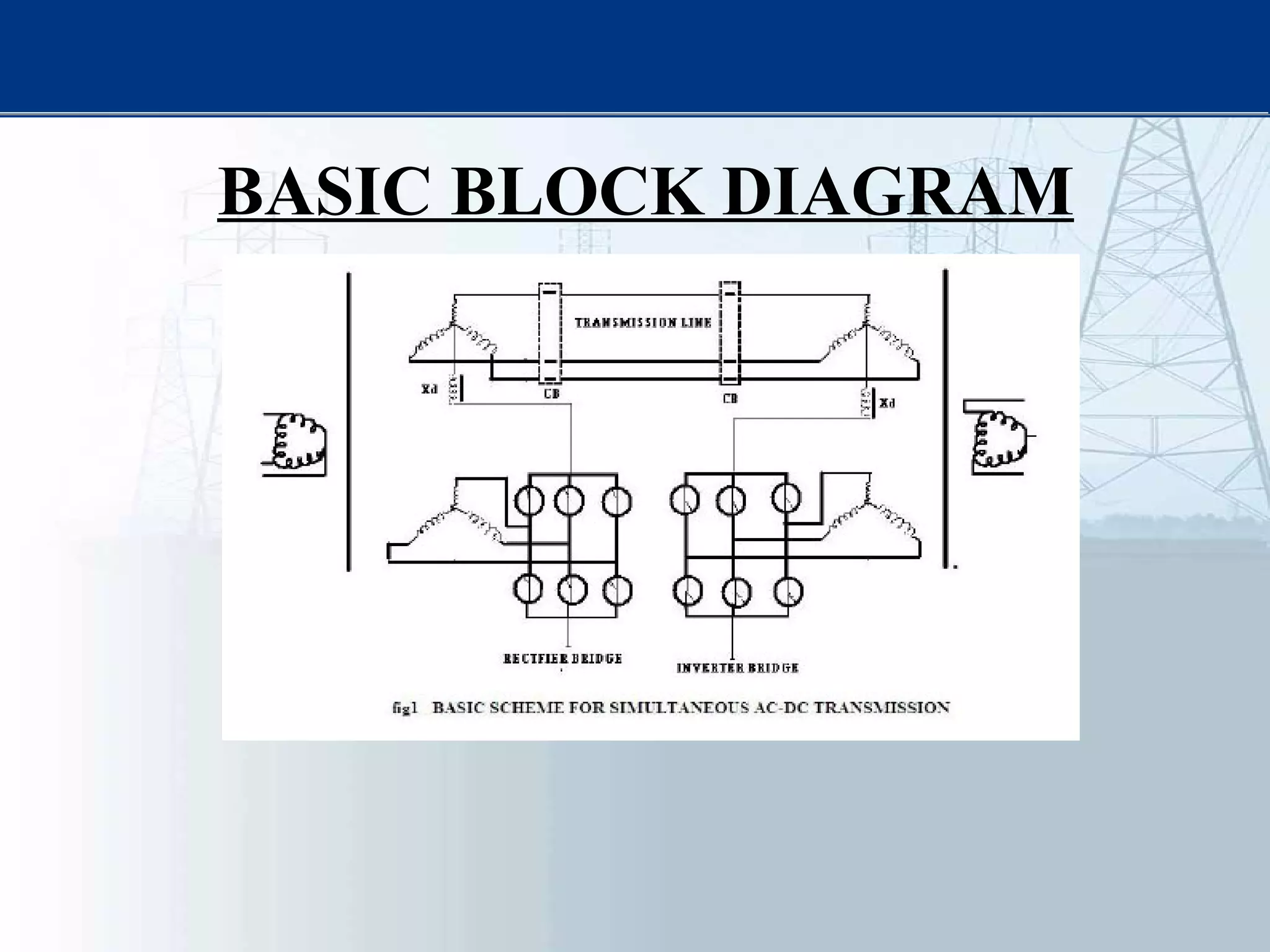
BASIC BLOCK DIAGRAM
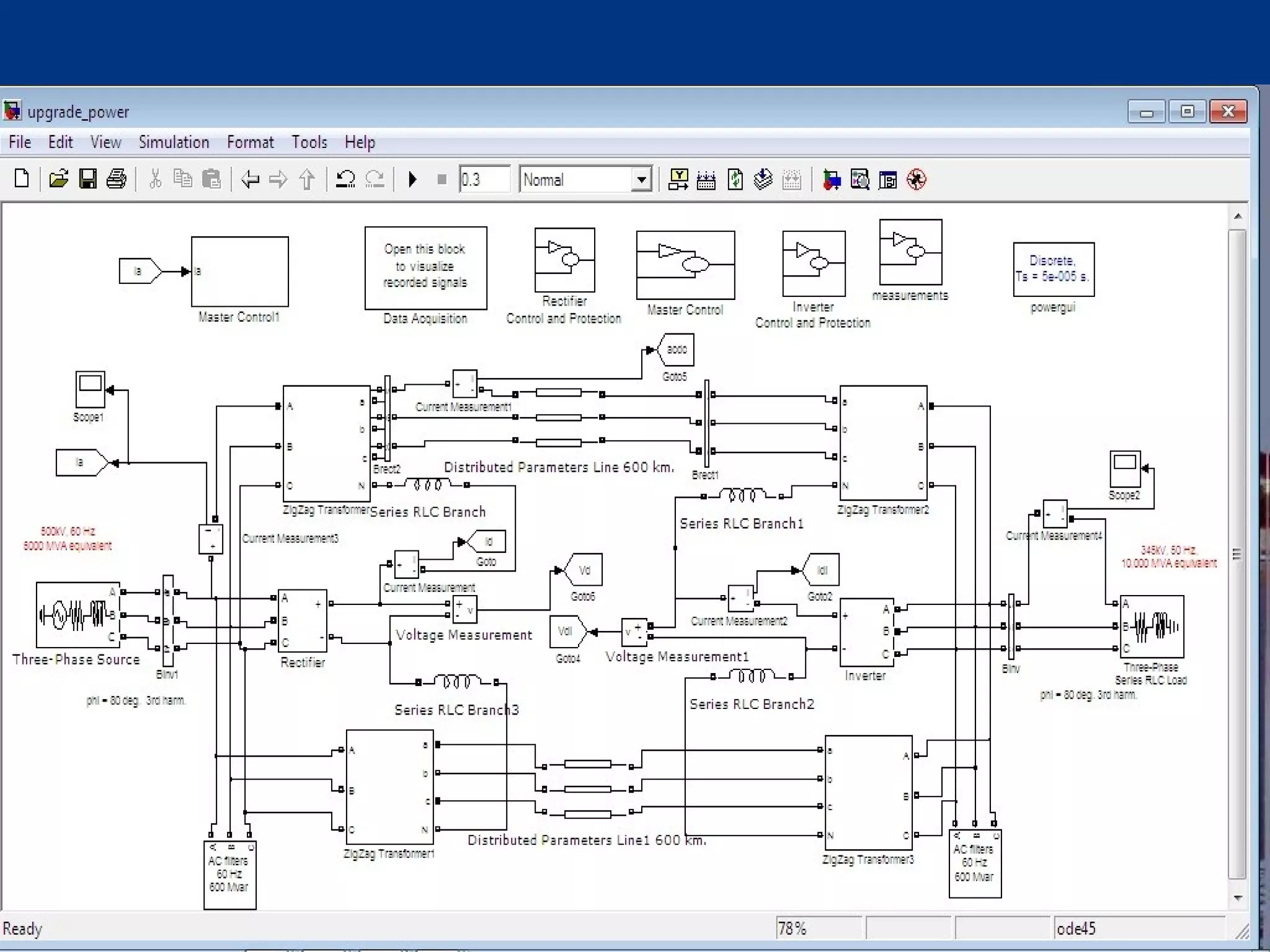
ď‚§ Simulation Model
 Result’s and Discussion
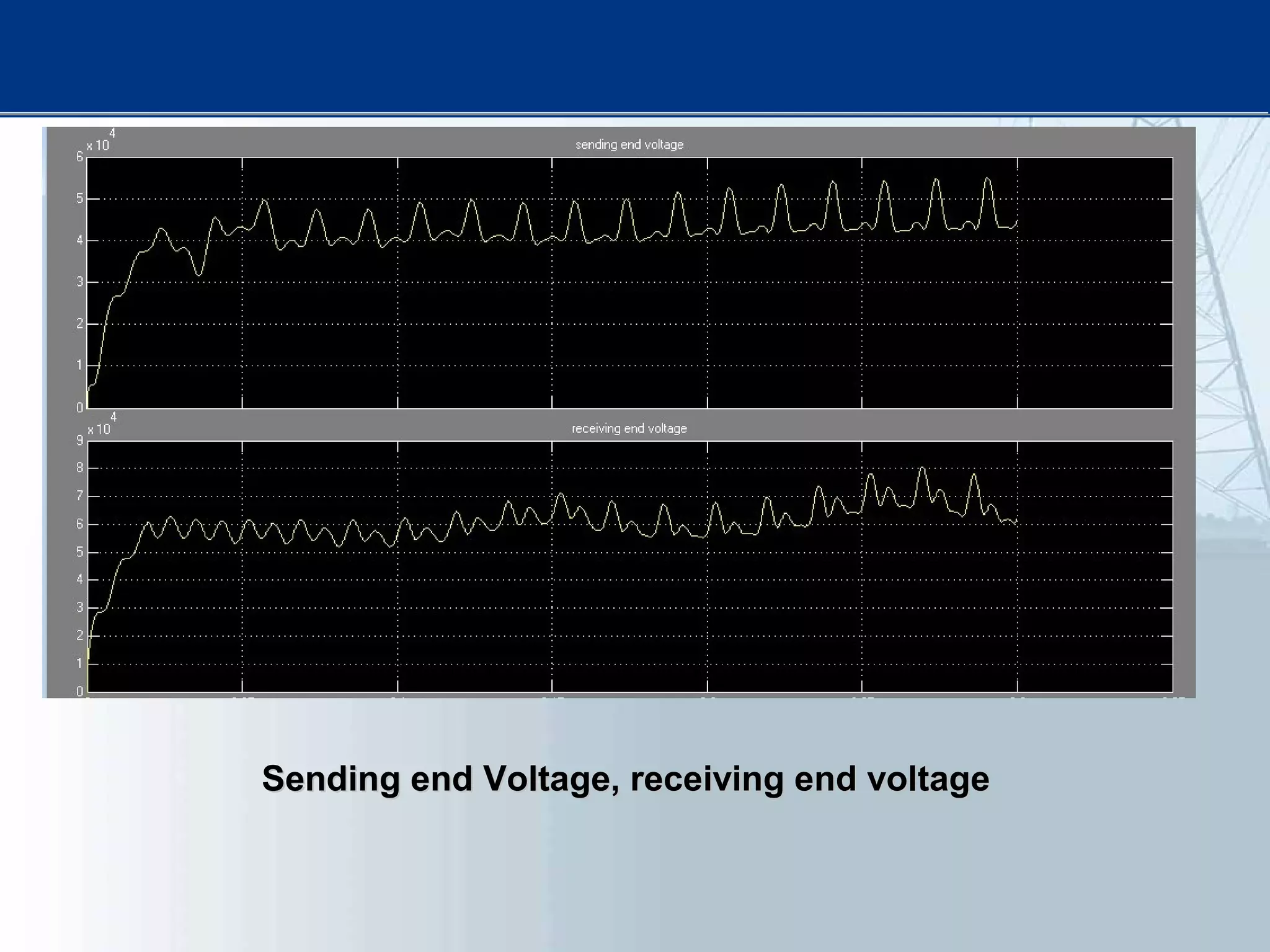
Sending end Voltage, receiving end voltageSending end Voltage, receiving end voltage
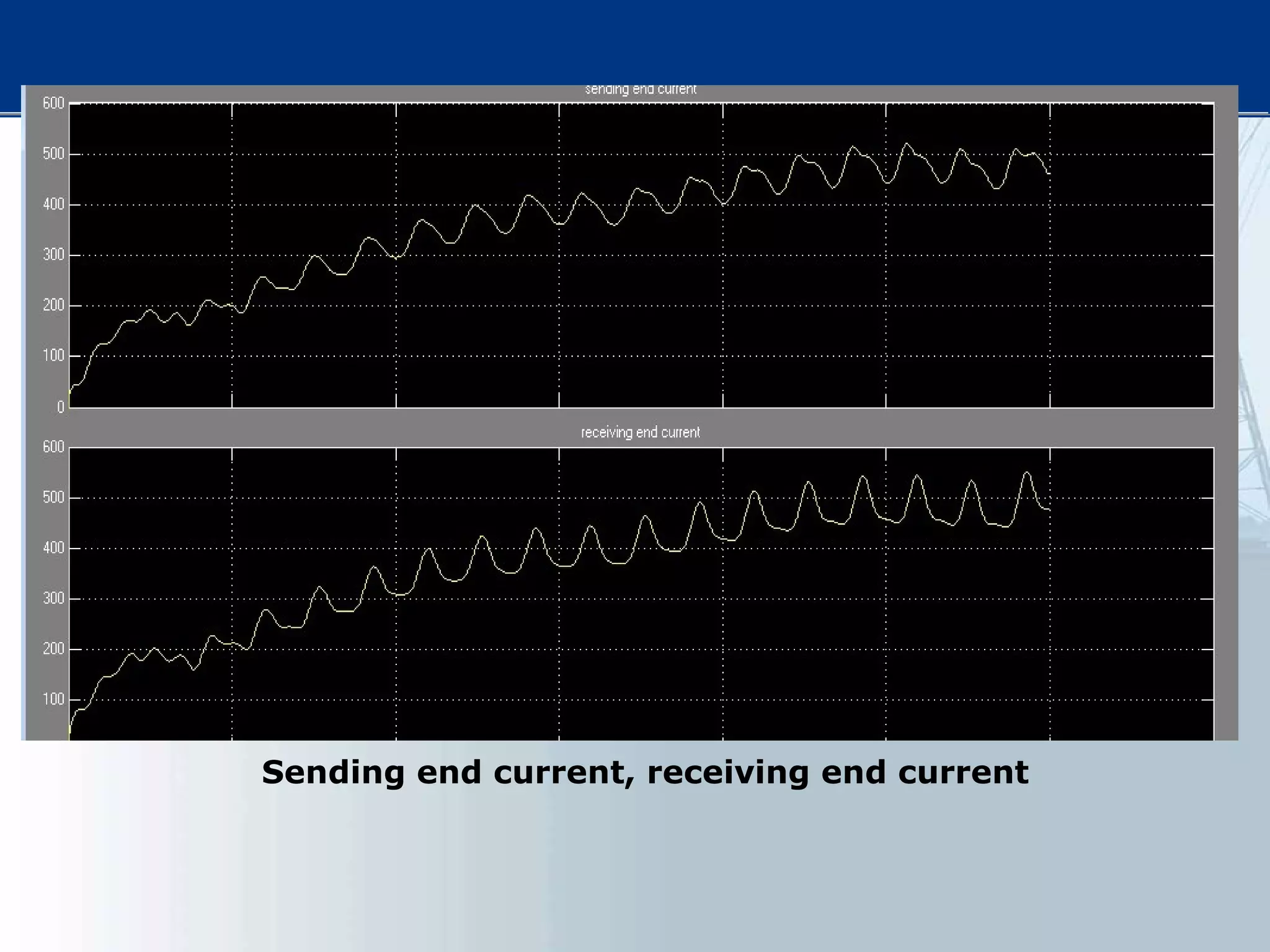
Sending end current, receiving end current
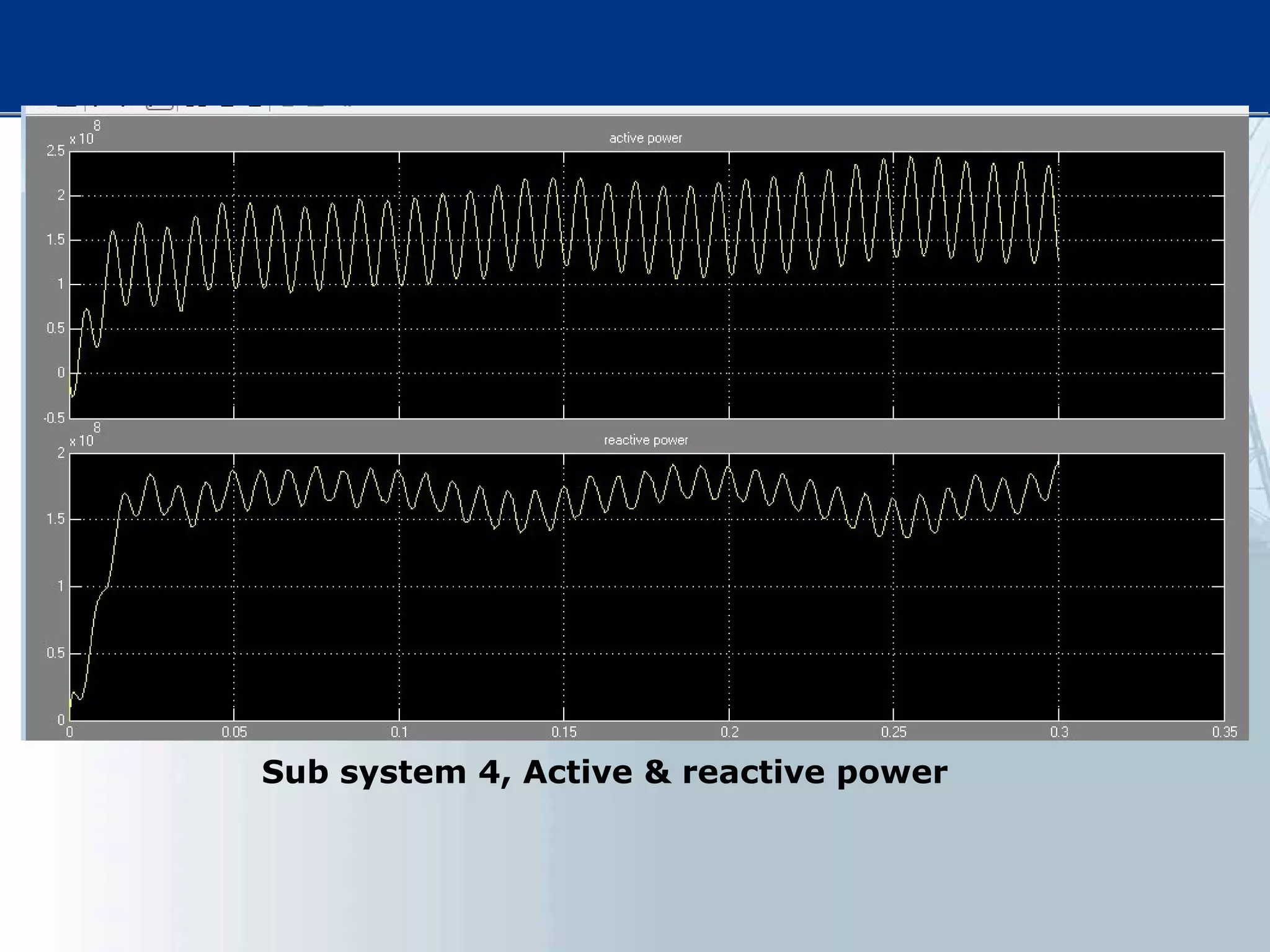
Sub system 4, Active & reactive power
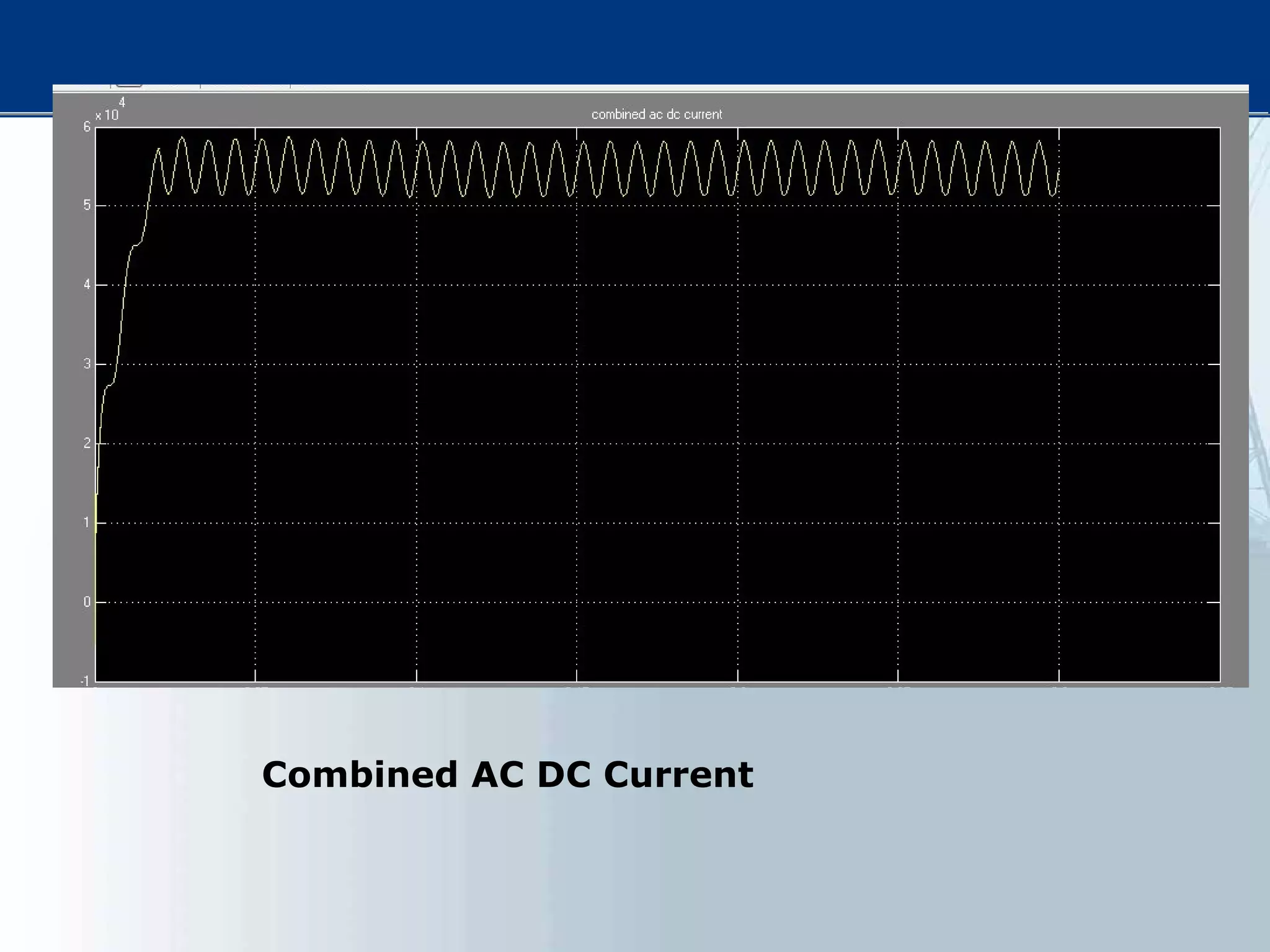
Combined AC DC Current
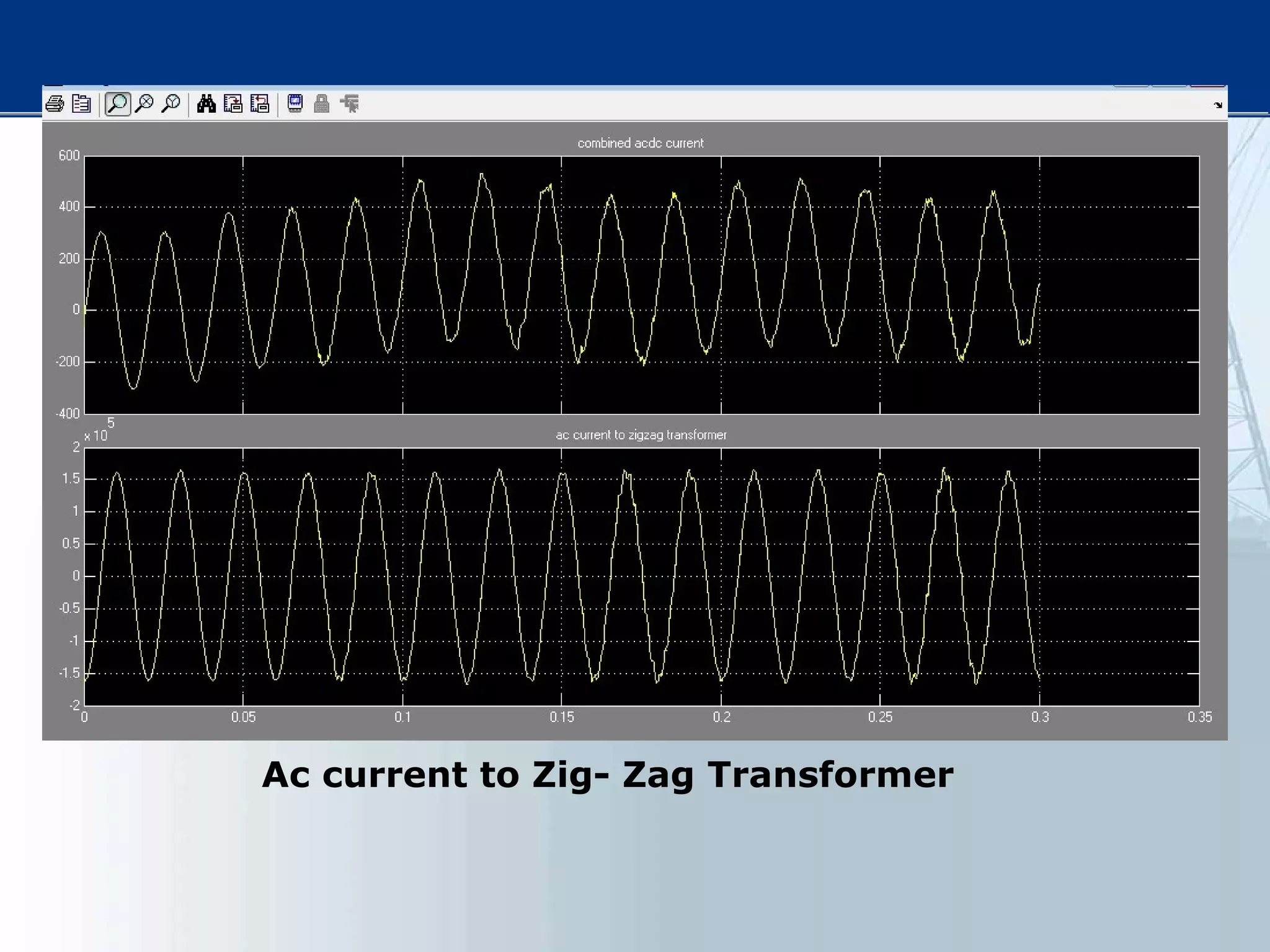
Ac current to Zig- Zag Transformer
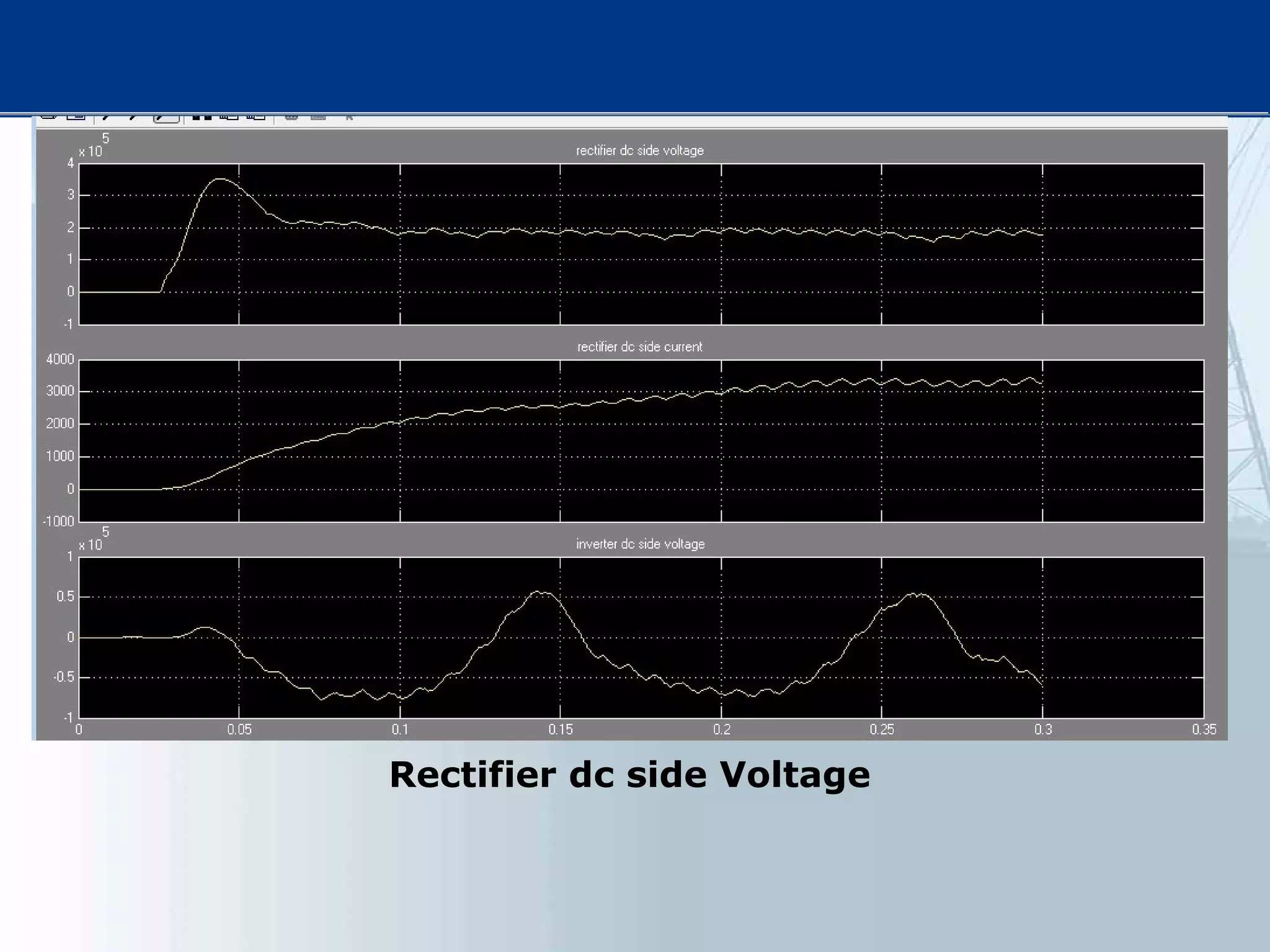
Rectifier dc side Voltage
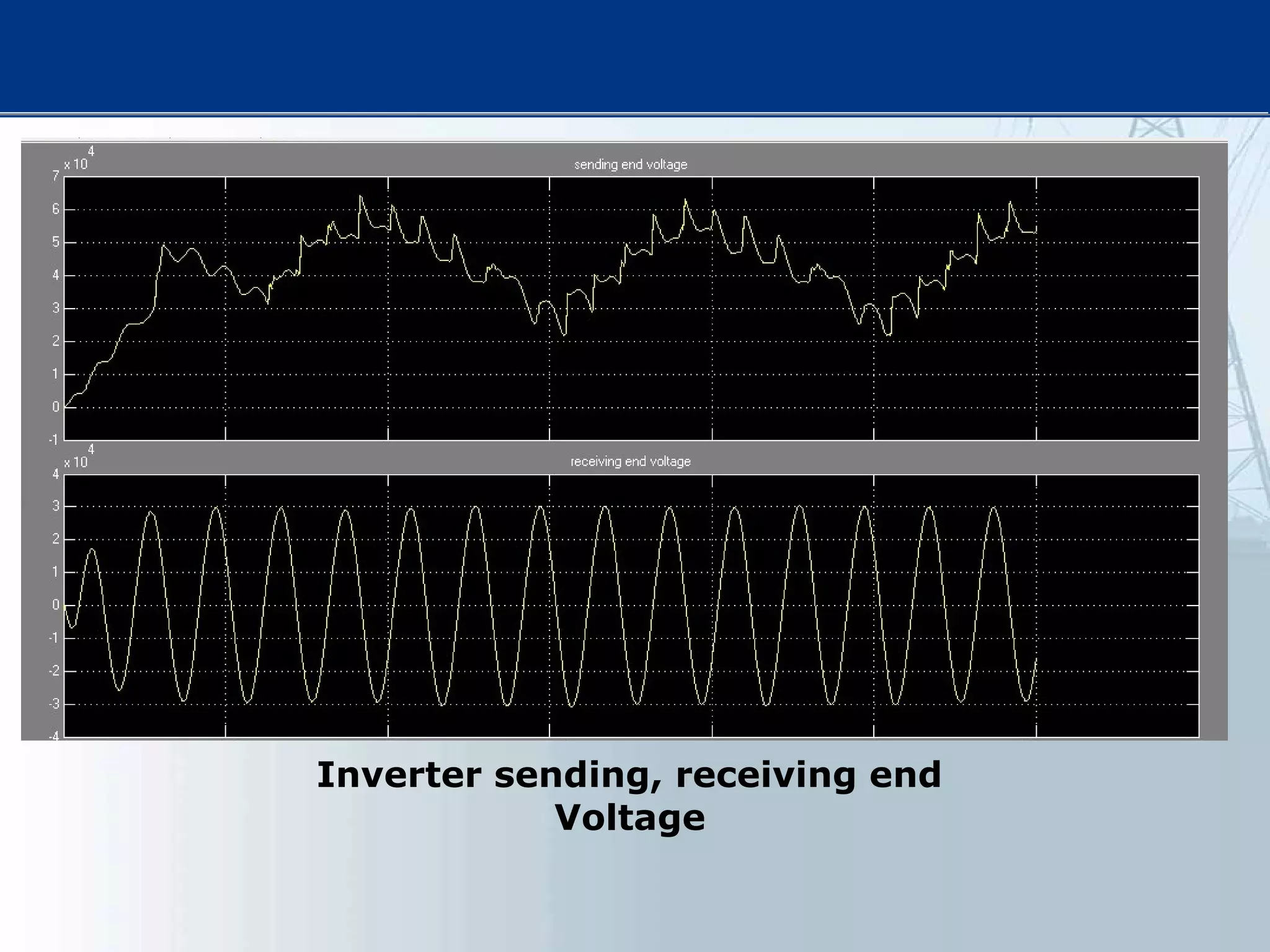
Inverter sending, receiving end
Voltage
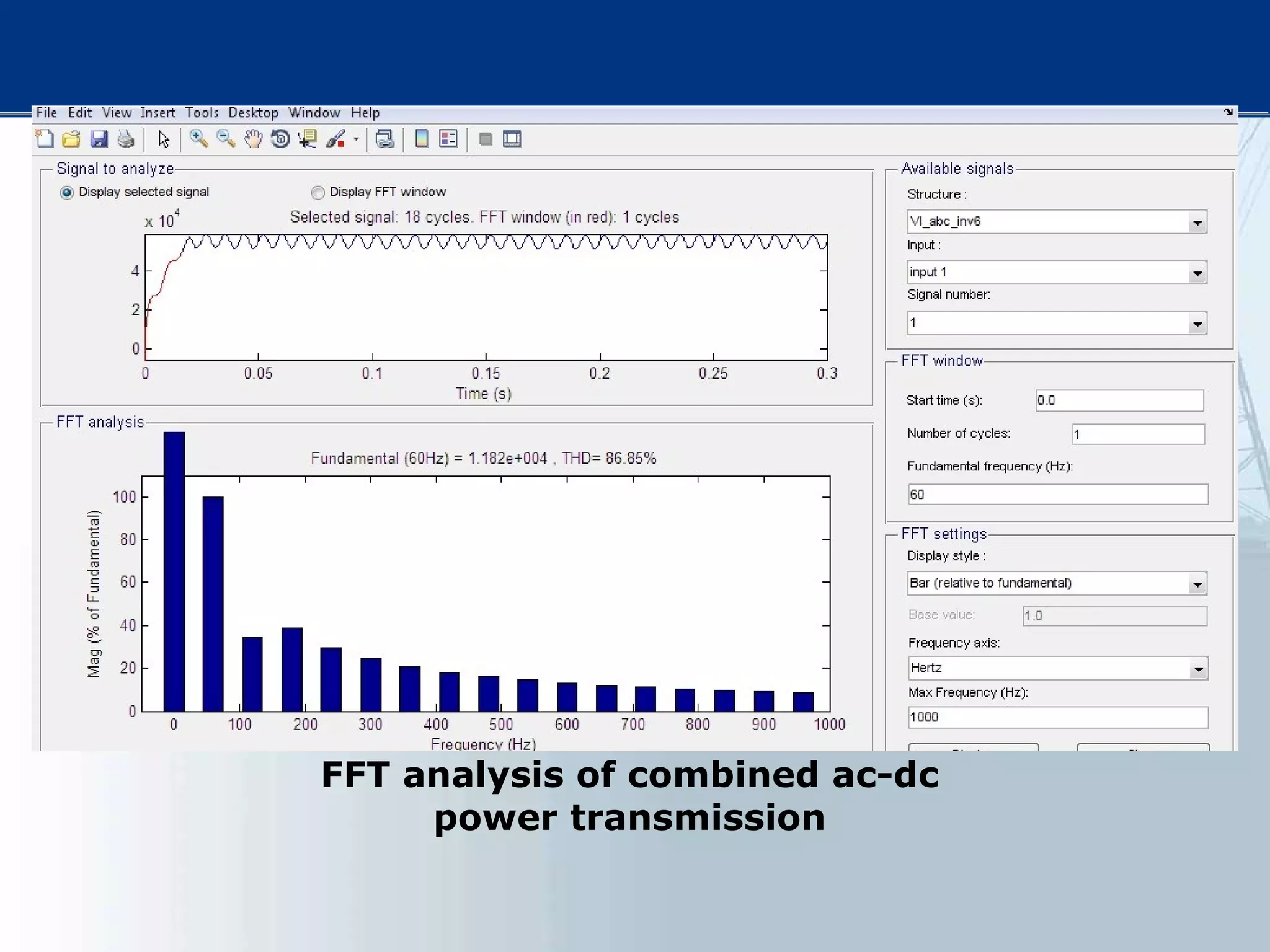
FFT analysis of combined ac-dc
power transmission
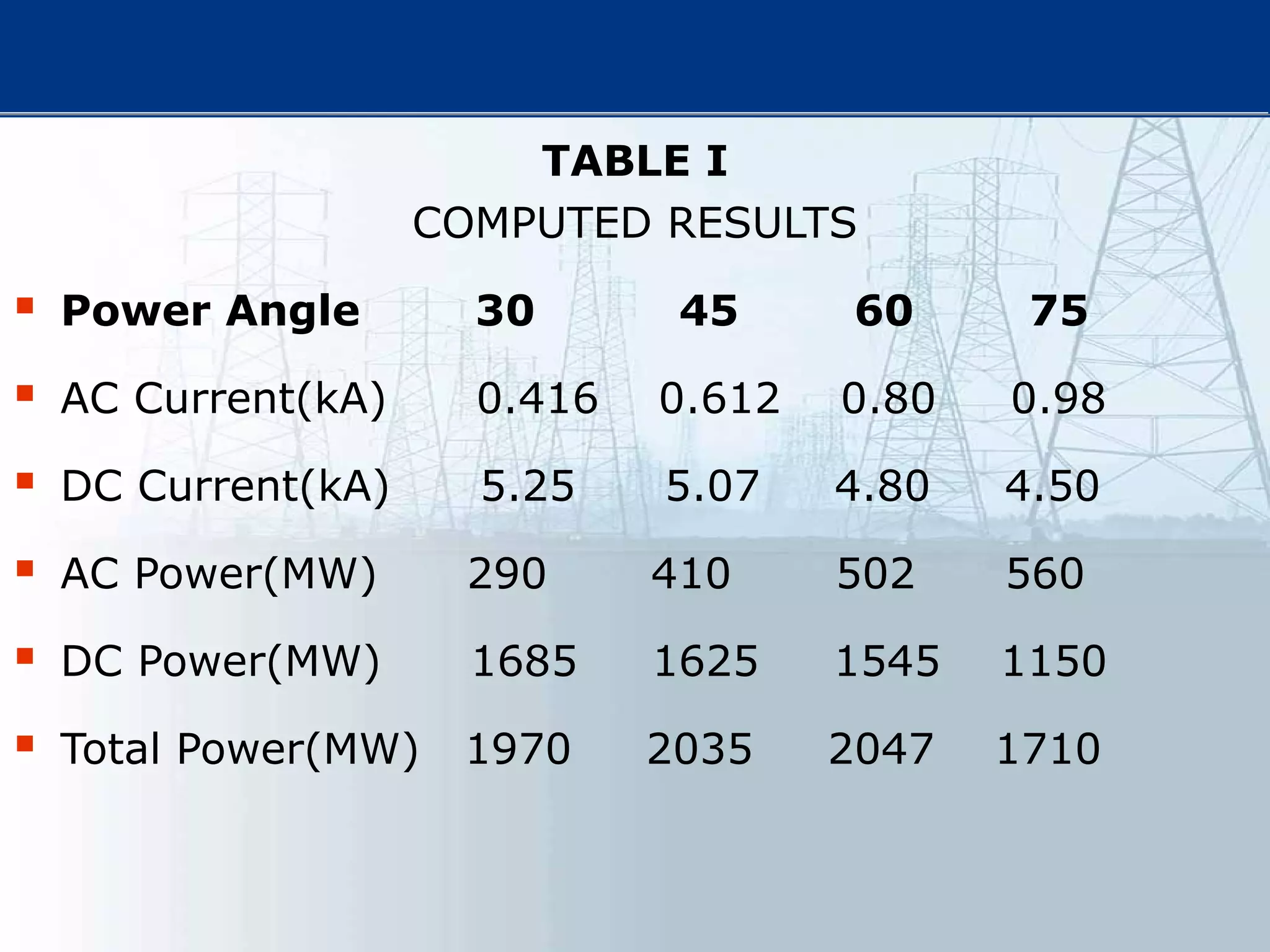
TABLE I
COMPUTED RESULTS
ď‚§ Power Angle 30 45 60 75
ď‚§ AC Current(kA) 0.416 0.612 0.80 0.98
ď‚§ DC Current(kA) 5.25 5.07 4.80 4.50
ď‚§ AC Power(MW) 290 410 502 560
ď‚§ DC Power(MW) 1685 1625 1545 1150
ď‚§ Total Power(MW) 1970 2035 2047 1710
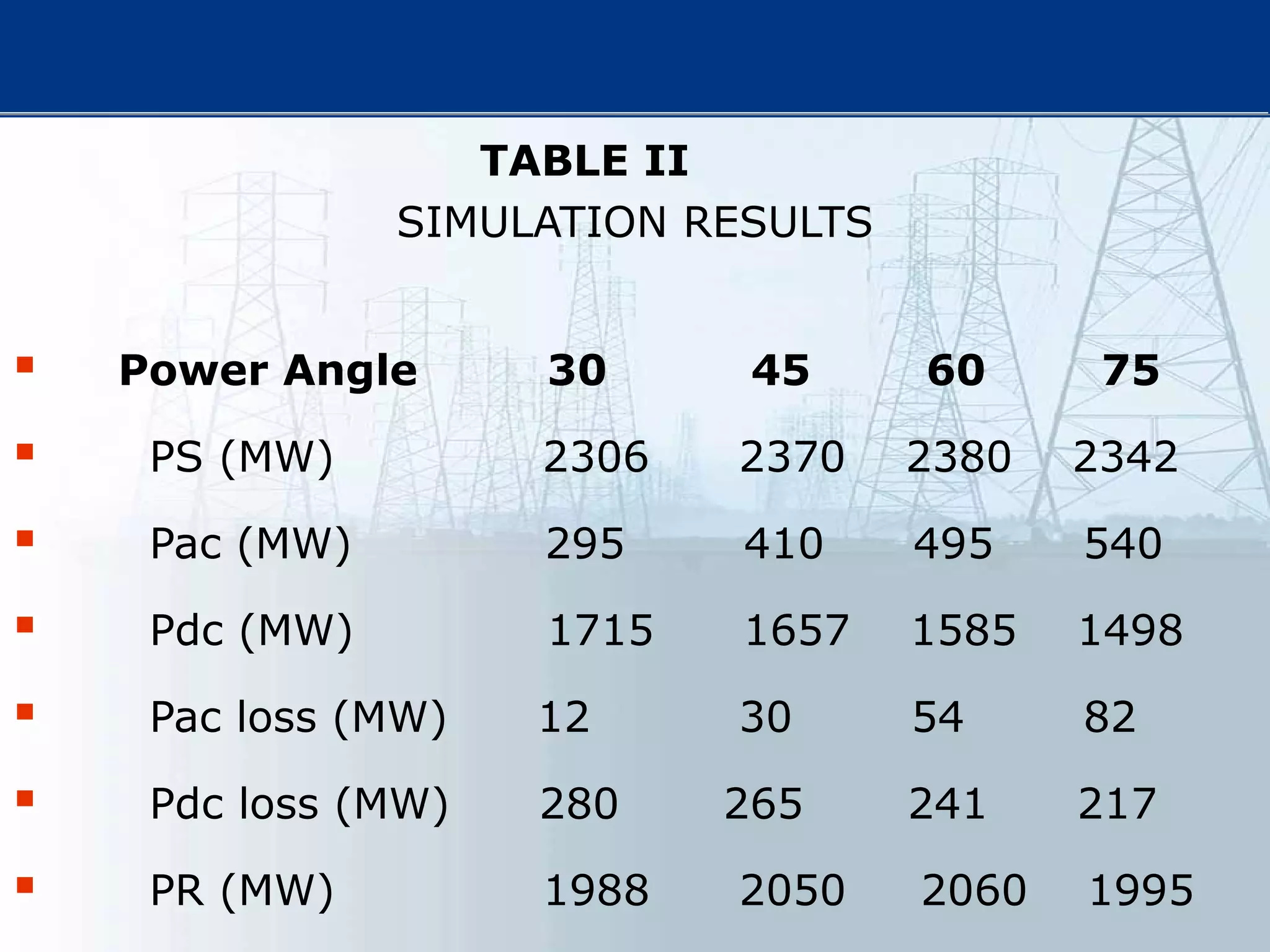
TABLE II
SIMULATION RESULTS
ď‚§ Power Angle 30 45 60 75
ď‚§ PS (MW) 2306 2370 2380 2342
ď‚§ Pac (MW) 295 410 495 540
ď‚§ Pdc (MW) 1715 1657 1585 1498
ď‚§ Pac loss (MW) 12 30 54 82
ď‚§ Pdc loss (MW) 280 265 241 217
ď‚§ PR (MW) 1988 2050 2060 1995
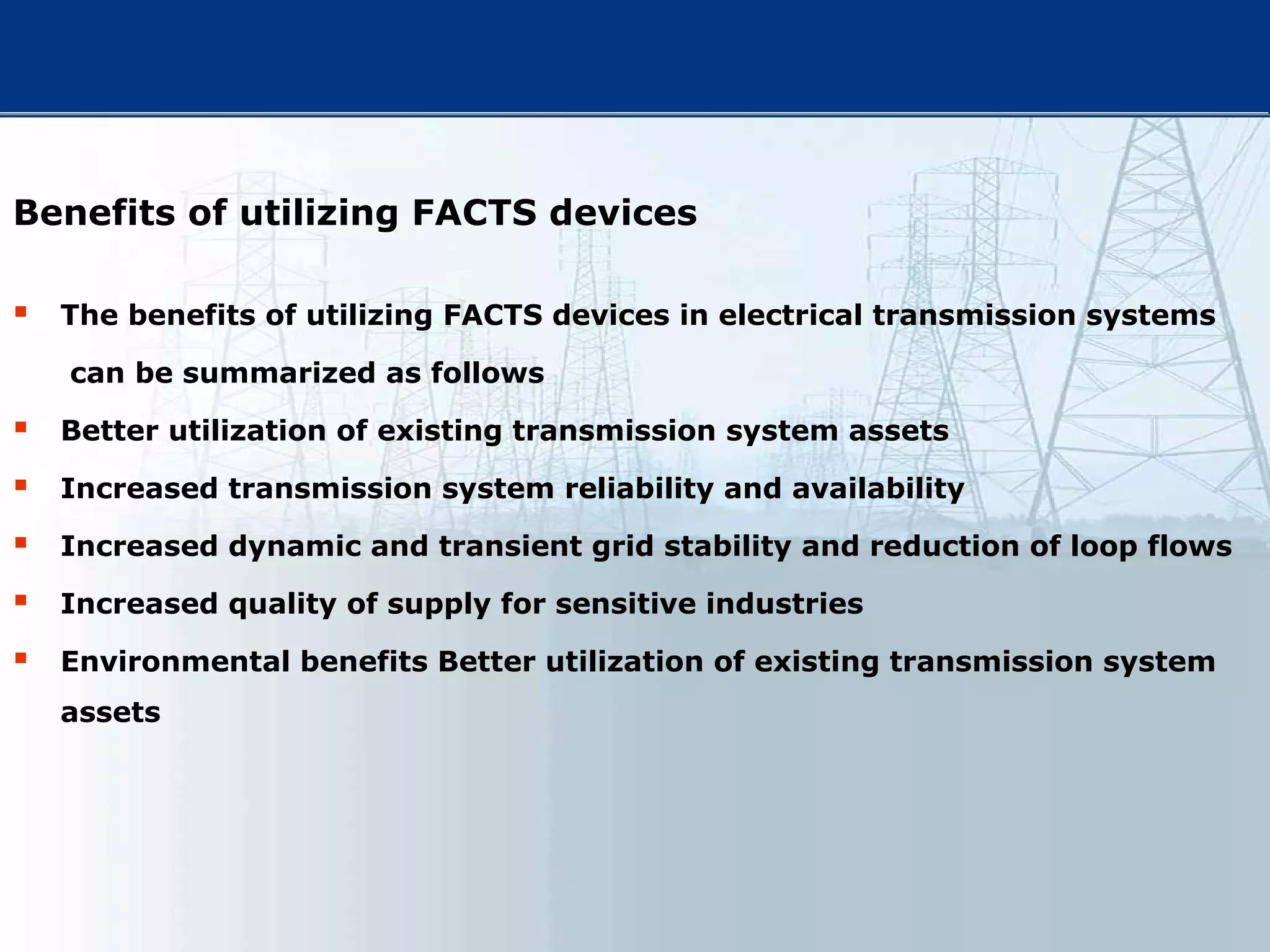
Benefits of utilizing FACTS devices
ď‚§ The benefits of utilizing FACTS devices in electrical transmission systems
can be summarized as follows
ď‚§ Better utilization of existing transmission system assets
ď‚§ Increased transmission system reliability and availability
ď‚§ Increased dynamic and transient grid stability and reduction of loop flows
ď‚§ Increased quality of supply for sensitive industries
ď‚§ Environmental benefits Better utilization of existing transmission system
assets
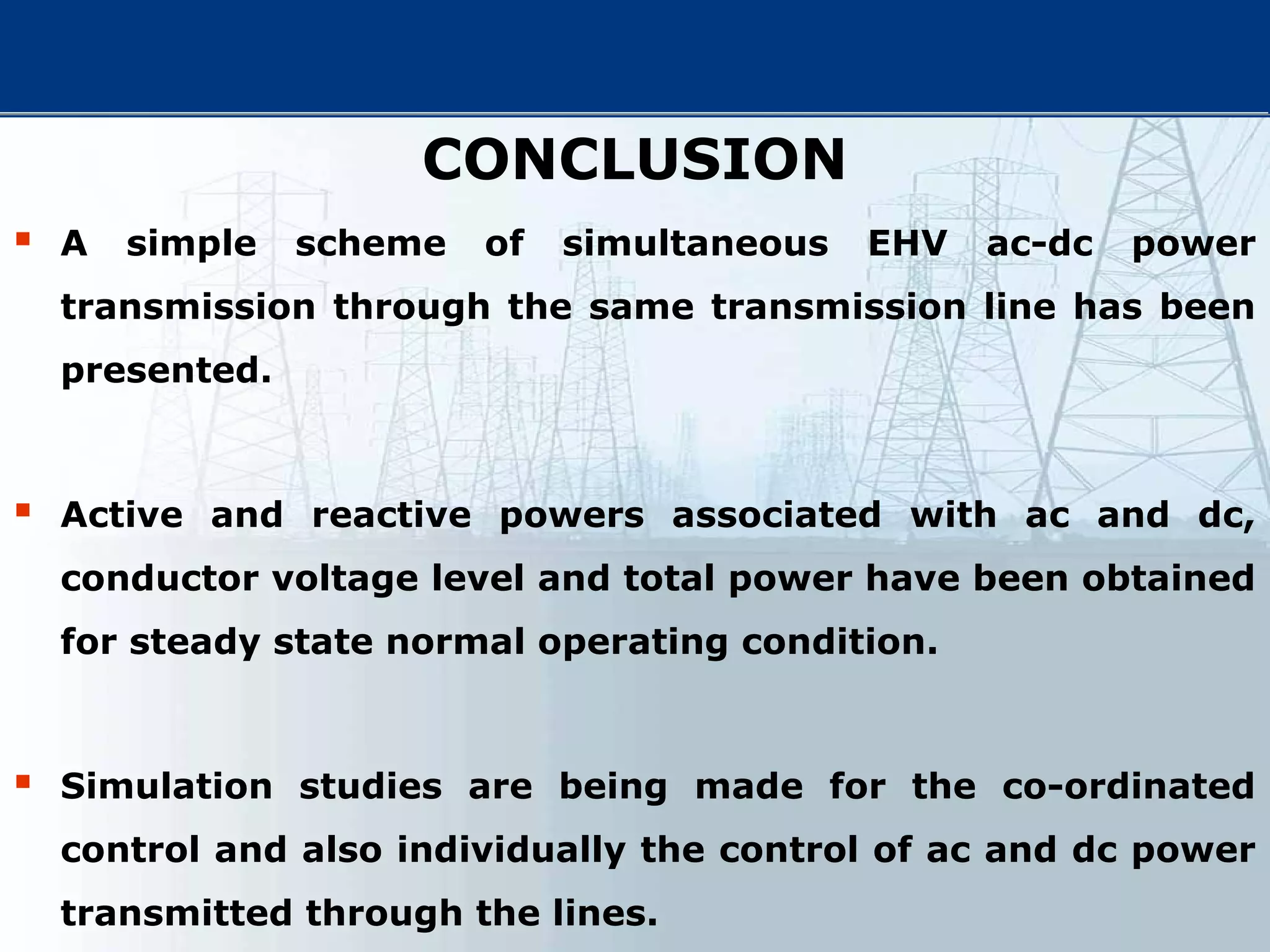
CONCLUSION
ď‚§ A simple scheme of simultaneous EHV ac-dc power
transmission through the same transmission line has been
presented.
ď‚§ Active and reactive powers associated with ac and dc,
conductor voltage level and total power have been obtained
for steady state normal operating condition.
ď‚§ Simulation studies are being made for the co-ordinated
control and also individually the control of ac and dc power
transmitted through the lines.
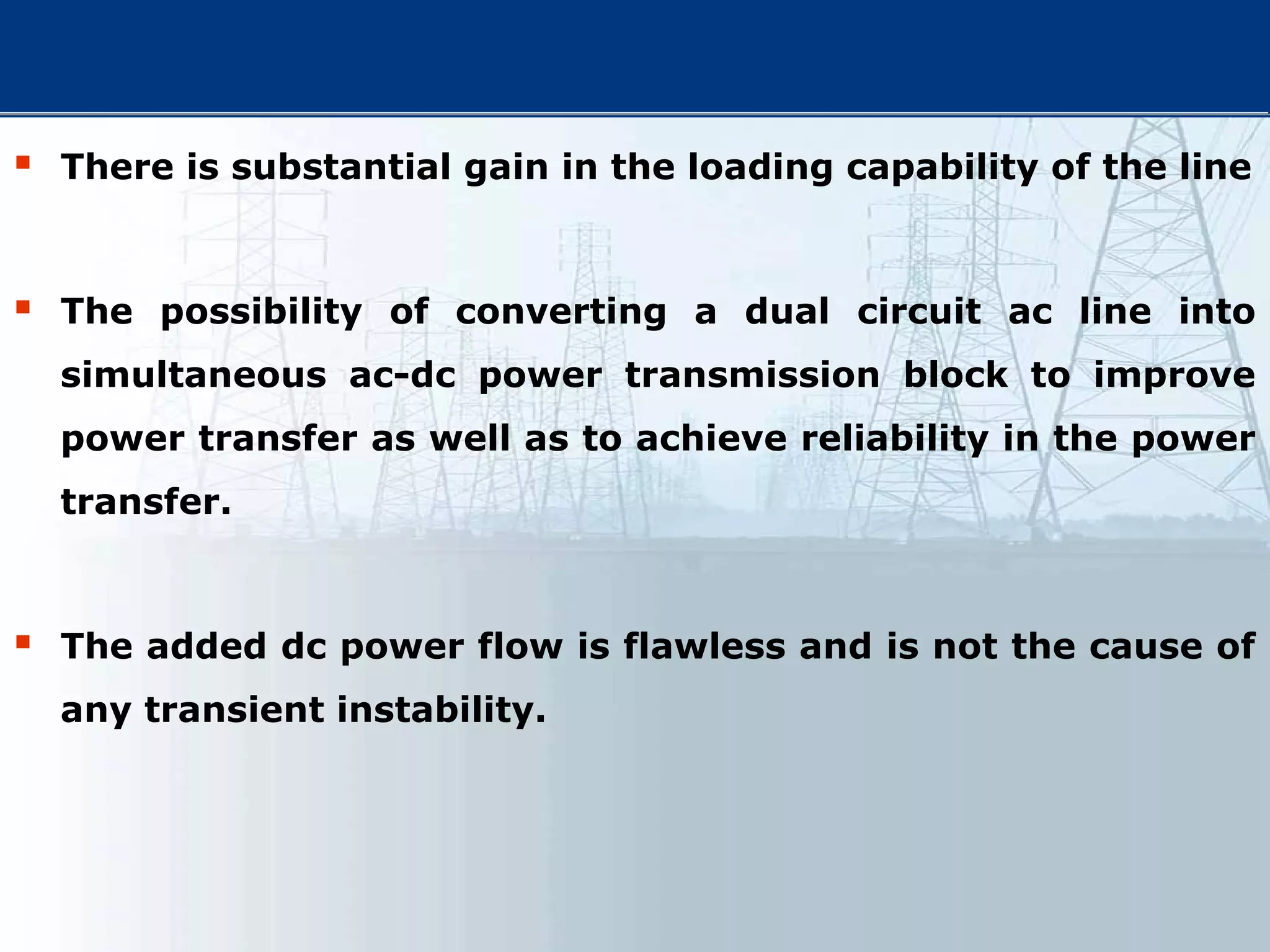
ď‚§ There is substantial gain in the loading capability of the line
ď‚§ The possibility of converting a dual circuit ac line into
simultaneous ac-dc power transmission block to improve
power transfer as well as to achieve reliability in the power
transfer.
ď‚§ The added dc power flow is flawless and is not the cause of
any transient instability.
REFERENCES
[1] N. G. Hingorani, “FACTS—flexible A.C. transmission system,”
in Proc. Inst. Elect. Eng. 5th. Int. Conf. A.C. D.C. Power
Transmission,
[2] Padiyar.’HVDC Power Transmission System.’ Wiley Eastern,
New Delhi, 1993)
[3] H. Rahman and B H Khan “Stability Improvement of Power
Systemby Simultaneous AC-DC Power Transmission” Electric Power
System Research Journal, Elsevier, Paper Editorial ID No. EPSRD-
06-00732, Press Article No. EPSR-2560— Digital Object.

POWER SYSTEM STABILITY ENHANCEMENT BY SIMULTANEOUS AC-DC POWER TRANSMISSION_2012

  • 1.
    M. TechM. Tech ThesisThesis OnOn POWERSYSTEM STABILITY ENHANCEMENT BY SIMULTANEOUS AC-DC POWER TRANSMISSION Submitted By: ABHISHEK CHATURVEDI ID No. : 11MTEEEPS019 Advisor: Er. Vinay Kumar Tripathi (Asst. Professor) Department of Electrical and Electronics Engineering Shepherd School of Engineering and Technology Sam Higginbottom Institute of Agriculture, Technology and Sciences (Deemed-To-Be-University) Allahabad-211007, Uttar Pradesh
  • 2.
  • 3.
    ď‚§ The conceptof simultaneous ac-dc power transmission.Long extra high voltage (EHV) ac lines cannot be loaded to their thermal limits due to this instability occurs in the power system ď‚§ It is possible to load these lines very close to their thermal limits. ď‚§ The conductors are allowed to carry usual ac along dc superimposed on it.
  • 4.
    ď‚§The advantage ofparallel ac-dc transmission for improvement of transient stability and dynamic stability and damp out oscillations have been established. ď‚§Simulation study is carried out in MATLAB software package. The results shows the stability of power system when compared with only ac transmission.
  • 5.
  • 6.
    ď‚§To emphasize thepossibility of simultaneous ac-dc transmission with its inherent advantage of power flow control improves stability and damps out oscillations in power system. ď‚§To achieve the advantages of parallel ac-dc transmission in some specific applications LV (low voltage) and MV (Medium voltage) system.
  • 7.
  • 8.
    ď‚§Using flexible actransmission system (FACTS) components . ď‚§Very fast control of SCRs in FACTS devices like state VAR system (SVS), controlled series capacitor (CSC), static phase shiftier (SPS) and controlled braking resistors oscillations as well as to control the voltage profile of the line by controlling the total reactive power flow. ď‚§The flexible ac transmission system (FACTS) concepts, based on applying state-of-the-art power electronic technology to existing ac transmission system, improve stability to achieve power transmission close to its thermal limit.
  • 9.
  • 10.
  • 12.
  • 13.
    Sending end Voltage,receiving end voltageSending end Voltage, receiving end voltage
  • 14.
    Sending end current,receiving end current
  • 15.
    Sub system 4,Active & reactive power
  • 16.
  • 17.
    Ac current toZig- Zag Transformer
  • 18.
  • 19.
  • 20.
    FFT analysis ofcombined ac-dc power transmission
  • 21.
    TABLE I COMPUTED RESULTS ď‚§Power Angle 30 45 60 75 ď‚§ AC Current(kA) 0.416 0.612 0.80 0.98 ď‚§ DC Current(kA) 5.25 5.07 4.80 4.50 ď‚§ AC Power(MW) 290 410 502 560 ď‚§ DC Power(MW) 1685 1625 1545 1150 ď‚§ Total Power(MW) 1970 2035 2047 1710
  • 22.
    TABLE II SIMULATION RESULTS ď‚§Power Angle 30 45 60 75 ď‚§ PS (MW) 2306 2370 2380 2342 ď‚§ Pac (MW) 295 410 495 540 ď‚§ Pdc (MW) 1715 1657 1585 1498 ď‚§ Pac loss (MW) 12 30 54 82 ď‚§ Pdc loss (MW) 280 265 241 217 ď‚§ PR (MW) 1988 2050 2060 1995
  • 23.
    Benefits of utilizingFACTS devices ď‚§ The benefits of utilizing FACTS devices in electrical transmission systems can be summarized as follows ď‚§ Better utilization of existing transmission system assets ď‚§ Increased transmission system reliability and availability ď‚§ Increased dynamic and transient grid stability and reduction of loop flows ď‚§ Increased quality of supply for sensitive industries ď‚§ Environmental benefits Better utilization of existing transmission system assets
  • 24.
    CONCLUSION ď‚§ A simplescheme of simultaneous EHV ac-dc power transmission through the same transmission line has been presented. ď‚§ Active and reactive powers associated with ac and dc, conductor voltage level and total power have been obtained for steady state normal operating condition. ď‚§ Simulation studies are being made for the co-ordinated control and also individually the control of ac and dc power transmitted through the lines.
  • 25.
    ď‚§ There issubstantial gain in the loading capability of the line ď‚§ The possibility of converting a dual circuit ac line into simultaneous ac-dc power transmission block to improve power transfer as well as to achieve reliability in the power transfer. ď‚§ The added dc power flow is flawless and is not the cause of any transient instability.
  • 26.
  • 27.
    [1] N. G.Hingorani, “FACTS—flexible A.C. transmission system,” in Proc. Inst. Elect. Eng. 5th. Int. Conf. A.C. D.C. Power Transmission, [2] Padiyar.’HVDC Power Transmission System.’ Wiley Eastern, New Delhi, 1993) [3] H. Rahman and B H Khan “Stability Improvement of Power Systemby Simultaneous AC-DC Power Transmission” Electric Power System Research Journal, Elsevier, Paper Editorial ID No. EPSRD- 06-00732, Press Article No. EPSR-2560— Digital Object.

Editor's Notes

  • #7 How electricity gets to you Generation: About half of the electricity in India is generated by coal-fired generation plants. Natural gas and renewable generation, including hydroelectric, biomass are also sources of Indian electricity. Transmission: Once generated, electricity travels across India from generating plants over high-voltage transmission lines to local transformers. The transformers reduce the voltage level making it suitable for local distribution to customers. Distribution - this is where comes inElectricity travels from the transformers via low-voltage distribution lines, owned by India, to your home or business.