Government Engineering
College
Rajkot
NAME : PARAS SAVALIYA
ENROLLMENT NO. : 150200119056
SUBJECT : MATERIAL SCIENCE AND
METALLURGY
DEPARTMENT OF MECHANICAL
ENGINEERING
POWDER METRALLURGY
Introduction
Powder Manufacture
Blending
Compacting
Sintering
Finishing Operations
Products
Introduction
 Powder Metallurgy is manufacturing of shaped
components or semi finished products from metal
powders.
 Powder Metallurgy is preferred due to it’s product cost
effectiveness. The main factors are:
1. Lower energy consumption.
2. Higher material utilization.
3. Production of complex shapes.
 Product uniqueness can be obtained by combination
of materials which otherwise would be impossible to
mix.
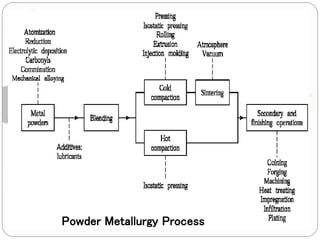
Powder Metallurgy Process
Powder Manufacture
 The first step of powder metallurgy is powder
manufacturing
 It involves making, characterizing, and
treating the powder which may have a strong
influence on the quality of the end product.
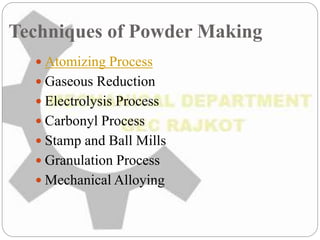
Techniques of Powder Making
 Atomizing Process
 Gaseous Reduction
 Electrolysis Process
 Carbonyl Process
 Stamp and Ball Mills
 Granulation Process
 Mechanical Alloying
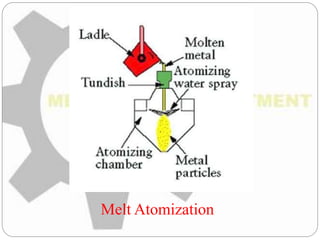
Atomization
 In this process the molten metal is forced through an
orifice into a stream of high velocity air, steam or inert
gas.
 This causes rapid cooling and disintegration into very
fine powder particles.
 The use of the process is limited to metals with
relatively low melting point.
 There are three types of Atomization
Liquid Atomization
Gas Atomization
Centrifugal Atomization
Melt Atomization
Powder Blending
 Powder blending is done due to following reasons:
Blending imparts uniformity in shapes of the powder
particles.
Facilitates mixing of different powder particles to
improve physical and mechanical properties.
Lubricants can be added to during blending to
improve the flow and reduce friction between powder
and dies.
Binders can be added to improve the green strength of
material during compaction process.
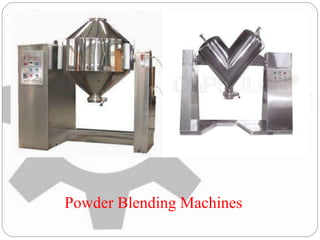
Powder Blending Machines
Powder Compaction
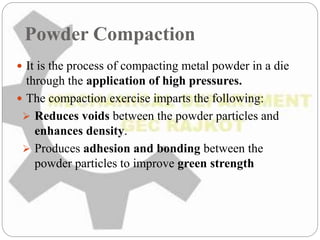
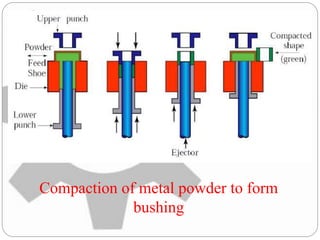
 It is the process of compacting metal powder in a die
through the application of high pressures.
 The compaction exercise imparts the following:
 Reduces voids between the powder particles and
enhances density.
 Produces adhesion and bonding between the
powder particles to improve green strength
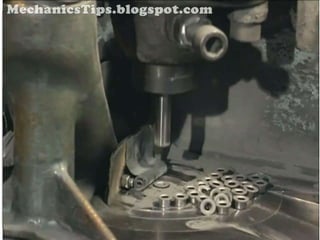
Compaction of metal powder to form
bushing
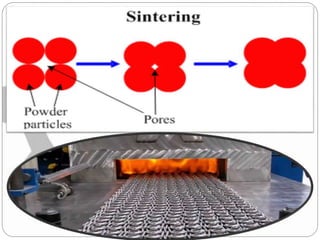
Sintering
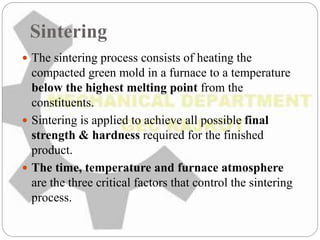
 The sintering process consists of heating the
compacted green mold in a furnace to a temperature
below the highest melting point from the
constituents.
 Sintering is applied to achieve all possible final
strength & hardness required for the finished
product.
 The time, temperature and furnace atmosphere
are the three critical factors that control the sintering
process.
Finishing Operations
 After sintering, some finishing operations such as
repressing(to impart dimensional accuracy) and
machining are carried out to further improve final
quality of parts.
 Parts are also subjected to other finishing
operations such as heat treatment, machining and
finishing according to the requirements.
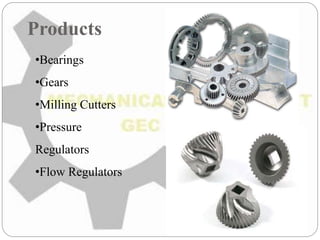
Products
•Bearings
•Gears
•Milling Cutters
•Pressure
Regulators
•Flow Regulators
References:
NPTEL Booklet
Google Images

Powder metallurgy

  • 1.
  • 2.
    NAME : PARASSAVALIYA ENROLLMENT NO. : 150200119056 SUBJECT : MATERIAL SCIENCE AND METALLURGY DEPARTMENT OF MECHANICAL ENGINEERING
  • 3.
  • 4.
    Introduction  Powder Metallurgyis manufacturing of shaped components or semi finished products from metal powders.  Powder Metallurgy is preferred due to it’s product cost effectiveness. The main factors are: 1. Lower energy consumption. 2. Higher material utilization. 3. Production of complex shapes.  Product uniqueness can be obtained by combination of materials which otherwise would be impossible to mix.
  • 5.
  • 6.
    Powder Manufacture  Thefirst step of powder metallurgy is powder manufacturing  It involves making, characterizing, and treating the powder which may have a strong influence on the quality of the end product.
  • 7.
    Techniques of PowderMaking  Atomizing Process  Gaseous Reduction  Electrolysis Process  Carbonyl Process  Stamp and Ball Mills  Granulation Process  Mechanical Alloying
  • 8.
    Atomization  In thisprocess the molten metal is forced through an orifice into a stream of high velocity air, steam or inert gas.  This causes rapid cooling and disintegration into very fine powder particles.  The use of the process is limited to metals with relatively low melting point.  There are three types of Atomization Liquid Atomization Gas Atomization Centrifugal Atomization
  • 9.
  • 11.
    Powder Blending  Powderblending is done due to following reasons: Blending imparts uniformity in shapes of the powder particles. Facilitates mixing of different powder particles to improve physical and mechanical properties. Lubricants can be added to during blending to improve the flow and reduce friction between powder and dies. Binders can be added to improve the green strength of material during compaction process.
  • 12.
  • 13.
    Powder Compaction  Itis the process of compacting metal powder in a die through the application of high pressures.  The compaction exercise imparts the following:  Reduces voids between the powder particles and enhances density.  Produces adhesion and bonding between the powder particles to improve green strength
  • 14.
    Compaction of metalpowder to form bushing
  • 16.
    Sintering  The sinteringprocess consists of heating the compacted green mold in a furnace to a temperature below the highest melting point from the constituents.  Sintering is applied to achieve all possible final strength & hardness required for the finished product.  The time, temperature and furnace atmosphere are the three critical factors that control the sintering process.
  • 18.
    Finishing Operations  Aftersintering, some finishing operations such as repressing(to impart dimensional accuracy) and machining are carried out to further improve final quality of parts.  Parts are also subjected to other finishing operations such as heat treatment, machining and finishing according to the requirements.
  • 19.
  • 20.