POTTASIUM METABOLISM
& APPROACH TO
HYPERKALEMIA
BY DR.RAVI KUMAR S
1ST YEAR PEDIATRIC PG
MGMCRI
TABLE OF CONTENTS
INTRODUCTION
PHYSIOLOGY OF K⁺
EXCRETION OF K⁺
DEFINITION OF HYPERKALEMIA
CLINICAL FEATURES
ETIOLOGY
TREATMENT
Introduction
Potassium an essential cation for cellular functions, is widely distributed in body.
One of the most commonly affected ions in sick children.
Normal Sr.K⁺ ranges between 3.5 to 5 mEq/L
Common K⁺ rich foods are Meats, Beans, Fruits & Potatoes.
Physiology
Nearly 98% of potassium is distributed in the ICS with a conc. Of 140-150 mEq/L.
About 3/4th of Intracellular K⁺ is in muscles, 2% K⁺ is in ECS, mostly in bones.
The intercellular to extracellular potassium gradient is maintained by sodium potassium
triphosphatase and selective K⁺ channel.
Na-K-ATPase allows active transport of Potassium into cells whereas selective channels allow
passive diffusion of K⁺ out of cells.
Potassium homeostasis depends on a number of renal and extra renal factors like intake,GI and
Urinary losses and transcellular shift.
Daily requirement of K is about 1-2 mEq/kg.
Excretion of K⁺
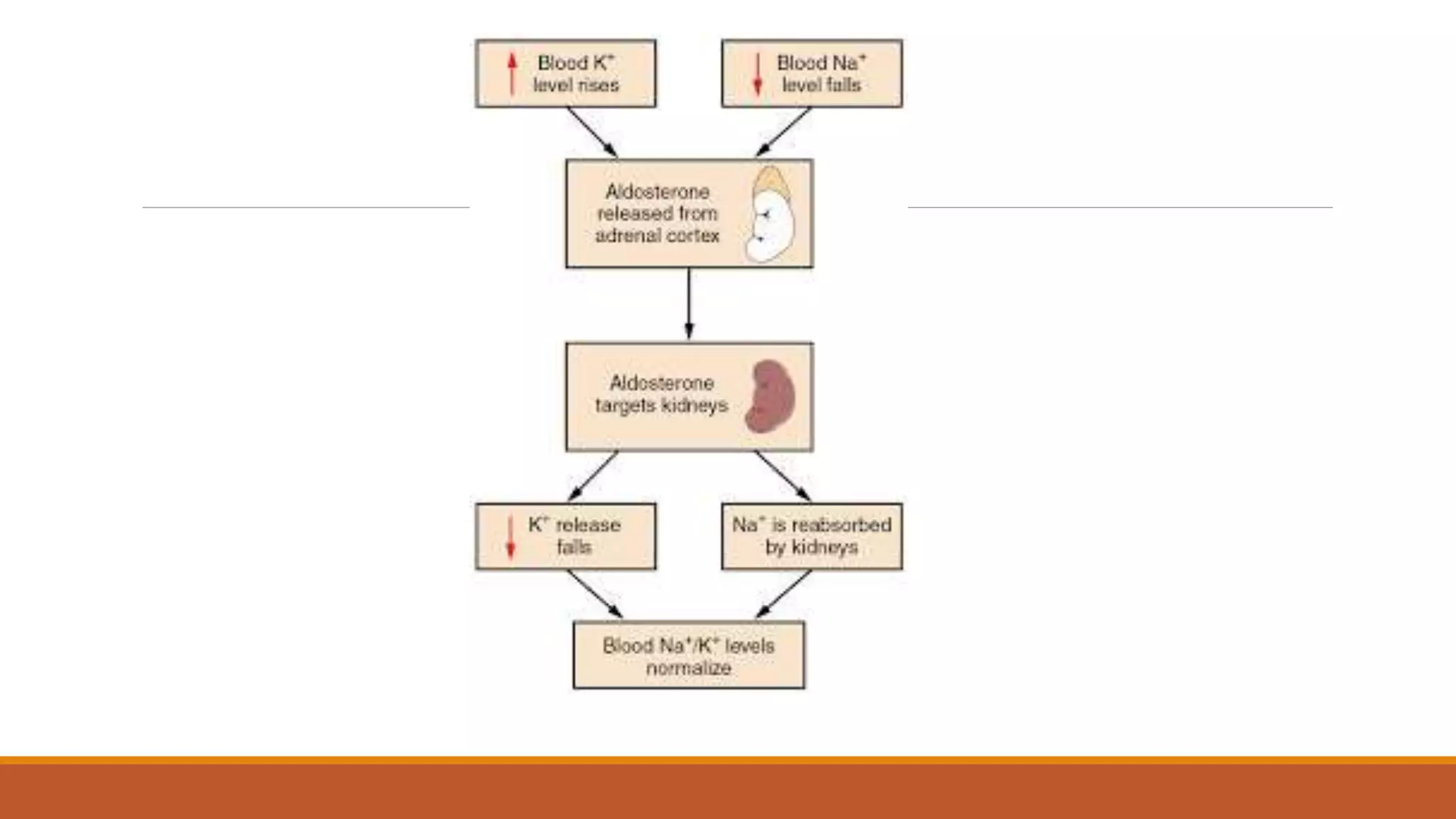
Kidney is the primary organ for excretion of K⁺ upto 90%
Nearly 85-90% of K⁺ is reabsorbed up to distal tubules and only 10-15% reaches cortical and
outer medullary collecting ducts, which is the principle site of regulation of potassium excretion.
Potassium secretion in cortical collecting duct (CCD) is regulated by aldosterone secreted from
adrenal cortex.
The net K⁺ secretion of CCD level evaluated by Transtubular K⁺ conc gradient (TTKG)
TTKG = Urine K⁺ x Sr osmolality / Sr potassium x Urine Osmolality)
In Hypokalemic children TTKG >4 indicates renal loss of K⁺
In Hyperkalemic children TTKG <8 indicates impaired renal secretion of K⁺
Hyperkalemia
DEFINITION
Sr.K⁺ >5.5 mEq/L
Based on the Sr. K⁺ concentration, Hyperkalemia can be categorized as
Mild (5.5 to 6.5 mEq/L)
Moderate (6.6 to 8 mEq/L)
Severe (>8 mEq/L)
Etiology
Spurious raised levels :
Release of K⁺ from Hemolysed RBC at the time of blood sampling.
True Hyperkalemia :
Increased load
Impaired renal excretion
Transcellular shift of K⁺
Etiology
Increased Load
A) Exogenous Source : Salt Supplements, Transfusion.
B) Endogenous Source : Intravascular hemolysis, resolving hematoma, rhabdomyolysis & tumor lysis.
Impaired Renal Excretion
A) ↓ed Na & H20 delivery to distal cortical tubules : AKD or Volume Depletion
B) Functional Aldosterone :
Hypoaldosteronism with ed Renin levels – Primary Adrenal Disease(Addison, CAH), Aldosterone
synthase deficiency, use of drugs (ACE inhibitors, Angiotensin receptor blocker)
Renal Tubular Diseases : Bartter syndrome –type II, Urinary Tract obstruction, Kidney transplant
Potassium sparing diuretics & NSAIDS
Etiology
Transcellular shift
Acidosis
Hypertonicity
Exercise
Diabetes
Myolysis
Drugs like Digoxin, Beta blockers & Succinylcholine
Extensive Muscle/ Cellular Injury
Malignant hyperthermia
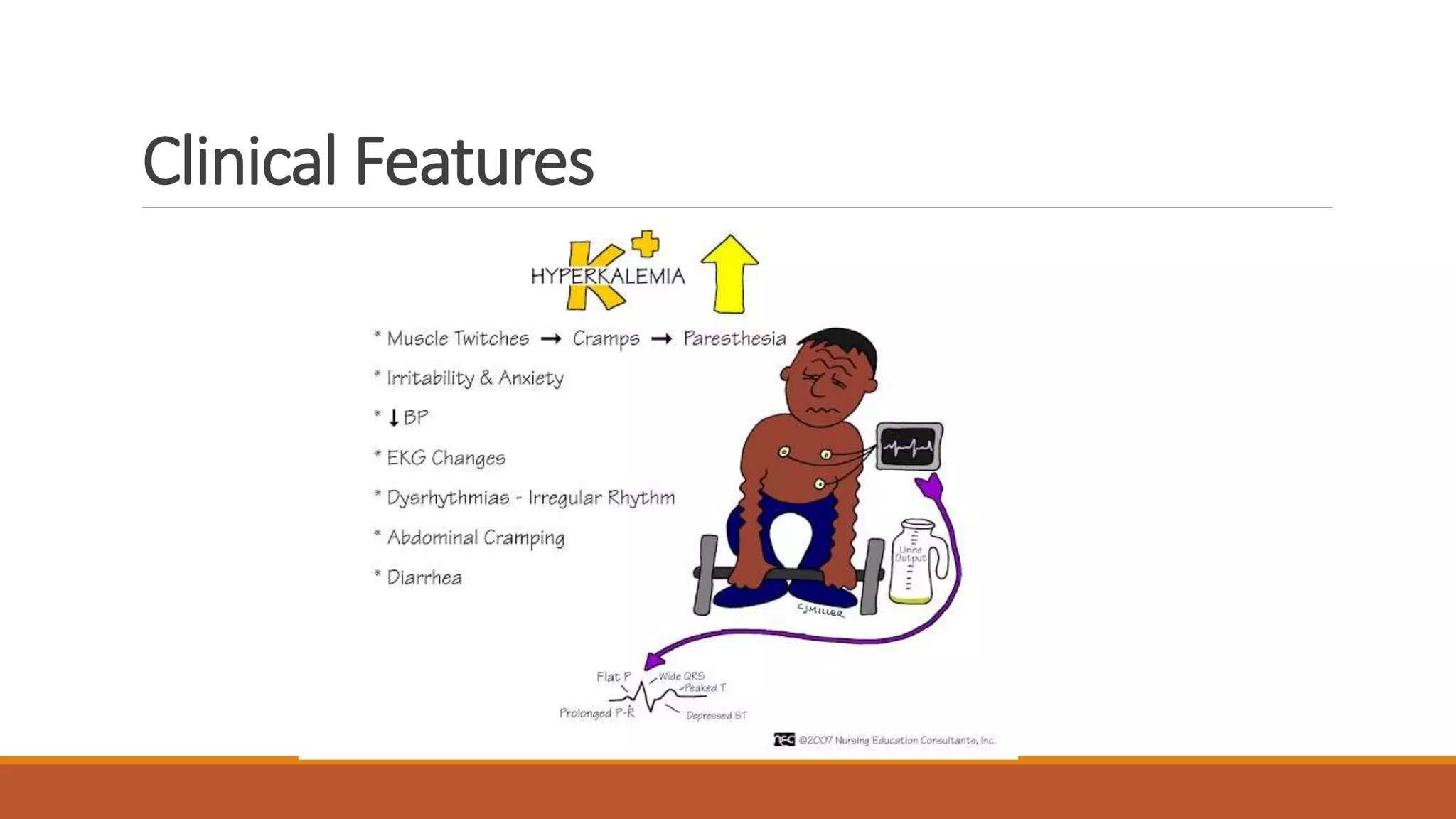
Clinical Features
TREATMENT
If plasma K⁺ >6.5 mEq/L or ECG abnormalities are detected, emergency treatment should be
initiated.
Priority of Rx
1. Withdrawl of Source if any; in case blood transfusion is urgently needed use of fresh &
washed RBC’s are recommended,
2. Stabilization of myocardial cells.
3. Rapid reduction of plasma K levels with transcellular shift.
4. Enhance K elimination from body
5. Treatement of underlying cause.
TREATMENT
 10 % calcium gluconate 0.5-1 ml/kg (max 10 ml) 1:1 diluted with saline over 10 min under
cardiac monitoring.
 Glucose insulin infusion :
Infants & Young children : 2ml/kg of 25% D with 0.1 Units/kg of regular insulin over 30 mins.
Older children : 50 ml in 50% D with 10 Units of regular insulin to be infused over 30 min.Should
be monitored for hypoglycemia.
Short acting beta agonist : Salbutamol Neb 2.5 -5 ml in 3ml NS over 20 mins
If there is Non anion gap acidosis, 1-2mEq/kg of Sodium bicarbonate iv over 30 mins.
Ion exchange Resin : sodium polysterene sulfonate (Kayexalate) 1-2g/kg PO or PR
IV Furosemide 1-2 mg/kg if Kidney function is normal
Hemodialysis/ Peritoneal Dialysis with K free fluid.

POTTASIUM METABOLISM & APPROACH TO HYPERKALEMIA

  • 1.
    POTTASIUM METABOLISM & APPROACHTO HYPERKALEMIA BY DR.RAVI KUMAR S 1ST YEAR PEDIATRIC PG MGMCRI
  • 2.
    TABLE OF CONTENTS INTRODUCTION PHYSIOLOGYOF K⁺ EXCRETION OF K⁺ DEFINITION OF HYPERKALEMIA CLINICAL FEATURES ETIOLOGY TREATMENT
  • 3.
    Introduction Potassium an essentialcation for cellular functions, is widely distributed in body. One of the most commonly affected ions in sick children. Normal Sr.K⁺ ranges between 3.5 to 5 mEq/L Common K⁺ rich foods are Meats, Beans, Fruits & Potatoes.
  • 4.
    Physiology Nearly 98% ofpotassium is distributed in the ICS with a conc. Of 140-150 mEq/L. About 3/4th of Intracellular K⁺ is in muscles, 2% K⁺ is in ECS, mostly in bones. The intercellular to extracellular potassium gradient is maintained by sodium potassium triphosphatase and selective K⁺ channel. Na-K-ATPase allows active transport of Potassium into cells whereas selective channels allow passive diffusion of K⁺ out of cells. Potassium homeostasis depends on a number of renal and extra renal factors like intake,GI and Urinary losses and transcellular shift. Daily requirement of K is about 1-2 mEq/kg.
  • 6.
    Excretion of K⁺ Kidneyis the primary organ for excretion of K⁺ upto 90% Nearly 85-90% of K⁺ is reabsorbed up to distal tubules and only 10-15% reaches cortical and outer medullary collecting ducts, which is the principle site of regulation of potassium excretion. Potassium secretion in cortical collecting duct (CCD) is regulated by aldosterone secreted from adrenal cortex. The net K⁺ secretion of CCD level evaluated by Transtubular K⁺ conc gradient (TTKG) TTKG = Urine K⁺ x Sr osmolality / Sr potassium x Urine Osmolality) In Hypokalemic children TTKG >4 indicates renal loss of K⁺ In Hyperkalemic children TTKG <8 indicates impaired renal secretion of K⁺
  • 8.
    Hyperkalemia DEFINITION Sr.K⁺ >5.5 mEq/L Basedon the Sr. K⁺ concentration, Hyperkalemia can be categorized as Mild (5.5 to 6.5 mEq/L) Moderate (6.6 to 8 mEq/L) Severe (>8 mEq/L)
  • 9.
    Etiology Spurious raised levels: Release of K⁺ from Hemolysed RBC at the time of blood sampling. True Hyperkalemia : Increased load Impaired renal excretion Transcellular shift of K⁺
  • 10.
    Etiology Increased Load A) ExogenousSource : Salt Supplements, Transfusion. B) Endogenous Source : Intravascular hemolysis, resolving hematoma, rhabdomyolysis & tumor lysis. Impaired Renal Excretion A) ↓ed Na & H20 delivery to distal cortical tubules : AKD or Volume Depletion B) Functional Aldosterone : Hypoaldosteronism with ed Renin levels – Primary Adrenal Disease(Addison, CAH), Aldosterone synthase deficiency, use of drugs (ACE inhibitors, Angiotensin receptor blocker) Renal Tubular Diseases : Bartter syndrome –type II, Urinary Tract obstruction, Kidney transplant Potassium sparing diuretics & NSAIDS
  • 11.
    Etiology Transcellular shift Acidosis Hypertonicity Exercise Diabetes Myolysis Drugs likeDigoxin, Beta blockers & Succinylcholine Extensive Muscle/ Cellular Injury Malignant hyperthermia
  • 12.
  • 13.
    TREATMENT If plasma K⁺>6.5 mEq/L or ECG abnormalities are detected, emergency treatment should be initiated. Priority of Rx 1. Withdrawl of Source if any; in case blood transfusion is urgently needed use of fresh & washed RBC’s are recommended, 2. Stabilization of myocardial cells. 3. Rapid reduction of plasma K levels with transcellular shift. 4. Enhance K elimination from body 5. Treatement of underlying cause.
  • 14.
    TREATMENT  10 %calcium gluconate 0.5-1 ml/kg (max 10 ml) 1:1 diluted with saline over 10 min under cardiac monitoring.  Glucose insulin infusion : Infants & Young children : 2ml/kg of 25% D with 0.1 Units/kg of regular insulin over 30 mins. Older children : 50 ml in 50% D with 10 Units of regular insulin to be infused over 30 min.Should be monitored for hypoglycemia. Short acting beta agonist : Salbutamol Neb 2.5 -5 ml in 3ml NS over 20 mins If there is Non anion gap acidosis, 1-2mEq/kg of Sodium bicarbonate iv over 30 mins. Ion exchange Resin : sodium polysterene sulfonate (Kayexalate) 1-2g/kg PO or PR IV Furosemide 1-2 mg/kg if Kidney function is normal Hemodialysis/ Peritoneal Dialysis with K free fluid.