PRESENTED BY-
PREETI KULSHRESTHA
M. SC. NURSING FINAL YEAR
MEANING
Poly - Excessive
Hydramnios - Amniotic fluid
DEFINITION
Polyhydramnios is a state where the amount of amniotic fluid exceeds 1500-
2000ml.
(or)
An amount of amniotic fluid more then 2000 ml.
INCIDENCE
• Polyhydramnios occurs in 1-2% of pregnancies.
• It is more common in multipara than in primipara.
ETIOLOGY
1) Fetal Anomalies
2) Maternal Causes
3) Placental Factors
4) Multiple Pregnancies
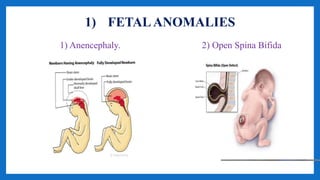
1) FETALANOMALIES
1) Anencephaly. 2) Open Spina Bifida
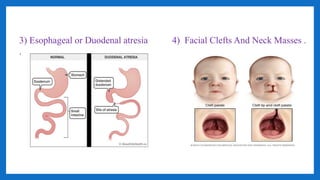
3) Esophageal or Duodenal atresia
.
4) Facial Clefts And Neck Masses .
2) MATERNAL CAUSES
 Diabetes mellitus.
 cardiac or renal diseases.
3) Placental factors
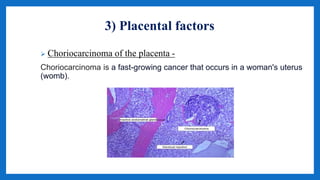
 Choriocarcinoma of the placenta -
Choriocarcinoma is a fast-growing cancer that occurs in a woman's uterus
(womb).
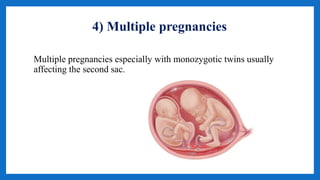
4) Multiple pregnancies
Multiple pregnancies especially with monozygotic twins usually
affecting the second sac.
SIGNS AND SYMPTOMS
 Uterine enlargement.
 Mechanical problems such as-
-Severe Dyspnea.
-Lower extremity and Vulvar e
-Pressure pains in the back abdomen and thighs.
-Nausea & Vomiting
Frequent change of fetal lie (unstable lie).
Auscultation of the fetal heart is difficult .
CLINICAL TYPES
ACUTE
POLYHYDRAMNIOS
CHRONIC
POLYHYDRAMNIOS
Acute polyhydramnios
DEFINITION
Acute polyhydramnios- it is extremely rare and occurs at about 20th
week and come on suddenly.
OR
It amniotic fluid increase rapidly over days can cause severe
symptoms is known as acute polyhydramnios.
SIGNS AND SYMTOMS OF ACUTE
POLYHYDRAMNIOS
 Abdomen pain.
 Nausea or vomiting.
 Fluid thrill may be present.
 Abdomen in hugely enlarged.
 Fetal parts cannot be felt normal but the fetal heart sound
is audible.
Chronic polyhydramnios
DEFINITION
This is the most common type which is gradual in onset ,
usually from about 30th week of pregnancy.
OR
If amniotic fluid volume increase progressively over
months the symptoms are usually milder is known is chronic
polyhydramnios.
SIGN AND SYMPTOMS OF THE CHRONIC
POLYHYDRAMNIOS
 Dyspnoea is more common in supine position.
 Oedema in legs.
 Uterine contractions.
 Uterine discomfortness.
DIAGNOSTIC TESTS
Ultrasonographic measurement of AFI >25c.m.
SDP=>8C.M.
Comprehensive ultrasonographic examination for fetal
malformations.
Maternal glucose challenge test
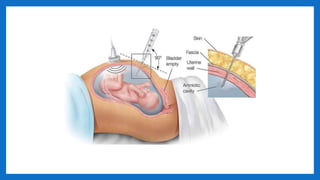
Amniocentesis
.
COMPLICATIONS
• Preterm contractions and possibly preterm labour
• Premature rupture of membranes
• Fetal malposition
• Maternal respiratory compromise
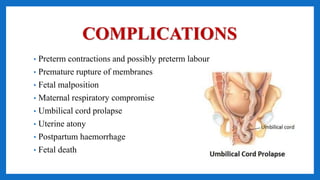
• Umbilical cord prolapse
• Uterine atony
• Postpartum haemorrhage
• Fetal death
MANAGEMENT
 Principles Of Management -
• To relieve the symptoms.
• To avoid and to deal with the complication.
• To find out the causes.
Contd.
 Supportive Therapy -
• Bed rest, treatment associate with condition like preeclampsia.
• Investigation are done to exclude congenital foetal malformation.
• Further management depends on
 Response to treatment.
 Period of gestation.
Presence of foetal malformation.
Associated complicating factors.
• Response to treatment is good means pregnancy is continued
• Unresponsive:
Pregnancy less than 37 weeks – Amniocentesis
 Pregnancy more than 37 week – Induction of labor is done
• Usual management is followed.
• If the uterine contraction become sluggish, oxytocin infusion may be
started.
• To prevent post partum hemorrhage.
• IV administration of methergine.
NURSING DIAGNOSIS
Risk for Maternal and Fetal Injury related to polyhydramnios
 Activity Intolerance related to maternal discomfort and
dyspnea.
 Deficient fluid volume & imbalance nutrition less than
the body requirements to meet metabolic demand
(nausea/vomiting).
 Fatigue related to the disease condition.
 Pain related to the disease condition.
.

Polyhydramnios

  • 1.
  • 2.
  • 3.
    DEFINITION Polyhydramnios is astate where the amount of amniotic fluid exceeds 1500- 2000ml. (or) An amount of amniotic fluid more then 2000 ml.
  • 4.
    INCIDENCE • Polyhydramnios occursin 1-2% of pregnancies. • It is more common in multipara than in primipara.
  • 5.
    ETIOLOGY 1) Fetal Anomalies 2)Maternal Causes 3) Placental Factors 4) Multiple Pregnancies
  • 6.
  • 7.
    3) Esophageal orDuodenal atresia . 4) Facial Clefts And Neck Masses .
  • 8.
    2) MATERNAL CAUSES Diabetes mellitus.  cardiac or renal diseases.
  • 9.
    3) Placental factors Choriocarcinoma of the placenta - Choriocarcinoma is a fast-growing cancer that occurs in a woman's uterus (womb).
  • 10.
    4) Multiple pregnancies Multiplepregnancies especially with monozygotic twins usually affecting the second sac.
  • 11.
    SIGNS AND SYMPTOMS Uterine enlargement.  Mechanical problems such as- -Severe Dyspnea. -Lower extremity and Vulvar e -Pressure pains in the back abdomen and thighs. -Nausea & Vomiting Frequent change of fetal lie (unstable lie). Auscultation of the fetal heart is difficult .
  • 12.
  • 13.
    Acute polyhydramnios DEFINITION Acute polyhydramnios-it is extremely rare and occurs at about 20th week and come on suddenly. OR It amniotic fluid increase rapidly over days can cause severe symptoms is known as acute polyhydramnios.
  • 14.
    SIGNS AND SYMTOMSOF ACUTE POLYHYDRAMNIOS  Abdomen pain.  Nausea or vomiting.  Fluid thrill may be present.  Abdomen in hugely enlarged.  Fetal parts cannot be felt normal but the fetal heart sound is audible.
  • 15.
    Chronic polyhydramnios DEFINITION This isthe most common type which is gradual in onset , usually from about 30th week of pregnancy. OR If amniotic fluid volume increase progressively over months the symptoms are usually milder is known is chronic polyhydramnios.
  • 16.
    SIGN AND SYMPTOMSOF THE CHRONIC POLYHYDRAMNIOS  Dyspnoea is more common in supine position.  Oedema in legs.  Uterine contractions.  Uterine discomfortness.
  • 17.
    DIAGNOSTIC TESTS Ultrasonographic measurementof AFI >25c.m. SDP=>8C.M. Comprehensive ultrasonographic examination for fetal malformations. Maternal glucose challenge test Amniocentesis
  • 18.
  • 19.
    COMPLICATIONS • Preterm contractionsand possibly preterm labour • Premature rupture of membranes • Fetal malposition • Maternal respiratory compromise • Umbilical cord prolapse • Uterine atony • Postpartum haemorrhage • Fetal death
  • 20.
    MANAGEMENT  Principles OfManagement - • To relieve the symptoms. • To avoid and to deal with the complication. • To find out the causes.
  • 21.
    Contd.  Supportive Therapy- • Bed rest, treatment associate with condition like preeclampsia. • Investigation are done to exclude congenital foetal malformation. • Further management depends on  Response to treatment.  Period of gestation. Presence of foetal malformation. Associated complicating factors.
  • 22.
    • Response totreatment is good means pregnancy is continued • Unresponsive: Pregnancy less than 37 weeks – Amniocentesis  Pregnancy more than 37 week – Induction of labor is done • Usual management is followed. • If the uterine contraction become sluggish, oxytocin infusion may be started. • To prevent post partum hemorrhage. • IV administration of methergine.
  • 23.
    NURSING DIAGNOSIS Risk forMaternal and Fetal Injury related to polyhydramnios  Activity Intolerance related to maternal discomfort and dyspnea.  Deficient fluid volume & imbalance nutrition less than the body requirements to meet metabolic demand (nausea/vomiting).  Fatigue related to the disease condition.  Pain related to the disease condition.
  • 24.