KANCHAN MEHRA
M.SC. NURSING 1ST YEAR
PCNMS
INTRODUCTION
The female pelvis is constructed to accommodate the fetus during
pregnancy and to facilitate its download passage through the pelvic
cavity in child birth. The most obvious difference
between the male and female pelvis is in the
shape. A woman's hips are wider and her pelvic cavity is round and
relatively large. There are differences in the shape of the female pelvis.
DEFINITION
Anatomically contracted pelvis is defined as one where the
essential diameters of one or more planes are shortened by 0.5cm.
 Obstetric definition which states alteration in the size and/ or
shape of the pelvis of sufficient degree as to alter the normal
mechanism of labor in an average size baby.
D.C.DUTTA
FACTORS INFLUENCING THE SIZE AND
SHAPE OF THE PELVIS
 Developmental factor: hereditary or congenital.
 Racial factor.
 Nutritional factor: malnutrition results in small pelvis.
 Sexual factor: as excessive androgen may produce android pelvis.
 Metabolic factor: As rickets and osteomalacia.
 Trauma, diseases or tumors of the bony pelvis, legs or spines.
ETIOLOGY OF CONTRACTED PELVIS
 Gross degree of contracted pelvis is nowadays a rarity.
Severe malnutrition, rickets, osteomalacia and bone tuberculosis
affecting grossly the pelvic architecture are now rarely met in
clinical practice.
Instead, minor variation in size and/or shape of the pelvis is
commonly found which is often overlooked until complication
arises.
Common causes of contracted pelvis are
I) Nutritional and environmental defects —
 Minor variation: Common
 Major: Rachitic and osteomalacic — rare
2. Diseases or injuries affecting the bones of the pelvis —
fracture, tumors, tubercular arthritis
Spine - kyphosis, scoliosis, coccygeal deformity
Lower limbs — poliomyelitis, hip joint disease.
3. Development defects —
Naegele’s pelvis
 Robert’s pelvis; high or low assimilation pelvis.
4. Short women
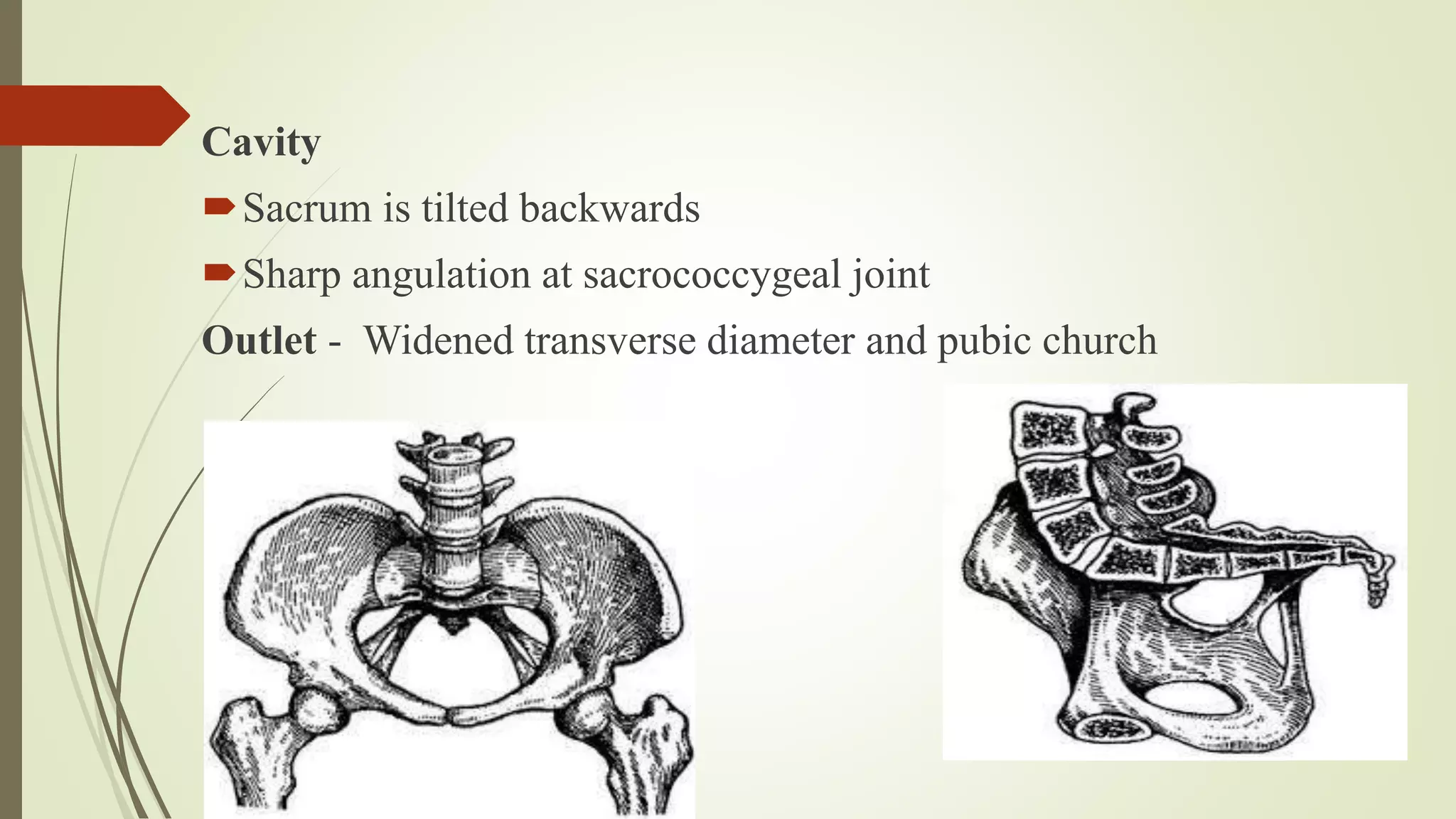
RACHITIC FLAT PELVIS
Rickets is predominantly a disease of early childhood when the bones
remain soft and unossified. In childhood, changes occur in the bony
pelvis due to weight bearing .The classic changes in the pelvic bones
are shown
Inlet-
Sacral promontary is pushed downwards or forwards producing a
reniform shape
Short Anterior posterior diameter
Cavity
Sacrum is tilted backwards
Sharp angulation at sacrococcygeal joint
Outlet - Widened transverse diameter and pubic church
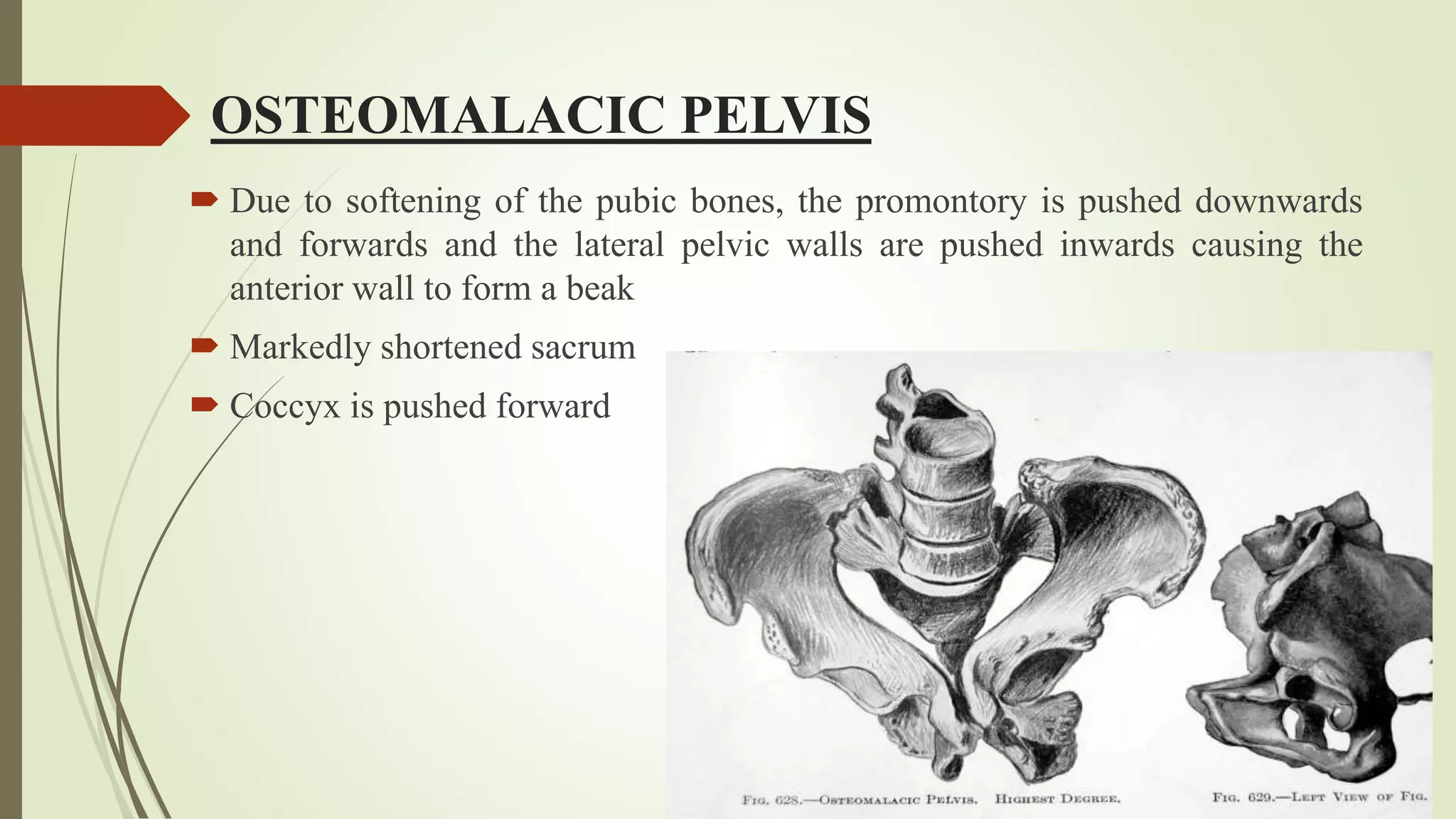
OSTEOMALACIC PELVIS
 Due to softening of the pubic bones, the promontory is pushed downwards
and forwards and the lateral pelvic walls are pushed inwards causing the
anterior wall to form a beak
 Markedly shortened sacrum
 Coccyx is pushed forward
ASYMMETRICAL/ OBLIQUELY
CONTRACTED PELVIS
 Naegel’s pelvis
Scoliotic pelvis
 Disease affecting one hip or sacroiliac joint.
 Tumors or fracture affecting one side of the pelvic bones during
growing age.
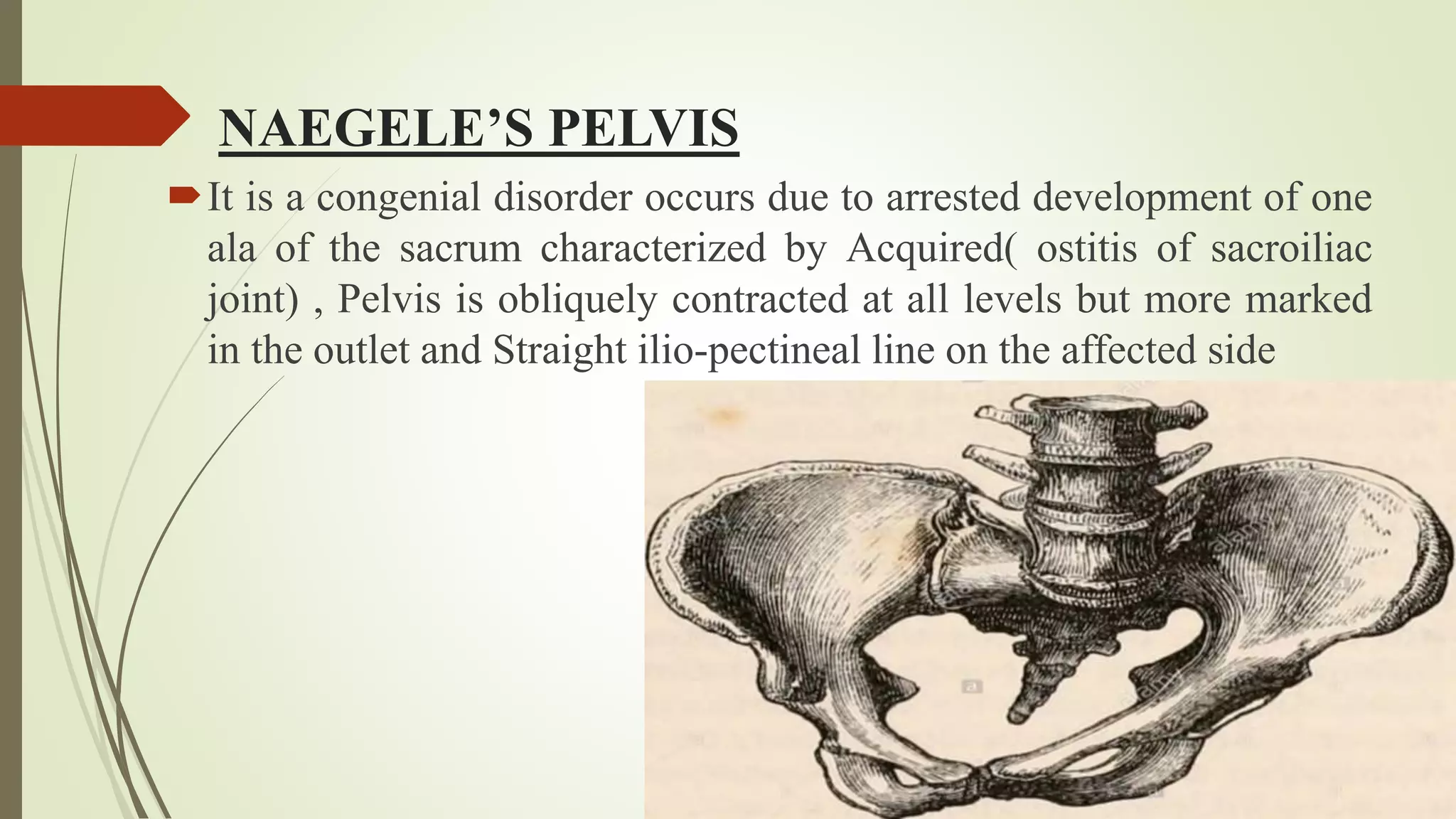
NAEGELE’S PELVIS
It is a congenial disorder occurs due to arrested development of one
ala of the sacrum characterized by Acquired( ostitis of sacroiliac
joint) , Pelvis is obliquely contracted at all levels but more marked
in the outlet and Straight ilio-pectineal line on the affected side
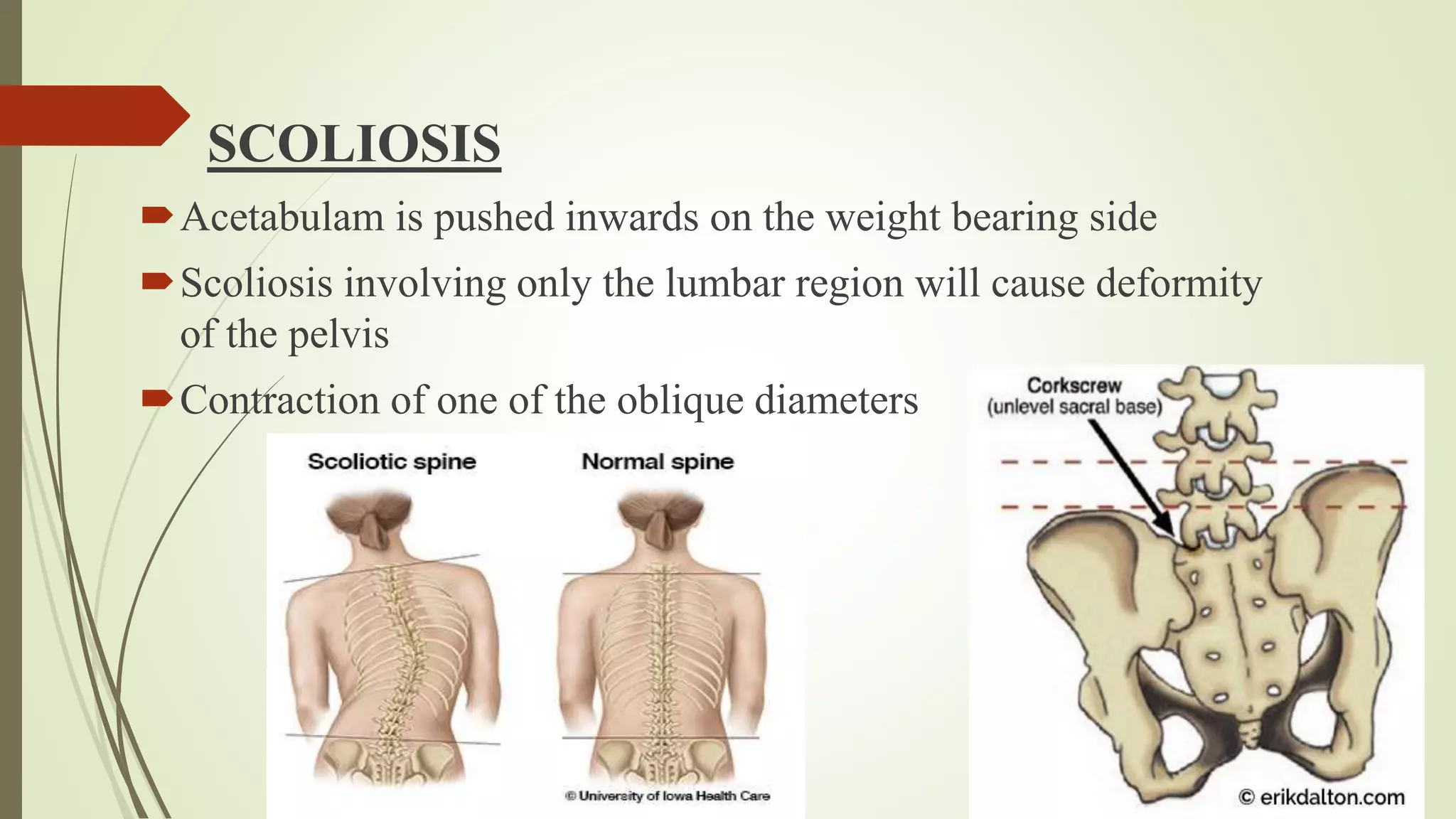
SCOLIOSIS
Acetabulam is pushed inwards on the weight bearing side
Scoliosis involving only the lumbar region will cause deformity
of the pelvis
Contraction of one of the oblique diameters
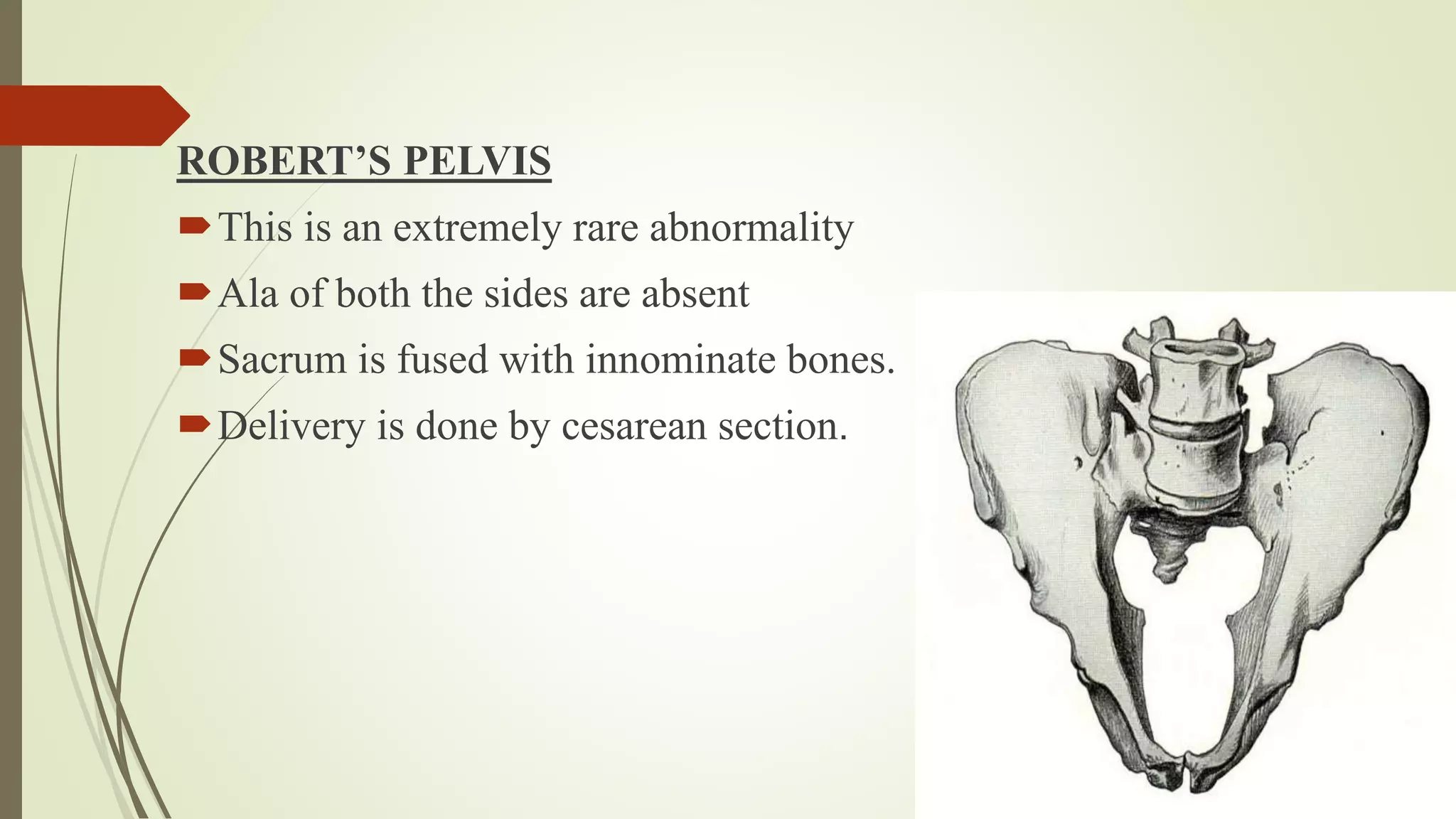
ROBERT’S PELVIS
This is an extremely rare abnormality
Ala of both the sides are absent
Sacrum is fused with innominate bones.
Delivery is done by cesarean section.
KYPHOTIC PELVIS
 Sacrum is tilted backward in the upper part towards the lower part, it
is narrow and straight
 APD is increased at the inlet but is decreased at the outlet
 Narrow suprapubic angle
 Pendulous abdomen
DIAGNOSIS OF CONTRACTED PELVIS
 History-
• Rickets: is expected if there is a history of delayed walking and
dentition.
• Trauma or diseases: of the pelvis, spines or lower limbs.
• Bad obstetric history: e.g. prolonged labor ended by; difficult
forceps, caesarean section or still birth.
 Examination-
GENERAL EXAMINATION:-
Gait: abnormal gait suggesting abnormalities in the pelvis,
spines or lower limbs.
Stature: women with less than 150 cm height usually have
contracted pelvis.
Spines and lower limbs: may have a disease or lesion.
 Manifestations of rickets.
Dystocia dystrophia syndrome: the woman is –
▪ Short, Stocky, Subfertile, having android pelvis and Masculine
hair distribution, with history of delayed menarche.
▪ This woman is more exposed to occipito-posterior position and
dystocia.
Abdominal examination:
 Non engagement of the head.
 Pendulous abdomen: in a primigravida.
 Malpresentations: are more common.
PELVIMETRY- It is assessment of the pelvic diameters and capacity done
at 38-39 weeks. It includes:
• CLINICAL PELVIMETRY:-
 Internal pelvimetry for:- ▪ inlet, ▪ cavity, and ▪ outlet.
 External pelvimetry for: ▪ inlet and ▪ outlet.
 Imaging pelvimetry-
 X-ray, Computerised tomography (CT)
 Magnetic resonance imaging (MRI).
CEPHALO PELVIC DISPROPORTION(CPD)
DEFINITION: Disproportion, in relation to the pelvis, is a state
where the normal proportion between the size of fetus to the size
of the pelvis is disturbed. The disparity in the relation between
the head and the pelvis is called cephalopelvic disproportion.
- D.C. DUTTA
VARIATION IN CEPHALO- PELVIC
DISPROOPORTION
Disproportion may be either due to an average size baby with a
small pelvis or due to a big baby (hydrocephalus) with normal
size pelvis or due to a combination of both the factors.
Pelvic inlet contraction is considered when the obstetric
conjugate is < 10 cm or the greatest transverse diameter is < 12
cm or diagonal conjugate is < 11 cm.
Contracted Midpelvis: Midpelvis is considered contracted when
the sum of the interischial spinous and posterior sagittal
diameters of the midpelvis (normal: 10.0 + 5 = 15.0 cm) is 13.0
cm or below.
DIAGNOSIS OF CEPHALOPELVIC
DISPROPORTION (CPD) AT THE BRIM
The presence and degree of cephalopelvic disproportion at the brim
can be ascertained by the following:
Clinical –
(a)Abdominal method
(b) Abdominovaginal (Muller-Munro Kerr)
Imaging pelvimetry
Cephalometry
(a) Ultrasound
(b) Magnetic Resonance Imaging: MRI is useful to assess the pelvic
capacity at different planes. It is equally informative to assess the
fetal size, fetal head volume and pelvic soft tissues which are also
important for successful vaginal delivery
(c) X-ray Clinical: Lateral X-ray view with the patient in standing
position is helpful in assessing cephalopelvic proportion in all planes
of the pelvis — inlet, midpelvic and outlet.
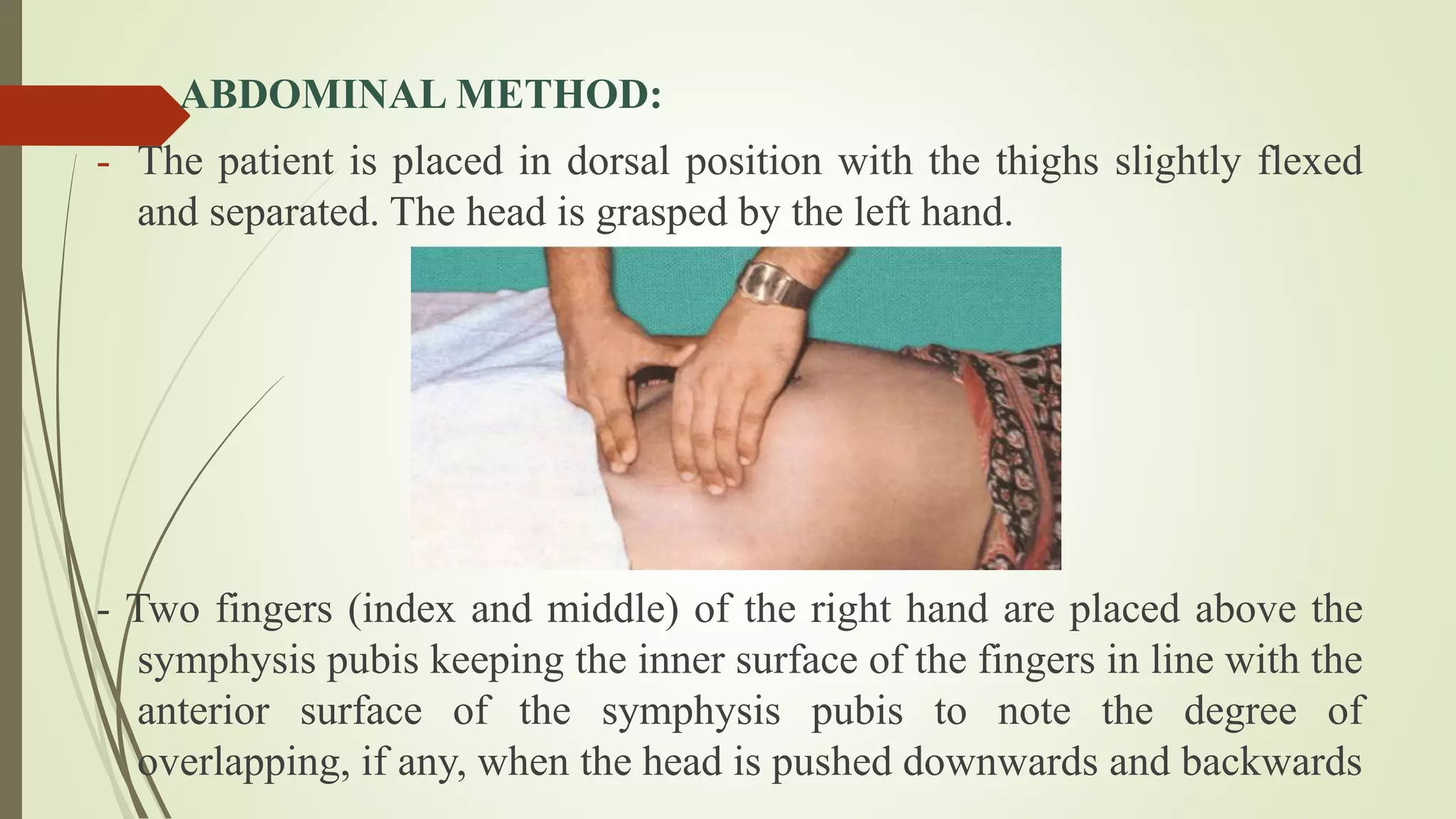
ABDOMINAL METHOD:
- The patient is placed in dorsal position with the thighs slightly flexed
and separated. The head is grasped by the left hand.
- Two fingers (index and middle) of the right hand are placed above the
symphysis pubis keeping the inner surface of the fingers in line with the
anterior surface of the symphysis pubis to note the degree of
overlapping, if any, when the head is pushed downwards and backwards
INTERFERENCE:
The head can be pushed down in the pelvis without overlapping of
the parietal bone on the symphysis pubis - no disproportion.
Head can be pushed down a little but there is slight overlapping of
the parietal bone evidenced by touch on the under surface of the
fingers (overlapping by 0.5 cm or 1/4" which is the thickness of the
symphysis pubis) - moderate disproportion.
Head cannot be pushed down and instead the parietal bone
overhangs the symphysis pubis displacing the fingers - severe
disproportion
ABDOMINOVAGINAL METHOD (MULLER-MUNRO KERR):
This bimanual method is superior to the abdominal method as the
pelvic assessment can be done simultaneously.
Muller introduced the method by placing the vaginal finger tips at
the level of ischial spines to note the descent of the head.
 Munro Kerr added placement of the thumb over the symphysis
pubis to note the degree of overlapping Lower bowel is emptied,
preferably by enema.
The patient is asked to empty the bladder. The patient is placed in
lithotomy position and the internal examination is done taking all
aseptic precautions.
Two fingers of the right hand are introduced into the vagina with
the finger tips placed at the level of ischial spines and thumb is
placed over the symphysis pubis.
The head is grasped by the left hand and is pushed in a downward
and backward direction into the pelvis
INTERFERENCE
(1) The head can be pushed down up to the level of ischial spines and
there is no overlapping of the parietal bone over the symphysis
pubis — no disproportion
(2) The head can be pushed down a little but not up to the level of
ischial spines and there is slight overlapping of the parietal bone —
slight or moderate disproportion
(3) The head cannot be pushed down and instead the parietal bone
overhangs the symphysis pubis displacing the thumb — severe
disproportion
EFFECTS OF CONTRACTED PELVIS ON
PREGNANCY AND LABOR:
1) PREGNANCY: The general course of pregnancy is not much
affected. However, the following may occur:
 There is more chance of incarceration of the retroverted gravid
uterus in flat pelvis.
 Abdomen becomes pendulous especially in multigravida with lax
abdominal wall.
 Malpresentations are increased three to four times and so also
increased frequency of unstable lie.
2) LABOR: The course of events in labor is greatly modified
depending upon the degree of pelvic contraction and presentation
of the fetus:
 There is increased incidence of early rupture of the membranes.
 Incidence of cord prolapse is increased
 Cervical dilatation is slowed
 There is increased tendency of prolonged labor and in neglected
cases, obstructed labor with features of exhaustion, dehydration,
ketoacidosis and sepsis
There is increased incidence of operative interference, shock,
postpartum; and hemorrhage and sepsis.
Maternal injuries: The injuries of the genital tract may occur
spontaneously or following operative delivery. There is increased
maternal morbidity and mortality.
Fetal hazards: Fetal risks are due to trauma and asphyxia. The net
effect leads to increased perinatal mortality and morbidity.
MANAGEMENT OF CONTRACTED
PELVIS
▪ It depends mainly on the degree of disproportion.
▪ Minor disproportion (minor degree of contracted pelvis):- vaginal delivery
▪ Moderate disproportion (moderate degree of contracted pelvis): trial labor, if
failed caesarean section.
▪ Marked disproportion (severe or extreme degree of contracted pelvis):
caesarean section.
TRIAL LABOUR
Definition: It is the conduction of spontaneous labor in a
moderate degree of cephalopelvic disproportion, in an
institution under supervision with watchful expectancy,
hoping for a vaginal delivery. Every arrangement should
be made available for operative delivery, either vaginal or
abdominal, if the condition so arises
Conduction of trial labor:
The labor should ideally be spontaneous in onset. But in cases
where the labor fails to start even on due date, induction of labor
may be done.
 Oral feeding remains suspended and hydration is maintained by
intravenous drip. Adequate analgesic is administered .
The progress of the labor is mapped with a partograph –
a) progressive descent of the head and
(b) progressive dilatation of the cervix
 Fetal monitoring is done
 If there is failure to progress due to inadequate uterine contraction, augmentation of
labor may be done by amniotomy along with oxytocin infusion. On no account
should the procedure be employed before the cervix is at least 3 cm (2 fingers)
dilated.
 After the membranes rupture, pelvic examination is to be done:
(a) To exclude cord prolapse
(b) To note the color of liquor
(c) To assess the pelvis once more and
(d) To note the condition of the cervix including pressure of the presenting part on the
cervix.
INDICATIONS OF CAESAREAN SECTION
IN CONTRACTED PELVIS
• Moderate disproportion if trial of labor is contraindicated or failed.
• Marked disproportion, whether the foetus is live or dead.
• Contracted outlet.
• Contracted pelvis with other indications as; -
- Elderly primigravida,
- Malpresentations,
- Placenta praevia.
NURSING MANAGEMENT
Check vitals every 4hourly
Monitor both contraction and fetus continuously
Report immediately the sign of fetal distress
Position the mother in ways to increase the pelvis diameter such as
sitting and squatting which increase the outlet diameter and also aid
in fetal descent
Assess the fetus for hypoxia
Provide support to the client and the family members in coping with
stress of a complicated labor
NURSING DIAGNOSIS:
Prolonged labor related to disproportion of maternal pelvis as
evidence by recording of partograph
fetal distress related to prolonged labor as evidence by
contraction stress test.
Risk of fetal malpresentation related to contrated pelvis as
evidence by vaginal examination.
COMPLICATIONS OF CONTRACTED PELVIS
MATERNAL:
 During pregnancy:-
▪ Malpresentations.
▪ Pendulous abdomen.
▪ Nonengagement.
 During labour:-
▪ Inertia, slow cervical dilatation and prolonged labour.
▪ Premature rupture of membranes and cord prolapse.
▪ Obstructed labour and rupture uterus.
▪ Injury to pelvic joints or nerves from difficult forceps delivery.
▪ Postpartum haemorrhage.
FOETAL:
o Intracranial haemorrhage.
o Asphyxia.
o Fracture skull.
o Nerve injuries.
o Intra-amniotic infection.
ABSTRACT
Bansal Shagun ,Guleria Kiran , Agarwal Neera, conducted a prospective study
on Evaluation of Sacral Rhomboid Dimensions to Predict Contracted Pelvis: A
Pilot Study of Indian Primigravidae at University College of Medical Sciences
and Guru Teg Bahadur Hospital, New Delhi, 2008, In 300 uncomplicated
primigravidae after 37 weeks gestation, transverse and vertical diagonal of sacral
rhomboid were recorded. Post- delivery, patients fell into two groups: Normal
Deliveries and Contracted pelvis. Analysis was done with SPSS version 10.5
and cross tabulation. Study fine that Rhomboid dimensions were smaller in
Contracted Pelvis group. On univariate analysis, 10th percentile cutoff of
Transverse Diameter was the most significant risk factor with Odds ratio of 7.5
and height below 10th percentile had Odds ratio of 2.7 and 2.99 respectively.
Both dimensions of sacral rhomboid below 10th percentile increased risk of
Contracted pelvis by 13 times and detected 2 out of 3 at risk women. Thus the
study concluded as Smaller dimensions of sacral rhomboid are promising
screening parameter for contracted pelvis which can be used in community to
pick up high risk primigravidae.
REFERENCES:
 Dutta D.C. Textbook of Obstertics , 8th Edition. India. Jaypee Bothers
Medical Publisher(P) Ltd: Nov 2015. Pp-402- 407
 Bhaskar Nima. Midwifery and Obstetrical Nursing. 2nd .Edition. India.
EMMESS Medical Publisher: 2017 .Pp -437- 442
 Freaser Diane M, Cooper Margaret A. Myles Textbook for Midwives , 15th
Edition.India.Churchill Livingstone Elsevier Publisher 2009, pp-105- 108
 Bansal Shagun ,Guleria Kiran , Agarwal Neera, Evaluation of Sacral
Rhomboid Dimensions to Predict Contracted Pelvis: A Pilot Study of Indian
Primigravidae, The Journal of Obstetrics and Gynecology of India
,September–October 2011[Internet], 61(5)pp 523–527 cited[1 Dec
2019],available at www.ncbi.nlm.nih.gov
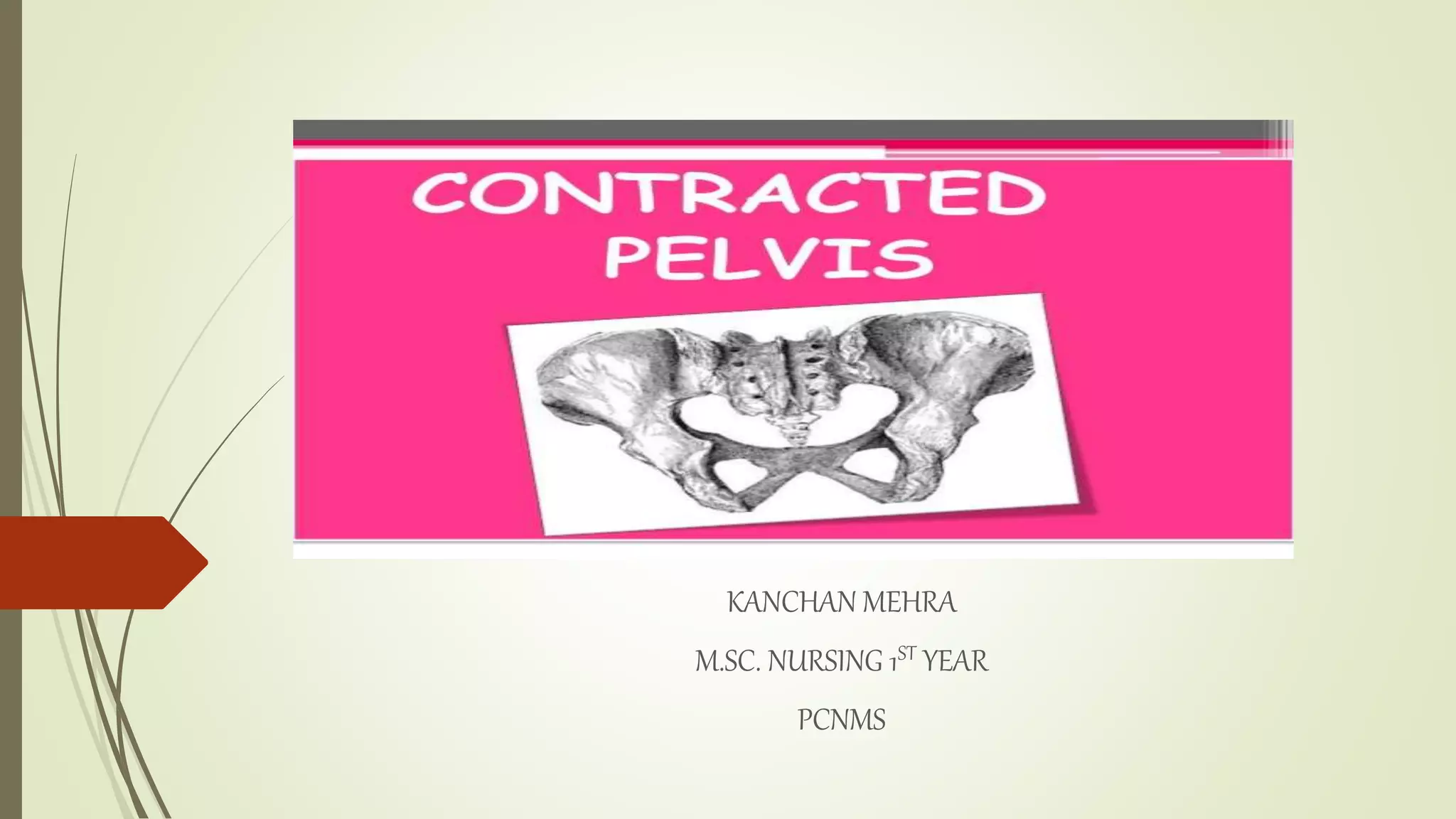
Contracted pelvis

Contracted pelvis

  • 1.
  • 2.
    INTRODUCTION The female pelvisis constructed to accommodate the fetus during pregnancy and to facilitate its download passage through the pelvic cavity in child birth. The most obvious difference between the male and female pelvis is in the shape. A woman's hips are wider and her pelvic cavity is round and relatively large. There are differences in the shape of the female pelvis.
  • 3.
    DEFINITION Anatomically contracted pelvisis defined as one where the essential diameters of one or more planes are shortened by 0.5cm.  Obstetric definition which states alteration in the size and/ or shape of the pelvis of sufficient degree as to alter the normal mechanism of labor in an average size baby. D.C.DUTTA
  • 4.
    FACTORS INFLUENCING THESIZE AND SHAPE OF THE PELVIS  Developmental factor: hereditary or congenital.  Racial factor.  Nutritional factor: malnutrition results in small pelvis.  Sexual factor: as excessive androgen may produce android pelvis.  Metabolic factor: As rickets and osteomalacia.  Trauma, diseases or tumors of the bony pelvis, legs or spines.
  • 5.
    ETIOLOGY OF CONTRACTEDPELVIS  Gross degree of contracted pelvis is nowadays a rarity. Severe malnutrition, rickets, osteomalacia and bone tuberculosis affecting grossly the pelvic architecture are now rarely met in clinical practice. Instead, minor variation in size and/or shape of the pelvis is commonly found which is often overlooked until complication arises.
  • 6.
    Common causes ofcontracted pelvis are I) Nutritional and environmental defects —  Minor variation: Common  Major: Rachitic and osteomalacic — rare
  • 7.
    2. Diseases orinjuries affecting the bones of the pelvis — fracture, tumors, tubercular arthritis Spine - kyphosis, scoliosis, coccygeal deformity Lower limbs — poliomyelitis, hip joint disease. 3. Development defects — Naegele’s pelvis  Robert’s pelvis; high or low assimilation pelvis. 4. Short women
  • 8.
    RACHITIC FLAT PELVIS Ricketsis predominantly a disease of early childhood when the bones remain soft and unossified. In childhood, changes occur in the bony pelvis due to weight bearing .The classic changes in the pelvic bones are shown Inlet- Sacral promontary is pushed downwards or forwards producing a reniform shape Short Anterior posterior diameter
  • 9.
    Cavity Sacrum is tiltedbackwards Sharp angulation at sacrococcygeal joint Outlet - Widened transverse diameter and pubic church
  • 10.
    OSTEOMALACIC PELVIS  Dueto softening of the pubic bones, the promontory is pushed downwards and forwards and the lateral pelvic walls are pushed inwards causing the anterior wall to form a beak  Markedly shortened sacrum  Coccyx is pushed forward
  • 11.
    ASYMMETRICAL/ OBLIQUELY CONTRACTED PELVIS Naegel’s pelvis Scoliotic pelvis  Disease affecting one hip or sacroiliac joint.  Tumors or fracture affecting one side of the pelvic bones during growing age.
  • 12.
    NAEGELE’S PELVIS It isa congenial disorder occurs due to arrested development of one ala of the sacrum characterized by Acquired( ostitis of sacroiliac joint) , Pelvis is obliquely contracted at all levels but more marked in the outlet and Straight ilio-pectineal line on the affected side
  • 13.
    SCOLIOSIS Acetabulam is pushedinwards on the weight bearing side Scoliosis involving only the lumbar region will cause deformity of the pelvis Contraction of one of the oblique diameters
  • 14.
    ROBERT’S PELVIS This isan extremely rare abnormality Ala of both the sides are absent Sacrum is fused with innominate bones. Delivery is done by cesarean section.
  • 15.
    KYPHOTIC PELVIS  Sacrumis tilted backward in the upper part towards the lower part, it is narrow and straight  APD is increased at the inlet but is decreased at the outlet  Narrow suprapubic angle  Pendulous abdomen
  • 16.
    DIAGNOSIS OF CONTRACTEDPELVIS  History- • Rickets: is expected if there is a history of delayed walking and dentition. • Trauma or diseases: of the pelvis, spines or lower limbs. • Bad obstetric history: e.g. prolonged labor ended by; difficult forceps, caesarean section or still birth.
  • 17.
     Examination- GENERAL EXAMINATION:- Gait:abnormal gait suggesting abnormalities in the pelvis, spines or lower limbs. Stature: women with less than 150 cm height usually have contracted pelvis. Spines and lower limbs: may have a disease or lesion.  Manifestations of rickets.
  • 18.
    Dystocia dystrophia syndrome:the woman is – ▪ Short, Stocky, Subfertile, having android pelvis and Masculine hair distribution, with history of delayed menarche. ▪ This woman is more exposed to occipito-posterior position and dystocia. Abdominal examination:  Non engagement of the head.  Pendulous abdomen: in a primigravida.  Malpresentations: are more common.
  • 19.
    PELVIMETRY- It isassessment of the pelvic diameters and capacity done at 38-39 weeks. It includes: • CLINICAL PELVIMETRY:-  Internal pelvimetry for:- ▪ inlet, ▪ cavity, and ▪ outlet.  External pelvimetry for: ▪ inlet and ▪ outlet.  Imaging pelvimetry-  X-ray, Computerised tomography (CT)  Magnetic resonance imaging (MRI).
  • 21.
    CEPHALO PELVIC DISPROPORTION(CPD) DEFINITION:Disproportion, in relation to the pelvis, is a state where the normal proportion between the size of fetus to the size of the pelvis is disturbed. The disparity in the relation between the head and the pelvis is called cephalopelvic disproportion. - D.C. DUTTA
  • 22.
    VARIATION IN CEPHALO-PELVIC DISPROOPORTION Disproportion may be either due to an average size baby with a small pelvis or due to a big baby (hydrocephalus) with normal size pelvis or due to a combination of both the factors. Pelvic inlet contraction is considered when the obstetric conjugate is < 10 cm or the greatest transverse diameter is < 12 cm or diagonal conjugate is < 11 cm.
  • 23.
    Contracted Midpelvis: Midpelvisis considered contracted when the sum of the interischial spinous and posterior sagittal diameters of the midpelvis (normal: 10.0 + 5 = 15.0 cm) is 13.0 cm or below.
  • 24.
    DIAGNOSIS OF CEPHALOPELVIC DISPROPORTION(CPD) AT THE BRIM The presence and degree of cephalopelvic disproportion at the brim can be ascertained by the following: Clinical – (a)Abdominal method (b) Abdominovaginal (Muller-Munro Kerr) Imaging pelvimetry Cephalometry (a) Ultrasound
  • 25.
    (b) Magnetic ResonanceImaging: MRI is useful to assess the pelvic capacity at different planes. It is equally informative to assess the fetal size, fetal head volume and pelvic soft tissues which are also important for successful vaginal delivery (c) X-ray Clinical: Lateral X-ray view with the patient in standing position is helpful in assessing cephalopelvic proportion in all planes of the pelvis — inlet, midpelvic and outlet.
  • 26.
    ABDOMINAL METHOD: - Thepatient is placed in dorsal position with the thighs slightly flexed and separated. The head is grasped by the left hand. - Two fingers (index and middle) of the right hand are placed above the symphysis pubis keeping the inner surface of the fingers in line with the anterior surface of the symphysis pubis to note the degree of overlapping, if any, when the head is pushed downwards and backwards
  • 27.
    INTERFERENCE: The head canbe pushed down in the pelvis without overlapping of the parietal bone on the symphysis pubis - no disproportion. Head can be pushed down a little but there is slight overlapping of the parietal bone evidenced by touch on the under surface of the fingers (overlapping by 0.5 cm or 1/4" which is the thickness of the symphysis pubis) - moderate disproportion. Head cannot be pushed down and instead the parietal bone overhangs the symphysis pubis displacing the fingers - severe disproportion
  • 28.
    ABDOMINOVAGINAL METHOD (MULLER-MUNROKERR): This bimanual method is superior to the abdominal method as the pelvic assessment can be done simultaneously. Muller introduced the method by placing the vaginal finger tips at the level of ischial spines to note the descent of the head.  Munro Kerr added placement of the thumb over the symphysis pubis to note the degree of overlapping Lower bowel is emptied, preferably by enema. The patient is asked to empty the bladder. The patient is placed in lithotomy position and the internal examination is done taking all aseptic precautions.
  • 29.
    Two fingers ofthe right hand are introduced into the vagina with the finger tips placed at the level of ischial spines and thumb is placed over the symphysis pubis. The head is grasped by the left hand and is pushed in a downward and backward direction into the pelvis
  • 30.
    INTERFERENCE (1) The headcan be pushed down up to the level of ischial spines and there is no overlapping of the parietal bone over the symphysis pubis — no disproportion (2) The head can be pushed down a little but not up to the level of ischial spines and there is slight overlapping of the parietal bone — slight or moderate disproportion (3) The head cannot be pushed down and instead the parietal bone overhangs the symphysis pubis displacing the thumb — severe disproportion
  • 31.
    EFFECTS OF CONTRACTEDPELVIS ON PREGNANCY AND LABOR: 1) PREGNANCY: The general course of pregnancy is not much affected. However, the following may occur:  There is more chance of incarceration of the retroverted gravid uterus in flat pelvis.  Abdomen becomes pendulous especially in multigravida with lax abdominal wall.  Malpresentations are increased three to four times and so also increased frequency of unstable lie.
  • 32.
    2) LABOR: Thecourse of events in labor is greatly modified depending upon the degree of pelvic contraction and presentation of the fetus:  There is increased incidence of early rupture of the membranes.  Incidence of cord prolapse is increased  Cervical dilatation is slowed  There is increased tendency of prolonged labor and in neglected cases, obstructed labor with features of exhaustion, dehydration, ketoacidosis and sepsis There is increased incidence of operative interference, shock, postpartum; and hemorrhage and sepsis.
  • 33.
    Maternal injuries: Theinjuries of the genital tract may occur spontaneously or following operative delivery. There is increased maternal morbidity and mortality. Fetal hazards: Fetal risks are due to trauma and asphyxia. The net effect leads to increased perinatal mortality and morbidity.
  • 34.
    MANAGEMENT OF CONTRACTED PELVIS ▪It depends mainly on the degree of disproportion. ▪ Minor disproportion (minor degree of contracted pelvis):- vaginal delivery ▪ Moderate disproportion (moderate degree of contracted pelvis): trial labor, if failed caesarean section. ▪ Marked disproportion (severe or extreme degree of contracted pelvis): caesarean section.
  • 35.
    TRIAL LABOUR Definition: Itis the conduction of spontaneous labor in a moderate degree of cephalopelvic disproportion, in an institution under supervision with watchful expectancy, hoping for a vaginal delivery. Every arrangement should be made available for operative delivery, either vaginal or abdominal, if the condition so arises
  • 36.
    Conduction of triallabor: The labor should ideally be spontaneous in onset. But in cases where the labor fails to start even on due date, induction of labor may be done.  Oral feeding remains suspended and hydration is maintained by intravenous drip. Adequate analgesic is administered . The progress of the labor is mapped with a partograph – a) progressive descent of the head and (b) progressive dilatation of the cervix
  • 37.
     Fetal monitoringis done  If there is failure to progress due to inadequate uterine contraction, augmentation of labor may be done by amniotomy along with oxytocin infusion. On no account should the procedure be employed before the cervix is at least 3 cm (2 fingers) dilated.  After the membranes rupture, pelvic examination is to be done: (a) To exclude cord prolapse (b) To note the color of liquor (c) To assess the pelvis once more and (d) To note the condition of the cervix including pressure of the presenting part on the cervix.
  • 38.
    INDICATIONS OF CAESAREANSECTION IN CONTRACTED PELVIS • Moderate disproportion if trial of labor is contraindicated or failed. • Marked disproportion, whether the foetus is live or dead. • Contracted outlet. • Contracted pelvis with other indications as; - - Elderly primigravida, - Malpresentations, - Placenta praevia.
  • 39.
    NURSING MANAGEMENT Check vitalsevery 4hourly Monitor both contraction and fetus continuously Report immediately the sign of fetal distress Position the mother in ways to increase the pelvis diameter such as sitting and squatting which increase the outlet diameter and also aid in fetal descent Assess the fetus for hypoxia Provide support to the client and the family members in coping with stress of a complicated labor
  • 40.
    NURSING DIAGNOSIS: Prolonged laborrelated to disproportion of maternal pelvis as evidence by recording of partograph fetal distress related to prolonged labor as evidence by contraction stress test. Risk of fetal malpresentation related to contrated pelvis as evidence by vaginal examination.
  • 41.
    COMPLICATIONS OF CONTRACTEDPELVIS MATERNAL:  During pregnancy:- ▪ Malpresentations. ▪ Pendulous abdomen. ▪ Nonengagement.
  • 42.
     During labour:- ▪Inertia, slow cervical dilatation and prolonged labour. ▪ Premature rupture of membranes and cord prolapse. ▪ Obstructed labour and rupture uterus. ▪ Injury to pelvic joints or nerves from difficult forceps delivery. ▪ Postpartum haemorrhage.
  • 43.
    FOETAL: o Intracranial haemorrhage. oAsphyxia. o Fracture skull. o Nerve injuries. o Intra-amniotic infection.
  • 45.
    ABSTRACT Bansal Shagun ,GuleriaKiran , Agarwal Neera, conducted a prospective study on Evaluation of Sacral Rhomboid Dimensions to Predict Contracted Pelvis: A Pilot Study of Indian Primigravidae at University College of Medical Sciences and Guru Teg Bahadur Hospital, New Delhi, 2008, In 300 uncomplicated primigravidae after 37 weeks gestation, transverse and vertical diagonal of sacral rhomboid were recorded. Post- delivery, patients fell into two groups: Normal Deliveries and Contracted pelvis. Analysis was done with SPSS version 10.5 and cross tabulation. Study fine that Rhomboid dimensions were smaller in Contracted Pelvis group. On univariate analysis, 10th percentile cutoff of Transverse Diameter was the most significant risk factor with Odds ratio of 7.5 and height below 10th percentile had Odds ratio of 2.7 and 2.99 respectively. Both dimensions of sacral rhomboid below 10th percentile increased risk of Contracted pelvis by 13 times and detected 2 out of 3 at risk women. Thus the study concluded as Smaller dimensions of sacral rhomboid are promising screening parameter for contracted pelvis which can be used in community to pick up high risk primigravidae.
  • 46.
    REFERENCES:  Dutta D.C.Textbook of Obstertics , 8th Edition. India. Jaypee Bothers Medical Publisher(P) Ltd: Nov 2015. Pp-402- 407  Bhaskar Nima. Midwifery and Obstetrical Nursing. 2nd .Edition. India. EMMESS Medical Publisher: 2017 .Pp -437- 442  Freaser Diane M, Cooper Margaret A. Myles Textbook for Midwives , 15th Edition.India.Churchill Livingstone Elsevier Publisher 2009, pp-105- 108  Bansal Shagun ,Guleria Kiran , Agarwal Neera, Evaluation of Sacral Rhomboid Dimensions to Predict Contracted Pelvis: A Pilot Study of Indian Primigravidae, The Journal of Obstetrics and Gynecology of India ,September–October 2011[Internet], 61(5)pp 523–527 cited[1 Dec 2019],available at www.ncbi.nlm.nih.gov