Ms Ankita R Bhatiya
Assistant Professor
Shree P.M.Patel COLLEGE OF
PARAMEDICAL SCIENCE N
TECHNOLOGY
 It include:
 1.What is Pleural fluid?
 2.Function of Pleural fluid.
 3.Collection of Pleural fluid.
 4. Examination of Pleural fluid.
 Introduction:
 It is fluid which is present in the pleural cavity of
lungs b/w parietal pleura n visceral pleura.
 The pleural cavity is a potential space lined by
mesothelium of the visceral n parietal pleura.
 Pleural fluid Formation:
 Pleural fluid is a selective ultrafiltrate of plasma.
 Small amount of the Pleural fluid is also formed
from the cells lining the pleura and other by capillaries.
 There is about 60-70 ml of pleural fluid at any one time
and about 125 ml is generated every day.
 Composition of Pleural fluid:
o Volume: 60-70 ml
o Cell/mm3: 1000-3000
Mesothelial cell :60%
Monocyte:30 %
Lymphocyte: 5%
Neutrophil: 5%
o Protein: up to 3 gm/dl
o Glucose: Same as plasma
o LDH:70-140 U/L
 Function of Pleural fluid:
 Protection: It helps to protect the lungs from the
sudden injury n damaged.
 Also acts as a medium for the transfer of
substances from the lung tissue to blood .
 Nutrition :
 Removal of waste :
 Lubrication :
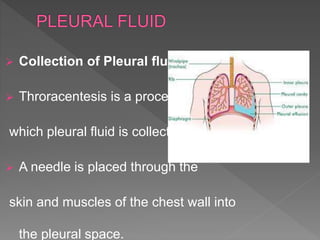
 Collection of Pleural fluid:
 Throracentesis is a process by
which pleural fluid is collected.
 A needle is placed through the
skin and muscles of the chest wall into
the pleural space.
 Indication of Pleural fluid:
1.Infections: Tuberculosis, Pneumonia (Bacterial,viral,fungal)
2. Neoplasm: Bronchogenic carcinoma, Metastatic carcinoma,
Lymphoma, Mesothelioma
3. Pulmonary infract
4.Non infections non inflammatory disease:
Rheumatoid disease
Systemic lupus erythreomatous
5. Extra pleural sources:
Pancreatitis
Ruptured esophagus
Urinithrorax
 Procedure:
1.Take consent of a patient.
2.Position of patient: The patient is sitting in an upright
position with arms & head extended to over bed table.
3.Proper aseptic precautions are taken
with the help of spirit –iodine-spirit.
4.Before puncture give injection of atrophin
intramuscularly to prevent vasovagal shock.
5.Give xylocane injection as local anesthesia before puncture.
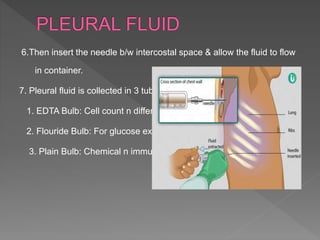
6.Then insert the needle b/w intercostal space & allow the fluid to flow
in container.
7. Pleural fluid is collected in 3 tubes:
1. EDTA Bulb: Cell count n differential count.
2. Flouride Bulb: For glucose examination.
3. Plain Bulb: Chemical n immunology study
 Examination of Pleural fluid:
1. Physical examination:
2. Chemical examination:
3. Microscopic examination:
 Physical examination of Pleural fluid:
1.Volume:
 Normally: 60 to 70 ml
 Transudates– 100 to 150 ml
Condition: Increase hydrostatic pressure
Decrease plasma oncotic pressure
Congestive heart failure
Hepatic cirrhosis
Hypoproteinemia
 Exudates– More than 150 ml
Condition: Pneumonia( Bacterial, Viral,Fungal)
Tuberculosis
Bronchogenic carcinoma, Metastatic carcinoma,
Lymphoma, Mesothelioma
Pulmonary infract
Rheumatoid disease
Systemic lupus erythreomatous
Pancreatitis, Ruptured esophagus,Urinithrorax
2. color:
 Normally: colorless
 Transudates: Pale yellow or straw clr
 Exudates:
Reddish: Presence of blood (Bacterial
pneumonia, Cancer, Pancreatitis.)
Green; Pseudochlyous effusion.
3.Appreance:
 Normally: Clear or transparent
 Transudate: Clear or transparent
 Exudate:
Turbid: Bacterial n viral Pneumonia,
Tuberculosis, Pancreatitis
Cloudy: Bacterial n fungal pneumonia
Purulent: Bacterial Pneumonia
Milky :Chylous effusion
4. Clot:
 Normally: absent
 Transudate: absent
 Exudate: Present
Tuberculous Peunomia
5,Specific gravity:
 Transudate: below 1.010
 Exudate: above 1.010
Pneumonia( Bacterial, Viral, Fungal)
Cancer
Pancreatitis
Rheumatoid pleuritis
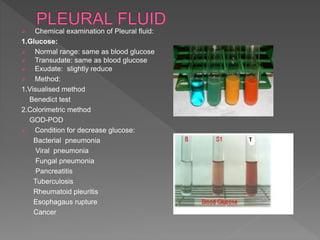
 Chemical examination of Pleural fluid:
1.Glucose:
 Normal range: same as blood glucose
 Transudate: same as blood glucose
 Exudate: slightly reduce
 Method:
1.Visualised method
Benedict test
2.Colorimetric method
GOD-POD
 Condition for decrease glucose:
Bacterial pneumonia
Viral pneumonia
Fungal pneumonia
Pancreatitis
Tuberculosis
Rheumatoid pleuritis
Esophagaus rupture
Cancer
2. Protein:
 Normal range: 6-8gm/dl
 Transudate: below 3 gm/dl
 Exudate: Above 3 gm/dl
 Method:
1.Turbidometric method method
SSA
Heat n acetic acid
2.Colorimetric method
Biuret
 Condition for Increase protein:
Pneumonia(Bacterial, fungal,viral)
Tuberculosis
3. Lactate:
 Normal range: 140-280U/L
 Transudate: NORMAL
 Exudate: Above 280U/L
 Method:
1.Colorimetric method
2. U.V.Kinetic method
 Condition for Increase protein:
Pleuritis(Bacterial, fungal,viral)
Tuberculosis
Melingancy
4. Amylase:
 Normal range: 30-110 U/L
 Transudate: Normal
 Exudate: Above 110U/L
 Method:
1.Colorimetric method
2. U.V.Kinetic method
 Condition for Increase protein:
Pancreatitis
Melingancy
Esophageal rupture
5. Lipid: (Tg)
 Normal range: 50-110 mg/dl
 Transudate: Normal
 Exudate: Above 110U/L
 Method:
1.Colorimetric method
 Condition for Increase protein:
Chylous effusion
6.Tumor marker:
 CEA: Carcino embryogenic antigen
 Transudate: Absent
 Exudate: Positive
 Condition for present tumor marker:
Lung carcinoma
Brest carcinoma
 Microscopic examination of pleural fluid:
1.TLC (Total leukocyte count):
 Normally: 0-50 cell/cumm
 Transudate: 0-50 cell/cumm
 Exudate: 50-500 cell
 Method: Same as Blood
 Condition in increase TLC count:
Bacterial Pneumonia
Viral Pneumonia
Fungal Pneumonia
Parasitic Infection
Pancreatitis
Tuberculosis
Malignancy
SLE
Congestive heart failure
Hypersensitivity reaction
2. DC:
 Method: Same as Blood
 Neutrophilia:
Bacterial Peumonia
Pulmonary infraction
Tuberculous Peumonia
Pancreatitis
Metastatic Tumor
 Lymphocytosis:
Viral Peumonia
Tuberculosis
Malignancy
Rheumatoid pleuritis
SLE
Leukemia
 Eosinophilia:
Parasitic Infection
Air in pleural space
Leukemia
Hypersensitivity reaction
Congestive heart failure
3.Gram’s Stain:
 Normally: Bacteria absent
 Transudate: Bacteria absent
 Exudates: Bacteria present
 Clinical Condition: Bacterial Pneumonia,pancreatitis
 Bacteria: Diplococci
Streptococcus
Pseudomonas
Neisseria
Homophiles influenza
4.AFB Stain:
 Normally: Bacteria absent
 Transudate: Bacteria present
 Exudates: Bacteria present
 Clinical Condition: Tuberculous Peumonia
 Bacteria: Mycobacterium Tuberculosis

Pleural fluid

  • 1.
    Ms Ankita RBhatiya Assistant Professor Shree P.M.Patel COLLEGE OF PARAMEDICAL SCIENCE N TECHNOLOGY
  • 2.
     It include: 1.What is Pleural fluid?  2.Function of Pleural fluid.  3.Collection of Pleural fluid.  4. Examination of Pleural fluid.
  • 3.
     Introduction:  Itis fluid which is present in the pleural cavity of lungs b/w parietal pleura n visceral pleura.  The pleural cavity is a potential space lined by mesothelium of the visceral n parietal pleura.  Pleural fluid Formation:  Pleural fluid is a selective ultrafiltrate of plasma.  Small amount of the Pleural fluid is also formed from the cells lining the pleura and other by capillaries.  There is about 60-70 ml of pleural fluid at any one time and about 125 ml is generated every day.
  • 4.
     Composition ofPleural fluid: o Volume: 60-70 ml o Cell/mm3: 1000-3000 Mesothelial cell :60% Monocyte:30 % Lymphocyte: 5% Neutrophil: 5% o Protein: up to 3 gm/dl o Glucose: Same as plasma o LDH:70-140 U/L
  • 5.
     Function ofPleural fluid:  Protection: It helps to protect the lungs from the sudden injury n damaged.  Also acts as a medium for the transfer of substances from the lung tissue to blood .  Nutrition :  Removal of waste :  Lubrication :
  • 6.
     Collection ofPleural fluid:  Throracentesis is a process by which pleural fluid is collected.  A needle is placed through the skin and muscles of the chest wall into the pleural space.
  • 7.
     Indication ofPleural fluid: 1.Infections: Tuberculosis, Pneumonia (Bacterial,viral,fungal) 2. Neoplasm: Bronchogenic carcinoma, Metastatic carcinoma, Lymphoma, Mesothelioma 3. Pulmonary infract 4.Non infections non inflammatory disease: Rheumatoid disease Systemic lupus erythreomatous 5. Extra pleural sources: Pancreatitis Ruptured esophagus Urinithrorax
  • 8.
     Procedure: 1.Take consentof a patient. 2.Position of patient: The patient is sitting in an upright position with arms & head extended to over bed table. 3.Proper aseptic precautions are taken with the help of spirit –iodine-spirit. 4.Before puncture give injection of atrophin intramuscularly to prevent vasovagal shock. 5.Give xylocane injection as local anesthesia before puncture.
  • 9.
    6.Then insert theneedle b/w intercostal space & allow the fluid to flow in container. 7. Pleural fluid is collected in 3 tubes: 1. EDTA Bulb: Cell count n differential count. 2. Flouride Bulb: For glucose examination. 3. Plain Bulb: Chemical n immunology study
  • 10.
     Examination ofPleural fluid: 1. Physical examination: 2. Chemical examination: 3. Microscopic examination:
  • 11.
     Physical examinationof Pleural fluid: 1.Volume:  Normally: 60 to 70 ml  Transudates– 100 to 150 ml Condition: Increase hydrostatic pressure Decrease plasma oncotic pressure Congestive heart failure Hepatic cirrhosis Hypoproteinemia  Exudates– More than 150 ml Condition: Pneumonia( Bacterial, Viral,Fungal) Tuberculosis Bronchogenic carcinoma, Metastatic carcinoma, Lymphoma, Mesothelioma Pulmonary infract Rheumatoid disease Systemic lupus erythreomatous Pancreatitis, Ruptured esophagus,Urinithrorax
  • 12.
    2. color:  Normally:colorless  Transudates: Pale yellow or straw clr  Exudates: Reddish: Presence of blood (Bacterial pneumonia, Cancer, Pancreatitis.) Green; Pseudochlyous effusion.
  • 13.
    3.Appreance:  Normally: Clearor transparent  Transudate: Clear or transparent  Exudate: Turbid: Bacterial n viral Pneumonia, Tuberculosis, Pancreatitis Cloudy: Bacterial n fungal pneumonia Purulent: Bacterial Pneumonia Milky :Chylous effusion
  • 14.
    4. Clot:  Normally:absent  Transudate: absent  Exudate: Present Tuberculous Peunomia 5,Specific gravity:  Transudate: below 1.010  Exudate: above 1.010 Pneumonia( Bacterial, Viral, Fungal) Cancer Pancreatitis Rheumatoid pleuritis
  • 15.
     Chemical examinationof Pleural fluid: 1.Glucose:  Normal range: same as blood glucose  Transudate: same as blood glucose  Exudate: slightly reduce  Method: 1.Visualised method Benedict test 2.Colorimetric method GOD-POD  Condition for decrease glucose: Bacterial pneumonia Viral pneumonia Fungal pneumonia Pancreatitis Tuberculosis Rheumatoid pleuritis Esophagaus rupture Cancer
  • 16.
    2. Protein:  Normalrange: 6-8gm/dl  Transudate: below 3 gm/dl  Exudate: Above 3 gm/dl  Method: 1.Turbidometric method method SSA Heat n acetic acid 2.Colorimetric method Biuret  Condition for Increase protein: Pneumonia(Bacterial, fungal,viral) Tuberculosis
  • 17.
    3. Lactate:  Normalrange: 140-280U/L  Transudate: NORMAL  Exudate: Above 280U/L  Method: 1.Colorimetric method 2. U.V.Kinetic method  Condition for Increase protein: Pleuritis(Bacterial, fungal,viral) Tuberculosis Melingancy
  • 18.
    4. Amylase:  Normalrange: 30-110 U/L  Transudate: Normal  Exudate: Above 110U/L  Method: 1.Colorimetric method 2. U.V.Kinetic method  Condition for Increase protein: Pancreatitis Melingancy Esophageal rupture
  • 19.
    5. Lipid: (Tg) Normal range: 50-110 mg/dl  Transudate: Normal  Exudate: Above 110U/L  Method: 1.Colorimetric method  Condition for Increase protein: Chylous effusion
  • 20.
    6.Tumor marker:  CEA:Carcino embryogenic antigen  Transudate: Absent  Exudate: Positive  Condition for present tumor marker: Lung carcinoma Brest carcinoma
  • 21.
     Microscopic examinationof pleural fluid: 1.TLC (Total leukocyte count):  Normally: 0-50 cell/cumm  Transudate: 0-50 cell/cumm  Exudate: 50-500 cell  Method: Same as Blood  Condition in increase TLC count: Bacterial Pneumonia Viral Pneumonia Fungal Pneumonia Parasitic Infection Pancreatitis Tuberculosis Malignancy SLE Congestive heart failure Hypersensitivity reaction
  • 22.
    2. DC:  Method:Same as Blood  Neutrophilia: Bacterial Peumonia Pulmonary infraction Tuberculous Peumonia Pancreatitis Metastatic Tumor  Lymphocytosis: Viral Peumonia Tuberculosis Malignancy Rheumatoid pleuritis SLE Leukemia  Eosinophilia: Parasitic Infection Air in pleural space Leukemia Hypersensitivity reaction Congestive heart failure
  • 23.
    3.Gram’s Stain:  Normally:Bacteria absent  Transudate: Bacteria absent  Exudates: Bacteria present  Clinical Condition: Bacterial Pneumonia,pancreatitis  Bacteria: Diplococci Streptococcus Pseudomonas Neisseria Homophiles influenza 4.AFB Stain:  Normally: Bacteria absent  Transudate: Bacteria present  Exudates: Bacteria present  Clinical Condition: Tuberculous Peumonia  Bacteria: Mycobacterium Tuberculosis