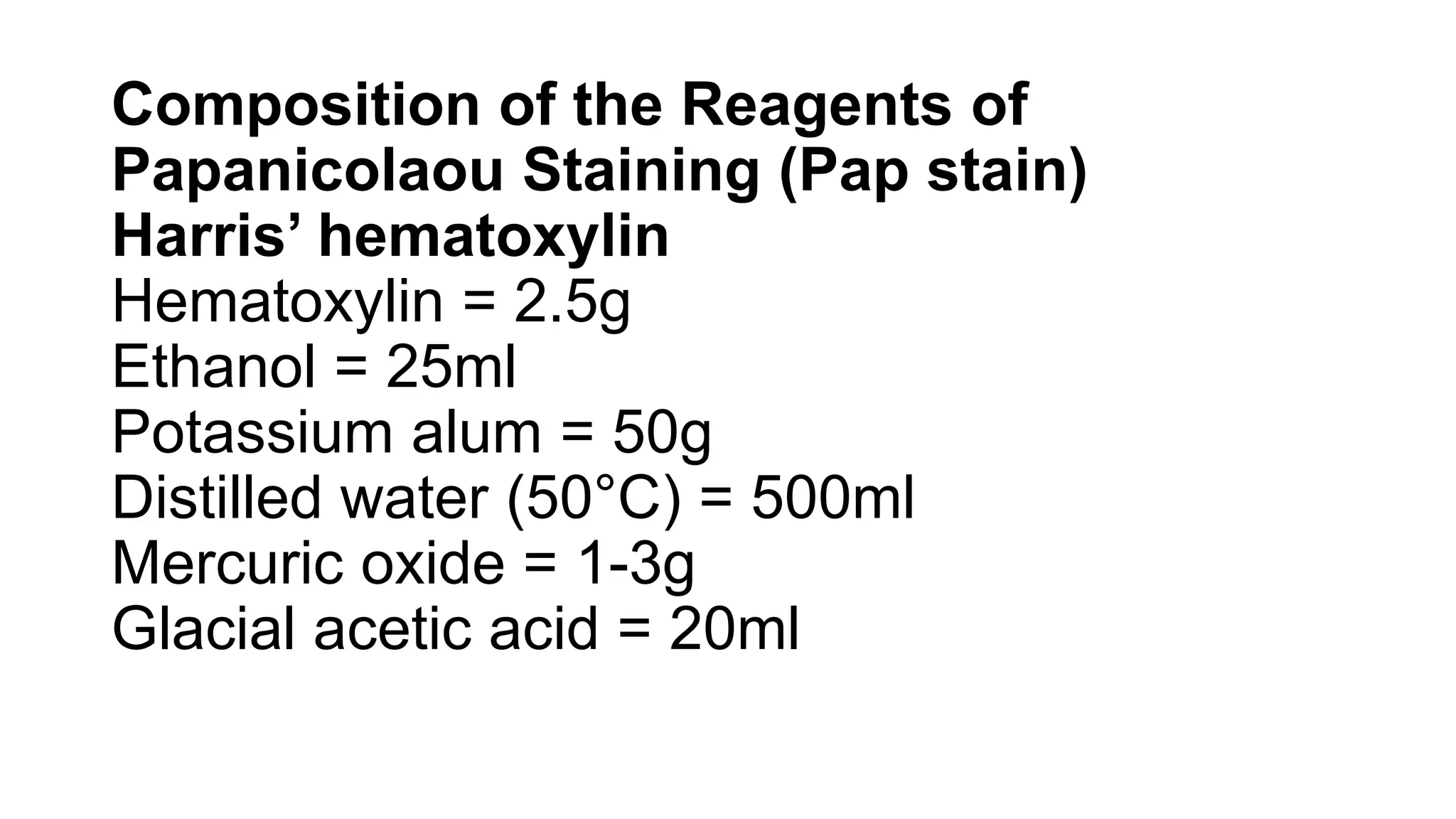
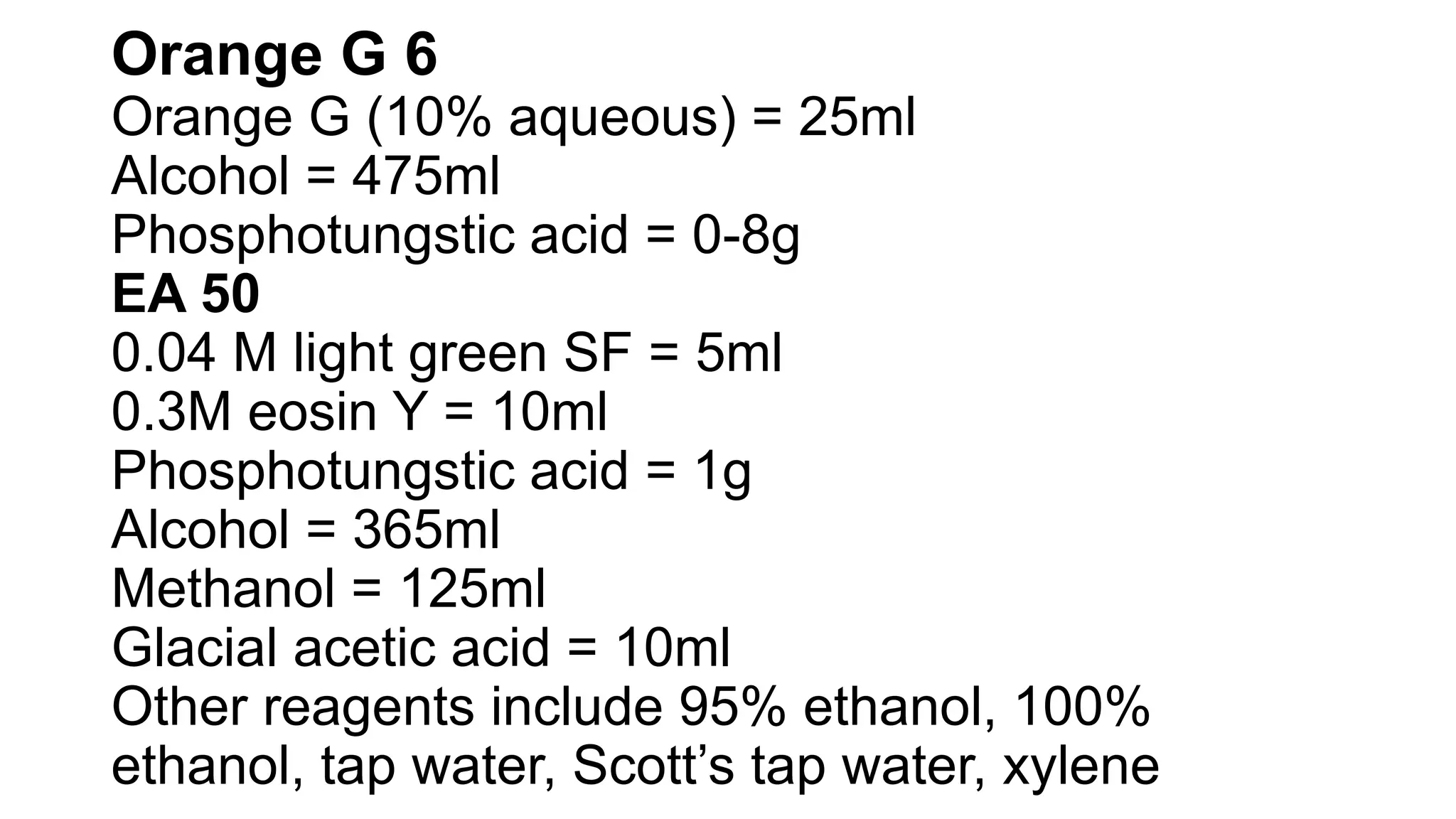
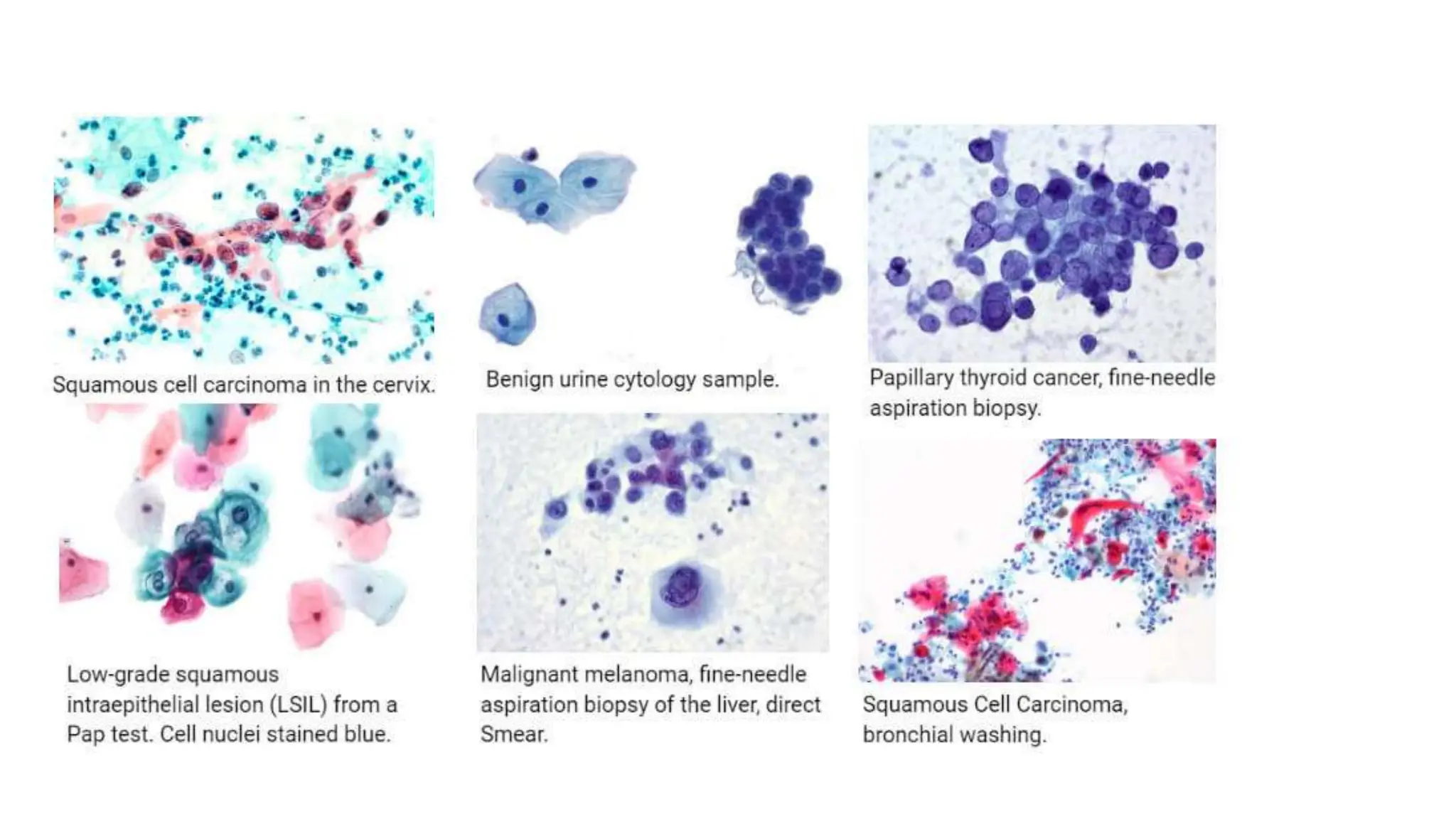
Papanicolaou staining, also known as a Pap smear, is a screening technique used to detect cervical cancer. It involves differentially staining cell components using multiple dyes. George Papanicolaou first developed the Pap stain technique in 1942 to distinguish cell types under a microscope. The stain uses basic and acidic dyes that bind to different cell components, allowing nuclei, cytoplasm, and cell types to be identified by their colors. A Pap smear can detect pre-cancerous changes in the cervix so that cancer treatment can begin early. It has significantly reduced cervical cancer rates in countries with widespread screening programs.