P. SUNIL KUMAR
Dept.of Haematology & Transfusion Medicine
St.John’s Medical College & Hospital
Bangalore
10/13/2018 1
SUNIL KUMAR.P ST.JOHN'S MEDICAL
COLLEGE
BODY FLUIDS
Cerebrospinal fluid
Peritoneal fluid(Ascitic fluid)
Synovial fluid
Pleural fluid
Pericardial fluid
Sputum
10/13/2018 2
SUNIL KUMAR.P ST.JOHN'S MEDICAL
COLLEGE
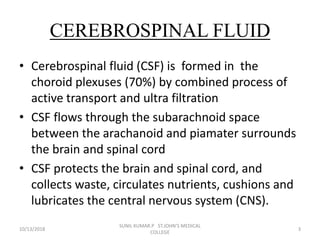
CEREBROSPINAL FLUID
• Cerebrospinal fluid (CSF) is formed in the
choroid plexuses (70%) by combined process of
active transport and ultra filtration
• CSF flows through the subarachnoid space
between the arachanoid and piamater surrounds
the brain and spinal cord
• CSF protects the brain and spinal cord, and
collects waste, circulates nutrients, cushions and
lubricates the central nervous system (CNS).
10/13/2018 3
SUNIL KUMAR.P ST.JOHN'S MEDICAL
COLLEGE
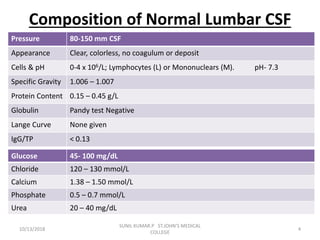
Composition of Normal Lumbar CSF
Pressure 80-150 mm CSF
Appearance Clear, colorless, no coagulum or deposit
Cells & pH 0-4 x 10⁶/L; Lymphocytes (L) or Mononuclears (M). pH- 7.3
Specific Gravity 1.006 – 1.007
Protein Content 0.15 – 0.45 g/L
Globulin Pandy test Negative
Lange Curve None given
IgG/TP < 0.13
Glucose 45- 100 mg/dL
Chloride 120 – 130 mmol/L
Calcium 1.38 – 1.50 mmol/L
Phosphate 0.5 – 0.7 mmol/L
Urea 20 – 40 mg/dL
10/13/2018 4
SUNIL KUMAR.P ST.JOHN'S MEDICAL
COLLEGE
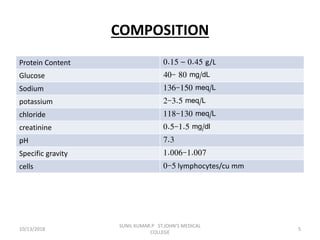
COMPOSITION
Protein Content 0.15 – 0.45 g/L
Glucose 40- 80 mg/dL
Sodium 136-150 meq/L
potassium 2-3.5 meq/L
chloride 118-130 meq/L
creatinine 0.5-1.5 mg/dl
pH 7.3
Specific gravity 1.006-1.007
cells 0-5 lymphocytes/cu mm
10/13/2018 5
SUNIL KUMAR.P ST.JOHN'S MEDICAL
COLLEGE
COLLECTION
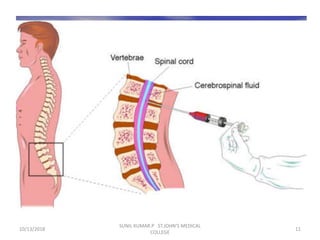
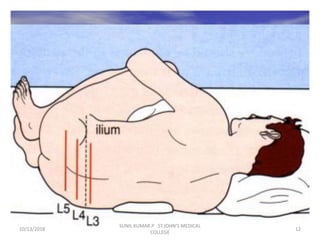
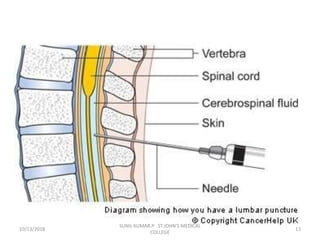
• CSF is collected by a sterile lumbar puncture
between
third, fourth, fifth lumbar vertebrae from the
subarachnoid space of meningeal covering
• Indications are mainly :
– possible cases of CNS infections, malignancies,
hemorrhage in the brain and spinal cord
• Contra indications are
– Increased intracranial pressure
– Infection in the area of puncture
10/13/2018 6
SUNIL KUMAR.P ST.JOHN'S MEDICAL
COLLEGE
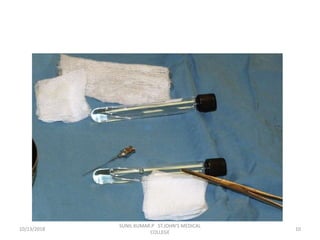
LP NEEDLE
• The needle measures 10-12 cm in length.
• In children , a shorter needle is used.
• It has needle and a stilette.
• The stilette has a pin which fits into the slot of the
head of the needle & helps to keep the needle
patent.
10/13/2018 7
SUNIL KUMAR.P ST.JOHN'S MEDICAL
COLLEGE
Requirements
10/13/2018 8
SUNIL KUMAR.P ST.JOHN'S MEDICAL
COLLEGE
• Spinal needle - 22 gauge:
• AGE& Length of needle:
• Less than 1 year--3.75 cm (1.5 inch)
• 1 year to middle childhood--6.25cm (2.5 inch)
• Older children to adolescents--8.75 cm (3.5 inch)
• Povidone-iodine solution.
• 1% Lidocaine and 25 gauge needle for local
anesthesia.
• Sterile 4 x 4 gauze.
10/13/2018 9
SUNIL KUMAR.P ST.JOHN'S MEDICAL
COLLEGE
10/13/2018 10
SUNIL KUMAR.P ST.JOHN'S MEDICAL
COLLEGE
10/13/2018 11
SUNIL KUMAR.P ST.JOHN'S MEDICAL
COLLEGE
10/13/2018 12
SUNIL KUMAR.P ST.JOHN'S MEDICAL
COLLEGE
10/13/2018 13
SUNIL KUMAR.P ST.JOHN'S MEDICAL
COLLEGE
INDICATIONS:
• Meningitis and encephilitis--viral, bacterial,
fungal, or parasitic infections.
• metastatic tumors (e.g., leukemia) and central
nervous system tumors that shed cells into the
CSF
• Syphilis
• bleeding (hemorrhaging) in the brain and spinal
cord
• Guillain-Barré, Multiple sclerosis---------a
demyelinating disease
10/13/2018 14
SUNIL KUMAR.P ST.JOHN'S MEDICAL
COLLEGE
• Normal volume 90 -150 ml
• CSF usually collected in three sterile tubes
- Label 1 / Tube 1 – used for chemical and
serologic test
( tubes are frozen)
- Label 2 / Tube 2 – used for microbiology lab (
room temp.)
- Label 3 / Tube 3 – used for hematology (cell
count)
10/13/2018 15
SUNIL KUMAR.P ST.JOHN'S MEDICAL
COLLEGE
PROCESSING
• PHYSICAL EXAMINATION
1 ) pH – measured by pH paper
2) Color - crystal clear and colorless
causes of change in color
 Xanthochromatia : supernatant is pink, orange, or yellow-
due to
- high protein content (>150 mg/dl)
- bilirubinemia(yellow)
- hemolysis(pink)
- carotenaemia(orange)
- melanin (brown)
10/13/2018 16
SUNIL KUMAR.P ST.JOHN'S MEDICAL
COLLEGE
3) Appearance : normally clear
 Turbidity/cloudiness due to;
- increase number of cells (>400-500) or numerous bacteria
or both
 smoky/opalescence – smaller number of cell (RBC and/or
leukocytes)
 Clot formation due to
- protein in CSF (subarachanoid block, pyogenic meningitis)
- traumatic tap (presence of fibrinogen)
- tuberculosis (cobweb like)
10/13/2018 17
SUNIL KUMAR.P ST.JOHN'S MEDICAL
COLLEGE
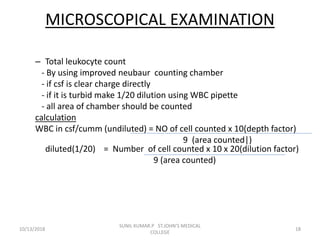
MICROSCOPICAL EXAMINATION
– Total leukocyte count
- By using improved neubaur counting chamber
- if csf is clear charge directly
- if it is turbid make 1/20 dilution using WBC pipette
- all area of chamber should be counted
calculation
WBC in csf/cumm (undiluted) = NO of cell counted x 10(depth factor)
9 (area counted|)
diluted(1/20) = Number of cell counted x 10 x 20(dilution factor)
9 (area counted)
10/13/2018 18
SUNIL KUMAR.P ST.JOHN'S MEDICAL
COLLEGE
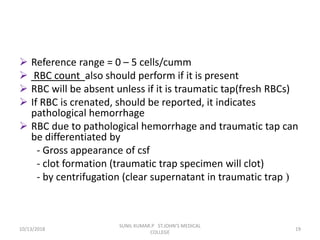
 Reference range = 0 – 5 cells/cumm
 RBC count also should perform if it is present
 RBC will be absent unless if it is traumatic tap(fresh RBCs)
 If RBC is crenated, should be reported, it indicates
pathological hemorrhage
 RBC due to pathological hemorrhage and traumatic tap can
be differentiated by
- Gross appearance of csf
- clot formation (traumatic trap specimen will clot)
- by centrifugation (clear supernatant in traumatic trap )
10/13/2018 19
SUNIL KUMAR.P ST.JOHN'S MEDICAL
COLLEGE
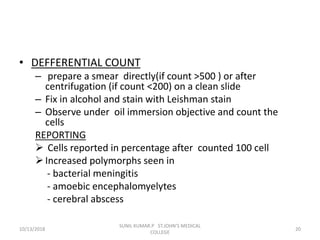
• DEFFERENTIAL COUNT
– prepare a smear directly(if count >500 ) or after
centrifugation (if count <200) on a clean slide
– Fix in alcohol and stain with Leishman stain
– Observe under oil immersion objective and count the
cells
REPORTING
 Cells reported in percentage after counted 100 cell
Increased polymorphs seen in
- bacterial meningitis
- amoebic encephalomyelytes
- cerebral abscess
10/13/2018 20
SUNIL KUMAR.P ST.JOHN'S MEDICAL
COLLEGE
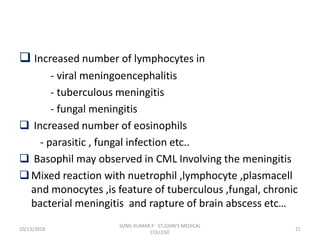
 Increased number of lymphocytes in
- viral meningoencephalitis
- tuberculous meningitis
- fungal meningitis
 Increased number of eosinophils
- parasitic , fungal infection etc..
 Basophil may observed in CML Involving the meningitis
Mixed reaction with nuetrophil ,lymphocyte ,plasmacell
and monocytes ,is feature of tuberculous ,fungal, chronic
bacterial meningitis and rapture of brain abscess etc…
10/13/2018 21
SUNIL KUMAR.P ST.JOHN'S MEDICAL
COLLEGE
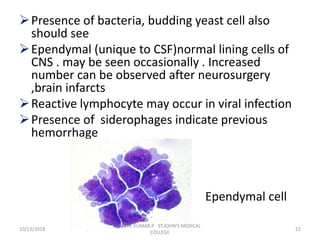
Presence of bacteria, budding yeast cell also
should see
Ependymal (unique to CSF)normal lining cells of
CNS . may be seen occasionally . Increased
number can be observed after neurosurgery
,brain infarcts
Reactive lymphocyte may occur in viral infection
Presence of siderophages indicate previous
hemorrhage
Ependymal cell
10/13/2018 22
SUNIL KUMAR.P ST.JOHN'S MEDICAL
COLLEGE
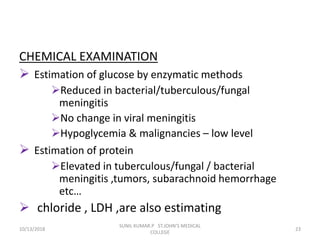
CHEMICAL EXAMINATION
 Estimation of glucose by enzymatic methods
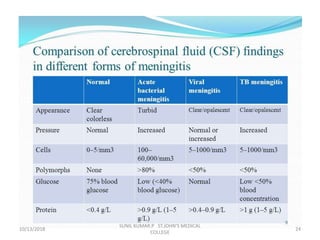
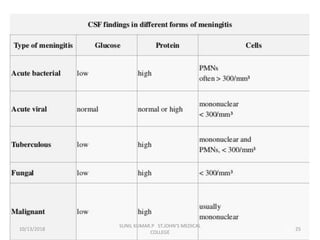
Reduced in bacterial/tuberculous/fungal
meningitis
No change in viral meningitis
Hypoglycemia & malignancies – low level
 Estimation of protein
Elevated in tuberculous/fungal / bacterial
meningitis ,tumors, subarachnoid hemorrhage
etc…
 chloride , LDH ,are also estimating
10/13/2018 23
SUNIL KUMAR.P ST.JOHN'S MEDICAL
COLLEGE
10/13/2018 24
SUNIL KUMAR.P ST.JOHN'S MEDICAL
COLLEGE
10/13/2018 25
SUNIL KUMAR.P ST.JOHN'S MEDICAL
COLLEGE
Contraindications
• Raised intracranial pressure
• Local infective lesions
• Disseminated sclerosis
• Brain tumor.
10/13/2018 26
SUNIL KUMAR.P ST.JOHN'S MEDICAL
COLLEGE
Complications of LP
• Herniation of cerebellum
• Hematoma,
• Introduction of infection by the LP needle
through the infected skin or subcutaneous
tissue.
10/13/2018 27
SUNIL KUMAR.P ST.JOHN'S MEDICAL
COLLEGE
SYNOVIAL FLUID
• Fluid found around joints such as knee, ankle, hip,
elbow, wrist and shoulder
• Secreted by the cells of the synovial membrane in the
joint
• Functions: Supplies nutrients to the cartilage also acts
as a lubricant for the free movement
• Clinical significance – infections, hemorrhage,
degenerative disorders (arthritis), inflammatory
disease ,gout etc…
• The composition resembles other fluid in addition it
contain mucopolysaccaride and hyaluronic acid
10/13/2018 28
SUNIL KUMAR.P ST.JOHN'S MEDICAL
COLLEGE
• Collection (Arthrocentesis) — needle
aspiration of joint fluid
1. Tube with EDTA –Used for cell counts and
microscopical examination
2. Tube with fluoride-oxalate mixture used for
glucose estimation
3. Plain tube – used for physical, chemical,
microbiological and serological examinations
10/13/2018 29
SUNIL KUMAR.P ST.JOHN'S MEDICAL
COLLEGE
• PHYSICAL EXAMINATION
• Color and appearance
- Normally clear and straw colored and viscous
- Cloudiness- inflammation, crystals, fibrin, cartilage
fragments
- Turbid yellow- septic/non-septic inflammation
- bloody- hemorrharage in joints ,traumatic tap etc..
• volume – normally 1 ml, increases during
inflammation
• pH- 7.4
• specific gravity- <1.016
10/13/2018 30
SUNIL KUMAR.P ST.JOHN'S MEDICAL
COLLEGE
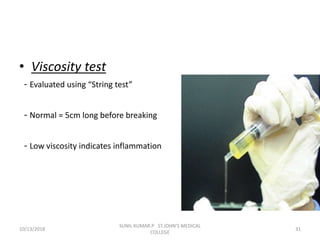
• Viscosity test
- Evaluated using “String test”
- Normal = 5cm long before breaking
- Low viscosity indicates inflammation
10/13/2018 31
SUNIL KUMAR.P ST.JOHN'S MEDICAL
COLLEGE
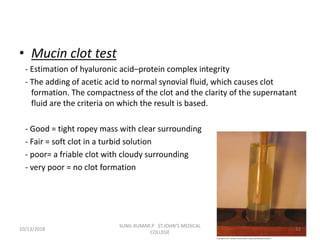
• Mucin clot test
- Estimation of hyaluronic acid–protein complex integrity
- The adding of acetic acid to normal synovial fluid, which causes clot
formation. The compactness of the clot and the clarity of the supernatant
fluid are the criteria on which the result is based.
- Good = tight ropey mass with clear surrounding
- Fair = soft clot in a turbid solution
- poor= a friable clot with cloudy surrounding
- very poor = no clot formation
10/13/2018 32
SUNIL KUMAR.P ST.JOHN'S MEDICAL
COLLEGE
• MICROSCOPIC EXAMINATION
– Cell counts
Reference range of SF leukocyte is 0-200/cumm.
Performing by using hemocytometer manually.
 highly viscose fluid may need to stand for 30 mts.
Bloody sample should be differentiated whether
traumatic tap or hemorrharage
 A very high count (>100,000/cumm) strongly
suggests bacterial infection.
Automated method also used (sysmax XT-4000)
unless it is highly viscous.
10/13/2018 33
SUNIL KUMAR.P ST.JOHN'S MEDICAL
COLLEGE
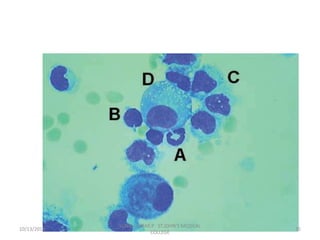
• Differential count
 Method is same as csf
 The mean distribution : neutrophils- <25% lymphocytes -
24%, monocytes- 48%, macrophages- 10%, and synovial
lining cells 4%
 The routine differential count usually is reported only as
percentage of neutrophil
 The accepted upper limit is 25% neutrophils
 A very high percentage (>90%) neutrphils indicate bacterial
arthritis even if the TLC is in normal range
10/13/2018 34
SUNIL KUMAR.P ST.JOHN'S MEDICAL
COLLEGE
10/13/2018 35
SUNIL KUMAR.P ST.JOHN'S MEDICAL
COLLEGE
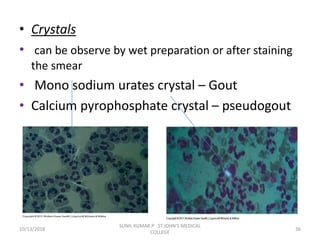
• Crystals
• can be observe by wet preparation or after staining
the smear
• Mono sodium urates crystal – Gout
• Calcium pyrophosphate crystal – pseudogout
10/13/2018 36
SUNIL KUMAR.P ST.JOHN'S MEDICAL
COLLEGE
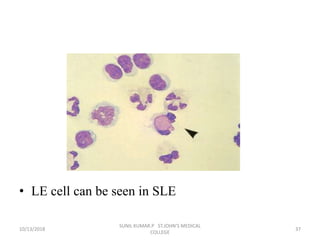
• LE cell can be seen in SLE
10/13/2018 37
SUNIL KUMAR.P ST.JOHN'S MEDICAL
COLLEGE
PLEURAL FLUID
• A transudate seen inside pleural cavity of lung
• Analysis is important to know the etiology of
pleural effusion
• PF is collected under aseptic precaution by
percutaneous puncture (thoracentesis)
• it is important to differentiate transude
effusion and exudate effusion
10/13/2018 38
SUNIL KUMAR.P ST.JOHN'S MEDICAL
COLLEGE
• PHYSICAL EXAMINATION
 Normal PF is clear, pale yellow, scanty in
amount(20ml)
 increased volume seen in CCF , CLD etc…
 turbidity is usually due to increased leukocyte in
inflammation
Milky fluid in chylous or pseudo chylous effusion
It is important to distinguish hemorrhagic fluid
from blood-tinged fluid due to traumatic tap
10/13/2018 39
SUNIL KUMAR.P ST.JOHN'S MEDICAL
COLLEGE
cont…
• Specific gravity: <1.018 indicate fluid is
transudate and >1.018 indicate exudate.
• clot formation indicates inflammatory cause
for effusion
10/13/2018 40
SUNIL KUMAR.P ST.JOHN'S MEDICAL
COLLEGE
• MICROSCOPICAL EXAMINATION
– RBC count
– WBC count
– differential count
 WBC count of <1000 /cumm indicate it is a transudate
 WBC count of >1000 /cumm with >50% of neutrophils
suggest bacterial infection
 RBC count of >100,000 /cumm is highly suggestive of
malignancy, trauma or pulmonary infarction
 high percentage of lymphocytes suggests tuberculosis,
viral infection etc..
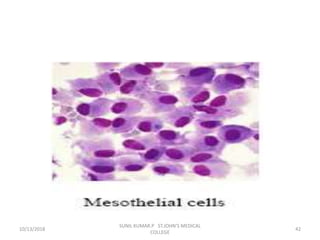
 presence of mesothelial cells should be report.
 Eosinophilic effusion(>10%) seen in pneumothorax,
parasitic infection, asthma , etc…
10/13/2018 41
SUNIL KUMAR.P ST.JOHN'S MEDICAL
COLLEGE
10/13/2018 42
SUNIL KUMAR.P ST.JOHN'S MEDICAL
COLLEGE
• CHEMICAL EXAMINATION
– Estimation of protein
– Estimation of glucose
– Estimation of LDH
10/13/2018 43
SUNIL KUMAR.P ST.JOHN'S MEDICAL
COLLEGE
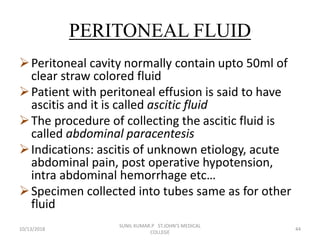
PERITONEAL FLUID
Peritoneal cavity normally contain upto 50ml of
clear straw colored fluid
Patient with peritoneal effusion is said to have
ascitis and it is called ascitic fluid
The procedure of collecting the ascitic fluid is
called abdominal paracentesis
Indications: ascitis of unknown etiology, acute
abdominal pain, post operative hypotension,
intra abdominal hemorrhage etc…
Specimen collected into tubes same as for other
fluid
10/13/2018 44
SUNIL KUMAR.P ST.JOHN'S MEDICAL
COLLEGE
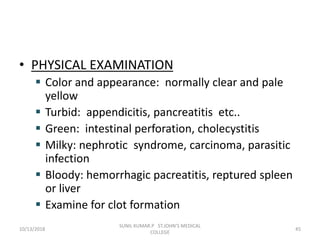
• PHYSICAL EXAMINATION
 Color and appearance: normally clear and pale
yellow
 Turbid: appendicitis, pancreatitis etc..
 Green: intestinal perforation, cholecystitis
 Milky: nephrotic syndrome, carcinoma, parasitic
infection
 Bloody: hemorrhagic pacreatitis, reptured spleen
or liver
 Examine for clot formation
10/13/2018 45
SUNIL KUMAR.P ST.JOHN'S MEDICAL
COLLEGE
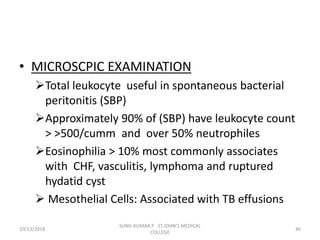
• MICROSCPIC EXAMINATION
Total leukocyte useful in spontaneous bacterial
peritonitis (SBP)
Approximately 90% of (SBP) have leukocyte count
> >500/cumm and over 50% neutrophiles
Eosinophilia > 10% most commonly associates
with CHF, vasculitis, lymphoma and ruptured
hydatid cyst
 Mesothelial Cells: Associated with TB effusions
10/13/2018 46
SUNIL KUMAR.P ST.JOHN'S MEDICAL
COLLEGE
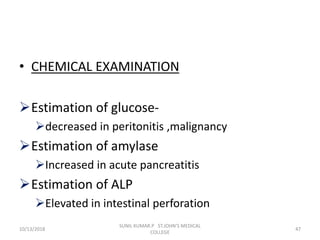
• CHEMICAL EXAMINATION
Estimation of glucose-
decreased in peritonitis ,malignancy
Estimation of amylase
Increased in acute pancreatitis
Estimation of ALP
Elevated in intestinal perforation
10/13/2018 47
SUNIL KUMAR.P ST.JOHN'S MEDICAL
COLLEGE
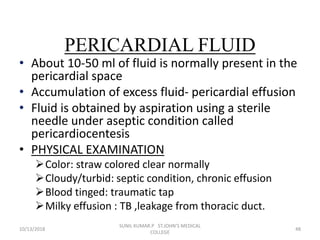
PERICARDIAL FLUID
• About 10-50 ml of fluid is normally present in the
pericardial space
• Accumulation of excess fluid- pericardial effusion
• Fluid is obtained by aspiration using a sterile
needle under aseptic condition called
pericardiocentesis
• PHYSICAL EXAMINATION
Color: straw colored clear normally
Cloudy/turbid: septic condition, chronic effusion
Blood tinged: traumatic tap
Milky effusion : TB ,leakage from thoracic duct.
10/13/2018 48
SUNIL KUMAR.P ST.JOHN'S MEDICAL
COLLEGE
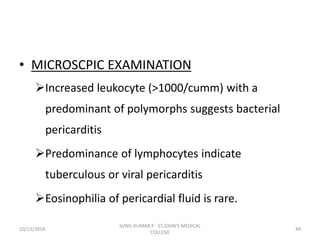
• MICROSCPIC EXAMINATION
Increased leukocyte (>1000/cumm) with a
predominant of polymorphs suggests bacterial
pericarditis
Predominance of lymphocytes indicate
tuberculous or viral pericarditis
Eosinophilia of pericardial fluid is rare.
10/13/2018 49
SUNIL KUMAR.P ST.JOHN'S MEDICAL
COLLEGE
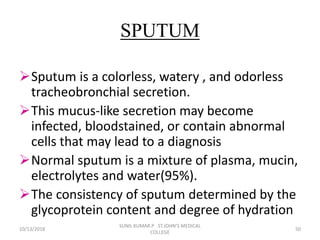
SPUTUM
Sputum is a colorless, watery , and odorless
tracheobronchial secretion.
This mucus-like secretion may become
infected, bloodstained, or contain abnormal
cells that may lead to a diagnosis
Normal sputum is a mixture of plasma, mucin,
electrolytes and water(95%).
The consistency of sputum determined by the
glycoprotein content and degree of hydration
10/13/2018 50
SUNIL KUMAR.P ST.JOHN'S MEDICAL
COLLEGE
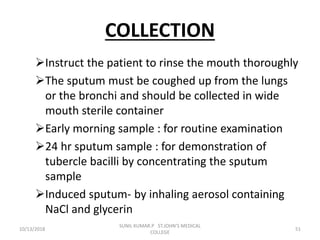
COLLECTION
Instruct the patient to rinse the mouth thoroughly
The sputum must be coughed up from the lungs
or the bronchi and should be collected in wide
mouth sterile container
Early morning sample : for routine examination
24 hr sputum sample : for demonstration of
tubercle bacilli by concentrating the sputum
sample
Induced sputum- by inhaling aerosol containing
NaCl and glycerin
10/13/2018 51
SUNIL KUMAR.P ST.JOHN'S MEDICAL
COLLEGE
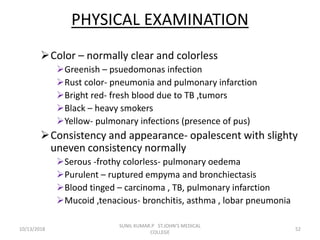
PHYSICAL EXAMINATION
Color – normally clear and colorless
Greenish – psuedomonas infection
Rust color- pneumonia and pulmonary infarction
Bright red- fresh blood due to TB ,tumors
Black – heavy smokers
Yellow- pulmonary infections (presence of pus)
Consistency and appearance- opalescent with slighty
uneven consistency normally
Serous -frothy colorless- pulmonary oedema
Purulent – ruptured empyma and bronchiectasis
Blood tinged – carcinoma , TB, pulmonary infarction
Mucoid ,tenacious- bronchitis, asthma , lobar pneumonia
10/13/2018 52
SUNIL KUMAR.P ST.JOHN'S MEDICAL
COLLEGE
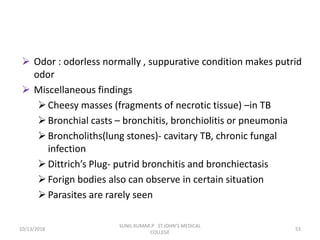
 Odor : odorless normally , suppurative condition makes putrid
odor
 Miscellaneous findings
Cheesy masses (fragments of necrotic tissue) –in TB
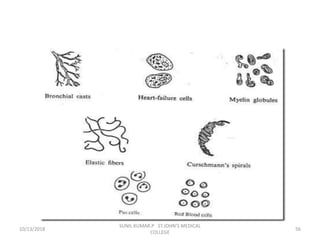
Bronchial casts – bronchitis, bronchiolitis or pneumonia
Broncholiths(lung stones)- cavitary TB, chronic fungal
infection
Dittrich’s Plug- putrid bronchitis and bronchiectasis
Forign bodies also can observe in certain situation
Parasites are rarely seen
10/13/2018 53
SUNIL KUMAR.P ST.JOHN'S MEDICAL
COLLEGE
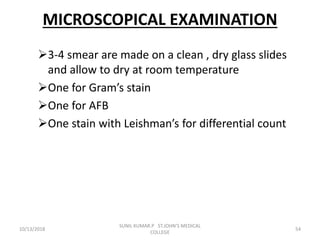
MICROSCOPICAL EXAMINATION
3-4 smear are made on a clean , dry glass slides
and allow to dry at room temperature
One for Gram’s stain
One for AFB
One stain with Leishman’s for differential count
10/13/2018 54
SUNIL KUMAR.P ST.JOHN'S MEDICAL
COLLEGE
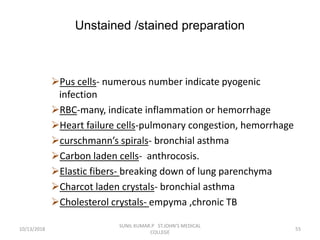
Unstained /stained preparation
Pus cells- numerous number indicate pyogenic
infection
RBC-many, indicate inflammation or hemorrhage
Heart failure cells-pulmonary congestion, hemorrhage
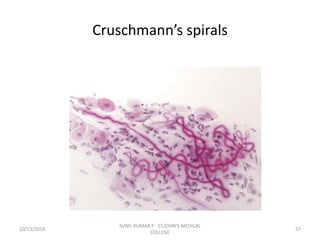
curschmann’s spirals- bronchial asthma
Carbon laden cells- anthrocosis.
Elastic fibers- breaking down of lung parenchyma
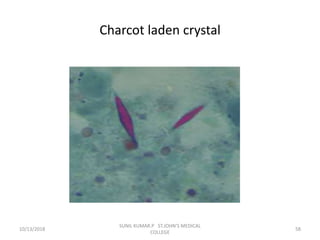
Charcot laden crystals- bronchial asthma
Cholesterol crystals- empyma ,chronic TB
10/13/2018 55
SUNIL KUMAR.P ST.JOHN'S MEDICAL
COLLEGE
10/13/2018 56
SUNIL KUMAR.P ST.JOHN'S MEDICAL
COLLEGE
Cruschmann’s spirals
10/13/2018 57
SUNIL KUMAR.P ST.JOHN'S MEDICAL
COLLEGE
Charcot laden crystal
10/13/2018 58
SUNIL KUMAR.P ST.JOHN'S MEDICAL
COLLEGE
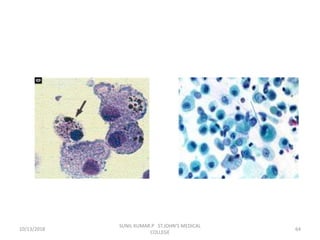
10/13/2018 59
SUNIL KUMAR.P ST.JOHN'S MEDICAL
COLLEGE
BRONCHO ALVEOLAR LAVAGE (BAL)
 Bronchoalveolar lavage (BAL) is a medical procedure in
which a bronchoscope is passed through the mouth or
nose into the lungs and fluid(Saline) is squirted into a
small part of the lung and then recollected for
examination
 BAL is typically performed to diagnose infections in
people with immune system problems, pneumonia in
people on ventilators, lung cancer, scarring of the lung
(interstitial lung disease)
 It provides important information about immunologic,
lnfectious processes taking place at the alveolar level
10/13/2018 60
SUNIL KUMAR.P ST.JOHN'S MEDICAL
COLLEGE
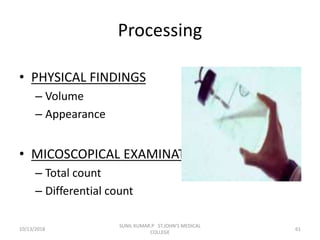
Processing
• PHYSICAL FINDINGS
– Volume
– Appearance
• MICOSCOPICAL EXAMINATION
– Total count
– Differential count
10/13/2018 61
SUNIL KUMAR.P ST.JOHN'S MEDICAL
COLLEGE
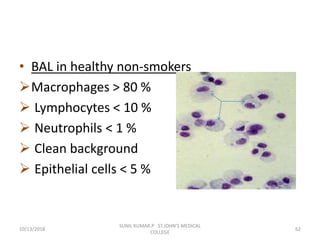
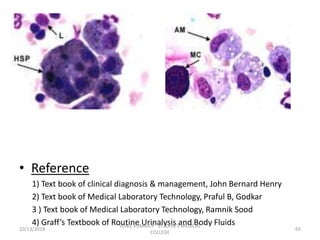
• BAL in healthy non-smokers
Macrophages > 80 %
 Lymphocytes < 10 %
 Neutrophils < 1 %
 Clean background
 Epithelial cells < 5 %
10/13/2018 62
SUNIL KUMAR.P ST.JOHN'S MEDICAL
COLLEGE
 Increased lymphocytes seen in sarcoidosis and hypersensitivity
pneumonia
 Neutrophilia seen in acute respiratory distress Syndrome, bacterial
infection, lung fibrosis
 Macrophages may show nuclear abnormality (multi -nucleation) in
inflamation , granulomatous reaction
 Macrophages also show inclusions inside the cytoplasm due to
-Smoking
-Asbestosis
-Histoplasma capsulatum
- hemosiderin
10/13/2018 63
SUNIL KUMAR.P ST.JOHN'S MEDICAL
COLLEGE
10/13/2018 64
SUNIL KUMAR.P ST.JOHN'S MEDICAL
COLLEGE
• Reference
1) Text book of clinical diagnosis & management, John Bernard Henry
2) Text book of Medical Laboratory Technology, Praful B, Godkar
3 ) Text book of Medical Laboratory Technology, Ramnik Sood
4) Graff’s Textbook of Routine Urinalysis and Body Fluids
10/13/2018 65
SUNIL KUMAR.P ST.JOHN'S MEDICAL
COLLEGE
10/13/2018 66
SUNIL KUMAR.P ST.JOHN'S MEDICAL
COLLEGE

Body fluids

  • 1.
    P. SUNIL KUMAR Dept.ofHaematology & Transfusion Medicine St.John’s Medical College & Hospital Bangalore 10/13/2018 1 SUNIL KUMAR.P ST.JOHN'S MEDICAL COLLEGE
  • 2.
    BODY FLUIDS Cerebrospinal fluid Peritonealfluid(Ascitic fluid) Synovial fluid Pleural fluid Pericardial fluid Sputum 10/13/2018 2 SUNIL KUMAR.P ST.JOHN'S MEDICAL COLLEGE
  • 3.
    CEREBROSPINAL FLUID • Cerebrospinalfluid (CSF) is formed in the choroid plexuses (70%) by combined process of active transport and ultra filtration • CSF flows through the subarachnoid space between the arachanoid and piamater surrounds the brain and spinal cord • CSF protects the brain and spinal cord, and collects waste, circulates nutrients, cushions and lubricates the central nervous system (CNS). 10/13/2018 3 SUNIL KUMAR.P ST.JOHN'S MEDICAL COLLEGE
  • 4.
    Composition of NormalLumbar CSF Pressure 80-150 mm CSF Appearance Clear, colorless, no coagulum or deposit Cells & pH 0-4 x 10⁶/L; Lymphocytes (L) or Mononuclears (M). pH- 7.3 Specific Gravity 1.006 – 1.007 Protein Content 0.15 – 0.45 g/L Globulin Pandy test Negative Lange Curve None given IgG/TP < 0.13 Glucose 45- 100 mg/dL Chloride 120 – 130 mmol/L Calcium 1.38 – 1.50 mmol/L Phosphate 0.5 – 0.7 mmol/L Urea 20 – 40 mg/dL 10/13/2018 4 SUNIL KUMAR.P ST.JOHN'S MEDICAL COLLEGE
  • 5.
    COMPOSITION Protein Content 0.15– 0.45 g/L Glucose 40- 80 mg/dL Sodium 136-150 meq/L potassium 2-3.5 meq/L chloride 118-130 meq/L creatinine 0.5-1.5 mg/dl pH 7.3 Specific gravity 1.006-1.007 cells 0-5 lymphocytes/cu mm 10/13/2018 5 SUNIL KUMAR.P ST.JOHN'S MEDICAL COLLEGE
  • 6.
    COLLECTION • CSF iscollected by a sterile lumbar puncture between third, fourth, fifth lumbar vertebrae from the subarachnoid space of meningeal covering • Indications are mainly : – possible cases of CNS infections, malignancies, hemorrhage in the brain and spinal cord • Contra indications are – Increased intracranial pressure – Infection in the area of puncture 10/13/2018 6 SUNIL KUMAR.P ST.JOHN'S MEDICAL COLLEGE
  • 7.
    LP NEEDLE • Theneedle measures 10-12 cm in length. • In children , a shorter needle is used. • It has needle and a stilette. • The stilette has a pin which fits into the slot of the head of the needle & helps to keep the needle patent. 10/13/2018 7 SUNIL KUMAR.P ST.JOHN'S MEDICAL COLLEGE
  • 8.
    Requirements 10/13/2018 8 SUNIL KUMAR.PST.JOHN'S MEDICAL COLLEGE
  • 9.
    • Spinal needle- 22 gauge: • AGE& Length of needle: • Less than 1 year--3.75 cm (1.5 inch) • 1 year to middle childhood--6.25cm (2.5 inch) • Older children to adolescents--8.75 cm (3.5 inch) • Povidone-iodine solution. • 1% Lidocaine and 25 gauge needle for local anesthesia. • Sterile 4 x 4 gauze. 10/13/2018 9 SUNIL KUMAR.P ST.JOHN'S MEDICAL COLLEGE
  • 10.
    10/13/2018 10 SUNIL KUMAR.PST.JOHN'S MEDICAL COLLEGE
  • 11.
    10/13/2018 11 SUNIL KUMAR.PST.JOHN'S MEDICAL COLLEGE
  • 12.
    10/13/2018 12 SUNIL KUMAR.PST.JOHN'S MEDICAL COLLEGE
  • 13.
    10/13/2018 13 SUNIL KUMAR.PST.JOHN'S MEDICAL COLLEGE
  • 14.
    INDICATIONS: • Meningitis andencephilitis--viral, bacterial, fungal, or parasitic infections. • metastatic tumors (e.g., leukemia) and central nervous system tumors that shed cells into the CSF • Syphilis • bleeding (hemorrhaging) in the brain and spinal cord • Guillain-Barré, Multiple sclerosis---------a demyelinating disease 10/13/2018 14 SUNIL KUMAR.P ST.JOHN'S MEDICAL COLLEGE
  • 15.
    • Normal volume90 -150 ml • CSF usually collected in three sterile tubes - Label 1 / Tube 1 – used for chemical and serologic test ( tubes are frozen) - Label 2 / Tube 2 – used for microbiology lab ( room temp.) - Label 3 / Tube 3 – used for hematology (cell count) 10/13/2018 15 SUNIL KUMAR.P ST.JOHN'S MEDICAL COLLEGE
  • 16.
    PROCESSING • PHYSICAL EXAMINATION 1) pH – measured by pH paper 2) Color - crystal clear and colorless causes of change in color  Xanthochromatia : supernatant is pink, orange, or yellow- due to - high protein content (>150 mg/dl) - bilirubinemia(yellow) - hemolysis(pink) - carotenaemia(orange) - melanin (brown) 10/13/2018 16 SUNIL KUMAR.P ST.JOHN'S MEDICAL COLLEGE
  • 17.
    3) Appearance :normally clear  Turbidity/cloudiness due to; - increase number of cells (>400-500) or numerous bacteria or both  smoky/opalescence – smaller number of cell (RBC and/or leukocytes)  Clot formation due to - protein in CSF (subarachanoid block, pyogenic meningitis) - traumatic tap (presence of fibrinogen) - tuberculosis (cobweb like) 10/13/2018 17 SUNIL KUMAR.P ST.JOHN'S MEDICAL COLLEGE
  • 18.
    MICROSCOPICAL EXAMINATION – Totalleukocyte count - By using improved neubaur counting chamber - if csf is clear charge directly - if it is turbid make 1/20 dilution using WBC pipette - all area of chamber should be counted calculation WBC in csf/cumm (undiluted) = NO of cell counted x 10(depth factor) 9 (area counted|) diluted(1/20) = Number of cell counted x 10 x 20(dilution factor) 9 (area counted) 10/13/2018 18 SUNIL KUMAR.P ST.JOHN'S MEDICAL COLLEGE
  • 19.
     Reference range= 0 – 5 cells/cumm  RBC count also should perform if it is present  RBC will be absent unless if it is traumatic tap(fresh RBCs)  If RBC is crenated, should be reported, it indicates pathological hemorrhage  RBC due to pathological hemorrhage and traumatic tap can be differentiated by - Gross appearance of csf - clot formation (traumatic trap specimen will clot) - by centrifugation (clear supernatant in traumatic trap ) 10/13/2018 19 SUNIL KUMAR.P ST.JOHN'S MEDICAL COLLEGE
  • 20.
    • DEFFERENTIAL COUNT –prepare a smear directly(if count >500 ) or after centrifugation (if count <200) on a clean slide – Fix in alcohol and stain with Leishman stain – Observe under oil immersion objective and count the cells REPORTING  Cells reported in percentage after counted 100 cell Increased polymorphs seen in - bacterial meningitis - amoebic encephalomyelytes - cerebral abscess 10/13/2018 20 SUNIL KUMAR.P ST.JOHN'S MEDICAL COLLEGE
  • 21.
     Increased numberof lymphocytes in - viral meningoencephalitis - tuberculous meningitis - fungal meningitis  Increased number of eosinophils - parasitic , fungal infection etc..  Basophil may observed in CML Involving the meningitis Mixed reaction with nuetrophil ,lymphocyte ,plasmacell and monocytes ,is feature of tuberculous ,fungal, chronic bacterial meningitis and rapture of brain abscess etc… 10/13/2018 21 SUNIL KUMAR.P ST.JOHN'S MEDICAL COLLEGE
  • 22.
    Presence of bacteria,budding yeast cell also should see Ependymal (unique to CSF)normal lining cells of CNS . may be seen occasionally . Increased number can be observed after neurosurgery ,brain infarcts Reactive lymphocyte may occur in viral infection Presence of siderophages indicate previous hemorrhage Ependymal cell 10/13/2018 22 SUNIL KUMAR.P ST.JOHN'S MEDICAL COLLEGE
  • 23.
    CHEMICAL EXAMINATION  Estimationof glucose by enzymatic methods Reduced in bacterial/tuberculous/fungal meningitis No change in viral meningitis Hypoglycemia & malignancies – low level  Estimation of protein Elevated in tuberculous/fungal / bacterial meningitis ,tumors, subarachnoid hemorrhage etc…  chloride , LDH ,are also estimating 10/13/2018 23 SUNIL KUMAR.P ST.JOHN'S MEDICAL COLLEGE
  • 24.
    10/13/2018 24 SUNIL KUMAR.PST.JOHN'S MEDICAL COLLEGE
  • 25.
    10/13/2018 25 SUNIL KUMAR.PST.JOHN'S MEDICAL COLLEGE
  • 26.
    Contraindications • Raised intracranialpressure • Local infective lesions • Disseminated sclerosis • Brain tumor. 10/13/2018 26 SUNIL KUMAR.P ST.JOHN'S MEDICAL COLLEGE
  • 27.
    Complications of LP •Herniation of cerebellum • Hematoma, • Introduction of infection by the LP needle through the infected skin or subcutaneous tissue. 10/13/2018 27 SUNIL KUMAR.P ST.JOHN'S MEDICAL COLLEGE
  • 28.
    SYNOVIAL FLUID • Fluidfound around joints such as knee, ankle, hip, elbow, wrist and shoulder • Secreted by the cells of the synovial membrane in the joint • Functions: Supplies nutrients to the cartilage also acts as a lubricant for the free movement • Clinical significance – infections, hemorrhage, degenerative disorders (arthritis), inflammatory disease ,gout etc… • The composition resembles other fluid in addition it contain mucopolysaccaride and hyaluronic acid 10/13/2018 28 SUNIL KUMAR.P ST.JOHN'S MEDICAL COLLEGE
  • 29.
    • Collection (Arthrocentesis)— needle aspiration of joint fluid 1. Tube with EDTA –Used for cell counts and microscopical examination 2. Tube with fluoride-oxalate mixture used for glucose estimation 3. Plain tube – used for physical, chemical, microbiological and serological examinations 10/13/2018 29 SUNIL KUMAR.P ST.JOHN'S MEDICAL COLLEGE
  • 30.
    • PHYSICAL EXAMINATION •Color and appearance - Normally clear and straw colored and viscous - Cloudiness- inflammation, crystals, fibrin, cartilage fragments - Turbid yellow- septic/non-septic inflammation - bloody- hemorrharage in joints ,traumatic tap etc.. • volume – normally 1 ml, increases during inflammation • pH- 7.4 • specific gravity- <1.016 10/13/2018 30 SUNIL KUMAR.P ST.JOHN'S MEDICAL COLLEGE
  • 31.
    • Viscosity test -Evaluated using “String test” - Normal = 5cm long before breaking - Low viscosity indicates inflammation 10/13/2018 31 SUNIL KUMAR.P ST.JOHN'S MEDICAL COLLEGE
  • 32.
    • Mucin clottest - Estimation of hyaluronic acid–protein complex integrity - The adding of acetic acid to normal synovial fluid, which causes clot formation. The compactness of the clot and the clarity of the supernatant fluid are the criteria on which the result is based. - Good = tight ropey mass with clear surrounding - Fair = soft clot in a turbid solution - poor= a friable clot with cloudy surrounding - very poor = no clot formation 10/13/2018 32 SUNIL KUMAR.P ST.JOHN'S MEDICAL COLLEGE
  • 33.
    • MICROSCOPIC EXAMINATION –Cell counts Reference range of SF leukocyte is 0-200/cumm. Performing by using hemocytometer manually.  highly viscose fluid may need to stand for 30 mts. Bloody sample should be differentiated whether traumatic tap or hemorrharage  A very high count (>100,000/cumm) strongly suggests bacterial infection. Automated method also used (sysmax XT-4000) unless it is highly viscous. 10/13/2018 33 SUNIL KUMAR.P ST.JOHN'S MEDICAL COLLEGE
  • 34.
    • Differential count Method is same as csf  The mean distribution : neutrophils- <25% lymphocytes - 24%, monocytes- 48%, macrophages- 10%, and synovial lining cells 4%  The routine differential count usually is reported only as percentage of neutrophil  The accepted upper limit is 25% neutrophils  A very high percentage (>90%) neutrphils indicate bacterial arthritis even if the TLC is in normal range 10/13/2018 34 SUNIL KUMAR.P ST.JOHN'S MEDICAL COLLEGE
  • 35.
    10/13/2018 35 SUNIL KUMAR.PST.JOHN'S MEDICAL COLLEGE
  • 36.
    • Crystals • canbe observe by wet preparation or after staining the smear • Mono sodium urates crystal – Gout • Calcium pyrophosphate crystal – pseudogout 10/13/2018 36 SUNIL KUMAR.P ST.JOHN'S MEDICAL COLLEGE
  • 37.
    • LE cellcan be seen in SLE 10/13/2018 37 SUNIL KUMAR.P ST.JOHN'S MEDICAL COLLEGE
  • 38.
    PLEURAL FLUID • Atransudate seen inside pleural cavity of lung • Analysis is important to know the etiology of pleural effusion • PF is collected under aseptic precaution by percutaneous puncture (thoracentesis) • it is important to differentiate transude effusion and exudate effusion 10/13/2018 38 SUNIL KUMAR.P ST.JOHN'S MEDICAL COLLEGE
  • 39.
    • PHYSICAL EXAMINATION Normal PF is clear, pale yellow, scanty in amount(20ml)  increased volume seen in CCF , CLD etc…  turbidity is usually due to increased leukocyte in inflammation Milky fluid in chylous or pseudo chylous effusion It is important to distinguish hemorrhagic fluid from blood-tinged fluid due to traumatic tap 10/13/2018 39 SUNIL KUMAR.P ST.JOHN'S MEDICAL COLLEGE
  • 40.
    cont… • Specific gravity:<1.018 indicate fluid is transudate and >1.018 indicate exudate. • clot formation indicates inflammatory cause for effusion 10/13/2018 40 SUNIL KUMAR.P ST.JOHN'S MEDICAL COLLEGE
  • 41.
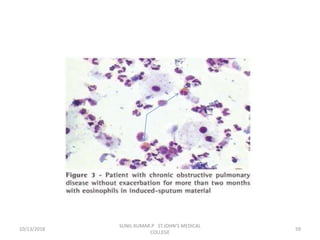
    • MICROSCOPICAL EXAMINATION –RBC count – WBC count – differential count  WBC count of <1000 /cumm indicate it is a transudate  WBC count of >1000 /cumm with >50% of neutrophils suggest bacterial infection  RBC count of >100,000 /cumm is highly suggestive of malignancy, trauma or pulmonary infarction  high percentage of lymphocytes suggests tuberculosis, viral infection etc..  presence of mesothelial cells should be report.  Eosinophilic effusion(>10%) seen in pneumothorax, parasitic infection, asthma , etc… 10/13/2018 41 SUNIL KUMAR.P ST.JOHN'S MEDICAL COLLEGE
  • 42.
    10/13/2018 42 SUNIL KUMAR.PST.JOHN'S MEDICAL COLLEGE
  • 43.
    • CHEMICAL EXAMINATION –Estimation of protein – Estimation of glucose – Estimation of LDH 10/13/2018 43 SUNIL KUMAR.P ST.JOHN'S MEDICAL COLLEGE
  • 44.
    PERITONEAL FLUID Peritoneal cavitynormally contain upto 50ml of clear straw colored fluid Patient with peritoneal effusion is said to have ascitis and it is called ascitic fluid The procedure of collecting the ascitic fluid is called abdominal paracentesis Indications: ascitis of unknown etiology, acute abdominal pain, post operative hypotension, intra abdominal hemorrhage etc… Specimen collected into tubes same as for other fluid 10/13/2018 44 SUNIL KUMAR.P ST.JOHN'S MEDICAL COLLEGE
  • 45.
    • PHYSICAL EXAMINATION Color and appearance: normally clear and pale yellow  Turbid: appendicitis, pancreatitis etc..  Green: intestinal perforation, cholecystitis  Milky: nephrotic syndrome, carcinoma, parasitic infection  Bloody: hemorrhagic pacreatitis, reptured spleen or liver  Examine for clot formation 10/13/2018 45 SUNIL KUMAR.P ST.JOHN'S MEDICAL COLLEGE
  • 46.
    • MICROSCPIC EXAMINATION Totalleukocyte useful in spontaneous bacterial peritonitis (SBP) Approximately 90% of (SBP) have leukocyte count > >500/cumm and over 50% neutrophiles Eosinophilia > 10% most commonly associates with CHF, vasculitis, lymphoma and ruptured hydatid cyst  Mesothelial Cells: Associated with TB effusions 10/13/2018 46 SUNIL KUMAR.P ST.JOHN'S MEDICAL COLLEGE
  • 47.
    • CHEMICAL EXAMINATION Estimationof glucose- decreased in peritonitis ,malignancy Estimation of amylase Increased in acute pancreatitis Estimation of ALP Elevated in intestinal perforation 10/13/2018 47 SUNIL KUMAR.P ST.JOHN'S MEDICAL COLLEGE
  • 48.
    PERICARDIAL FLUID • About10-50 ml of fluid is normally present in the pericardial space • Accumulation of excess fluid- pericardial effusion • Fluid is obtained by aspiration using a sterile needle under aseptic condition called pericardiocentesis • PHYSICAL EXAMINATION Color: straw colored clear normally Cloudy/turbid: septic condition, chronic effusion Blood tinged: traumatic tap Milky effusion : TB ,leakage from thoracic duct. 10/13/2018 48 SUNIL KUMAR.P ST.JOHN'S MEDICAL COLLEGE
  • 49.
    • MICROSCPIC EXAMINATION Increasedleukocyte (>1000/cumm) with a predominant of polymorphs suggests bacterial pericarditis Predominance of lymphocytes indicate tuberculous or viral pericarditis Eosinophilia of pericardial fluid is rare. 10/13/2018 49 SUNIL KUMAR.P ST.JOHN'S MEDICAL COLLEGE
  • 50.
    SPUTUM Sputum is acolorless, watery , and odorless tracheobronchial secretion. This mucus-like secretion may become infected, bloodstained, or contain abnormal cells that may lead to a diagnosis Normal sputum is a mixture of plasma, mucin, electrolytes and water(95%). The consistency of sputum determined by the glycoprotein content and degree of hydration 10/13/2018 50 SUNIL KUMAR.P ST.JOHN'S MEDICAL COLLEGE
  • 51.
    COLLECTION Instruct the patientto rinse the mouth thoroughly The sputum must be coughed up from the lungs or the bronchi and should be collected in wide mouth sterile container Early morning sample : for routine examination 24 hr sputum sample : for demonstration of tubercle bacilli by concentrating the sputum sample Induced sputum- by inhaling aerosol containing NaCl and glycerin 10/13/2018 51 SUNIL KUMAR.P ST.JOHN'S MEDICAL COLLEGE
  • 52.
    PHYSICAL EXAMINATION Color –normally clear and colorless Greenish – psuedomonas infection Rust color- pneumonia and pulmonary infarction Bright red- fresh blood due to TB ,tumors Black – heavy smokers Yellow- pulmonary infections (presence of pus) Consistency and appearance- opalescent with slighty uneven consistency normally Serous -frothy colorless- pulmonary oedema Purulent – ruptured empyma and bronchiectasis Blood tinged – carcinoma , TB, pulmonary infarction Mucoid ,tenacious- bronchitis, asthma , lobar pneumonia 10/13/2018 52 SUNIL KUMAR.P ST.JOHN'S MEDICAL COLLEGE
  • 53.
     Odor :odorless normally , suppurative condition makes putrid odor  Miscellaneous findings Cheesy masses (fragments of necrotic tissue) –in TB Bronchial casts – bronchitis, bronchiolitis or pneumonia Broncholiths(lung stones)- cavitary TB, chronic fungal infection Dittrich’s Plug- putrid bronchitis and bronchiectasis Forign bodies also can observe in certain situation Parasites are rarely seen 10/13/2018 53 SUNIL KUMAR.P ST.JOHN'S MEDICAL COLLEGE
  • 54.
    MICROSCOPICAL EXAMINATION 3-4 smearare made on a clean , dry glass slides and allow to dry at room temperature One for Gram’s stain One for AFB One stain with Leishman’s for differential count 10/13/2018 54 SUNIL KUMAR.P ST.JOHN'S MEDICAL COLLEGE
  • 55.
    Unstained /stained preparation Puscells- numerous number indicate pyogenic infection RBC-many, indicate inflammation or hemorrhage Heart failure cells-pulmonary congestion, hemorrhage curschmann’s spirals- bronchial asthma Carbon laden cells- anthrocosis. Elastic fibers- breaking down of lung parenchyma Charcot laden crystals- bronchial asthma Cholesterol crystals- empyma ,chronic TB 10/13/2018 55 SUNIL KUMAR.P ST.JOHN'S MEDICAL COLLEGE
  • 56.
    10/13/2018 56 SUNIL KUMAR.PST.JOHN'S MEDICAL COLLEGE
  • 57.
    Cruschmann’s spirals 10/13/2018 57 SUNILKUMAR.P ST.JOHN'S MEDICAL COLLEGE
  • 58.
    Charcot laden crystal 10/13/201858 SUNIL KUMAR.P ST.JOHN'S MEDICAL COLLEGE
  • 59.
    10/13/2018 59 SUNIL KUMAR.PST.JOHN'S MEDICAL COLLEGE
  • 60.
    BRONCHO ALVEOLAR LAVAGE(BAL)  Bronchoalveolar lavage (BAL) is a medical procedure in which a bronchoscope is passed through the mouth or nose into the lungs and fluid(Saline) is squirted into a small part of the lung and then recollected for examination  BAL is typically performed to diagnose infections in people with immune system problems, pneumonia in people on ventilators, lung cancer, scarring of the lung (interstitial lung disease)  It provides important information about immunologic, lnfectious processes taking place at the alveolar level 10/13/2018 60 SUNIL KUMAR.P ST.JOHN'S MEDICAL COLLEGE
  • 61.
    Processing • PHYSICAL FINDINGS –Volume – Appearance • MICOSCOPICAL EXAMINATION – Total count – Differential count 10/13/2018 61 SUNIL KUMAR.P ST.JOHN'S MEDICAL COLLEGE
  • 62.
    • BAL inhealthy non-smokers Macrophages > 80 %  Lymphocytes < 10 %  Neutrophils < 1 %  Clean background  Epithelial cells < 5 % 10/13/2018 62 SUNIL KUMAR.P ST.JOHN'S MEDICAL COLLEGE
  • 63.
     Increased lymphocytesseen in sarcoidosis and hypersensitivity pneumonia  Neutrophilia seen in acute respiratory distress Syndrome, bacterial infection, lung fibrosis  Macrophages may show nuclear abnormality (multi -nucleation) in inflamation , granulomatous reaction  Macrophages also show inclusions inside the cytoplasm due to -Smoking -Asbestosis -Histoplasma capsulatum - hemosiderin 10/13/2018 63 SUNIL KUMAR.P ST.JOHN'S MEDICAL COLLEGE
  • 64.
    10/13/2018 64 SUNIL KUMAR.PST.JOHN'S MEDICAL COLLEGE
  • 65.
    • Reference 1) Textbook of clinical diagnosis & management, John Bernard Henry 2) Text book of Medical Laboratory Technology, Praful B, Godkar 3 ) Text book of Medical Laboratory Technology, Ramnik Sood 4) Graff’s Textbook of Routine Urinalysis and Body Fluids 10/13/2018 65 SUNIL KUMAR.P ST.JOHN'S MEDICAL COLLEGE
  • 66.
    10/13/2018 66 SUNIL KUMAR.PST.JOHN'S MEDICAL COLLEGE