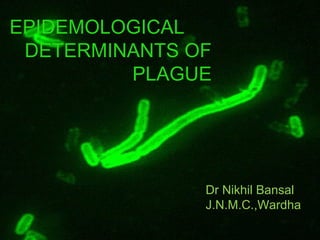
EPIDEMOLOGICAL
 DETERMINANTS OF
         PLAGUE


               Dr Nikhil Bansal
               J.N.M.C.,Wardha
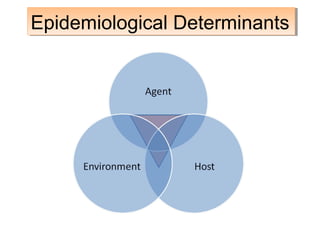
Epidemiological Determinants
AGENT FACTORS


        Agent


Reservoir of infection


  Source of
  infection
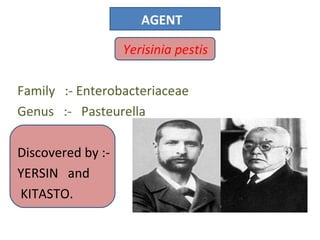
AGENT

                   Yerisinia pestis

Family :- Enterobacteriaceae
Genus :- Pasteurella

Discovered by :-
YERSIN and
KITASTO.
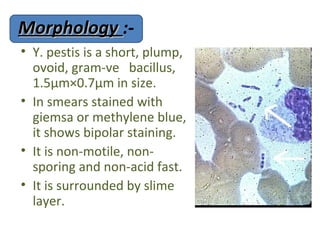
Morphology :-
• Y. pestis is a short, plump,
  ovoid, gram-ve bacillus,
  1.5μm×0.7µm in size.
• In smears stained with
  giemsa or methylene blue,
  it shows bipolar staining.
• It is non-motile, non-
  sporing and non-acid fast.
• It is surrounded by slime
  layer.
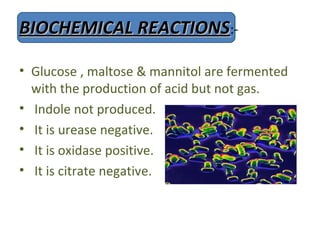
BIOCHEMICAL REACTIONS:-

• Glucose , maltose & mannitol are fermented
  with the production of acid but not gas.
• Indole not produced.
• It is urease negative.
• It is oxidase positive.
• It is citrate negative.
RESISTANCE:-

• Plague bacillus is easily destroyed by exposure
  to heat, sunlight, drying and chemical
  disinfectants.
• It is destroyed by heat at 55 degrees or by 0.5
  percent phenol in 15 minutes.
• They are lysed by specific antiplague
  bacteriophages.
VIRULENCE FACTORS:-
• A heat labile protein envelope antigen seen in
  virulent strains only.
• Two antigens designated as V & W are always
  produced together.
• Virulent strains produce bacteriocin,coagulase
  and fibrinolysin.
• Plague toxins endotoxins and murine toxins.
• Virulence is associated with purine synthesis .
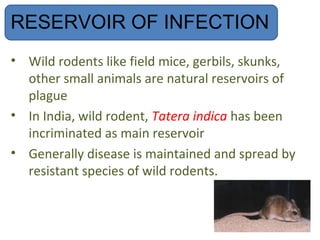
RESERVOIR OF INFECTION
• Wild rodents like field mice, gerbils, skunks,
  other small animals are natural reservoirs of
  plague
• In India, wild rodent, Tatera indica has been
  incriminated as main reservoir
• Generally disease is maintained and spread by
  resistant species of wild rodents.
Source of infection:-

• Infected rodents

• Infected fleas

• Case of a pneumonic plague
HOST - FACTORS

•       Age and sex

•       Human activities

•       Movement of the people.

•       Immunity.
ENVIRONMENTAL FACTORS

    Season:-
•   Out breaks are usually seasonal in nature
•    In northern India plague season start
     from september until may
•    Plague season depends primarily on field
     rodent factors
Temperature and humidity:-
 A mean temperature of 20-25 degrees and
 relative humidity of 60% is considered to be
 favourable for spread of plague.

Rainfall :-
 Heavy rainfall is unfavourable for spread of
 plague.
Urban and Rural areas:-
Plague have unable to gain a foothold in
many towns of India perhaps due to unto-
ward ecological conditions and lack of
efficient flea vectors.
Human dwellings :-
 Rats are abundantly found in places of
 poor housing conditions and frequent
 dwellings.
VECTORS OF PLAGUE

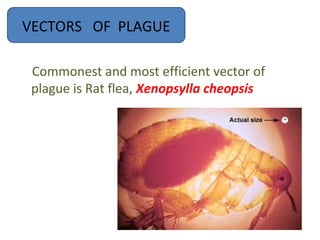
 Commonest and most efficient vector of
 plague is Rat flea, Xenopsylla cheopsis
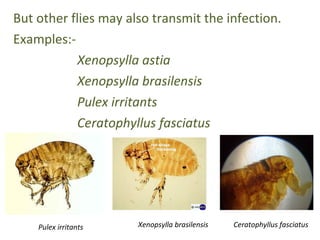
But other flies may also transmit the infection.
Examples:-
           Xenopsylla astia
           Xenopsylla brasilensis
           Pulex irritants
           Ceratophyllus fasciatus


    Pulex irritants   Xenopsylla brasilensis   Ceratophyllus fasciatus
BLOCKED FLEA

• A flea may ingest upto 0.5 cu.mm of blood which
  may contain as many as 5000 plague bacilli.
• Plague bacilli multiply enormously in gut of rat
  flea and may block the proventriculus so that no
  food can pass through it
• Such a flea is called blocked flea
• A blocked flea may eventually faces starvation
  and dies as it is unable to obtain blood meal.
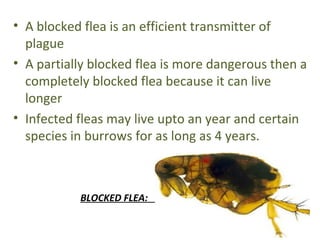
• A blocked flea is an efficient transmitter of
  plague
• A partially blocked flea is more dangerous then a
  completely blocked flea because it can live
  longer
• Infected fleas may live upto an year and certain
  species in burrows for as long as 4 years.


           BLOCKED FLEA:
FLEA INDICES

• They are useful measurements for density of fleas.
• They are useful in evaluating the effectiveness of
  spraying programme.
• Following flea indices are widely used:-
       Total flea index.
       Cheopsis index.
       Specific percentage of fleas.
       Burrow index.
Total flea index:-


     It is average number of fleas of all species
     per rat.
Cheopsis index:-


    It is the average number of x.cheopsis per
    rat. It is a specific flea index.
Specific percentage of fleas:-


          It is percentage of different species of
          fleas that are found in rats.
Burrow index : -


         It is the average number of free living
         fleas per species per rodent burrow.
Thanks…

Plague

  • 1.
    EPIDEMOLOGICAL DETERMINANTS OF PLAGUE Dr Nikhil Bansal J.N.M.C.,Wardha
  • 2.
  • 3.
    AGENT FACTORS Agent Reservoir of infection Source of infection
  • 4.
    AGENT Yerisinia pestis Family :- Enterobacteriaceae Genus :- Pasteurella Discovered by :- YERSIN and KITASTO.
  • 5.
    Morphology :- • Y.pestis is a short, plump, ovoid, gram-ve bacillus, 1.5μm×0.7µm in size. • In smears stained with giemsa or methylene blue, it shows bipolar staining. • It is non-motile, non- sporing and non-acid fast. • It is surrounded by slime layer.
  • 6.
    BIOCHEMICAL REACTIONS:- • Glucose, maltose & mannitol are fermented with the production of acid but not gas. • Indole not produced. • It is urease negative. • It is oxidase positive. • It is citrate negative.
  • 7.
    RESISTANCE:- • Plague bacillusis easily destroyed by exposure to heat, sunlight, drying and chemical disinfectants. • It is destroyed by heat at 55 degrees or by 0.5 percent phenol in 15 minutes. • They are lysed by specific antiplague bacteriophages.
  • 8.
    VIRULENCE FACTORS:- • Aheat labile protein envelope antigen seen in virulent strains only. • Two antigens designated as V & W are always produced together. • Virulent strains produce bacteriocin,coagulase and fibrinolysin. • Plague toxins endotoxins and murine toxins. • Virulence is associated with purine synthesis .
  • 9.
    RESERVOIR OF INFECTION •Wild rodents like field mice, gerbils, skunks, other small animals are natural reservoirs of plague • In India, wild rodent, Tatera indica has been incriminated as main reservoir • Generally disease is maintained and spread by resistant species of wild rodents.
  • 10.
    Source of infection:- •Infected rodents • Infected fleas • Case of a pneumonic plague
  • 11.
    HOST - FACTORS • Age and sex • Human activities • Movement of the people. • Immunity.
  • 12.
    ENVIRONMENTAL FACTORS Season:- • Out breaks are usually seasonal in nature • In northern India plague season start from september until may • Plague season depends primarily on field rodent factors
  • 13.
    Temperature and humidity:- A mean temperature of 20-25 degrees and relative humidity of 60% is considered to be favourable for spread of plague. Rainfall :- Heavy rainfall is unfavourable for spread of plague.
  • 14.
    Urban and Ruralareas:- Plague have unable to gain a foothold in many towns of India perhaps due to unto- ward ecological conditions and lack of efficient flea vectors. Human dwellings :- Rats are abundantly found in places of poor housing conditions and frequent dwellings.
  • 15.
    VECTORS OF PLAGUE Commonest and most efficient vector of plague is Rat flea, Xenopsylla cheopsis
  • 16.
    But other fliesmay also transmit the infection. Examples:- Xenopsylla astia Xenopsylla brasilensis Pulex irritants Ceratophyllus fasciatus Pulex irritants Xenopsylla brasilensis Ceratophyllus fasciatus
  • 17.
    BLOCKED FLEA • Aflea may ingest upto 0.5 cu.mm of blood which may contain as many as 5000 plague bacilli. • Plague bacilli multiply enormously in gut of rat flea and may block the proventriculus so that no food can pass through it • Such a flea is called blocked flea • A blocked flea may eventually faces starvation and dies as it is unable to obtain blood meal.
  • 18.
    • A blockedflea is an efficient transmitter of plague • A partially blocked flea is more dangerous then a completely blocked flea because it can live longer • Infected fleas may live upto an year and certain species in burrows for as long as 4 years. BLOCKED FLEA:
  • 19.
    FLEA INDICES • Theyare useful measurements for density of fleas. • They are useful in evaluating the effectiveness of spraying programme. • Following flea indices are widely used:- Total flea index. Cheopsis index. Specific percentage of fleas. Burrow index.
  • 20.
    Total flea index:- It is average number of fleas of all species per rat.
  • 21.
    Cheopsis index:- It is the average number of x.cheopsis per rat. It is a specific flea index.
  • 22.
    Specific percentage offleas:- It is percentage of different species of fleas that are found in rats.
  • 23.
    Burrow index :- It is the average number of free living fleas per species per rodent burrow.
  • 24.