Downloaded 274 times

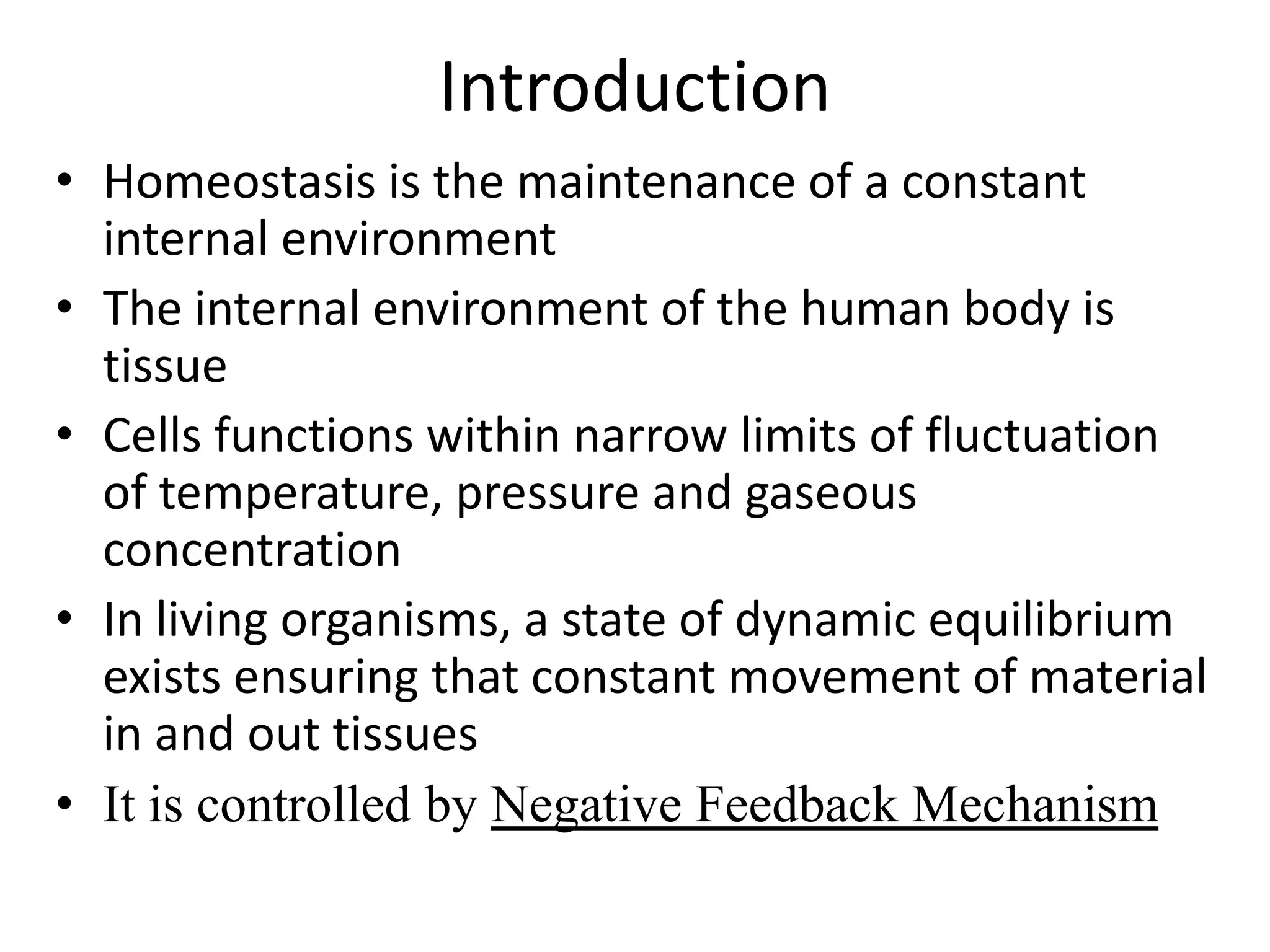
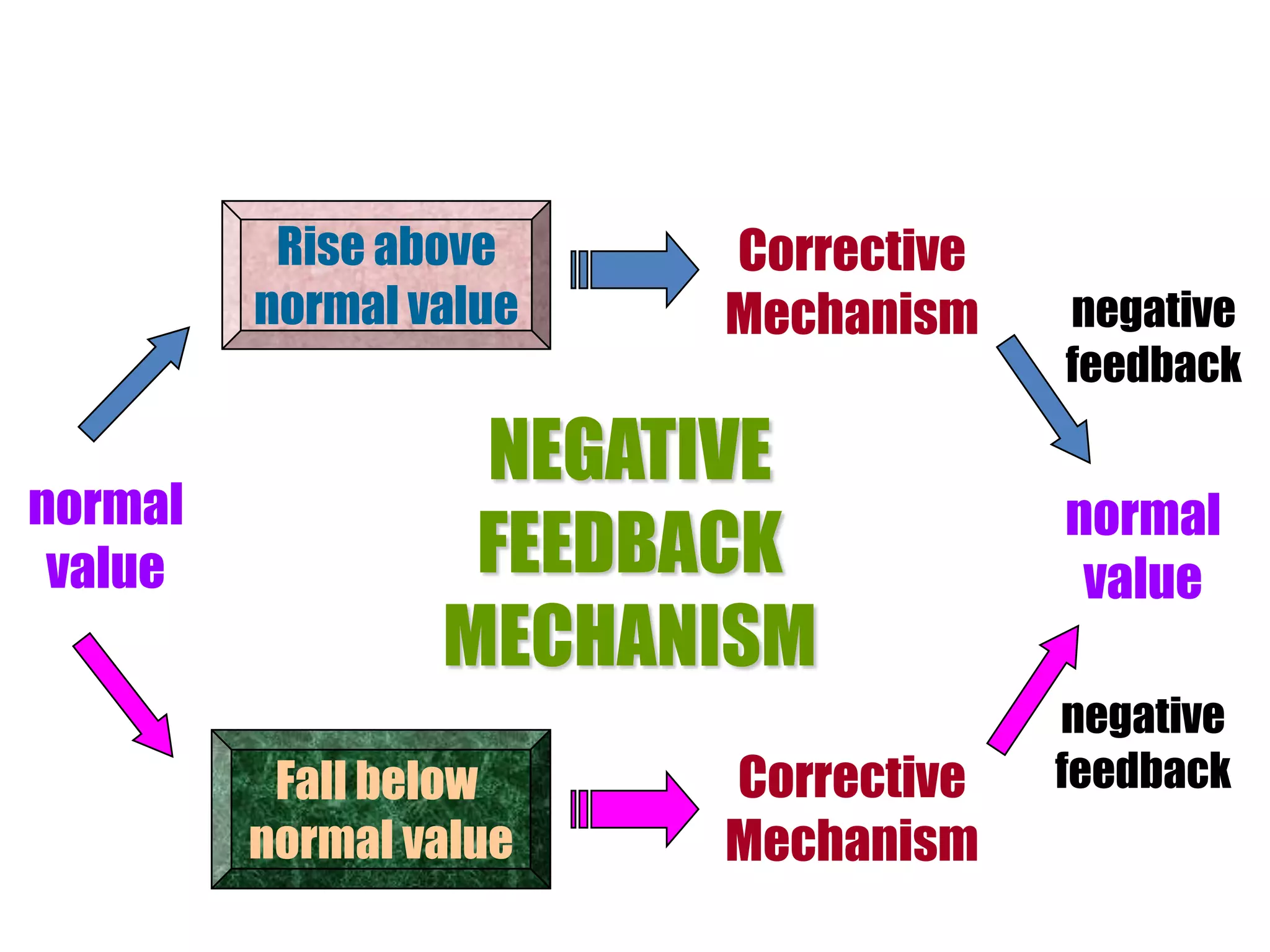
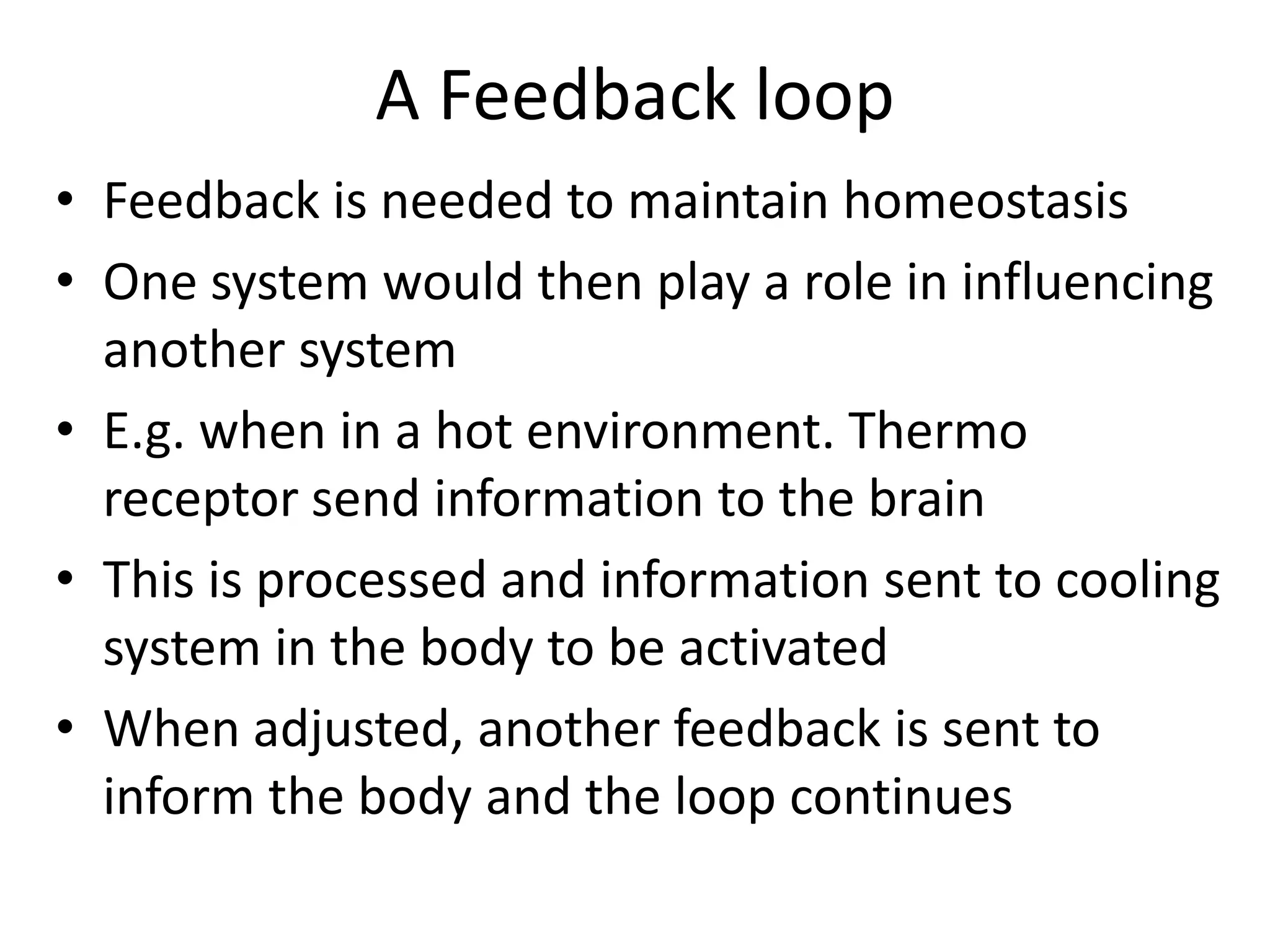
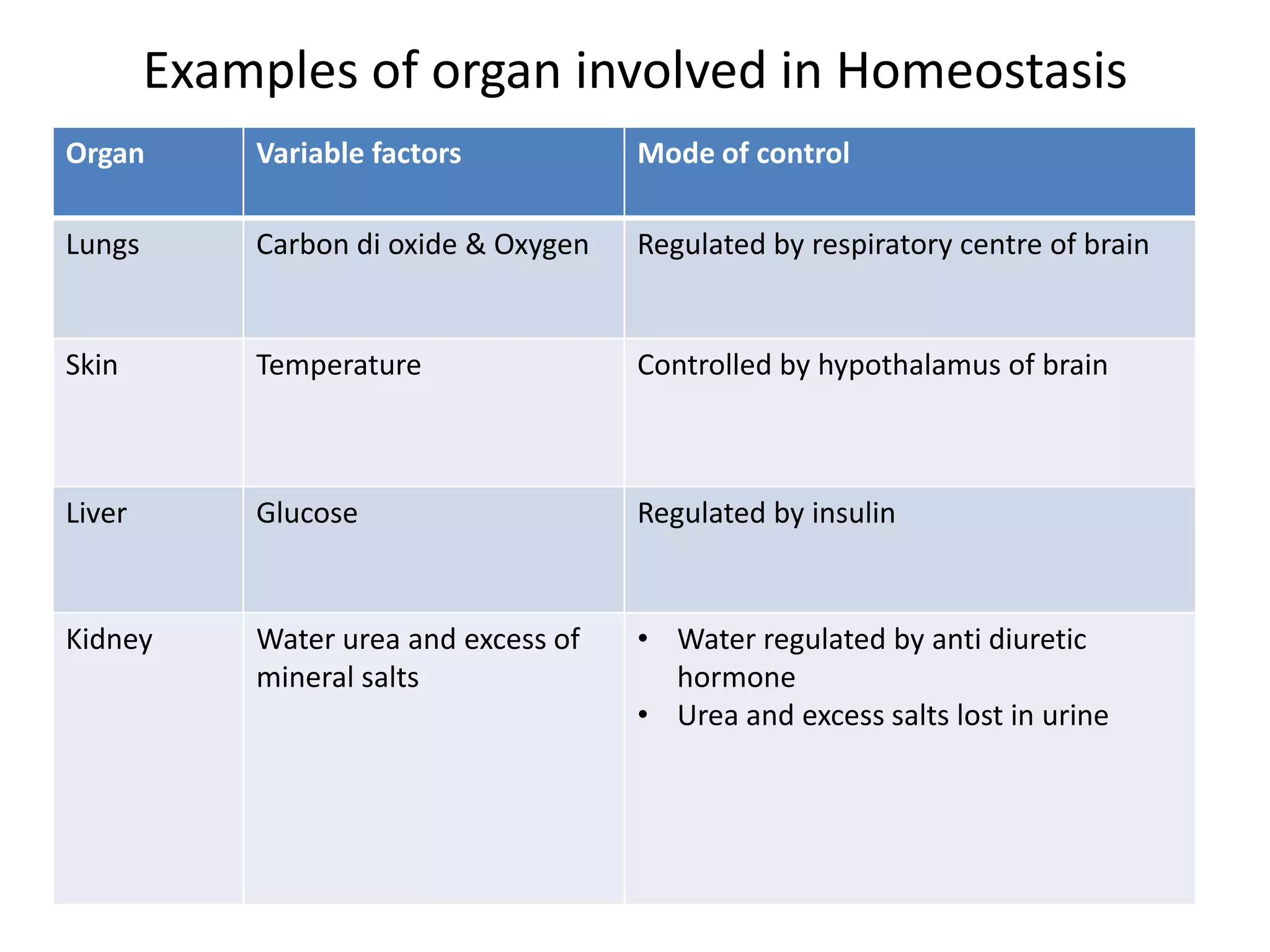
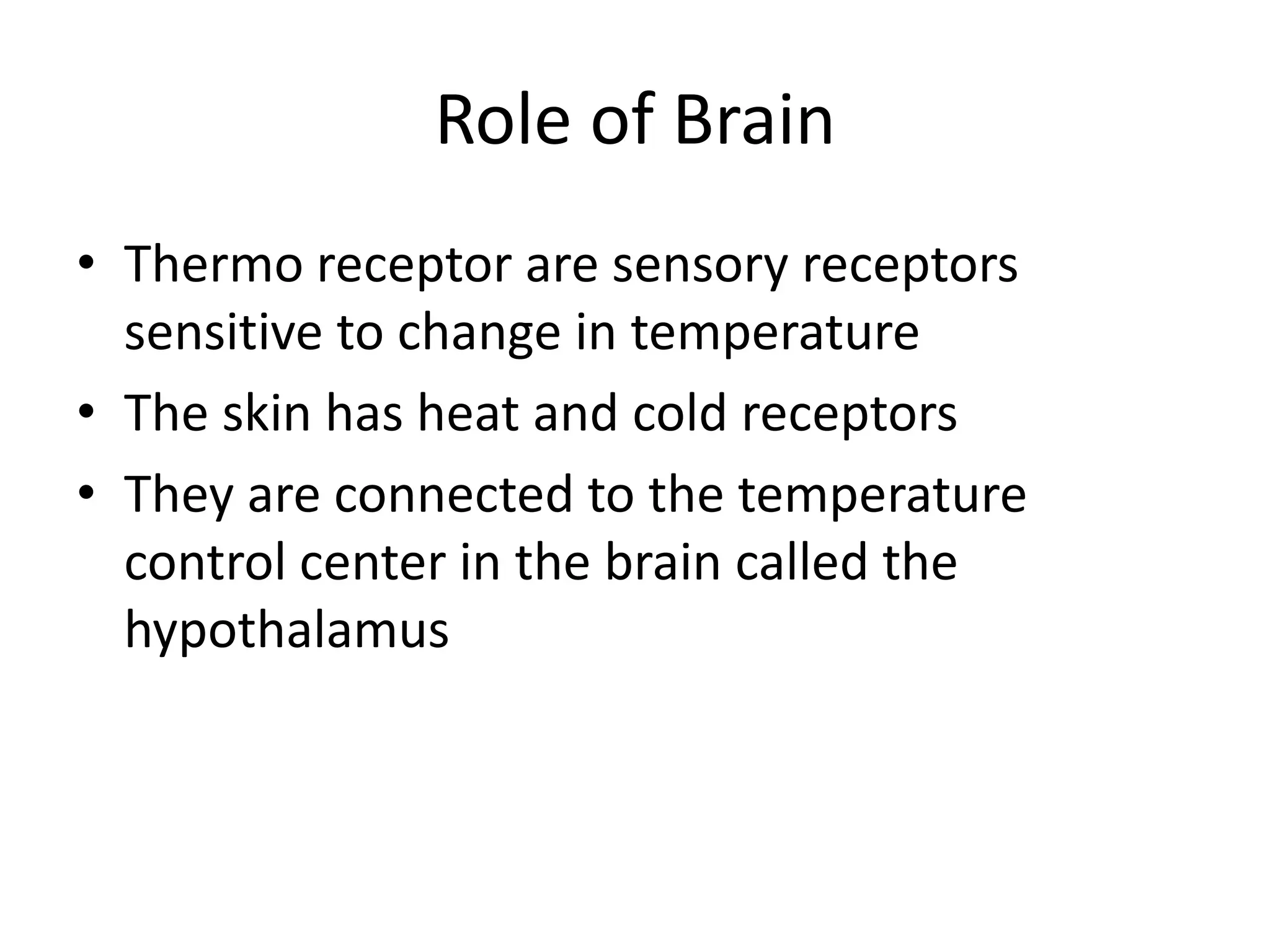
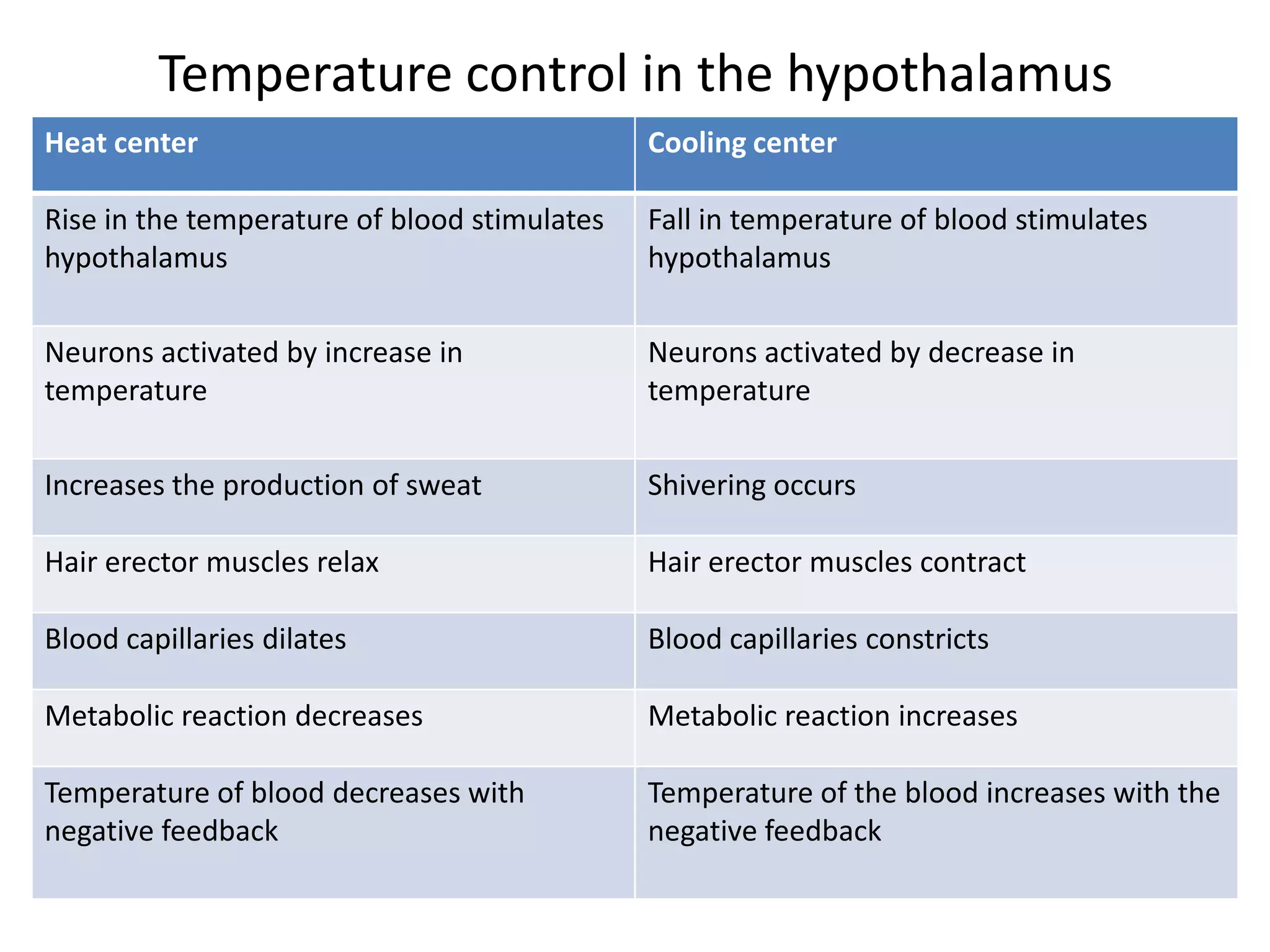
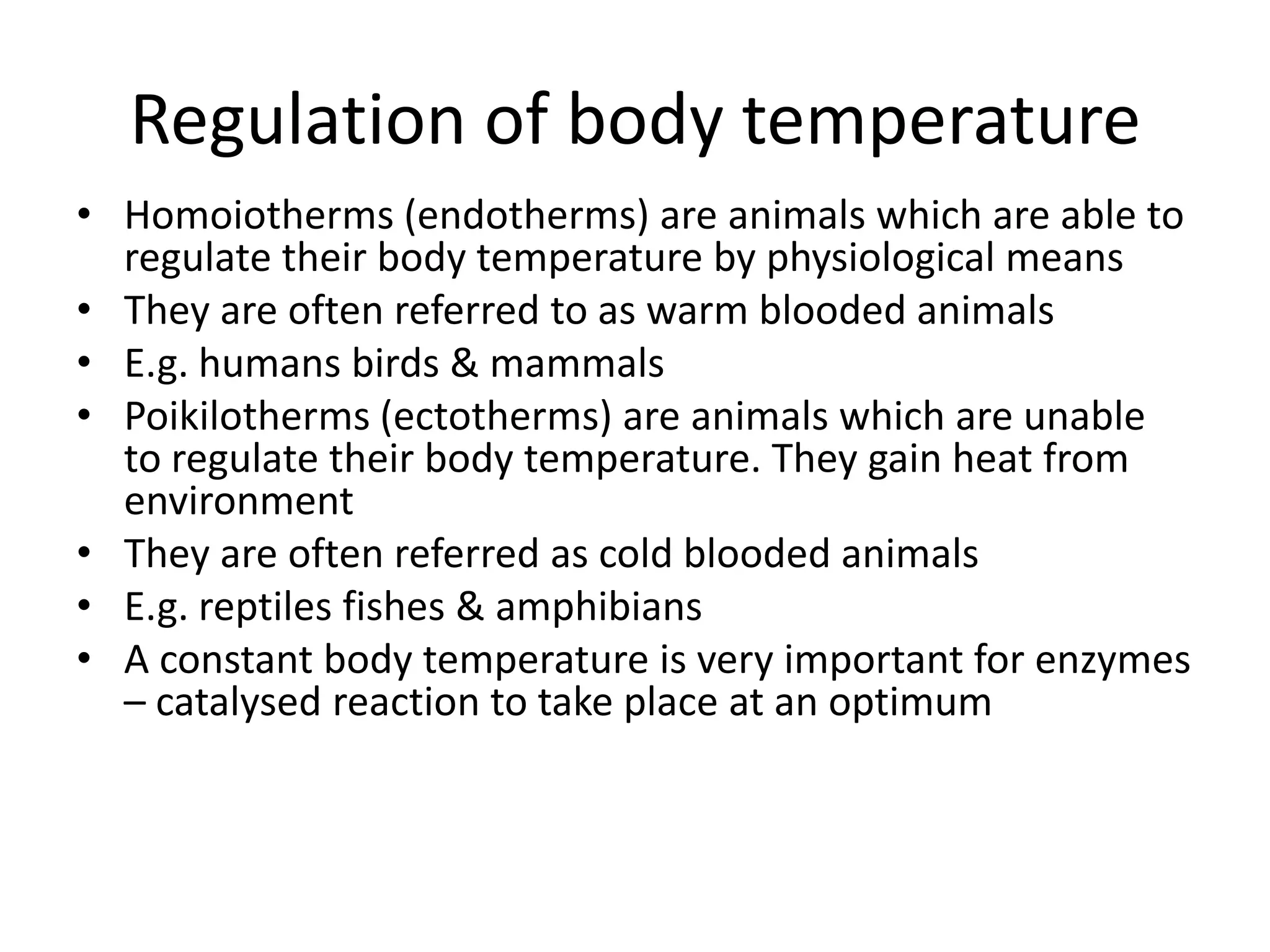
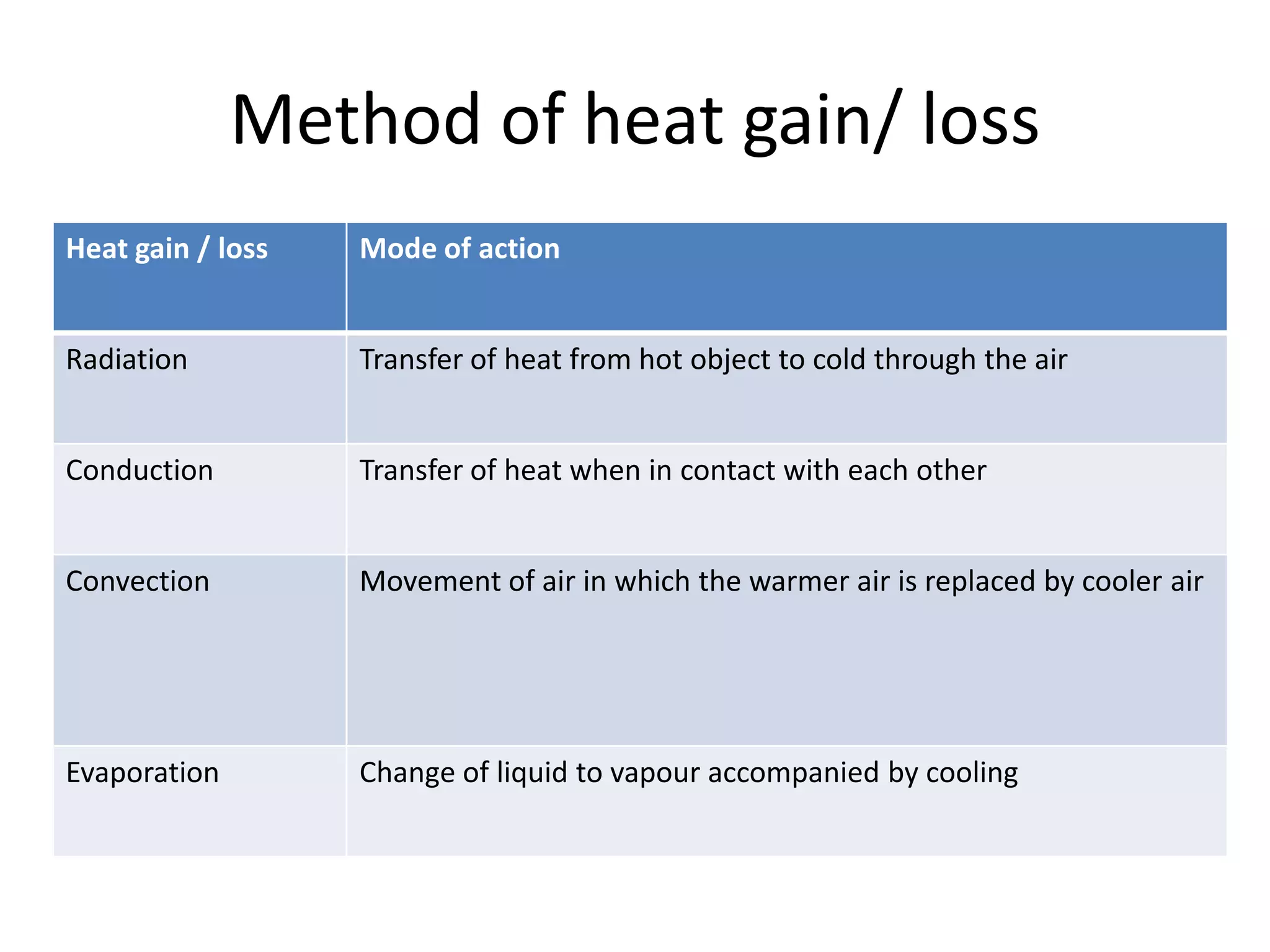
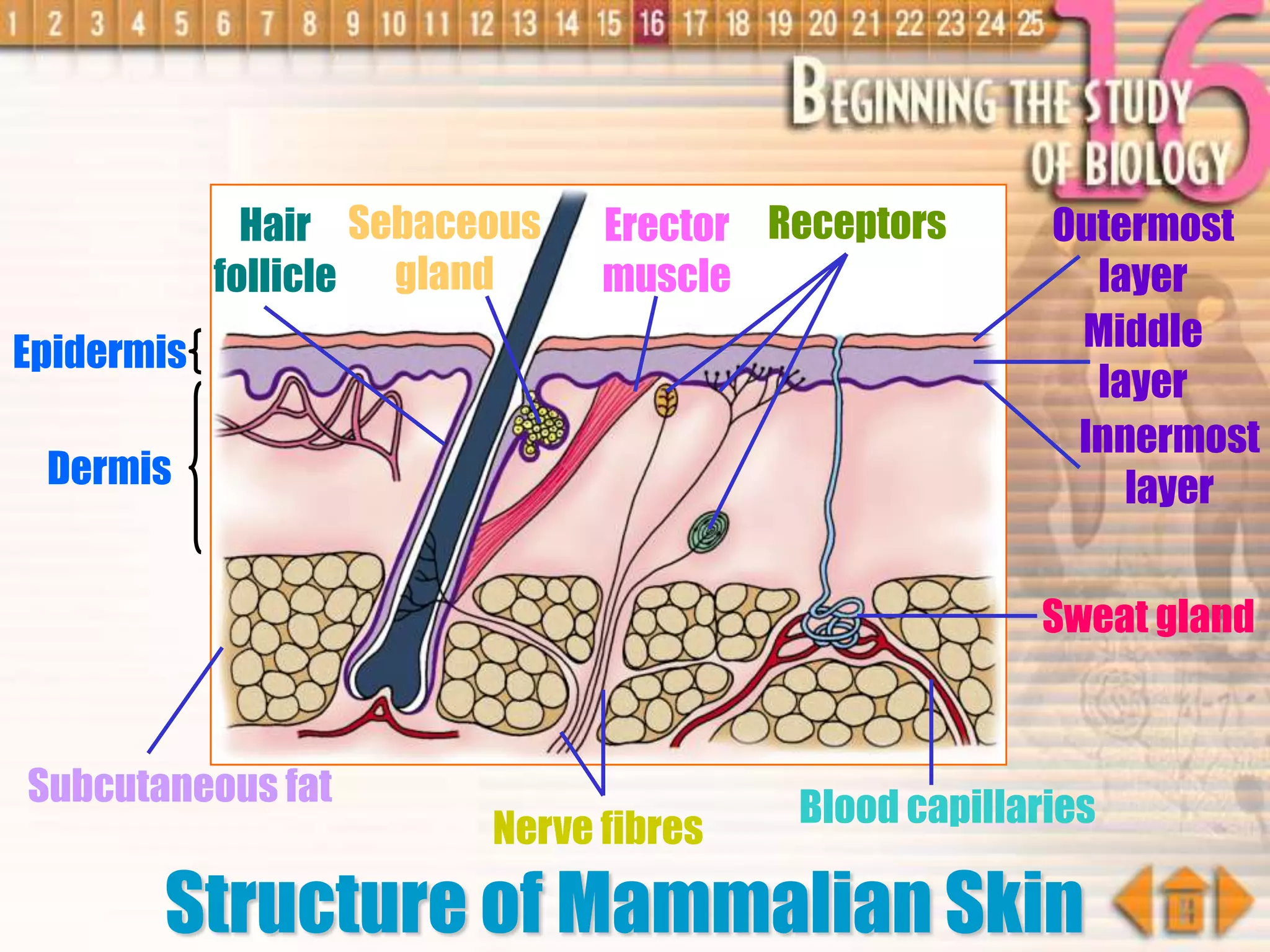
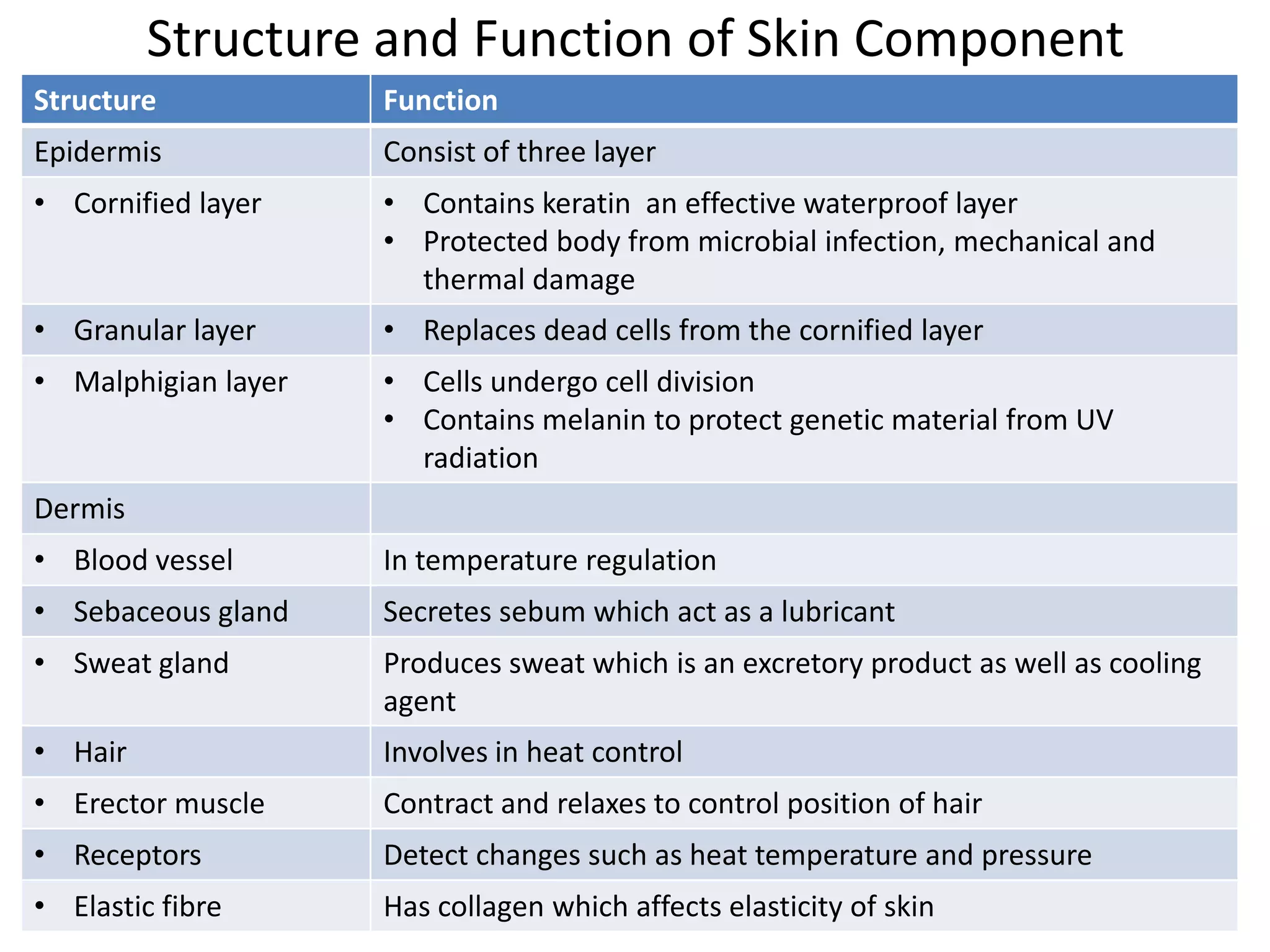
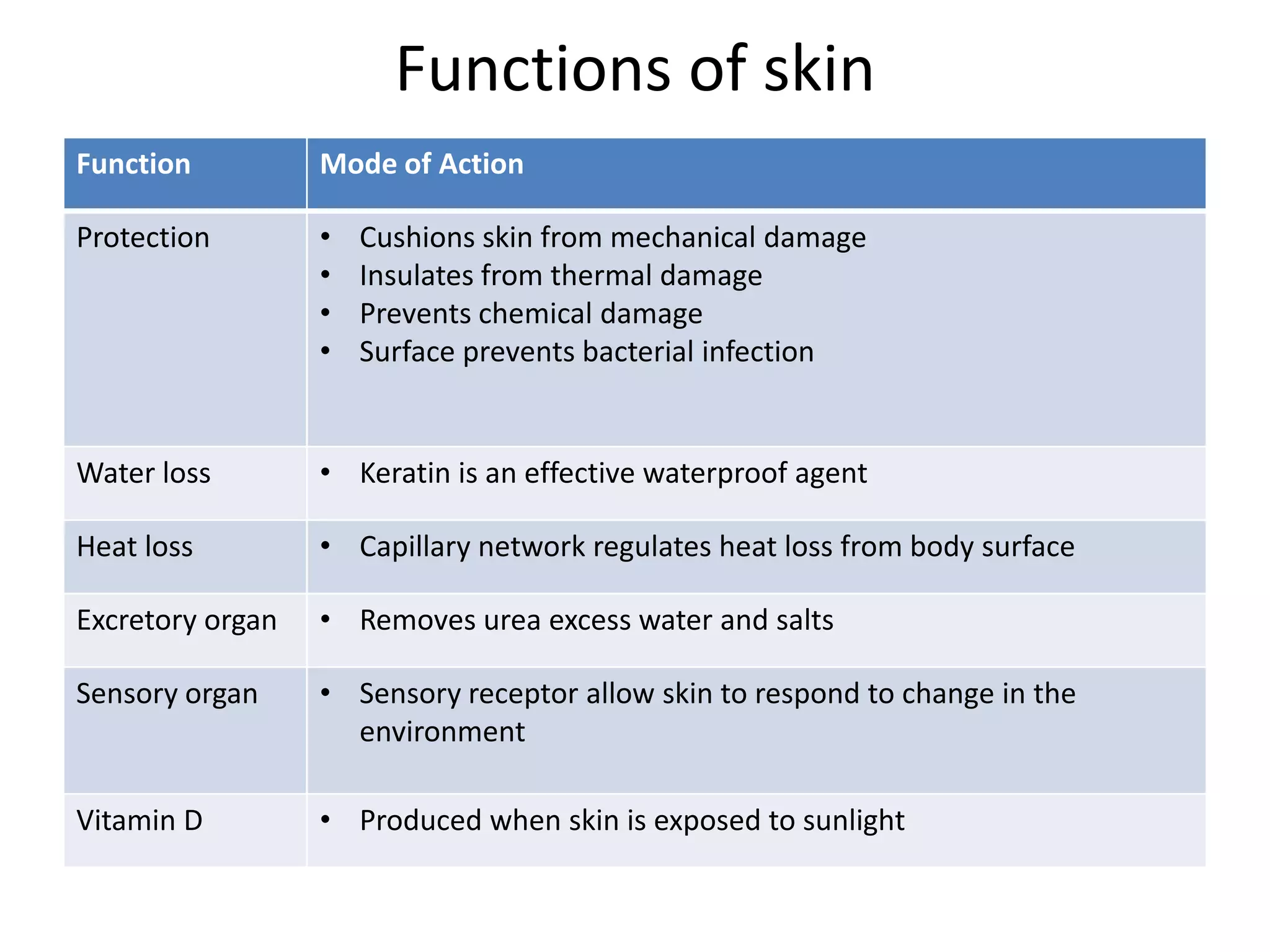
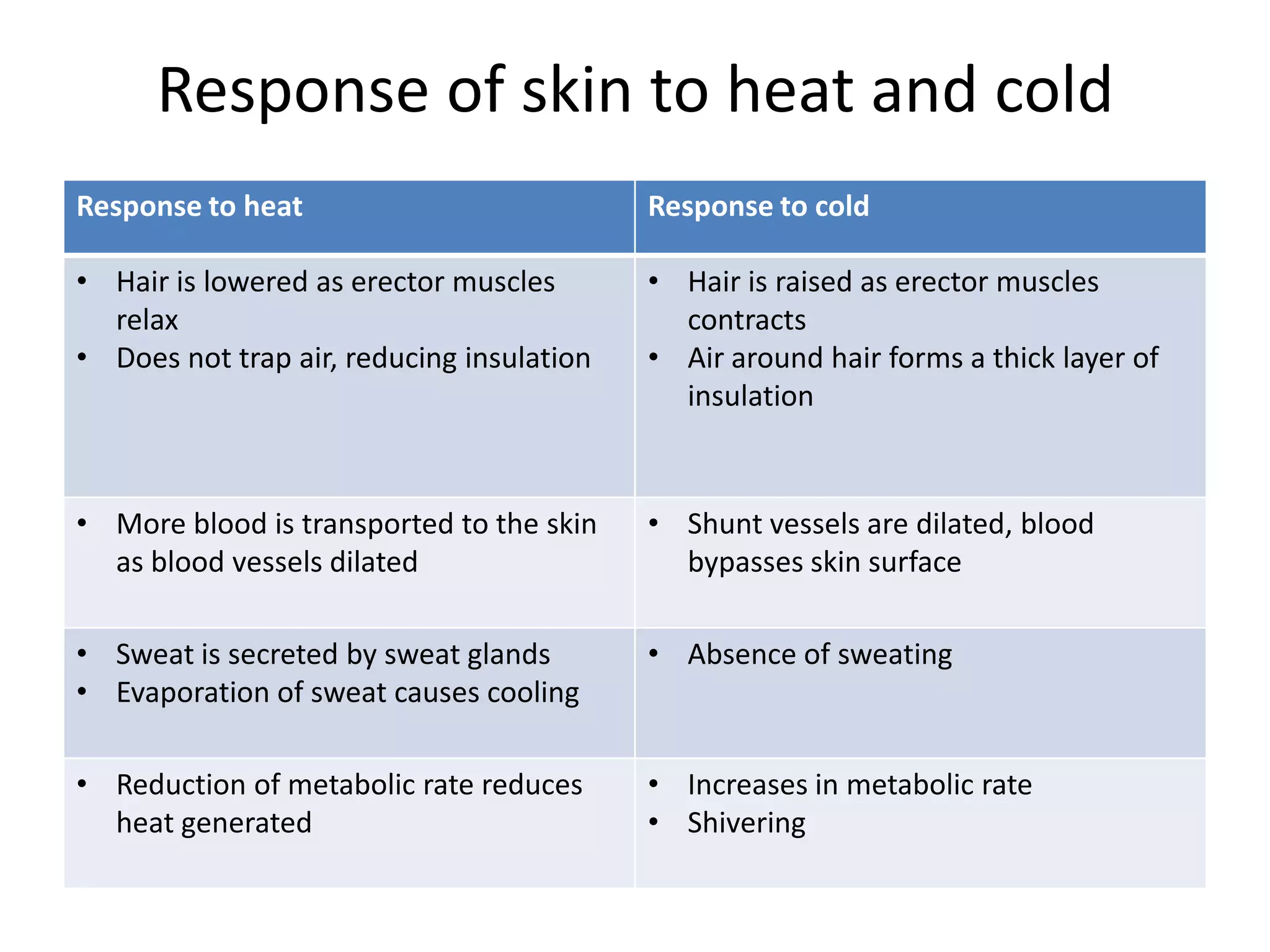
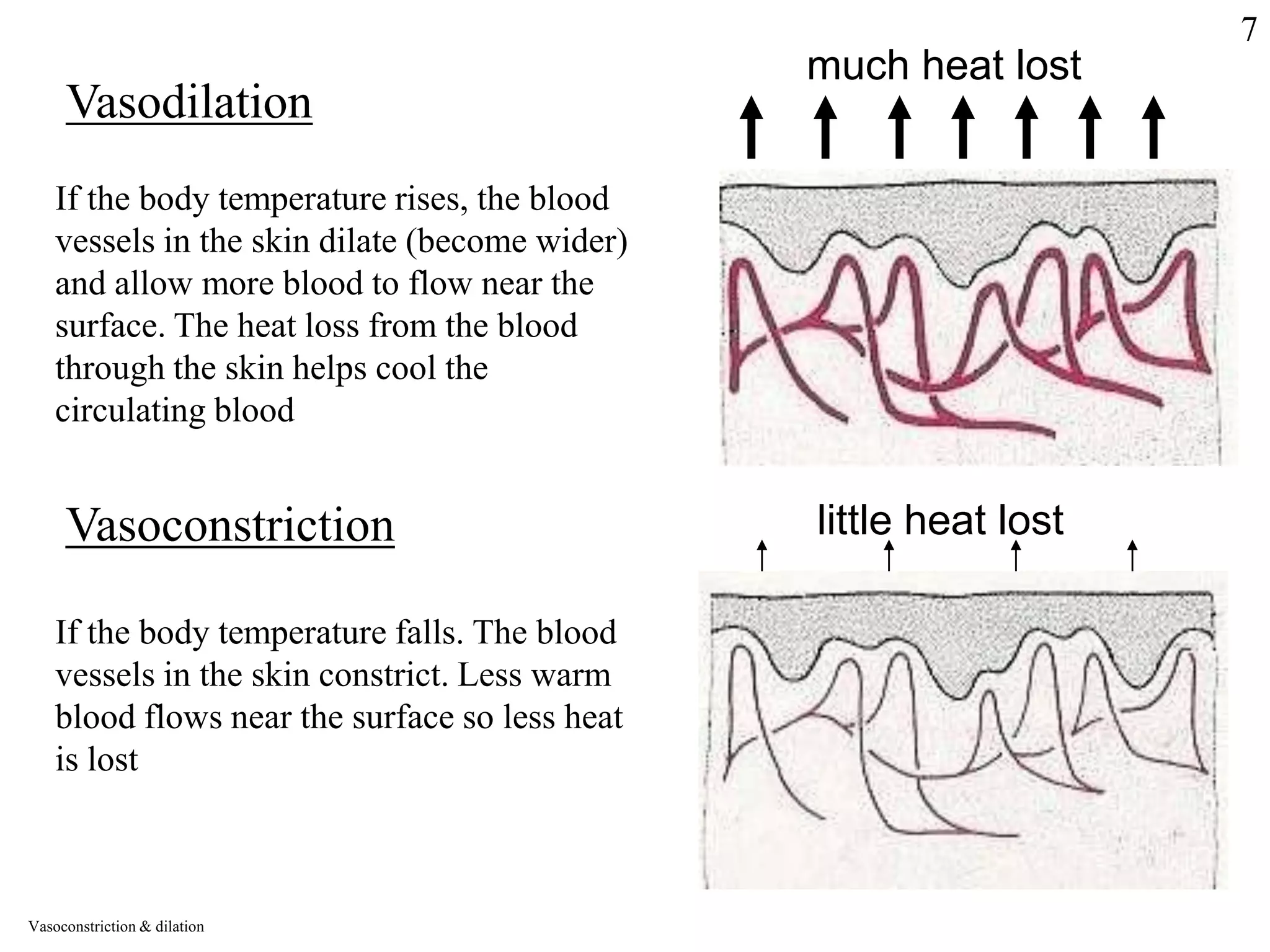

Homeostasis refers to the body's ability to maintain stable internal conditions such as temperature and glucose levels. It is regulated by negative feedback mechanisms. For example, temperature receptors in the skin sense changes and send signals to the hypothalamus in the brain. If body temperature rises, the hypothalamus activates sweating and blood vessel dilation to cool the body through evaporation. Conversely, it triggers shivering and vessel constriction when temperatures fall to conserve heat. Various organs also help regulate variables through hormones, like the liver controlling glucose with insulin secretion. The skin plays an important role in homeostasis through insulation, sweating, and temperature reception.


![Transport In Animals[1].pptx Cambridge IGCSE](https://cdn.slidesharecdn.com/ss_thumbnails/transportinanimals1-240526233901-c748a533-thumbnail.jpg?width=640&height=640&fit=bounds)


