DONE BY
DR SUBA RANJANA
1ST
YEAR MDS
SRI SIDDHARTHA DENTAL COLLEGE
introductionintroduction
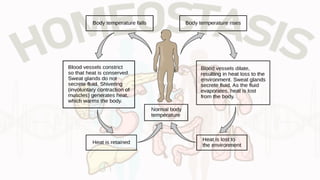
• Homeostasis-refers to the existence of a stable internal
environment.
• The term “Homeostasis” is derived from 2 Greek words
• Homeo’-constant/same/unchanging
• Stasis-standing
• It is an organism’s internal environment which “stays the same”
• The ‘internal environment refers to condition inside an
organism.these cnditions remain more or less constant despite
changes such as pH or temperature in outside environment.
Walter Bradford
Cannon ,in 1930
CLAUDE BERNARD,great biologist
and physiologist in 19th century
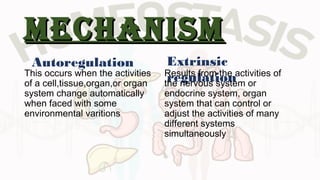
Autoregulation Extrinsic
regulation
mechanismmechanism
This occurs when the activities
of a cell,tissue,organ,or organ
system change automatically
when faced with some
environmental varitions
Results from the activities of
the nervous system or
endocrine system, organ
system that can control or
adjust the activities of many
different systems
simultaneously
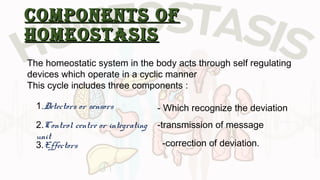
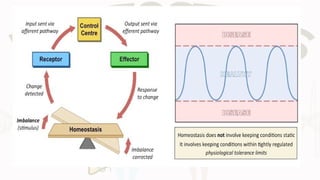
The homeostatic system in the body acts through self regulating
devices which operate in a cyclic manner
This cycle includes three components :
1.Detectors or sensors - Which recognize the deviation
2.Control centre or integrating
unit
-transmission of message
3.Effectors -correction of deviation.
components ofcomponents of
homeostasishomeostasis
mechanism ofmechanism of
actionactionFeedbackFeedback
Is a process in which some proportion of the output signal of
a system is fed back to the input.
This is done intentionally to control the behaviour pattern of
the system.whenever any change occurs,system receives
and reacts to two types of feedback:
1.Negative feedback
2.Positive feedback
negative feedbacknegative feedback
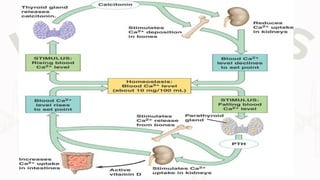
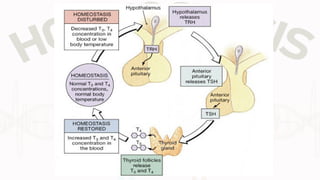
The one to which the system reacts in such a way as to
arrest the change or reverse the direction of change.
After receiving a message,the effectors send the
negative feedback signals to the system.
Now,the system stabilizes its own function and makes an
attempt to maintain homeostasis.
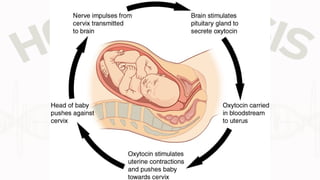
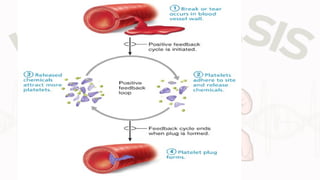
It is the one to which the system reacts in such a way as to
increase the intensity of the change in the same way as to
increase the intensity of the change in same direction.
Positive feedback is less common than the negative feedback
However it has its own significance particularly during emergency
conditions.
Positive feedbackPositive feedback
When homeostatic regulaions fail,whether as a
result of infection ,injury or geneic abnormality,organ
systems begin to malfunction.the result is known as
illness,or disease.
conclusionconclusion
Homeostasis

Homeostasis

  • 1.
    DONE BY DR SUBARANJANA 1ST YEAR MDS SRI SIDDHARTHA DENTAL COLLEGE
  • 3.
    introductionintroduction • Homeostasis-refers tothe existence of a stable internal environment. • The term “Homeostasis” is derived from 2 Greek words • Homeo’-constant/same/unchanging • Stasis-standing • It is an organism’s internal environment which “stays the same” • The ‘internal environment refers to condition inside an organism.these cnditions remain more or less constant despite changes such as pH or temperature in outside environment.
  • 5.
    Walter Bradford Cannon ,in1930 CLAUDE BERNARD,great biologist and physiologist in 19th century
  • 6.
    Autoregulation Extrinsic regulation mechanismmechanism This occurswhen the activities of a cell,tissue,organ,or organ system change automatically when faced with some environmental varitions Results from the activities of the nervous system or endocrine system, organ system that can control or adjust the activities of many different systems simultaneously
  • 7.
    The homeostatic systemin the body acts through self regulating devices which operate in a cyclic manner This cycle includes three components : 1.Detectors or sensors - Which recognize the deviation 2.Control centre or integrating unit -transmission of message 3.Effectors -correction of deviation. components ofcomponents of homeostasishomeostasis
  • 9.
    mechanism ofmechanism of actionactionFeedbackFeedback Isa process in which some proportion of the output signal of a system is fed back to the input. This is done intentionally to control the behaviour pattern of the system.whenever any change occurs,system receives and reacts to two types of feedback: 1.Negative feedback 2.Positive feedback
  • 10.
    negative feedbacknegative feedback Theone to which the system reacts in such a way as to arrest the change or reverse the direction of change. After receiving a message,the effectors send the negative feedback signals to the system. Now,the system stabilizes its own function and makes an attempt to maintain homeostasis.
  • 13.
    It is theone to which the system reacts in such a way as to increase the intensity of the change in the same way as to increase the intensity of the change in same direction. Positive feedback is less common than the negative feedback However it has its own significance particularly during emergency conditions. Positive feedbackPositive feedback
  • 16.
    When homeostatic regulaionsfail,whether as a result of infection ,injury or geneic abnormality,organ systems begin to malfunction.the result is known as illness,or disease. conclusionconclusion