Topic : Phosphorus Cycle
The Phosphorus Cycle
 Phosphorus:
 cell membranes
 ATP - Adenosine tri PHOSPHATE
 bones - calcium phosphate
 Two methods of P recycling:
 geological (abiotic)
 living organisms (biotic)
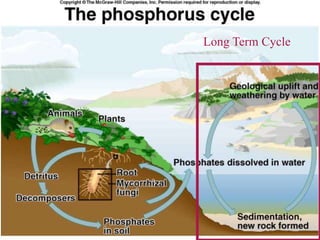
Long Term Cycle
 Most common form: a part of rocks
 Properties:
 soluble - dissolve in water
 Phosphates dissolve in water—erosion
carries them from land to streams and rivers
and then finally to the oceans
 Oceanssediments may be thrust upward
and once again form land through geological
activity
Long Term Cycle
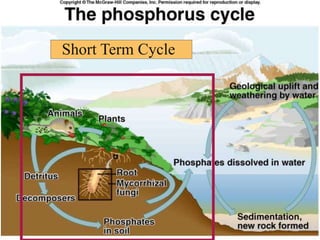
Short Term Cycle
 Phosphates in water also enter the food chain
through photosynthetic organisms
 Decomposition of dead organismssoluble
phosphates are absorbed by plants and used
during photosynthesis
 Plants are eaten by animals
Short Term Cycle
Phosphorous Cycle

Phosphorus cycle

  • 1.
  • 2.
    The Phosphorus Cycle Phosphorus:  cell membranes  ATP - Adenosine tri PHOSPHATE  bones - calcium phosphate  Two methods of P recycling:  geological (abiotic)  living organisms (biotic)
  • 3.
    Long Term Cycle Most common form: a part of rocks  Properties:  soluble - dissolve in water  Phosphates dissolve in water—erosion carries them from land to streams and rivers and then finally to the oceans  Oceanssediments may be thrust upward and once again form land through geological activity
  • 4.
  • 5.
    Short Term Cycle Phosphates in water also enter the food chain through photosynthetic organisms  Decomposition of dead organismssoluble phosphates are absorbed by plants and used during photosynthesis  Plants are eaten by animals
  • 6.
  • 7.