OXYGEN CYCLE
OXYGEN
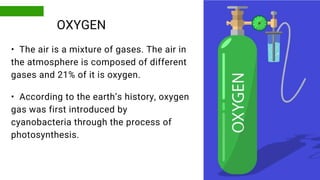
• The air is a mixture of gases. The air in
the atmosphere is composed of different
gases and 21% of it is oxygen.
• According to the earth’s history, oxygen
gas was first introduced by
cyanobacteria through the process of
photosynthesis.
OXYGEN
• Today, oxygen is freely available in the
air and also dissolved in water .
• It is the second most abundant gas
present in the atmosphere and also the
most common element of the human
body
• serves as an essential element in
biomolecules like proteins and nucleic
acids.
OXYGEN CYCLE
The oxygen cycle is a biological
process which helps in
maintaining the oxygen level by
moving through three main
spheres of the earth which are:
• Atmosphere
• Lithosphere
• Biosphere
Service Us
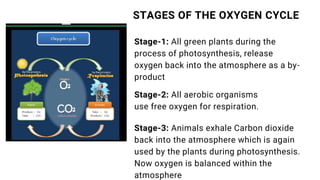
Stage-1: All green plants during the
process of photosynthesis, release
oxygen back into the atmosphere as a by-
product
Stage-2: All aerobic organisms
use free oxygen for respiration.
Stage-3: Animals exhale Carbon dioxide
back into the atmosphere which is again
used by the plants during photosynthesis.
Now oxygen is balanced within the
atmosphere
STAGES OF THE OXYGEN CYCLE
Photosynthesis converts carbon dioxide and water into
oxygen and glucose. Glucose is used as food by the
plant and oxygen is a by-product. Cellular respiration
converts oxygen and glucose into water and carbon
dioxide. Water and carbon dioxide are by- products and
ATP is energy that is transformed from the process.
Relationship between photosynthesis and
cellular respiration
Plants: The leading creators of oxygen are plants by the
process of photosynthesis. Photosynthesis is a biological
process by which all green plants synthesize their food in
the presence of sunlight. During photosynthesis, plants use
sunlight, water, carbon dioxide to create energy and oxygen
gas is liberated as a by-product of this process
Sunlight: Sunlight also produces oxygen. Some
oxygen gas is produced when the sunlight reacts
with water vapour in the atmosphere
The four main processes that use
atmospheric oxygen are:
Uses of Oxygen
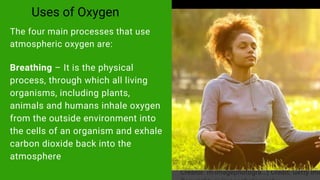
Breathing – It is the physical
process, through which all living
organisms, including plants,
animals and humans inhale oxygen
from the outside environment into
the cells of an organism and exhale
carbon dioxide back into the
atmosphere
Uses of Oxygen
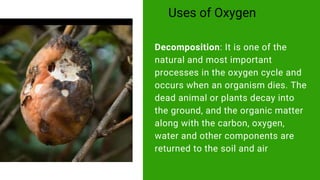
Decomposition: It is one of the
natural and most important
processes in the oxygen cycle and
occurs when an organism dies. The
dead animal or plants decay into
the ground, and the organic matter
along with the carbon, oxygen,
water and other components are
returned to the soil and air
The four main processes that use
atmospheric oxygen are:
Uses of Oxygen
Combustion: It is also one of the
most important processes which
occur when any of the organic
materials, including fossil fuels,
plastics and wood, are burned in
the presence of oxygen and
releases carbon dioxide into the
atmosphere
Uses of Oxygen
Rusting: This process also
requires oxygen. It is the
formation of oxides which is also
called oxidation. In this process,
metals like iron or alloy rust when
they are exposed to moisture and
oxygen for an extended period of
time and new compounds of
oxides are formed by the
combination of oxygen with the
metal
Some Interesting Facts about Oxygen
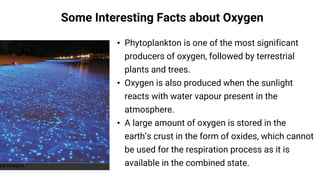
• Phytoplankton is one of the most significant
producers of oxygen, followed by terrestrial
plants and trees.
• Oxygen is also produced when the sunlight
reacts with water vapour present in the
atmosphere.
• A large amount of oxygen is stored in the
earth’s crust in the form of oxides, which cannot
be used for the respiration process as it is
available in the combined state.
+123-456-7890
How are humans impacting the oxygen cycle?
+123-456-7890
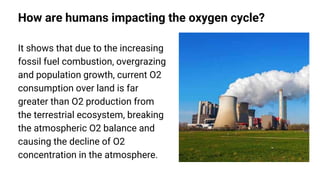
It shows that due to the increasing
fossil fuel combustion, overgrazing
and population growth, current O2
consumption over land is far
greater than O2 production from
the terrestrial ecosystem, breaking
the atmospheric O2 balance and
causing the decline of O2
concentration in the atmosphere.
THANK YOU
PREPARED BY:
BOAQUIÑA, KIAN
CORONEL, YSSA MAE
MORTE,NELCIE

OXYGEN CYCLE.pptx

  • 1.
  • 2.
    OXYGEN • The airis a mixture of gases. The air in the atmosphere is composed of different gases and 21% of it is oxygen. • According to the earth’s history, oxygen gas was first introduced by cyanobacteria through the process of photosynthesis.
  • 3.
    OXYGEN • Today, oxygenis freely available in the air and also dissolved in water . • It is the second most abundant gas present in the atmosphere and also the most common element of the human body • serves as an essential element in biomolecules like proteins and nucleic acids.
  • 4.
    OXYGEN CYCLE The oxygencycle is a biological process which helps in maintaining the oxygen level by moving through three main spheres of the earth which are: • Atmosphere • Lithosphere • Biosphere
  • 5.
    Service Us Stage-1: Allgreen plants during the process of photosynthesis, release oxygen back into the atmosphere as a by- product Stage-2: All aerobic organisms use free oxygen for respiration. Stage-3: Animals exhale Carbon dioxide back into the atmosphere which is again used by the plants during photosynthesis. Now oxygen is balanced within the atmosphere STAGES OF THE OXYGEN CYCLE
  • 6.
    Photosynthesis converts carbondioxide and water into oxygen and glucose. Glucose is used as food by the plant and oxygen is a by-product. Cellular respiration converts oxygen and glucose into water and carbon dioxide. Water and carbon dioxide are by- products and ATP is energy that is transformed from the process. Relationship between photosynthesis and cellular respiration
  • 7.
    Plants: The leadingcreators of oxygen are plants by the process of photosynthesis. Photosynthesis is a biological process by which all green plants synthesize their food in the presence of sunlight. During photosynthesis, plants use sunlight, water, carbon dioxide to create energy and oxygen gas is liberated as a by-product of this process
  • 8.
    Sunlight: Sunlight alsoproduces oxygen. Some oxygen gas is produced when the sunlight reacts with water vapour in the atmosphere
  • 9.
    The four mainprocesses that use atmospheric oxygen are: Uses of Oxygen Breathing – It is the physical process, through which all living organisms, including plants, animals and humans inhale oxygen from the outside environment into the cells of an organism and exhale carbon dioxide back into the atmosphere
  • 10.
    Uses of Oxygen Decomposition:It is one of the natural and most important processes in the oxygen cycle and occurs when an organism dies. The dead animal or plants decay into the ground, and the organic matter along with the carbon, oxygen, water and other components are returned to the soil and air
  • 11.
    The four mainprocesses that use atmospheric oxygen are: Uses of Oxygen Combustion: It is also one of the most important processes which occur when any of the organic materials, including fossil fuels, plastics and wood, are burned in the presence of oxygen and releases carbon dioxide into the atmosphere
  • 12.
    Uses of Oxygen Rusting:This process also requires oxygen. It is the formation of oxides which is also called oxidation. In this process, metals like iron or alloy rust when they are exposed to moisture and oxygen for an extended period of time and new compounds of oxides are formed by the combination of oxygen with the metal
  • 13.
    Some Interesting Factsabout Oxygen • Phytoplankton is one of the most significant producers of oxygen, followed by terrestrial plants and trees. • Oxygen is also produced when the sunlight reacts with water vapour present in the atmosphere. • A large amount of oxygen is stored in the earth’s crust in the form of oxides, which cannot be used for the respiration process as it is available in the combined state. +123-456-7890
  • 14.
    How are humansimpacting the oxygen cycle? +123-456-7890 It shows that due to the increasing fossil fuel combustion, overgrazing and population growth, current O2 consumption over land is far greater than O2 production from the terrestrial ecosystem, breaking the atmospheric O2 balance and causing the decline of O2 concentration in the atmosphere.
  • 15.
  • 16.