Sulfur Cycle
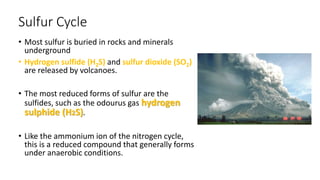
• Most sulfur is buried in rocks and minerals
underground
• Hydrogen sulfide (H2S) and sulfur dioxide (SO2)
are released by volcanoes.
• The most reduced forms of sulfur are the
sulfides, such as the odourus gas hydrogen
sulphide (H2S).
• Like the ammonium ion of the nitrogen cycle,
this is a reduced compound that generally forms
under anaerobic conditions.
Slide 42
Slide 42
Slide 42
Figure 4-34
Page 83
Sulfur
Hydrogen
sulfide
Sulfate salts
Plants
Acidic fog and
precipitation
Ammonium
sulfate
Animals
Decaying
matter
Metallic
sulfide
deposits
Ocean
Dimethyl
sulfide
Sulfur dioxide Hydrogen
sulfide
Sulfur trioxide Sulfuric acid
Water
Ammonia
Oxygen
Volcano
Industries
SULFUR CYCLE
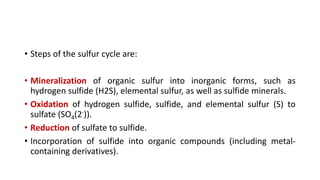
• Steps of the sulfur cycle are:
• Mineralization of organic sulfur into inorganic forms, such as
hydrogen sulfide (H2S), elemental sulfur, as well as sulfide minerals.
• Oxidation of hydrogen sulfide, sulfide, and elemental sulfur (S) to
sulfate (SO4(2-)).
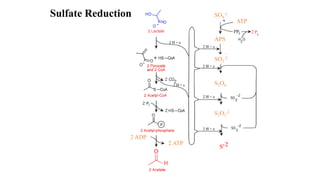
• Reduction of sulfate to sulfide.
• Incorporation of sulfide into organic compounds (including metal-
containing derivatives).
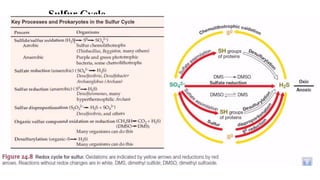
Sulfur Cycle
SO4
-2
Sulfate Reduction
(Assimilitory)
Organic Sulfur
H2S
Mineralization
Sulfur Oxidation
Sulfate Reduction
(Dissimilitory)
Elemental Sulfur
Sulfur Oxidation
Sulfur Reduction
SO4
-2
ATP
APS
2 ADP
2 ATP
SO3
-2
S3O6
S2O3
-2
Sulfate Reduction
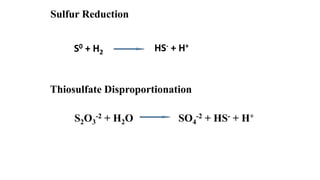
Sulfur Reduction
Thiosulfate Disproportionation
S2O3
-2 + H2O SO4
-2 + HS- + H+
S0 + H2 HS- + H+
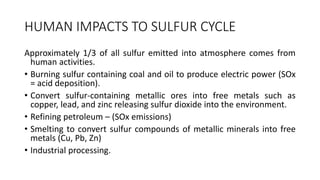
HUMAN IMPACTS TO SULFUR CYCLE
Approximately 1/3 of all sulfur emitted into atmosphere comes from
human activities.
• Burning sulfur containing coal and oil to produce electric power (SOx
= acid deposition).
• Convert sulfur-containing metallic ores into free metals such as
copper, lead, and zinc releasing sulfur dioxide into the environment.
• Refining petroleum – (SOx emissions)
• Smelting to convert sulfur compounds of metallic minerals into free
metals (Cu, Pb, Zn)
• Industrial processing.
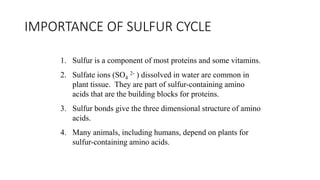
IMPORTANCE OF SULFUR CYCLE
1. Sulfur is a component of most proteins and some vitamins.
2. Sulfate ions (SO4
2- ) dissolved in water are common in
plant tissue. They are part of sulfur-containing amino
acids that are the building blocks for proteins.
3. Sulfur bonds give the three dimensional structure of amino
acids.
4. Many animals, including humans, depend on plants for
sulfur-containing amino acids.
Sulfur Cycle
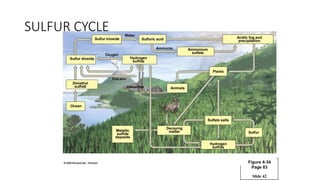
• Sulfur cycle is the natural cycle which includes the
mineralization of organic sulfur to sulfide, oxidation of this
to sulfate, and reduction of this to sulfide followed by
microbial incorporation of this into organic compounds.
Sulfur Cycle
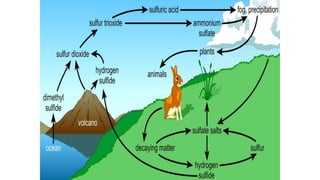
• The sulfur cycle includes both gases and solids.
• Hydrogen sulfide gas (H2S) is released into the atmosphere
by volcanic eruptions, hot springs , and the anaerobic decay
of sulfur-containing biological material in swamps, bogs, and
tidal flats.
• Certain marine algae produce dimethyl sulfide, (CH3)2S, a
volatile compound that enters the atmosphere as tiny
droplets.
• Sulfur dioxide gas is released into the atmosphere by
volcanoes and also forms when dimethyl sulfide reacts with
oxygen gas.
• The burning of fossil fuels, such as coal and oil releases sulfur
dioxide into the atmosphere.
Sulfur Cycle
• Sulfur dioxide reacts with atmospheric oxygen to produce
sulfur trioxide (SO3).
• Some sulfur trioxide reacts with tiny water droplets to
form sulfuric acid (H2SO4).
• Sulfur oxides also react with ammonia to produce tiny
particles of ammonium salts.
• The winds carry droplets of sulfuric acid and particles of
sulfate salts, which then fall to the earth in acid
deposition.
• By adding sulfur compounds to the air, the use of fossil
fuels increases the rate of acid deposition.
• All living things require sulfur to make proteins.
Sulfur Cycle
• Plants get sulfur by taking up ions of sulfate salts (SO4
2-)
from the soil.
• Animals get sulfur by eating plants, and all living things
release sulfur compounds when they decay.
• Decomposition releases sulfate salts (SO4
2-), which can be
taken up by plants, as well as gaseous hydrogen sulfide.
Sulfur Cycle
• Some hydrogen sulfide enters the atmosphere.
• But when decay occurs in an oxygen-free environment,
anaerobic bacteria break down hydrogen sulfide and
release sulfur gas (S2).
• Oxygen-requiring bacteria can incorporate sulfur into
sulfate salts, which can be taken up by plants and enter
the food chain once again.
Sulphur cycle

Sulphur cycle

  • 1.
    Sulfur Cycle • Mostsulfur is buried in rocks and minerals underground • Hydrogen sulfide (H2S) and sulfur dioxide (SO2) are released by volcanoes. • The most reduced forms of sulfur are the sulfides, such as the odourus gas hydrogen sulphide (H2S). • Like the ammonium ion of the nitrogen cycle, this is a reduced compound that generally forms under anaerobic conditions.
  • 2.
    Slide 42 Slide 42 Slide42 Figure 4-34 Page 83 Sulfur Hydrogen sulfide Sulfate salts Plants Acidic fog and precipitation Ammonium sulfate Animals Decaying matter Metallic sulfide deposits Ocean Dimethyl sulfide Sulfur dioxide Hydrogen sulfide Sulfur trioxide Sulfuric acid Water Ammonia Oxygen Volcano Industries SULFUR CYCLE
  • 3.
    • Steps ofthe sulfur cycle are: • Mineralization of organic sulfur into inorganic forms, such as hydrogen sulfide (H2S), elemental sulfur, as well as sulfide minerals. • Oxidation of hydrogen sulfide, sulfide, and elemental sulfur (S) to sulfate (SO4(2-)). • Reduction of sulfate to sulfide. • Incorporation of sulfide into organic compounds (including metal- containing derivatives).
  • 4.
    Sulfur Cycle SO4 -2 Sulfate Reduction (Assimilitory) OrganicSulfur H2S Mineralization Sulfur Oxidation Sulfate Reduction (Dissimilitory) Elemental Sulfur Sulfur Oxidation Sulfur Reduction
  • 5.
  • 6.
    Sulfur Reduction Thiosulfate Disproportionation S2O3 -2+ H2O SO4 -2 + HS- + H+ S0 + H2 HS- + H+
  • 7.
    HUMAN IMPACTS TOSULFUR CYCLE Approximately 1/3 of all sulfur emitted into atmosphere comes from human activities. • Burning sulfur containing coal and oil to produce electric power (SOx = acid deposition). • Convert sulfur-containing metallic ores into free metals such as copper, lead, and zinc releasing sulfur dioxide into the environment. • Refining petroleum – (SOx emissions) • Smelting to convert sulfur compounds of metallic minerals into free metals (Cu, Pb, Zn) • Industrial processing.
  • 8.
    IMPORTANCE OF SULFURCYCLE 1. Sulfur is a component of most proteins and some vitamins. 2. Sulfate ions (SO4 2- ) dissolved in water are common in plant tissue. They are part of sulfur-containing amino acids that are the building blocks for proteins. 3. Sulfur bonds give the three dimensional structure of amino acids. 4. Many animals, including humans, depend on plants for sulfur-containing amino acids.
  • 9.
    Sulfur Cycle • Sulfurcycle is the natural cycle which includes the mineralization of organic sulfur to sulfide, oxidation of this to sulfate, and reduction of this to sulfide followed by microbial incorporation of this into organic compounds.
  • 10.
    Sulfur Cycle • Thesulfur cycle includes both gases and solids. • Hydrogen sulfide gas (H2S) is released into the atmosphere by volcanic eruptions, hot springs , and the anaerobic decay of sulfur-containing biological material in swamps, bogs, and tidal flats. • Certain marine algae produce dimethyl sulfide, (CH3)2S, a volatile compound that enters the atmosphere as tiny droplets. • Sulfur dioxide gas is released into the atmosphere by volcanoes and also forms when dimethyl sulfide reacts with oxygen gas. • The burning of fossil fuels, such as coal and oil releases sulfur dioxide into the atmosphere.
  • 11.
    Sulfur Cycle • Sulfurdioxide reacts with atmospheric oxygen to produce sulfur trioxide (SO3). • Some sulfur trioxide reacts with tiny water droplets to form sulfuric acid (H2SO4). • Sulfur oxides also react with ammonia to produce tiny particles of ammonium salts. • The winds carry droplets of sulfuric acid and particles of sulfate salts, which then fall to the earth in acid deposition. • By adding sulfur compounds to the air, the use of fossil fuels increases the rate of acid deposition. • All living things require sulfur to make proteins.
  • 12.
    Sulfur Cycle • Plantsget sulfur by taking up ions of sulfate salts (SO4 2-) from the soil. • Animals get sulfur by eating plants, and all living things release sulfur compounds when they decay. • Decomposition releases sulfate salts (SO4 2-), which can be taken up by plants, as well as gaseous hydrogen sulfide.
  • 13.
    Sulfur Cycle • Somehydrogen sulfide enters the atmosphere. • But when decay occurs in an oxygen-free environment, anaerobic bacteria break down hydrogen sulfide and release sulfur gas (S2). • Oxygen-requiring bacteria can incorporate sulfur into sulfate salts, which can be taken up by plants and enter the food chain once again.

Editor's Notes

  • #3 The bacteria converts the reduced sulphur in H2S into elemental sulphur granules and fully oxidized sulfates (SO4-2 ).
  • #4 Oxidation of sulphur or sulphides for energy production is restricted to the bacterial genus Thiobacillus, the genus Thiomicrospira, and the genus Sulfolobus. These bacteria all produce sulphuric acid (i.e. hydrogen ions, H+, and sulphate ions, SO4-- ) as a metabolic product.
  • #5 Sulfate
  • #6 S3O6 trithionate S2O3 Thiosulfate
  • #9 Thiamine, or vitamin B1 Biotin, or vitamin B7,