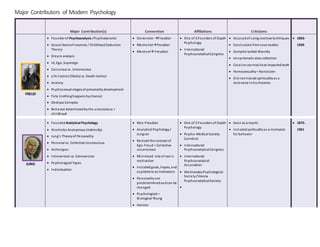
Major Contributors of Modern Psychology
Major Contribution(s) Convention Affiliations Criticisms
FREUD
 Founder of Psychoanalysis /Psychodynamic
 Sexual basisof neurosis / ChildhoodSeduction
Theory
 Dream analysis
 Id, Ego, Superego
 Conscious vs. Unconscious
 Life Instinct (libido) vs. Death Instinct
 Anxiety
 Psychosexual stagesof personalitydevelopment
 Fate (nothinghappens bychance)
 Oedipus Complex
 Behavior determinedbythe unconscious +
childhood
 Darwinism-Freudian
 MechanistFreudian
 Marxism Freudian
 One of 3 Founders of Depth
Psychology
 International
PsychoanalyticalCongress
 Accusedof using coercive techniques
 Conclusions fromcase studies
 Samples lacked diversity
 Unsystematic data collection
 Cocaine use mayhave impactedwork
 Homosexuality= Narcissism
 Did not include spiritualityas a
motivator inhis theories
 1856-
1939
JUNG
 Founded Analytical Psychology
 Alcoholics Anonymous (indirectly)
 Jung’s Theoryof Personality
 Personal vs. Collective Unconscious
 Archetypes
 Introversion vs. Extroversion
 Psychological Types
 Individuation
 Neo-Freudian
 Analytical Psychology/
Jungian
 Revised the concept of
Ego:Freud + Collective
unconscious
 Minimized role of sex in
motivation
 Includedgoals, hopes, and
aspirations as motivators
 Personalitynot
predeterminedandcan be
changed
 Psychological –
BiologicalJung
 Holistic
 One of 3 Founders of Depth
Psychology
 Psycho-Medical Society
(London)
 International
PsychoanalyticalCongress
 International
Psychoanalytical
Association
 WednesdayPsychological
Society/Vienna
PsychoanalyticalSociety

 Seen as a mystic
 Includedspiritualityas a motivator
for behavior
 1875-
1961
Major Contribution(s) Convention Affiliations Criticisms
A. FREUD
 Consideredto be the founder of Psychoanalytic
Child Psychology
 Defense mechanisms
 Freudian - Neo-Freudian  Vienna Psychoanalytical
Society
 International
Psychoanalytical
Association
 HampsteadNursery
 Accusedof being over loyal to her
father’s work
 1895-
1982
HORNEY
 Feminist Psychology
 Basic Anxiety
 Theoryof Neurotic Needs: Described 10 neurotic
needs of individuals
 Idealized self-image
 Self-Psychology
 Neo-Freudian
 Freudian – PenisEnvy+
Womb Envy
Feminist Psychology
 Loneliness +Helplessness
Neurosis
 Holistic
 Institute for Psychoanalysis
 The New School
 ChicagoInstitute for
Psychoanalysis
 Association for the
Advancement of
Psychoanalysis
 American Journal of
Psychoanalysis
 Views onNarcissism largelydiffered
from the vast majorityof the time
 Some viewed“womb envy” as less
plausible theorythan that of Freud’s
penis envy
 1885-
1952
ADLER
 The first major figure to breakawayfrom traditional
psychoanalysisto form an independent school of
psychotherapyandpersonalitytheory i.e. Individual
Psychology
 InferiorityComplex, Compensation, Fictional
Finalism
 Advocate of Feminism
 Birth Order, Holism
 Neo-Freudian /Split from
Freudianperspective
 Psychological +
Sociological Adlerian
 People determine
personality
 Holistic
 One of 3 Founders of Depth
Psychology
 Vienna Psychoanalytic
Society
 Viewedhomosexualityas a sort of
inferioritycomplex towardone’s own
gender
 1870-
1937
M
MASLOW
 Hierarchyof needs / Humanism
 Self-actualization
 Motivationunrelatedto rewardor unconscious
 Lack of basic needs whenunmet = Motivation
 “The specific form that these needs will take will of
course varygreatlyfrom person to person. Inone
individualit maytake the form of the desire to be an
ideal mother, inanother it maybe expressed
athletically, andinstill another it may be expressed
in painting pictures or in inventions.” (Maslow,
1943, p. 382–383).
 Post-Freudian
 Humanistic
 Association for Humanistic
Psychology
 American Humanist
Association
 Journal of Humanistic
Psychology
 His methodologywas qualitative
 Biographical Analysis, raised
questions due to subjectivityof
personalopinion
 Biasedsample consisting of mostly
White males
 Lower needs needto be met before
self-actualizationcantake place = not
always the case
 1908-
1970
Major Contribution(s) Convention Affiliations Criticisms
KOHUT
 Self-Psychology
 Empathy/ Vicarious Introspection
 “Selfobject”
 Revolutionized therapy
 Post-Freudian
 Rejected Freud’s id, Ego,
Superego
 ChicagoInstitute for
Psychoanalysis
 American Psychoanalytic
Association
 AttributedNarcissism to lackof
empathyshownbyparents during
development
 1913-
1981
KLIEN
 Importance ofparent-childrelationship
 Interpersonal relationships with instinct-satisfying
objects
 PlayTherapy
 Thanatos vs. Eros
 Freudian – Free
AssociationKleinian
Psychology
 BritishPsychoanalytical
Society
 International
Psychoanalytical
Association
 Aggression brought to forefront as
important part of adolescent analysis
causeda 3-foldsplit inthought
among the Psychoanalytical
Association
 1882-
1960
ROGERS
 Person-centeredtherapy
 Definitionof Psychologicallyhealthy person
 Humanistic Psychology/Humanism
 When goals are achieved, self—actualizationtakes
place
 Phenomenology
 Self-Concept:(1) Self-Worth, (2) Self-Image, and
(3) Ideal Self
 "The organism hasone basic tendencyandstriving -
to actualize, maintain, and enhance the
experiencingorganism” (Rogers, 1951, p. 487).
 Post-Freudian+ Maslow +
Genuineness 
Humanistic
 American Psychological
Association
 Societyfor the Prevention
of Crueltyto Children
 American Academyof
Psychotherapists
 Western Behavioral
SciencesInstitute
 People had difficulties accepting
subjective phenomena
 1902-
1987
References
Horney, K. (1967). Feminine Psychology, New York: W. W. Norton.
Maslow, A. H. (1943). A Theory of Human Motivation. Psychological Review, 50(4), 370-96.
Rogers, C. (1951). Client-centered Therapy: Its Current Practice, Implications and Theory. London: Constable .

Philpot s5102chart

  • 1.
    Major Contributors ofModern Psychology Major Contribution(s) Convention Affiliations Criticisms FREUD  Founder of Psychoanalysis /Psychodynamic  Sexual basisof neurosis / ChildhoodSeduction Theory  Dream analysis  Id, Ego, Superego  Conscious vs. Unconscious  Life Instinct (libido) vs. Death Instinct  Anxiety  Psychosexual stagesof personalitydevelopment  Fate (nothinghappens bychance)  Oedipus Complex  Behavior determinedbythe unconscious + childhood  Darwinism-Freudian  MechanistFreudian  Marxism Freudian  One of 3 Founders of Depth Psychology  International PsychoanalyticalCongress  Accusedof using coercive techniques  Conclusions fromcase studies  Samples lacked diversity  Unsystematic data collection  Cocaine use mayhave impactedwork  Homosexuality= Narcissism  Did not include spiritualityas a motivator inhis theories  1856- 1939 JUNG  Founded Analytical Psychology  Alcoholics Anonymous (indirectly)  Jung’s Theoryof Personality  Personal vs. Collective Unconscious  Archetypes  Introversion vs. Extroversion  Psychological Types  Individuation  Neo-Freudian  Analytical Psychology/ Jungian  Revised the concept of Ego:Freud + Collective unconscious  Minimized role of sex in motivation  Includedgoals, hopes, and aspirations as motivators  Personalitynot predeterminedandcan be changed  Psychological – BiologicalJung  Holistic  One of 3 Founders of Depth Psychology  Psycho-Medical Society (London)  International PsychoanalyticalCongress  International Psychoanalytical Association  WednesdayPsychological Society/Vienna PsychoanalyticalSociety   Seen as a mystic  Includedspiritualityas a motivator for behavior  1875- 1961
  • 2.
    Major Contribution(s) ConventionAffiliations Criticisms A. FREUD  Consideredto be the founder of Psychoanalytic Child Psychology  Defense mechanisms  Freudian - Neo-Freudian  Vienna Psychoanalytical Society  International Psychoanalytical Association  HampsteadNursery  Accusedof being over loyal to her father’s work  1895- 1982 HORNEY  Feminist Psychology  Basic Anxiety  Theoryof Neurotic Needs: Described 10 neurotic needs of individuals  Idealized self-image  Self-Psychology  Neo-Freudian  Freudian – PenisEnvy+ Womb Envy Feminist Psychology  Loneliness +Helplessness Neurosis  Holistic  Institute for Psychoanalysis  The New School  ChicagoInstitute for Psychoanalysis  Association for the Advancement of Psychoanalysis  American Journal of Psychoanalysis  Views onNarcissism largelydiffered from the vast majorityof the time  Some viewed“womb envy” as less plausible theorythan that of Freud’s penis envy  1885- 1952 ADLER  The first major figure to breakawayfrom traditional psychoanalysisto form an independent school of psychotherapyandpersonalitytheory i.e. Individual Psychology  InferiorityComplex, Compensation, Fictional Finalism  Advocate of Feminism  Birth Order, Holism  Neo-Freudian /Split from Freudianperspective  Psychological + Sociological Adlerian  People determine personality  Holistic  One of 3 Founders of Depth Psychology  Vienna Psychoanalytic Society  Viewedhomosexualityas a sort of inferioritycomplex towardone’s own gender  1870- 1937 M MASLOW  Hierarchyof needs / Humanism  Self-actualization  Motivationunrelatedto rewardor unconscious  Lack of basic needs whenunmet = Motivation  “The specific form that these needs will take will of course varygreatlyfrom person to person. Inone individualit maytake the form of the desire to be an ideal mother, inanother it maybe expressed athletically, andinstill another it may be expressed in painting pictures or in inventions.” (Maslow, 1943, p. 382–383).  Post-Freudian  Humanistic  Association for Humanistic Psychology  American Humanist Association  Journal of Humanistic Psychology  His methodologywas qualitative  Biographical Analysis, raised questions due to subjectivityof personalopinion  Biasedsample consisting of mostly White males  Lower needs needto be met before self-actualizationcantake place = not always the case  1908- 1970
  • 3.
    Major Contribution(s) ConventionAffiliations Criticisms KOHUT  Self-Psychology  Empathy/ Vicarious Introspection  “Selfobject”  Revolutionized therapy  Post-Freudian  Rejected Freud’s id, Ego, Superego  ChicagoInstitute for Psychoanalysis  American Psychoanalytic Association  AttributedNarcissism to lackof empathyshownbyparents during development  1913- 1981 KLIEN  Importance ofparent-childrelationship  Interpersonal relationships with instinct-satisfying objects  PlayTherapy  Thanatos vs. Eros  Freudian – Free AssociationKleinian Psychology  BritishPsychoanalytical Society  International Psychoanalytical Association  Aggression brought to forefront as important part of adolescent analysis causeda 3-foldsplit inthought among the Psychoanalytical Association  1882- 1960 ROGERS  Person-centeredtherapy  Definitionof Psychologicallyhealthy person  Humanistic Psychology/Humanism  When goals are achieved, self—actualizationtakes place  Phenomenology  Self-Concept:(1) Self-Worth, (2) Self-Image, and (3) Ideal Self  "The organism hasone basic tendencyandstriving - to actualize, maintain, and enhance the experiencingorganism” (Rogers, 1951, p. 487).  Post-Freudian+ Maslow + Genuineness  Humanistic  American Psychological Association  Societyfor the Prevention of Crueltyto Children  American Academyof Psychotherapists  Western Behavioral SciencesInstitute  People had difficulties accepting subjective phenomena  1902- 1987
  • 7.
    References Horney, K. (1967).Feminine Psychology, New York: W. W. Norton. Maslow, A. H. (1943). A Theory of Human Motivation. Psychological Review, 50(4), 370-96. Rogers, C. (1951). Client-centered Therapy: Its Current Practice, Implications and Theory. London: Constable .