Download as DOCX, PPTX
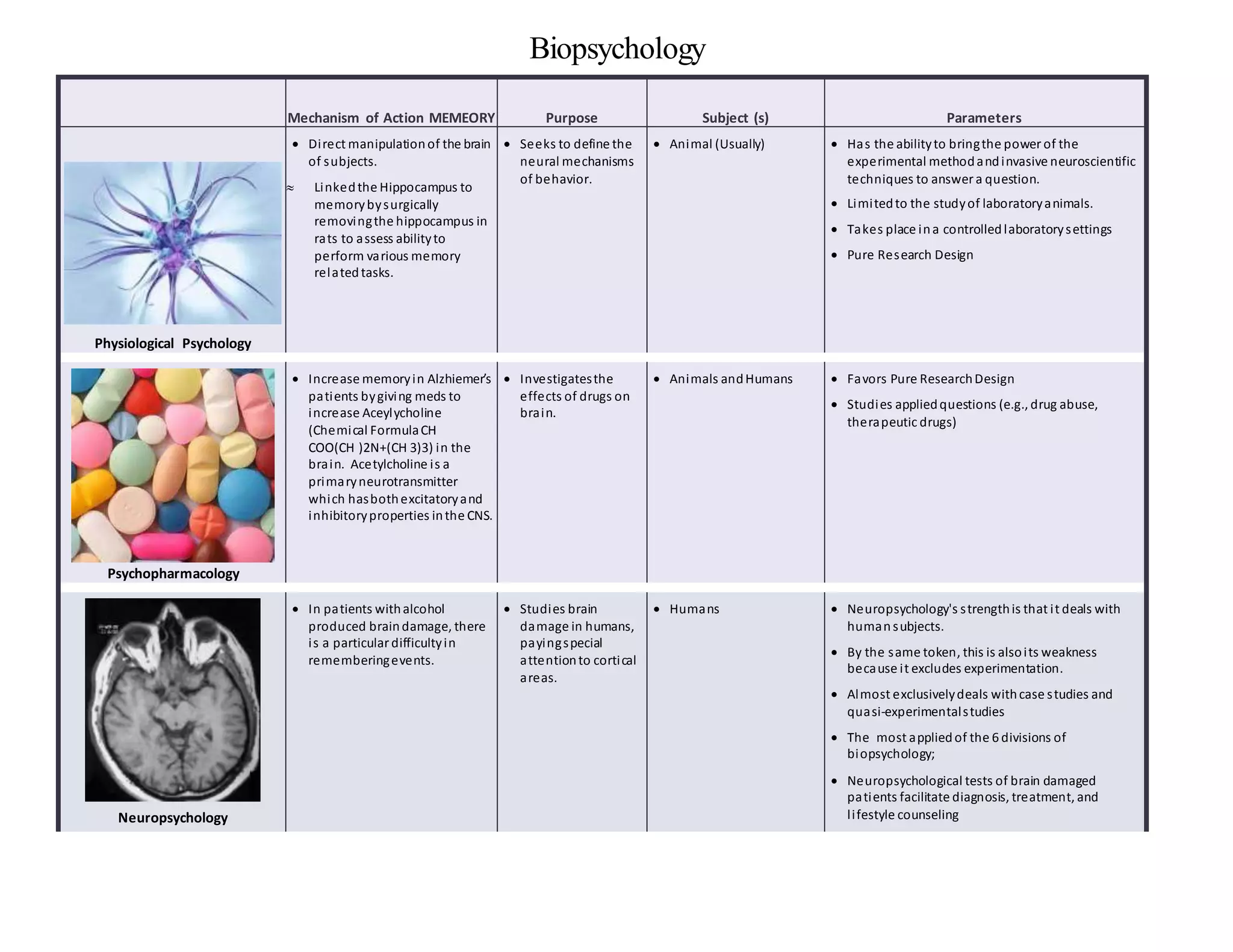
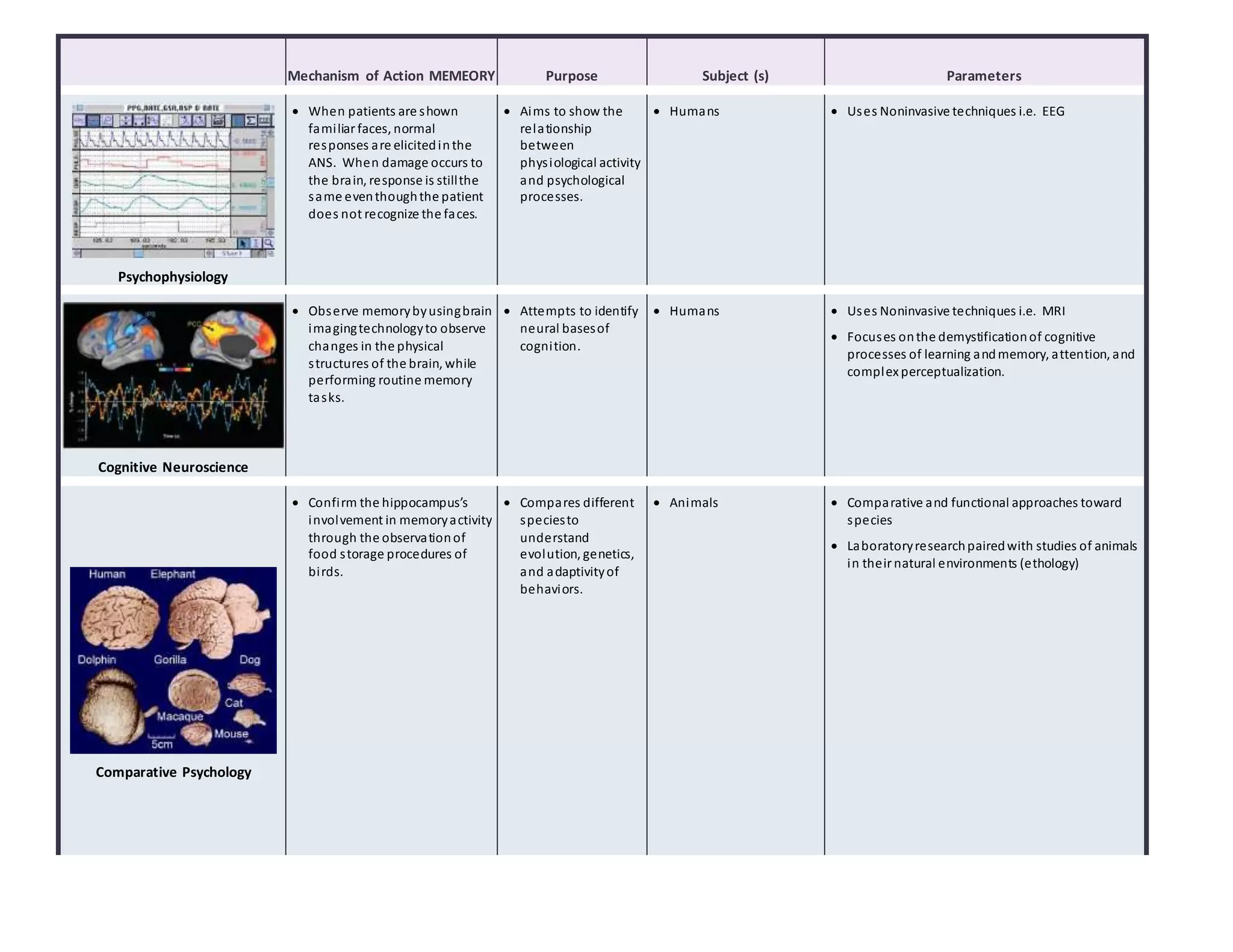

This document summarizes six divisions of biopsychology: physiological psychology, psychopharmacology, neuropsychology, psychophysiology, cognitive neuroscience, and comparative psychology. For each division, it outlines the mechanism of action/memory, purpose, typical subjects, and key parameters. Physiological psychology directly manipulates animal brains to study memory mechanisms. Psychopharmacology investigates drug effects on the brain in animals and humans. Neuropsychology studies brain damage in humans through case studies. Psychophysiology examines the relationship between physiological activity and psychology in humans. Cognitive neuroscience uses brain imaging to observe memory in humans. Comparative psychology compares species' behaviors to understand evolution and adaptation.


