Psychodynamic Approach

         Freud
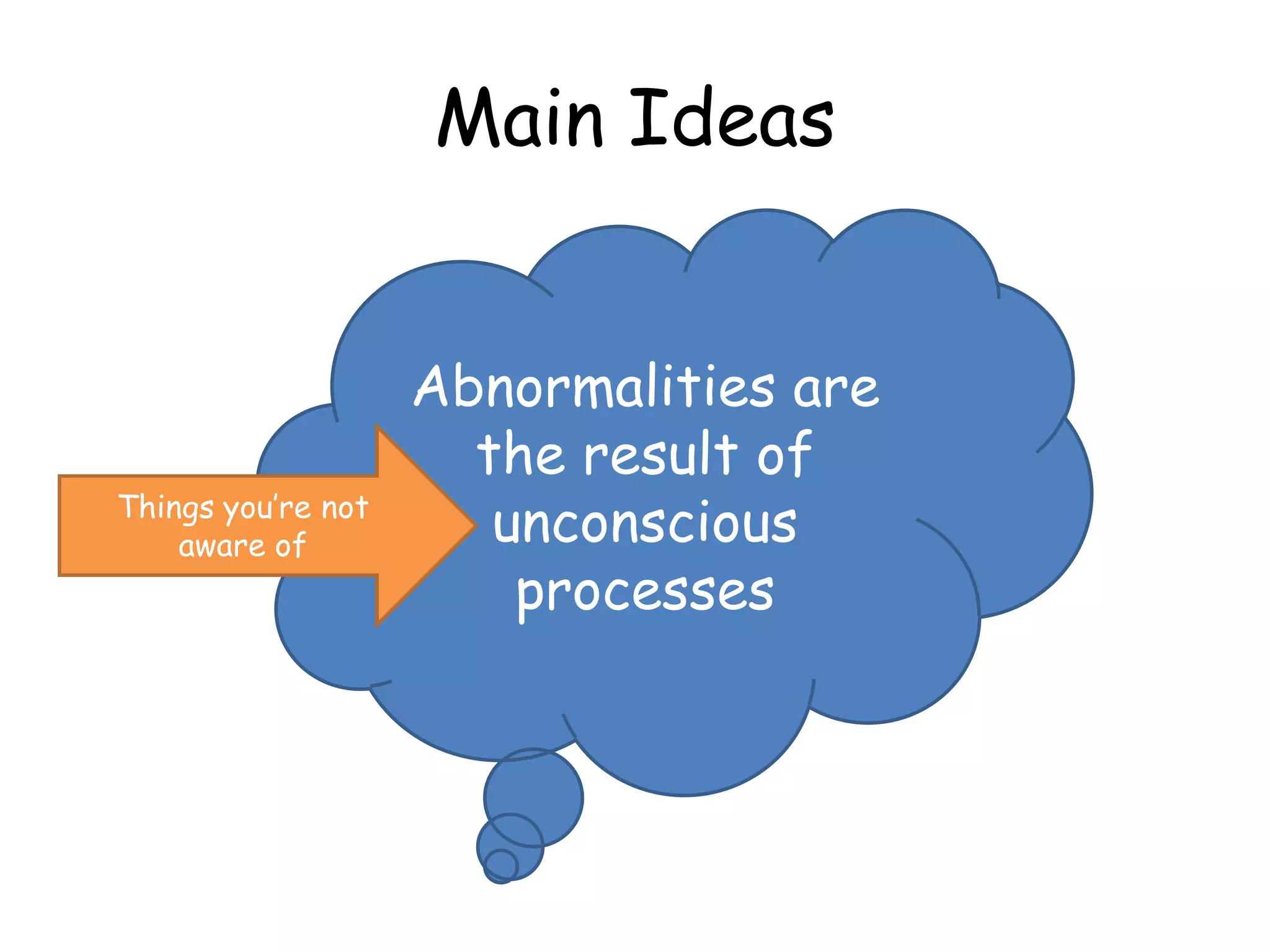
Main Ideas


                    Abnormalities are
                      the result of
Things you’re not
    aware of           unconscious
                        processes
Introductory Stuff
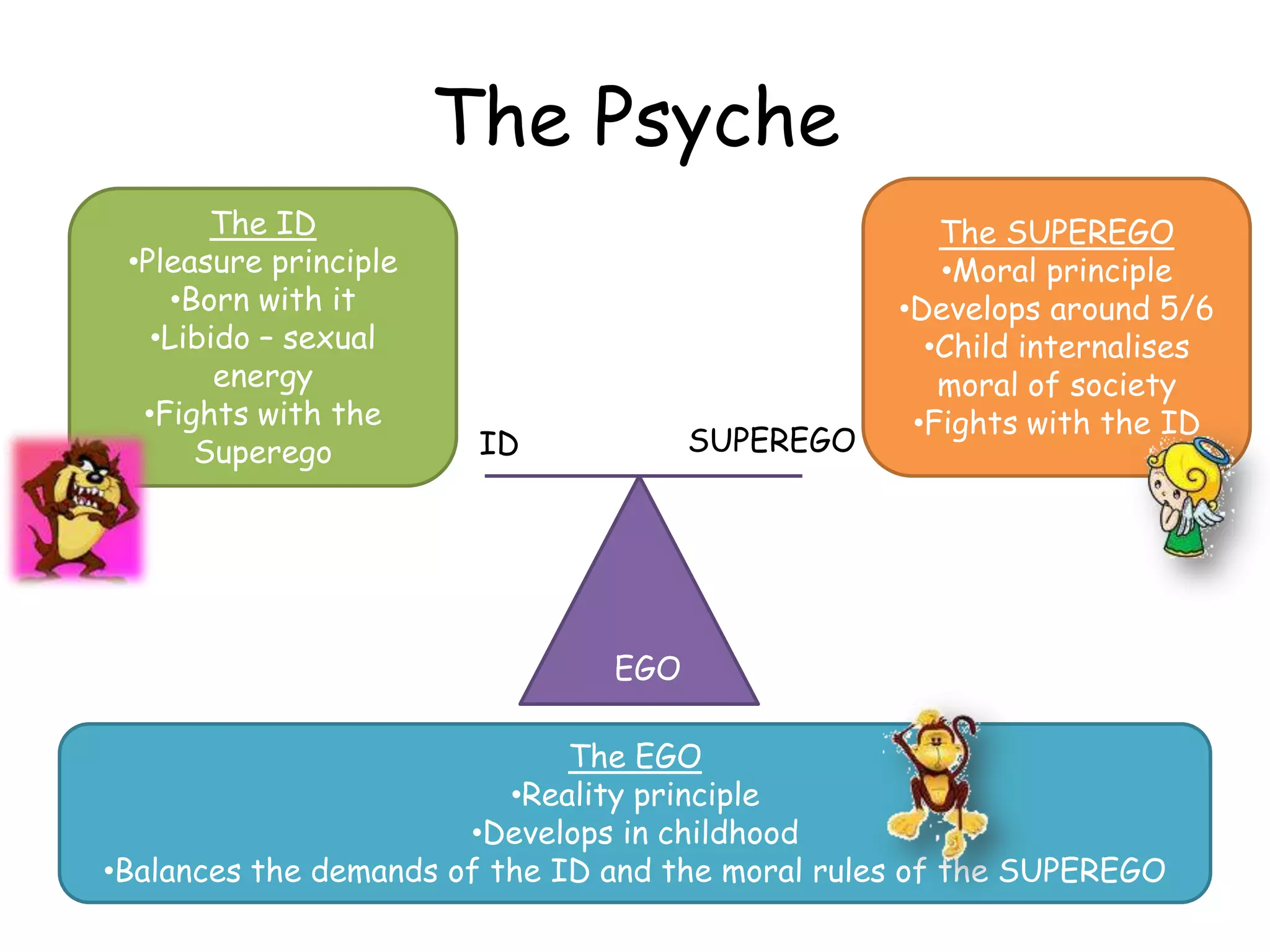
The Psyche
        The ID                                       The SUPEREGO
 •Pleasure principle                                 •Moral principle
     •Born with it                                •Develops around 5/6
   •Libido – sexual                                 •Child internalises
        energy                                       moral of society
  •Fights with the                                 •Fights with the ID
       Superego         ID            SUPEREGO


                                EGO

                              The EGO
                          •Reality principle
                       •Develops in childhood
•Balances the demands of the ID and the moral rules of the SUPEREGO
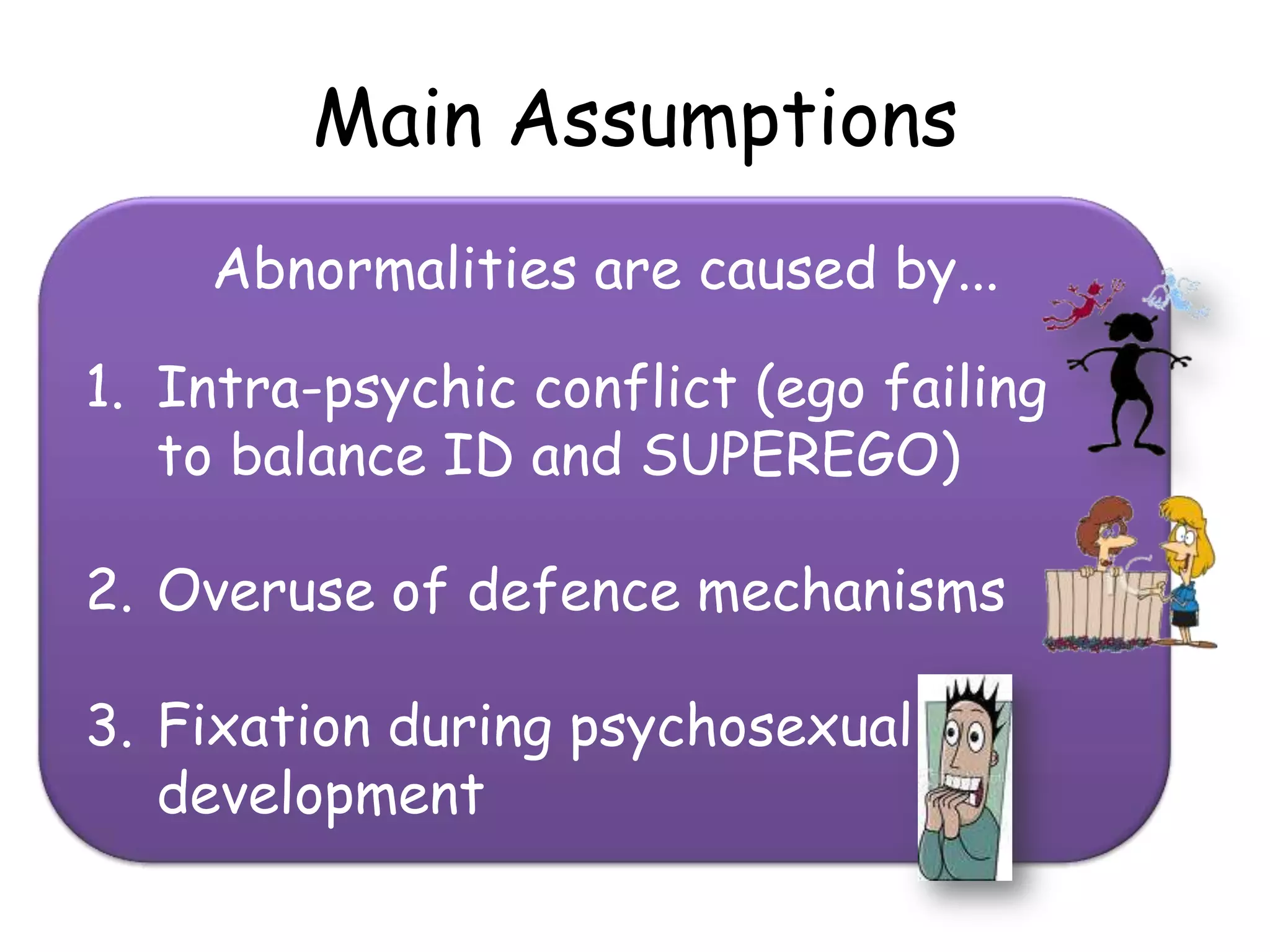
Main Assumptions
    Abnormalities are caused by...

1. Intra-psychic conflict (ego failing
   to balance ID and SUPEREGO)

2. Overuse of defence mechanisms

3. Fixation during psychosexual
   development
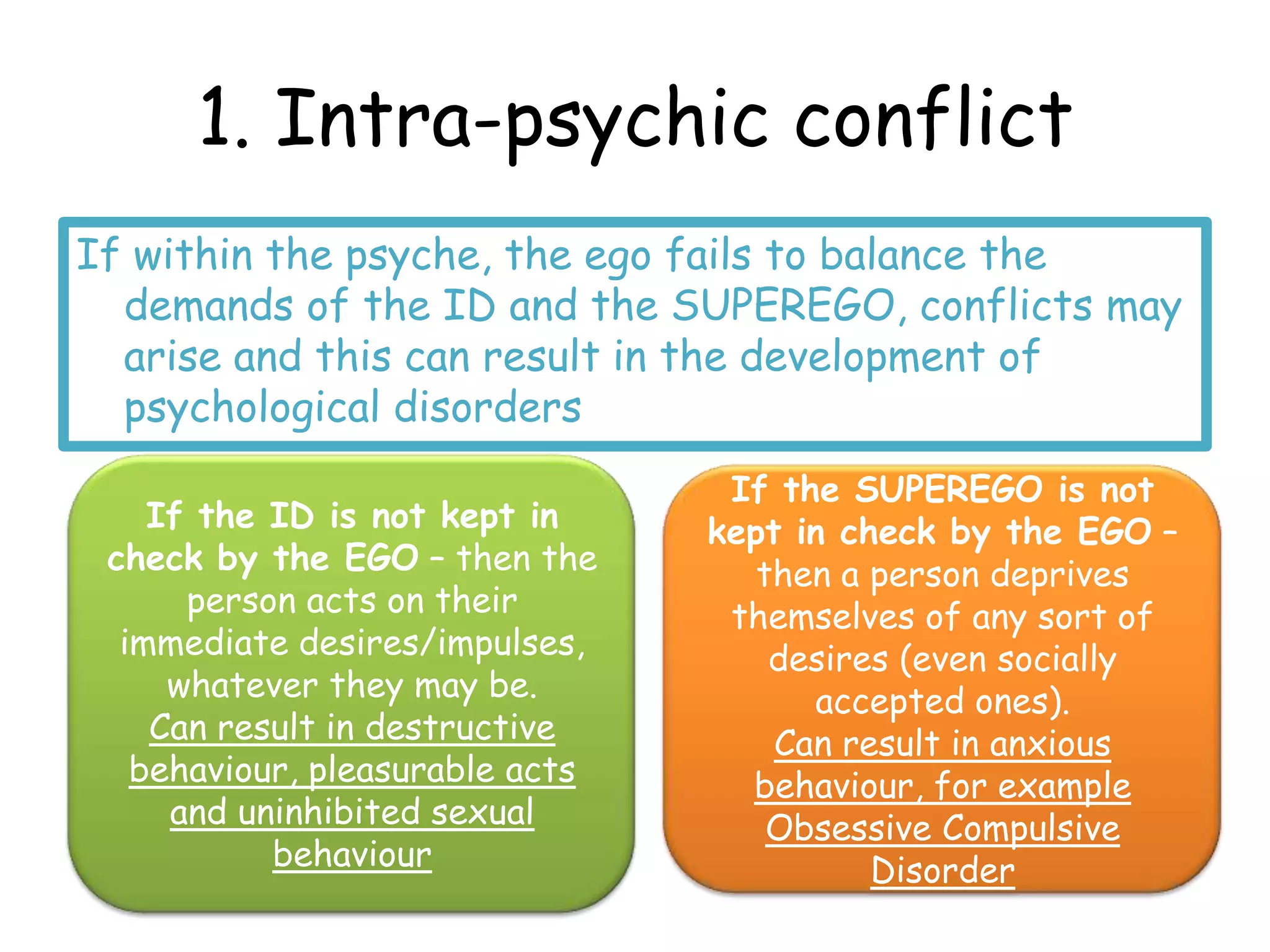
1. Intra-psychic conflict
If within the psyche, the ego fails to balance the
  demands of the ID and the SUPEREGO, conflicts may
  arise and this can result in the development of
  psychological disorders
                                  If the SUPEREGO is not
    If the ID is not kept in     kept in check by the EGO –
 check by the EGO – then the        then a person deprives
      person acts on their        themselves of any sort of
  immediate desires/impulses,        desires (even socially
     whatever they may be.             accepted ones).
    Can result in destructive        Can result in anxious
   behaviour, pleasurable acts     behaviour, for example
     and uninhibited sexual          Obsessive Compulsive
           behaviour                       Disorder
2. Overuse of defence
             mechanisms
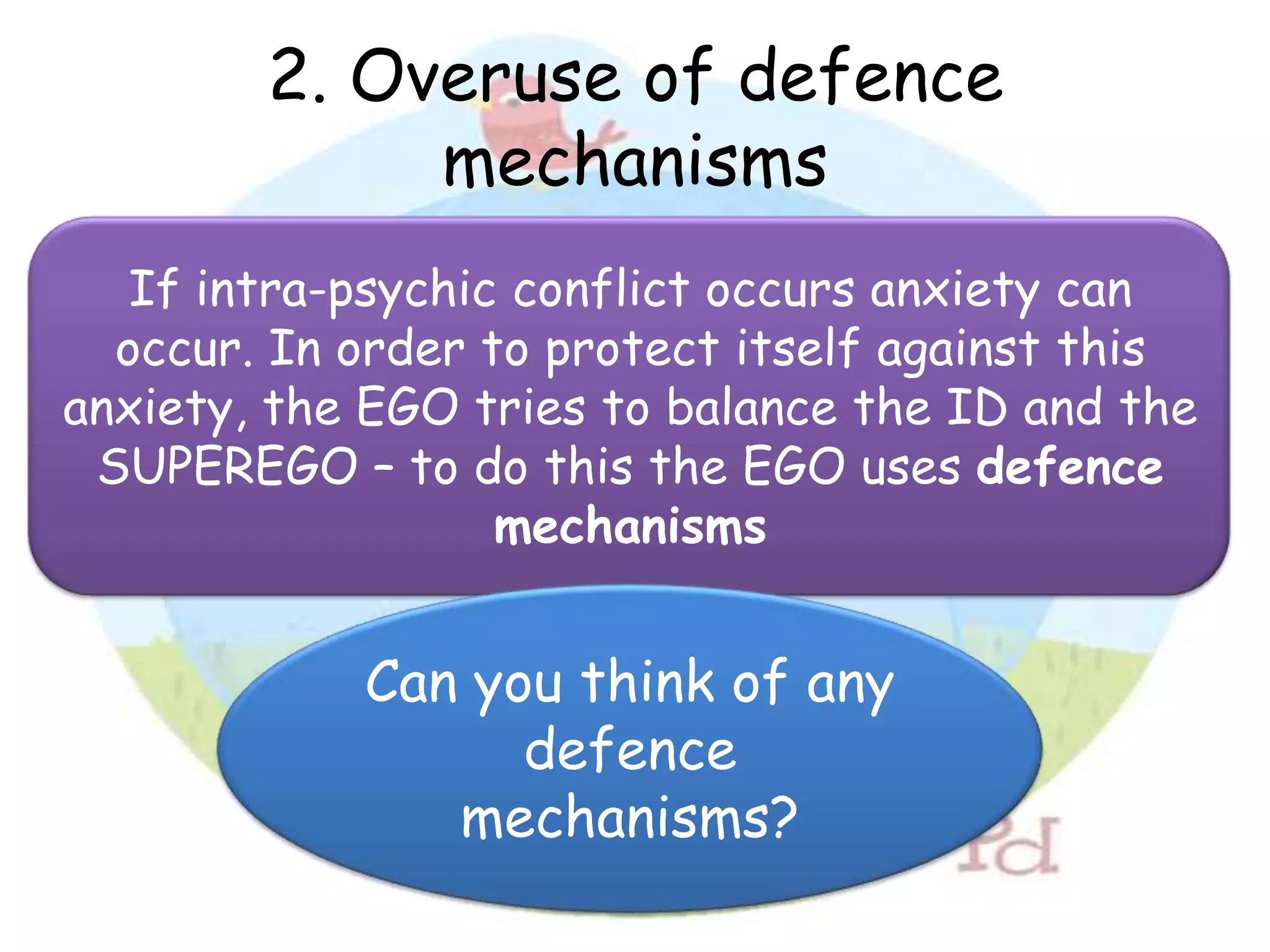
   If intra-psychic conflict occurs anxiety can
  occur. In order to protect itself against this
anxiety, the EGO tries to balance the ID and the
 SUPEREGO – to do this the EGO uses defence
                   mechanisms


            Can you think of any
                  defence
               mechanisms?
Defence Mechanisms
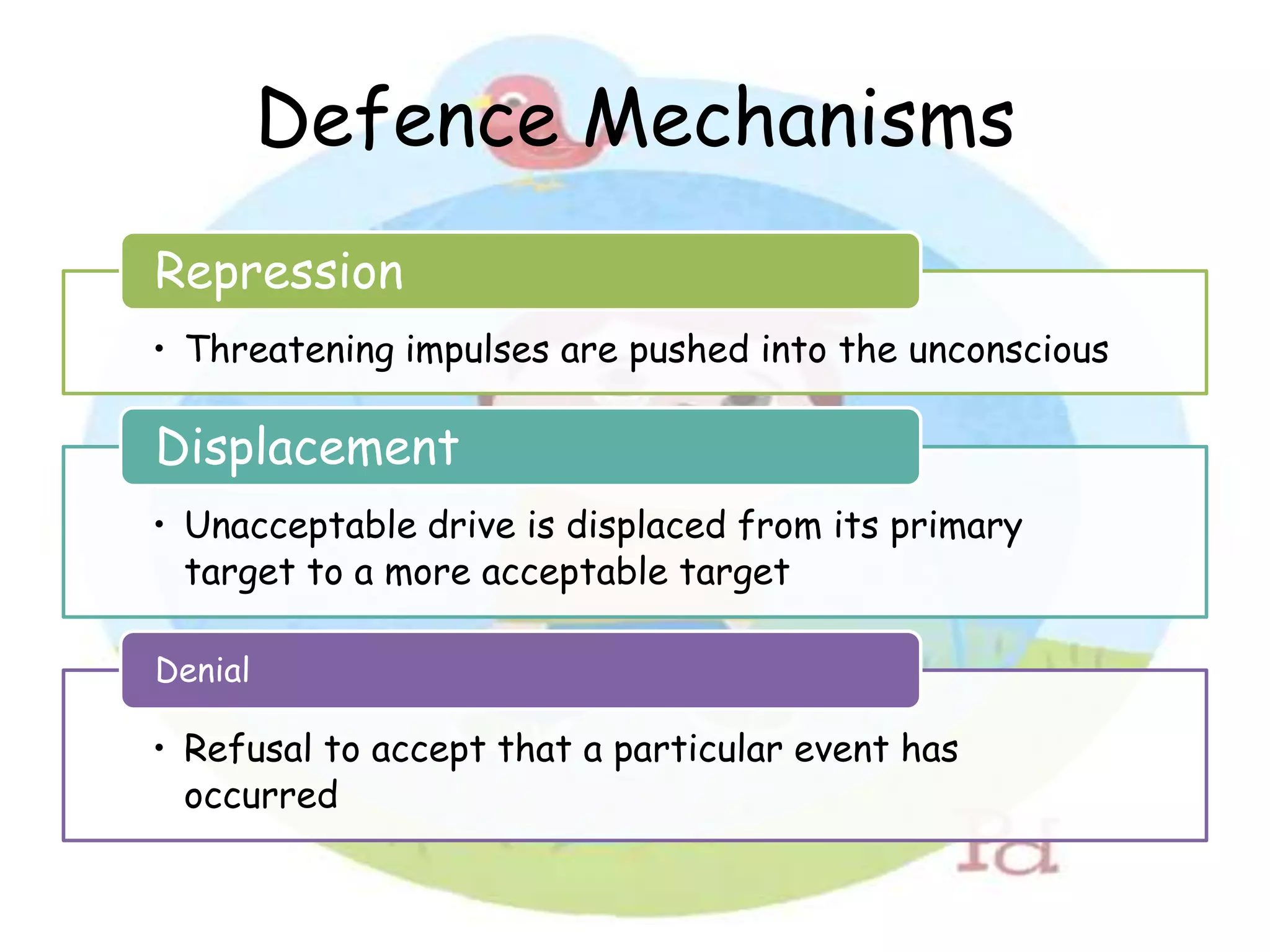
Repression
• Threatening impulses are pushed into the unconscious

Displacement
• Unacceptable drive is displaced from its primary
  target to a more acceptable target

Denial

• Refusal to accept that a particular event has
  occurred
Defence Mechanisms


Defence Mechanisms protect our conscious
  self from the anxiety produced by the
unconscious intra-psychic conflict – it this
  is unsuccessful, the anxiety may reveal
    itself through clinical disorders e.g.
         Phobias, anxiety disorders
3. Fixation during Psychosexual
          Development
 Freud believed that children goes through a
series of stages where the instinctive energy
    of the ID looks for gratification from
   different areas of the body – erogenous
                    zones.


 If a child is under or over gratified at any
stage the child may become ‘fixated’ and this
     could affect their adult behaviour
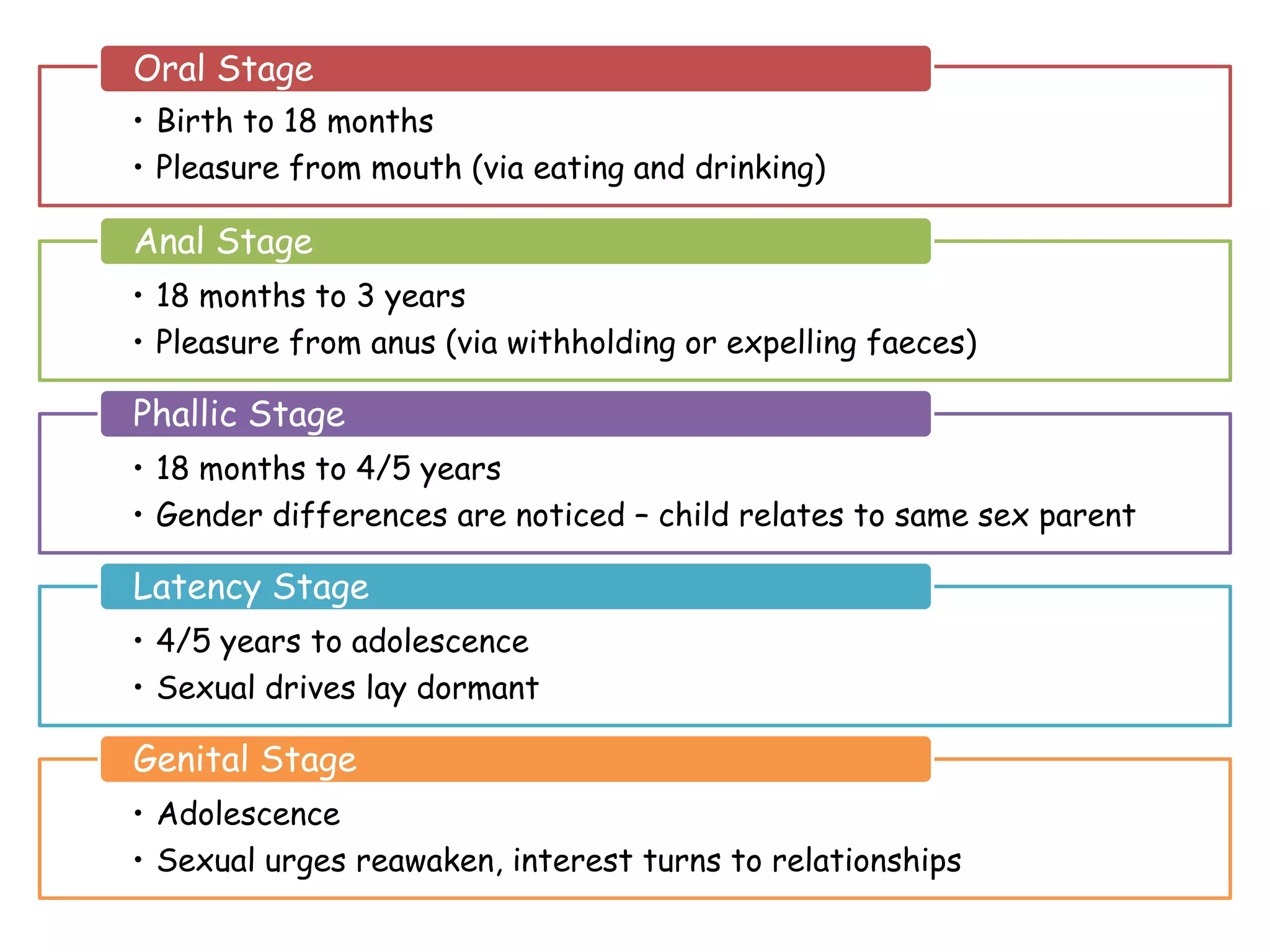
Oral Stage
• Birth to 18 months
• Pleasure from mouth (via eating and drinking)

Anal Stage
• 18 months to 3 years
• Pleasure from anus (via withholding or expelling faeces)

Phallic Stage
• 18 months to 4/5 years
• Gender differences are noticed – child relates to same sex parent

Latency Stage
• 4/5 years to adolescence
• Sexual drives lay dormant

Genital Stage
• Adolescence
• Sexual urges reawaken, interest turns to relationships
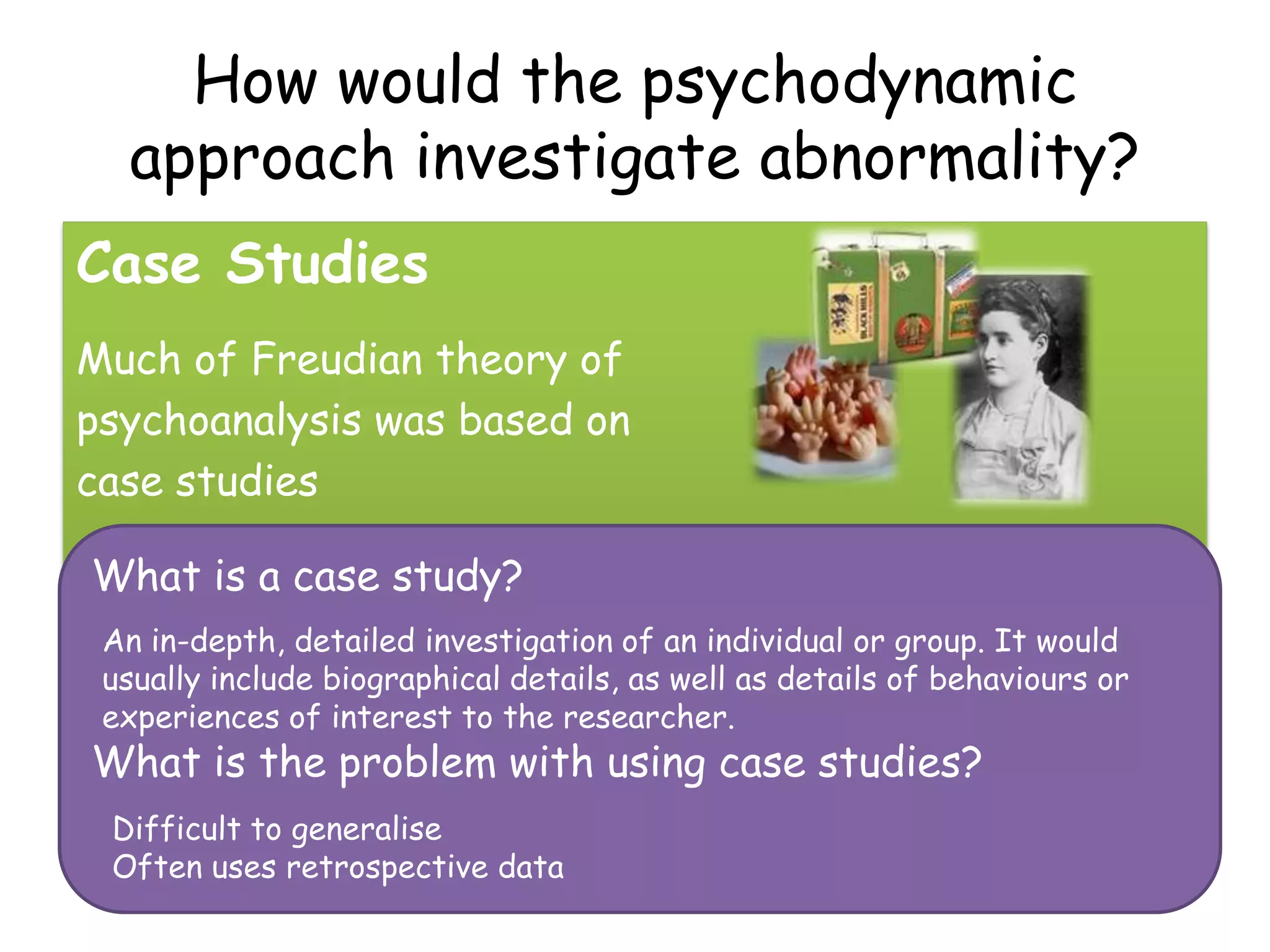
How would the psychodynamic
  approach investigate abnormality?
Case Studies
Much of Freudian theory of
psychoanalysis was based on
case studies

What is a case study?
 An in-depth, detailed investigation of an individual or group. It would
 usually include biographical details, as well as details of behaviours or
 experiences of interest to the researcher.
What is the problem with using case studies?
 Difficult to generalise
 Often uses retrospective data
Influential
   The Psychodynamic approach to
psychopathology has influenced many
treatments, e.g. Dream analysis, free
            association

   This is a strength because many
 therapies/treatments based on the
psychodynamic approach are still used
         today to help people
Deterministic
  For example, according to this
     approach, if someone was
   overindulged or deprived at a
psychosexual stage of development
    than they would develop an
           abnormality
This is a weakness because the approach
 suggests our behaviour is ruled by our
 unconscious processes only and ignores
                free will
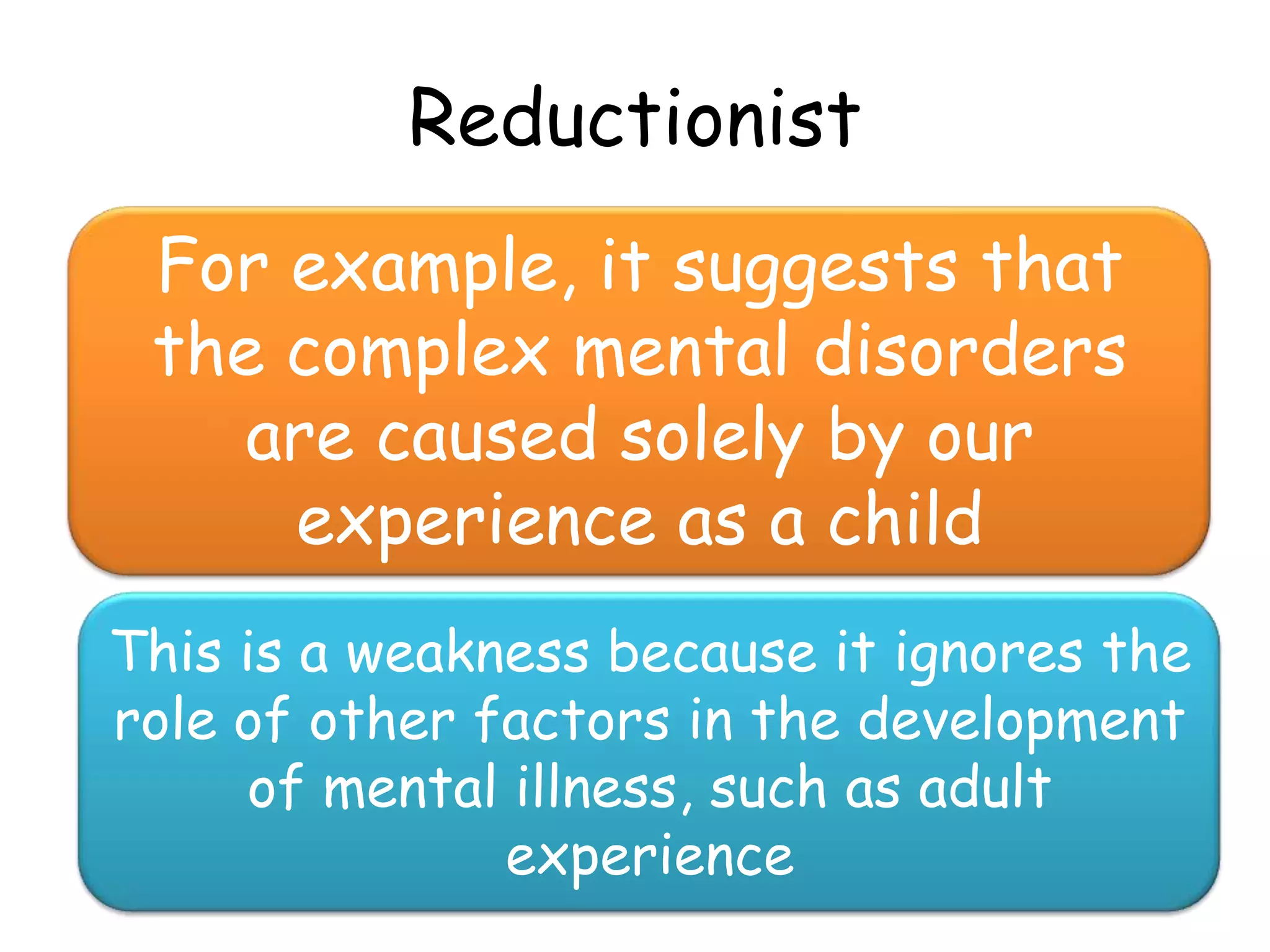
Reductionist
 For example, it suggests that
 the complex mental disorders
    are caused solely by our
     experience as a child
This is a weakness because it ignores the
role of other factors in the development
     of mental illness, such as adult
               experience
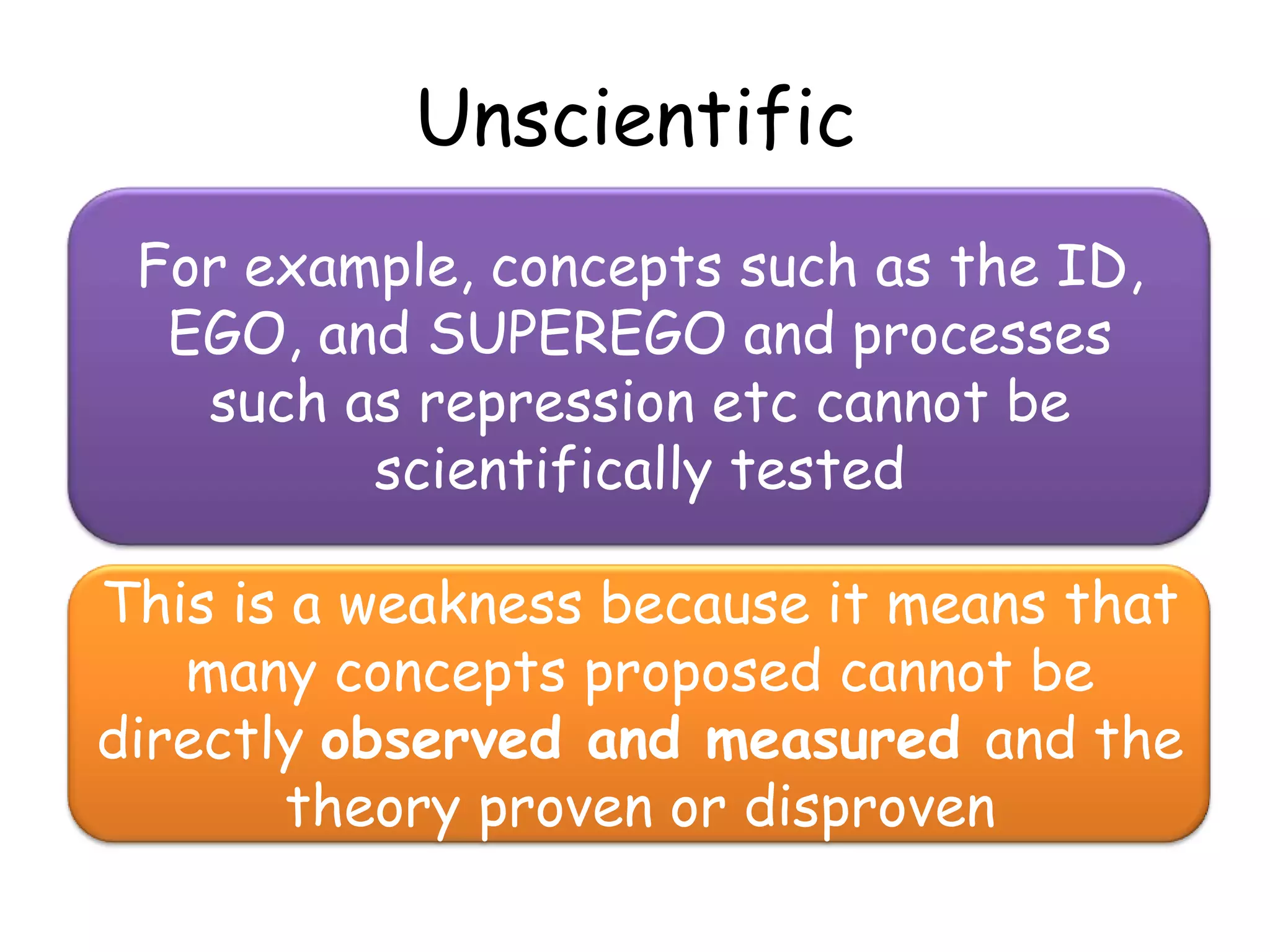
Unscientific
 For example, concepts such as the ID,
  EGO, and SUPEREGO and processes
   such as repression etc cannot be
         scientifically tested

This is a weakness because it means that
   many concepts proposed cannot be
directly observed and measured and the
        theory proven or disproven
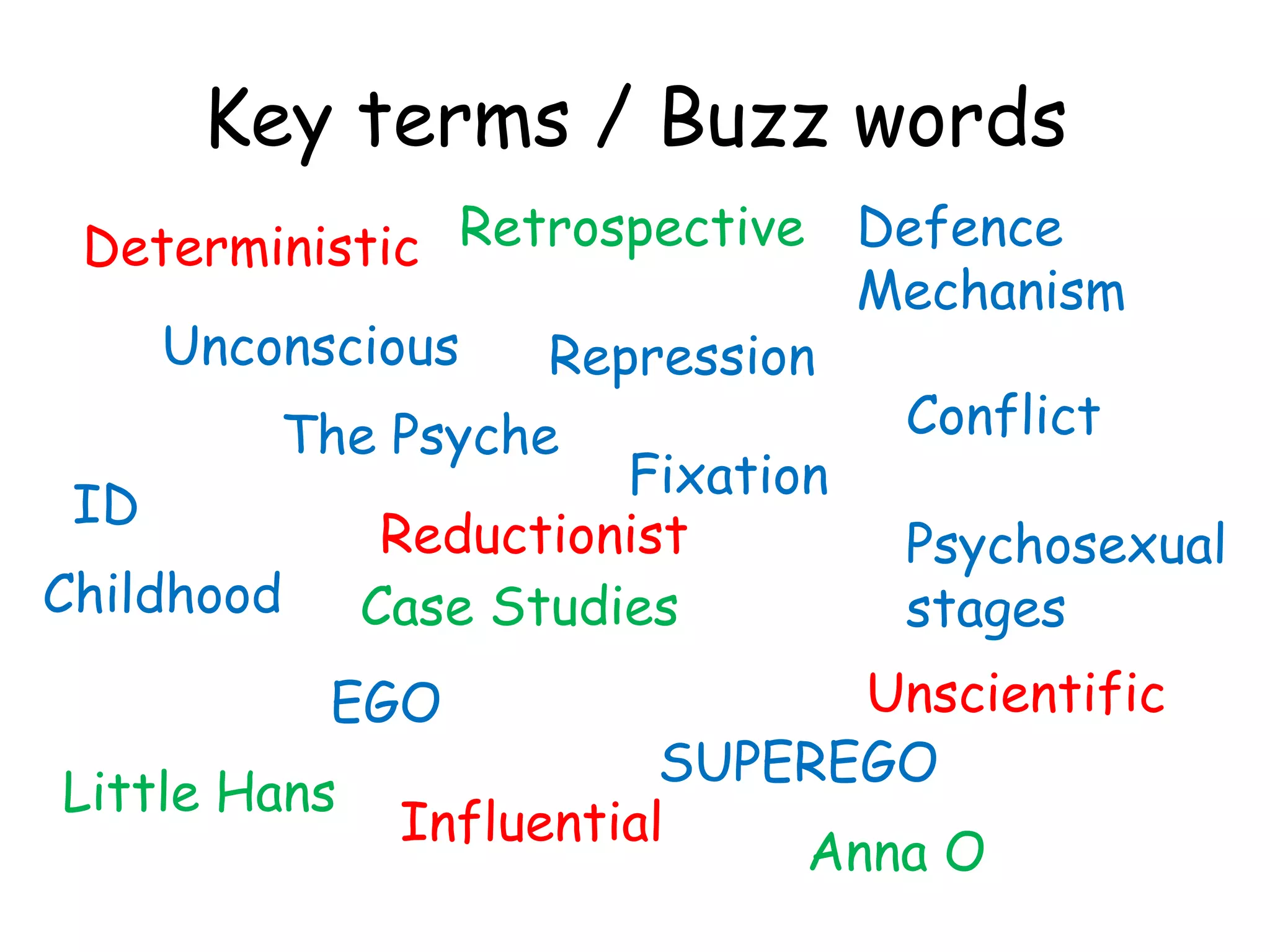
Key terms / Buzz words
 Deterministic Retrospective Defence
                               Mechanism
     Unconscious   Repression
         The Psyche             Conflict
                      Fixation
 ID
             Reductionist       Psychosexual
Childhood Case Studies          stages
          EGO                  Unscientific
                         SUPEREGO
Little Hans
              Influential
                             Anna O

Psychodynamic approach

  • 1.
  • 2.
    Main Ideas Abnormalities are the result of Things you’re not aware of unconscious processes
  • 3.
  • 4.
    The Psyche The ID The SUPEREGO •Pleasure principle •Moral principle •Born with it •Develops around 5/6 •Libido – sexual •Child internalises energy moral of society •Fights with the •Fights with the ID Superego ID SUPEREGO EGO The EGO •Reality principle •Develops in childhood •Balances the demands of the ID and the moral rules of the SUPEREGO
  • 5.
    Main Assumptions Abnormalities are caused by... 1. Intra-psychic conflict (ego failing to balance ID and SUPEREGO) 2. Overuse of defence mechanisms 3. Fixation during psychosexual development
  • 6.
    1. Intra-psychic conflict Ifwithin the psyche, the ego fails to balance the demands of the ID and the SUPEREGO, conflicts may arise and this can result in the development of psychological disorders If the SUPEREGO is not If the ID is not kept in kept in check by the EGO – check by the EGO – then the then a person deprives person acts on their themselves of any sort of immediate desires/impulses, desires (even socially whatever they may be. accepted ones). Can result in destructive Can result in anxious behaviour, pleasurable acts behaviour, for example and uninhibited sexual Obsessive Compulsive behaviour Disorder
  • 7.
    2. Overuse ofdefence mechanisms If intra-psychic conflict occurs anxiety can occur. In order to protect itself against this anxiety, the EGO tries to balance the ID and the SUPEREGO – to do this the EGO uses defence mechanisms Can you think of any defence mechanisms?
  • 8.
    Defence Mechanisms Repression • Threateningimpulses are pushed into the unconscious Displacement • Unacceptable drive is displaced from its primary target to a more acceptable target Denial • Refusal to accept that a particular event has occurred
  • 9.
    Defence Mechanisms Defence Mechanismsprotect our conscious self from the anxiety produced by the unconscious intra-psychic conflict – it this is unsuccessful, the anxiety may reveal itself through clinical disorders e.g. Phobias, anxiety disorders
  • 10.
    3. Fixation duringPsychosexual Development Freud believed that children goes through a series of stages where the instinctive energy of the ID looks for gratification from different areas of the body – erogenous zones. If a child is under or over gratified at any stage the child may become ‘fixated’ and this could affect their adult behaviour
  • 11.
    Oral Stage • Birthto 18 months • Pleasure from mouth (via eating and drinking) Anal Stage • 18 months to 3 years • Pleasure from anus (via withholding or expelling faeces) Phallic Stage • 18 months to 4/5 years • Gender differences are noticed – child relates to same sex parent Latency Stage • 4/5 years to adolescence • Sexual drives lay dormant Genital Stage • Adolescence • Sexual urges reawaken, interest turns to relationships
  • 12.
    How would thepsychodynamic approach investigate abnormality? Case Studies Much of Freudian theory of psychoanalysis was based on case studies What is a case study? An in-depth, detailed investigation of an individual or group. It would usually include biographical details, as well as details of behaviours or experiences of interest to the researcher. What is the problem with using case studies? Difficult to generalise Often uses retrospective data
  • 13.
    Influential The Psychodynamic approach to psychopathology has influenced many treatments, e.g. Dream analysis, free association This is a strength because many therapies/treatments based on the psychodynamic approach are still used today to help people
  • 14.
    Deterministic Forexample, according to this approach, if someone was overindulged or deprived at a psychosexual stage of development than they would develop an abnormality This is a weakness because the approach suggests our behaviour is ruled by our unconscious processes only and ignores free will
  • 15.
    Reductionist For example,it suggests that the complex mental disorders are caused solely by our experience as a child This is a weakness because it ignores the role of other factors in the development of mental illness, such as adult experience
  • 16.
    Unscientific For example,concepts such as the ID, EGO, and SUPEREGO and processes such as repression etc cannot be scientifically tested This is a weakness because it means that many concepts proposed cannot be directly observed and measured and the theory proven or disproven
  • 17.
    Key terms /Buzz words Deterministic Retrospective Defence Mechanism Unconscious Repression The Psyche Conflict Fixation ID Reductionist Psychosexual Childhood Case Studies stages EGO Unscientific SUPEREGO Little Hans Influential Anna O