Chapter 12Psychoanalysis After Freud: Neo-Freudians, Object Relations and Current Research
Alfred Adler  Individual PsychologyFocused on Social Interest – desire to relate positively and productively1. Striving for superiority – motivating force of life		Negative effect – Inferiority Complex2. Parental Influence – placed greater emphasis than Freud on role of parents in early personality development3. Birth Order – First to emphasize in the shaping of personality
Erik Erikson Ego PsychologyConcept of ego – Principle function is to establish and maintain identityIdentity – complex inner state that includes sense of individuality and uniqueness as well as sense of wholeness and continuity with past and futureEight Stages of Man:Trust vs. MistrustAutonomy vs. Self-doubtInitiative vs. GuiltIndustry vs. InferiorityIdentity vs. Role ConfusionIntimacy vs. IsolationGenerativity vs. StagnationIntegrity vs. Despair
Karen Horney Feminine PsychologyDescribed psychological health and neurosisThree general interacting styles:Moving toward peopleMoving against peopleMoving away from peopleElectra Complex
Carl Jung Analytical PsychologyDiffered from Freud in important ways:		Disagreed about sex (libido) as life force		Focused on interpersonal aspects		Spiritual and mystical mattersJung believed in a connection to the inner rhythm of the universe : “synchronicity”Transcendental experiencesCollective Unconscious
Jung - Collective UnconsciousResult of the history of the human race – we as a species share memories and ideas – most are unconsciousThe fundamental images of the collective unconscious are archetypes
Jung - ArchetypesImages that are at the core of how we think about the world both consciously and unconsciouslySometimes disguised behind symbols, show up in dreams, thoughts, mythology – all over the world – repeatedly!
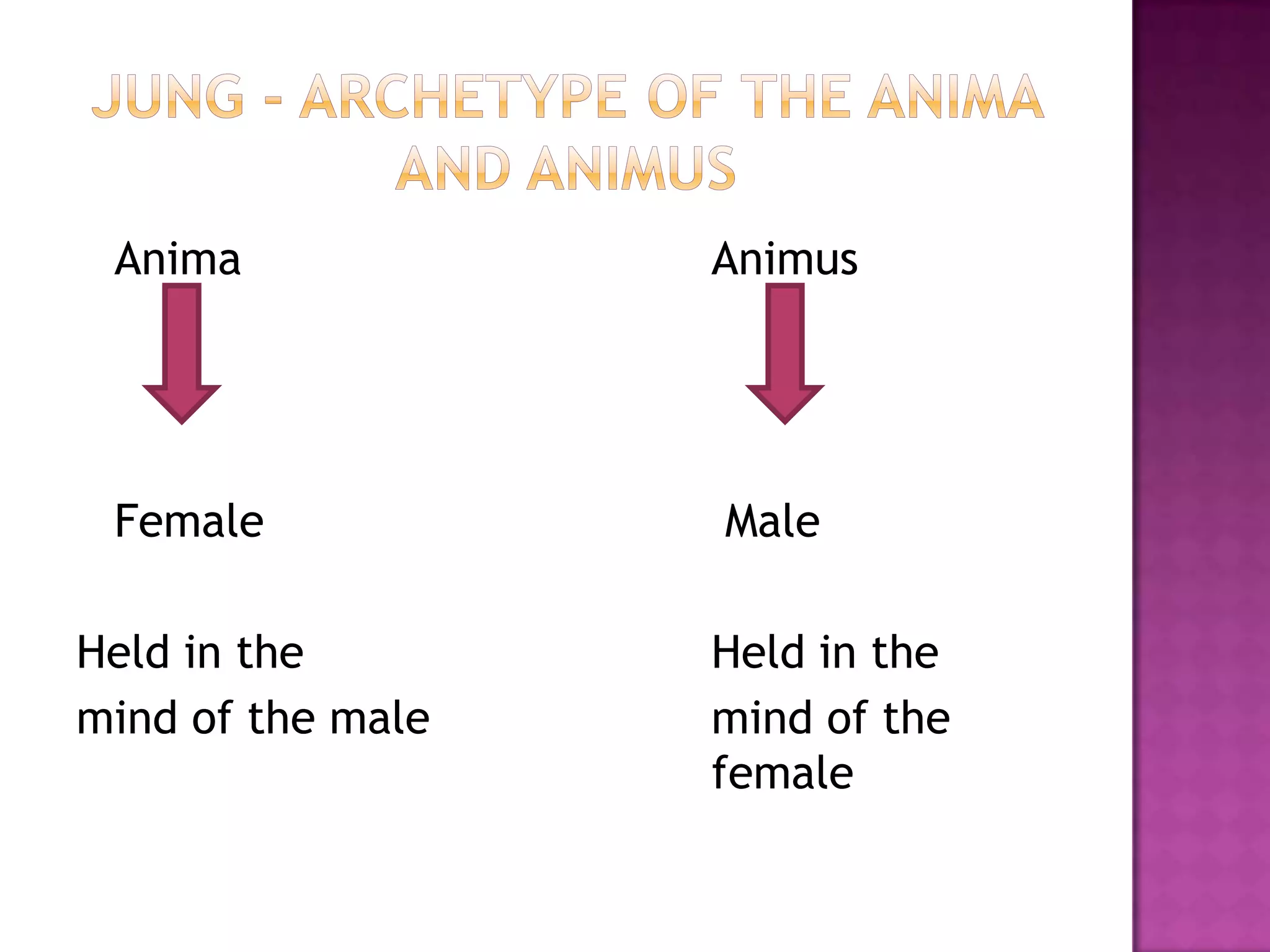
Jung - Archetype of the Anima and Animus	Anima				Animus	Female				MaleHeld in the				Held in themind of the male			mind of the 						female
Jung - PersonaSocial mask we wear in publicPersona is always a false self(Sociology and social psychology – similar)How we relate to objects and our belief about objectsDanger – may come to identify with persona too much and lose self
Jung - TypesJung was interested in determining individual differences in personalityTwo distinct attitudes:	1. Person who draws back (Introversion)	2. Person who goes forth (Extroversion)More than two types of people:		Ways of Thinking:SensationIntuitionThinkingFeeling
Questions to ponder:Why might someone buy a vehicle like a Humvee? Is it possible the person may or may not know all the reasons they bought this vehicle? Describe an example of an advertisement that seem to target hidden motives for buying something.Are people who are your parents/grandparents age still growing and changing? How?Have you noticed the same character types showing up in films and books? Does Jung’s idea of the collective unconscious have anything to do with this?

Personality chapter 5 - 6

  • 1.
    Chapter 12Psychoanalysis AfterFreud: Neo-Freudians, Object Relations and Current Research
  • 2.
    Alfred Adler Individual PsychologyFocused on Social Interest – desire to relate positively and productively1. Striving for superiority – motivating force of life Negative effect – Inferiority Complex2. Parental Influence – placed greater emphasis than Freud on role of parents in early personality development3. Birth Order – First to emphasize in the shaping of personality
  • 3.
    Erik Erikson EgoPsychologyConcept of ego – Principle function is to establish and maintain identityIdentity – complex inner state that includes sense of individuality and uniqueness as well as sense of wholeness and continuity with past and futureEight Stages of Man:Trust vs. MistrustAutonomy vs. Self-doubtInitiative vs. GuiltIndustry vs. InferiorityIdentity vs. Role ConfusionIntimacy vs. IsolationGenerativity vs. StagnationIntegrity vs. Despair
  • 4.
    Karen Horney FemininePsychologyDescribed psychological health and neurosisThree general interacting styles:Moving toward peopleMoving against peopleMoving away from peopleElectra Complex
  • 5.
    Carl Jung AnalyticalPsychologyDiffered from Freud in important ways: Disagreed about sex (libido) as life force Focused on interpersonal aspects Spiritual and mystical mattersJung believed in a connection to the inner rhythm of the universe : “synchronicity”Transcendental experiencesCollective Unconscious
  • 6.
    Jung - CollectiveUnconsciousResult of the history of the human race – we as a species share memories and ideas – most are unconsciousThe fundamental images of the collective unconscious are archetypes
  • 7.
    Jung - ArchetypesImagesthat are at the core of how we think about the world both consciously and unconsciouslySometimes disguised behind symbols, show up in dreams, thoughts, mythology – all over the world – repeatedly!
  • 8.
    Jung - Archetypeof the Anima and Animus Anima Animus Female MaleHeld in the Held in themind of the male mind of the female
  • 9.
    Jung - PersonaSocialmask we wear in publicPersona is always a false self(Sociology and social psychology – similar)How we relate to objects and our belief about objectsDanger – may come to identify with persona too much and lose self
  • 10.
    Jung - TypesJungwas interested in determining individual differences in personalityTwo distinct attitudes: 1. Person who draws back (Introversion) 2. Person who goes forth (Extroversion)More than two types of people: Ways of Thinking:SensationIntuitionThinkingFeeling
  • 11.
    Questions to ponder:Whymight someone buy a vehicle like a Humvee? Is it possible the person may or may not know all the reasons they bought this vehicle? Describe an example of an advertisement that seem to target hidden motives for buying something.Are people who are your parents/grandparents age still growing and changing? How?Have you noticed the same character types showing up in films and books? Does Jung’s idea of the collective unconscious have anything to do with this?