Gangrene
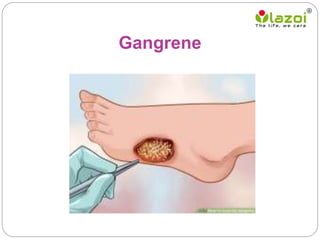
Gangrene
Gangrene of hands or feet occurs when tissues
of the body part dies which occurs because the
tissues did not get enough blood from the
circulatory system of a person and fingers, toes,
and limbs are most often affected, but gangrene
can also occur inside the body, damaging organs
and muscles.
Types of Gangrene
There are three types of gangrene which have been found by the
doctors, which are as follows:
 Dry Gangrene
 Wet Gangrene
 Gas Gangrene
These are the major types of Gangrene, in which the conditions are as
follows:
 Dry Gangrene: Dry gangrene is caused when one of the body parts
isn't getting enough oxygen. Eventually, the body part will start to
deteriorate and die. With dry gangrene, the skin is closed and there is
no evidence of infection.
 Wet Gangrene: Wet gangrene happens when the body tissues become
infected with some type of bacteria. The tissues react to the presence
of the bacteria by growing moist and breaking down. This process
causes the death of the tissues. This is more of an emergency than dry
gangrene because of the possibility of infection spreading to other
parts of the body.
 Gas Gangrene: Bacteria called Clostridia cause gas gangrene. This
bacterium creates an infection that causes gas bubbles and toxins to
Symptoms of Gangrene
There are various symptoms of gangrene which are as follows:
 Dry gangrene:
a)The affected area becomes cold and numb.
b)Initially, the affected area becomes red.
c)Then, it develops a brown discoloration.
d)Finally, it becomes black and shriveled.
 Wet or moist gangrene:
a)The affected area becomes swollen and decays.
b)It is extremely painful.
c)Local oozing occurs.
d)It produces a foul-smelling odor.
e)It becomes black.
f)The affected person develops a fever.
Symptoms of Gangrene
 Gas gangrene:
a)The wound is infected.
b)A brown-red or bloody discharge may ooze from the affected
tissues.
c)Gas produced by Clostridia may produce a crackling sensation
when the affected area is pressed.
d)It becomes swollen, and blisters may develop.
e)Pain in the affected area is severe.
f)The affected person develops fever, increased heart rate, and
rapid breathing if the toxins spread into the bloodstream.
Continue:
Treatments of Gangrene
There are various types of treatment prescribed by doctors according
to the condition of patient, which are as follows:
 Antibiotics: The doctor may prescribe antibiotics if bacteria are
present. These are typically given intravenously, or through a needle
directly into the blood stream.
 Vascular Surgery: For people with poor circulation that results in
gangrene, vascular surgery (surgery on the arteries or veins) may be
recommended in order to improve the flow of blood through the veins
to body tissues.
 Hyperbaric Oxygen Chamber: Placing a person with gas gangrene in
a special oxygen-rich environment can slow the growth of bacteria.
This allows the skin to begin healing. It also brings oxygen to the
damaged tissue to promote healing.
 Tissue Debridement: In serious gangrene cases, the dead tissue or
body part may need to be removed. This process is called
debridement. Debridement can be done with surgery tools or with
chemicals. The goal with this type of surgery is to remove the
affected areas so the infection can no longer spread and to rid the
Treatments of Gangrene
 Tissue Debridement: In serious gangrene cases,
the dead tissue or body part may need to be
removed. This process is called debridement.
Debridement can be done with surgery tools or
with chemicals. The goal with this type of surgery
is to remove the affected areas so the infection
can no longer spread and to rid the body of the
dead tissue.
 Amputation: People who must have part of an
arm or leg amputated due to gangrene may be
fitted with a prosthesis, or artificial limb, to replace
the missing body part.
Continue:
CONNECT WITH US
Logon to
www.lazoi.com
Like us on Facebook
https://www.facebook.com/LazoiTheLife
Follow us on Twitter
https://www.twitter.com/lazoithelife
Follow us on Pinterest
https://www.in.pinterest.com/lazoithelife

Gangrene

  • 1.
  • 2.
    Gangrene Gangrene of handsor feet occurs when tissues of the body part dies which occurs because the tissues did not get enough blood from the circulatory system of a person and fingers, toes, and limbs are most often affected, but gangrene can also occur inside the body, damaging organs and muscles.
  • 3.
    Types of Gangrene Thereare three types of gangrene which have been found by the doctors, which are as follows:  Dry Gangrene  Wet Gangrene  Gas Gangrene These are the major types of Gangrene, in which the conditions are as follows:  Dry Gangrene: Dry gangrene is caused when one of the body parts isn't getting enough oxygen. Eventually, the body part will start to deteriorate and die. With dry gangrene, the skin is closed and there is no evidence of infection.  Wet Gangrene: Wet gangrene happens when the body tissues become infected with some type of bacteria. The tissues react to the presence of the bacteria by growing moist and breaking down. This process causes the death of the tissues. This is more of an emergency than dry gangrene because of the possibility of infection spreading to other parts of the body.  Gas Gangrene: Bacteria called Clostridia cause gas gangrene. This bacterium creates an infection that causes gas bubbles and toxins to
  • 4.
    Symptoms of Gangrene Thereare various symptoms of gangrene which are as follows:  Dry gangrene: a)The affected area becomes cold and numb. b)Initially, the affected area becomes red. c)Then, it develops a brown discoloration. d)Finally, it becomes black and shriveled.  Wet or moist gangrene: a)The affected area becomes swollen and decays. b)It is extremely painful. c)Local oozing occurs. d)It produces a foul-smelling odor. e)It becomes black. f)The affected person develops a fever.
  • 5.
    Symptoms of Gangrene Gas gangrene: a)The wound is infected. b)A brown-red or bloody discharge may ooze from the affected tissues. c)Gas produced by Clostridia may produce a crackling sensation when the affected area is pressed. d)It becomes swollen, and blisters may develop. e)Pain in the affected area is severe. f)The affected person develops fever, increased heart rate, and rapid breathing if the toxins spread into the bloodstream. Continue:
  • 6.
    Treatments of Gangrene Thereare various types of treatment prescribed by doctors according to the condition of patient, which are as follows:  Antibiotics: The doctor may prescribe antibiotics if bacteria are present. These are typically given intravenously, or through a needle directly into the blood stream.  Vascular Surgery: For people with poor circulation that results in gangrene, vascular surgery (surgery on the arteries or veins) may be recommended in order to improve the flow of blood through the veins to body tissues.  Hyperbaric Oxygen Chamber: Placing a person with gas gangrene in a special oxygen-rich environment can slow the growth of bacteria. This allows the skin to begin healing. It also brings oxygen to the damaged tissue to promote healing.  Tissue Debridement: In serious gangrene cases, the dead tissue or body part may need to be removed. This process is called debridement. Debridement can be done with surgery tools or with chemicals. The goal with this type of surgery is to remove the affected areas so the infection can no longer spread and to rid the
  • 7.
    Treatments of Gangrene Tissue Debridement: In serious gangrene cases, the dead tissue or body part may need to be removed. This process is called debridement. Debridement can be done with surgery tools or with chemicals. The goal with this type of surgery is to remove the affected areas so the infection can no longer spread and to rid the body of the dead tissue.  Amputation: People who must have part of an arm or leg amputated due to gangrene may be fitted with a prosthesis, or artificial limb, to replace the missing body part. Continue:
  • 8.
    CONNECT WITH US Logonto www.lazoi.com Like us on Facebook https://www.facebook.com/LazoiTheLife Follow us on Twitter https://www.twitter.com/lazoithelife Follow us on Pinterest https://www.in.pinterest.com/lazoithelife