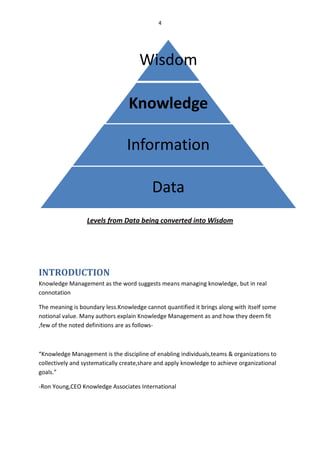
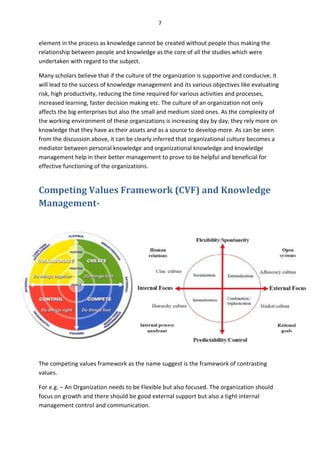
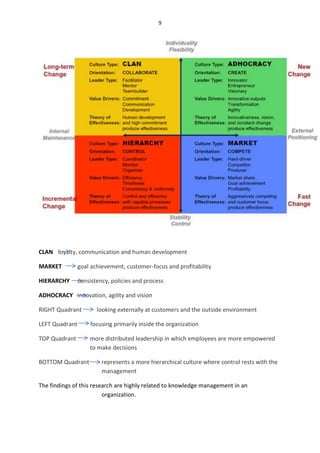
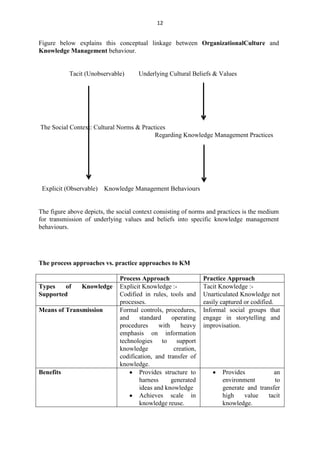
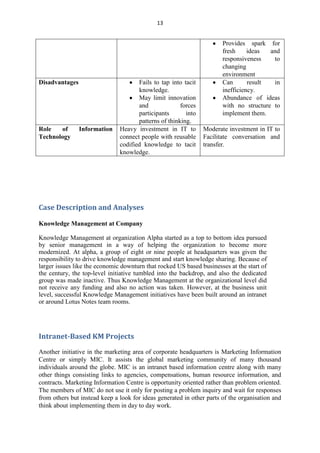
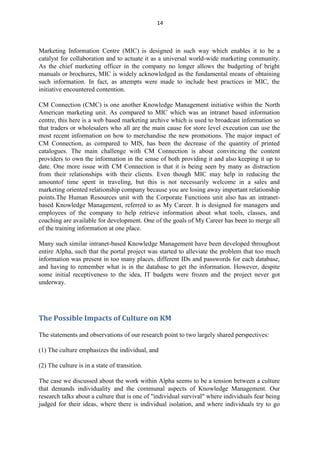

This document discusses the role of organizational culture in knowledge management. It begins with definitions of knowledge management and discusses how it can benefit organizations by increasing efficiency, effectiveness, expertise and customer satisfaction. It then explains how knowledge in organizations can be either explicit or tacit. The document also discusses different frameworks for understanding organizational culture, such as the competing values framework, and how culture can impact a organization's approach to knowledge management, whether it takes a process-based approach that relies on formal systems or a practice-based approach that focuses on informal knowledge sharing. Finally, the document analyzes some case examples of knowledge management initiatives within a company and how cultural factors may have influenced their success or challenges.


