Key Performance Indicators (KPI’S) and Knowledge Management Kate Stanfield and James Mullan Knowledge Connections – February 2008
Why measure? Measuring and evaluating KM performance is an important process and can be used to serve a number of purposes  including: Gathering evidence Monitoring progress Learning from past activities
What do you need to think about? The intention and purpose of the measurement will affect the type of tool you use. There are a huge number of tools available including; Surveys Storytelling Activity Reports/Logs
KP what? Key Performance Indicators (KPI) are financial and non-financial metrics used to quantify objectives to reflect strategic performance KPIs are often used to apply “value” to difficult to measure activities
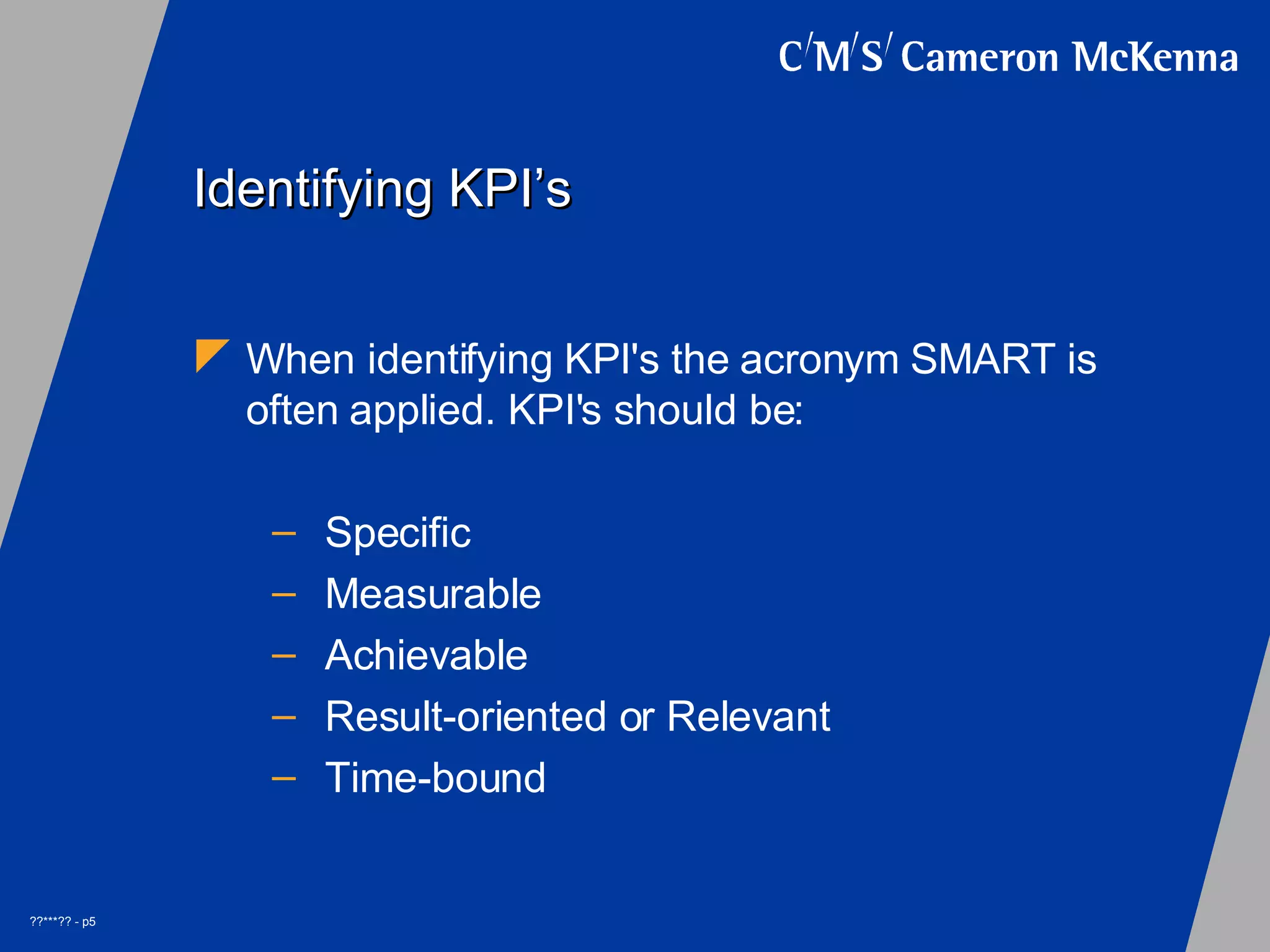
Identifying KPI’s When identifying KPI's the acronym SMART is often applied. KPI's should be: Specific  Measurable  Achievable  Result-oriented or Relevant  Time-bound
 
 
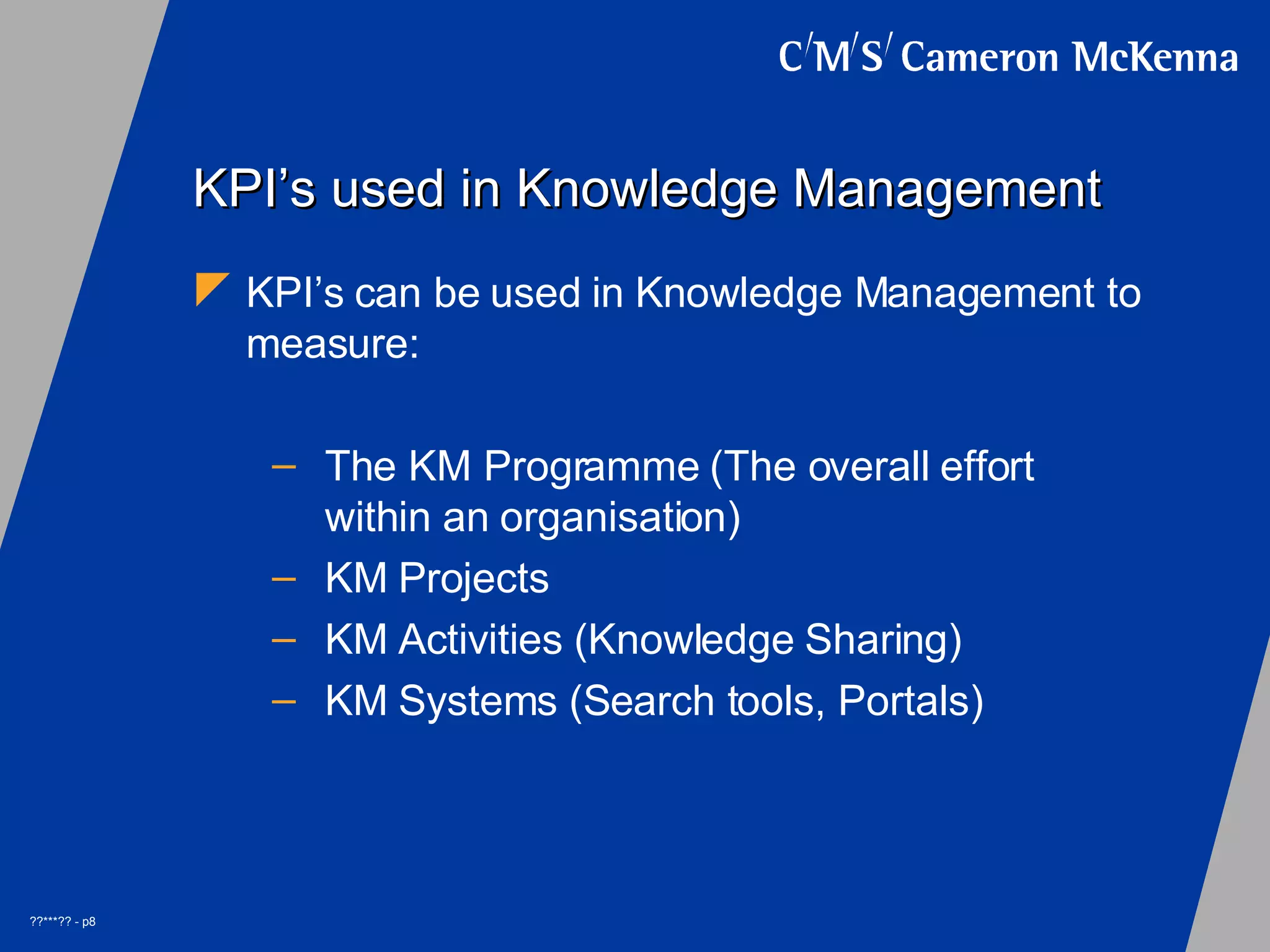
KPI’s used in Knowledge Management KPI’s can be used in Knowledge Management to measure: The KM Programme (The overall effort within an organisation) KM Projects KM Activities (Knowledge Sharing) KM Systems (Search tools, Portals)
KPI levels Organisation – strategic objectives Team – Linkage between strategic goals and key business activities Personal – Individual competencies matched to roles
Example KPI’s KM Activities # of Knowledge Assets created KM Systems % of staff contributing documents % of staff accessing documents # of searches
Give your metrics teeth! Tie in “what matters” to that audience: Financial results Appraisals Performance Name and shame!
What is your experience?

Key Performance Indicators And Knowledge Management

  • 1.
    Key Performance Indicators(KPI’S) and Knowledge Management Kate Stanfield and James Mullan Knowledge Connections – February 2008
  • 2.
    Why measure? Measuringand evaluating KM performance is an important process and can be used to serve a number of purposes including: Gathering evidence Monitoring progress Learning from past activities
  • 3.
    What do youneed to think about? The intention and purpose of the measurement will affect the type of tool you use. There are a huge number of tools available including; Surveys Storytelling Activity Reports/Logs
  • 4.
    KP what? KeyPerformance Indicators (KPI) are financial and non-financial metrics used to quantify objectives to reflect strategic performance KPIs are often used to apply “value” to difficult to measure activities
  • 5.
    Identifying KPI’s Whenidentifying KPI's the acronym SMART is often applied. KPI's should be: Specific Measurable Achievable Result-oriented or Relevant Time-bound
  • 6.
  • 7.
  • 8.
    KPI’s used inKnowledge Management KPI’s can be used in Knowledge Management to measure: The KM Programme (The overall effort within an organisation) KM Projects KM Activities (Knowledge Sharing) KM Systems (Search tools, Portals)
  • 9.
    KPI levels Organisation– strategic objectives Team – Linkage between strategic goals and key business activities Personal – Individual competencies matched to roles
  • 10.
    Example KPI’s KMActivities # of Knowledge Assets created KM Systems % of staff contributing documents % of staff accessing documents # of searches
  • 11.
    Give your metricsteeth! Tie in “what matters” to that audience: Financial results Appraisals Performance Name and shame!
  • 12.
    What is yourexperience?