Pelvic Inflammatory Disease PID
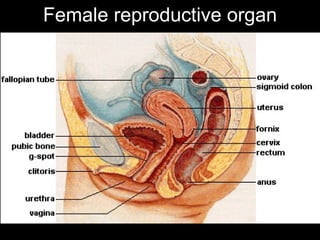
Female reproductive organ
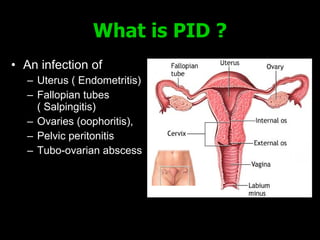
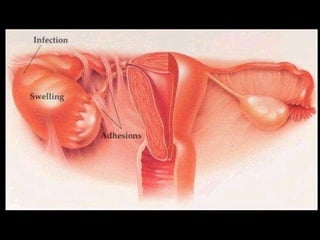
What is PID  ? An  infection of  U terus  ( Endometritis) F allopian tubes  ( Salpingitis) O varies (oophoritis),  Pelvic peritonitis Tubo-ovarian abscess
PID A  common and serious complication of STDs  (Sexual Transmitted Diseases)
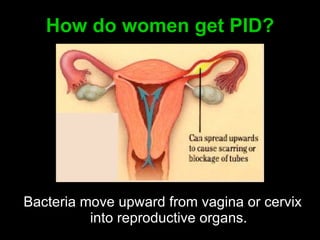
How do women get PI D? B acteria move upward from vagina or cervix into reproductive organs.
Most common bacteria Chlamydia trachomatis  Neisseria gonorrhoea tends to sudden and severe symptoms,  high fever and abdominal pain  ( acute PID )
Risk factors A ge  < 25  are more likely to develop PID than those  older   M ore sex partners P artner has more than one  sex  partner D ouch ing regularly IUD
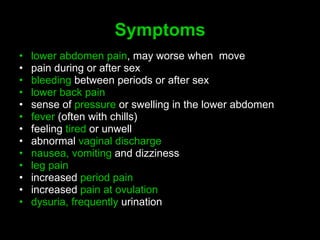
S ymptoms lower abdomen pain , may worse when  move  pain during or after sex  bleeding  between periods or after sex  lower back pain   sense of  pressure  or swelling in the lower abdomen  fever  (often with chills)  feeling  tired  or unwell  abnormal  vaginal discharge   nausea, vomiting  and dizziness  leg pain   increased  period pain   increased  pain at ovulation  dysuria, frequently  urination
 
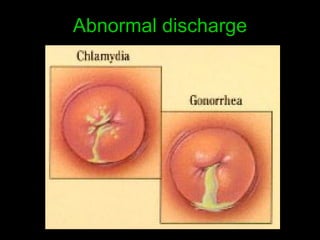
Abnormal discharge
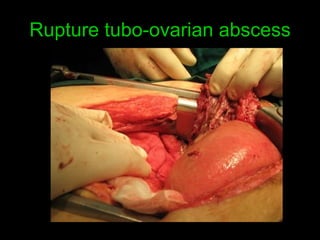
Complications and long - term problems   Recurrent PID   Ruptured abscess   Chronic pain   Ectopic pregnancy   Infertility   Perihepatic adhesions   ( Fitz-Hugh-Curtis syndrome)
Rupture tubo-ovarian abscess
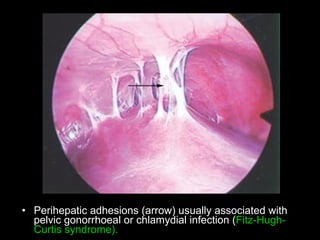
Perihepatic adhesions  ( arrow )  usually associated with pelvic gonorrhoeal or chlamydial infection  ( Fitz - Hugh - Curtis syndrome ).
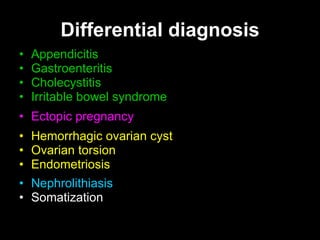
Differential diagnosis Appendicitis  Gastroenteritis  Cholecystitis  Irritable bowel syndrome Ectopic pregnancy   Hemorrhagic ovarian cyst Ovarian torsion  Endometriosis Nephrolithiasis Somatization
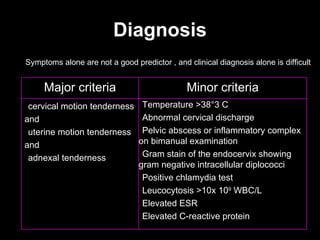
D iagno sis Symptoms alone are not a good predictor , and clinical diagnosis alone is difficult Temperature >38°3 C   Abnormal cervical discharge  Pelvic abscess or inflammatory complex on bimanual examination   Gram stain of the endocervix showing gram negative intracellular diplococci  Positive chlamydia test   Leucocytosis > 10 x  10 9  WBC/L  Elevated ESR   Elevated C-reactive protein cervical motion tenderness  and   uterine motion tenderness  and adnexal tenderness Minor criteria Major criteria
The definitive criteria  histopathologic evidence of endometritis on endometrial biopsy   transvaginal sonography or other imaging techniques  showing thickened fluid-filled tubes with or without free pelvic fluid or tubo-ovarian complex  laparoscopic  abnormalities consistent with PID
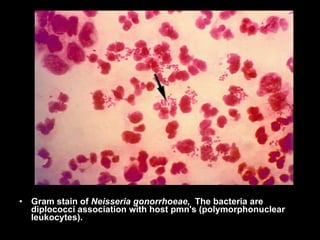
Gram stain of  Neisseria gonorrhoeae,   The bacteria are diplococci association with host pmn's  ( polymorphonuclear leukocytes ).
Investigation   Laboratory m ay be entirely normal  An elevated leukocyte count does not distinguish PID from other diagnoses  Cervical cultures for gonorrhea or Chlamydia require  3-7  days for results  HIV and syphilis testing should be recommended Pelvic ultrasonography can detect pelvic abscesses  Laparoscopy  when the diagnosis is unclear or when the patient fails to improve.
C riteria for hospitalization surgical emergencies (e.g., appendicitis) cannot be excluded is pregnan t does not respond to oral antimicrobial therapy unable to tolerate an outpatient oral regimen has severe illness, nausea and vomiting, or high fever  has a tubo-ovarian abscess.
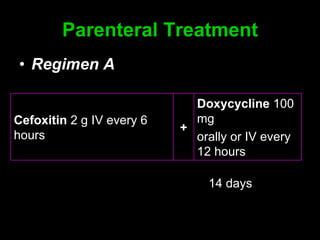
Parenteral T reatment Regimen A     14 days Cefoxitin  2 g IV every 6 hours Doxycycline  100 mg orally or IV every 12 hours  +
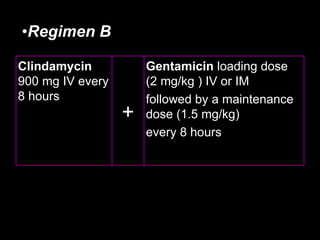
Regimen B Gentamicin  loading dose (2 mg/kg ) IV or IM  followed by a maintenance dose (1.5 mg/kg)  every 8 hours  + Clindamycin  900 mg IV every 8 hours    
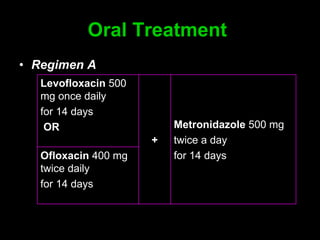
Oral Treatment   Regimen A       Ofloxacin  400 mg twice daily for 14 days Metronidazole  500 mg  twice a day  for 14 days + Levofloxacin  500 mg once daily  for 14 days      OR
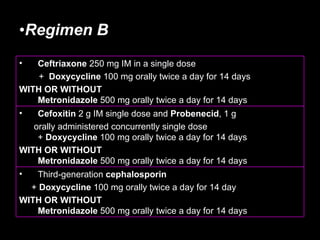
Regimen B   Third-generation  cephalosporin   +  Doxycycline  100 mg orally twice a day for 14 day WITH OR WITHOUT Metronidazole  500 mg orally twice a day for 14 days  Cefoxitin  2 g IM single dose and  Probenecid , 1 g  orally administered concurrently single dose  +  Doxycycline  100 mg orally twice a day for 14 days WITH OR WITHOUT   Metronidazole  500 mg orally twice a day for 14 days Ceftriaxone  250 mg IM in a single dose  +  Doxycycline  100 mg orally twice a day for 14 days  WITH OR WITHOUT Metronidazole  500 mg orally twice a day for 14 days
Surgery   Rupture abscess invade to peritonium Failure medical treatment 48-72 hr Abscess does not go away after 2-3 week with persistent abdominal pain
Management of Sex Partners Male sex partners of women with PID should be examined and treated Male partners of women who have PID caused by  C. trachomatis  and/or  N. gonorrhoeae  frequently are asymptomatic.

Pelvic Inflammatory Disease

  • 1.
  • 2.
  • 3.
    What is PID ? An infection of U terus ( Endometritis) F allopian tubes ( Salpingitis) O varies (oophoritis), Pelvic peritonitis Tubo-ovarian abscess
  • 4.
    PID A common and serious complication of STDs (Sexual Transmitted Diseases)
  • 5.
    How do womenget PI D? B acteria move upward from vagina or cervix into reproductive organs.
  • 6.
    Most common bacteriaChlamydia trachomatis Neisseria gonorrhoea tends to sudden and severe symptoms, high fever and abdominal pain ( acute PID )
  • 7.
    Risk factors Age < 25 are more likely to develop PID than those older M ore sex partners P artner has more than one sex partner D ouch ing regularly IUD
  • 8.
    S ymptoms lowerabdomen pain , may worse when move pain during or after sex bleeding between periods or after sex lower back pain sense of pressure or swelling in the lower abdomen fever (often with chills) feeling tired or unwell abnormal vaginal discharge nausea, vomiting and dizziness leg pain increased period pain increased pain at ovulation dysuria, frequently urination
  • 9.
  • 10.
  • 11.
    Complications and long- term problems Recurrent PID Ruptured abscess Chronic pain Ectopic pregnancy Infertility Perihepatic adhesions ( Fitz-Hugh-Curtis syndrome)
  • 12.
  • 13.
    Perihepatic adhesions ( arrow ) usually associated with pelvic gonorrhoeal or chlamydial infection ( Fitz - Hugh - Curtis syndrome ).
  • 14.
    Differential diagnosis Appendicitis Gastroenteritis Cholecystitis Irritable bowel syndrome Ectopic pregnancy Hemorrhagic ovarian cyst Ovarian torsion Endometriosis Nephrolithiasis Somatization
  • 15.
    D iagno sisSymptoms alone are not a good predictor , and clinical diagnosis alone is difficult Temperature >38°3 C Abnormal cervical discharge Pelvic abscess or inflammatory complex on bimanual examination Gram stain of the endocervix showing gram negative intracellular diplococci Positive chlamydia test Leucocytosis > 10 x 10 9 WBC/L Elevated ESR Elevated C-reactive protein cervical motion tenderness and uterine motion tenderness and adnexal tenderness Minor criteria Major criteria
  • 16.
    The definitive criteria histopathologic evidence of endometritis on endometrial biopsy transvaginal sonography or other imaging techniques showing thickened fluid-filled tubes with or without free pelvic fluid or tubo-ovarian complex laparoscopic abnormalities consistent with PID
  • 17.
    Gram stain of Neisseria gonorrhoeae, The bacteria are diplococci association with host pmn's ( polymorphonuclear leukocytes ).
  • 18.
    Investigation Laboratory m ay be entirely normal An elevated leukocyte count does not distinguish PID from other diagnoses Cervical cultures for gonorrhea or Chlamydia require 3-7 days for results HIV and syphilis testing should be recommended Pelvic ultrasonography can detect pelvic abscesses Laparoscopy when the diagnosis is unclear or when the patient fails to improve.
  • 19.
    C riteria forhospitalization surgical emergencies (e.g., appendicitis) cannot be excluded is pregnan t does not respond to oral antimicrobial therapy unable to tolerate an outpatient oral regimen has severe illness, nausea and vomiting, or high fever has a tubo-ovarian abscess.
  • 20.
    Parenteral T reatmentRegimen A     14 days Cefoxitin 2 g IV every 6 hours Doxycycline 100 mg orally or IV every 12 hours +
  • 21.
    Regimen B Gentamicin loading dose (2 mg/kg ) IV or IM followed by a maintenance dose (1.5 mg/kg) every 8 hours + Clindamycin 900 mg IV every 8 hours    
  • 22.
    Oral Treatment Regimen A     Ofloxacin 400 mg twice daily for 14 days Metronidazole 500 mg twice a day for 14 days + Levofloxacin 500 mg once daily for 14 days      OR
  • 23.
    Regimen B Third-generation cephalosporin + Doxycycline 100 mg orally twice a day for 14 day WITH OR WITHOUT Metronidazole 500 mg orally twice a day for 14 days Cefoxitin 2 g IM single dose and Probenecid , 1 g orally administered concurrently single dose + Doxycycline 100 mg orally twice a day for 14 days WITH OR WITHOUT Metronidazole 500 mg orally twice a day for 14 days Ceftriaxone 250 mg IM in a single dose + Doxycycline 100 mg orally twice a day for 14 days  WITH OR WITHOUT Metronidazole 500 mg orally twice a day for 14 days
  • 24.
    Surgery Rupture abscess invade to peritonium Failure medical treatment 48-72 hr Abscess does not go away after 2-3 week with persistent abdominal pain
  • 25.
    Management of SexPartners Male sex partners of women with PID should be examined and treated Male partners of women who have PID caused by C. trachomatis and/or N. gonorrhoeae frequently are asymptomatic.