PELVIC
INFLAMMATORY
DISEASES
By
Dr.Hafsa
DEFINITION
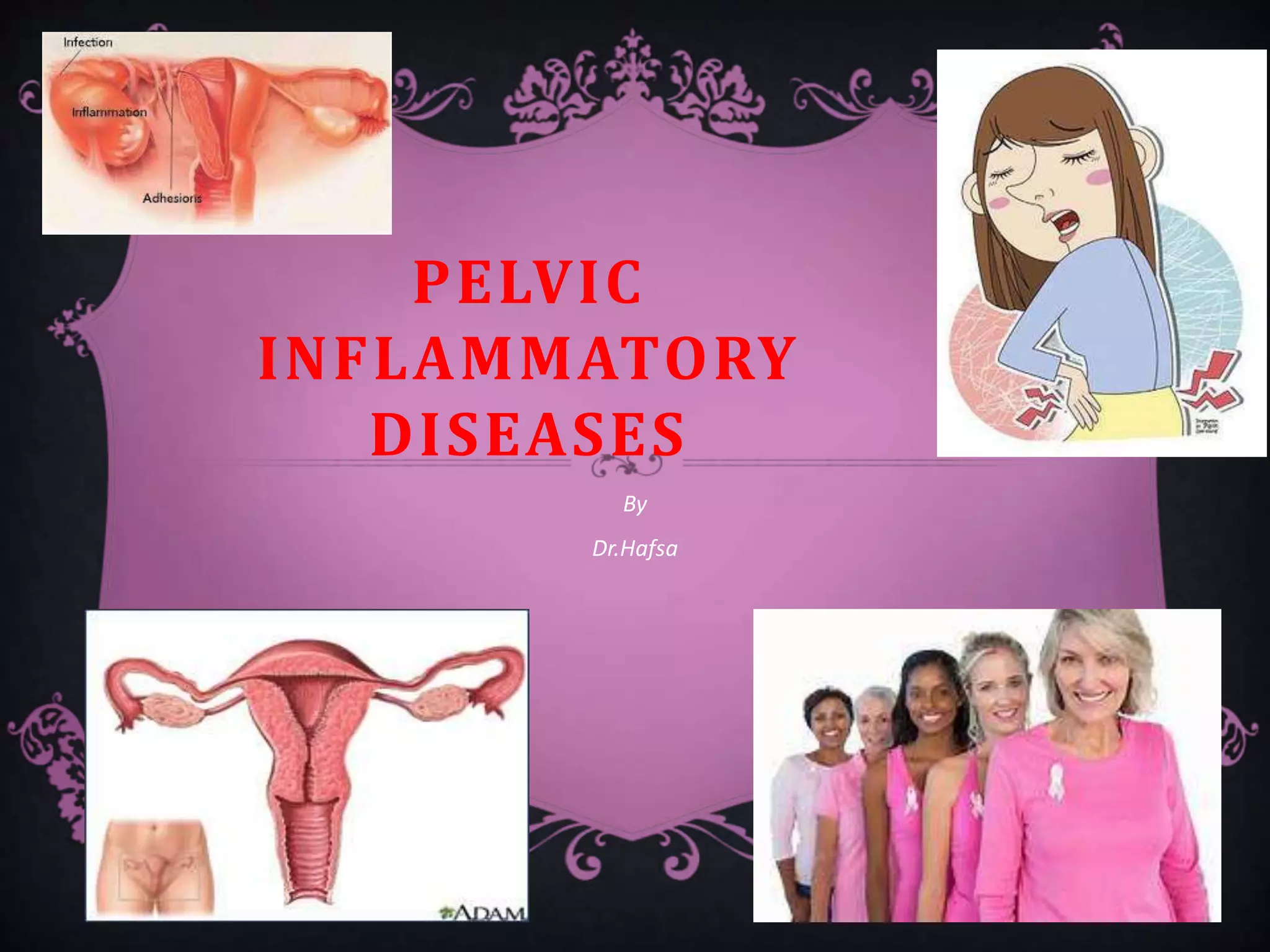
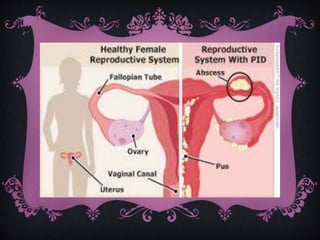
PID comprises of a spectrum of
inflammatory disorders of the upper female
genital tract, including any combination of
endometritis, salpingitis, tubo-ovarian
abscess and pelvic peritonitis.
INCIDENCE
The incidence of PID is unknown.
Approximately 1 in 60 consultations in general practice is
for women less than 45 yrs for suspected PID.
The National Disease and therapeutic index (NDTI)
estimated that from 2004-2013 number of visits to
physicians for PID among women aged 15-44 decreased
from 123000 to 88000 visits.
AETIOLOGY
PID is a polymicrobial infection.
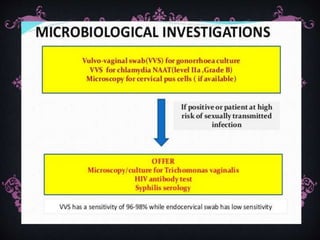
NEISSERIA GONORRHOEAE and
CHLAMYDIA TRACHOMATIS are most
frequently recognized pathogens.
GARDNERELLA VAGINALIS anaerobes
and other organisms may also be
implicated.
 Young Age < 25
 Multiple Sexual Partners
 Past History of STD
 Termination of Pregnancy
 Insertion of IUCD within 6
Weeks
 Hysterosalpingography
 In-vitro Fertilization
 Post partum endometritis
 Bacterial vaginosis
 Lower socioeconomic group
 Lack of condom use
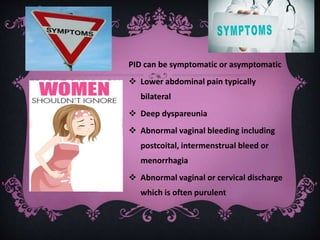
PID can be symptomatic or asymptomatic
 Lower abdominal pain typically
bilateral
 Deep dyspareunia
 Abnormal vaginal bleeding including
postcoital, intermenstrual bleed or
menorrhagia
 Abnormal vaginal or cervical discharge
which is often purulent
SIGNS
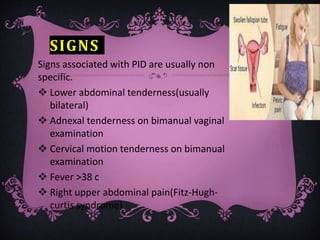
Signs associated with PID are usually non
specific.
 Lower abdominal tenderness(usually
bilateral)
 Adnexal tenderness on bimanual vaginal
examination
 Cervical motion tenderness on bimanual
examination
 Fever >38 c
 Right upper abdominal pain(Fitz-Hugh-
curtis syndrome)
DIFFERENTIAL DIAGNOSIS
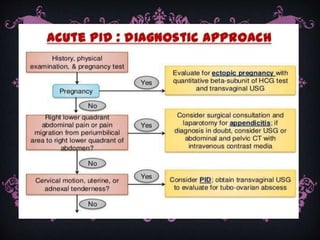
Ectopic Pregnancy(pregnancy should be excluded in all
women suspected of having PID)
Acute appendicitis
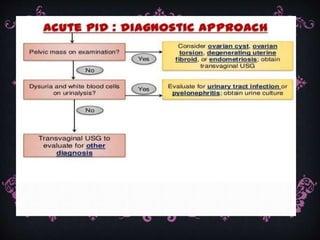
Endometriosis
Complications of an ovarian cyst i.e torsion or rupture
Urinary tract Infection
Functional pain
MANAGEMENT
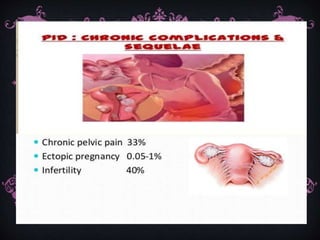
 Delaying treatment increases risk of long term
sequelae
 Because of lack of definitive diagnostic criteria
and sequelae, a low threshold for impirical
treatment of PID is required.
 Broad spectrum antibiotics should be given as
soon as possible
GENERAL ADVICE
 Rest
 Appropriate analgesia
 Intravenous therapy is recommended for patients with
more severe disease e.g pyrexia >38, clinical signs of
tubo-ovarian abscess, signs of pelvic peritonitis
 Avoid unprotected sex until they and their partner have
completed treatment and follow up.
 Detailed information about PID should be given.
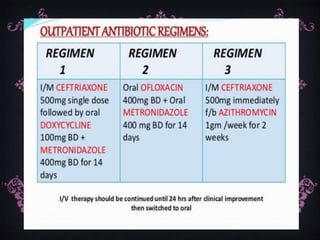
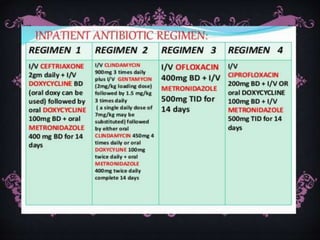
RECOMMENDED REGIMENS
Factors important in selecting a
regimen:
 Local antimicrobial sensitivities
 Local epidemiology of infections
 Cost
 Patient preference and likelihood
of compliance
 Severity of disease
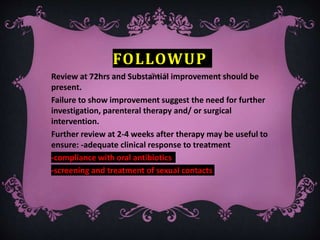
FOLLOWUP
Review at 72hrs and Substantial improvement should be
present.
Failure to show improvement suggest the need for further
investigation, parenteral therapy and/ or surgical
intervention.
Further review at 2-4 weeks after therapy may be useful to
ensure: -adequate clinical response to treatment
-compliance with oral antibiotics
-screening and treatment of sexual contacts
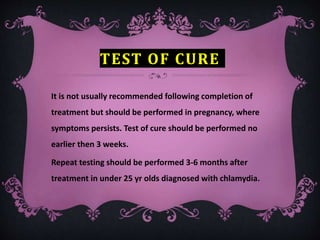
TEST OF CURE
It is not usually recommended following completion of
treatment but should be performed in pregnancy, where
symptoms persists. Test of cure should be performed no
earlier then 3 weeks.
Repeat testing should be performed 3-6 months after
treatment in under 25 yr olds diagnosed with chlamydia.
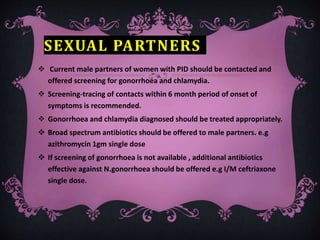
SEXUAL PARTNERS
 Current male partners of women with PID should be contacted and
offered screening for gonorrhoea and chlamydia.
 Screening-tracing of contacts within 6 month period of onset of
symptoms is recommended.
 Gonorrhoea and chlamydia diagnosed should be treated appropriately.
 Broad spectrum antibiotics should be offered to male partners. e.g
azithromycin 1gm single dose
 If screening of gonorrhoea is not available , additional antibiotics
effective against N.gonorrhoea should be offered e.g I/M ceftriaxone
single dose.
PREGNANCY AND LACTATION
 PID in pregnancy is associated with increased
maternal and fetal morbidity.
 Antibiotics like erythromycin, azithromycin
and metronidazole can be used in pregnancy
PID & IUCD
The randomized control trial evidence for whether an IUCD
should be left insitu or removed in women with PID is
limited.
The decision to remove IUCD should be balanced against
the risk of pregnancy.
Single 1gm dose of azithromycin should be given as
prophylaxis before IUCD insertion.
THANK YOU

Pid

  • 1.
  • 2.
    DEFINITION PID comprises ofa spectrum of inflammatory disorders of the upper female genital tract, including any combination of endometritis, salpingitis, tubo-ovarian abscess and pelvic peritonitis.
  • 3.
    INCIDENCE The incidence ofPID is unknown. Approximately 1 in 60 consultations in general practice is for women less than 45 yrs for suspected PID. The National Disease and therapeutic index (NDTI) estimated that from 2004-2013 number of visits to physicians for PID among women aged 15-44 decreased from 123000 to 88000 visits.
  • 4.
    AETIOLOGY PID is apolymicrobial infection. NEISSERIA GONORRHOEAE and CHLAMYDIA TRACHOMATIS are most frequently recognized pathogens. GARDNERELLA VAGINALIS anaerobes and other organisms may also be implicated.
  • 5.
     Young Age< 25  Multiple Sexual Partners  Past History of STD  Termination of Pregnancy  Insertion of IUCD within 6 Weeks  Hysterosalpingography  In-vitro Fertilization  Post partum endometritis  Bacterial vaginosis  Lower socioeconomic group  Lack of condom use
  • 6.
    PID can besymptomatic or asymptomatic  Lower abdominal pain typically bilateral  Deep dyspareunia  Abnormal vaginal bleeding including postcoital, intermenstrual bleed or menorrhagia  Abnormal vaginal or cervical discharge which is often purulent
  • 7.
    SIGNS Signs associated withPID are usually non specific.  Lower abdominal tenderness(usually bilateral)  Adnexal tenderness on bimanual vaginal examination  Cervical motion tenderness on bimanual examination  Fever >38 c  Right upper abdominal pain(Fitz-Hugh- curtis syndrome)
  • 9.
    DIFFERENTIAL DIAGNOSIS Ectopic Pregnancy(pregnancyshould be excluded in all women suspected of having PID) Acute appendicitis Endometriosis Complications of an ovarian cyst i.e torsion or rupture Urinary tract Infection Functional pain
  • 16.
    MANAGEMENT  Delaying treatmentincreases risk of long term sequelae  Because of lack of definitive diagnostic criteria and sequelae, a low threshold for impirical treatment of PID is required.  Broad spectrum antibiotics should be given as soon as possible
  • 17.
    GENERAL ADVICE  Rest Appropriate analgesia  Intravenous therapy is recommended for patients with more severe disease e.g pyrexia >38, clinical signs of tubo-ovarian abscess, signs of pelvic peritonitis  Avoid unprotected sex until they and their partner have completed treatment and follow up.  Detailed information about PID should be given.
  • 19.
    RECOMMENDED REGIMENS Factors importantin selecting a regimen:  Local antimicrobial sensitivities  Local epidemiology of infections  Cost  Patient preference and likelihood of compliance  Severity of disease
  • 22.
    FOLLOWUP Review at 72hrsand Substantial improvement should be present. Failure to show improvement suggest the need for further investigation, parenteral therapy and/ or surgical intervention. Further review at 2-4 weeks after therapy may be useful to ensure: -adequate clinical response to treatment -compliance with oral antibiotics -screening and treatment of sexual contacts
  • 23.
    TEST OF CURE Itis not usually recommended following completion of treatment but should be performed in pregnancy, where symptoms persists. Test of cure should be performed no earlier then 3 weeks. Repeat testing should be performed 3-6 months after treatment in under 25 yr olds diagnosed with chlamydia.
  • 24.
    SEXUAL PARTNERS  Currentmale partners of women with PID should be contacted and offered screening for gonorrhoea and chlamydia.  Screening-tracing of contacts within 6 month period of onset of symptoms is recommended.  Gonorrhoea and chlamydia diagnosed should be treated appropriately.  Broad spectrum antibiotics should be offered to male partners. e.g azithromycin 1gm single dose  If screening of gonorrhoea is not available , additional antibiotics effective against N.gonorrhoea should be offered e.g I/M ceftriaxone single dose.
  • 25.
    PREGNANCY AND LACTATION PID in pregnancy is associated with increased maternal and fetal morbidity.  Antibiotics like erythromycin, azithromycin and metronidazole can be used in pregnancy
  • 26.
    PID & IUCD Therandomized control trial evidence for whether an IUCD should be left insitu or removed in women with PID is limited. The decision to remove IUCD should be balanced against the risk of pregnancy. Single 1gm dose of azithromycin should be given as prophylaxis before IUCD insertion.
  • 28.