Pelvic Inflammatory Disease www.freelivedoctor.com
CREOG Educational Objectives:  Pelvic Inflammatory Disease Describe the diagnostic criteria for PID List the common infectious agents implicated in PID Elicit a pertinent history from a patient suspected to have PID Perform a physical exam to confirm the diagnosis of PID www.freelivedoctor.com
CREOG Educational Objectives:  Pelvic Inflammatory Disease Describe the appropriate diagnostic tests to confirm PID, including: Indications for the tests How to perform the tests Interpretation of the results Endocervical swab for culture or nucleic acid probe Endometrial biopsy Laparoscopy www.freelivedoctor.com
CREOG Educational Objectives:  Pelvic Inflammatory Disease Treatment of PID with appropriate antimicrobial and surgical options Summarize the potential long-term effects [of PID] and counsel patients regarding the risks of further complications, including: Chronic pelvic pain Infertility Ectopic pregnancy www.freelivedoctor.com
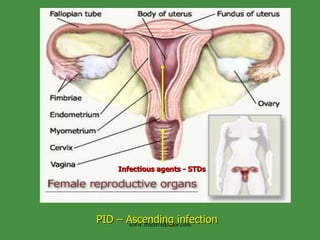
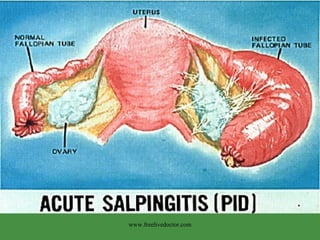
Pelvic Inflammatory Disease Upper genital tract infections that involve the endometrium (endometritis), fallopian tubes (salpingitis), and pelvic peritoneum (peritonitis).  These infections result from ascending spread of lower genital tract infection  www.freelivedoctor.com
Infectious agents - STDs PID – Ascending infection www.freelivedoctor.com
www.freelivedoctor.com
Pelvic Inflammatory Disease Estimates of the annual incidence of PID in the United States are: Between 9.5 to 14 cases per 1,000 fertile women, with a higher rate of 18 to 20 per 1,000 among women aged 15 to 24 years.  As many as 1,000,000 cases of PID occur annually in the United States resulting in approximately 200,000 hospitalizations. Due to under reporting, incidence figures are unreliable  www.freelivedoctor.com
Risk Factors for PID:  Adolescents Younger age at first intercourse Older sex partners Involvement with child protection agency Prior suicide attempt(s) Consumption of alcohol before sex Current chlamydia infection www.freelivedoctor.com
Pelvic Inflammatory Disease The most common etiologic agents in PID are: Neisseria gonorrhoeae ,  Chlamydia trachomatis Anaerobic bacterial species found in the vagina, particularly  Bacteroides spp.,  Anaerobic gram-positive cocci, (Peptostreptococci), E. coli Mycoplasma hominis   www.freelivedoctor.com
Pelvic Inflammatory Disease These organisms initially cause lower genital tract infections and then spread into the upper genital tract via the endometrium. Many cases - polymicrobial in etiology. Pure gonococcal or chlamydial PID is possible. The relative frequency of the various agents depends somewhat on  the population tested,  the site cultured (i.e., cervix, endometrium, or Fallopian tubes), the sensitivity of the diagnostic tests performed. www.freelivedoctor.com
PID:  History and Examination Symptoms suggestive of PID include: Abdominal pain (usually bilateral and in the lower quadrants), Dyspareunia, [abnormal] Vaginal discharge, Menometrorrhagia, Dysuria, Onset of pain in association with menses, Fever, and/or chills Nausea or vomiting www.freelivedoctor.com
PID:  History and Examination Women with endometritis may present with: vaginal discharge or  intermenstrual bleeding, and have uterine tenderness on pelvic exam www.freelivedoctor.com
PID:  Additional Considerations PID is difficult to accurately diagnose, in part, because manifestations range from mild to quite severe All young, sexually active women presenting with lower abdominal pain should be carefully evaluated for the presence of salpingitis and endometritis Routine bimanual and abdominal exams should be done on all women with an STD, since some women with salpingitis or endometritis will not complain of lower abdominal pain.  www.freelivedoctor.com
Diagnosis of Acute PID – CDC Criteria Minimum findings: Cervical motion tenderness and uterine and adnexal tenderness,  along with WBCs seen on vaginal wet mount Additional supportive criteria to increase the specificity: - Oral temperature higher than 101ºF (38.3ºC) - Abnormal cervical or vaginal mucopurulent discharge - Elevated erythrocyte sedimentation rate - Elevated C-reactive protein level  - Laboratory documentation of cervical infection with  N    gonorrhoeae  or  C trachomatis www.freelivedoctor.com
Diagnosis of PID – Laboratory Tests 1. Gram-stained endocervical smear (to quantify PMNs/1000x field and to look for intracellular Gram-negative diplococci) 2. Endocervical NAAT or endocervical (and rectal) cultures for  N. gonorrhoeae 3. Culture of endocervical swab or NAAT for endocervical swab or first void urine for  C. trachomatis 4. Wet prep for WBCs 5. If menses is late or if the patient is not using reliable contraception - check pulse and blood pressure (supine and seated); - obtain serum or sensitive urine pregnancy test if ectopic  pregnancy is suspected. www.freelivedoctor.com
Diagnosis of PID: Association of LGTI Evaluation of vaginal discharge Underutilized Consistent predictor Criteria Inflammatory cells outnumber all other cellular elements Absence for WBCs plus clear mucous – high negative predictive value www.freelivedoctor.com
Diagnosis of PID – Endometrial biopsy Prevalence and manifestations of endometritis among women with cervicitis. Paavonen J ,  Kiviat N ,  Brunham RC ,  Stevens CE ,  Kuo CC ,  Stamm WE ,  Miettinen A ,  Soules M ,  Eschenbach DA ,  Holmes KK . Thirty-five women referred from an STD Clinic, because of suspected cervicitis, studied for the presence of endometritis by transcervical endometrial biopsies and cervical and endometrial cultures.  Fourteen (40%) of the patients had histologic evidence of endometritis.  Findings that significantly correlated with endometritis included a history of intermenstrual vaginal bleeding, the presence of Chlamydia trachomatis, Neisseria gonorrhoeae, or Streptococcus agalactiae in the cervix, and the presence of serum antibodies to C. trachomatis or to Mycoplasma hominis. www.freelivedoctor.com
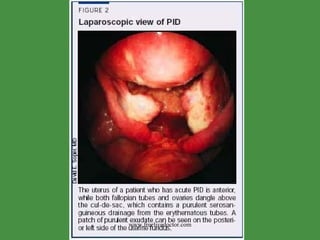
Diagnosis of PID: Laparoscopy “ Gold Standard” University of Helsinki study: (N=33) Confirmed PID in 20 (61%) 11 (33%) other diseases 2 (6%) no evidence of disease Final diagnosis in 91% Lysis of adhesions, drainage, irrigation, extirpation www.freelivedoctor.com
www.freelivedoctor.com
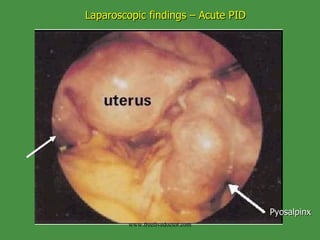
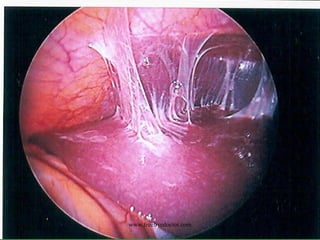
Laparoscopic findings – Acute PID Pyosalpinx www.freelivedoctor.com
www.freelivedoctor.com
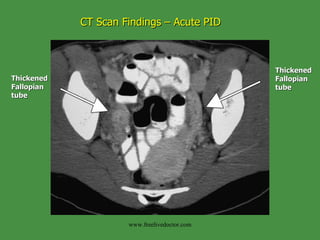
CT Scan Findings – Acute PID Thickened Fallopian tube Thickened Fallopian tube www.freelivedoctor.com
Diagnosis of PID – Additional considerations Enlargement or induration of one or both fallopian tubes, a tender pelvic mass, and direct or rebound abdominal tenderness may also be present. Temperature may be elevated but is normal in many cases  In general, clinicians should err on the side of over-diagnosing and treating milder cases. Some women have chlamydial infection of the upper genital tract without apparent clinical manifestations of PID (i.e., “silent salpingitis”). www.freelivedoctor.com
Treatment Strategies www.freelivedoctor.com
Treatment of PID Often unclear, based on cervical samples, which etiologic agents are causative in a given patient, thus: broad spectrum antimicrobial coverage should be  provided to cover gonorrhea, chlamydia, and anaerobes.  Patients should be advised to: Rest for 1 to 3 days or until symptoms have resolved or pain is significantly improved (pain score decreased by 50%) and to, Abstain from sexual intercourse until follow-up cultures are negative (usually a minimum of 2 weeks).  An IUD should be removed in moderate to severe cases of PID. www.freelivedoctor.com
Treatment of PID:  CDC Criteria for Hospitalization   Surgical emergencies such as appendicitis cannot be excluded Pregnancy No clinical response to oral antimicrobial therapy Inability to follow or intolerance of the outpatient oral regimen Severe illness, nausea and vomiting, or high fever Tubo-ovarian abscess   www.freelivedoctor.com
Outpatient Treatment of PID:  CDC Treatment Guidelines 2002 Regimen A Either of the following: - Ofloxacin 400 mg orally twice a day for 14 days - Levofloxacin 500 mg orally once daily, with or without Metronidazole  500 mg orally twice a day for 14 days. Regimen B Any of the following: - Ceftriaxone 250 mg IM once, - Cefoxitin or Cefotetan 2 g IM plus Probenecid, 1 g orally in a single  dose, [Other parenteral third-generation cephalosporins (e.g., ceftizoxime or cefotaxime),]   plus   - Doxycycline 100 mg orally twice a day for 14 days, with or without  Metronidazole 500 mg orally twice a day for 14 days.   www.freelivedoctor.com
Inpatient Treatment of PID:  CDC Treatment Guidelines 2002 Regimen A Either of the following: Cefotetan 2 g IV every 12 hours, Cefoxitin 2 g IV every 6 hours, plus Doxycycline 100 mg orally or IV every 12 hours. Regimen B Clindamycin 900 mg IV every 8 hours, plus  Gentamicin loading dose IV or IM (2 mg/kg of body weight) followed by a maintenance dose (1.5 mg/kg) every 8 hours.  Single daily dosing may be substituted. www.freelivedoctor.com
Inpatient Treatment of PID:  CDC Treatment Guidelines 2002 Alternative parenteral regimens Limited data supports the use of other parenteral regimens, but the following three regimens have been investigated in at least one clinical trial, and they have broad spectrum coverage. -   Ofloxacin 400 mg IV every 12 hours, -   Levofloxacin 500 mg IV once daily with or without  Metronidazole 500 mg IV every 8 hours, -   Ampicillan/Sulbactam 3 g IV every 6 hours plus  Doxycycline 100 mg orally or IV every 12 hours. www.freelivedoctor.com
Treatment of PID:  Additional Considerations In non-PID patients,  Chlamydia  and anaerobes in the cervix / vagina ascend to the endometrium in 45-60% of cases (only 20% for  N. gonorrhoeae ). Outpatient regimens are effective in eradicating  N. gonorrhoeae  from the endometrium and although  C. trachomatis  and anaerobic flora are variably reduced (<50%), they are not eliminated from the endometrium. Ofloxacin and clindamycin appear to be more effective in clearing the endometrium of anaerobic organisms than ceftriaxone and doxycycline, but (at 4 weeks) appear to be no different in improving histopathologic evidence of endometritis. www.freelivedoctor.com
Transvaginal Ultrasound Guided Aspiration Wayne State University Medical Center N=22 women; 27 pelvic abscesses (13 TOA, 14 POA) Mean age 30 Mean duration (d) - diagnosis to drainage 5.6/2.0 Mean diameter - 86mm Volume of purulent material 70-750cc Cultures positive in 51% “ Successful” in 25/27 cases www.freelivedoctor.com
Treatment of PID:  Follow-up The follow-up schedule should be individualized, but an ideal follow-up schedule would be: 1.   1 to 3 days after starting treatment: The patient’s therapy should be reevaluated in light of microbiological results at the 3-day follow-up visit. In patients who are not improved after 3 days of treatment, consideration should be given to hospitalizing the patient for parenteral therapy and further diagnostic evaluation. 2.   7 to 10 days after completing treatment: Repeat endocervical and rectal gonorrhea cultures (applies to both gonococcal and nongonococcal PID). Repeat endocervical chlamydia culture or NAAT (although a positive NAAT could be due to non-viable organisms after effective treatment). www.freelivedoctor.com
Treatment of PID:  Follow-up MANAGEMENT OF SEX PARTNERS Examination and urethral smear and culture for gonorrhea and NAAT for chlamydia for all sex partners within the preceding 4 weeks, regardless of symptoms.  Empirically treat partners with cefixime and doxycycline or azithromycin to cover  C. trachomatis  and  N. gonorrhoeae , regardless of the apparent etiology of the PID.  Cases should be reported to the state/local health department   www.freelivedoctor.com
www.freelivedoctor.com
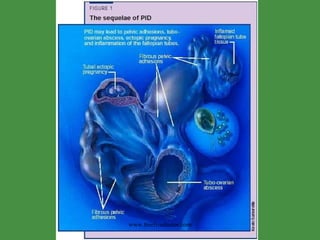
Sequelae of Pelvic Inflammatory Disease Reported sequelae occurs in up to 25% of cases - Infertility (12% to 50%) - Ectopic Pregnancy (6 to 10 fold increase) - Chronic Pelvic Pain (18%) - 100,000 surgical procedures Psychological Problems: devastating www.freelivedoctor.com
PID: Postmenopausal Women Exact mechanism unclear Direct extension from adjacent viscera Risks Uterine instrumentation Structural abnormalities (stenosis, polyps, etc) “ Forgotten” IUD Degenerating myomas Postmenopausal vaginal flora (anaerobic) www.freelivedoctor.com
PID: Postmenopausal Women Presenting symptoms include: Vaginal spotting, bleeding, pain, fever, nausea, change in bowel habits Majority have tuboovarian abscess – USG or CT Differential diagnosis Diverticulitis, appendicitis, bowel perforation Liberal use of laparoscopy www.freelivedoctor.com
PID: Postmenopausal Women Treatment Hospitalization IV antibiotics Remove IUD Early surgical intervention Mortality up to 25% www.freelivedoctor.com
PID:  Where Do We Go From Here? 1. Reduction in risk factors – effective behavioral interventions 2. Vaccine development (chlamydial and gonococcal infection) 3. Better screening a. More sensitive screening tests (specificity can be compromised) b. Broader based and more frequently applied screening programs 4. Better diagnostics a. Identification of STD agents more quickly –sensitive specific methods b. Identification of “silent PID” 5. Better evaluation of therapy using outcome measures to assess efficacy a. Short term eradication of infecting agents, evidence of tissue healing b. Long term - fertility www.freelivedoctor.com
Prevention of PID: Screening Adolescents Annual exams History of change of sex partners Every 6 months Prior to initiating contraception All women  <  25 for annual exams All women reporting signs & symptoms of vaginitis or PID www.freelivedoctor.com

Pelvic inflammatory disease

  • 1.
    Pelvic Inflammatory Diseasewww.freelivedoctor.com
  • 2.
    CREOG Educational Objectives: Pelvic Inflammatory Disease Describe the diagnostic criteria for PID List the common infectious agents implicated in PID Elicit a pertinent history from a patient suspected to have PID Perform a physical exam to confirm the diagnosis of PID www.freelivedoctor.com
  • 3.
    CREOG Educational Objectives: Pelvic Inflammatory Disease Describe the appropriate diagnostic tests to confirm PID, including: Indications for the tests How to perform the tests Interpretation of the results Endocervical swab for culture or nucleic acid probe Endometrial biopsy Laparoscopy www.freelivedoctor.com
  • 4.
    CREOG Educational Objectives: Pelvic Inflammatory Disease Treatment of PID with appropriate antimicrobial and surgical options Summarize the potential long-term effects [of PID] and counsel patients regarding the risks of further complications, including: Chronic pelvic pain Infertility Ectopic pregnancy www.freelivedoctor.com
  • 5.
    Pelvic Inflammatory DiseaseUpper genital tract infections that involve the endometrium (endometritis), fallopian tubes (salpingitis), and pelvic peritoneum (peritonitis). These infections result from ascending spread of lower genital tract infection www.freelivedoctor.com
  • 6.
    Infectious agents -STDs PID – Ascending infection www.freelivedoctor.com
  • 7.
  • 8.
    Pelvic Inflammatory DiseaseEstimates of the annual incidence of PID in the United States are: Between 9.5 to 14 cases per 1,000 fertile women, with a higher rate of 18 to 20 per 1,000 among women aged 15 to 24 years. As many as 1,000,000 cases of PID occur annually in the United States resulting in approximately 200,000 hospitalizations. Due to under reporting, incidence figures are unreliable www.freelivedoctor.com
  • 9.
    Risk Factors forPID: Adolescents Younger age at first intercourse Older sex partners Involvement with child protection agency Prior suicide attempt(s) Consumption of alcohol before sex Current chlamydia infection www.freelivedoctor.com
  • 10.
    Pelvic Inflammatory DiseaseThe most common etiologic agents in PID are: Neisseria gonorrhoeae , Chlamydia trachomatis Anaerobic bacterial species found in the vagina, particularly Bacteroides spp., Anaerobic gram-positive cocci, (Peptostreptococci), E. coli Mycoplasma hominis www.freelivedoctor.com
  • 11.
    Pelvic Inflammatory DiseaseThese organisms initially cause lower genital tract infections and then spread into the upper genital tract via the endometrium. Many cases - polymicrobial in etiology. Pure gonococcal or chlamydial PID is possible. The relative frequency of the various agents depends somewhat on the population tested, the site cultured (i.e., cervix, endometrium, or Fallopian tubes), the sensitivity of the diagnostic tests performed. www.freelivedoctor.com
  • 12.
    PID: Historyand Examination Symptoms suggestive of PID include: Abdominal pain (usually bilateral and in the lower quadrants), Dyspareunia, [abnormal] Vaginal discharge, Menometrorrhagia, Dysuria, Onset of pain in association with menses, Fever, and/or chills Nausea or vomiting www.freelivedoctor.com
  • 13.
    PID: Historyand Examination Women with endometritis may present with: vaginal discharge or intermenstrual bleeding, and have uterine tenderness on pelvic exam www.freelivedoctor.com
  • 14.
    PID: AdditionalConsiderations PID is difficult to accurately diagnose, in part, because manifestations range from mild to quite severe All young, sexually active women presenting with lower abdominal pain should be carefully evaluated for the presence of salpingitis and endometritis Routine bimanual and abdominal exams should be done on all women with an STD, since some women with salpingitis or endometritis will not complain of lower abdominal pain. www.freelivedoctor.com
  • 15.
    Diagnosis of AcutePID – CDC Criteria Minimum findings: Cervical motion tenderness and uterine and adnexal tenderness, along with WBCs seen on vaginal wet mount Additional supportive criteria to increase the specificity: - Oral temperature higher than 101ºF (38.3ºC) - Abnormal cervical or vaginal mucopurulent discharge - Elevated erythrocyte sedimentation rate - Elevated C-reactive protein level - Laboratory documentation of cervical infection with N gonorrhoeae or C trachomatis www.freelivedoctor.com
  • 16.
    Diagnosis of PID– Laboratory Tests 1. Gram-stained endocervical smear (to quantify PMNs/1000x field and to look for intracellular Gram-negative diplococci) 2. Endocervical NAAT or endocervical (and rectal) cultures for N. gonorrhoeae 3. Culture of endocervical swab or NAAT for endocervical swab or first void urine for C. trachomatis 4. Wet prep for WBCs 5. If menses is late or if the patient is not using reliable contraception - check pulse and blood pressure (supine and seated); - obtain serum or sensitive urine pregnancy test if ectopic pregnancy is suspected. www.freelivedoctor.com
  • 17.
    Diagnosis of PID:Association of LGTI Evaluation of vaginal discharge Underutilized Consistent predictor Criteria Inflammatory cells outnumber all other cellular elements Absence for WBCs plus clear mucous – high negative predictive value www.freelivedoctor.com
  • 18.
    Diagnosis of PID– Endometrial biopsy Prevalence and manifestations of endometritis among women with cervicitis. Paavonen J , Kiviat N , Brunham RC , Stevens CE , Kuo CC , Stamm WE , Miettinen A , Soules M , Eschenbach DA , Holmes KK . Thirty-five women referred from an STD Clinic, because of suspected cervicitis, studied for the presence of endometritis by transcervical endometrial biopsies and cervical and endometrial cultures. Fourteen (40%) of the patients had histologic evidence of endometritis. Findings that significantly correlated with endometritis included a history of intermenstrual vaginal bleeding, the presence of Chlamydia trachomatis, Neisseria gonorrhoeae, or Streptococcus agalactiae in the cervix, and the presence of serum antibodies to C. trachomatis or to Mycoplasma hominis. www.freelivedoctor.com
  • 19.
    Diagnosis of PID:Laparoscopy “ Gold Standard” University of Helsinki study: (N=33) Confirmed PID in 20 (61%) 11 (33%) other diseases 2 (6%) no evidence of disease Final diagnosis in 91% Lysis of adhesions, drainage, irrigation, extirpation www.freelivedoctor.com
  • 20.
  • 21.
    Laparoscopic findings –Acute PID Pyosalpinx www.freelivedoctor.com
  • 22.
  • 23.
    CT Scan Findings– Acute PID Thickened Fallopian tube Thickened Fallopian tube www.freelivedoctor.com
  • 24.
    Diagnosis of PID– Additional considerations Enlargement or induration of one or both fallopian tubes, a tender pelvic mass, and direct or rebound abdominal tenderness may also be present. Temperature may be elevated but is normal in many cases In general, clinicians should err on the side of over-diagnosing and treating milder cases. Some women have chlamydial infection of the upper genital tract without apparent clinical manifestations of PID (i.e., “silent salpingitis”). www.freelivedoctor.com
  • 25.
  • 26.
    Treatment of PIDOften unclear, based on cervical samples, which etiologic agents are causative in a given patient, thus: broad spectrum antimicrobial coverage should be provided to cover gonorrhea, chlamydia, and anaerobes. Patients should be advised to: Rest for 1 to 3 days or until symptoms have resolved or pain is significantly improved (pain score decreased by 50%) and to, Abstain from sexual intercourse until follow-up cultures are negative (usually a minimum of 2 weeks). An IUD should be removed in moderate to severe cases of PID. www.freelivedoctor.com
  • 27.
    Treatment of PID: CDC Criteria for Hospitalization Surgical emergencies such as appendicitis cannot be excluded Pregnancy No clinical response to oral antimicrobial therapy Inability to follow or intolerance of the outpatient oral regimen Severe illness, nausea and vomiting, or high fever Tubo-ovarian abscess www.freelivedoctor.com
  • 28.
    Outpatient Treatment ofPID: CDC Treatment Guidelines 2002 Regimen A Either of the following: - Ofloxacin 400 mg orally twice a day for 14 days - Levofloxacin 500 mg orally once daily, with or without Metronidazole 500 mg orally twice a day for 14 days. Regimen B Any of the following: - Ceftriaxone 250 mg IM once, - Cefoxitin or Cefotetan 2 g IM plus Probenecid, 1 g orally in a single dose, [Other parenteral third-generation cephalosporins (e.g., ceftizoxime or cefotaxime),] plus - Doxycycline 100 mg orally twice a day for 14 days, with or without Metronidazole 500 mg orally twice a day for 14 days. www.freelivedoctor.com
  • 29.
    Inpatient Treatment ofPID: CDC Treatment Guidelines 2002 Regimen A Either of the following: Cefotetan 2 g IV every 12 hours, Cefoxitin 2 g IV every 6 hours, plus Doxycycline 100 mg orally or IV every 12 hours. Regimen B Clindamycin 900 mg IV every 8 hours, plus Gentamicin loading dose IV or IM (2 mg/kg of body weight) followed by a maintenance dose (1.5 mg/kg) every 8 hours. Single daily dosing may be substituted. www.freelivedoctor.com
  • 30.
    Inpatient Treatment ofPID: CDC Treatment Guidelines 2002 Alternative parenteral regimens Limited data supports the use of other parenteral regimens, but the following three regimens have been investigated in at least one clinical trial, and they have broad spectrum coverage. - Ofloxacin 400 mg IV every 12 hours, - Levofloxacin 500 mg IV once daily with or without Metronidazole 500 mg IV every 8 hours, - Ampicillan/Sulbactam 3 g IV every 6 hours plus Doxycycline 100 mg orally or IV every 12 hours. www.freelivedoctor.com
  • 31.
    Treatment of PID: Additional Considerations In non-PID patients, Chlamydia and anaerobes in the cervix / vagina ascend to the endometrium in 45-60% of cases (only 20% for N. gonorrhoeae ). Outpatient regimens are effective in eradicating N. gonorrhoeae from the endometrium and although C. trachomatis and anaerobic flora are variably reduced (<50%), they are not eliminated from the endometrium. Ofloxacin and clindamycin appear to be more effective in clearing the endometrium of anaerobic organisms than ceftriaxone and doxycycline, but (at 4 weeks) appear to be no different in improving histopathologic evidence of endometritis. www.freelivedoctor.com
  • 32.
    Transvaginal Ultrasound GuidedAspiration Wayne State University Medical Center N=22 women; 27 pelvic abscesses (13 TOA, 14 POA) Mean age 30 Mean duration (d) - diagnosis to drainage 5.6/2.0 Mean diameter - 86mm Volume of purulent material 70-750cc Cultures positive in 51% “ Successful” in 25/27 cases www.freelivedoctor.com
  • 33.
    Treatment of PID: Follow-up The follow-up schedule should be individualized, but an ideal follow-up schedule would be: 1. 1 to 3 days after starting treatment: The patient’s therapy should be reevaluated in light of microbiological results at the 3-day follow-up visit. In patients who are not improved after 3 days of treatment, consideration should be given to hospitalizing the patient for parenteral therapy and further diagnostic evaluation. 2. 7 to 10 days after completing treatment: Repeat endocervical and rectal gonorrhea cultures (applies to both gonococcal and nongonococcal PID). Repeat endocervical chlamydia culture or NAAT (although a positive NAAT could be due to non-viable organisms after effective treatment). www.freelivedoctor.com
  • 34.
    Treatment of PID: Follow-up MANAGEMENT OF SEX PARTNERS Examination and urethral smear and culture for gonorrhea and NAAT for chlamydia for all sex partners within the preceding 4 weeks, regardless of symptoms. Empirically treat partners with cefixime and doxycycline or azithromycin to cover C. trachomatis and N. gonorrhoeae , regardless of the apparent etiology of the PID. Cases should be reported to the state/local health department www.freelivedoctor.com
  • 35.
  • 36.
    Sequelae of PelvicInflammatory Disease Reported sequelae occurs in up to 25% of cases - Infertility (12% to 50%) - Ectopic Pregnancy (6 to 10 fold increase) - Chronic Pelvic Pain (18%) - 100,000 surgical procedures Psychological Problems: devastating www.freelivedoctor.com
  • 37.
    PID: Postmenopausal WomenExact mechanism unclear Direct extension from adjacent viscera Risks Uterine instrumentation Structural abnormalities (stenosis, polyps, etc) “ Forgotten” IUD Degenerating myomas Postmenopausal vaginal flora (anaerobic) www.freelivedoctor.com
  • 38.
    PID: Postmenopausal WomenPresenting symptoms include: Vaginal spotting, bleeding, pain, fever, nausea, change in bowel habits Majority have tuboovarian abscess – USG or CT Differential diagnosis Diverticulitis, appendicitis, bowel perforation Liberal use of laparoscopy www.freelivedoctor.com
  • 39.
    PID: Postmenopausal WomenTreatment Hospitalization IV antibiotics Remove IUD Early surgical intervention Mortality up to 25% www.freelivedoctor.com
  • 40.
    PID: WhereDo We Go From Here? 1. Reduction in risk factors – effective behavioral interventions 2. Vaccine development (chlamydial and gonococcal infection) 3. Better screening a. More sensitive screening tests (specificity can be compromised) b. Broader based and more frequently applied screening programs 4. Better diagnostics a. Identification of STD agents more quickly –sensitive specific methods b. Identification of “silent PID” 5. Better evaluation of therapy using outcome measures to assess efficacy a. Short term eradication of infecting agents, evidence of tissue healing b. Long term - fertility www.freelivedoctor.com
  • 41.
    Prevention of PID:Screening Adolescents Annual exams History of change of sex partners Every 6 months Prior to initiating contraception All women < 25 for annual exams All women reporting signs & symptoms of vaginitis or PID www.freelivedoctor.com