CLINICAL MANAGEMENT OF DIABETES DURING PREGNANCY Antenatal, Intrapartum  and Postpartum Perspectives Chukwuma I. Onyeije, M.D. Atlanta Perinatal Associates
BACKGROUND:  WHAT IS DIABETES? A defect in body energy regulation and utilization Causes: Insulin deficiency  Insulin resistance End result: Elevated blood sugar Impact of elevated blood sugar: Pregnancy complications Multi-organ dysfunction Excess mortality
Epidemiology and Diagnosis
Classification of Diabetes Adapted from The Expert Committee on the Diagnosis and Classification of Diabetes Mellitus.  Diabetes Care.  1997;20:1183-1197.  Genetic defects in b-cell function,  Pancreatic disease,  Endocrinopathies,  Drug- or chemical- induced, and other rare forms Other types Insulin resistance with b-cell dysfunction Gestational Insulin resistance and relative  insulin deficiency Type 2 b-cell destruction with lack of insulin Type 1
INSULIN PHYSIOLOGY:  REGULATION OF BLOOD SUGAR
TYPE 1 DIABETES: INSULIN DEFICIENCY  - cell destruction with lack of insulin
TYPE 2 DIABETES: INSULIN RESISTANCE Insulin Resistance
GESTATIONAL DIABETES:  INSULIN DEFICIENCY AND INSULIN RESISTANCE Insulin Resistance Insulin Deficiency
Gestational Diabetes Screening High risk Marked obesity Previous unexplained fetal demise Personal history of GDM Glucosuria Strong family history of diabetes Low risk Age <25 years Normal weight before pregnancy Ethnicity with low prevalence No known first degree relatives with diabetes No history of abnormal glucose tolerance No history of poor obstetric outcome
Gestational Diabetes Screening Universal screening is advisable 1 hour 50 gm glucose load (GCT)‏ Venous plasma glucose cut-offs 140 mg/dl 135 mg/dl 130 mg/dl
SCREENING THRESHOLDS FOR GESTATIONAL DIABETES MELLITUS WITH THE 50-g ORALGLUCOSE-CHALLENGE TEST 90% 20-25% 130 80% 14-18% 140 SENSITIVITY PATIENTS SCREENING POSITIVE THRESHOLD
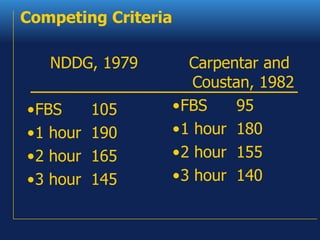
Diagnosis of Gestational Diabetes Three Hour 100 gm glucose tolerance test (GTT)‏ Not necessary if GCT is >200mg/dl on screening Two abnormal values required for the diagnosis of gestational diabetes  Currently two diagnostic criteria acceptable
Competing Criteria NDDG, 1979 FBS  105 1 hour  190 2 hour  165 3 hour  145 Carpentar and Coustan, 1982 FBS  95 1 hour  180 2 hour  155 3 hour  140
Diabetes Trends Among  Adults in the U.S. Source: CDC, Behavioral Risk Factor Surveillance System.  1990 2000 1997-1998 No Data Less than 4% 4% to 6% Above 6%
 
Pathophysiology
PRINCIPLE DANGERS GESTATIONAL DIABETES: Fetal hyperinsulinemia PREGESTATIONAL DIABETES: Fetal Anomalies
Normal Glucose Regulation in Pregnancy The pregnant patient has a tendency to develop HYPOGLYCEMIA between meals  Related to fetal demand Placental steroids cause increased tissue insulin resistance  They are “DIABETOGENIC” Insulin production INCREASES in normal pregnancy By 30%
RECALL: PATHOLOGIC CHANGES IN GDM Insulin Resistance Insulin Deficiency
Effects of Hyperglycemia in GDM Fetal hyperglycemia fetal hyperinsulinemia abnormal fetal growth impaired fetal well-being
Fetal Hyperinsulinemia Promotes storage of excess nutrients  Net Effect: macrosomia Increased catabolism of excess nutrients and increased energy usage  Net Effect: Decreased fetal oxygen storage and episodic fetal hypoxia Episodic fetal hypoxia leads to increased catecholamines causing:  Fetal hypertension Cardiac remodelling and hypertrophy Increased erythropoietin, RBC’s, hematocrit  Poor fetal circulation and hyperbilirubinemia Stillbirth (?)‏
The Impact of Fetal Macrosomnia Increased hyperbilirubinemia Increased hypoglycemia Increased acidosis Increased birth trauma Macrosomic children are more likely to develop glucose intolerance in adulthood
Congenital Anomalies and Diabetic Control Risk for Congenital Anomalies at various levels of Hemoglobin A1C Critical periods - 3-6 weeks post conception Importance of pre-conceptional metabolic care
Congenital Anomalies with Pregestational Diabetes Cardiac defects x18 8.5% CNS defects x16 5.3% Anencephaly x 13 Spina Bifida x 20 All Anomalies x 8 18.4% Background major defects 3-4%
Perinatal Risks for All Diabetic Pregnancies: Mortality/Morbidity Miscarriage IUGR Macrosomia Birth Injury Stillbirth
Neonatal Risks for All Diabetic Pregnancies: Morbidity and Mortality Polycythemia and hyperviscosity Neonatal hypoglycemia Neonatal hypocalcemia Hyperbilirubinemia Hypertrophic and congestive cardiomyopathy RDS Childhood impaired glucose tolerance
Maternal Complications Chronic hypertension Pre-eclampsia Diabetic ketoacidosis Maternal hypoglycemia Maternal trauma Higher C Section rate Retinal disease/renal disease not affected significantly by pregnancy
CARE FOR THE PATIENT WITH DIABETES
Pre-Pregnancy Management Preconceptional care PRECONCEPTION CARE BEGINS AT THE END OF A PREGNANCY WITH GDM Tight glucose control (HbA1c)‏ Assessment and treatment of associated medical problems Hypertension,  Renal disease,  Retinal disease Heart disease Folic acid Assessment of family, financial and personal resources to help achieve a successful pregnancy
FIRST PERINATAL VISIT  or UPON HOSPITALIZATION Review routine prenatal lab tests Baseline 24 hour urinalysis for protein and creatinine clearance Baseline retinal exam - for Type 1 Diabetics EKG - for Type 1 Diabetics Thyroid function tests - for Type 1 Diabetics Hemoglobin A1C Fetal echocardiogram for pregestational diabetics
Antepartum Gestational Diabetes Care Dietary advice Glucose monitoring (5 times per day)‏ Insulin therapy if necessary  Oral Hypoglycemic agents Frequent visits to monitor glucose control Ultrasound monitoring of fetal growth Mode of Delivery: Based on obstetric issues Timing of Delivery: Based on glucose control
What is an ADA diet? Avoidance of large meals with high percentage of simple carbohydrates Three small meals with three snacks are preferred Low glycemic index foods release calories from the gut slowly and improve metabolic control Caloric content: 35 calories/Kg Ideal body weight (or 15 calories/pound IBW)‏ No less than 1800 calories and no more than 2800 calories “ Eyeball Technique” Small patient 1800 calories Medium patient 2200 calories Large patient 2400 calorie
What is a “Low” Glycemic Index Glycemic Index (GI): Compares equal quantities of carbohydrate in foods Is a measure of the effect on blood glucose levels over a 2 hr period Provides a measure of carbohydrate  quality . Expressed as a percentage Time GI = 30 GI = 100 BGL BGL
‘ Traditional’ starchy foods have a lower GI Barley  Legumes/beans  Multigrain ‘Specialty’ breads  Mueslix   Porridge oats 33 30’s 40’s 50’s 50’s Foster-Powell K, Holt SHA, and Brand-Miller JC. International table of glycemic index and glycemic load values:2002. Am J Clin Nutr. 2002; 76 (1): 5-56.
“ Sugary” foods have a intermediate-low GI Soft drinks Flavoured milk (low fat) Yogurt (sweetened) Ice cream (low fat) 60’s 34 30-40 50’s Foster-Powell K, Holt SHA, and Brand-Miller JC. International table of glycemic index and glycemic load values:2002. Am J Clin Nutr. 2002; 76 (1): 5-56.
Modern starchy foods have a high GI Potatoes Cornflakes Rice crispies Wholegrain bread Crackers Rice (most types)‏ 85 77 85  70 81 83 Foster-Powell K, Holt SHA, and Brand-Miller JC. International table of glycemic index and glycemic load values:2002. Am J Clin Nutr. 2002; 76 (1): 5-56.
HOME GLUCOSE MONITORING Fasting and 2 hour post-prandial Pre-meal values only if sliding scale short acting insulin  coverage is used Early AM value if hypoglycemia suspected Assure that glucose meter is calibrated
INDICATIONS FOR HOSPITALIZATION Persistent nausea and vomiting Significant maternal infection DKA Poor control/compliance  Preterm labor
Intensive Inpatient Management: The APA Hybrid Protocol For poorly controlled diabetic patients admitted  for rapid control.  Empiric insulin with the patient’s current standing dose: Targets adequate glycemic control  Fasting values:  Less than 100 mg/dl 2 hour postparandial values:  Less than 120 mg/dl  Avoidance of hypoglycemia, ketonuria, and hyperglycemia
Intensive Inpatient Management: The APA Hybrid Protocol Begin 2200 to 2400 calorie ADA diet.  Obtain fingerstick every 2 hours for 12-24 hours Administer HUMALOG INSULIN for sliding scale Retake blood sugar at 2 hours after EACH sliding dose noted below and repeat sliding scale dose of insulin based on FSG.  Adjust Insulin after 24 hours
Intensive Inpatient Management: The APA Hybrid Protocol 2 hours 14 Units 220-260 2 hours 16 Units >260 2 hours 12 Units 200-220 2 hours 10 Units 180-200 2 hours 6 Units 161-180 2 hours 4 Units 140-1600 4-6 hours Hold Humalog insulin < 140 Recheck Blood sugar Administer the following dosage of humalog insulin Blood sugar value
Patient CH – Before Hybrid Approach Patient CH – After Hybrid Approach
Intrapartum management ABSOLUTE REQUIREMENTS: Dextrose containing intravenous fluids Insulin  Hourly glucose monitoring Continuous fetal heart rate monitoring Continuous tocodynametry Manage labor as normal
THE APA INSULIN DRIP PROTOCOL INTRAVENOUS FLUID MAINLINE: D5W @ 125 cc/hr  INSULIN DRIP: Initially Check Fingerstick every hour MIX 100 Units Regular insulin in 500 cc NS (0.2  U/cc)‏ TITRATE INFUSION AS FOLLOWS: After Fingerstick has been between 80-140 x >2 hours, decrease frequency of fingersticks to every 2 hours then every 4 hours. 2.5 U/hr 12.5 cc/hr* FS> 220 2.0 U/hr 10 cc/hr* FS= 181-220 1.5 U/hr 7.5 cc/hr FS= 141-180 1.0 U/hr 5.0 cc/hr FS=101-140 0.5 U/hr 2.5 cc/hr FS= 80-100 0 U/hr Turn off drip FS= <80 Units per hour Drip Rate Fingerstick Value
HYPOGLYCEMIA DURING AN INSULIN DRIP For Glucose <60 Turn off Insulin drip for 30 minutes  Continue D5W (or D5LR) at 100 – 125 cc/hr Recheck Glucose after 30 minutes If blood glucose on recheck  is still <60  Give 25 ml of D50 IV (or 10-12 grams glucose)  Recheck  Blood Glucose  every 30 minutes  Restart insulin when glucose >101 mg/dl
INSULIN DRIP FOR THE INSULIN RESISTANT PATIENT Method for poorly controlled, morbidly obese or noncompliant patients with gestational diabetes 50% of total daily insulin dosage divided by 24 hours provides initial rate for insulin drip. EXAMPLE: Ms. Jones current insulin regimen  AM: 80units NPH 45 units Regular insulin PM: 60 units NPH, 55 units Regular insulin Total daily dosage= 240 units per day. ½ of 240 units = 120 units 120 units / 24 hours =  5 units per hour as initial dosage.
Management - Postpartum Use pre pregnancy insulin levels when on diet and monitor. If GDM monitor sugars only  Immediate postpartum goal is fingerstick < 200 GDM – Repeat GTT at 6 weeks postpartum GDM - long term risk of NIDDM Contraception
THANK YOU !
EXTRA SLIDES
 
INSULIN SECRETION Rising blood glucose levels.  After the uptake of glucose by the GLUT2 transporter there is  Glycolytic phosphorylation of glucose causing A rise in the ATP:ADP ratio, which then Inactivates the potassium channel that  Depolarizes the membrane, causing  Calcium channel to open up allowing calcium ions to flow inward. The rise in levels of calcium leads to the  Release of insulin from their storage granule.   1 2 3 4 5 6 7 8
INSULIN ACTION Insulin-mediated glucose uptake  begins when Insulin binds to the insulin receptor and Induces a signal transduction cascade which  Allows the glucose transporter (GLUT4) to transport glucose into the cell.   1 2 3
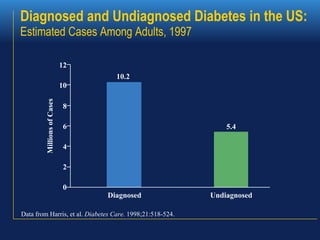
Diagnosed and Undiagnosed Diabetes in the US: Estimated Cases Among Adults, 1997 Data from Harris, et al.  Diabetes Care.  1998;21:518-524. 0 2 4 6 8 10 12 Undiagnosed Diagnosed 10.2 5.4 Millions of Cases
Glucose Tolerance Categories:  NONPREGNANT Patients Adapted from The Expert Committee on the Diagnosis and Classification of Diabetes Mellitus.  Diabetes Care.  1997;20:1183-1197. FPG 126 mg/dL 110 mg/dL Impaired Fasting Glucose Normal 2-Hour PG on OGTT 200 mg/dL 140 mg/dL Diabetes Mellitus Impaired Glucose Tolerance Normal Diabetes Mellitus
FOLIC ACID All women of reproductive age should consume at least 0.4 mg of folic acid High risk women should consume 4 mg/day This reduces the risk of neural tube defects Newer evidence suggests a lower risk of facial clefting and congenital heart disease as well

Gestational Diabetes

  • 1.
    CLINICAL MANAGEMENT OFDIABETES DURING PREGNANCY Antenatal, Intrapartum and Postpartum Perspectives Chukwuma I. Onyeije, M.D. Atlanta Perinatal Associates
  • 2.
    BACKGROUND: WHATIS DIABETES? A defect in body energy regulation and utilization Causes: Insulin deficiency Insulin resistance End result: Elevated blood sugar Impact of elevated blood sugar: Pregnancy complications Multi-organ dysfunction Excess mortality
  • 3.
  • 4.
    Classification of DiabetesAdapted from The Expert Committee on the Diagnosis and Classification of Diabetes Mellitus. Diabetes Care. 1997;20:1183-1197. Genetic defects in b-cell function, Pancreatic disease, Endocrinopathies, Drug- or chemical- induced, and other rare forms Other types Insulin resistance with b-cell dysfunction Gestational Insulin resistance and relative insulin deficiency Type 2 b-cell destruction with lack of insulin Type 1
  • 5.
    INSULIN PHYSIOLOGY: REGULATION OF BLOOD SUGAR
  • 6.
    TYPE 1 DIABETES:INSULIN DEFICIENCY  - cell destruction with lack of insulin
  • 7.
    TYPE 2 DIABETES:INSULIN RESISTANCE Insulin Resistance
  • 8.
    GESTATIONAL DIABETES: INSULIN DEFICIENCY AND INSULIN RESISTANCE Insulin Resistance Insulin Deficiency
  • 9.
    Gestational Diabetes ScreeningHigh risk Marked obesity Previous unexplained fetal demise Personal history of GDM Glucosuria Strong family history of diabetes Low risk Age <25 years Normal weight before pregnancy Ethnicity with low prevalence No known first degree relatives with diabetes No history of abnormal glucose tolerance No history of poor obstetric outcome
  • 10.
    Gestational Diabetes ScreeningUniversal screening is advisable 1 hour 50 gm glucose load (GCT)‏ Venous plasma glucose cut-offs 140 mg/dl 135 mg/dl 130 mg/dl
  • 11.
    SCREENING THRESHOLDS FORGESTATIONAL DIABETES MELLITUS WITH THE 50-g ORALGLUCOSE-CHALLENGE TEST 90% 20-25% 130 80% 14-18% 140 SENSITIVITY PATIENTS SCREENING POSITIVE THRESHOLD
  • 12.
    Diagnosis of GestationalDiabetes Three Hour 100 gm glucose tolerance test (GTT)‏ Not necessary if GCT is >200mg/dl on screening Two abnormal values required for the diagnosis of gestational diabetes Currently two diagnostic criteria acceptable
  • 13.
    Competing Criteria NDDG,1979 FBS 105 1 hour 190 2 hour 165 3 hour 145 Carpentar and Coustan, 1982 FBS 95 1 hour 180 2 hour 155 3 hour 140
  • 14.
    Diabetes Trends Among Adults in the U.S. Source: CDC, Behavioral Risk Factor Surveillance System. 1990 2000 1997-1998 No Data Less than 4% 4% to 6% Above 6%
  • 15.
  • 16.
  • 17.
    PRINCIPLE DANGERS GESTATIONALDIABETES: Fetal hyperinsulinemia PREGESTATIONAL DIABETES: Fetal Anomalies
  • 18.
    Normal Glucose Regulationin Pregnancy The pregnant patient has a tendency to develop HYPOGLYCEMIA between meals Related to fetal demand Placental steroids cause increased tissue insulin resistance They are “DIABETOGENIC” Insulin production INCREASES in normal pregnancy By 30%
  • 19.
    RECALL: PATHOLOGIC CHANGESIN GDM Insulin Resistance Insulin Deficiency
  • 20.
    Effects of Hyperglycemiain GDM Fetal hyperglycemia fetal hyperinsulinemia abnormal fetal growth impaired fetal well-being
  • 21.
    Fetal Hyperinsulinemia Promotesstorage of excess nutrients Net Effect: macrosomia Increased catabolism of excess nutrients and increased energy usage Net Effect: Decreased fetal oxygen storage and episodic fetal hypoxia Episodic fetal hypoxia leads to increased catecholamines causing: Fetal hypertension Cardiac remodelling and hypertrophy Increased erythropoietin, RBC’s, hematocrit Poor fetal circulation and hyperbilirubinemia Stillbirth (?)‏
  • 22.
    The Impact ofFetal Macrosomnia Increased hyperbilirubinemia Increased hypoglycemia Increased acidosis Increased birth trauma Macrosomic children are more likely to develop glucose intolerance in adulthood
  • 23.
    Congenital Anomalies andDiabetic Control Risk for Congenital Anomalies at various levels of Hemoglobin A1C Critical periods - 3-6 weeks post conception Importance of pre-conceptional metabolic care
  • 24.
    Congenital Anomalies withPregestational Diabetes Cardiac defects x18 8.5% CNS defects x16 5.3% Anencephaly x 13 Spina Bifida x 20 All Anomalies x 8 18.4% Background major defects 3-4%
  • 25.
    Perinatal Risks forAll Diabetic Pregnancies: Mortality/Morbidity Miscarriage IUGR Macrosomia Birth Injury Stillbirth
  • 26.
    Neonatal Risks forAll Diabetic Pregnancies: Morbidity and Mortality Polycythemia and hyperviscosity Neonatal hypoglycemia Neonatal hypocalcemia Hyperbilirubinemia Hypertrophic and congestive cardiomyopathy RDS Childhood impaired glucose tolerance
  • 27.
    Maternal Complications Chronichypertension Pre-eclampsia Diabetic ketoacidosis Maternal hypoglycemia Maternal trauma Higher C Section rate Retinal disease/renal disease not affected significantly by pregnancy
  • 28.
    CARE FOR THEPATIENT WITH DIABETES
  • 29.
    Pre-Pregnancy Management Preconceptionalcare PRECONCEPTION CARE BEGINS AT THE END OF A PREGNANCY WITH GDM Tight glucose control (HbA1c)‏ Assessment and treatment of associated medical problems Hypertension, Renal disease, Retinal disease Heart disease Folic acid Assessment of family, financial and personal resources to help achieve a successful pregnancy
  • 30.
    FIRST PERINATAL VISIT or UPON HOSPITALIZATION Review routine prenatal lab tests Baseline 24 hour urinalysis for protein and creatinine clearance Baseline retinal exam - for Type 1 Diabetics EKG - for Type 1 Diabetics Thyroid function tests - for Type 1 Diabetics Hemoglobin A1C Fetal echocardiogram for pregestational diabetics
  • 31.
    Antepartum Gestational DiabetesCare Dietary advice Glucose monitoring (5 times per day)‏ Insulin therapy if necessary Oral Hypoglycemic agents Frequent visits to monitor glucose control Ultrasound monitoring of fetal growth Mode of Delivery: Based on obstetric issues Timing of Delivery: Based on glucose control
  • 32.
    What is anADA diet? Avoidance of large meals with high percentage of simple carbohydrates Three small meals with three snacks are preferred Low glycemic index foods release calories from the gut slowly and improve metabolic control Caloric content: 35 calories/Kg Ideal body weight (or 15 calories/pound IBW)‏ No less than 1800 calories and no more than 2800 calories “ Eyeball Technique” Small patient 1800 calories Medium patient 2200 calories Large patient 2400 calorie
  • 33.
    What is a“Low” Glycemic Index Glycemic Index (GI): Compares equal quantities of carbohydrate in foods Is a measure of the effect on blood glucose levels over a 2 hr period Provides a measure of carbohydrate quality . Expressed as a percentage Time GI = 30 GI = 100 BGL BGL
  • 34.
    ‘ Traditional’ starchyfoods have a lower GI Barley Legumes/beans Multigrain ‘Specialty’ breads Mueslix Porridge oats 33 30’s 40’s 50’s 50’s Foster-Powell K, Holt SHA, and Brand-Miller JC. International table of glycemic index and glycemic load values:2002. Am J Clin Nutr. 2002; 76 (1): 5-56.
  • 35.
    “ Sugary” foodshave a intermediate-low GI Soft drinks Flavoured milk (low fat) Yogurt (sweetened) Ice cream (low fat) 60’s 34 30-40 50’s Foster-Powell K, Holt SHA, and Brand-Miller JC. International table of glycemic index and glycemic load values:2002. Am J Clin Nutr. 2002; 76 (1): 5-56.
  • 36.
    Modern starchy foodshave a high GI Potatoes Cornflakes Rice crispies Wholegrain bread Crackers Rice (most types)‏ 85 77 85 70 81 83 Foster-Powell K, Holt SHA, and Brand-Miller JC. International table of glycemic index and glycemic load values:2002. Am J Clin Nutr. 2002; 76 (1): 5-56.
  • 37.
    HOME GLUCOSE MONITORINGFasting and 2 hour post-prandial Pre-meal values only if sliding scale short acting insulin coverage is used Early AM value if hypoglycemia suspected Assure that glucose meter is calibrated
  • 38.
    INDICATIONS FOR HOSPITALIZATIONPersistent nausea and vomiting Significant maternal infection DKA Poor control/compliance Preterm labor
  • 39.
    Intensive Inpatient Management:The APA Hybrid Protocol For poorly controlled diabetic patients admitted for rapid control. Empiric insulin with the patient’s current standing dose: Targets adequate glycemic control Fasting values: Less than 100 mg/dl 2 hour postparandial values: Less than 120 mg/dl Avoidance of hypoglycemia, ketonuria, and hyperglycemia
  • 40.
    Intensive Inpatient Management:The APA Hybrid Protocol Begin 2200 to 2400 calorie ADA diet. Obtain fingerstick every 2 hours for 12-24 hours Administer HUMALOG INSULIN for sliding scale Retake blood sugar at 2 hours after EACH sliding dose noted below and repeat sliding scale dose of insulin based on FSG. Adjust Insulin after 24 hours
  • 41.
    Intensive Inpatient Management:The APA Hybrid Protocol 2 hours 14 Units 220-260 2 hours 16 Units >260 2 hours 12 Units 200-220 2 hours 10 Units 180-200 2 hours 6 Units 161-180 2 hours 4 Units 140-1600 4-6 hours Hold Humalog insulin < 140 Recheck Blood sugar Administer the following dosage of humalog insulin Blood sugar value
  • 42.
    Patient CH –Before Hybrid Approach Patient CH – After Hybrid Approach
  • 43.
    Intrapartum management ABSOLUTEREQUIREMENTS: Dextrose containing intravenous fluids Insulin Hourly glucose monitoring Continuous fetal heart rate monitoring Continuous tocodynametry Manage labor as normal
  • 44.
    THE APA INSULINDRIP PROTOCOL INTRAVENOUS FLUID MAINLINE: D5W @ 125 cc/hr INSULIN DRIP: Initially Check Fingerstick every hour MIX 100 Units Regular insulin in 500 cc NS (0.2 U/cc)‏ TITRATE INFUSION AS FOLLOWS: After Fingerstick has been between 80-140 x >2 hours, decrease frequency of fingersticks to every 2 hours then every 4 hours. 2.5 U/hr 12.5 cc/hr* FS> 220 2.0 U/hr 10 cc/hr* FS= 181-220 1.5 U/hr 7.5 cc/hr FS= 141-180 1.0 U/hr 5.0 cc/hr FS=101-140 0.5 U/hr 2.5 cc/hr FS= 80-100 0 U/hr Turn off drip FS= <80 Units per hour Drip Rate Fingerstick Value
  • 45.
    HYPOGLYCEMIA DURING ANINSULIN DRIP For Glucose <60 Turn off Insulin drip for 30 minutes Continue D5W (or D5LR) at 100 – 125 cc/hr Recheck Glucose after 30 minutes If blood glucose on recheck is still <60 Give 25 ml of D50 IV (or 10-12 grams glucose) Recheck Blood Glucose every 30 minutes Restart insulin when glucose >101 mg/dl
  • 46.
    INSULIN DRIP FORTHE INSULIN RESISTANT PATIENT Method for poorly controlled, morbidly obese or noncompliant patients with gestational diabetes 50% of total daily insulin dosage divided by 24 hours provides initial rate for insulin drip. EXAMPLE: Ms. Jones current insulin regimen AM: 80units NPH 45 units Regular insulin PM: 60 units NPH, 55 units Regular insulin Total daily dosage= 240 units per day. ½ of 240 units = 120 units 120 units / 24 hours = 5 units per hour as initial dosage.
  • 47.
    Management - PostpartumUse pre pregnancy insulin levels when on diet and monitor. If GDM monitor sugars only Immediate postpartum goal is fingerstick < 200 GDM – Repeat GTT at 6 weeks postpartum GDM - long term risk of NIDDM Contraception
  • 48.
  • 49.
  • 50.
  • 51.
    INSULIN SECRETION Risingblood glucose levels. After the uptake of glucose by the GLUT2 transporter there is Glycolytic phosphorylation of glucose causing A rise in the ATP:ADP ratio, which then Inactivates the potassium channel that Depolarizes the membrane, causing Calcium channel to open up allowing calcium ions to flow inward. The rise in levels of calcium leads to the Release of insulin from their storage granule. 1 2 3 4 5 6 7 8
  • 52.
    INSULIN ACTION Insulin-mediatedglucose uptake begins when Insulin binds to the insulin receptor and Induces a signal transduction cascade which Allows the glucose transporter (GLUT4) to transport glucose into the cell. 1 2 3
  • 53.
    Diagnosed and UndiagnosedDiabetes in the US: Estimated Cases Among Adults, 1997 Data from Harris, et al. Diabetes Care. 1998;21:518-524. 0 2 4 6 8 10 12 Undiagnosed Diagnosed 10.2 5.4 Millions of Cases
  • 54.
    Glucose Tolerance Categories: NONPREGNANT Patients Adapted from The Expert Committee on the Diagnosis and Classification of Diabetes Mellitus. Diabetes Care. 1997;20:1183-1197. FPG 126 mg/dL 110 mg/dL Impaired Fasting Glucose Normal 2-Hour PG on OGTT 200 mg/dL 140 mg/dL Diabetes Mellitus Impaired Glucose Tolerance Normal Diabetes Mellitus
  • 55.
    FOLIC ACID Allwomen of reproductive age should consume at least 0.4 mg of folic acid High risk women should consume 4 mg/day This reduces the risk of neural tube defects Newer evidence suggests a lower risk of facial clefting and congenital heart disease as well

Editor's Notes

  • #4 Slide 1
  • #5 Slide 3 Etiologic Classification of Diabetes Mellitus Diabetes mellitus is best described as a group of metabolic diseases character-ized by hyperglycemia. The hyperglycemia may be the result of defects in insulin secretion or insulin sensitivity, or both. Two major forms of diabetes are recognized in the most recent classification scheme, which was developed by The Expert Committee on the Diagnosis and Classification of Diabetes Mellitus, an international group, and has been adopted by both the American Diabetes Association and the World Health Organization. Type 1 diabetes includes almost all cases that are marked by destruction of the pancreatic islet  -cells. Type 2 diabetes includes those cases that result from insulin resistance accompanied by a defect in insulin secretion. Other specific forms of diabetes, which affect far fewer patients than the two major forms, include genetic defects of  -cell function, genetic defects in insulin sensitivity, diseases of the exocrine pancreas, endocrinopathies, drug- or chemical-induced infections, uncommon immune-mediated conditions, and other genetic conditions. Gestational diabetes mellitus is a fourth type in this new classification system. The Expert Committee on the Diagnosis and Classification of Diabetes Mellitus. Report of the Expert Committee on the Diagnosis and Classification of Diabetes Mellitus . Diabetes Care . 1997;20:1183-1197.
  • #17 Slide 1
  • #29 Slide 1
  • #54 Slide 8 Diagnosed and Undiagnosed Diabetes in the US : Estimated Cases Among Adults, 1997 Using the data collected in the Third National Health and Nutrition Examination Survey (NHANES III), 1988-1994, and applying the new diagnostic criteria for diabetes (see Slides 4 and 5), estimates for the prevalence of diabetes (diagnosed and undiagnosed) were developed for the 1997 adult US population. It was estimated that 10.2 million adults (aged  20 years) had diagnosed diabetes (fasting plasma glucose [FPG]  126 mg/dL) and 5.4 million had undiagnosed diabetes (FPG  110 mg/dL and &lt;126 mg/dL). Thus, in the US in 1997, approximately 35% of adults with diabetes had undiagnosed disease. Harris M, Flegal K, Cowie C, et al. Prevalence of diabetes, impaired fasting glucose, and impaired glucose tolerance in U.S. adults. Diabetes Care . 1998;21:518-524.
  • #55 Slide 4 Glucose Tolerance Categories Either the fasting plasma glucose (FPG) test or the 2-hour plasma glucose (PG) determination during the oral glucose tolerance test (OGTT) may be used to determine glucose tolerance status. According to the most recent diagnostic criteria established by The Expert Committee on the Diagnosis and Class-ification of Diabetes Mellitus, an FPG value  126 mg/dL (  7.0 mmol/L) or a 2-hour plasma glucose value  200 mg/dL (  11.1 mmol/L) are the new cutoff points for the diagnosis of diabetes. The cutoff points for the intermediate stage of hyperglycemia denoted by the terms impaired fasting glucose (IFG) and impaired glucose tolerance (IGT) have been adjusted to conform to the new diagnostic criteria for diabetes mellitus. IFG is now defined by FPG  110 mg/dL (  6.1 mmol/L) and &lt;126 mg/dL (&lt;7.0 mmol/L), and IGT is defined by 2-hour PG measurements  140 mg/dL (  7.8 mmol/L) and &lt;200 mg/dL (&lt;11.1 mmol/L). The Expert Committee on the Diagnosis and Classification of Diabetes Mellitus. Report of the Expert Committee on the Diagnosis and Classification of Diabetes Mellitus. Diabetes Care . 1997;20:1183-1197.