Pedagogical Concerns
in
Science Learning
Transmissive rather than
participative and owning
the process of learning
Hence, it is not surprising that many
students in considering the senior
secondary years are saying: Why
should I continue studying science
subjects when there are more
interactive, interesting and less
difficult ones to study? (Fensham
2008)
• Problem solving & Creativity
• Explorative & Investigative learning
• Project based learning
• Activity based learning
• Experiment
• Sharing and Cooperative learning
• Learning styles oriented
• Concepts
• Methods
• Language and readability index
• Process of learning– Process skills and
metacognition
• Contextualizing
• Reflection
• Examination
• Content learning rather than process,
method, strategy for knowledge creation
• Drill and rote learning for scoring rather
than observation, design, analysis,
questioning, argumentation, discussion,
debate and process skills in general
• Vertical continuity, horizontal integration
is missing so is with life connection
• Stock of knowledge , but missing
building of scientific habits, attitudes,
interest, values (spirit of observation,
Calmness, Self control, practice of
looking for the causes of things, Order
Caution in making claims, admiration of
nature, modesty, tolerance and so on
(Comas Camps 1925)
Research
• Theoretical,
• Pedagogical,
• Action,
• Applied
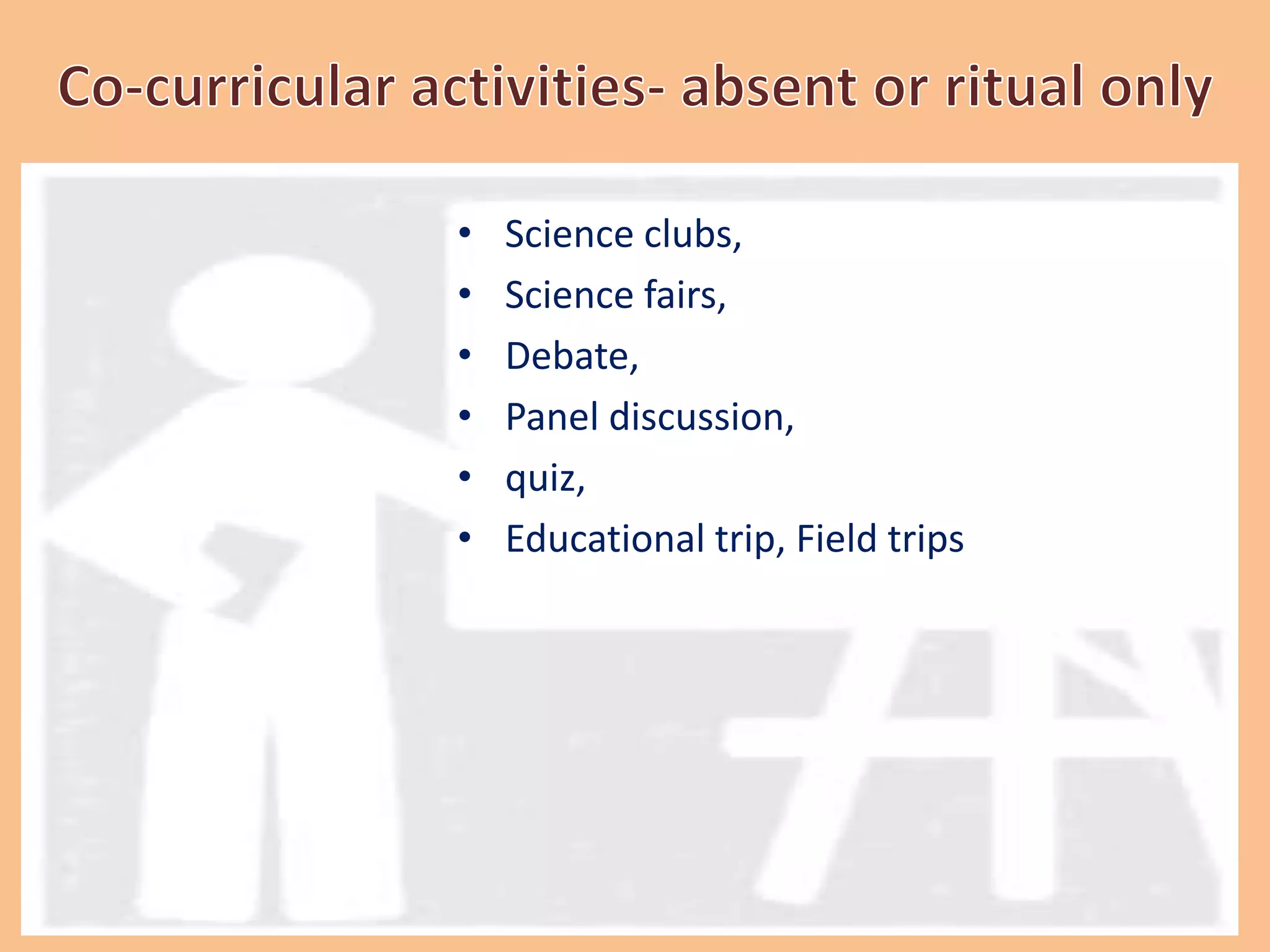
• Science clubs,
• Science fairs,
• Debate,
• Panel discussion,
• quiz,
• Educational trip, Field trips
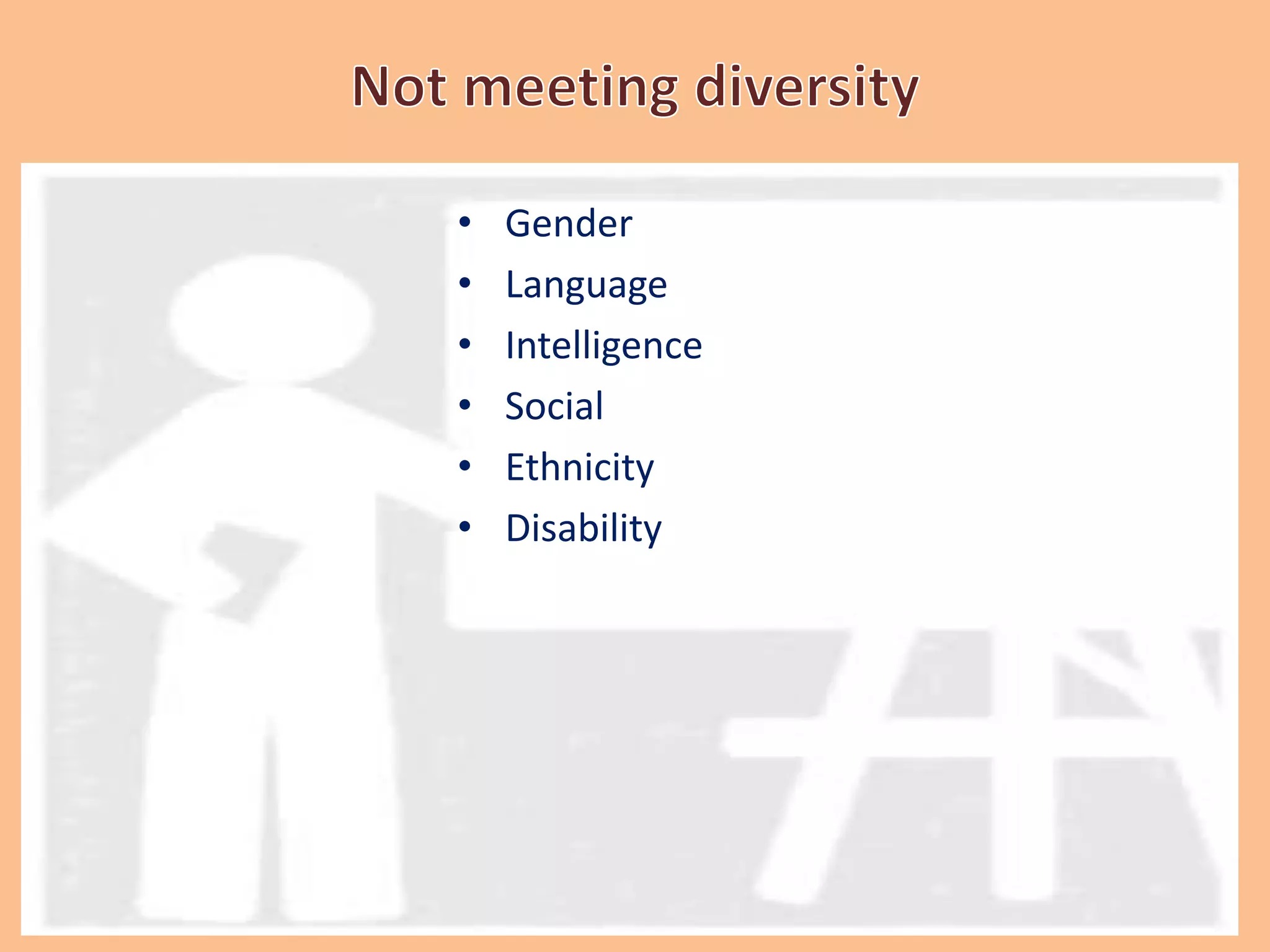
• Gender
• Language
• Intelligence
• Social
• Ethnicity
• Disability
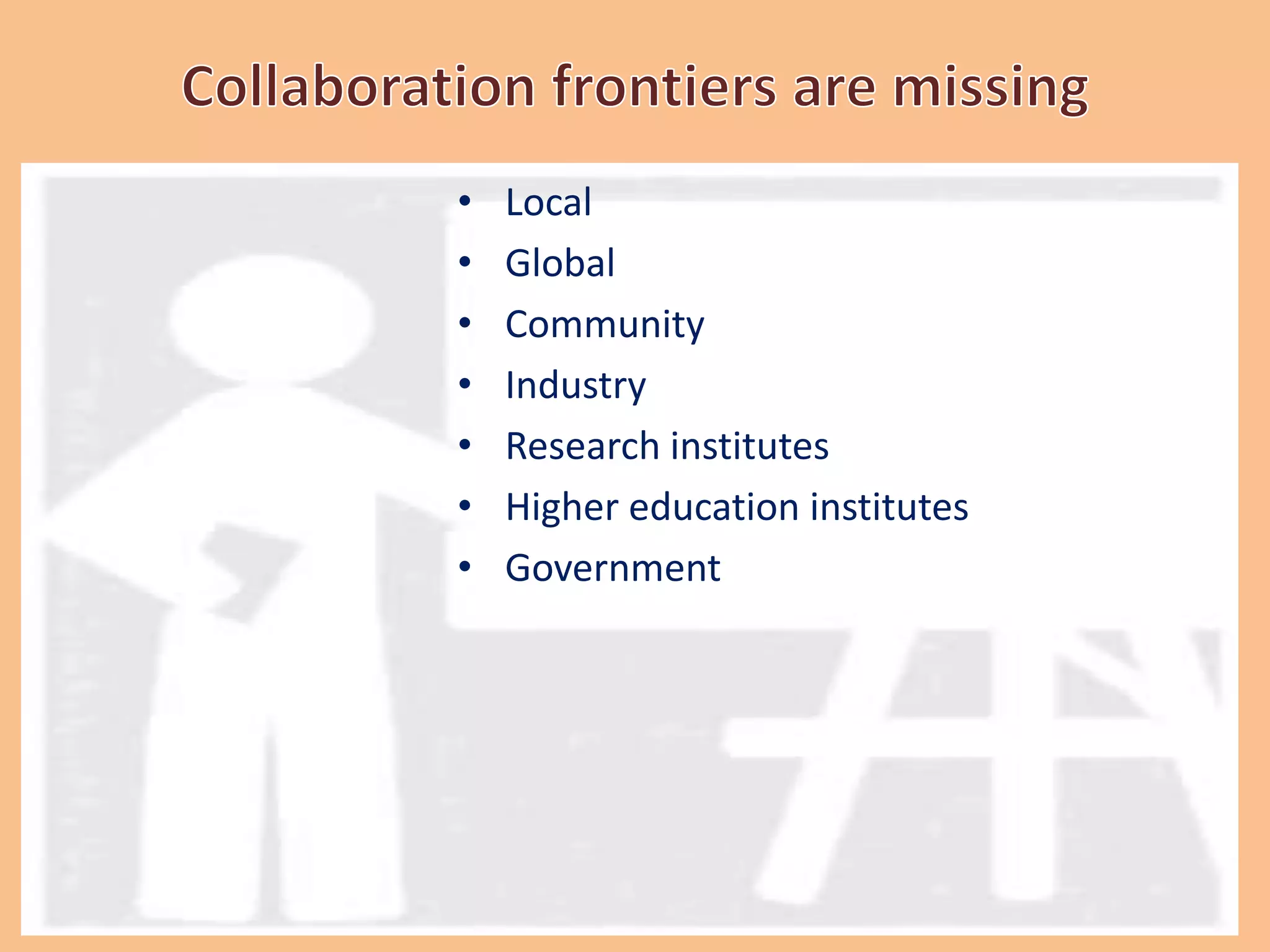
• Local
• Global
• Community
• Industry
• Research institutes
• Higher education institutes
• Government
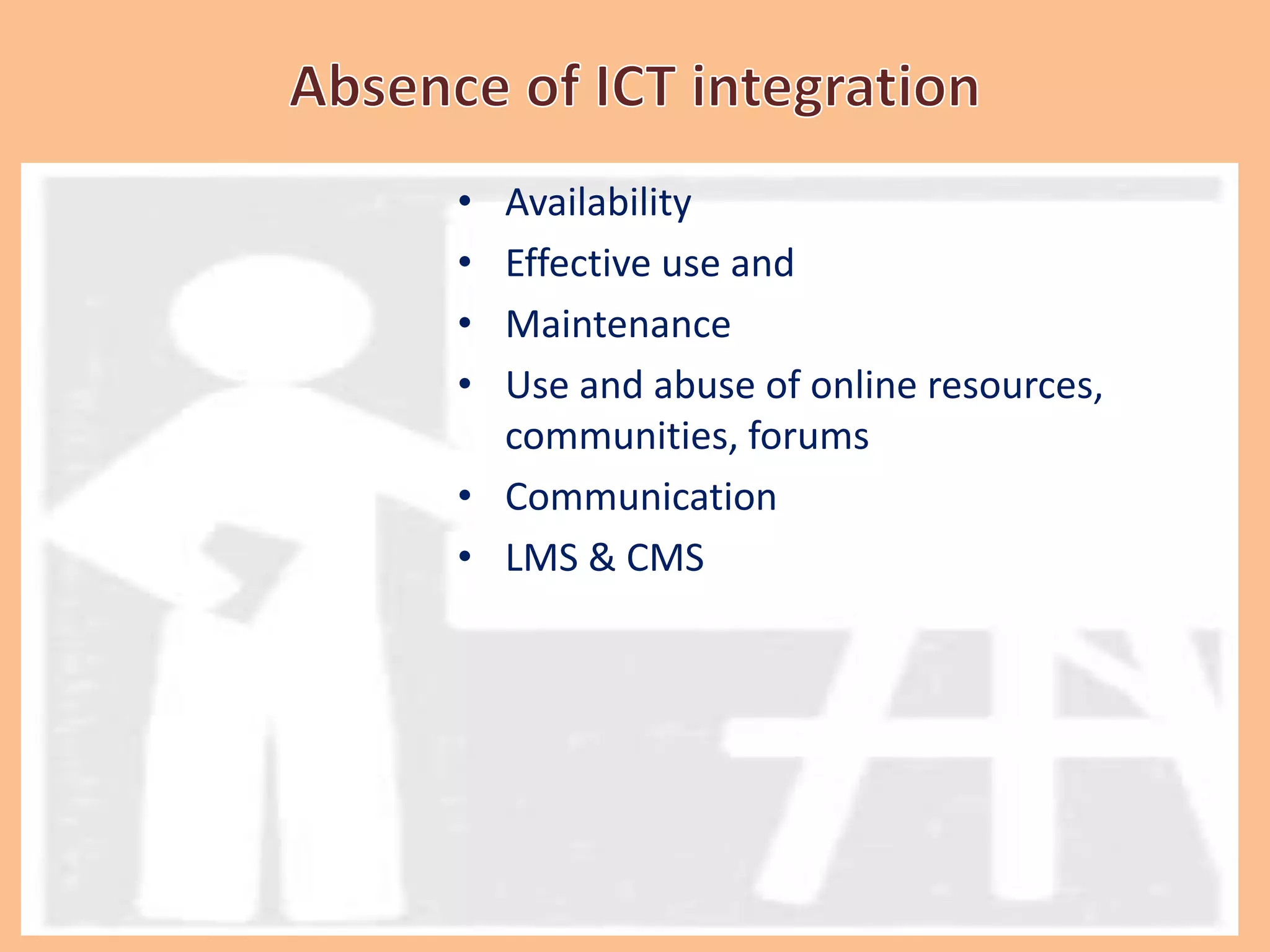
• Availability
• Effective use and
• Maintenance
• Use and abuse of online resources,
communities, forums
• Communication
• LMS & CMS
Habits, behaviors, attitudes
• Learning
• Practicing
• Spreading
• Working with others
• Need be for short term and long term
purpose
• for attitudes and values building
• Collaboration of assessment
• Science Education- Equality and Equity
• Culture of Science
• Empowerment of teachers
• Training of Teacher Educators
• Differentiated instructions
• Open ended instruction
• Integrated learning
• Evidence based learning
• Personalized and customized learning
• Project and problem based learning
• Collaboration and communication
• Capitalize on Lerner’s interest in mobile
technology
• Make the most of social media
• Metacognition skills
• Build right relation for learning
• Teach metacognitive skills
• Include every learner through technology
• Highlight learner centered models
• Promote learning without boarders
• Encourage life long learning
• Adapt to non traditional learning modes
• Assess for deeper understanding and
competence
• Innovator
• Facilitator
• Co-worker
• Mentor
• Modeling
• Leader
• Resource provider
• Catalyst of and for change
Thanks For Your Kind Attention
Dr. Vijay Grover
DAV College of Education, Abohar, Punjab
Email: grovervijayk@gmail.com

Pedagogical Concerns in Science Learning

  • 1.
  • 2.
    Transmissive rather than participativeand owning the process of learning
  • 3.
    Hence, it isnot surprising that many students in considering the senior secondary years are saying: Why should I continue studying science subjects when there are more interactive, interesting and less difficult ones to study? (Fensham 2008)
  • 4.
    • Problem solving& Creativity • Explorative & Investigative learning • Project based learning • Activity based learning • Experiment • Sharing and Cooperative learning • Learning styles oriented
  • 5.
    • Concepts • Methods •Language and readability index • Process of learning– Process skills and metacognition • Contextualizing • Reflection • Examination
  • 6.
    • Content learningrather than process, method, strategy for knowledge creation • Drill and rote learning for scoring rather than observation, design, analysis, questioning, argumentation, discussion, debate and process skills in general • Vertical continuity, horizontal integration is missing so is with life connection
  • 7.
    • Stock ofknowledge , but missing building of scientific habits, attitudes, interest, values (spirit of observation, Calmness, Self control, practice of looking for the causes of things, Order Caution in making claims, admiration of nature, modesty, tolerance and so on (Comas Camps 1925)
  • 8.
  • 9.
    • Science clubs, •Science fairs, • Debate, • Panel discussion, • quiz, • Educational trip, Field trips
  • 10.
    • Gender • Language •Intelligence • Social • Ethnicity • Disability
  • 11.
    • Local • Global •Community • Industry • Research institutes • Higher education institutes • Government
  • 12.
    • Availability • Effectiveuse and • Maintenance • Use and abuse of online resources, communities, forums • Communication • LMS & CMS
  • 13.
    Habits, behaviors, attitudes •Learning • Practicing • Spreading • Working with others
  • 14.
    • Need befor short term and long term purpose • for attitudes and values building • Collaboration of assessment
  • 15.
    • Science Education-Equality and Equity • Culture of Science • Empowerment of teachers • Training of Teacher Educators • Differentiated instructions • Open ended instruction • Integrated learning • Evidence based learning
  • 16.
    • Personalized andcustomized learning • Project and problem based learning • Collaboration and communication • Capitalize on Lerner’s interest in mobile technology • Make the most of social media • Metacognition skills • Build right relation for learning
  • 17.
    • Teach metacognitiveskills • Include every learner through technology • Highlight learner centered models • Promote learning without boarders • Encourage life long learning • Adapt to non traditional learning modes • Assess for deeper understanding and competence
  • 18.
    • Innovator • Facilitator •Co-worker • Mentor • Modeling • Leader • Resource provider • Catalyst of and for change
  • 19.
    Thanks For YourKind Attention Dr. Vijay Grover DAV College of Education, Abohar, Punjab Email: grovervijayk@gmail.com